

SUBSCRIBE TO OUR FREE NEWSLETTER
Daily news & progressive opinion—funded by the people, not the corporations—delivered straight to your inbox.
5
#000000
#FFFFFF
To donate by check, phone, or other method, see our More Ways to Give page.
Daily news & progressive opinion—funded by the people, not the corporations—delivered straight to your inbox.

"We need to make this type of undisclosed AI political advertising illegal yesterday," one tech journalist said.
Republicans are once again using artificial intelligence to attack US Senate candidate James Talarico. This time, they're spending big to air an ad featuring the Democratic nominee for Texas in a dress singing a song about transgender children.
It follows a previous video posted by the Senate GOP's official social media channels in March featuring an uncanny AI rendering of Talarico reading what they described as "extreme statements" he'd previously made on X (then known as Twitter) discussing his views on religion and support for the LGBTQ+ community.
Now, a Trump-aligned dark money group known as Citizens for Sanity is taking it even further. According to a report from The Daily Caller on Tuesday, the group has spent "six figures" on an ad campaign portraying the Texas state representative in a dress singing a parody of "My Favorite Things" from The Sound of Music about trans kids.
“Boys in white dresses with blue satin sashes. Girls dosed with hormones til they grow mustaches. Changing the gender of all your offspring. These are a few of my favorite things," Talarico is shown belting out in the ad.
The ad references comments made by Talarico in 2023 in which he celebrated the trans youth who had shown up, along with other activists, at the Texas state capitol to hold a protest in opposition to Senate Bill 14, which sought to ban transition-related medical care for transgender minors, part of a wave of hundreds of pieces of legislation proposed across the US attacking LGBTQ+ individuals.
Speaking on a podcast, Talarico said: “I love—I’m just going to say this because it’s on my mind—the trans children who showed up yesterday at the state Capitol to advocate for their humanity. They shouldn’t have to, but it was an inspiration to watch.”
As Talarico became the Democratic nominee in Texas, where he'll face off against Republican Attorney General Ken Paxton in November, official Republican channels have spliced the comments to portray Talarico as a creep.
One post in March, from the Republican National Committee Research account on X with 1.3 million views, quotes the interaction dishonestly, as follows:
HOST: "Something that you love that's not family or friends?"
TALARICO: "Trans children."
The ad is in line with others put out by Citizens for Sanity in 2022, when it spent a staggering $93 million attacking Democrats in swing districts. As The Guardian explained in 2024:
The group... flooded the airwaves in battleground states and swing districts with deeply offensive and often misleading ads. Some ads targeted LGBTQ+ rights and attacked “Biden and his radical allies” for supporting “the woke left’s war on girls’ sports” and the “woke war on our children”. Others pictured Latino immigrants and characterized them as criminals “draining your paychecks, wrecking your schools, ruining your hospitals [and] threatening your family”, declaring that “Joe Biden and the Democrats have erased our southern border.”
With AI deepfakes playing an increasing role in political campaigning—especially among Republicans—the group is discovering new frontiers for misinformation in this year's election.
The 15-second spot it plans to roll out across Texas makes no indication of the fact that it was generated with AI, nor of the fact that Talarico never actually uttered any of the words in the song.
Like many other states, Texas has a law prohibiting the use of AI deepfakes to deceive voters during elections. However, it would not apply to this ad, since it is limited to state races and only applies within 30 days before the vote.
Lawmakers in the state have introduced legislation to strengthen the law by scrapping the 30-day rule and requiring disclosures on paid political content generated with AI. But despite some bipartisan support, the reforms failed to pass through the GOP-controlled Legislature.
While this new Talarico ad would be unlikely to fool most voters, others—like the one released by the Senate GOP in March—are already realistic enough to influence even savvy viewers, explained Sandra Cai, the founder of Plurall AI, an AI deepfake and fraud detection platform.
"By the time a viewer questions what they saw, the impression is already made," she said in a social media post. "The 2026 midterms laid bare an uncomfortable truth: Disclosure labels are easy to miss and easy to ignore. The tools to produce these ads are cheap, fast, and widely available. Regulation remains a patchwork, often applying only in the final weeks before an election."
On the left, the Talarico ad has led to familiar bewilderment that such misleading material has not been outlawed.
"We need to make this type of undisclosed AI political advertising illegal yesterday," said the liberal tech journalist Taylor Lorenz.
And while some Talarico opponents boasted that they were "going to win the midterms by programming boomers with AI brainrot ads," others on the right said they were also disturbed by the trend.
"James Talarico is awful," said Frank DeVito, senior counsel at the right-wing Napa Legal Institute. "But this use of AI to generate a video of a political opponent saying or doing what he did not really say or do is not good."
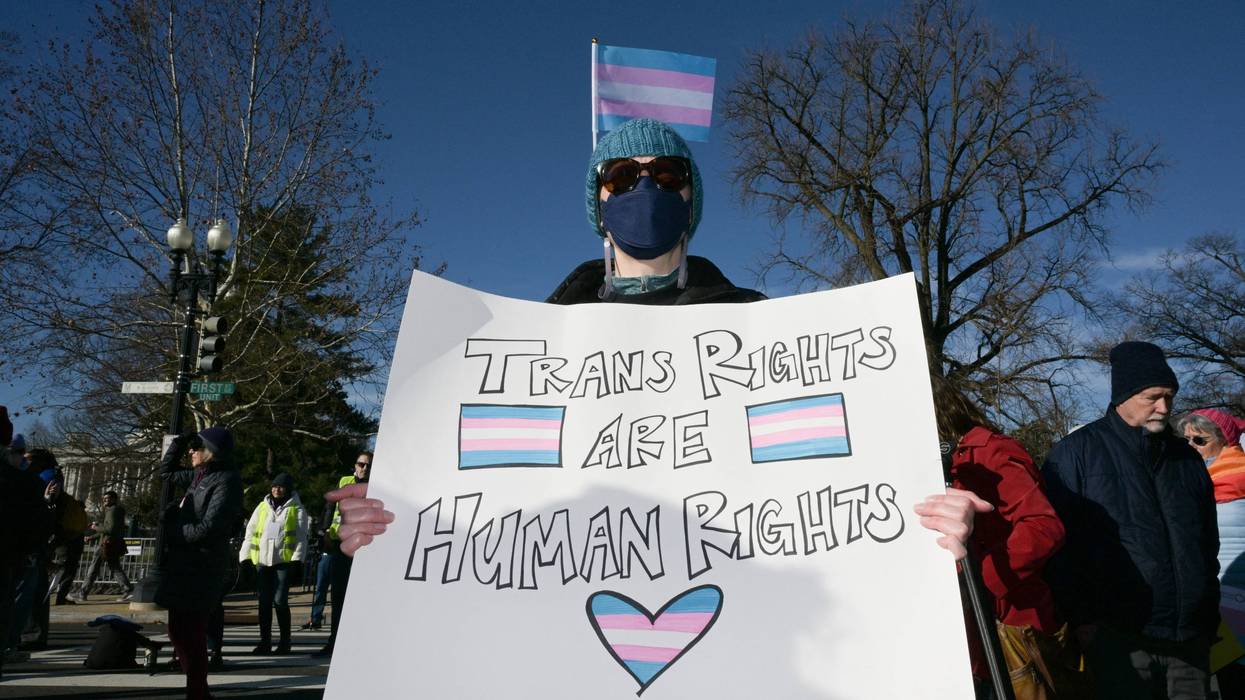
As the defense teams in Hecox and BPJ seek to police the bodies of transgender women and girls, all women and girls who don’t adhere to society’s rigid standard of femininity will feel the impact.
The power politicians have over women’s bodies is one of the oldest tools of control in American history. Throughout that history, the promise of protecting women has been the longtime excuse for excluding women from civic life and limiting our freedom. That history isn’t over.
The Supreme Court will soon decide Little v. Hecox and West Virginia v. BPJ—legal cases out of Idaho and West Virginia that will determine whether transgender athletes will be allowed to compete on women’s and girls’ school sports teams.
Idaho’s attorney general has argued that the bans ensure “women’s spaces and sports remain fair, safe, and dedicated to empowering female athletes.” Or, in other words, that we must allow politicians to pass these bans to “protect” women. Although the court’s decision is expected any day now, I have already made mine. Transgender sports bans are not and never have been about protecting women.
I have spent my career fighting to protect the bodily autonomy and legal protections of all women and girls. When people ask me, whether genuinely or in bad faith, why transgender women are unequivocally included in my organization’s work, I tell them the truth: Our fight is the same.
If you have been in the business of fighting for women’s rights and protections as long as I have, you know that women face many threats to their safety and autonomy, but not one of those threats includes transgender people.
The tactics being used to exclude transgender athletes are similar to those once used to keep women from casting a ballot, having a credit card, or getting the healthcare they need.
In 1776, a woman couldn’t own the clothes on her back, much less the home she built. Proponents of the practice said it was “intended for her protection.” One 100 years later, when women were shut out of the legal profession, the Supreme Court ruled in favor of such paternalism, even stating that “man is, or should be, woman’s protector.” And when women were later fighting for the right to abortion, we were told that our bodies are not our own.
It is no wonder, then, that the red herring of protecting women is being deployed in the Trump administration’s executive orders and in the Hecox and BPJ cases. It is the same excuse being used in a flurry of sports bans and anti-transgender bills that have been introduced and implemented around the country over the past six years. Ultimately, transgender sports bans fail to address the real threats women face in sports, like unfair pay and unequal access to training and facilities.
The great irony is that bans against transgender women in women’s sports, women’s bathrooms, and other areas of public life actually endanger all women. The Idaho law that the Hecox case is challenging, for example, requires women and girl student-athletes whose sex is disputed to undergo invasive sex testing, including physical examinations. Athletes in men’s sports are not subject to the same degradation.
For as long as women and girls have been allowed to participate in sports, their bodies have been scrutinized. From non-white women who do not conform to white beauty standards, to girls with short hair or baggy clothes, to those who are deemed too strong, women athletes who do not perform femininity as some deem correctly have been harassed, punished, and forced to face humiliating tests to prove their gender.
It is no accident that Project 2025 and its supporters are pushing both anti-transgender legislation and a rollback of women’s protections against sexual harassment and assault, their right to reproductive healthcare, and even their ability to vote. Today, as the defense teams in Hecox and BPJ seek to police the bodies of transgender women and girls, all women and girls who don’t adhere to society’s rigid standard of femininity will feel the impact.
If you have been in the business of fighting for women’s rights and protections as long as I have, you know that women face many threats to their safety and autonomy, but not one of those threats includes transgender people.
It remains to be seen if the Supreme Court’s decision in Hecox and BPJ will reaffirm what I already know to be true: We women, including transgender women, must be in the fight for liberation together.
One advocate said the proposed rule would force hospitals "to choose between providing lifesaving care for trans people or maintaining the ability to serve patients through Medicare and Medicaid."
A pair of extreme new Trump administration rules aimed at functionally banning gender-affirming healthcare for transgender youth could force even more hospitals to close down.
NPR reported Thursday that the Department of Health and Human Services (HHS) drafted a proposed rule that would prohibit federal Medicaid reimbursement for medical care provided to transgender patients younger than 18 and prohibit the same from the Children's Health Insurance Program (CHIP) for patients under 19.
Another proposed rule goes even further, blocking all Medicaid and Medicare funding to hospitals that provide gender-affirming care to youth.
As Erin Reed, an independent journalist who reports on LGBTQ+ rights, explained, this "would effectively eliminate access to such care nationwide, except at the few private clinics able to forgo Medicaid entirely, a rarity in transgender youth medicine."
The policies are of a piece with the Trump administration and the broader Republican Party's efforts to eliminate transgender healthcare for youth across the country.
Bans on gender-affirming care for those under 18 have already been passed in 27 states, despite evidence that early access to treatments like puberty blockers and hormones can save lives.
As Reed pointed out, a Cornell University review of more than 51 studies shows that access to such care dramatically reduces the risk of suicide and the rates of anxiety and depression among transgender adolescents.
The new HHS rules are being prepared for public release in November and would not be finalized for several more months.
But if passed, the ramifications could extend far beyond transgender people, impacting the entire healthcare system, for which federal funding from Medicare and Medicaid is a load-bearing piece. According to a report last year from the American Hospital Association, 96% of hospitals in the US have more than half their inpatient days paid for by Medicare and Medicaid.
It is already becoming apparent what happens when even some of that funding is taken away. As a result of the massive GOP budget law passed in July, an estimated $1 trillion is expected to be cut from Medicaid over the next decade. According to an analysis released Thursday by Protect Our Care, which maintains a Hospital Crisis Watch database, more than 500 healthcare providers across the country are already at risk of shutting down due to the budget cuts.
Tyler Hack, the executive director of the Christopher Street Project, a transgender rights organization, said that the newly proposed HHS rule would be "forcing hospitals to choose between providing lifesaving care for trans people or maintaining the ability to serve patients through Medicare and Medicaid."
"Today’s news marks a dangerous overreach by the executive branch, pitting trans people, low-income families, disabled people, and seniors against each other and making hospitals choose which vulnerable populations to serve," Hack said. "If these rules become law, it will kill people."

The New York City Council Progressive Caucus endorses a landmark legislative package of youth priorities: “a road map for our youth movements in cities everywhere.”
In New York City, things seem to be falling apart. Prospect Park and Van Cortland Park are on fire; 6-year-old students, high school seniors, and college students are being detained and deported by Immigration and Customs Enforcement; gender-affirming care remains out of reach for many, and trans hate is escalating.
This is our future under governments led by the likes of New York City Mayor Eric Adams and President Donald Trump. It’s one of fear, climate disaster, fascism, genocide, unaffordability, and violence. It’s not one we will accept.
That’s why this September, dozens of New York City youth organizations, New York City Council members, and 150 youth leaders came together to chart a new vision for our interconnected movements, unveiling the Livable Future Package. Now, the New York City Council Progressive Caucus, a 17-member bloc of elected officials, joins our campaign centered on the four most urgent crises facing New York City youth.
The priorities include 1) the NYC Trust Act, which will strengthen enforcement of our sanctuary city laws. 2) Intro 1180 to lower utility bills and hold ultra-wealthy landlords accountable by enforcing our landmark 2019 climate and energy efficiency law. 3) The Community Opportunity Purchase Act, which will give community organizations the first chance to purchase buildings, providing youth communities a pathway to stable housing over corporate speculation. Lastly, 4) City G.I.R.D.S. and a companion bill to make sure that young trans, non-binary, intersex, and gender-nonconforming New Yorkers in the jail and prison systems have access to housing decisions aligning with their identity and to gender-affirming medication and items.
“We grew up in New York. We want to stay here, and I want to be proud of the place I am from.”
This is a model for a city government that stands up for our generation in the face of fascism and won’t back down from the fight for a city we can afford.
The Livable Future coalition spans both traditional movement divides and the five boroughs. Our coalition, from middle schoolers to young adults newly entering the workforce to sitting NYC Council members, collectively shares in the belief that a livable future is possible. Our future is not just 100 years into the future; it’s 2026, 2030, and every minute in between.
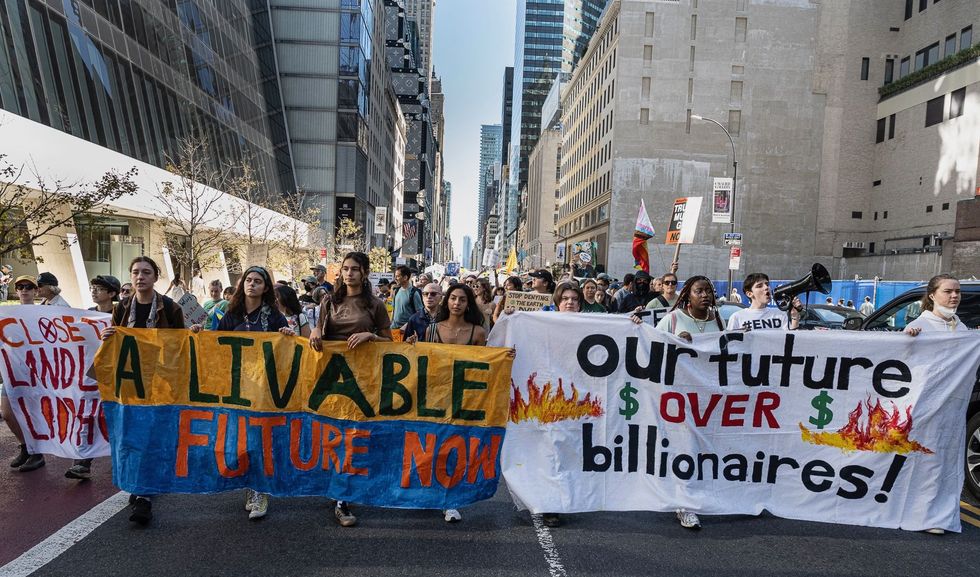 The 15+ youth organizations behind the Livable Future Package united at the September 20 Make Billionaires Pay March, holding banners for each of the bills and demanding New York’s leaders put their future over Trump-allied billionaires. (Photo by Ken Schles)
Our campaign presents a road map for our youth movements in cities across the country. From New York City to Los Angeles, Chicago to DC, and Houston to Philadelphia, we can and we must organize our cities as fortresses against encroaching oligarchical fascism.
Leaders across New York City have already taken note of our organizing, joining us at our launch event in September and for rallies outside City Hall.
As youth-leader Emma Rehac of Youth Alliance for Housing said at one of these events, “We grew up in New York. We want to stay here, and I want to be proud of the place I am from.”
“The Livable Future Package is about ensuring New York is a city that stands up for all our communities. We deserve to afford to grow old in the neighborhoods we grew up in, to live in a place that defends against detention and deportation—somewhere that takes action to fight the climate crisis and for affordability, and ensures our basic human rights are protected no matter our gender identity.”
Our work on the package is just beginning. The Council, led by Speaker Adrienne Adams, and the mayor have a choice.
Will they stand by as our city capitulates to Trump? As ICE floods our schools, and our future disappears? Or, will they join us and pass the Livable Future Package by the end of the year?
We hope they will help us build a city that stands up, that fights back, and charts a livable, affordable future for the next generation.
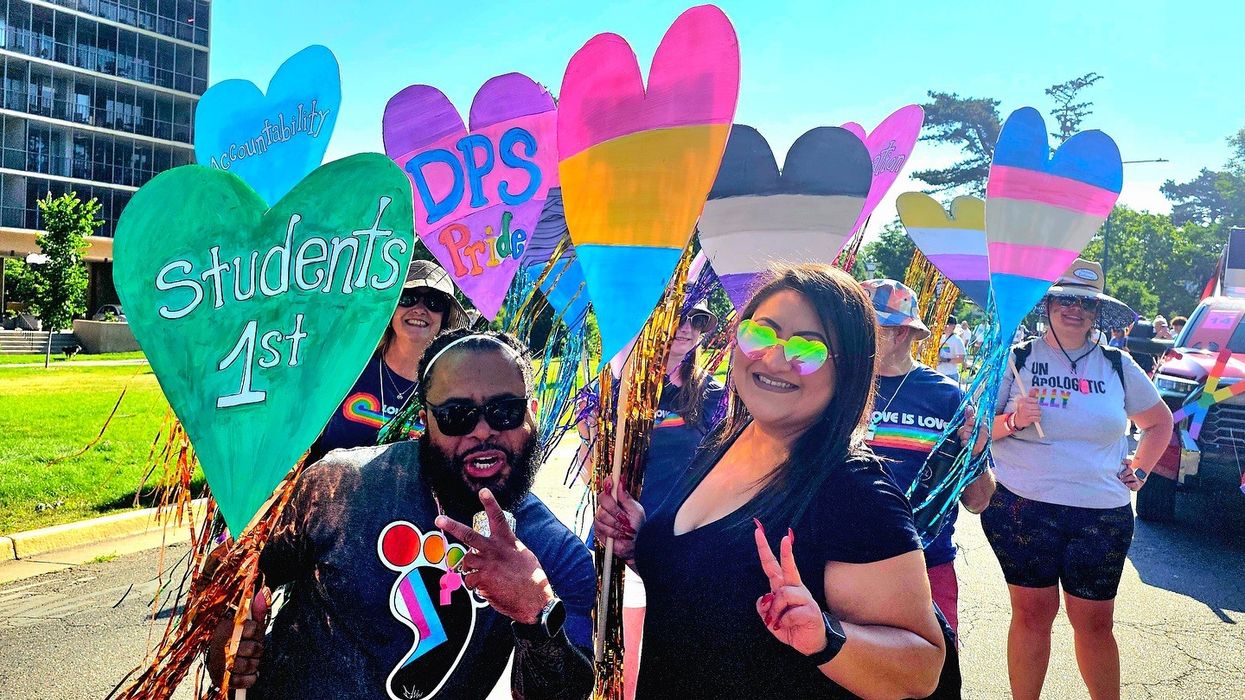
"The district has made clear it will not fold quietly, signaling that some institutions still have the resolve to stand against a federal campaign of erasure," wrote one LGBTQ+ rights journalist.
As educational institutions around the country capitulate, Denver's public school system said Tuesday that it would defy demands from the Trump administration to discriminate against transgender students even if it means losing federal funds.
Alex Marrero, the superintendent of Denver Public Schools (DPS), said the school "will protect all of their students from this hostile administration," by refusing to implement a ban on gender-neutral bathrooms mandated by Trump's Department of Education.
On Thursday, the department's Office for Civil Rights (OCR) sent Denver Public Schools an email demanding that the school remove a multi-stall, gender-neutral restroom at one of its high schools, which it claimed violated Title IX of the Civil Rights Act.
As Erin Reed, an independent journalist who covers LGBTQ+ rights, notes, the facility built by DPS and other schools is "similar to facilities in major airports, European cities, and increasingly across the United States." The school, meanwhile, has said that the facility was requested by students themselves and has 12-foot high partitions to protect their privacy.
The OCR went further. To be compliant with Title IX, it said, the school also had to "adopt biology-based definitions for the words 'male' and 'female'," meaning they needed to classify transgender students by their biological sex at birth rather than their preferred identities, including banning them from restrooms that do not correspond to their biological sex.
The Trump administration also called on the school to eliminate components of its "LGBTQ+ Toolkit," which includes guidance on how students and faculty can create a welcoming environment for their trans peers. Among other things, the document encourages members of the school community to step in to stop bullying of LGBTQ+ students, respect the preferred pronouns of all students, and for faculty to enforce dress codes in a gender-neutral way.
As Reed put it, the department was effectively "claiming that Title IX actually mandates discrimination against transgender students."
If DPS refused to comply within 10 days, the department threatened to strip the district of federal funding, which makes up 7% of the school's annual budget, according to Chalkbeat. A large portion of that federal money goes toward low-cost school lunches for poor children.
In a statement issued Tuesday, DPS's school board and administration put out a statement "disagreeing unequivocally" with the government's interpretation of the law.
"Title IX permits schools to provide sex-separate restrooms. It does not require that to be the only option," DPS argued. "The interpretation put forward by OCR would undercut our equity commitments, contradict our mission, harm the very students we are entrusted to support, and would have a devastating impact on East High School and the broader LGBTQ+ community. What matters most is that students are safe, have privacy, and can learn without fear."
"The decision to implement gender-neutral restrooms at East followed direct feedback from LGBTQ+ students who reported they did not feel safe," the statement continued. "For these students, access to a restroom where they feel secure is not symbolic. It is about dignity, health, and the ability to learn. When students speak, we listen and we act."
Superintendent Marrero, meanwhile, put out a short video on Instagram expressing his support for the district's LGBTQ+ students.
"As you might have seen in the news, the federal government has decided to take a firm stance and have us roll back our support to the LGBTQ+ community, and of course, we're not having it," Marrero said. "We will continue to stand in solidarity, and as you engage this weekend and beyond, I just wanted to let you know that we got you, and everything is going to be ok."
In a statement published alongside the video, Marrero wrote: "We will fight. In the courts, if we must. In the public square, when necessary. Always in partnership with those who believe that every student deserves to show up to school ready to learn, free from fear."
With this pledge to stand by its LGBTQ+ students, DPS joined five school districts in Virginia that last month responded with similar defiance when the Trump administration ordered them to stop allowing trans students to use bathrooms matching their gender. Those districts—which include Loudoun, Arlington, and Fairfax Counties—have launched a lawsuit against the Trump administration to keep their federal funding.
"Elite institutions like Brown, Columbia, and Penn—as well as multiple hospitals serving transgender youth—have already capitulated, signing away protections through bathroom and sports bans or cutting off medical care entirely," Reed wrote. "Denver Public Schools, by contrast, has drawn a line. With the Department of Education's deadline looming next Monday, the district has made clear it will not fold quietly, signaling that some institutions still have the resolve to stand against a federal campaign of erasure."
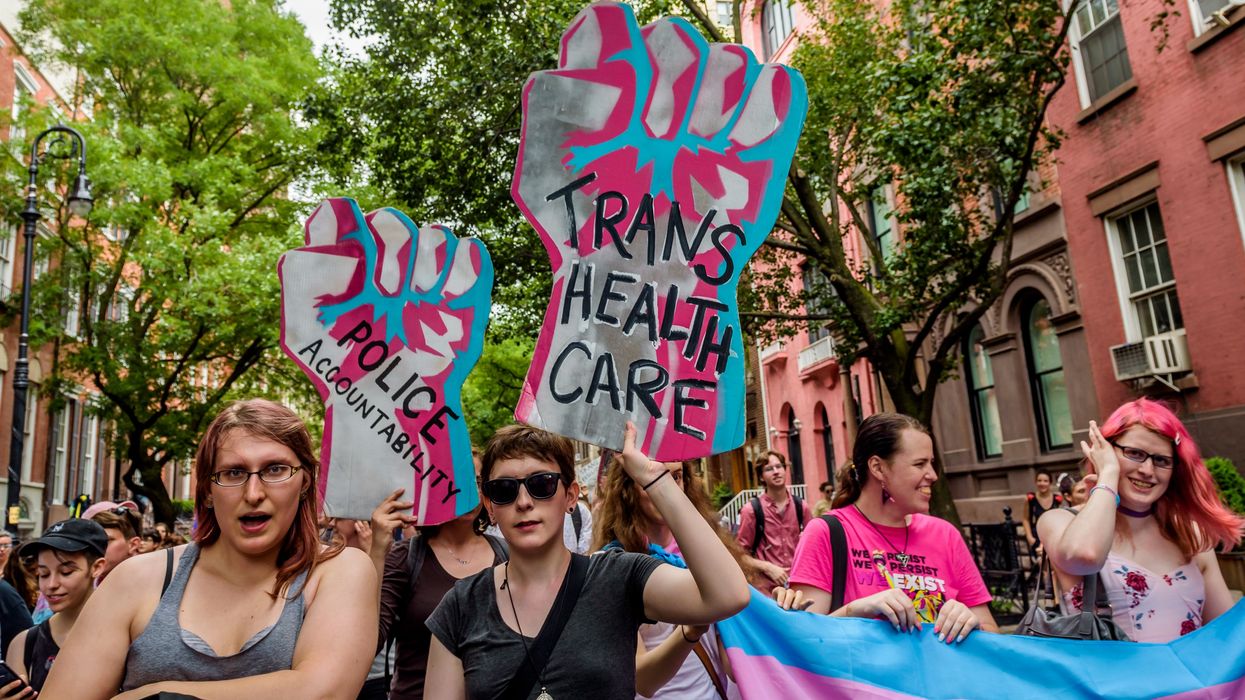
Transgender Americans—like all Americans—deserve Medicare coverage; nevertheless, their access to healthcare is at risk.
The U.S. House of Representatives passed a budget bill that promises a sweeping dismantling of critical public programs that millions of people rely on, including food stamps, Medicaid, and federal education loans. Buried inside the bill’s thousand-plus pages are provisions that specifically target healthcare for transgender people, including an outright ban on Medicaid coverage for transgender people of all ages.
These provisions are the latest escalation of the immense and overwhelming political attacks on transgender people in America over the last several years, which already include a ban on transgender military members, limitations on participation in sports for children, and openly spreading falsehoods about transgender youth and the healthcare they receive. Instead of focusing on the stigma, violence (which is disproportionately experienced by Black transgender women), and discrimination transgender people face every day that results in severe health disparities, higher rates of poverty, and premature deaths, legislators all over the country are enacting policies that perpetuate these very issues.
Between this congressional budget legislation and the Trump administration’s assaults on transgender youth, military service members, and veterans, concern is growing that this administration’s war on transgender people will soon include efforts to strip transgender Medicare beneficiaries of essential medical coverage. Medicare was created with the intention of ensuring that American adults have access to vital healthcare services as they age and can no longer work, and it has grown to become one of the most well-supported and positively viewed government programs of our time. Weaponizing the Medicare program to impose a political agenda in place of expert medical standards of care would be a deeply concerning development with serious ramifications not just for transgender Medicare beneficiaries but for the practice of medicine in America as a whole.
The issue policymakers should be tackling is not banning medical care for transgender youth or adults but rather ensuring that all people, including Medicare beneficiaries, can access the medical care they need.
According to expert standards of care in transgender health, medical care for transgender people is carefully tailored to align with the recommendations of healthcare providers and each person’s individual needs. To examine the frequency and trends of one particular form of care—gender-affirming surgical procedures—for Medicare beneficiaries, my team and I recently published a study using Medicare claims data. While these surgical procedures are not part of the routine standard of care for transgender youth, they are a medically necessary and important part of care for many transgender adults.
We found that gender-affirming surgeries are exceptionally rare in the Medicare program and that transgender Medicare enrollees in the South are less likely to receive surgery compared to those in the Northeast with similar characteristics (e.g., race, ethnicity, age). These findings stem from discriminatory policies that result in inaccessibility. Medicare beneficiaries face barriers to receiving gender-affirming surgeries because of a lack of access to surgeons, inconsistent and unclear coverage policies, coverage denials, and high out-of-pocket costs. These barriers represent structural forms of stigma that may be particularly elevated for racial and ethnic minoritized populations due to racism. Thus, the issue policymakers should be tackling is not banning medical care for transgender youth or adults but rather ensuring that all people, including Medicare beneficiaries, can access the medical care they need.
Transgender people are under political, social, and legal attack with such intensity that it is easy to lose sight of who—and how many people—are actually directly impacted. To put our study’s findings into context: In 2019, 37.9 million people received their Medicare benefits through Traditional Medicare (our study focused on those with Traditional Medicare and excluded those with private plans, known as Medicare Advantage). Of these nearly 38 million people, we were able to identify about 35,000 transgender adults, which is 0.09% of the Traditional Medicare population. Of this small number of Medicare beneficiaries who are transgender, 1.4% received a gender-affirming surgery in 2019. In other words, less than one one-hundredth of a percent—or 0.001%—of this Medicare population was transgender and received gender-affirming surgery.
Not only is the number of transgender Medicare beneficiaries small and the number who received gender-affirming surgeries much smaller, we also observed a decrease in the number of transgender Medicare beneficiaries who received gender-affirming surgeries over time. This downward trend is unique to the Medicare program, further highlighting access issues for transgender people with Medicare coverage.
To put an even finer point on it: We included a cisgender, or non-transgender, cohort in our study because the same surgeries transgender people need are also often received by cisgender people (e.g., hysterectomies). Overall, each year, about 0.5% of our cisgender cohort underwent procedures that could be considered gender-affirming for transgender people. Our team wanted to see if transgender Medicare beneficiaries face any disadvantages in receiving needed surgical care compared to cisgender beneficiaries. We found that, unlike transgender people, there were no significant differences in the receipt of surgery based on where cisgender people lived. In other words, a cisgender person residing in New York was just as likely to receive a surgery they need as another cisgender person in Texas with similar characteristics. Our findings indicate that transgender adults with Medicare may be uniquely unable to access needed care both because of who they are and where they live.
It is timely and crucial to highlight the facts about gender-affirming care and the Medicare program: Our study suggests that transgender Medicare beneficiaries already face unique access issues when seeking medically necessary care. Just like all Medicare beneficiaries, transgender people are deserving of Medicare coverage. Just like everyone else, transgender people should have the ability to access the care that they need from providers they trust without politically motivated, anti-science barriers imposed by the federal government. Yet transgender people continue to be singled out in political attacks that deny them access to care and services that remain accessible to non-transgender people. This issue has already made its way to the U.S. Supreme Court—which could have dire consequences for the health of transgender people of all ages.
The amount of effort, time, and resources being used to target (and scapegoat) such a marginalized group—and to limit their ability to access medically necessary care, no less—is harmful, imbalanced, and malicious. It is also anti-science. Gender-affirming care is cost-effective, associated with improved mental health outcomes, and considered medically necessary by every major medical organization in the U.S., including the American Medical Association, the American Psychological Association, and the American Psychiatric Association. Polling shows most Americans do not want policymakers to focus on the transgender community. With severe federal budget cuts looming, policymakers should, instead, do something useful and positive: They should act to ensure that all people, including transgender people, can get the healthcare they need.
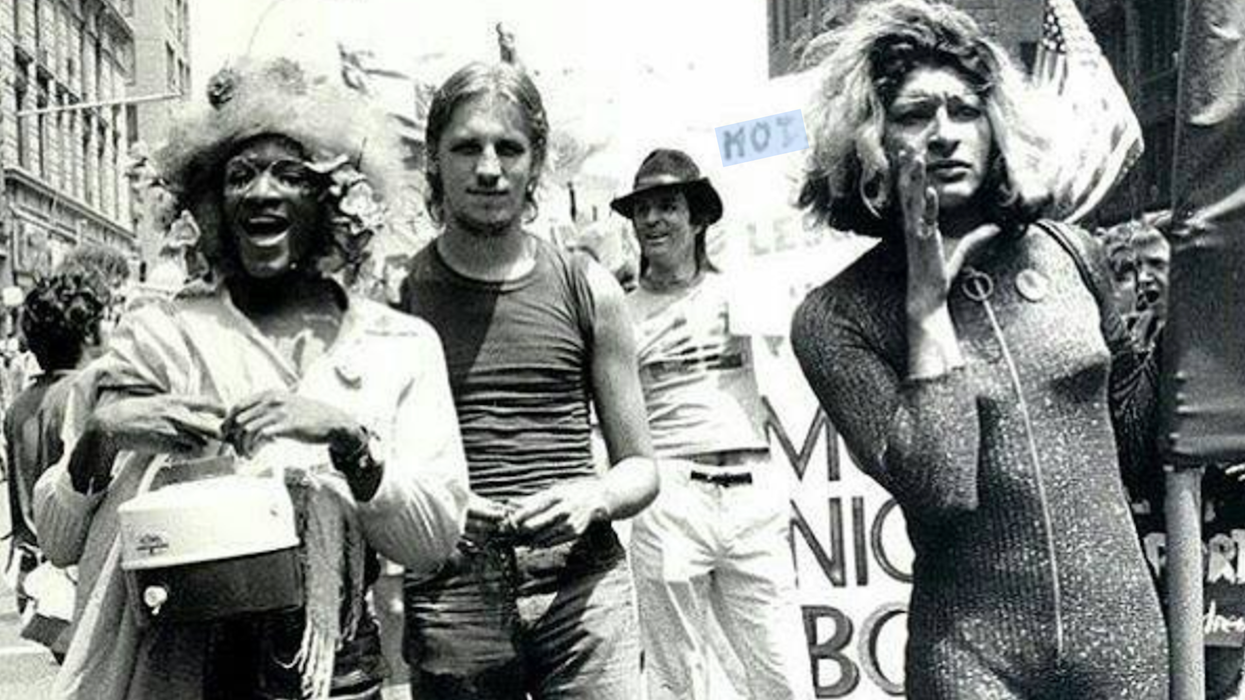
"The Trump administration is trying to write us out of that history," said one transgender writer. "We will not let them."
They were on the front lines of the most famous uprising for LGBTQ+ civil rights in history, but the Trump administration has erased mention of transgender and queer people from the official website of the national monument marking the event.
The National Park Services' (NPS) website for Stonewall National Monument in New York City now welcomes visitors with the lines: "Before the 1960s, almost everything about living openly as a lesbian, gay, bisexual (LGB) person was illegal. The Stonewall Uprising on June 28, 1969 is a milestone in the quest for LGB civil rights and provided momentum for a movement."
Previously, the site said "lesbian, gay, bisexual, transgender, or queer (LGBTQ+) person."
This, despite the fact that queer and transgender people including Marsha P. Johnson and Sylvia Rivera—who, according to a still-standing NPS web page, threw the second Molotov cocktail at police—were front-and-center during the six-day uprising at the Stonewall Inn gay bar on Christopher Street in Greenwich Village.
In a statement posted on Instagram, the Stonewall Inn and its Stonewall Gives Back Initiative said they are "outraged and appalled" by the NPS move, adding that "this blatant act of erasure not only distorts the truth of our history, but it also dishonors the immense contributions of transgender individuals—especially transgender women of color—who were at the forefront of the Stonewall Riots and the broader fight for LGBTQ+ rights."
The statement continues:
Let us be clear: Stonewall history is transgender history. Marsha P. Johnson, Sylvia Rivera, and countless other trans and gender-nonconforming individuals fought bravely, and often at great personal risk, to push back against oppressive systems. Their courage, sacrifice, and leadership were central to the resistance we now celebrate as the foundation of the modern LGBTQ+ rights movement.
The decision to erase the word "transgender" is a deliberate attempt to erase our history and marginalize the very people who paved the way for many victories we have achieved as a community. It is a direct attack on transgender people, especially transgender women of color, who continue to face violence, discrimination, and erasure at every turn.
Also gone from the NPS site is a page previously containing an interactive "Pride Guide" for visitors "to explore the legacy and history of lesbian, gay, bisexual, transgender, and queer (LGBTQ) people and places."
Stonewall National Monument—which was dedicated by then-President Barack Obama in 2016—commemorates the 1969 Stonewall Uprising at and around the Stonewall Inn, a gay bar in Greenwich Village.
Police raids of LGBTQ+ spaces were a frequent fact of life during a time when consensual same-sex sexual relations, cross-dressing, and even dancing with members of the same sex were illegal. On the night of June 28, 1969 New York City police raided the mafia-owned Stonewall Inn, ostensibly to investigate illegal alcohol sales and find "three-article rule" violators to arrest, provoking the six-day uprising that is widely credited with sparking the LGBTQ+ rights movement.
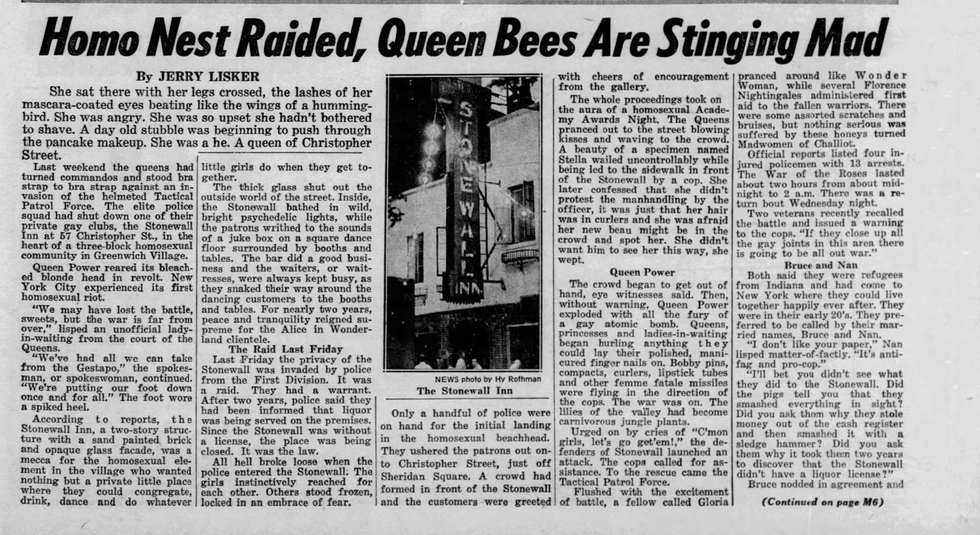 This is the New York Daily News' front-page coverage of the Stonewall Uprising. (Photo: New York Daily News)
Although there were earlier uprisings—like the 1966 trans-led Compton's Cafeteria Riot in San Francisco—Stonewall became synonymous with the ongoing struggle for LGBTQ+ equality.
While attempts to marginalize and separate the fight for transgender rights from the wider LGBTQ+ movement are nothing new—Rivera lamented this "gay liberation but transgender nothing" ethos a generation ago—such efforts have accelerated in recent years, fueled by the far-right and prominent figures in the "trans-exclusionary radical feminist" (TERF) movement, author J.K. Rowling, anti-trans gay activists, and others.
The NPS' move is part of Trump's wider war on transgender people that began during his first administration and continues today with the president's executive orders aimed at delegitimizing transgender identity, cutting off federal support for gender-affirming healthcare, pushing for a ban on trans women and girls from female sports, renewing his first-term prohibition on trans military enlistment, and other insidiously discriminatory and dangerous moves.
Transgender activists and their allies aren't taking the Trump's administration's latest move sitting down. A protest took place at the monument site on Friday afternoon, with others vowing future action.
#Stonewall today
[image or embed]
— bonnjny.bsky.social (@bonnjny.bsky.social) February 14, 2025 at 9:42 AM
"The Trump administration is trying to write us out of that history," Media Matters LGBTQ program director Ari Drennen asserted on social media. "We will not let them."
Lamenting that "the federal government is attempting to erase us and take away our history," researcher and self-described "transgender menace" Allison Chapman said on the social platform Bluesky, "This Pride, we riot."
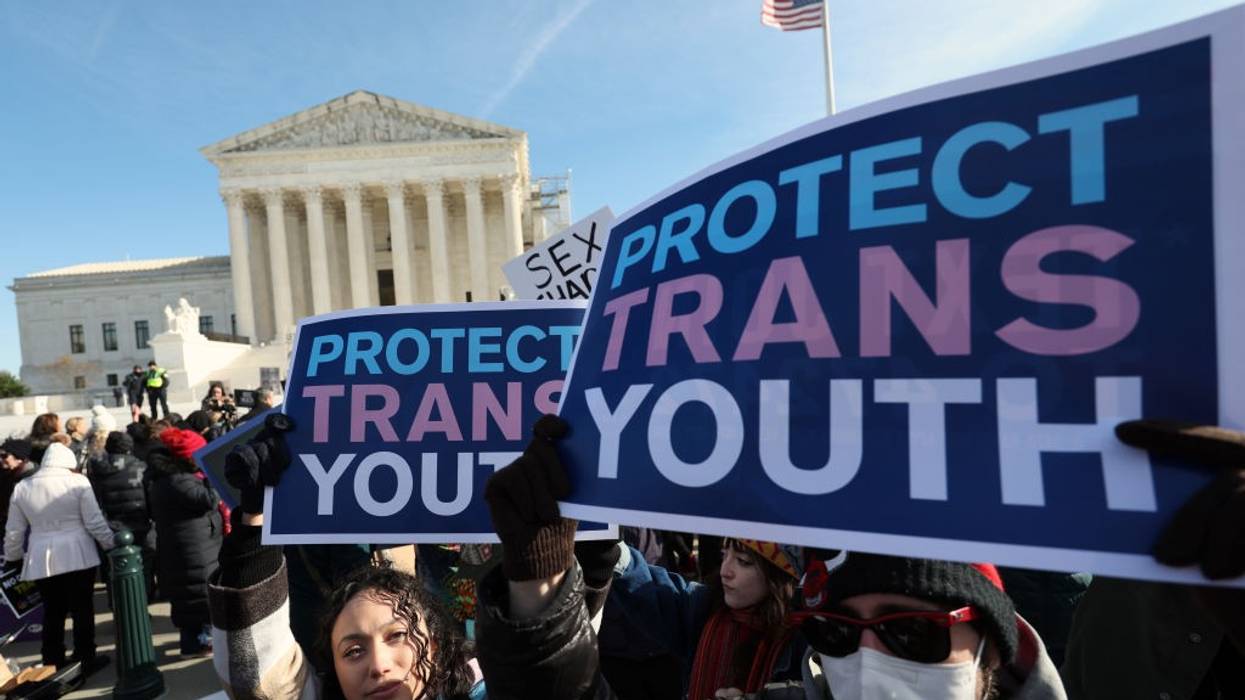
The Democrats' problem isn't "wokeness," but rather their failure to counter the Republicans' cruel anti-trans narrative.
In the wake of the Democrats' devastating loss last month, there has been no shortage of arguments and analyses about what went wrong and how the party should move forward. It has been deeply concerning to see some of these arguments taking Republican fearmongering and propaganda as a basis, particularly on the subject of transgender rights. Falling for Republican propaganda will not only bring terrible harm to the most vulnerable members of society; I believe it is also a losing political strategy for Democrats. Instead, the Democratic Party must be vigilant against Republican propaganda, and must proactively counter it.
The Democrats' failures in messaging on transgender rights were evident throughout the campaign. Despite the Biden-Harris administration's progress - such as signing executive orders aimed at curbing discrimination, expanding health care access, and raising awareness of the societal barriers and violence that transgender people regularly experience - the Harris campaign appeared to studiously avoid discussing transgender people at all.
Democrats must make clear to the public that while Republicans cynically claim to be "protecting children," they are in fact doing the opposite.
One of the few exceptions, and thus the most visible mention of trans people by Kamala Harris during the campaign, was in her October 16 interview on Fox News. When the host, Bret Baier, challenged the Biden-Harris administration's policy supporting gender-affirming medical care for prisoners, Harris had an opportunity to make a defense on moral grounds. Instead, she counterattacked by pointing out that the Trump administration followed the same laws, and thus the argument was "throwing...stones when you're living in a glass house." By doing so, she implicitly condoned the narrative that gender-affirming care is a luxury rather than a necessity, or, worse, somehow wrong or shameful, rather than a fundamental human right that should be afforded to all, including incarcerated people.
Setting aside for a moment the moral aspect, try to coldly consider the political message this phrasing sent to voters. After the provision of gender-affirming care was presented as though it were a problem, the Democrats seemed to be saying, 'it is a problem that both we and the Trump administration failed to deal with.' Meanwhile, the Republicans were promising to 'solve' it in the next administration. So why would an uninformed voter, after hearing both parties apparently acknowledge a 'problem' but only one party offer to 'solve' it, be expected to support the Democrats?
If Democrats want to be seen as competent, then they must stop catering to the Republicans' fearmongering and dehumanizing narrative and instead proactively counter it. Democrats must stand up and say yes, our policy is to support the provision of gender-affirming care, and we are proud of this policy. It is not a problem, but a protection of our citizens' basic human rights. The Democrats already campaigned on messages of freedom, self-determination, and bodily autonomy; these are precisely the values that must be applied not only to cis Americans, but to trans Americans as well. It is indeed somewhat astonishing that the Democrats failed to consistently articulate as simple a concept as: our platform of freedom and bodily autonomy also applies to trans people.
Of course, Harris was not the only high-ranking Democrat to weaken their own political position by failing to stand up for trans rights. Senate candidates Colin Allred and Sherrod Brown both ran television ads legitimizing Republican fearmongering about trans kids playing in school sports. After the election, Representative Seth Moulton went farther, portraying trans children as a physical danger to cis children, saying he didn't want his daughters to be "run over on a playing field" by trans students. Trans kids already suffer from bullying, abuse, and depression at significantly higher rates than their cis counterparts, and it's not hard to see why, when even Democratic lawmakers are demonizing them.
Democrats... appear to implicitly accept the premise of the supposed 'problem,' but do not offer a solution. Again, how is a rational but uninformed voter supposed to respond?
Again, let us try to dispassionately consider the potential political effect of such messaging (absurd as it is to set aside the ethical aspects of politicians attacking already marginalized children). The Republicans claim that trans kids are some sort of malign threat, and advertise policies to neutralize this 'threat' by denying them legal protections, further isolating them, and trying to erase the very existence of their identities. In other words, Republicans have presented a (manufactured) 'problem' and a (monstrous) 'solution.' Democrats, meanwhile, appear to implicitly accept the premise of the supposed 'problem,' but do not offer a solution. Again, how is a rational but uninformed voter supposed to respond?
The only logical path forward is for Democrats to explicitly renounce the Republicans' false premises. Trans children are not a threat to cis children, whether on the playground or in the bathroom, and bullying of trans kids not only by other students but by adult politicians is an outrage. Democrats must make clear to the public that while Republicans cynically claim to be "protecting children," they are in fact doing the opposite.
Unfortunately, there is no time to lose. Trump has announced a stream of extremist anti-trans appointees to key administration roles, including Secretary of Education (Linda McMahon), Secretary of Health and Human Services (Robert F. Kennedy, Jr.), Secretary of Defense (Pete Hegseth), and Secretary of State (Marco Rubio), among many others, who will enable the Republicans to make good on their promises to destroy protections for trans students, prevent access to healthcare and housing, purge transgender servicepeople from the military, promote anti-trans bigotry abroad, and deny transgender people the ability to openly exist in society. Not to mention the possibility of using the military to go after Trump's "enemy from within," which presumably includes trans people and their allies, whom Trump described as representing "a great evil."
The Democrats must unify to counter the Republicans' anti-trans propaganda and impending anti-trans agenda, not only to prevent the further oppression of millions of transgender Americans, but also to maintain credibility as a political movement.
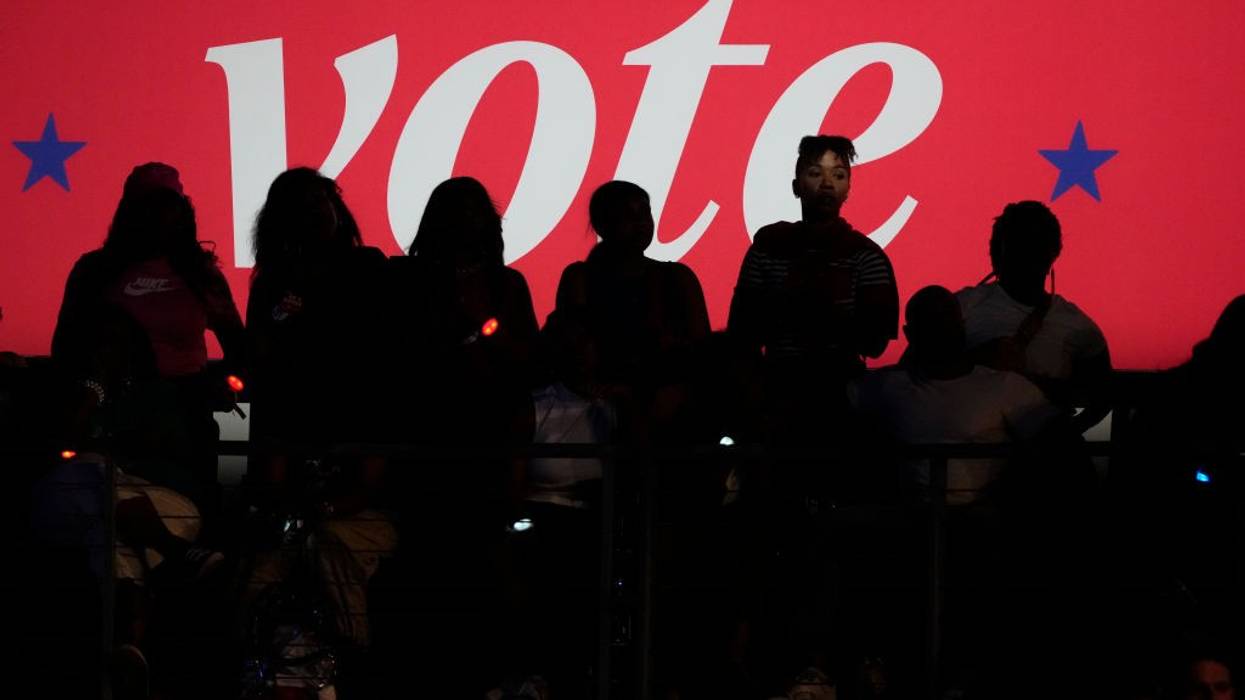
While my emotions have been high surrounding the election and the genocide in Gaza, I am finding it important to take a step back and rationally assess my choices on November 5
I’ve crossed paths with Vice President Harris multiple times over the last decade at various phases in her political career. In 2014, I attended a luncheon in Los Angeles featuring then-Attorney General Harris sponsored by Junior State of America, the largest high school student-led organization in the United States, where I served as Southern California State Speaker of the Assembly. In 2019, I saw then-Senator Harris campaign for President in Iowa, where I served as a Field Organizer on the Bernie 2020 presidential campaign in rural areas outside of Iowa City. In 2023, as Climate Campaign Manager at the West Coast-based environmental nonprofit Pacific Environment, I was invited to greet Vice President Harris at LAX following my successful advocacy for the Biden-Harris Administration’s approval of an air quality regulation for California.
Fast forward to the presidential election season of fall 2024, and Kamala Harris is the Democratic Nominee for President going against Republican Nominee Donald Trump. Trump is running on a white Christian nationalist Project 2025 agenda of restructuring the contours of U.S. democratic government to dramatically increase the powers of the executive branch to limit abortion access nationwide, discriminate against transgender people, deport immigrants in mass, surveil Americans’ data without warrants, unleash undue force on First Amendment protestors, and censor critical theory in classrooms.
I am voting for Harris-Walz for the best realistically-possible political conditions for pro-Palestine organizing—and other forms of progressive organizing—in the United States for the next four years.
Harris is the Vice President of an Administration that spent $22.76 billion in arms transfers to Israel between October 7, 2023—September 30, 2024 as Israel’s religious extremist, apartheid government has conducted a full-blown ethnic cleansing campaign of the vulnerable Palestinian refugee population that Israel mass incarcerates within the 160 square mile Gaza Strip. The Biden-Harris Administration has enabled Israel’s Jewish supremacist government to weaponize Israeli suffering caused by Hamas’s October 7 attacks to carry out a systematic genocide of Palestinian non-citizens intergenerationally mass incarcerated in the Gaza Strip and under the control of the Israeli state. The Israeli Defense Forces (IDF) has attacked Gaza with the equivalent force of several nuclear bombs, killing over 40,000 Palestinians and destroying 80% of schools in Gaza, 60% of buildings overall, and 57% of agricultural land. Recently, the American-armed IDF has attacked Lebanon with the stated goal of targeting Hezbollah, leading to mass civilian casualties including the killings of over 1,640 people.
Meanwhile, during this election, I’m a first-year Ph.D. student in Ethnic Studies at UC Berkeley focusing my research on post-World War II U.S.-Israel-Palestine-Iran relations. I’m an Iranian American transgender woman with relatives who live in Iran, including Tehran, where the Israeli military just attacked with the blessing of the Biden-Harris Administration. I’ve also been a volunteer Palestine solidarity activist since 2017 with Students for Justice in Palestine at Yale University, the Democratic Socialists of America’s BDS and Palestine Solidarity Working Group, and other organizations. How do I vote and advance my political interests in and beyond this election?
Some Americans in my position who care about Palestinian, Lebanese, and Iranian dignity, freedom, human rights, and peace and want to make their interests known in this election are opting to vote for third party candidates. They seek a candidate who does not have a track-record of financing Israel’s 76-year-long, Jewish-supremacist military occupation and systematic ethnic cleansing of Palestinians. They seek a candidate that can be trusted with protecting human life during this moment of global crisis that the Biden-Harris Administration’s reckless decision-making has worsened.
I’m highly sympathetic to these Americans and I even voted third party in the presidential primaries. That said, for the presidential general election, I respectfully disagree with voting third party most especially in swing states. I will be voting for Harris-Walz, even though it’s quite hard to stomach given how Harris has positioned herself in relation to Israel-Palestine and Iran over the course of her career, in her Vice Presidency, and in this election. I am voting this way not out of an overabundance of enthusiasm for Harris, but due to a realpolitik calculation of what is necessary to defeat Trump and prevent our global crisis from getting even worse.
The reality is that most Americans think of politics through the lens of the two-party system. This, I believe is a flaw in our democracy that prohibits creativity, but it is a current reality. The project of strengthening additional parties to be able to compete in presidential elections is noble, but it is going to more time than we have available before November 5, 2024. Third party presidential candidates are not realistically going to win enough electoral college votes to secure the presidency. This means our two realistic choices for our next President are Harris and Trump. A pro-Palestine voter’s vote for a third party candidate in a swing state may thus inadvertently help Trump win that state and ultimately the Presidency.
I am voting this way not out of an overabundance of enthusiasm for Harris, but due to a realpolitik calculation of what is necessary to defeat Trump and prevent our global crisis from getting even worse.
While the Biden-Harris Administration’s management of this moment of global crisis has been nothing short of abhorrent, a Trump-Vance Administration would be materially worse. In addition to campaigning on cracking down on rights of transgender people and women domestically, denying climate change and opposing climate action, and revoking the visas of pro-Palestine international students at U.S. universities, Trump believes in an unqualified Israeli offensive on Palestine, Lebanon, and Iran. He told Netanyahu in response to Iran’s missile attack on Israel an unrestricted “do what you have to do,” and has explicitly stated that Biden has gotten in the way of Israel’s war. Meanwhile, while the Biden-Harris Administration has armed Israel in its war, it has recently threatened to stop the flow of arms to Israel, openly criticized Netanyahu’s tactics in the war, and pressured Israel into narrowing its attack on Iran to targeted non-nuclear military sites. As an Iranian American with family in Iran, I worry for the possibilities that could arise with someone as unstable as Donald Trump as Commander-in-Chief of the United States Armed Forces during this moment of global crisis. Trump should be nowhere near in charge of American nuclear weaponry in a time as fragile as this.
That said, my political action is not confined to my vote. Just as important as voting is organizing. I am voting for Harris-Walz for the best realistically-possible political conditions for pro-Palestine organizing—and other forms of progressive organizing—in the United States for the next four years. I see my vote as a prayer for the possibility of a shift toward a U.S.-policy of peace, justice, reparations, democracy, freedom, and equality in the Middle East against the current status quo of institutionalized supremacy and political violence—possible only with good political conditions and good organizing. Trump, an open white nationalist and warmonger with a wide religious fundamentalist following, as President would foreclose many possibilities for peace in Israel-Palestine. Harris at least represents more of a multiracial coalition and speaks the language of pluralism. Between these options, there is more political room under a potential Harris presidency to organize for advancing a pro-Palestinian, pro-human political agenda.
While my emotions have been high surrounding the election and the genocide in Gaza, I am finding it important to take a step back and rationally assess my choices on November 5 in the context of this moment of global crisis. It’s clear—even if hard to stomach —that Harris-Walz is the best realistic choice.
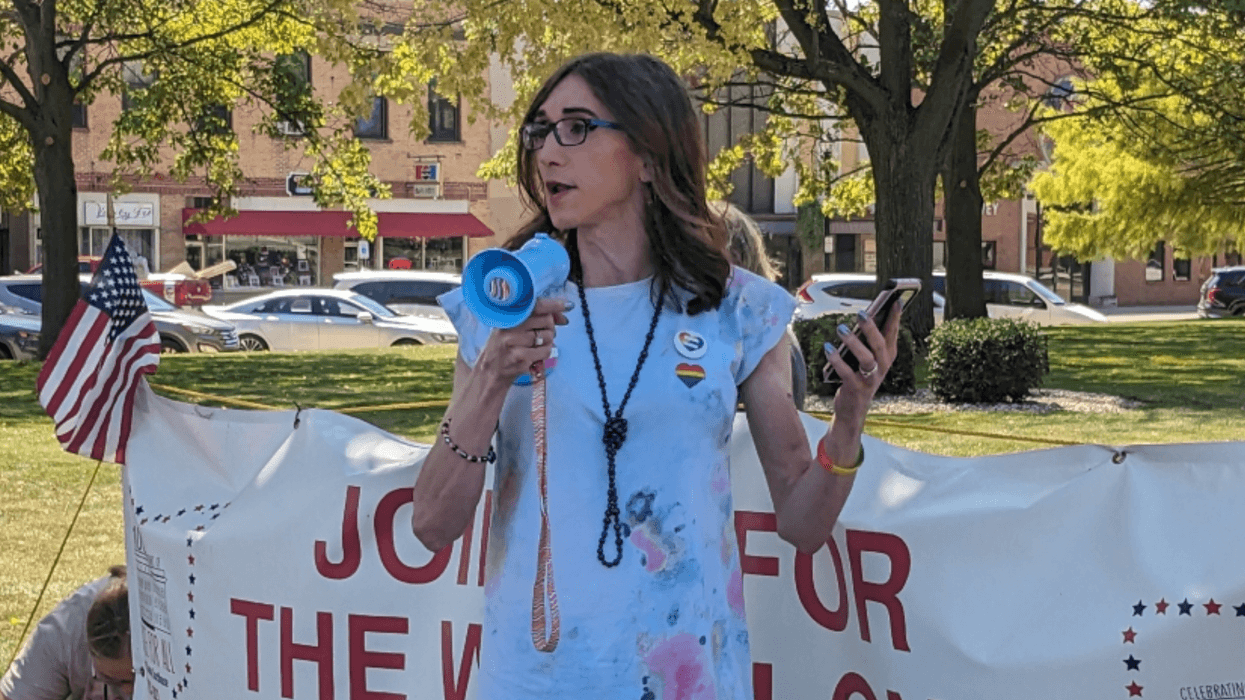
"This effort to remove trans candidates, due to an obscure law, comes at a time when the General Assembly has ramped up efforts to use their role in government to wage an outright attack on the LGBTQ+ community," said Arienne Childrey.
Days after a transgender woman's campaign for a state House seat in Ohio was abruptly ended over her failure to include the name given to her at birth on her election paperwork, a Republican leader in the state was aiming on Friday to disqualify Arienne Childrey, another transgender candidate.
The chair of the Mercer County Republican Party, Robert Hibner, submitted a letter of protest to local election officials late last week, alleging that Childrey violated a 1995 statute requiring all candidates to include on candidacy petitions any other names they have used within five years of the election.
Childrey, a Democrat, said in a statement that "the name change provision is not included in the Candidate Guide issued by the secretary of state's office, nor any of the other paperwork or forms," and noted that the recent disqualification of state House candidate Vanessa Joy and her own campaign's potential end comes as Republicans in Ohio and across the U.S. are pushing anti-LGBTQ+ legislation.
"This effort to remove trans candidates, due to an obscure law, comes at a time when the General Assembly has ramped up efforts to use their role in government to wage an outright attack on the LGBTQ+ community," said Childrey.
According to The Guardian, the 1995 law includes an exception for people who change their name due to marriage, but not one for transgender candidates' deadnames—the names they're given at birth which don't match their gender identity.
Mercer County election officials deemed Hibner's challenge to Childrey invalid this week because state rules require letters of protest to be filed by members of the candidate's party. The county's assistant prosecutor told local reporters on Tuesday that the board can still proceed with a hearing on Childrey's candidacy, which is scheduled for January 18.
"I entered this race to fight for the people of the 84th District and to fight against the rising tide of hatred in our district and our state," said Childrey. "Regardless of the outcome of this hearing, I will continue that fight."
Childrey began her campaign to challenge state Rep. Angela King (R-84), who last year introduced a bill to ban drag performances in public spaces.
On Wednesday, a day after Joy lost her appeal regarding her own candidacy to the Stark County Board of Elections, the GOP-controlled state House voted to override Republican Gov. Mike DeWine's veto of a bill to restrict transgender youths' participation in team sports and ban puberty blockers and other gender-affirming healthcare.
"The transgender community in the United States of America is currently in the midst of a state-sponsored genocide, brought on by the Republican Party," said Joy on Wednesday. "We are currently in stages 8 (persecution) and 9 (extermination) of the genocide of the transgender community. The persecution portion is the incredible amount of legislation being passed to take away our rights, and the extermination portion is the fact that in the states that these laws have passed, deaths will rise within the community."
"Ohio is no exception, and in fact is becoming one of the most dangerous places in the country for transgender people to live," said Joy.
The ACLU tracked 510 anti-LGBTQ+ bills that were introduced, advanced, or passed in 2023, including seven in Ohio. Restrictions on gender-affirming healthcare account for 175 of the bills.
A study out of the University of Washington in 2022 found a 73% decrease in depression and suicidal ideation when transgender people can access gender-affirming treatment.
On Monday, the Mercer County Democratic Party passed a resolution opposing Hibner's complaint over Childrey's candidacy.
"Mr. Hibner's protest is nothing but a hateful attempt to further discriminate against a community not meeting the GOP definition of 'normal'—a radical approach to alienate qualified candidates and stifle the will of the voters," said Don Holtvoigt, vice chair of the party. "The radical right should cease and desist in their efforts to divide our community."