

SUBSCRIBE TO OUR FREE NEWSLETTER
Daily news & progressive opinion—funded by the people, not the corporations—delivered straight to your inbox.
5
#000000
#FFFFFF
To donate by check, phone, or other method, see our More Ways to Give page.
Daily news & progressive opinion—funded by the people, not the corporations—delivered straight to your inbox.

"We need serious public debate and democratic oversight over this enormously consequential issue," said the senator. "The time for action is now."
Although Denver Mayor Mike Johnston is a vocal supporter of artificial intelligence and has pushed to adopt AI-driven products to power the city's infrastructure, he joined City Council members on Monday in announcing a moratorium on the construction of massive AI data centers—the latest sign, said US Sen. Bernie Sanders, that the push to stop corporations from building the energy-guzzling, pollution-causing facilities is not "radical, fringe, and Luddite" as some claim.
Johnston, a Democrat, and other local officials across the country who are pushing to block the construction of data centers "are right," said Sanders (I-Vt.). "Data centers will have a profound impact on land and water use, and will drive up electricity costs."
As grassroots community groups and experts have warned, AI will also "likely have a catastrophic impact on the lives of working-class Americans, eliminating tens of millions of blue- and white-collar jobs in every sector of our economy," said the senator, who proposed a nationwide moratorium on AI data centers in December.
He renewed that call after Johnston and the Denver City Council announced the city would halt any plans for new data centers for at least several months and would require projects that are already permitted or under construction to follow new guidelines once they're finalized by local officials.
"We need a federal moratorium on AI data centers," said Sanders.
Johnston said in a statement that he believes "data centers power the technology we depend upon and strengthen our economy," but stressed that "as this industry evolves, so must our policies."
"This pause allows us to put clear and consistent guardrails in place while protecting our most precious resources and preserving our quality of life," said the mayor.
The city plans to review regulations for data centers that would target “responsible land, energy, and water use as well as zoning and affordability for ratepayers.”
Soaring electricity bills across the country have been linked to the build-out of data centers, which have cropped up as President Donald Trump has pushed to preempt state and local regulations on AI. As CNBC reported last year, residential utility bills rose 6% in August nationwide, but much higher price hikes were reported in states with high concentrations of data centers, like Virginia (13%) and Illinois (16%).
Sanders' office issued a report last October showing that AI, automation, and robotics could replace nearly 100 million jobs over the next decade, including 40% of registered nurses, 47% of truck drivers, 64% of accountants, and 89% of fast food workers.
And a study published in Nature Sustainability last year found that data centers could consume as much water as 10 million Americans and emit as much carbon dioxide as 10 million cars.
At a forum last week at Stanford University, Sanders joined Rep. Ro Khanna (D-Calif.) in warning that the expansion of AI data centers is meant to increase the wealth of billionaire tech moguls with no regard for how working Americans are affected.
“The question that we should be asking day after day… is who is pushing this revolution, who benefits from it, and who gets hurt?” Sanderss said.
In Denver, the moratorium was announced ahead of a planned community meeting scheduled for Tuesday evening at Geotech Environmental, where neighbors are planning to speak out against the 170,000-square foot DE3 data center being built in the Globeville-Elyria-Swansea (GES) area by the Denver-based company CoreSite.
The burden that will be placed on locals if the project is completed "is not accidental," reads a petition by the local grassroots community organization GES Coalition. “It is the outcome of colonial dispossession and extraction, then decades of zoning, redlining, highway construction, and industrial siting that concentrated pollution next to working-class homes alongside the legacy of the Vasquez Boulevard/I-70 Superfund site, a 4.5-square-mile smelting contamination footprint affecting multiple neighborhoods."
Meanwhile, state legislators have introduced at least two bills regarding AI data center development. One, House Bill 1030, would offer sales and use tax exemptions for data center builders—and would slash state general fund revenue while also triggering a $106 million reduction in tax credits for low-income households.
Another, Senate Bill 102, would require data centers to use renewable energy sources and ensure their energy use does not raise rates for consumers.
Grassroots efforts to block the construction of data centers have taken off in places including Saline, Michigan; Port Washington, Wisconsin; and Tucson, Arizona, where community members successfully blocked plans for a new center owned by Amazon.
State lawmakers in Maine, South Dakota, and Oklahoma are also considering moratoriums or limits on new data centers.
"We need serious public debate and democratic oversight over this enormously consequential issue," said Sanders. "The time for action is now."

"The district has made clear it will not fold quietly, signaling that some institutions still have the resolve to stand against a federal campaign of erasure," wrote one LGBTQ+ rights journalist.
As educational institutions around the country capitulate, Denver's public school system said Tuesday that it would defy demands from the Trump administration to discriminate against transgender students even if it means losing federal funds.
Alex Marrero, the superintendent of Denver Public Schools (DPS), said the school "will protect all of their students from this hostile administration," by refusing to implement a ban on gender-neutral bathrooms mandated by Trump's Department of Education.
On Thursday, the department's Office for Civil Rights (OCR) sent Denver Public Schools an email demanding that the school remove a multi-stall, gender-neutral restroom at one of its high schools, which it claimed violated Title IX of the Civil Rights Act.
As Erin Reed, an independent journalist who covers LGBTQ+ rights, notes, the facility built by DPS and other schools is "similar to facilities in major airports, European cities, and increasingly across the United States." The school, meanwhile, has said that the facility was requested by students themselves and has 12-foot high partitions to protect their privacy.
The OCR went further. To be compliant with Title IX, it said, the school also had to "adopt biology-based definitions for the words 'male' and 'female'," meaning they needed to classify transgender students by their biological sex at birth rather than their preferred identities, including banning them from restrooms that do not correspond to their biological sex.
The Trump administration also called on the school to eliminate components of its "LGBTQ+ Toolkit," which includes guidance on how students and faculty can create a welcoming environment for their trans peers. Among other things, the document encourages members of the school community to step in to stop bullying of LGBTQ+ students, respect the preferred pronouns of all students, and for faculty to enforce dress codes in a gender-neutral way.
As Reed put it, the department was effectively "claiming that Title IX actually mandates discrimination against transgender students."
If DPS refused to comply within 10 days, the department threatened to strip the district of federal funding, which makes up 7% of the school's annual budget, according to Chalkbeat. A large portion of that federal money goes toward low-cost school lunches for poor children.
In a statement issued Tuesday, DPS's school board and administration put out a statement "disagreeing unequivocally" with the government's interpretation of the law.
"Title IX permits schools to provide sex-separate restrooms. It does not require that to be the only option," DPS argued. "The interpretation put forward by OCR would undercut our equity commitments, contradict our mission, harm the very students we are entrusted to support, and would have a devastating impact on East High School and the broader LGBTQ+ community. What matters most is that students are safe, have privacy, and can learn without fear."
"The decision to implement gender-neutral restrooms at East followed direct feedback from LGBTQ+ students who reported they did not feel safe," the statement continued. "For these students, access to a restroom where they feel secure is not symbolic. It is about dignity, health, and the ability to learn. When students speak, we listen and we act."
Superintendent Marrero, meanwhile, put out a short video on Instagram expressing his support for the district's LGBTQ+ students.
"As you might have seen in the news, the federal government has decided to take a firm stance and have us roll back our support to the LGBTQ+ community, and of course, we're not having it," Marrero said. "We will continue to stand in solidarity, and as you engage this weekend and beyond, I just wanted to let you know that we got you, and everything is going to be ok."
In a statement published alongside the video, Marrero wrote: "We will fight. In the courts, if we must. In the public square, when necessary. Always in partnership with those who believe that every student deserves to show up to school ready to learn, free from fear."
With this pledge to stand by its LGBTQ+ students, DPS joined five school districts in Virginia that last month responded with similar defiance when the Trump administration ordered them to stop allowing trans students to use bathrooms matching their gender. Those districts—which include Loudoun, Arlington, and Fairfax Counties—have launched a lawsuit against the Trump administration to keep their federal funding.
"Elite institutions like Brown, Columbia, and Penn—as well as multiple hospitals serving transgender youth—have already capitulated, signing away protections through bathroom and sports bans or cutting off medical care entirely," Reed wrote. "Denver Public Schools, by contrast, has drawn a line. With the Department of Education's deadline looming next Monday, the district has made clear it will not fold quietly, signaling that some institutions still have the resolve to stand against a federal campaign of erasure."
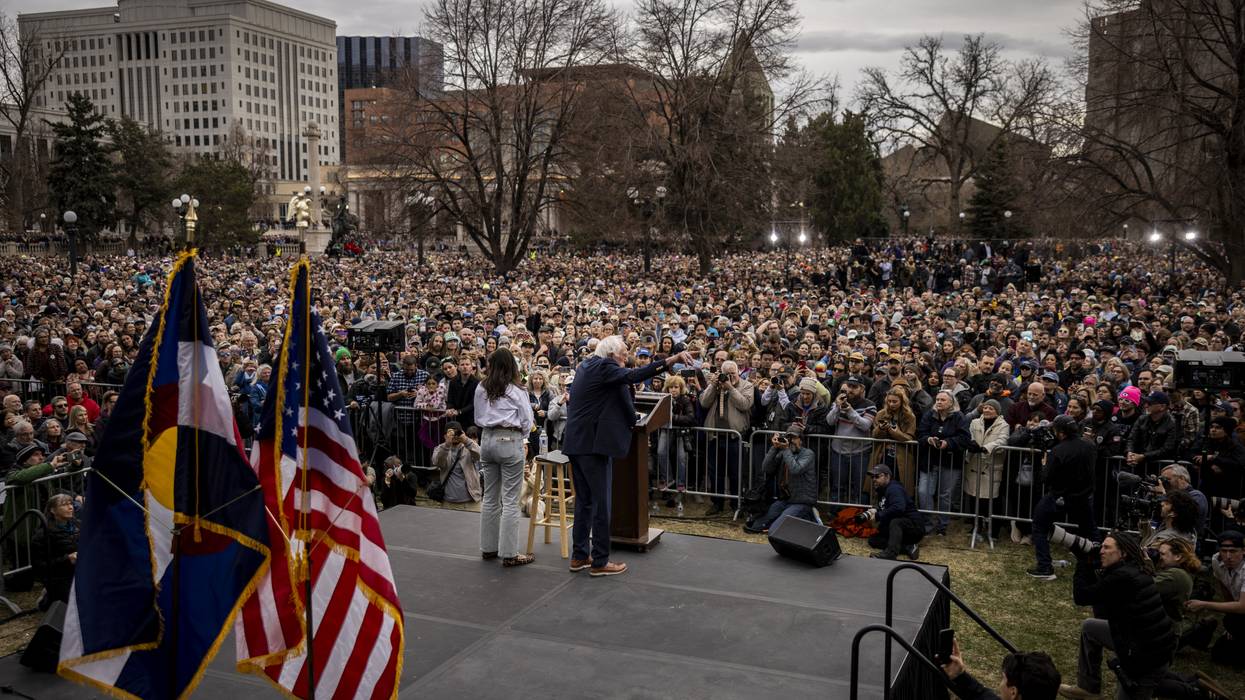
"The American people will not allow Trump to move us into oligarchy and authoritarianism. We will fight back. We will win," said Sanders.
On the heels of record-breaking attendance at a "Fighting Oligarchy" event in Tempe, Arizona earlier this week, Sen. Bernie Sanders of Vermont and Rep. Alexandria Ocasio-Cortez of New York held a rally in Denver, Colorado on Friday evening that drew more than 34,000 people—making it largest event that Sanders or Ocasio-Cortez have ever held.
Sanders, an Independent, wrote on social media on Friday that the turnout is a sign that "the American people will not allow Trump to move us into oligarchy and authoritarianism. We will fight back. We will win."
According to Anna Bahr, Sanders' communications director, the senator's largest rally prior to Denver took place in Brooklyn, New York in 2016, when he was running for president.
Ocasio-Cortez, a Democrat, wrote online that "something special is happening... Working people are ready to stand together and fight for our democracy. Thank you Colorado!"
At the rally, which took place at Denver's Civic Center Park, the two lawmakers hit on the same themes they spoke about in Arizona.
"The American people are saying loud and clear, we will not accept an oligarchic form of society," Sanders said, according to Colorado Public Radio. "We will not accept the richest guy in the world running all over Washington, making cuts to the Social Security Administration, cuts to the Veterans Administration, almost destroying the Department of Education—all so that they could give over a trillion dollars in tax breaks to the wealthiest 1%."
"If you don't know your neighbor, it's easier to turn on them," said Ocasio-Cortez, per CPR. "That's why they want to keep us separated, alone, and apart. Scrolling on our phones thinking that the person next to us is some kind of enemy, but they're not."
Sanders launched his "Fighting Oligarchy: Where We Go From Here" tour in February, with the aim of talking to Americans about the "takeover of the national government by billionaires and large corporations, and the country's move toward authoritarianism."
The series of "Fighting Oligarchy" events have been taking place as some Democrats have gotten an earful at town halls back home, where constituents have come out to implore them to do more to counter efforts by the Trump administration.
Earlier in the day, Ocasio-Cortez and Sanders also held a rally in Greeley, Colorado—which is represented by Republican Gabe Evans in the House of Representatives—which drew more than 11,000 people.
Semafor reporter David Weigel, who attended both the Greely and Denver rally, posted online that at the Greeley rally it wasn't easy to find people in the crowd who had voted for Sanders in the 2020 presidential primary. Weigel also wrote that the Sanders team told him that half of the RSVPs to the rallies were not from the lawmaker's supporter list.
Eric Blanc, an assistant professor the School of Management and Labor Relations at Rutgers University, wrote on Bluesky on Saturday that it is "pretty remarkable how AOC and Bernie have become leaders not just of lefties, but of the Democratic Party's mainstream liberal base."
While its dangerous that "establishment liberals" are yielding to Trump, he wrote, "the silver lining is that this has enabled anti-corporate forces such as labor unions and AOC-Bernie to set the tenor of Resistance 2.0."
"Because today's anti-Trump resistance is more focused on economic concerns, more rooted in labor unions, and more anti-billionaire, it has the potential to sink much deeper roots among working people and, in so doing, to definitively overcome MAGA," wrote Blanc.

"We must take action to protect funding for education in Colorado to ensure that the budget is no longer balanced off the backs of students," the state's largest teachers' union said.
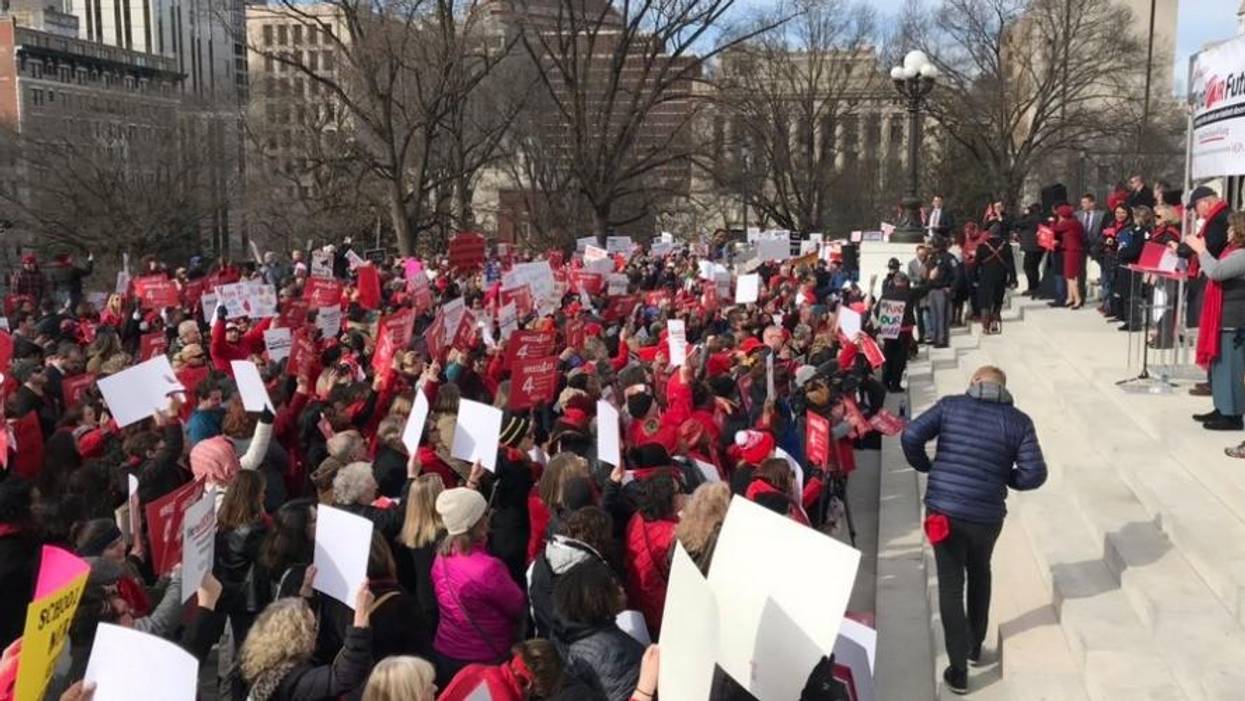
Thousands of teachers and allies rallied at the Colorado State Capitol in Denver Thursday to demand that officials stop diverting money meant for public education to balance the state's budget.
Led by the Colorado Education Association (CEA), the state's largest teachers union, protesters wore crimson T-shirts reading "#RedForEd," a nationwide campaign for quality public education. Demonstrators chanted slogans including, "You left us no choice, we have to use our teacher voice!" and held placards with messages including "No More Cuts" and "Fund the Future."
CEA president Kevin Vick told Chalkbeat Colorado that "we feel like we've done our time. We simply are at our limit and we can't absorb any more losses."
"Districts are operating at such a thin margin that if there is significant losses in revenue at this point, it's going to mean a lot of teachers lost," Vick added. "It's going to mean a lot of schools closing."
Thousands of teachers, parents, students, and educators at the state capitol today asking Governor Polis to properly fund education. Colorado consistently ranks below average on education funding.
[image or embed]
— Allen Cowgill (@allencowgill.bsky.social) March 20, 2025 at 1:01 PM
Rob Gould, president of the Denver Classroom Teacher's Association, told KMGH that "our teachers are tired of always—and every year—balancing the budget on the backs of our students."
Many Colorado school districts canceled classes for the day due to the high number teachers who said they would miss work to attend the protest. The Colorado Sun reported that around two-thirds of schools in Denver, the state's largest district, were closed Thursday.
Rally participants demanded that state lawmakers and Democratic Colorado Gov. Jared Polis preserve education funding jin the face of a $1.2 billion budget shortfall for next fiscal year. This could complicate a promise by Polis and lawmakers to stop using a mechanism called a budget stabilization factor—often derisively dubbed the "B.S. factor"—to divert funding from public schools to cover other budget items. Colorado state lawmakers are now considering allocating less money than promised to school districts in order to address the projected deficit.
Huge crowd of teachers, students and community (including my 1st grade kiddo) rallying at the Colorado State Capitol right now for the statewide day of action to protect public education. It’s time to get rid of TABOR and fully fund our public schools! #coleg #copolitics
[image or embed]
— Lauren Gifford 🌱🌎🌲 (@laurengifford.bsky.social) March 20, 2025 at 11:34 AM
According to Colorado Public Radio:
Last year, state lawmakers voted to fully fund Colorado schools by no longer withholding funding from schools and diverting it to other departments. In January, two studies commissioned by lawmakers concluded that full funding—$9.8 billion this year—isn't enough. The studies said Colorado needs to spend $3.5 billion to $4.1 billion more per year to adequately fund its public schools.
But two months later, it's clear that doing so will be impossible in the short term and could mean asking voters for more money in the long term. A coalition of education advocacy groups say lawmakers' current struggles and the history of K-12 spending in the state illustrate why Colorado needs to discuss a long-term solution to increase revenue for school funding.
"Colorado students and educators are already being asked to do more with less every year—and now lawmakers are considering even more cuts to public education," CEA said in a statement promoting Thursday's rally. "Despite being one of the wealthiest states in the country, Colorado chronically underfunds its public schools by $4,000 to $4,500 per student per year compared to the national average."
"Now, facing a budget shortfall of over $1 billion, we must take action to protect funding for education in Colorado to ensure that the budget is no longer balanced off the backs of students across all four corners of the state," the union added. "Let's be clear: A cut is a cut, and students pay the price."
Thursday's rally came as U.S. President Donald Trump signed an executive order directing Education Secretary Linda McMahon to "take all necessary steps to facilitate the closure of the Department of Education and return education authority to the states."
Joan Marcano, whose two daughters attend a Denver elementary school that was closed for the day, said he backs the protesters.
"I support the teachers," he told KMGH. "These are the people who take care of my daughters every day."
The gentle soul and thoughtful man I know as Councilman Chris Hinds was able to take the moment of personal humiliation and struggle and turn it into a vibrant teachable moment for millions of people.
You may not have seen the news or you may have forgotten all about it by now. Last month, Denver City Councilman and candidate for re-election Chris Hinds was forced to crawl up onto the stage for a scheduled debate or forfeit the matching election funds from the city. The story drew attention not only locally but throughout the country and even globally. Councilman Hinds has used a wheelchair since 2008 when an accident left him paralyzed from the chest down.
Many people have wondered why any person would feel forced or compelled to respond as he did to the barrier presented. I didn’t. Our society remains grossly and intentionally uninformed about what it is like to face physical barriers due to a disability. We passed the Americans With Disabilities Act, the ADA, 29 years ago yet we still build and maintain most buildings and even our cities to accommodate people without physical disabilities. Often, until a property’s owner is confronted by a legal challenge to become ADA compliant, barriers remain unchanged.
I wasn’t in Denver when this week’s barrier-busting occurred. I was sitting in my daughter’s home relaxing on the couch when my daughter asked me if I knew anything about the disabled man she saw crawling on that stage. What? I knew who it had to be when she asked that question. Chris Hinds is the only man in a wheelchair I know who is actively campaigning right now. I pulled up the story, and when I saw and read the piece, I was dumbfounded. I was also angry and horrified. How could a venue known to celebrate the diversity of the Denver community never have needed to accommodate anyone in a wheelchair before? A dancer’s dream, that stage has launched careers and helped break cultural and economic barriers. Yet on that evening, no one had even considered a person in a wheelchair needing access. That was more than an oversight. It had never been necessary for that stage to allow disabled people to dance.
Yet, the gentle soul and thoughtful man I know as Councilman Chris Hinds was able to take the moment of personal humiliation and struggle and turn it into a vibrant teachable moment for millions of people. Undoubtedly, that particular venue will rectify the lack of access to their stage. They have already said so. It remains to be seen if the wider lesson for stages and performance venues everywhere will be truly absorbed and learned. In 2023, it ought not be necessary for any disabled person to point out that need.
Chris said today that sometimes he thinks people view the disabled as "less than" other elected leaders when they advocate for the disability community as if it's the only issue for which they are capable of advocating. Funny thing is, I see Chris as more able than most elected officials to truly understand what makes a community more fully integrated for all its people. Most disabled people understand that being highly competent in as many ways as possible is the only way to be seen and heard over the often unconscious and immediate impact their physical limitations make so obvious to the non-disabled. Even people who consider themselves compassionate can be unaware of the dynamics of their own reactions to those who are disabled.
Disabled men and women are candidates for office like Chris Hinds. More need to run, and more need to be elected. Disabled men and women are also speakers, dancers, painters, sculptors, authors, business leaders, and more. It turns out disabled people are actually complete and full human beings. And until we can actually embrace our diversity, we are all disabled by our prejudice and our arrogance.
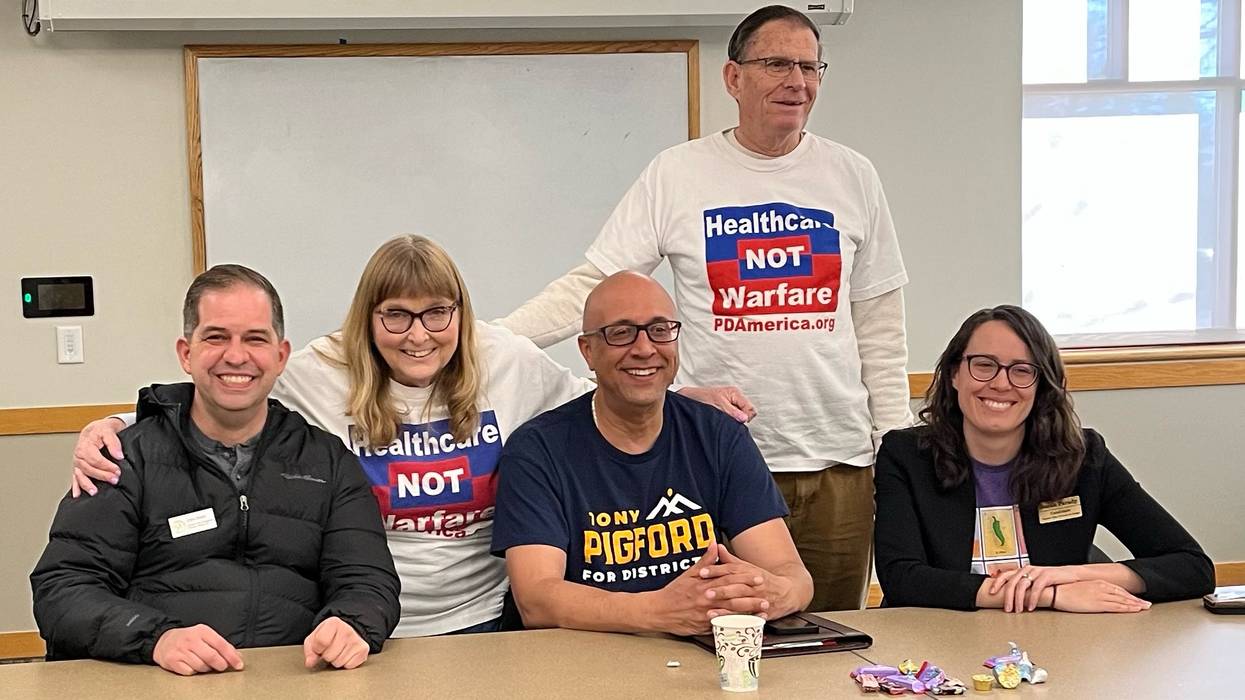
I was at a community meeting this week with Councilman Chris Hinds and candidates Tony Pigford and Sarah Parady. Beforehand I had written a note to Chris, and I read it to him there for everyone to hear:
February 25, 2023
I have had scoliosis since I was in my 20s. It has been progressive, and doctors told us in the 1990s that I would be in a wheel chair by the time I was 55 years old. I have fought with walkers, canes and more for many years to keep myself walking. It hurts. I cannot do the things I used to do. But when I am left to hoist myself into the back of an uber ride in a huge GMC truck as my husband pushes on my ass, I feel humiliated and alone. It’s not very ladylike or even decent to feel like your body won’t do something and therefore you cannot do whatever that thing is.
I was sitting in my daughter’s home when she asked me about a news story she was seeing. She mentioned your name, Chris. I quickly read the story and saw the photo and pounded my own leg with rage. My throat hurt and I was there with you, trying so hard to do the thing I could not do – and I was broken. Then you turned it into something others might learn from. Thank you from the bottom of my heart and the crookedness of my back.
Chris, you are a hero. My hero.
Peace and power... together,
Donna
My hope, my humble ask is that everyone who reads this essay will share it and donate to the effort to make sure these wonderful people are part of making sure every human being in Denver is valued and protected equally. A great city deserves no less. Great people do too.

A federal judge late Friday issued a temporary order barring the Denver Police Department from using projectiles and chemical weapons such as tear gas against peaceful demonstrators, condemning the conduct of some officers against protesters across the nation in recent days as "disgusting."
"The time is past to rely solely on the good faith and discretion of the Denver Police Department and its colleagues from other jurisdictions," wrote Judge R. Brooke Jackson of the U.S. District Court for the District of Colorado in his 11-page order (pdf). "The Denver Police Depart. has failed in its duty to police its own."
"People have an absolute right to demonstrate and protest the actions of governmental officials, including police officers."
--Judge R. Brooke Jackson
The restraining order, which took effect immediately, comes in response to a lawsuit filed on behalf of four Denver protesters who said the use of "pepper spray, pepper balls, rubber bullets, flashbang grenades, and tear gas" by city police during a May 28 demonstration against the killing of George Floyd violated their constitutional rights. Jackson's ruling came just hours after Seattle Mayor Jenny Durkan, a Democrat, imposed a 30-day ban on police use of tear gas, which is banned in warfare.
"If immediate relief is not granted, plaintiffs' speech would be chilled and outright denied over the next several days or weeks of demonstrations," Jackson wrote. "Indeed, irreparable harm has already occurred in the form of physical injury and the suppression of speech."
"People have an absolute right to demonstrate and protest the actions of governmental officials, including police officers," Jackson continued. "It is one of the many freedoms on which this country was built... Citizens should never have to fear peaceful protest on the basis of police retaliation, especially not when protesting that very same police violence."
While Jackson's order was described as "extraordinary" and applauded as a positive step that should be replicated nationwide, it is not without loopholes. As the Colorado Sun reported, Jackson's order allows Denver police to use chemical agents and some projectiles against demonstrators "if an on-scene supervisor at the rank of captain or above specifically authorizes such use of force in response to specific acts of violence or destruction of personal property that the supervisor witnessed."

Two for-profit prison operators lost a combined $10.6 million in contracts after a progressive councilwoman convinced her fellow members of the Denver City Council to end the city's involvement with Core Civic and the GEO Group.
City councilor Candi CdeBaca, who won her seat in June after campaigning on a Democratic Socialist platform, organized community members to speak out Monday against the two companies' contracts with the city, under which they have long operated six halfway houses in Denver.
The companies also run the majority of Immigration and Customs Enforcement's (ICE) immigration detention centers, where children and adults have been subjected to neglect and abuse under the Trump administration and where at least 24 people have died since President Donald Trump took office.
"We've watched these large entities gobble up smaller providers with public dollars and little to no transparency or accountability," CdeBaca told her fellow council members.
As Ryan Grim reported in The Intercept Thursday, CdeBaca called on members of local groups--including the Colorado Criminal Justice Reform Coalition, the ACLU, and Black Lives Matter--to speak at the city council's meeting.
"We've got to quit feeding the beast of for-profit in our criminal justice system," said Denise Maes, policy director for the ACLU of Colorado.
"Will my family end up in one of the GEO and CoreCivic concentration camps that profit off of us?" added community member Alma Urbano, who has DACA status.
After hearing from the advocates, seven of CdeBaca's 12 colleagues joined her in voting to end the contracts.
"I am blown away," CdeBaca told The Colorado Independent. "I have a newfound respect for my colleagues who showed immense courage and determination tonight in one of the most challenging votes possible."
CdeBaca acknowledged that a just transition away from the GEO Group's and CoreCivic's operation of the halfway houses is necessary for the sake of the 500 former inmates who are currently living there. The end of the contacts could mean some of the residents will be sent back to prison while others may be paroled. About 100 inmates who were scheduled to arrive at the halfway houses may now have longer prison stays.
The city should transition toward local control of the halfway houses over a six-to-ten month period, CdeBaca told The Intercept.
"I am very concerned about the 500 beds that we jeopardized by this vote, and I want to see a plan to make sure that we transition out of these contracts in a way that is just for the residents of these facilities," she said.
CdeBaca's success in convincing the Denver City Council to vote against the two companies is a "signal of the [Democratic Socialists of America's] rising influence," Grim wrote, "and the willingness of mainstream politicians to follow the lead of organizers and activists making a stark moral argument."
Others also applauded CdeBaca for leading the city's fight against the for-profit industry and the Trump administration's use of the GEO Group and Core Civic to commit what immigrant rights advocates have decried as human rights abuses, while enriching the two companies.
As Denver public school teachers head back to school, ending their first labor stoppage in 25 years, it's hard to dismiss the impact the nation-wide teacher strikes have had on American politics. As Democratic presidential candidates rush to voice support for the Colorado educators, Denver's strike marks the ninth major teacher uprising in the last twelve months, with the anniversary of the very first--West Virginia's--coming up next week.
Survey after survey has shown the striking teachers have gotten their message across: The majority of Americans agree teacher pay is a real problem. The annual PDK poll reported in September that two-thirds of people say teacher salaries are too low -- a new high in its data since the poll started in 1969. Another national poll released in April found 78 percent of adults think schools don't pay teachers enough, and 52 percent supported those going on strike over wages.
As further evidence of how the teacher protests have shaped the national conversation, the House education committee convened this week for its first hearing on K-12 schools in the new Congress, and the topic of teacher pay was front and center. Republicans and Democrats both agreed that teacher salaries were simply too low.
The House Education and Labor Committee hearing, chaired by Democratic Representative Bobby Scott of Virginia, lasted three and a half hours, and was entitled, "Underpaid Teachers and Crumbling Schools: How Underfunding Public Education Shortchanges America's Students." Topics explored throughout the convening included more than just teacher compensation and school infrastructure. Legislators and witnesses also discussed adequate funding for students with disabilities, turnaround strategies for low-performing schools, and civil rights protections for students who attend private schools.
While lawmakers from both parties agreed public-school teachers are not earning enough money, the two parties had vastly different explanations as to why.
Witness Benjamin Scafidi, an economist and fellow with EdChoice, a national school choice advocacy group, said that while inflation-adjusted spending on public schools increased 37 percent between 1992 and 2016, real teacher salaries declined by one percent in that same period, according to data from the National Center for Education Statistics. Scafidi said this was due to the "tremendous increase" in non-teacher staff working in public schools--referring to a 52 percent jump.
Republicans seemed content to embrace the idea that the teacher salary problem was not due to their failure to fund schools properly, but because of school districts' wasteful hiring decisions.
"It scares me when I hear people in education coming up and asking this completely broken federal government for more money when [states] are running surpluses," said Republican Representative Glenn Grothman of Wisconsin. "Why do people think the federal government should give more money?"
Yet, according to the liberal Center on Budget and Policy Priorities, in 2015, 29 states provided less total school funding per-pupil than they had spent before the recession.
Democrats and some witnesses pushed back on the idea that schools are chock-full of superfluous staff, noting many workers included in this category are bus drivers, cafeteria staff, paraprofessionals, nurses, custodians and special-education aides.
Randi Weingarten, the president of the American Federation of Teachers, testified that the increase in school staff spending also overlapped with the Individuals with Disabilities Act, which was signed into law in 1990. That legislation obligates schools to provide students with disabilities with additional support services. If the federal government did an audit, Weingarten said, "you'd see that most of the non-teacher increase in schools across America was because of the needs in IDEA."
Democratic Representative Joseph Morelle also noted the growing movement to provide wraparound social services in schools, since that is where students spend the bulk of their days and where it can be easier for parents to access. That sort of increased investment in community schools, he suggested, is not wasteful spending.
Some of the hearing was dedicated to discussing the Rebuild America's Schools Act, legislation recently reintroduced by Representative Scott and Democratic Senator Jack Reed. The bill would invest $100 billion in K-12 public school infrastructure, and create an estimated 1.9 million jobs for local workers. Representative Pramila Jayapal, a Democrat from Washington and the co-chair of the Congressional Progressive Caucus, spoke of schools where students and teachers are forced to hold their feet over hot plates to keep warm. Even Representative Ron Wright, a Republican from Texas who voiced skepticism for new spending on education, admitted he never had an air conditioner in his overly warm Texas public schools until he reached high school; he said he'd be open to support air conditioners at least for Texas schools.
One 2016 report on national school infrastructure needs estimated it would cost roughly $145 billion annually to maintain and modernize school buildings to the point where all were in safe condition. While federal spending accounts for about 10 percent of school operating budgets, the feds currently spend virtually nothing on school infrastructure. The bulk of those facility costs fall on local governments, which results in a system where wealthier communities can afford to have nicer school buildings, and can more easily make necessary building repairs.
At the hearing, Chairman Scott noted his school infrastructure legislation would create more jobs than the Republican tax bill did, and at 5 percent of the cost. The last time Congress came close to authorizing federal school infrastructure spending was in 2009 as part of the stimulus bill. But Senator Susan Collins, a Maine Republican, said she wouldn't support Scott's legislation, arguing that school facilities should remain exclusively a local responsibility. As a result, communities across the country lost out on billions of dollars to fix their crumbling schools.
The Republican tax bill made two other appearances during Tuesday's hearing. Residents who live in areas with higher state and local tax burdens had previously been able to deduct those costs on their federal taxes, so as to avoid paying twice. But in the legislation President Trump signed in 2017, individuals can now only deduct up to $10,000 in state and local taxes, and freshman Democratic Representative Lauren Underwood noted at the hearing that residents in her home state of Illinois have been very anxious about their skyrocketing tax bills. "We want our money to go to schools, not tax cuts for corporations," she said. Other states feeling the brunt of the new SALT cap are California, New York, Connecticut, and New Jersey.
The second time the GOP tax bill came up was in reference to so-called "Opportunity Zones," which are federal subsidies directed toward investment in distressed areas to supposedly revitalize the areas. Ranking committee member Virginia Foxx, a Republican from North Carolina, said while she'd like to see teachers take home more money, she's not interested in increasing federal investment in school budgets. Noting the expansion Opportunity Zone funding in the new tax bill, Foxx suggested that community development could perhaps somehow lead somehow to increased teacher pay.
"Time will tell if Opportunity Zones and other new initiatives will finally help us solve the problems of teacher pay and poor school facilities, but time has already told us that higher price tags and more bureaucracy in Washington won't deliver results," she said. "The answer is not more money."
As federal lawmakers continue to bicker over how we got to this point, teachers aren't waiting around. Earlier this month, 95 percent of Oakland teachers voted to authorize their own strike, and they too could walk out of their schools within days.

After staging the country's ninth major teachers' strike in the past 12 months, teachers on Thursday scored the latest victory for their students, communities, and profession as they reached a tentative deal with the school district that they say will help combat the city's teacher turnover crisis.
The Denver Classroom Teachers Association (DCTA) this week went on strike for three days, calling for changes to their compensation system which they say has been driving teachers away from the city as wages stagnate and housing grows more expensive.
After an all-night bargaining session, the DCTA and Denver Public Schools announced that they had reached an agreement that would send teachers back to their classrooms as early as Thursday afternoon.
"This agreement is a win, plain and simple: for our students; for our educators; and for our communities," DCTA President Henry Roman said in a statement. "No longer will our students see their education disrupted because their teachers cannot afford to stay in their classrooms."
Local politicians and the National Education Association (NEA) offered congratulations and thanks to the 2,600 educators who had walked out of their classrooms, for standing up for their profession and their students.
After 14 months of negotiations, Denver teachers voted to go on strike for the first time in 25 years, demanding higher base salaries and a more stable compensation system to replace the unpredictable bonuses which have been given out and sometimes taken away from year to year.
The agreement reached early Thursday will give teachers a seven to 11 percent raise, put in place a transparent salary schedule, institute cost-of-living raises, and do away with "exorbitant five-figure bonuses" for school administrators.
"Educators in Denver Public Schools now have a fair, predictable, transparent salary schedule. We're happy to get back to work," Rob Gould, DCTA's lead negotiator, told the Denver Post.
"Teachers will be able to stay in Denver, and we'll be able to keep our experienced educators here for our students," he told CNN.
As New York Times reporter Dana Goldstein wrote on social media, the Denver teachers's strike is part of a nationwide "social movement"--with similar walkouts having taken place in Los Angeles, Oklahoma, Kentucky, and Arizona in the past year.
In Oakland, California, teachers voted to authorize their own strike earlier this month. An independent fact finder is currently conducting an assessment of the district, with a potential walkout beginning after this week.
Oakland teachers also say low wages have caused difficulties with recruiting and retaining qualified teachers. Educators there earn just $46,500 to start and an average of about $63,000--in a city with the nation's fourth-highest cost of living.
The Oakland Education Association's (OEA) decision to strike sent "a clear message that our members are ready to fight for the schools our students deserve," union president Keith Brown told the San Francisco Chronicle. "This powerful vote is a mandate for smaller class size, more student support, a living wage, and it is a mandate to keep our neighborhood schools open."
As Denver teachers fought for their own students and schools this week, they also showed solidarity with Oakland teachers.

Taking their place among a national awakening of public school educators demanding better treatment of their profession and better schools for their students, thousands of teachers went on strike Monday after 15 months of negotiations stalled.
"In the richest country in the world, our teachers should be the best-paid, not among the worst-paid. I stand with Denver teachers. We must invest in public education because our students and teachers deserve better."
--Sen. Bernie Sanders (I-Vt.)
The walkout is the district's first in about 25 years, with teachers decrying their chronically low pay resulting from an incentive-driven compensation system, and the suffering it inflicts on Denver's 71,000 students.
"We will strike Monday for our students and for our profession, and perhaps then DPS will get the message and return to the bargaining table with a serious proposal aimed at solving the teacher turnover crisis in Denver," said Henry Roman, president of the Denver Classroom Teachers Association (DCTA), in a statement Saturday, after the union rejected Denver Public Schools' latest offer to reform compensation.
Outside the district's schools on Monday, many students braved the cold to join their teachers in demanding fair pay. Demonstrators carried signs reading "On strike for our students" and "I'd rather be teaching but I can't afford it." Many chanted, "What do we want, fair pay! When do we want it? Now!"
The main issue teachers are striking over is a compensation system which they say favors giving out incentives over base pay, making it hard for the district to attract and retain qualified educators. More than 30 percent of Denver teachers have been in the district for three years or less, according to DCTA.
Under the compensation system, teachers are given financial incentives to teach hard-to-staff subject areas and schools. This keeps base pay at an average of $43,255 per year, according to USA Today--an amount that makes it hard for many to make ends meet in Denver.
"Over the years," education reporter Jenny Brundin said on NPR's "Morning Edition" Monday, the system "became really complicated and unpredictable. Some of the incentives would suddenly disappear or shrink. And teachers say that makes it really hard to plan or even pay rent."
CNN shared stories on Monday of the struggles of some Denver teachers, including a physical education teacher who drives a Lyft on off-hours to cover his bills, a Spanish teacher who hasn't made enough in nine years of teaching to start a savings account, and two teachers who are considering leaving the field because they can't afford to live on their paltry salaries.
"We're not asking for a million dollars," gym teacher Sean Bowers told CNN. "We're asking for an extra $200 to $300 per paycheck so that I can save up so that I can buy a house and live in my community and not jump from house to house."
Over the weekend, the DCTA rejected DPS's offer of more funding for base salaries, as the plan kept incentives in place and "lacked transparency," according to the union.
"We are incredibly disappointed that on the last day of bargaining and less than two days before a strike, they doubled down on one-time incentives teachers do not want, and the data shows do not work to keep teachers in their schools," said Roman. "The bizarre proposal proves what we have said during this entire process, that DPS is not interested in listening to the concerns and needs of its teachers and special service providers."
Last month, DPS superintendent Susana Cordova came under fire for approaching furloughed federal workers to entice them with paid substitute teacher jobs in the event of a teacher strike, as 800,000 government employees languished without paychecks during the 35-day government shutdown. One local union official denounced the move as "union-busting."
On social media, some local substitute teachers indicated that they would refuse to cross the picket line.
Also on social media, progressive politicians including Sen. Bernie Sanders (I-Vt.) and Colorado state Rep. Emily Sirota pledged their support for DCTA--with Sirota posting a video from a picket line where she had joined teachers Monday morning.