

SUBSCRIBE TO OUR FREE NEWSLETTER
Daily news & progressive opinion—funded by the people, not the corporations—delivered straight to your inbox.
5
#000000
#FFFFFF
To donate by check, phone, or other method, see our More Ways to Give page.
Daily news & progressive opinion—funded by the people, not the corporations—delivered straight to your inbox.

"A Trump-led deployment of federalized guard and active-duty troops to quell a fabricated insurrection inside American cities should only be understood as war on the American people," said one observer.
President Donald Trump on Monday said he was open to invoking the Insurrection Act to put down future civil unrest in US cities, drawing sharp condemnation from legal experts and other critics, some of whom accused the president of trying to foment disorder that would justify his authoritarian actions.
Speaking to reporters in the Oval Office about his deployment of federal forces to Portland, Oregon a day after a federal judge blocked his move to send hundreds of National Guard troops to the peaceful city, Trump said that he did not believe it was necessary to invoke the Insurrection Act yet, but "if I had to enact it, I'd do it, if people were being killed and courts were holding us up, or governors or mayors were holding us up."
Courts, governors, and mayors have all resisted Trump's efforts to invade Democrat-controlled cities under the pretext of combating crime and unauthorized immigration.
"You look at what's happening with Portland over the years, it's a burning hellhole," Trump baselessly claimed. "And then you have a judge that lost her way that tries to pretend that there's no problem."
Trump was referring to US District Judge Karin Immergut—whom he appointed during his first term—after she found that his reasoning regarding his administration's response to protests at a US Immigration and Customs Enforcement (ICE) facility in Portland were "untethered to facts."
The Insurrection Act of 1807 is a federal law that allows the president to deploy the US military domestically or federalize state National Guard troops to put down any unrest the White House deems to be an uprising.
Trump said Monday that he believes there is a "criminal insurrection" in Portland.
Trump is now threatening to invoke the Insurrection Act to bully courts into letting his illegal military occupations proceed unchecked by rule of law.Inventing a fake crisis wholesale to bulldoze what's left of constitutional restraints: Unhinged despotism.Okay, then. Make him invoke it.
[image or embed]
— Greg Sargent (@gregsargent.bsky.social) October 6, 2025 at 2:57 PM
White House Deputy Chief of Staff Stephen Miller also contended Monday that there is a "legal insurrection" being committed by judges who rule against the Trump administration. Miller said these judges are attacking "the laws and Constitution of the United States"
Some social media users pointed out that Trump was impeached for a second time for his role in inciting the January 6, 2021 insurrection at the US Capitol.
Defense Secretary Pete Hegseth on Sunday sent a memo to Democratic Oregon Gov. Tina Kotek announcing the administration's federalization of 200 National Guard troops "to protect US Immigration and Customs Enforcement and other US government personnel."
The memo cited Trump's deployment earlier this year of 4,000 National Guard troops to Los Angeles—a move that a federal judge ruled was illegal and portends the creation of "a national police force with the president as its chief."
Kotek responded to the memo by noting that "there is no insurrection in Portland. No threat to national security. No fires, no bombs, no fatalities due to civil unrest. The only threat we face is to our democracy—and it is being led by President Donald Trump."
"The only threat we face is to our democracy—and it is being led by President Donald Trump."
According to The Washington Post, approximately 100 California National Guard troops were sent to Portland after midnight Sunday and around 100 more arrived later in the day. Local leaders and residents said there is no reason for the invasion.
As the Post reported:
Residents of Portland responded to Trump's description of their city with a mix of indignation and bemusement. "WarRavagedPortland" quickly became a popular social media hashtag on photos and video showing bustling farmers markets, peaceful parks, and sparkling vistas of the Willamette River.
Trump's remarks followed his speech to hundreds of US generals and admirals last week, in which he declared that the country is "under invasion from within" and that the military leaders should use American cities as "training grounds" to target domestic "enemies."
The president's remarks drew warnings of encroaching fascism as his administration expands its invasion and occupation of US communities, from Washington, DC to Chicago to Portland. On Saturday, Sen. Jeff Merkley (D-Ore.) asserted that "Trump's troops are deliberately attacking peaceful protesters to incite violence."
A core principle of this nation is that the military should not be asked to turn its weapons against fellow Americans. We cannot allow this unprecedented militarization of American cities to become normalized. Read: wapo.st/4mQhNHq
[image or embed]
— Brennan Center (@brennancenter.org) October 6, 2025 at 12:44 PM
Writing for Just Security, former US Navy Undersecretary Janine Davidson argued Monday that Trump's recent designation of left-wing protesters as "insurrectionists" had "crossed a clear red line in civil-military relations."
"It is the Insurrection Act he seems keen to invoke, which would give him dictatorial-like powers like we've never seen used before in this country—not even in the Civil War," Davidson said of Trump. "The Civil War was a war between states with militaries fighting on battlefields. A Trump-led deployment of federalized guard and active-duty troops to quell a fabricated insurrection inside American cities should only be understood as war on the American people."
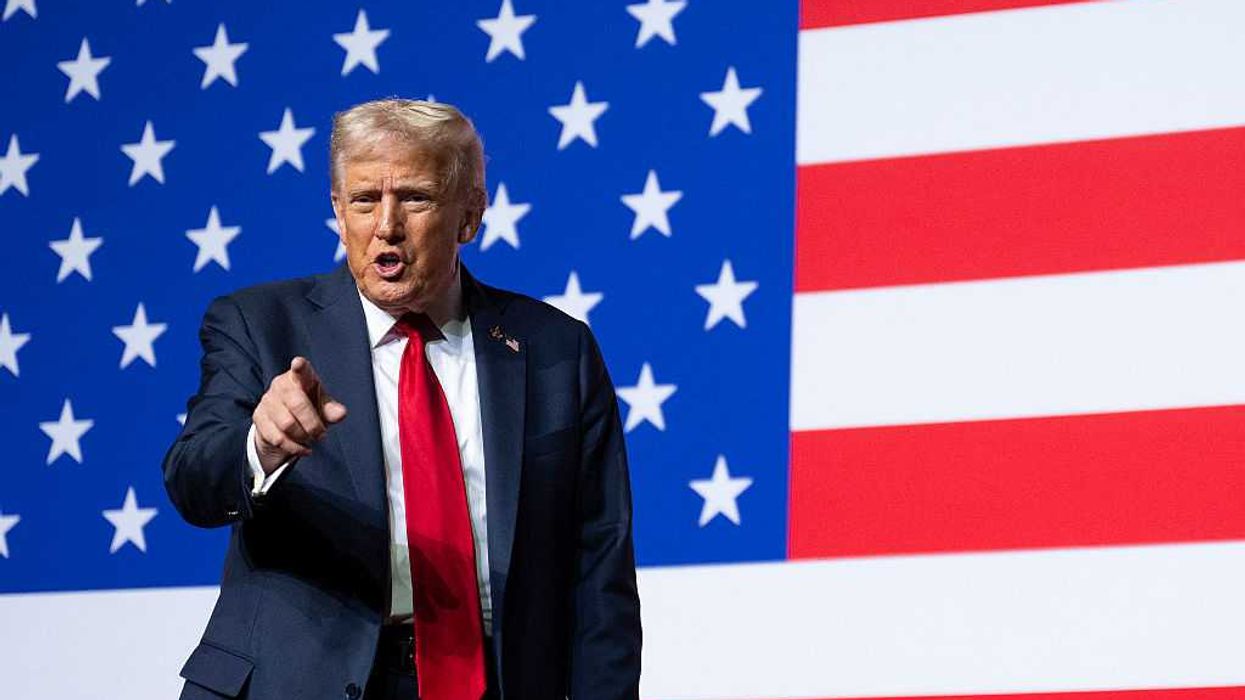
"Wake up, people, the US is fast approaching a point of no return," warned one critic, who said the president's alarming rhetoric "comes right out of the fascism playbook."
President Donald Trump told hundreds of senior military commanders Tuesday that the country is "under invasion from within" and that they should use American cities as "training grounds" to target domestic "enemies"—remarks that drew warnings of encroaching fascism as the president expands his invasion and occupation of US communities.
Speaking to nearly 800 US generals and admirals stationed around the world who were summoned to Quantico, Virginia by Defense Secretary Pete Hegseth for a highly unusual assembly, Trump told military leaders they would be used against the American people.
"They're vicious people that we have to fight," the president said, referring in this case to critical journalists, whom he called "sleazebags."
(Trump begins speaking at the 1:09:45 mark in the following video)
"Just like you have to fight vicious people, mine are a different kind of vicious," he added.
Trump then said that cities "run by the radical left Democrats... San Francisco, Chicago, New York, Los Angeles" are "very unsafe places, and we're gonna straighten them out one by one."
"And this is gonna be a major part for some of the people in this room," he continued. "This is a war too. It's a war from within."
Referring to Hegseth, Trump said, "and I told Pete, "we should use some of these dangerous cities as training grounds for our military."
Responding to this, Naureen Shah, director of government affairs at the ACLU's Equality Division, told Common Dreams that when Trump said "the enemy within," he meant "those who disagree with him."
"We don't need to spell out how dangerous the president’s message is, but here goes: Military troops must not police us, let alone be used as a tool to suppress the president’s critics," Shah said. "In cities across the country, the president’s federal deployments are already creating conflict where there is none and instilling profound fear in people who are simply trying to live their lives and exercise their constitutional rights. Our country and democracy deserve far better than this."
Trump also said during his Tuesday speech that "only in recent decades did politicians somehow come to believe that our job is to police the far reaches of Kenya and Somalia while America is under invasion from within," a false assertion given centuries of US imperialism and colonization, first in the Americas and then around the globe.
"We’re under invasion from within, no different than a foreign enemy, but more difficult in many ways, because they don’t wear uniforms—at least when they're wearing a uniform you can take them out; these people don't have uniforms," Trump said. "But we are under invasion from within; we're stopping it very quickly."
He then turned his attention to "radical left lunatics, that are brilliant people but dumb as hell when it comes to common sense," falsely accusing the previous administration of opening US borders to Venezuelans after that country's government "emptied its prison population into our country."
In another lie, Trump said that "Washington, DC was the most unsafe, the most dangerous city in the United States of America, and to a large extent, beyond."
The president claimed that "we took out 1,700 career criminals" during his recently launched takeover of DC—almost certainly another false statement given that more than 80% of arrests made in the capital were for misdemeanor offenses, many of them immigration-related.
Trump said US troops are "following in a great and storied military tradition" of presidents who have deployed military forces against "domestic" enemies.
"Today, I want to thank every service member from general to private who's helped secure the nation's capital and make America safe for the American people," he said, adding in another blatant lie that "we haven't had a crime in Washington in so long."
"We're going into Chicago very soon," he said, although Operation Midway Blitz is already underway in the city.
"How about Portland?" he asked, adding in a comment utterly divorced from reality that the laconic Oregon city "looks like a war zone."
Trump ordered troops to invade Portland despite the city ranking 72nd in violent crime in the US, according to FBI data.
In an apparent moment of doubt, Trump asked during a Sunday NBC News interview, "Well wait a minute, am I watching things on television that are different from what’s happening?"
Recounting how Democratic Oregon Gov. Tina Kotek asked Trump to not deploy federal forces to Portland, Trump said during Tuesday's speech that "unless they're playing false tapes, this looked like World War II. Your place is burning down."
Amid small-scale protests in Portland over Trump's authoritarian Immigration and Customs Enforcement (ICE) crackdown, Fox News aired a report conflating video footage from 2020 protests against the police murder of George Floyd with the recent images. Anti-ICE protesters have burned an American flag and set small street fires in Portland, but no structures have been burned down.
Trump also said that any anti-ICE protesters who throw objects at federal vehicles or agents can be met with unlimited force.
"You get out of that car, and you can do whatever the hell you want to do," the president said.
Critics swiftly pushed back on Trump's suggestion of using American cities as military "training grounds."
Congressman Seth Moulton (D-Mass.), a former Marine Corps combat veteran who served multiple tours during the US invasion and occupation of Iraq, said on the social media site X that "today’s speeches by Trump and Hegseth were weak portrayals of 'leadership' by two small, insecure men."
"US cities should never be 'training grounds' for the military," Moulton added. "There is no 'enemy from within.' The reputational and operational damage being done to our military will take years to undo."
The Democratic Association of Secretaries of State said on social media, "This is authoritarian, unconstitutional, and a direct threat to our democracy."
"Today’s speeches by Trump and Hegseth were weak portrayals of 'leadership' by two small, insecure men."
Chris Rilling, a former senior official at the National Oceanic and Atmospheric Administration (NOAA), said on X: "Trump should be impeached for this statement alone. Period."
Some legal experts noted that the Posse Comitatus Act of 1878 prohibits use of the military for domestic law enforcement.
Leaders of the Not Above the Law Coalition—which includes progressive groups such as Public Citizen, MoveOn, and Stand Up America—called Trump's remarks "deeply un-American."
“This dangerous rhetoric delivered during an unprecedented gathering reveals a fundamental misunderstanding of our military's purpose and the people it serves," the coalition co-chairs said. "Make no mistake: This isn't about public safety—it's about turning our own military into a force to be used against Trump’s perceived political opponents or anyone who questions his administration."
“Americans cannot stay silent when our leaders express plans to use our military against us," they added. "We must reject any attempt to normalize this outrageous and unlawful directive.”
Observers abroad also expressed shock at Trump's remarks.
"In Trump’s speech today, Trump mentioned something very dangerous: using US cities (Democrat-run, I bet) as US troops training ground," said José Antonio Salcedo, a professor at University of Porto in Portugal. "This is definitely contrary to the US Constitution."
"It comes right out of the fascism playbook that Project 2025 and its fringe lunatic authors have been advocating and planning," he added. "Wake up, people, the US is fast approaching a point of no return."

Over 5,000 frontline healthcare professionals walked off the job at Providence hospitals and clinics across the Beaver State.
Thousands of Oregon medical caregivers at Providence hospitals launched what organizers are calling the largest healthcare strike in state history Friday as they fight for improved patient care, fair wages, and better working conditions in their new contract.
Around 5,000 nurses, doctors, midwives, and other healthcare professionals began their indefinite strike at 6:00 am local time Friday, Oregon Public Broadcasting reported. Workers walked off the job at Providence hospitals including: St. Vincent Medical Center in Portland, Providence Portland, Providence Willamette Falls in Oregon City, Providence Milwaukie, Providence Hood River, Providence Seaside, Providence Newberg, and Providence Medford. Numerous clinics are also affected.
Striking nurses are seeking higher wages, better nurse-to-patient ratios, more paid time off, and lower out-of-pocket costs on their healthcare plans. Doctors want Providence to cap hospital admissions when patient numbers climb too high.
"We're asking for competitive compensation that reflects the reality of our work, the long hours, the emotional toll, and the ever-growing demands that are placed on us," Oregon Nurses Association (ONA) member Gina Ottinger, a registered nurse, told the Oregon Capital Chronicle on Friday. "We're asking for wages that keep pace with inflation."
Healthcare workers' unions are also asking for employment guarantees should Providence sell off their hospitals. The unions have also flagged contract alignment issues; Providence favors a three-year deal, while workers are seeking two-year agreements.
"This strike could have been avoided," ONA executive director Anne Tan Piazza
said at a Thursday press conference. "We need Providence to stop refusing to negotiate and come back to the table."
In a recent statement explaining the strike, ONA said: "Providence is a $30 billion corporation whose top executives make million-dollar salaries and are too focused on profits and not enough on high-quality patient care. Providence's outgoing CEO made more than $12 million in 2024."
"The corporatization of healthcare has left many Providence employees frustrated and burnt out as they are being told to spend less and less time with patients and more time trying to drive up profits," the union added. "Providence offers their employees healthcare plans that are far worse than other healthcare systems, with some Providence employees having to pay $5,000 out of pocket to receive services at the place they work."
“The corporatization of health care has left many Providence employees frustrated and burnt out as they are being told to spend less ..time with patients and more time trying to drive up profits."5,000 Oregon doctors, RNS & caregivers will be on strike starting Jan 10 www.wweek.com/news/2024/12...
[image or embed]
— Randi Weingarten (@rweingarten.bsky.social) January 5, 2025 at 3:54 PM
Providence officials say the company has made "competitive offers" to hospital bargaining units, "including double-digit pay increases for hospital nurses representing more than $12,000 a year for a typical nurse."
In a Friday statement referencing Oregon's mandatory 10-day strike notice period, Democratic Oregon Gov. Tina Kotek said that "Providence wasted 10 days when they could have been at the table making progress towards a comprehensive resolution of their labor dispute."
"We must take care of the people who take care of Oregonians—all hospital staff deserve a fair contract," she added. "Oregonians are already experiencing disruptions to care. All parties must return to the table immediately to resolve their disagreements so normal operations and care can resume."

"Oregon becomes the first state to ban 'parts pairing,' which let companies like Apple decide when and how you replace parts."
In a move that advocates said will save Oregon residents money while supporting small businesses and reducing waste of electronic devices, Democratic Gov. Tina Kotek on Wednesday signed the Right to Repair Act, a law that passed earlier this month despite Apple's lobbying efforts.
The Public Interest Research Group (PIRG), applauded the signing of the bill, which requires manufacturers to provide Oregonians and small repair businesses with access to the parts, tools, and information needed to fix personal electronics and household appliances.
Manufacturers like Apple frequently require consumers to go to their stores or authorized service providers for repairs, making them expensive for customers and difficult to access for people who live far from the providers.
Charlie Fisher, state director of Oregon PIRG, said the law means Oregon is "moving forward on an innovation even more critical than a new gadget: the right to fix our electronic devices."
"By eliminating manufacturer restrictions, the right to repair will make it easier for Oregonians to keep their personal electronics running," said Fisher. "That will conserve precious natural resources and prevent waste. It's a refreshing alternative to a 'throwaway' system that treats everything as disposable."
The Right to Repair Act, which will go into effect on January 1, 2025, was supported by roughly 100 small businesses that provide repairs across the state, as well as recycling nonprofit organizations.
Apple testified against the bill, saying it opposed a provision against "parts pairing." The practice requires consumers or independent repair businesses to purchase parts from Apple and have them validated by the company.
John Perry, a senior security manager at Apple, told state senators that the provision would "undermine the security, safety, and privacy of Oregonians by forcing device manufacturers to allow the use of parts of unknown origin and consumer devices."
State Rep. Courtney Neron (D-26) cited a letter from the Federal Trade Commission when she told her colleagues that Apple's parts paring requirements "drive up the price that consumers must pay to fix a device and cause consumers to purchase a new device before the end of its useful life."
"Manufacturer repair restrictions also make it more challenging for small repair businesses to compete and contribute to unnecessary e-waste," she said.
Pro-labor media organization More Perfect Union called Kotek's signing of the bill "a major loss for Apple."
"Oregon has a proud history of passing forward thinking policies that help Oregonians steward and respect the resources that go into making the products we use everyday," said Celeste Meiffren-Swango, state director of Environment Oregon, "and we are building on that legacy with the Right to Repair Act."
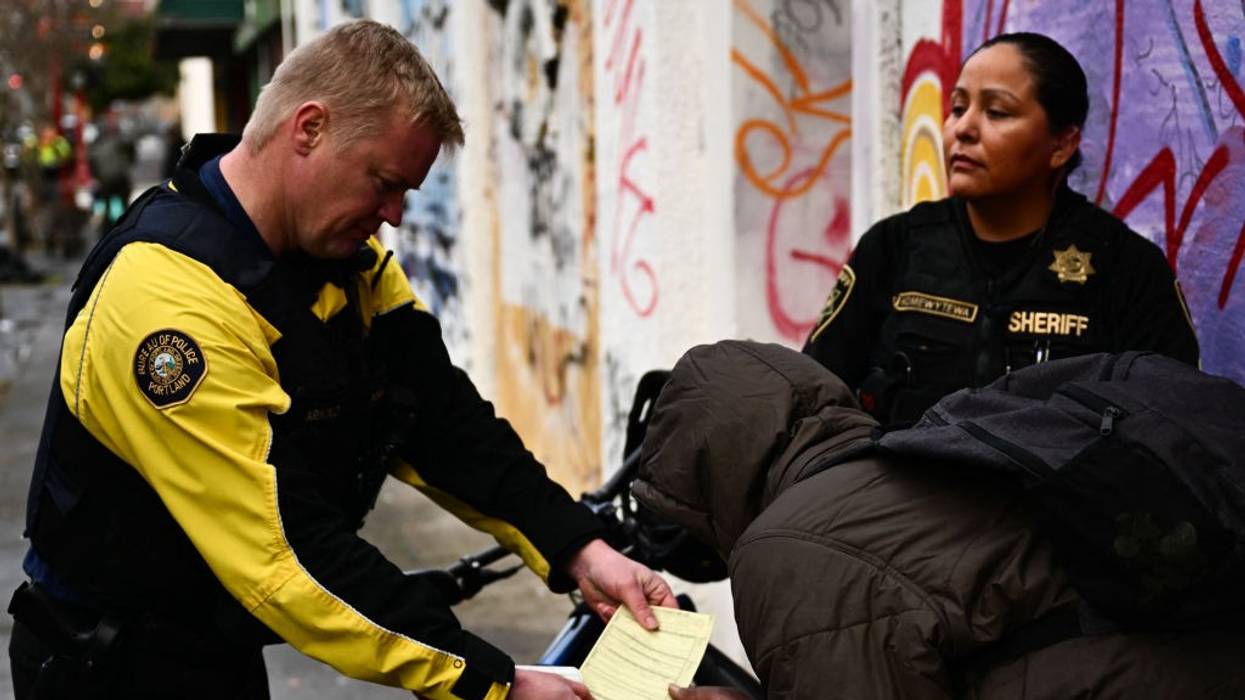
The landmark decriminalization measure passed by state voters in 2020 "now stands as a cautionary tale about the failure to match bold policy reform with competent administration," said one reporter.
The Drug Policy Alliance's leader expressed disappointment on Friday after Democratic Oregon Gov. Tina Kotek confirmed that she plans to sign legislation rolling back the state's historic measure that decriminalized possession of small amounts of all drugs.
"Today is not the end, just a detour. While I am saddened by today's developments, we at the Drug Policy Alliance will continue to advocate fiercely for an evidence-based, health approach to drugs in Oregon and across the United States," said Kassandra Frederique, executive director of the advocacy group, which is part of the Oregonians for Safety and Recovery (OSR) coalition.
"The recriminalization of drugs in Oregon is happening in a difficult national environment where criminal justice reforms at large are under attack by special interests," she added. "As politicians learn that criminalization will not solve—and will worsen—the problems that Oregonians care about, opportunities to establish a true health-based drug policy should emerge. Despite this setback, the movement to replace drug criminalization with care continues. We won't back down until our communities are healthy."
Our ED @Kassandra_Fred responds to Oregon's return to failed drug war policies. Her vision? We actually ensure people get the resources that they need to thrive. Decriminalization of all drugs is a part of that vision - one part of a tapestry of interventions communities need. pic.twitter.com/ih8n87Eepz
— Drug Policy Alliance (@DrugPolicyOrg) March 8, 2024
Oregon voters passed Measure 110, also called the Drug Addiction Treatment and Recovery Act, by a 17% margin in 2020, and it took effect the following February. The state was the first and only in the country to take the decriminalization and treatment approach, a shift widely lauded by drug policy groups. However, the measure "now stands as a cautionary tale about the failure to match bold policy reform with competent administration," Tim Dickinson wrote Thursday for Rolling Stone.
The Oregon Health Authority "provided inadequate support to the Oversight and Accountability Council, the body responsible for Measure 110 funding allocations," a Drug Policy Alliance memo explains. "This resulted in a significant delay in funding getting to service providers."
"The state failed to provide any training or standardized citation forms to law enforcement, many of whom were opposed to Measure 110," the memo continues. "The state deliberately chose not to advertise the screening hotline to the public. Rather than working to improve Measure 110 and provide real solutions, policymakers caved to a rollback effort bankrolled by business interests and led by the former chief of Oregon's prisons."
"Locking people up for possessing drugs or forcing them into court-ordered programs does not end drug use, but it does increase harms, including death."
In a wide-ranging statement about the end of this year's legislative session, Kotek announced Thursday that "reforms to Measure 110 will start to take shape, as I intend to sign House Bill 4002 and the related prevention and treatment investments within the next 30 days."
"As governor, my focus is on implementation. My office will work closely with each implementing authority to set expectations, specifically in response to the Criminal Justice Center's Racial Equity Impact Statement, which projected disproportionate impacts to communities of color and the accompanying concerns raised by advocates," she said. "House Bill 4002 will require persistent action and commitment from state and local government to uphold the intent that the legislature put forward: to balance treatment for individuals struggling with addiction and accountability."
As OPB detailed on Monday:
The system created by H.B. 4002 is complex; people found with drugs can be charged with a crime, but there will be multiple paths they might take to avoid conviction. Lawmakers have envisioned a "deflection" system that is meant to be a major step in that direction. Under the proposal, counties that choose to participate would create a way for police to route people caught with drugs to service providers, rather than to jail and the courts system.
So far, at least 23 counties—accounting for the vast majority of Oregon's population—have signaled interest. But what kind of policies they might create is unknown, hinging partly on state funding.
"H.B. 4002 is being touted as a compromise, but we ask at the cost to whom?" Jennifer Parrish Taylor, director of advocacy and public policy at the Urban League of Portland, an OSR member, said after Oregon legislators passed the bill with bipartisan support last week, with a 21-8 vote in the state Senate and 51-7 vote in the House.
"It is an unacceptable compromise when we know that there will be disparate impacts to Oregonians of color," she argued. "It is not enough to monitor the system when we know it is a system that has bias built into it. I fear that we will be back next year, hearing those stories of harm, figuring out how to make our communities whole."
Frederique warned in an opinion piece for The Daily Beast that "this recriminalization is dangerous. We've been down this road before. More than 50 years of evidence demonstrates that locking people up for possessing drugs or forcing them into court-ordered programs does not end drug use, but it does increase harms, including death."
Jessica Maravilla, policy director at the ACLU of Oregon, another OSR member, noted that as lawmakers debated the bill, "thousands of us took action and engaged in our democracy—calling and emailing lawmakers and submitting testimony for hearings."
"We asked for real solutions including more treatment, housing, prevention programs, community revitalization efforts, and nonpolice mobile crisis response teams," she said. "The ACLU of Oregon community has deep gratitude for the lawmakers who voted 'no' to the false promises of criminalization in H.B. 4002—and its unconscionable human and other costs to our state."
As Current Affairs' Nathan Robinson concluded while Oregon legislators considered their options last month, "This is not a story about the failure of decriminalization, it's a story about how U.S. politicians, even in a liberal state, seem incapable of addressing any social problem through means other than cruelty."

"We are sending a powerful message to PPS, to the city of Portland, to the state, that Portland communities won't settle for less than great public schools for all," said one strike leader.
Demanding adequate investments in students, schools, and educators, 4,500 members of the Portland Association of Teachers went on strike Wednesday following months of failed negotiations with Oregon's largest school district.
"We are making history in Portland today," Portland Association of Teachers (PAT) president Angela Bonilla said at a Wednesday afternoon rally outside Roosevelt High School in North Portland's St. Johns neighborhood.
"We are sending a powerful message to PPS, to the city of Portland, to the state, that Portland communities won't settle for less than great public schools for all," said Bonilla, referring to the Portland Public Schools district.
The strike, which came after PAT rejected an eleventh-hour offer from PPS, resulted in the closure of all 81 of the district's public schools, sending some parents scrambling to find daycare—and in some cases, food—for their children, many of whom rely upon the district's breakfast and lunch services.
Oregon Food Bank president Susannah Morgan told KGW that "even when Portland Public Schools is closed, food is still available."
PAT wants PPS to hire more counselors, provide more planning time for teachers, increase support for special education students, reduce class sizes, and boost salaries and cost-of-living adjustments.
Bonilla noted teachers working as many as 20 unpaid hours a week to keep up with workloads, schools unable to sufficiently serve students' mental health needs, and the district's crowded classrooms—which sometimes don't have enough desks—as causes for the strike.
According to The Oregonian:
The strike, the first in district history, comes after a 10-month stalemate during which district and union leaders were unable to agree on even basic budget realities. How long the strike might last is unknown, though sources have pegged the likely duration as three days to two weeks. Teachers will lose their health insurance for December if they do not return to work by mid-November.
There is a yawning gap of at least $200 million between what teachers are seeking and what the district says it can afford without having to make deep and painful cuts in the years ahead, whether through layoffs, fewer instructional days, closed schools, or a combination of the three. The two sides will not meet again to negotiate until Friday, which means schools will close Thursday too. Friday was already a day off for students and had been scheduled as a teacher professional development day.
"Our kids don't deserve the bare minimum; they deserve everything," Bonilla said during an October 28 teachers' march across the Burnside Bridge. "And we will not stop fighting until we can give them the schools that they deserve."
The median salary for Portland teachers is $87,000, slightly above the area's median income. PPS offered educators a 4.5% raise for the first year of a prospective contract, with 3% increases in each subsequent year. Union members want an 8.5% raise in the first year and 5-6% annual increases.
PPS—and Oregon Gov. Tina Kotek, a Democrat endorsed by PAT—say the district can't afford the union's demands, citing, among other constraints, a state law limiting its power to increase school taxes.
Brittany Doris, a fifth grade teacher at Capitol Hill Elementary School in the city's Capitol Hill neighborhood, told Oregon Public Broadcasting that she has 34 students—and rats—in her classroom. Although Doris has a master's degree, she recently moved in with a roommate because she can't afford to rent on her own in the neighborhood.
"We have students with disabilities who aren't getting served because our team is so overworked," she explained. "We have too few adults for too many kids with some really big needs."
Becky Pringle, president of the National Education Association, flew in from Philadelphia to stand in solidarity with the striking Portland teachers, telling the crowd at Roosevelt High School Wednesday that she knows what PAT educators are fighting for, "because that's what all teachers are fighting for all across the country."
"No one goes into teaching to make a lot of money, but we do expect that we will be able to take care of our families," Pringle said.
A survey of 1,000 registered Oregon voters conducted by the New York-based Democratic pollster GBAO Strategies in mid-September
found that an overwhelming majority of respondents support teachers striking for more high-quality educators, smaller class sizes, and more student support services.
The strike has also drawn the support of elected officials, from the local to the federal level.
"Over the last three years, our educators have strived to maintain a quality, equitable education program for our children through the enormous difficulties of the Covid-19 pandemic," Oregon's two U.S. senators, Jeff Merkley and Ron Wyden—both Democrats—said in a joint statement. "They have been underpaid and overstressed, and we strongly affirm our support for Portland's educators exercising their right to strike for an equitable collective bargaining agreement."
"At the same time, we urge leadership from both the Portland Association of Teachers and Portland Public Schools to continue working in good faith toward an agreement that addresses a number of key issues, including class size, salaries and benefits, safety in the classroom, stronger equity programs, and expanded services for early learning and special education," the senators added.