
SUBSCRIBE TO OUR FREE NEWSLETTER
Daily news & progressive opinion—funded by the people, not the corporations—delivered straight to your inbox.
5
#000000
#FFFFFF
To donate by check, phone, or other method, see our More Ways to Give page.


Daily news & progressive opinion—funded by the people, not the corporations—delivered straight to your inbox.
"This is going to be an ugly summer," warned one California water policy specialist.
One of the worst Western US snow droughts of the century—exacerbated by a historically warm winter and a record-shattering March heatwave—has experts increasingly worried about wildfire and water supply risks heading into the spring and summer months.
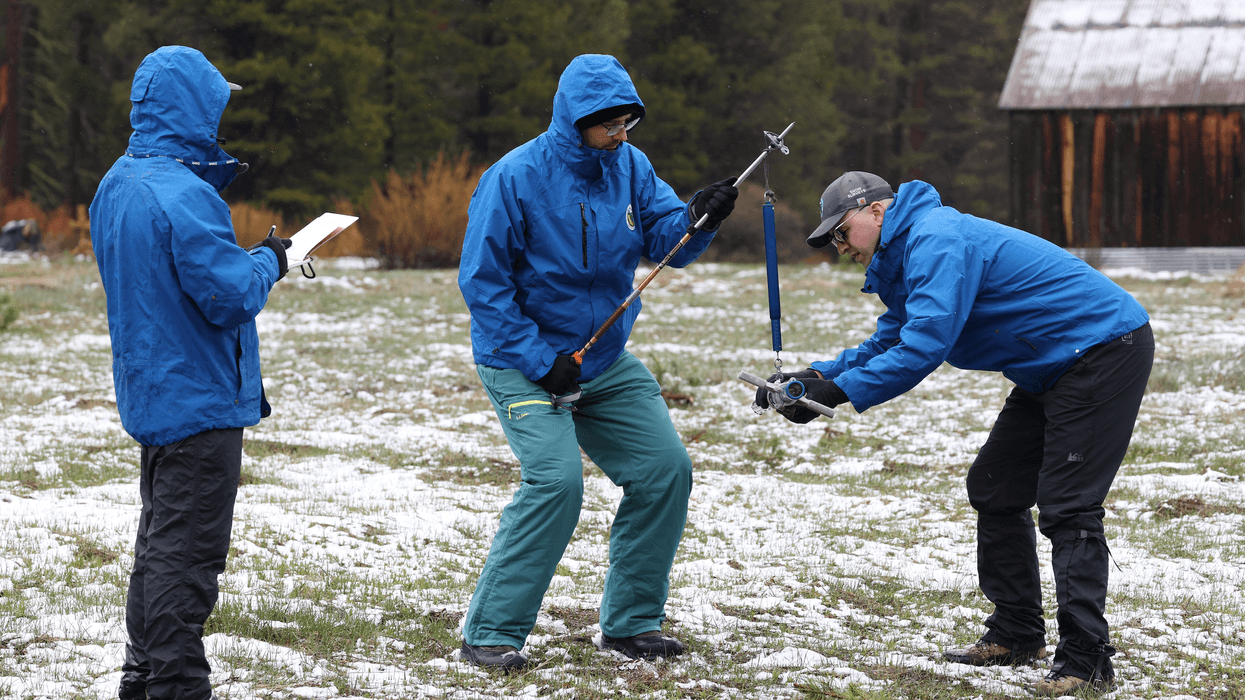
On Wednesday, the California Department of Water Resources reported "no measurable snow" recorded at Phillips Station in the Sierra Nevada range. Because there was some visible snow already on the ground, DWR is calling this the second-lowest April measurement on record.
The agency said this is "a stark indicator of how record‑hot March temperatures and high‑elevation rain have erased the Sierra Nevada snowpack months ahead of schedule."
"The combination of warm storms and unusually hot temperatures rapidly melted what remained of this year’s already sparse snowpack," DWR added. "Statewide, the snowpack is now just 18% of average for this date, according to the automated snow sensor network."
DWR Director Karla Nemeth said that “it feels like we skipped spring this year and dropped straight into a summer heatwave."
“What should be gradual snowmelt happened suddenly weeks ago," Nemeth added. "We’re seeing fewer, warmer storms and shorter wet seasons. Future water supplies will depend upon our ability to capture water when it’s available and manage it more efficiently.”

Jeff Mount, a senior fellow at the Public Policy Institute of California’s Water Policy Center, told the San Francisco Chronicle on Wednesday: "It didn’t snow where we needed it to snow, and where it did snow, it didn’t stick. This is going to be an ugly summer."
Oregon's iconic Crater Lake is experiencing its lowest snow water equivalent levels on record for this time of year, according to the National Weather Service.
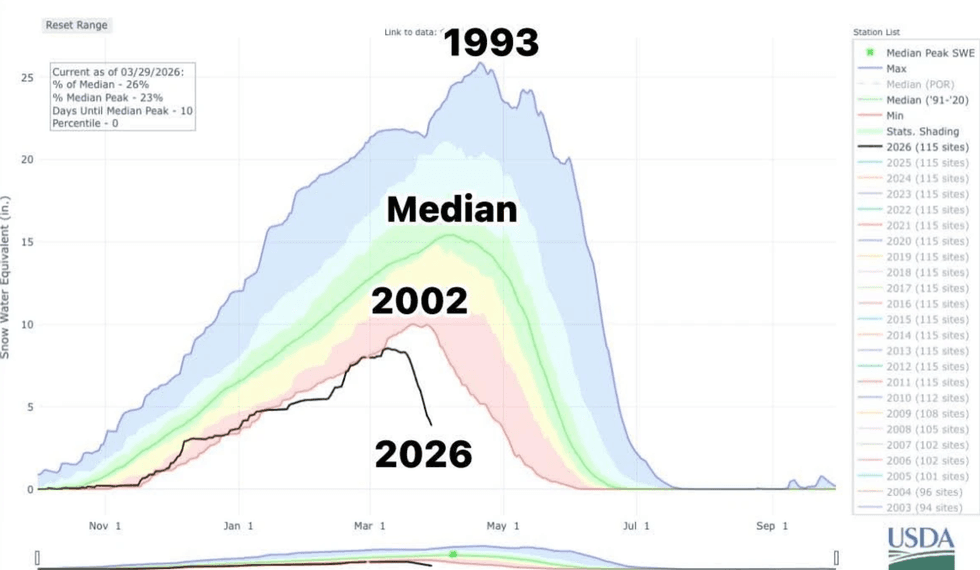
In Colorado, US Department of Agriculture (USDA) data show the statewide snowpack is at just 26% of median levels as of Thursday.
“This year is on a whole other level,” Colorado State University climatologist Russ Schumacher told The Guardian. "Seeing this year so far below any of the other years we have data for is very concerning."
Last week, the Denver Board of Water Commissioners declared Stage 1 drought restrictions, a move that seeks to reduce water use by 20%.
“The snowpack within Denver Water’s collection system has deteriorated significantly and continues to decline,” said Nathan Elder, Denver Water’s manager of water supply. “Snowpack levels in both basins are now the lowest observed in the past 40 years, with accelerated melting underway. The conditions we are experiencing are unprecedented, and we need customers to save water to protect the supply we have right now.”
April measurements of alpine snowpacks—which are sometimes described as water savings accounts—typically indicate peak levels of water that, with spring warming, melt into reservoirs, rivers, and other bodies that help hydrate the West during the parched summer and fall months.
“March is often a big month for snowstorms,” Schumacher said. “Instead of getting snow we would normally expect we got this unprecedented, way-off-the-scale warmth.”
“This year has the potential of being way worse than any of the years we have analogues for in the past,” he added.
As University of California Agriculture and Natural Resources climate scientist Daniel Swain explained last week:
Meteorologically speaking, March 2026 will go down in the record books as the warmest March on record for at least a third, and possibly half or more, of the continental United States. But even more remarkable is the ~10 day window of peak heat during this truly exceptional March heatwave—when many, if not most, locations across the western two thirds of the United States in a broad swath stretching from the Pacific Coast in California eastward past the Mississippi River broke their all-time March monthly heat records. The margin by which March heat records were shattered was so wide that more than a handful of locations also broke their all-time April heat records, and in a few locations even tied or broke their May heat records!
“Beyond the conspicuous ‘weirdness’ of it all, the most consequential impact of our record-shattering March heat will likely be the decimation of the water year 2025-26 snowpack across nearly all of the American west," Swain warned. "The toll wrought on our 'water tower in the sky' is nothing short of shocking."
I agree. This event has been meteorologically astonishing, and its impacts will be felt long after it ends in terms of record low snowpack, sharply increased wildfire risk, and extreme low watershed runoff/streamflow into summer and beyond.
[image or embed]
— Daniel Swain (@weatherwest.bsky.social) March 25, 2026 at 2:25 PM
The National Interagency Fire Center is among those projecting above-normal fire risk throughout the American West in the coming months.
“Unless there’s a major change in the weather patterns and we somehow pull out some sort of miracle springtime precipitation, we’re looking at an extended fire season,” Joel Lisonbee, senior associate scientist at the Cooperative Institute for Research at the University of Colorado Boulder, told The Guardian.
In addition to the risk of drought and wildfire, low water levels threaten wildlife, including California's flagging salmon runs—which are also imperiled by Trump administration actions including habitat disruption caused by water flow manipulation.
“No sooner do we start to gain a little ground back in rebuilding our salmon runs, the federal Bureau of Reclamation is destroying them again,” Vance Staplin, executive director of the Golden State Salmon Association, told The Sacramento Bee last week. "These fish are in big trouble if the bureau doesn’t relent very soon.”
Scientists have long warned that planetary heating driven by human burning of fossil fuels will result in longer and more frequent snow droughts. One 2020 study showed how the Western United States is fast becoming a "global snow drought hot spot," with the length of such dry spells increasing by 28% between 1980 and 2018.
“Climate change is going to result in a lot of these extreme events worsening,” Clark University climatologist Abby Frazier told The Guardian on Thursday. "It is heartbreaking to see it all playing out as we have predicted for so long. The changes we have teed up for ourselves are going to be catastrophic.”
The "impressively coordinated" AIPAC operation features individual donations given "on the same day, by the same donors, for the same amounts" for pro-Israel candidates, according to Drop Site News.
The largest pro-Israel lobbying organization in the US has become increasingly toxic among Democratic voters, and a Friday report from Drop Site News revealed how the organization has gone to great lengths to conceal its support for candidates in the party's primaries.
Drop Site examined campaign donations in competitive Democratic primaries in Illinois and found that the American Israel Public Affairs Committee (AIPAC) "is resorting to ever more sophisticated methods to support its preferred candidates while cloaking its own involvement."
According to Drop Site, AIPAC appears to have pioneered its concealment tactics during a 2024 Democratic primary in Oregon, when it funded super political action committees (PACs) that dumped money into the race to benefit Rep. Maxine Dexter (D-Ore.), who was challenging Susheela Jayapal, the sister of Rep. Pramila Jayapal (D-Wash.).
"The main super PAC in question (named 314 Action) explicitly denied that any funding came from AIPAC—a claim revealed as a flagrant lie once disclosure records finally became public," the report noted. "But by then, Dexter had triumphed and was on her way to Congress."
The same tactics are being used in Illinois, Drop Site continued, where AIPAC has been quietly spending to benefit the campaigns of Democratic candidates Laura Fine, Donna Miller, and Melissa Bean, who are all facing off against progressive challengers who have been critical of Israel.
What is notable about the Illinois operation is that many past donors to AIPAC and its major affiliated super PAC United Democracy Project (UDP) have been lining up to give individual contributions to the Fine, Miller, and Bean campaigns.
"A whopping 237 former AIPAC/UDP donors have given to both Miller and Bean, contributing $396,288.01 to Bean and $429,083.00 to Miller," the report found. "Forty-four of these donors have given to all three candidates, sending a total of $208,753.33 to them. Several of the donations were given to the candidates on the same day, by the same donors, for the same amounts."
Like in Oregon, the three campaigns have also been propped up by AIPAC-funded super PACs that have been taking out ads that do not mention Israel and instead focus on generic biographical information on the candidates.
Of course, these operations, which Drop Site describes as "impressively coordinated," do not guarantee victory.
AIPAC's UDP super PAC recently spent heavily in a New Jersey Democratic primary that concluded on Thursday to take down former Rep. Tom Malinowski, who earned the group's displeasure when he came out in support of putting conditions on US aid to Israel.
But as Forward reported Friday, the campaign proved ineffective against Malinowski, who at the moment is in a dead heat with Analilia Mejia, a progressive candidate who has been even more critical of Israel.
"Whether or not Malinowski ultimately wins, AIPAC will have failed to achieve its goal of electing a Democrat in the primary who it views as being more supportive of Israel," wrote Forward, "either Essex County Commissioner Brendan Gill or former Lt. Gov. Tahesha Way. And if Mejia wins, AIPAC will have helped elect a progressive who is less supportive of Israel."
In "a well-functioning constitutional democratic republic," said US District Judge Michael Simon, "free speech, courageous newsgathering, and nonviolent protest are all permitted, respected, and even celebrated."
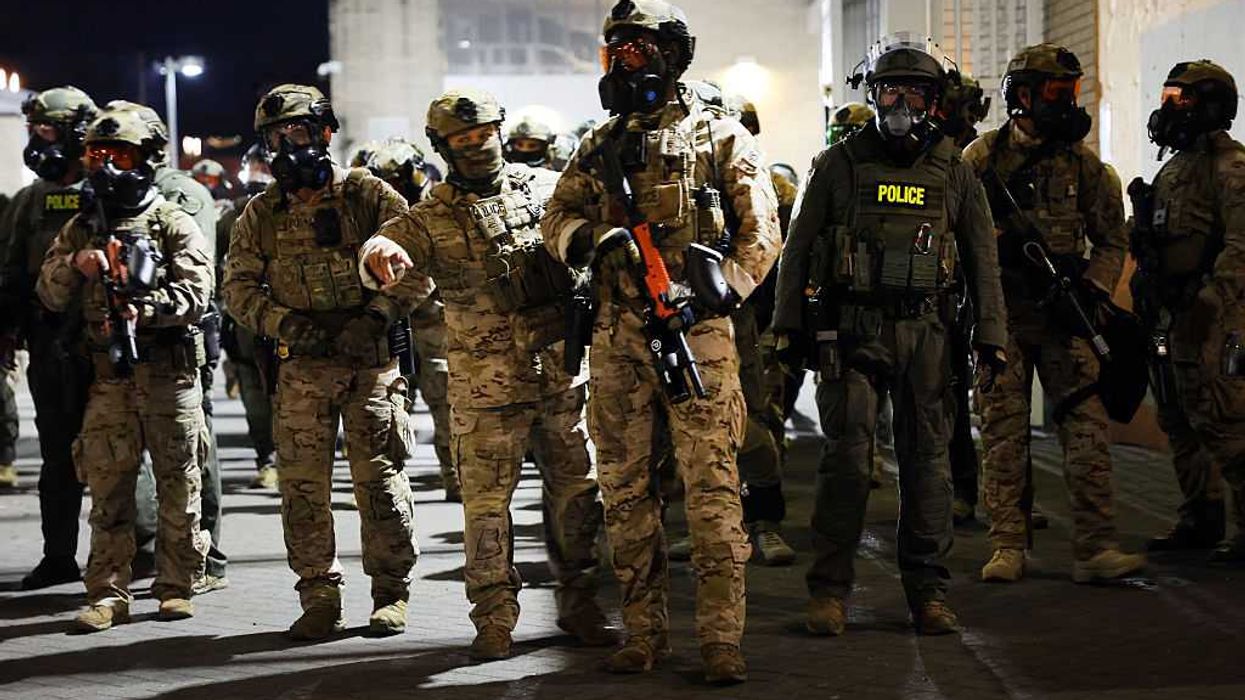
Warning that President Donald Trump's crackdown on immigrant communities, protesters who speak out for civil and human rights, and journalists who are reporting on the president's mass deportation campaign has placed the nation at a "crossroads," a US judge on Tuesday temporarily barred federal agents from launching tear gas, projectiles, and other chemicals at demonstrators in Portland, Oregon.
US District Judge Michael Simon in the District of Oregon ruled that for at least the next 14 days—a period that could be extended—federal agents with the Department of Homeland Security or other agencies can no longer use chemical or projectile munitions like tear gas or pepper balls unless the specific target poses an imminent threat of physical harm to a law enforcement officer or someone else.
Officers are also prohibited from firing any munition at a person's head, neck, or torso except in cases where deadly force would be justified, and from using a less lethal munition if doing so would endanger someone who doesn't pose an imminent threat.
Simon emphasized that he arrived at the ruling in order to preserve the United States' status as "a well-functioning constitutional democratic republic."
In such a country, wrote Simon, free speech, courageous newsgathering, and nonviolent protest are all permitted, respected, and even celebrated."
"In an authoritarian regime, that is not the case," he continued. "Our nation is now at a crossroads. We have been here before and have previously returned to the right path, notwithstanding an occasional detour. In helping our nation find its constitutional compass, an impartial and independent judiciary operating under the rule of law has a responsibility that it may not shirk."
The ruling pertains to the vicinity of the Portland Immigration and Customs Enforcement (ICE) Building, which has been at the center of protests against the agency's arrests and detention of immigrants in the Portland area.
Simon handed down the ruling days after thousands of residents assembled near the building to speak out against Trump's anti-immigration agenda, in which a majority of the people who have been detained in recent months have had no criminal records despite the president's claims that ICE is targeting the "worst of the worst" violent offenders. DHS agents have shot at least 13 people since September, and have killed two—Renee Good and Alex Pretti in Minneapolis. An off-duty ICE agent also fatally shot Keith Porter in Los Angeles.
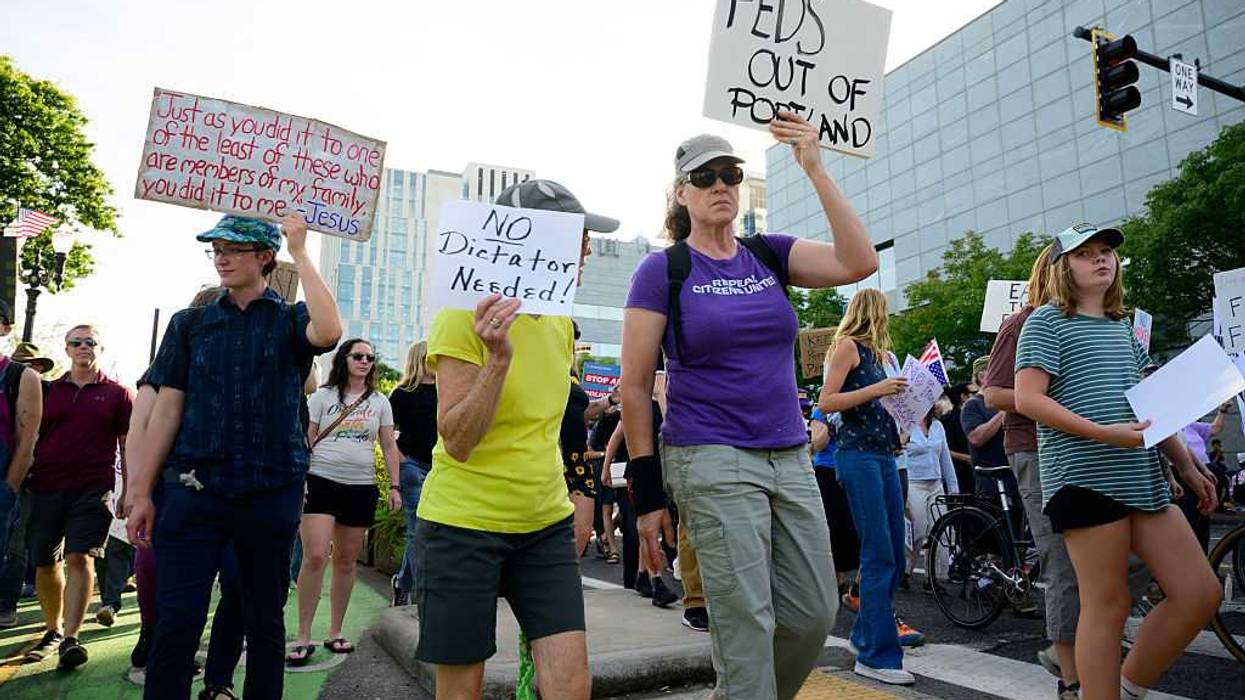
The protest on Saturday in Portland was nonviolent and family-friendly, with children and senior citizens among those who gathered to speak out against the killings, deportations, and detentions.
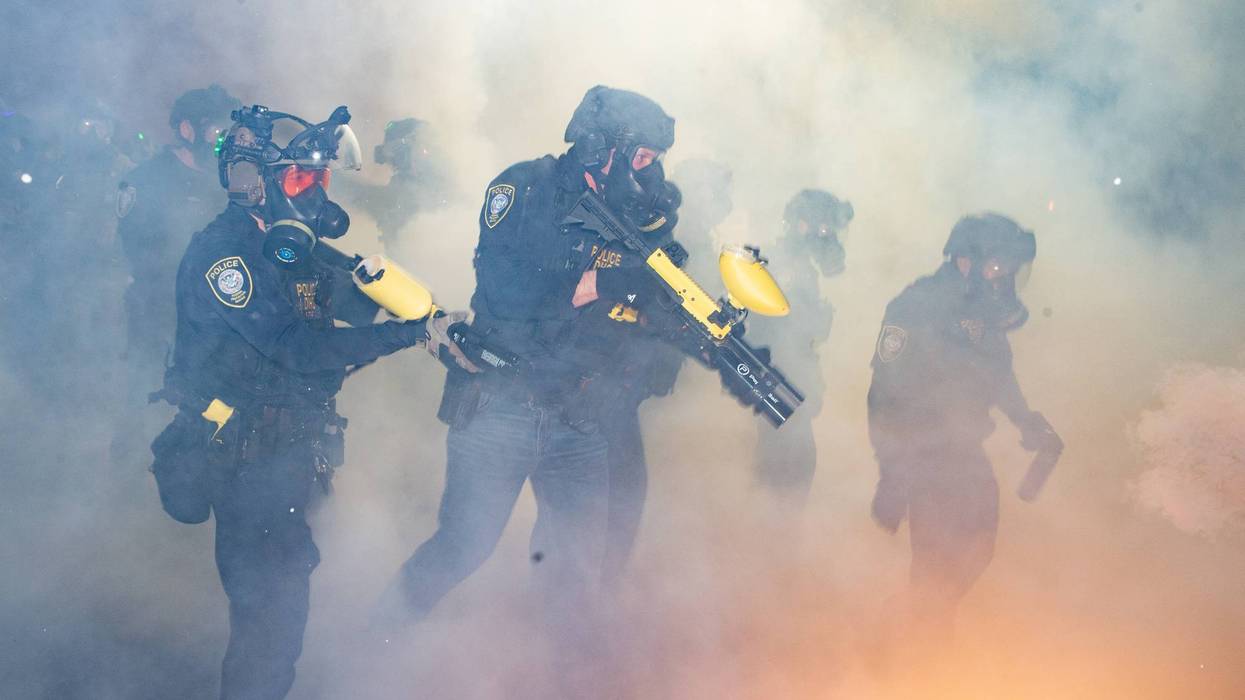
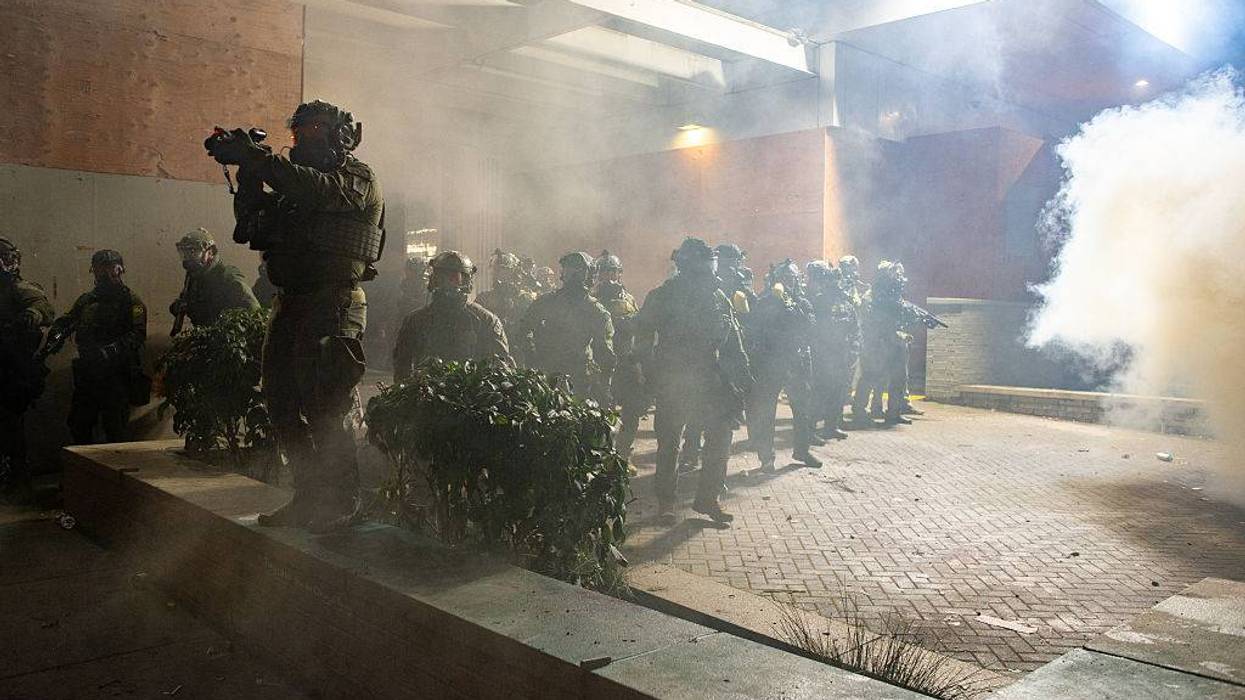
But ICE agents nonetheless deployed tear gas at the crowd. They did so again the next day when hundreds of protesters rallied at City Hall and marched to the ICE Building. DHS claimed the protesters “threw objects at law enforcement and rocks at cameras." lreported that it had not verified those claims.
This is indefensible.
During an Alex Pretti memorial bike ride in SW Portland, federal agents deployed tear gas as children were present.
Video shows a child believed to be around 7 years old fleeing the gas.
This is what “law enforcement” looks like now.
U.S. Immigration and… pic.twitter.com/PvJuyUSn1w
— Brian Allen (@allenanalysis) February 1, 2026
The ACLU, which filed a legal complaint to the judge Sunday night on behalf of protesters who had been affected by ICE's use of tear gas, said Tuesday that "not only are DHS’s extreme actions violating protesters’ First Amendment rights, but they also pose an imminent risk that officers will seriously maim or kill someone, as they have done repeatedly within the last few weeks in other parts of the country."
Kelly Simon, the legal director for ACLU of Oregon, said that "it has been inspiring to see Oregonians rising together with love, nonviolence, and creativity to oppose the Trump administration’s cruelty."
"The Department of Homeland Security’s pattern of violently retaliating against protesters and documenters flies in the face of any notion of order, safety, or freedom," she said. "This ruling affirms that, in Oregon, we still love our neighbors and believe in the power of our constitutional freedoms, including the freedoms of assembly, speech, and the press, to build a better future for all of us."
In its filing, the ACLU described several alleged acts of violence and excessive force by federal agents against peaceful protesters and journalists, including the use of a chemical impact munition against an 84-year-old woman who was "peacefully holding a sign on a public street" when she was hit in the head. She walked home "soaked in blood" and was later diagnosed with a concussion at an emergency department.
A freelance journalist was also allegedly shot in the groin with projectile munitions and suffered bruises, and on another occasion was maced in the face by an officer.
Jack Dickinson, a protester who has been dubbed the Portland Chicken for the chicken costume he's worn at anti-ICE demonstrations, said he was "grateful that Judge Simon agreed that cruelty is not an appropriate response to dissent."
"Since June, the Trump regime has subjected people in Portland to chemical weapons and violence because they are offended by our words," said Dickinson. "This administration should hear our grievances and halt their barbaric treatment of our communities. Until then, I hope Portland will continue to show up and exercise our First Amendment rights. Our voices are needed most in times like now."
Federal agents' use of tear gas and other chemicals also prompted a separate lawsuit recently, with a property management company joining a group of residents in an apartment building about 100 feet from the ICE building suing DHS because tear gas has clouded their homes for months—forcing some to sleep wearing gas masks.
One resident said she was also struck by rubber bullets that left her with welts and bruises.
Lawsuits challenging federal agents' deployment of chemicals and munitions have also been filed in Minnesota and Chicago.
An evidentiary hearing is scheduled for March 2 in Simon's courtroom regarding the question of whether the court should grant a preliminary injunction, further limiting the use of tear gas and other weapons against protesters and journalists.