

SUBSCRIBE TO OUR FREE NEWSLETTER
Daily news & progressive opinion—funded by the people, not the corporations—delivered straight to your inbox.
5
#000000
#FFFFFF
To donate by check, phone, or other method, see our More Ways to Give page.
Daily news & progressive opinion—funded by the people, not the corporations—delivered straight to your inbox.
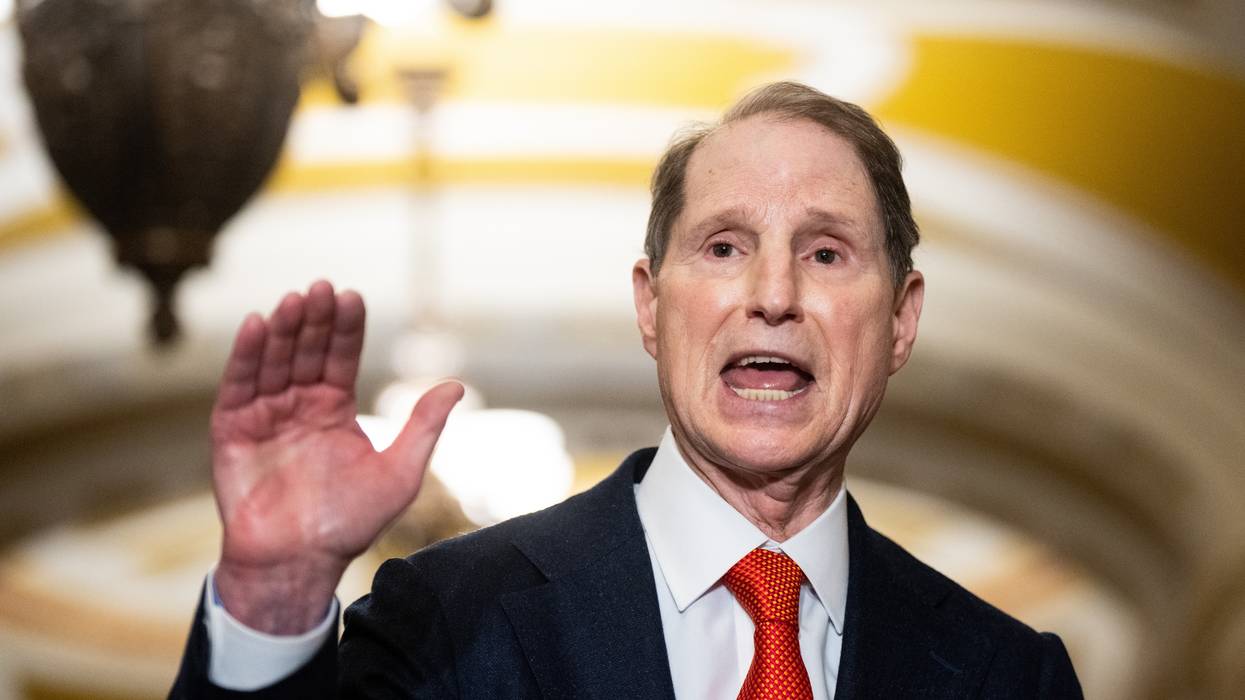
"Americans will pay a steep price if Republicans move forward with this disastrous agenda," said Sen. Ron Wyden.
The House Republican Study Committee on Tuesday released a blueprint for a new budget reconciliation package with the purported goal of making "life more affordable for working families."
However, according to an analysis by Washington Post economic policy reporter Jacob Bogage, two of the three most expensive items in the GOP budget blueprint would be the elimination of the federal estate tax, which would provide a massive windfall to the richest US households, and indexing capital gains to inflation, which even the conservative American Enterprise Institute contends "would further distort taxpayer decisions and increase the ability to shelter income from taxation."
Other items in the GOP blueprint include refilling the Strategic Petroleum Reserve with oil seized from Venezuela, blocking federal funds for abortion providers, and a new "excise tax on colleges that allow trans women in sports."
Sen. Ron Wyden (D-Ore.), ranking member of the Senate Finance Committee, wasted no time ripping the proposal from the largest right-wing House caucus to pieces.
"After passing the largest health care cut in American history, Republicans are doubling down on a failed agenda that benefits billionaires and giant corporations while ripping away food, healthcare and other basic necessities,” Wyden said. “This legislation will eliminate protections for Americans with preexisting conditions, place more red tape between families and their healthcare, and seize ideological trophies instead of focusing on making life more affordable. Americans will pay a steep price if Republicans move forward with this disastrous agenda.”
Richard Phillips, pensions and tax policy director for Sen. Bernie Sanders (I-Vt.), marveled at the GOP loading up a bill supposedly focused on working families with massive giveaways to the wealthiest Americans.
"As part of it's new affordability agenda for the American people the Republican Study Committee reveals its plan to give the wealthiest 0.2% of estates a $281 billion tax break?" he wrote in a post on X.
Chuck Marr, vice president of federal tax policy at the Center on Budget and Policy Priorities, similarly called the GOP blueprint "tone deaf."
"Nothing says attack the affordability crisis working-class people face than Rs calling for eliminating the estate tax for the wealthiest heirs in the country—just months after giving them a $30 million tax free exemption," he wrote.
The GOP's second attempt at a budget reconciliation package comes months after it passed the One Big Beautiful Bill Act, a reconciliation package that gave more tax breaks to the rich, but cut Medicaid spending by nearly $1 trillion over the next decade, while also slashing spending on the Supplemental Nutrition Assistance Program by nearly $200 billion over the same period.

"Donald Trump and Republicans just sacrificed hospitals and lifesaving care for millions so they could hand out massive tax breaks to billionaires."
A healthcare advocacy group launched a project Thursday aimed at tracking hospital closures under the recently enacted Trump-GOP budget law, whose unprecedented cuts to Medicaid could force clinics across the United States to cut services or shut down entirely in the near future.
More than 700 rural hospitals, which rely heavily on Medicaid reimbursements, were already in dire financial straits prior to passage of the Republican budget package, which includes more than $1 trillion in Medicaid cuts. The new law is expected to push many struggling facilities over the edge.
"The consequences of this Republican bill are playing out in real time," said Protect Our Care, the advocacy organization behind new project, titled Hospital Crisis Watch. Earlier this month, a clinic in a rural Nebraska community announced that it would soon shut its doors, citing "anticipated federal budget cuts to Medicaid" as a major factor.
One analysis by researchers at the University of North Carolina at Chapel Hill estimates that more than 330 hospitals in rural areas across the U.S. are at risk of closing or curbing their services due to the Republican assault on Medicaid.
"With Hospital Crisis Watch, we're exposing the full scale of harm Republicans are inflicting on America's healthcare system."
Protect Our Care noted that Medicaid "accounts for one-fifth of spending on hospitals, one-fifth of hospital discharges, and at least one in five inpatient days in nearly every state."
" Donald Trump and Republicans just sacrificed hospitals and lifesaving care for millions so they could hand out massive tax breaks to billionaires," said Brad Woodhouse, the president of Protect Our Care. "This GOP bill won't just hurt people who rely on Medicaid or the Affordable Care Act—it rips care from everyone who depends on the hospitals, clinics, and nursing homes that will shut their doors as a result."
"With Hospital Crisis Watch, we're exposing the full scale of harm Republicans are inflicting on America's healthcare system—community by community, hospital by hospital," Woodhouse added. "The public deserves to know who's responsible, and we won't stop until Trump and Republicans are held accountable."
The project comes as hospital officials and healthcare experts are increasingly sounding the alarm about the looming impact of the Trump-GOP Medicaid cuts.
"What this does is put us at risk when the respiratory season hits," Benjamin Anderson, CEO of Hutchinson Regional Healthcare System, told NBC News earlier this week, saying the Medicaid cuts ensure that the 180-bed hospital his organization oversees will have to continue its hiring freeze.
"We're at real risk of wearing out the staff we have right now," Anderson warned.
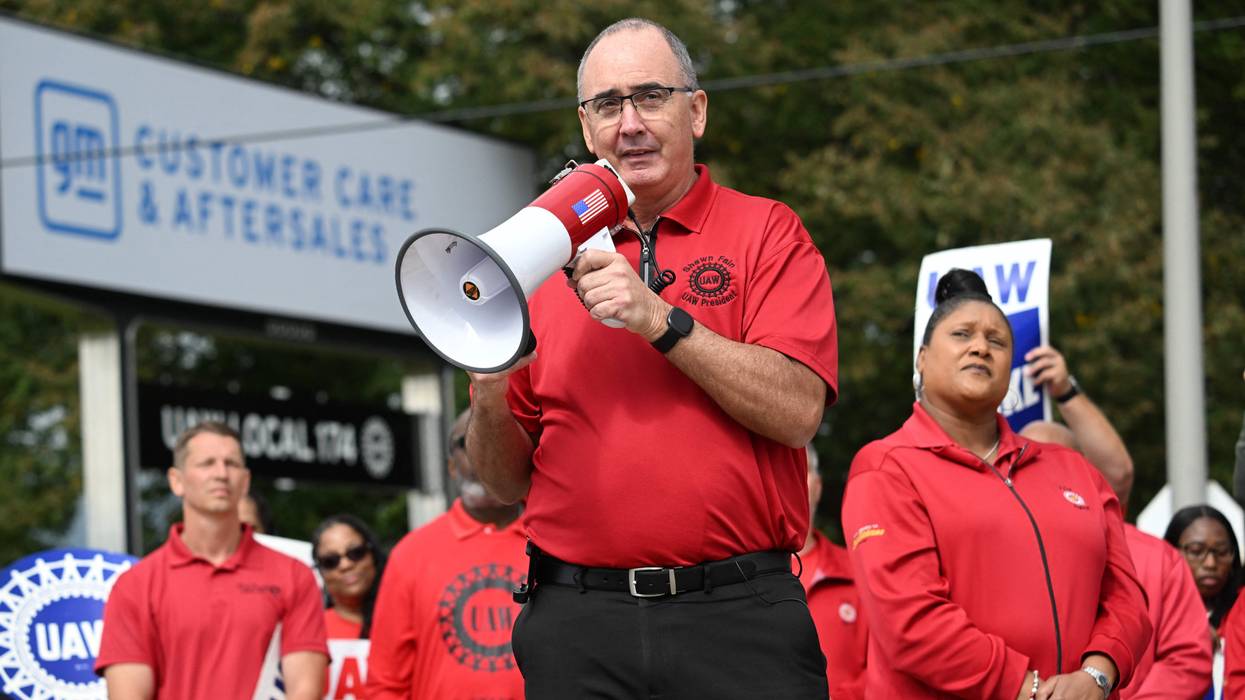
"This bill isn't governance," said United Auto Workers president Shawn Fain. "This is a class war waged from Capitol Hill."
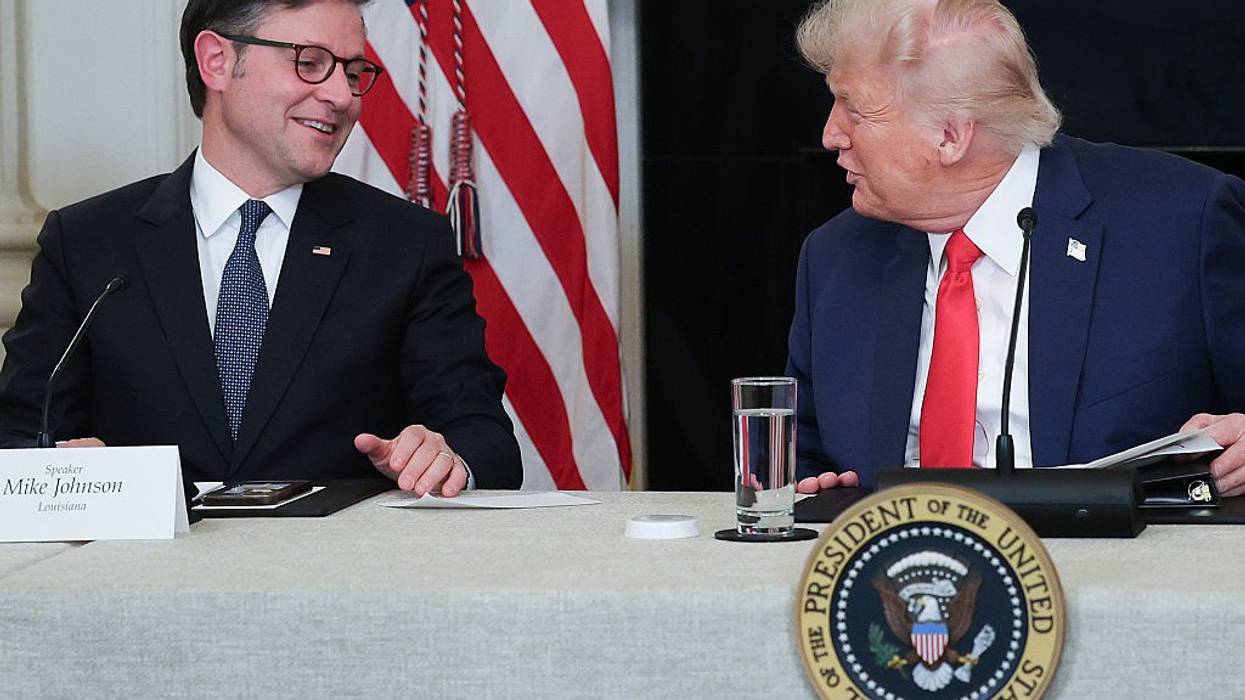
After Republicans pushed their unpopular reconciliation package through Congress last week, U.S. House Speaker Mike Johnson hailed the legislation as a step toward "a future where working Americans can feel relief."
But Shawn Fain, the president of the United Auto Workers (UAW), argued in an op-ed Tuesday for The Detroit News that such "hollow promises" are an attempt to obscure "a brutal agenda: stripping working-class people of security, dignity, and power while lining the pockets of billionaires" with trillions of dollars in tax breaks.
"The budget reconciliation bill that the Republicans just passed isn't just bad policy—it's a full-blown attack on America's working class," wrote Fain. "For the UAW and the millions of workers we represent, four core issues define what it means to live and work with dignity: a livable wage, affordable healthcare, retirement security, and time to enjoy life beyond the job. On every one of those fronts, this bill delivers nothing but setbacks."
Fain pointed specifically to the GOP law's more than $1 trillion in cuts to Medicaid. Those cuts, combined with Republicans' refusal to extend Affordable Care Act subsidies that are set to lapse at the end of the year, are expected to strip health coverage from around 17 million Americans over the next decade, according to the nonpartisan Congressional Budget Office.
The UAW president also points to the Republican law's lesser-known attack on Medicare recipients. The legislation, which President Donald Trump signed into law late last week, would restrict enrollment in Medicare Savings Programs—potentially causing more than a million low-income seniors to lose access—and force more than $500 billion in automatic cuts to Medicare.
"These aren't numbers on a spreadsheet," Fain wrote. "These are real people losing access to lifesaving care."
"By passing this legislation, the government is telling working-class families they're on their own while billionaires get even more tax breaks."
While the Trump White House and congressional Republicans have tried to cast the budget law's tax provisions as worker-friendly—in some cases by outright lying about what's in the legislation—Fain noted that the law's limited deductions for tips and overtime will only benefit a small sliver of Americans, and only until 2028.
"On the other hand, many of the tax benefits in this bill for the wealthy are indefinite and have no expiration date," Fain wrote. "This is the same bait-and-switch the Trump administration used to sell its 2017 billionaire tax giveaway to the American people: small, temporary tax breaks for working people, with massive, long-term benefits for the wealthy and corporate America."
"This bill isn't governance. This is a class war waged from Capitol Hill," Fain continued. "It shifts the balance of power even further toward the billionaire class and hollows out the rights and dignity of labor. By passing this legislation, the government is telling working-class families they're on their own while billionaires get even more tax breaks."
"It's a total betrayal," he added.
Fain is among many prominent labor leaders who spoke out forcefully against the Republican budget measure and warned about its potentially catastrophic impact on millions of workers.
National Nurses United, the nation's largest nurses union, called the day of the bill's final passage one of "the darkest days in the history of U.S. healthcare."
"People will suffer and die because of the cuts in this legislation to fund tax cuts for billionaires—certainly in the short term and potentially for decades to come if nothing is done," the union said. "Lawmakers have effectively signed the death warrants for millions."
Liz Shuler, president of the AFL-CIO, said that "every member of Congress who voted for this devastating bill picked the pockets of working people to hand billionaires a $5 trillion gift."
"But if the politicians who rammed through this shameful bill think they can sneak away without anyone knowing the damage they've done and the chaos they've created," said Shuler, "they don't know anything about the labor movement."
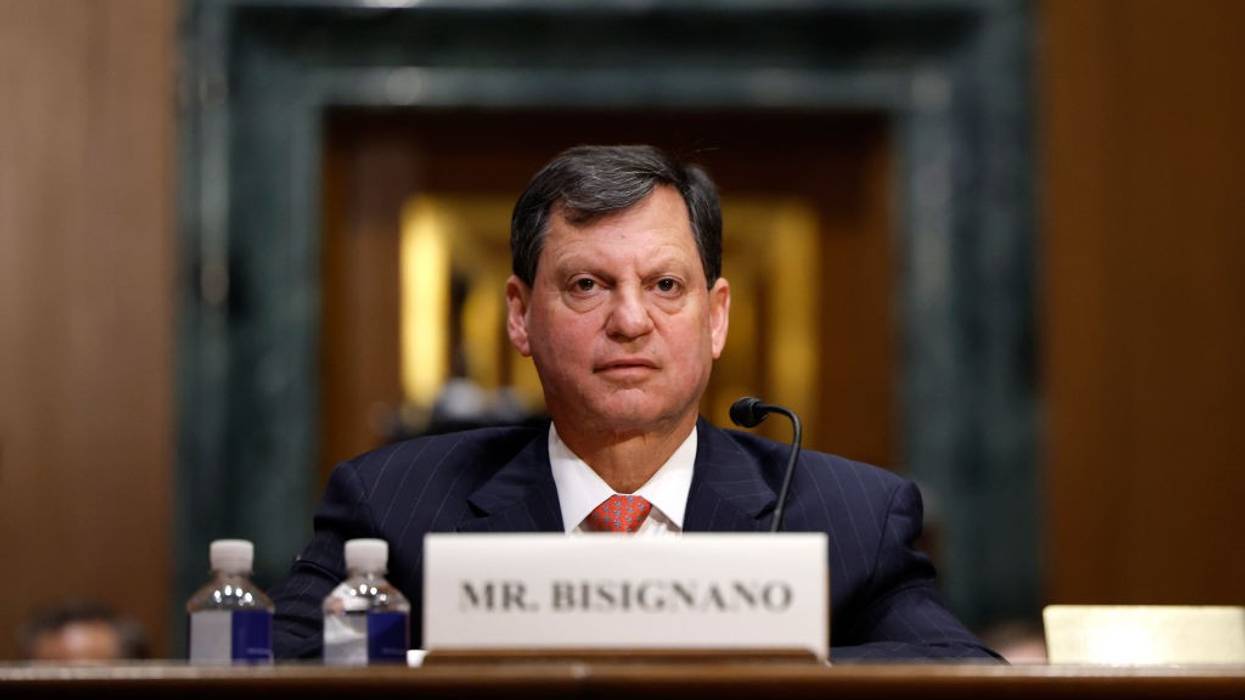
"The Social Security Administration put out a statement celebrating a bill that would lead to faster insolvency of the Social Security Trust Fund."
U.S. President Donald Trump's handpicked Social Security chief issued a statement Thursday applauding the passage of a Republican reconciliation bill that analysts say would negatively impact the New Deal program's finances.
Social Security Commissioner Frank Bisignano called the Republican legislation, which Trump is expected to sign on Friday, a "historic step forward for America's seniors" and a reaffirmation of the president's "promise to protect Social Security."
But experts warned in the lead-up to the bill's passage that its massive tax cuts would bring forward the date at which Social Security will no longer be able to pay out full benefits in the absence of legislative solutions.
"By raising the standard deduction for all filers, and raising it even higher for some seniors, fewer Social Security beneficiaries will pay taxes on their benefits, and those who do will pay lower rates," said Kathleen Romig and Gbenga Ajilore of the Center on Budget and Policy Priorities. "Raising the standard deduction would deliver little to no benefit to lower- and moderate-income families while reducing income into Social Security's trust funds."
The Social Security Administration put out a statement celebrating a bill that would lead to faster insolvency of the Social Security Trust Fund pic.twitter.com/aRhLfcRiIv
— Bobby Kogan (@BBKogan) July 4, 2025
According to the latest Social Security Board of Trustees report—released ahead of the reconciliation bill's passage—the Old-Age and Survivors Insurance (OASI) Trust Fund will be able to pay out 100% of benefits until 2033. Thereafter, if lawmakers don't act, the fund will be able to pay out 77% of total scheduled benefits.
The Committee for a Responsible Federal Budget (CRFB), a conservative think tank, estimated in an analysis released last month that the Republican reconciliation package would accelerate the depletion of Social Security and Medicare's trust funds by a year. Compared to current law, the GOP measure would also result in "even deeper" cuts to Social Security benefits after the trust fund depletion date, the analysis projected.
Rep. John Larson (D-Conn.), a leading champion of Social Security Expansion in Congress, highlighted CRFB's findings in a video posted to social media a day before House Republicans secured final passage of the reconciliation bill.
"We have to act now, not just to protect Social Security but to expand the benefits," said Larson. "It needs to be protected, it needs to be enhanced—not cut and diminished."
The amount set to flow to a "tiny sliver of affluent families" over the next decade is roughly equal to the Medicaid cuts included in the Republican bill, according to the Institute on Taxation and Economic Policy.
An analysis released Thursday estimates that the Republican legislation on the brink of final passage in Congress would deliver over $1 trillion in combined tax breaks to the richest 1% of Americans over the next decade—an amount roughly equal to the bill's unprecedented cuts to Medicaid.
The new analysis by the Institute on Taxation and Economic Policy (ITEP), which utilizes data from the nonpartisan Joint Committee on Taxation and other sources, finds that the "tiny sliver of affluent families" in the top 1% of the U.S. income distribution will "receive tax cuts totaling $1.02 trillion over the next decade."
The centerpiece of Trump's megabill is a trillion-dollar tax cut to the wealthy, paid for by increasing the national debt and cutting public services. pic.twitter.com/ISr2XuIdJQ
— ITEP (@iteptweets) July 3, 2025
ITEP has previously shown that the Republican bill's tax cuts—largely extensions of expiring provisions of the 2017 Trump-GOP tax law—would be highly skewed to the wealthy, with the small percentage of households at the very top receiving significantly more in total tax breaks than middle- and lower-income Americans.
"Sixty-nine percent of the net tax cuts would go to the richest fifth of Americans in 2026, only 11% would go to the middle fifth of Americans, and less than 1% would go to the poorest fifth," the group found. "The $107 billion in net tax cuts going to the richest 1% next year would exceed the amount going to the entire bottom 60% of taxpayers."
ITEP's new analysis was released as House Minority Leader Hakeem Jeffries (D-N.Y.) wrapped up a record-breaking, eight-hour-plus speech against the GOP legislation, which delayed a final vote on the measure. Republicans are expected to pass the unpopular bill on Thursday.

"The top 1% are salivating over getting an extra $300,000 a year because of this dangerous bill," said one House Democrat. "Billionaires win."
House Republicans are on the verge of passing legislation that is projected to strip health coverage and food aid from millions of people across the United States, all to pay for tax breaks that will flow disproportionately to a small sliver of rich Americans.
The final vote on the sprawling budget reconciliation package, which narrowly passed the Senate on Tuesday, is expected Thursday after hours of jockeying among Republican leaders and holdovers in the GOP's ranks overnight. Republicans finally cleared a procedural hurdle to begin debate on the measure after 3 am ET on Thursday.
"If Republicans are so proud of their Big Bad Betrayal Bill... why did they begin debate at 3:28 am?" asked Rep. Pramila Jayapal (D-Wash.). "Why are they hiding from the American people?"
House Minority Leader Hakeem Jeffries (D-N.Y.) delayed the final vote on the bill with an hours-long—and, as of this writing, still ongoing—speech that featured stories from constituents who are horrified that they will soon lose health coverage or food aid.
"This isn't abstract, taking away healthcare from the American people," said Jeffries. "It's concrete, it's real, it has devastating implications."
Watch Jeffries' remarks live:
The unpopular legislation that set to clear the House Thursday is substantially more expensive than the version the chamber's Republicans approved in May, and it includes roughly $300 billion more in cuts to Medicaid. The bill now heads to the desk of U.S. President Donald Trump, who has repeatedly pledged not to cut Medicaid.
Analysts estimate that over the next 10 years, roughly 17 million Americans will lose health coverage under the GOP package, both due to the measure's Medicaid cuts and its failure to extend Affordable Care Act subsidies set to expire at the end of the year.
The bill's assault on Medicaid—including its restriction on states' use of provider taxes to fund their programs—is expected to ravage rural hospitals, notwithstanding Republicans' last-ditch attempt to put a Band-Aid on the massive wound they're set to create.
The legislation would also trigger more than $500 billion in automatic cuts to Medicare due to its multitrillion-dollar addition to the deficit.
One recent study estimated that the bill's healthcare cuts would result in more than 51,000 additional, preventable deaths across the U.S. each year.
"The decision we have been entrusted by the American people to make will have ramifications for millions of our fellow Americans, and indeed for our country, for decades to come," Rep. Brendan Boyle (D-Pa.), the top Democrat on the House Budget Committee, said in floor remarks early Thursday.
"In just a few short hours, some of them on Medicaid will be waking up and turning on the news to find out if what we did here tonight means they're about to lose it," said Boyle. "Some of the people who get their healthcare from the ACA exchanges will be turning on their TV to find out what we've done in these next few minutes, and if they will still be able to have healthcare... The kids who rely on SNAP, the nutrition assistance program, they may not quite understand it, but make no mistake about it—what we are about to do in the next few minutes here will have a profound effect on their lives."
As Ranking Member @HouseBudgetDems, I'm on the House floor right now to lead the fight against Trump's Big Bill for Billionaires.
This bill is an attack on my neighbors — and I'm not going to let Republicans kick 17 million Americans off their health care without a fight. pic.twitter.com/MeBkYKd8f2
— Rep. Brendan Boyle (@CongBoyle) July 3, 2025
The GOP bill proposes $186 billion in Supplemental Nutrition Assistance Program cuts over the next decade, which analysts say will imperil benefits for millions—including many children. The Center on Budget and Policy Priorities estimates that around 1 million children "would see food assistance to their families cut substantially or terminated" due to the legislation's SNAP cuts, including its expanded work requirements.
The measure's unprecedented cuts to the safety net, as well as clean energy programs, will only partially offset its trillions of dollars in tax cuts. According to the Institute on Taxation and Economic Policy (ITEP), more than 70% of the legislation's net tax breaks "would go to the richest fifth of Americans in 2026, only 10% would go to the middle fifth of Americans, and less than 1% would go to the poorest fifth."
"The effects of President Trump's tariff policies alone offset most of the tax cuts for the bottom 80% of Americans," ITEP found. "For the bottom 40% of Americans, the tariffs impose a cost that is greater than the tax cuts they would receive under this legislation."
Rep. Gabe Amo (D-R.I.) said in a floor speech early Thursday that "budgets are statements of values," and Republicans "are showing they have none."
"People will suffer, people will die, and it will be the hands of Republicans who vote yes," said Amo. "The top 1% are salivating over getting an extra $300,000 a year because of this dangerous bill. Billionaires win."
Back speaking on the House floor at 3:45am because budgets are a statement of values — with this big, ugly bill Republicans have none.
Americans will suffer. Americans will die. And it will be at the hands of the Republicans who vote yes.
This budget is shameful. I’m a hell no! pic.twitter.com/K5Ri5lGzzs
— Congressman Gabe Amo (@RepGabeAmo) July 3, 2025
Ahead of the bill's final passage, state leaders warned that the cuts pushed by Republican lawmakers could be deeply destructive to their residents and economies.
"Voices across North Carolina are sounding the alarm—our hospitals, healthcare providers, county leaders, state leaders, business leaders, workers, nonprofits, and, most importantly, the people who rely on these essential services and industries every day," North Carolina Gov. Josh Stein wrote in a letter to his state's congressional delegation on Wednesday. "Many North Carolinians are worried about feeding their families, being able to continue seeing their doctor, or keeping their jobs. We are united in our concern that this reconciliation bill would undo decades of bipartisan progress and harm the health, well-being, and economic security of our individuals, families, and communities."
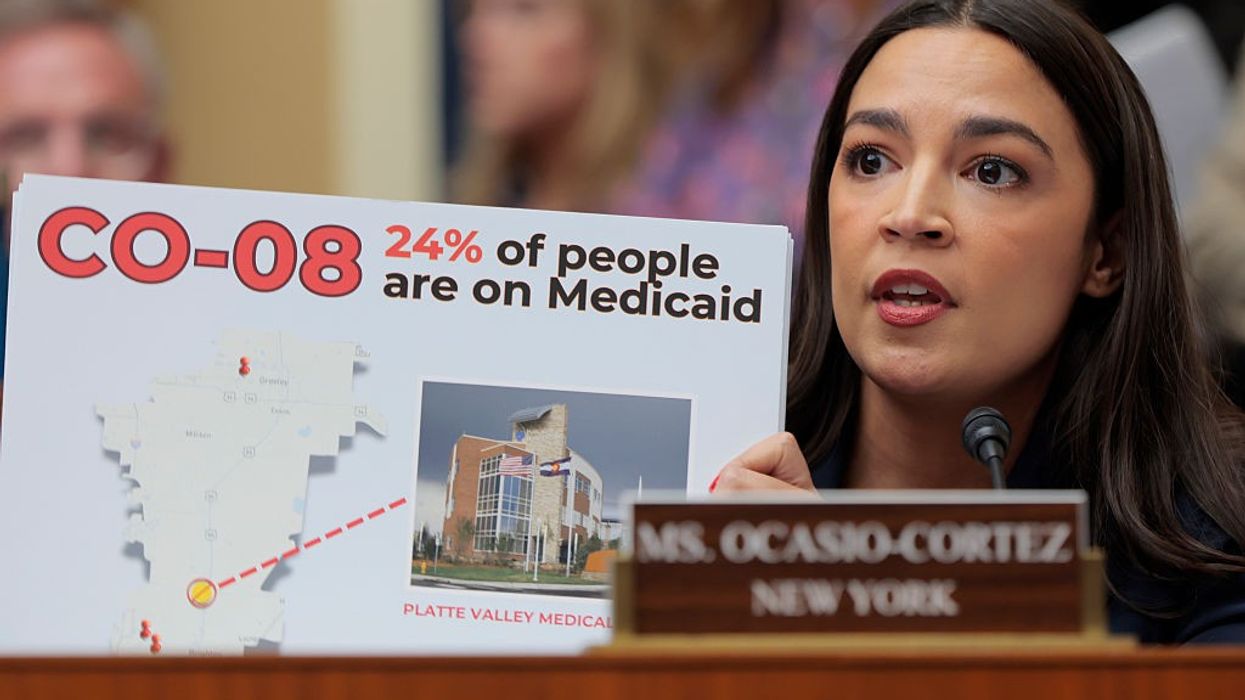
"It explodes our national debt, it militarizes our entire economy, and it strips away healthcare and basic dignity of the American people. For what? To give Elon Musk a tax break and billionaires the greedy taking of our nation."
U.S. Congresswoman Alexandria Ocasio-Cortez delivered a scathing condemnation of the GOP's budget reconciliation package—particularly its devastating cuts to Medicaid—in remarks on the House floor Wednesday as Republicans worked to send the legislation to President Donald Trump's desk.
"This bill is a deal with the devil," said Ocasio-Cortez (D-N.Y.). "It explodes our national debt, it militarizes our entire economy, and it strips away healthcare and basic dignity of the American people. For what? To give Elon Musk a tax break and billionaires the greedy taking of our nation. We cannot stand for it, and we will not support it."
"You should be ashamed," she added.
AOC: "On this point of tax on tips, as one of the only people in this body who has lived off of tips, I want to tell you a little bit about the scam ... the cap on that is $25,000 while you're jacking up taxes on people who make less than $50,000 across the US ... while kicking… pic.twitter.com/5VrEbJNnHl
— Aaron Rupar (@atrupar) July 2, 2025
Ocasio-Cortez expressed contempt for the Trump-backed Republican bill's proposed tax deduction for tips, which would be capped at $25,000 per year.
The New York Democrat argued the provision is effectively meaningless "while you're jacking up taxes on people who make less than $50,000 across the United States while taking away their [nutrition assistance], while taking away their Medicaid, while kicking them off of the [Affordable Care Act] and their healthcare extensions."
"So if you're at home and you're living off tips, you do the math," she added. "Is that worth it to you? Losing all your healthcare, not able to feed your babies, not being able to put a diaper on their bottom, in exchange for what?"
If approved, the Republican reconciliation bill would strip health coverage from at least 17 million Americans, according to expert estimates. That number includes the roughly 12 million who would lose coverage due to the bill's Medicaid cuts and millions more who would be left uninsured by the GOP's refusal to extend ACA subsidies that are set to expire at the end of the year.
"President Trump had issued some statements throughout this process saying and urging, insisting, that this bill does not cut Medicaid," Ocasio-Cortez said Wednesday. "President Trump, you're either being lied to or you are lying, because this bill represents... the largest and greatest loss of healthcare in American history."

"This country deserves better than this dumpster fire of greed, cruelty, and cowardice."
Progressives within and outside of Congress are mobilizing and working to rally public opposition on Wednesday as House Republicans moved to put the final stamp of approval on a budget package that includes unprecedented cuts to Medicaid and federal nutrition assistance—alongside trillions of dollars in tax breaks for the wealthiest Americans.
"This fight isn't over, and we're not backing down," Andrew O'Neil, national advocacy director of Indivisible, said following the Republican-controlled Senate's narrow passage of the budget reconciliation bill on Tuesday, a vote so close that Vice President JD Vance was forced to intervene to push the measure over the finish line.
The GOP's margins are similarly thin in the House, with Speaker Mike Johnson (R-La.) only able to lose three Republican members amid unanimous Democratic opposition.
Indivisible and other advocacy organizations are driving calls and emails to House Republicans on Wednesday urging them to vote down the Senate-passed legislation, which is significantly more expensive and contains more aggressive Medicaid cuts than the bill the House approved in May. Medicaid cuts are highly unpopular with the U.S. public, including among Republican voters.
The phone number for the U.S. House switchboard is (202) 224-3121.
"Your Republican representative could be the deciding vote," Ezra Levin, Indivisible's co-executive director, said in an appearance on MSNBC late Tuesday. "We've got about 26 Republican targets. We need four of them—we just need four. And this is not a done deal."
While a House vote on the legislation could come as soon as Wednesday, far-right hardliners in the Republican caucus are threatening to prevent a quick advance of the bill, pointing to projections that it would add trillions of dollars to the nation's deficit over the next decade.
Reps. Tim Burchett (R-Tenn.) and Ralph Norman (R-S.C.) reportedly headed to the White House on Wednesday to meet with Trump administration officials, who have urged Republican holdovers to drop their objections and help pass the budget legislation.
Progressive lawmakers in the House, meanwhile, are united in firm opposition to the bill, which they warn would have catastrophic impacts on vulnerable Americans nationwide.
"No way will I allow [President Donald] Trump and the GOP to rip healthcare and food away from millions of Americans just so he, [Elon] Musk, and their billionaire buddies can get a tax break," Rep. Mark Pocan (D-Wis.) said Wednesday, declaring that he will vote "hell no" on the Republican bill.
Today the Senate passed the biggest betrayal of working people in modern history.
It rips health care from 17 million, slashes food aid, and showers billionaires with tax breaks.
Next stop: the House. Progressives will be voting HELL NO. https://t.co/qd4Q13YiNa
— Progressive Caucus (@USProgressives) July 1, 2025
House Republican leaders are hoping to get the bill to President Donald Trump's desk for his signature before the July 4 holiday on Friday.
If passed, experts say the GOP legislation would spark the largest transfer of wealth from the poor to the rich in a single law in U.S. history.
Heidi Shierholz, president of the Economic Policy Institute, said Tuesday that the Republican bill "steals from the poor to give massive tax cuts to the wealthy."
"If the Republicans wanted to add $4 trillion to the national debt, they could have instead written a $12,000 check to each and every adult and child in the United States," said Shierholz. "However, this grotesque bill would cause the bottom 40% of households to lose income on average. This country deserves better than this dumpster fire of greed, cruelty, and cowardice."

"From the start, this provision had Big Tech's money and lobbyists all over it. This is a major victory for the American people over the AI industry," said one advocate.
With a 99-1 vote early Tuesday, the Republican-controlled Senate decided to remove a controversial provision that would have prevented state-level regulation on artificial intelligence for 10 years from U.S. President Donald Trump's massive tax and spending bill that is currently being debated in Congress.
Sen. Thom Tillis (R-N.C.) was the lone lawmaker who voted to keep the moratorium in the bill.
While far from the only controversial part of the reconciliation package, the provision drew opposition from an ideologically diverse group that included Democratic and Republican state attorneys general; over 140 groups working to support children's online safety, consumer protections, and responsible innovation; and faith leaders.
Senators struck Sen. Ted Cruz's (R-Texas) AI measure from the megabill by adopting an amendment introduced by Sen. Marsha Blackburn (R-Tenn.). They voted on Blackburn's amendment during a session known as a vote-a-rama. Blackburn introduced the amendment after considering an agreement that would have watered down the provision.
According to The Verge, the measure that was rejected on Tuesday required states to avoid regulation AI and "automated decision systems" if they wanted to get funding for their broadband programs.
The provision would have been a major win for Big Tech, which has made the case that state laws around AI are obstructing their ability to do business.
Advocates and Democratic lawmakers cheered the decision to strip the provision.
"From the start, this provision had Big Tech's money and lobbyists all over it. This is a major victory for the American people over the AI industry. It shows that Americans are aware of the proliferation of AI harms in real time," said J.B. Branch, Big Tech accountability advocate at the watchdog group Public Citizen.
Sen. Edward Markey (D-Mass.) said Tuesday that "early this morning, the Senate overwhelmingly voted to reject a dangerous provision to block states from regulating artificial intelligence, including protecting kids online. This 99-1 vote sent a clear message that Congress will not sell out our kids and local communities in order to pad the pockets of Big Tech billionaires."
In addition to concerns focused on Big Tech, experts recently told The Guardian that in the absence of state-level AI regulation, untrammeled growth of AI would take a toll on the world's "dangerously overheating climate."
Sacha Haworth, the executive director of the Tech Oversight Project, credited the "massive" defeat of Cruz's provision to the "incredible mobilizing by advocates to beat back Big Tech lobbying and last-minute bullying."
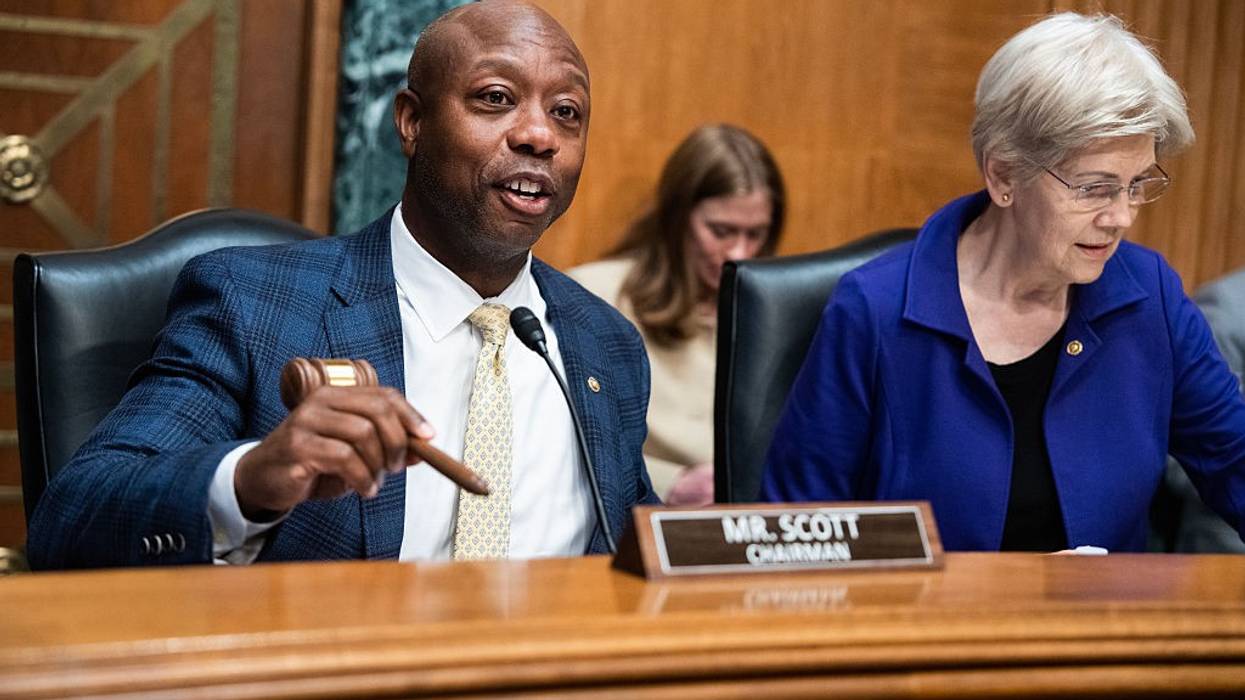
"Senate Republicans will bring to the floor a proposal that slashes the agency's available budget so they can hand out more tax breaks for billionaires and billionaire corporations," said Sen. Elizabeth Warren.
Senate Republicans on Thursday moved to revive a plan to dramatically reduce the Consumer Financial Protection Bureau's budget after the chamber's parliamentarian determined that an earlier proposal ran afoul of reconciliation rules.
The previous proposal, crafted by Republicans on the Senate Banking Committee, would have zeroed out the CFPB's budget, but the Senate parliamentarian deemed it in violation of the Byrd Rule.
The new attack on the CFPB, unveiled by Senate Banking Committee Chair Tim Scott (R-S.C.)—a major recipient of financial industry donations—would cut the agency's budget nearly in half. The proposal still must face scrutiny from the parliamentarian.
Sen. Elizabeth Warren (D-Mass.), the ranking member of the Senate Banking Committee and an architect of the consumer bureau, said in a statement that Democrats would introduce an amendment to strip the proposal from the reconciliation package, noting that the CFPB has "returned $21 billion to scammed American families" since its inception in the wake of the Great Recession.
" Donald Trump and Republicans tried to shut down the CFPB by gutting its entire operating budget to 0%," said Warren. "We fought back and won. Now, Senate Republicans will bring to the floor a proposal that slashes the agency's available budget so they can hand out more tax breaks for billionaires and billionaire corporations."
The CFPB has been a major target of the Trump administration, which has installed an opponent of the agency—Russell Vought—as its acting director, moved to gut the bureau's staff, and effectively halted its enforcement efforts. Since the start of Trump's second term, the CFPB has dropped at least 18 enforcement actions against predatory financial firms.
"Trump is making his corporate backers even richer by letting them swindle you," former U.S. Labor Secretary Robert Reich wrote Thursday.
Research released earlier this week estimates that the Trump administration's assault on the CFPB has already cost Americans $18 billion worth of fees and lost compensation for harms inflicted by law-breaking corporations.
"The increased consumer costs from the CFPB's rollback of regulations on bank fees, wholesale dismissal of cases against banks and other lenders, and the apparent failure to disburse funds intended for harmed borrowers run counter to Trump's campaign pledges to ease the cost of living," Reuters reported Tuesday, citing an analysis by the Student Borrower Protection Center and the Consumer Federation of America.