

SUBSCRIBE TO OUR FREE NEWSLETTER
Daily news & progressive opinion—funded by the people, not the corporations—delivered straight to your inbox.
5
#000000
#FFFFFF
To donate by check, phone, or other method, see our More Ways to Give page.
Daily news & progressive opinion—funded by the people, not the corporations—delivered straight to your inbox.
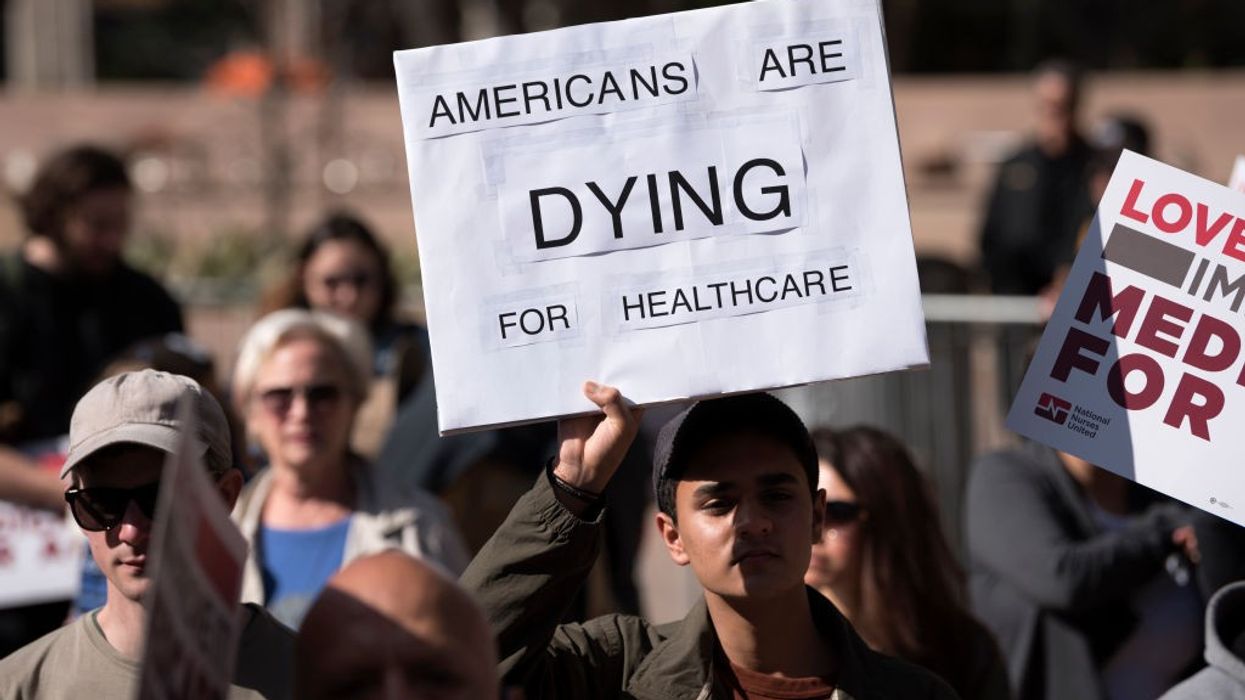
Predictably, centrists are pushing the public option and “anything-but-single-payer” solutions before the midterms. Nothing short of taking control of the healthcare system and running it in the interest of the people instead of in the interest of profit will heal this nation.
On July 5, 1852, Frederick Douglass addressed the Rochester Ladies’ Anti-Slavery Society with an oration called, “What to the Slave Is the Fourth of July?” In 1852, the United States was a young country, only 76 years old, and given its youth, Douglass held out hope for the country that put him and 3 million Black men, women, and children in chains. He called Congress and judges “inhuman, disgraceful, and scandalous.” He accused the church of being the “bulwark of American slavery, and the shield of American slave-hunters.” Still, he held out hope. He admired the rebels of the American Colonies, respected their grit to side with the oppressed against the oppressor. He did not despair for America.
This year, as we celebrate the nation’s 250th anniversary, we find ourselves in dark times. We are heirs to a political system willing to promote wars, sanctions, occupation, slavery, and genocide around the globe, while accepting the mass suffering of a healthcare system that keeps many in chains in our own country. Violence abroad and austerity at home are part of the same ideological structure. Despair is understandable, but not inevitable.
On this 250th anniversary of the Declaration of Independence, we declare it is time for the people to rise up, organize, take control of the healthcare system, and run it in the interest of the people instead of in the interest of profit. It is time we declare our independence from the medical-industrial complex keeping us in chains.
What is the medical-industrial complex? A sprawling alliance of insurance companies and middlemen stealing from the public coffers, pharmaceutical companies holding us hostage, private equity and venture capital owning the delivery of care, profit-generating “nonprofit” health and hospital systems, compromised academic centers and endowed non-governmental organizations, unprincipled medical organizations that choose expediency over patients, and all politicians who accept financial contributions to work for the industry instead of for the people. Their profits depend on keeping healthcare commodified and the rest of us in chains.
Historic public support for a national health program, free from insurance companies and financed through progressive taxes, presents us with a new opening for National Single Payer Improved Medicare for All, free from profit.
Our lives depend on declaring our independence from their profits.
Historic public support for a national health program, free from insurance companies and financed through progressive taxes, presents us with a new opening for National Single Payer Improved Medicare for All, free from profit, guaranteeing all necessary medical coverage for everyone through community-governed delivery, permanently resolving our healthcare crises, lowering costs, and ending medical debt.
But instead of bold proposals, corporate Democrats and their allies are working overtime to come up with “anything-but-single-payer” solutions. Derailment by such Democrats might be a larger challenge than barriers posed by the rest of the medical-industrial complex.
Senate Finance Committee ranking member Ron Wyden (D-Ore.), and 11 Senate Democrats, announced a new initiative to lower the cost of healthcare and improve health coverage for American families. What is this “bold, meaningful change the American people seek”? First, blame Republicans for cost increases (as if Democrats were not also guilty); make healthcare simpler for families by keeping health insurance corporations still in charge of our healthcare; and then take on corporate greed by creating flimsy new guardrails, because naturally, corporations will suddenly decide to play by the rules!
The Center for Health and Democracy, which usually provides credible analysis, went off the rails, putting their money behind “Medicare by Choice,” a warmed-over version of the public option, which allows everyone the option of purchasing traditional Medicare regardless of age, and even allowing employers to select Medicare by Choice as their employees’ workplace benefit. Sadly (and somewhat opportunely) we have a natural experiment that shows us just how well a public option (i.e., traditional Medicare) would fare in the marketplace (i.e., Medicare Advantage). Spoiler alert: not well at all.
Any version of the public option would fail to reap administrative savings or control costs necessary to provide comprehensive universal coverage. A public option would preserve the Machiavellian system of thousands of private insurance plans; Medicaid; CHIP; the federal exchanges; Medicare Part A, B, and Dl MediGap; and Medicare Advantage—a hodgepodge system that has failed to either provide necessary health coverage for all or control costs.
A public option would add even greater complexity to this overwhelmingly complex system. Importantly, a public option would not lead to single payer, as magical thinking would have you believe, but toward a jaded triaging of patients according to their profitability, with profitable individuals going to the private plans and the unprofitable, chronically ill patients shunted to the public plan.
A profit-driven system cannot be repaired with incremental fixes. We have the hard facts from a century of failed attempts to prove it. Derailments offer Democrats an off-ramp in 2028, away from National Single Payer Improved Medicare for All, free from profit. These and similar proposals are guaranteed to set the burgeoning healthcare movement back another 15 years, just like the Affordable Care Act. In 2009, even the Congressional Progressive Caucus favored the public option over single payer. It makes no sense to replay this failure again.
These are the four bold demands we make to declare our independence from the medical-industrial complex:
If you wish to declare your independence from the medical-industrial complex, sign the Declaration as an individual or as an organization. We will inform your member of Congress that a constituent has signed the Declaration. Then join us October 14, 2026, for a virtual National Town Hall to hear how we will achieve our demands.
Let us not squander this opportunity to put national single payer on the nation’s agenda. Frederick Douglass did not despair, "The doom of slavery is certain. I therefore, leave off where I began, with hope.” Let us likewise use this opportunity to build an uncompromising movement capable of confronting the medical-industrial complex directly and achieving what we deserve and already pay for: National Single Payer Improved Medicare for All, Free From Profit.
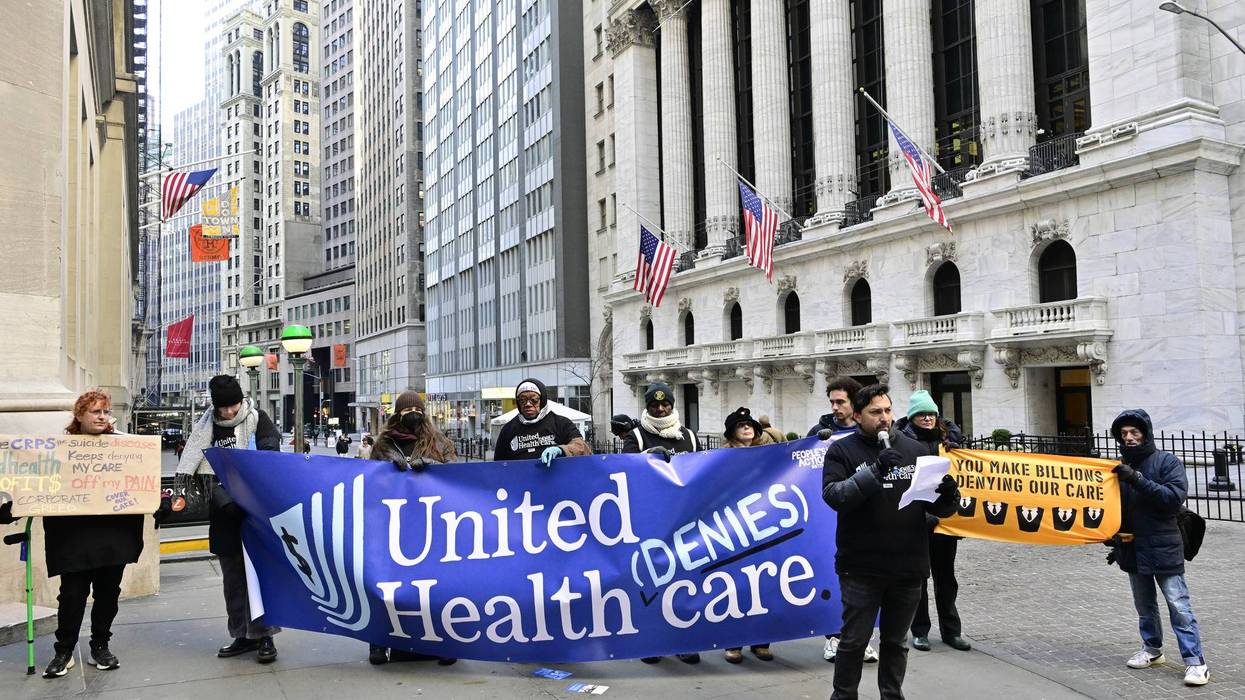
Researchers found prior authorization—which allows insurers to overrule physicians and deny coverage—acts as a “corporate care veto” that drains tens of billions of dollars each year that could go toward patients.
A new report is making the case for ending a widely-hated and sometimes deadly tactic used by for-profit health insurers to deny needed care.
It's called "prior authorization," and it allows health insurance companies to override physicians and decide whether certain care is medically necessary before it is covered.
The policy brief, published Monday by the American Economic Liberties Project (AELP), an anti-monopoly think tank, argues that the system is a massive drag on the US healthcare system, draining doctors of their time, fueling hiring shortages, and—most importantly—worsening treatable health problems for millions of Americans.
"This practice has massive financial and human costs, as I know personally from my family’s own tragic experience,” said the report's author, Hannah Garden-Monheit—a senior fellow at the AELP, whose late father was denied rehab by UnitedHealthcare after cancer forced his leg to be amputated.
"Prior authorization may have started as a narrow cost-control tool," she explained. "But it’s mushroomed into private insurers’ strategy for diverting resources from care toward their own profits. It’s time to ban prior authorization as we know it.”
The report examines how prior authorization went from a tool used sparingly to prevent payment for unnecessary treatments to what Garden-Monheit and co-author, AELP senior healthcare fellow Emma Freer, described as a "corporate care veto."
Around 1 in 5 adults with private insurance report that they or a family member had experienced a coverage denial in the past year, with 28% reporting that it worsened their health problem, according to a June survey from the Commonwealth Fund.
While insurers claim that their decisions to deny care are "evidence-based," the authors say that "in reality, the practice empowers distant corporate entities with a financial conflict of interest to override the professional judgment of physicians with firsthand knowledge of patients’ medical needs."
"There is generally little to no transparency or accountability for these decisions," the authors wrote.
While insurers claim that denials are reviewed by qualified clinicians, one survey from the American Medical Association (AMA) found that only 16% of physicians participating in peer-to-peer reviews reported that the “peer” was often or always qualified.
Garden-Monheit said United denied her father's claim multiple times, first citing his cancer diagnosis—the reason his leg was amputated in the first place—then by claiming that he had made significant enough "progress" that paying for rehab was unnecessary. The "progress" was that he "had figured out how to hop on one leg from his hospital bed to a chair."
Garden-Monheit describes how she, her father, and their care team were forced to navigate a "bureaucratic maze" by United, which ultimately led them to give up.
"At least twice, I learned of a denial only after calling United to check on the status of their request. They hadn’t even bothered with a letter," she said. "While the lines of communication felt frustratingly unpredictable, the answers always led to the same place: 'no.'"
As she explained in a recent op-ed for MS NOW: "My family’s experience wasn’t a one-off glitch. For United, the system was working as designed."
Former United chief medical officer Dr. Archelle Georgiou estimated that across just two Medicare Advantage plans from United and Humana, the companies save an estimated $100 million per year by denying claims that never get appealed. She said that's a "conservative estimate." Across the two plans, 1.75 million people were denied care, even after appeal.
While insurers pad their profits, patients suffer, the researchers found. Among people reporting a prior authorization denial, 41% said it delayed their care and 28% said their health problem worsened, according to the Commonwealth survey.
"My family’s experience wasn’t a one-off glitch. For United, the system was working as designed."
Meanwhile, the AMA survey found that 95% of physicians said that prior authorization delays care, 79% said it causes patients to abandon recommended treatments, and more than 1 in 4 doctors said it has caused a serious adverse event, including hospitalization, permanent impairment, or death.
Denied timely treatments, many patients end up paying for costly and ineffective alternatives that only make their situations worse and cause the costs to increase down the line.
"It was extremely difficult to obtain authorizations for substance abuse treatment when I covered the emergency department as a practicing psychologist," one healthcare professional, identified in the report as Nancy, said. "Other times, in my private practice, I would get authorizations and later experience ‘clawbacks’ where Blue Cross, for example, would decide the treatment was not medically necessary and take back the money already paid."
"It is impossible at times to provide sound ethical treatment and extremely hard to make a living," she said, "when reimbursement rates kept going down, and the insurance companies could take back the money they had already paid for no obvious reason.”
Prior authorization doesn't just deny care to patients. It also creates piles of paperwork for their doctors, taking away precious time that could be dedicated to their care.
The report found that physicians and their teams now spend so much on prior authorization paperwork that it consumes the equivalent of nearly 100,000 full-time physician and advanced practice clinician workloads, plus more than 213,000 clinic staff, costing as much as $32.7 billion each year. If prior authorization were eliminated, they found, it would free up enough capacity to turn a national physician shortage into a surplus.
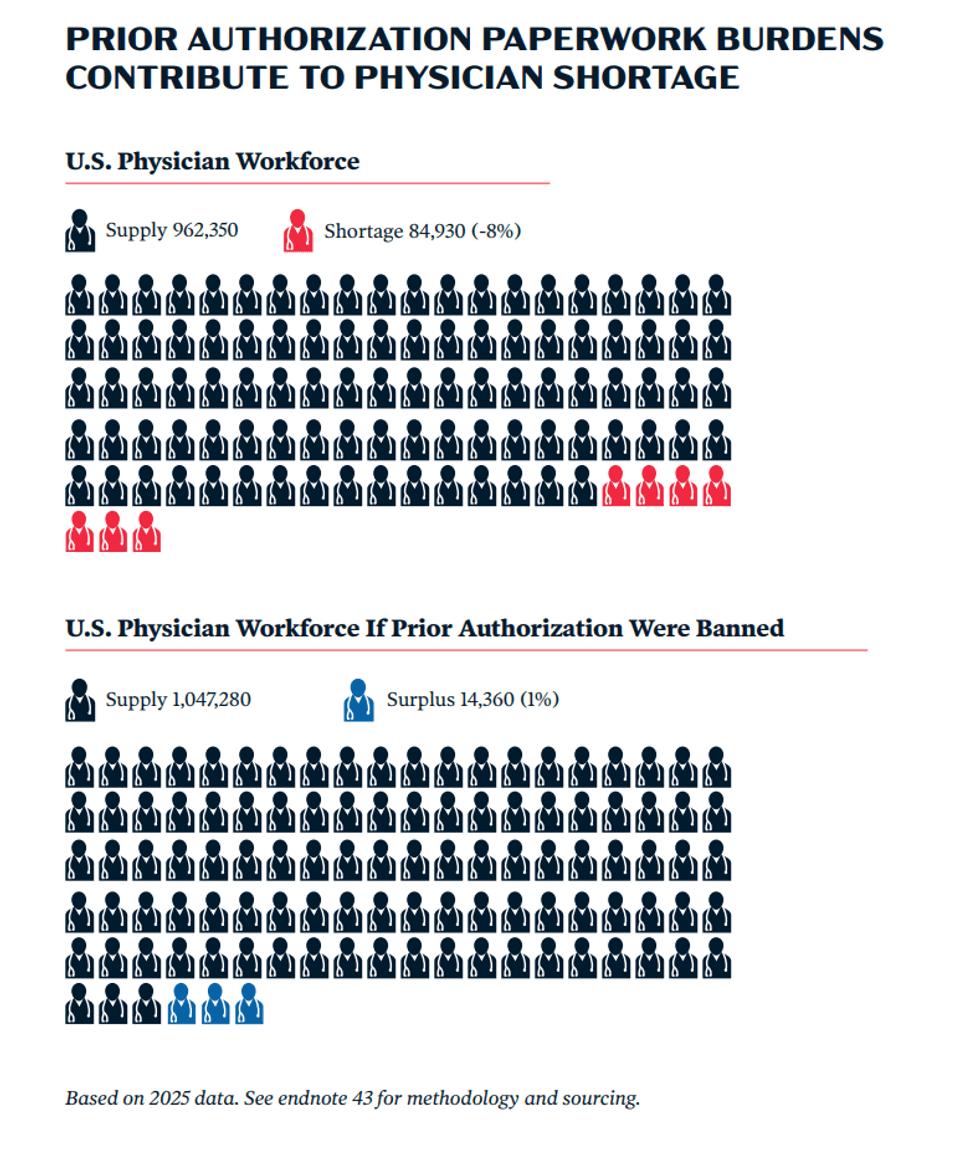 (Graphic: American Economic Liberties Project)
A YouGov poll for AELP found that more than two-thirds of voters in both parties want legislation banning prior authorization outright. But the researchers said both the Trump and Biden administrations have enacted only minor reforms that "fail to address the structural conflict of interest that underpins the corporate care veto strategy."
Meanwhile, the industry is making the denial process even more ruthlessly efficient, increasingly deploying artificial intelligence to deny requests en masse.
According to a 2023 class action lawsuit, United's NaviHealth system used a predictive AI model to determine whether Medicare Advantage patients should receive rehabilitation care despite knowing that the model had a 90% error rate.
President Donald Trump, meanwhile, has expanded prior authorization for traditional Medicare through a pilot program that allows AI models to adjudicate claims in some states. In July, Senate Republicans blocked Democrats' attempt to end the pilot program.
As part of a national pro-AI strategy, Trump has also sought to preempt state laws banning the use of AI to deny care.
The AELP researchers called for a series of reforms to end prior authorization as it currently exists. Among other changes, they said decisions to authorize treatments should be made by independent third parties without the incentive to deny care, that denials must be evidence-based, that the use of AI tools to deny claims should be banned, and that physicians should review patients in person before denying their claims.
“For too long, prior authorization has allowed insurance companies to put profits ahead of patients by overruling doctors and delaying and denying essential care,” Freer said. “This status quo is failing patients, ratcheting up costs, and undermining the basis of effective, expert-informed care. It’s time to end this ‘corporate care veto’ and put medical decisions back where they belong: with patients and their doctors.”
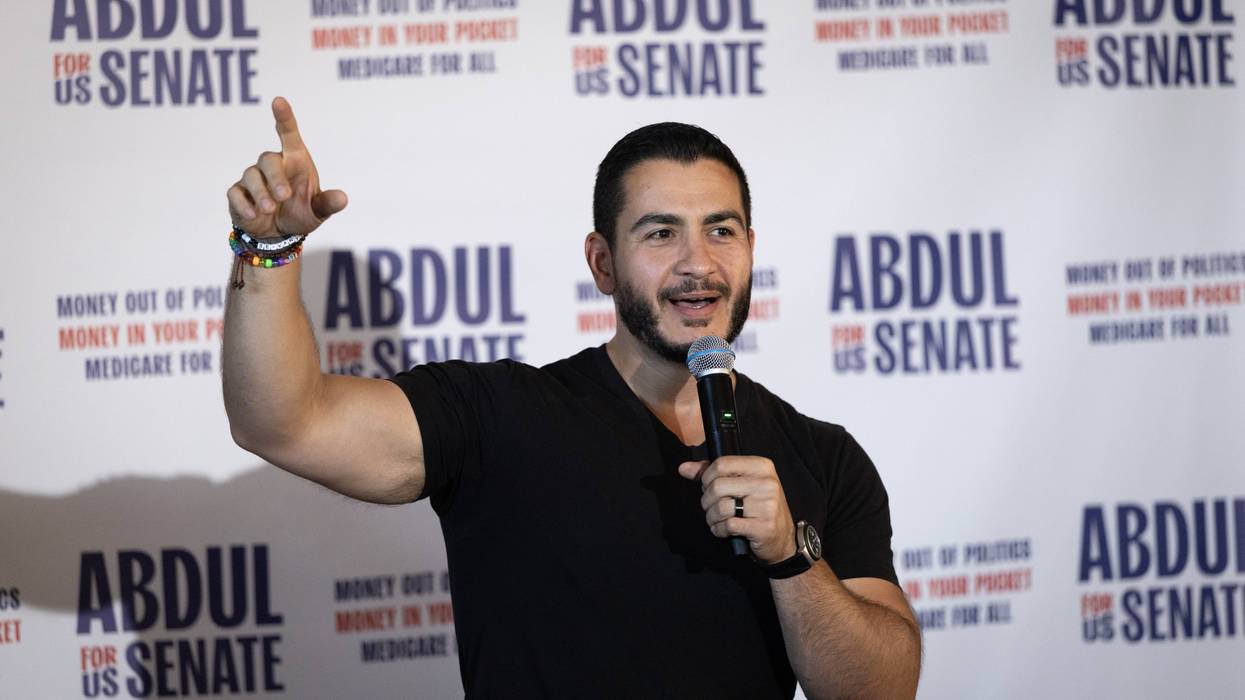
In the Michigan Democratic Senate primary, Abdul El-Sayed put guaranteed healthcare at the center of a statewide campaign and let voters decide. They decided.
You won’t find “Medicare for All” printed on any Michigan ballot from Tuesday’s primary. What you’ll find is a name: Abdul El-Sayed, the Ann Arbor physician who literally wrote the book on single-payer healthcare and then built his Senate campaign around it.
El-Sayed co-authored Medicare for All: A Citizen’s Guide, with a foreword from Sen. Bernie Sanders (I-Vt.), laying out how the country could guarantee healthcare as a right instead of rationing it by income. He wasn’t a candidate who discovered Medicare for All in a focus group. He ran because of it, and Tuesday night he routed the Democratic establishment’s chosen candidate, Haley Stevens. That’s as close to a referendum on single-payer healthcare as American politics gets, and voters delivered a verdict.
El-Sayed didn’t soften his message for the donor class. He paired “Medicare for All” with a blunt indictment of a country rich enough to end medical bankruptcy but too captured by insurance money to bother. Voters in Washtenaw and Kent counties answered.
What makes this remarkable is who El-Sayed beat and how. Stevens had every advantage institutional Democratic politics can hand a candidate: Sen. Chuck Schumer’s (D-NY) early backing, a late endorsement from Michigan Gov. Gretchen Whitmer, and roughly $30 million from the American Israel Public Affairs Committee (AIPAC) and its affiliates, the largest single-race investment in that organization’s history. This was one of the most expensive Democratic primaries ever run, a fire hose of establishment cash aimed at burying a single-payer candidate. It wasn’t enough. Voters weren’t buying what millions in outside spending were selling.
As a practicing physician assistant who has spent years advocating for Medicare for All and working in electoral politics, I've heard the same warning over and over: Don't run on single-payer. Michigan suggests that conventional wisdom deserves another look.
That should terrify the consultant class that has spent a decade telling Democrats Medicare for All is political poison in a state like Michigan, that it scares away suburban moderates. El-Sayed’s night says otherwise: an unapologetic healthcare message is exactly what turns out voters a low-turnout August primary usually leaves behind. Reporting pointed to a young, energized base and a ground game that outperformed expectations where turnout can’t be bought with television ads.
The country is catching up to what El-Sayed put in writing years ago. Over 85 million working-age Americans are uninsured or underinsured, per Commonwealth Fund research, shut out of the system or paying premiums that still leave them exposed the moment they get sick. Millions are one diagnosis away from medical debt they’ll spend a decade paying off. Public patience with an industry that profits by denying claims has curdled into open contempt, visible in viral outrage over coverage denials and a for-profit sector that ranks among the least trusted in America. Strip away the euphemisms, and the arithmetic is obscene. Insurers post billions in profit by finding reasons to say no to sick people, skimming a cut off human suffering as a business model. The United States is the only wealthy industrialized democracy that treats healthcare as a product to be underwritten, means tested, and denied rather than a right owed to its citizens. El-Sayed didn’t invent that anger, and he didn’t just write a book about it. He built a winning campaign on the promise that Democrats don’t have to keep managing that anger on behalf of the industry that causes it.
There’s symbolic weight here too. El-Sayed lost a bruising primary for governor in 2018, written off as unelectable in a state supposedly too uneasy about a candidate named Abdul. Eight years later, running on the same conviction that no one should go bankrupt getting cancer treatment, he built a coalition big enough to beat back one of the most heavily financed efforts to defeat a progressive candidate in recent Democratic primary history. That’s proof of where the Democratic base stands on healthcare, no matter what the party’s risk-averse, industry-funded strategists have told candidates for two decades.
As a practicing physician assistant who has spent years advocating for Medicare for All and working in electoral politics, I've heard the same warning over and over: Don't run on single-payer. Michigan suggests that conventional wisdom deserves another look.
Michigan shows the old fear, that Medicare for All is too risky to run on out loud, was always a story told by people who never tried telling voters the truth about their premiums. Michigan is a battleground state, not a safely progressive one, and El-Sayed won by refusing to hide the ball. He put guaranteed healthcare at the center of a statewide campaign and let voters decide. They decided. That’s not a fluke. It’s a preview of what happens when a candidate treats single-payer healthcare like the popular, morally obvious policy it has always been. AIPAC and the insurance lobby’s allies spent a fortune trying to prove otherwise and lost.
Party insiders will insist this was about mechanics, not Medicare for All. They said the same after every progressive upset this cycle, right up until they had to explain the next one. For one night, the closest thing Michigan had to a ballot question on national healthcare got its answer, and it wasn’t close.

"Every day the consequences of GOP healthcare cuts get worse," said one campaigner.
Health insurance companies that offer plans on the Affordable Care Act marketplace are proposing double-digit premium increases for 2027, signaling the second consecutive year of out-of-pocket cost hikes following President Donald Trump and congressional Republicans' refusal to extend enhanced subsidies that lapsed last December.
The health policy research group KFF and the Peterson Center on Healthcare released an analysis on Wednesday showing that ACA marketplace insurers "are proposing a median premium increase of about 14% in 2027." While that would represent a decrease compared to the median finalized premium increase of 20% for 2026, it marks "the second-highest requested rate change since 2018, as premium growth had been relatively flat in this market for several years," the analysis notes.
"If these early indications of median premium increases for 2027 hold, typical premiums for insurers participating in the ACA marketplaces will have jumped by more than one-third over a two-year period," KFF and the Peterson Center found, pointing to the significance of Trump and the GOP's deciseion to oppose an extension of enhanced ACA premiums that were established in 2021 during the Biden administration.
KFF and the Peterson Center explain:
As anticipated, many healthier enrollees left the ACA Marketplaces in 2026 as their subsidies decreased—leading to an average increase in premium payments after subsidies of 58% this year—leaving behind an enrollee base that is on average somewhat sicker and more expensive to cover. For 2026, this dynamic was estimated to drive rates an average of four percentage points higher than they otherwise would have been, and insurers are now building 2027 rates on top of that adjusted, less-healthy risk pool—compounding the effect into next year’s premiums as well.
Leslie Dach, chair of the advocacy group Protect Our Care, said in a statement Wednesday that the analysis underscores "just the latest hit on hard-working families struggling to get by after Republicans ripped away the tax credits that helped millions of Americans afford coverage."
"Every day the consequences of GOP healthcare cuts get worse," said Dach. "This was a deliberate choice by Republicans who took away affordable coverage from millions of people to help fund tax breaks for billionaires and big corporations. The damage is already being felt at kitchen tables across America, and these new premium hikes show the worst is still ahead. And Republicans will pay the political price. Healthcare is already the driving issue leading up to the elections, and as the consequences mount, it will only mobilize voters further.”
Since the start of President Donald Trump's second White House term, ACA enrollment has declined by more than 5 million people as a growing number of Americans are priced out of coverage by surging premiums.
For 2027, at least 20 insurers across states that have submitted rate filings so far have proposed premium increases exceeding 20%, according to the KFF-Peterson Center analysis.
Kendall Witmer, the Democratic National Committee's rapid response director, said in a statement Wednesday that "healthcare is unaffordable for millions of Americans because Donald Trump and Republicans sold them out to give billionaires even bigger tax cuts."
"Working families are already grappling with sky-high prices for groceries and gas, and growing medical bills are putting them over the edge," said Witmer. "Healthcare for Americans has never been more expensive—and Trump and Republicans are squarely to blame."
Leor Tal, campaign director for the advocacy group Unrig Our Ecnomy, echoed those arguments and called for GOP lawmakers, who still control the House and the Senate, to act.
“Millions have already lost access to health insurance, and these planned premium hikes will only escalate this crisis," said Tal.
"We need Republicans in Congress to restore the health care tax credits they took away from millions. Otherwise, when their premiums rise again, Americans will know who is at fault.”
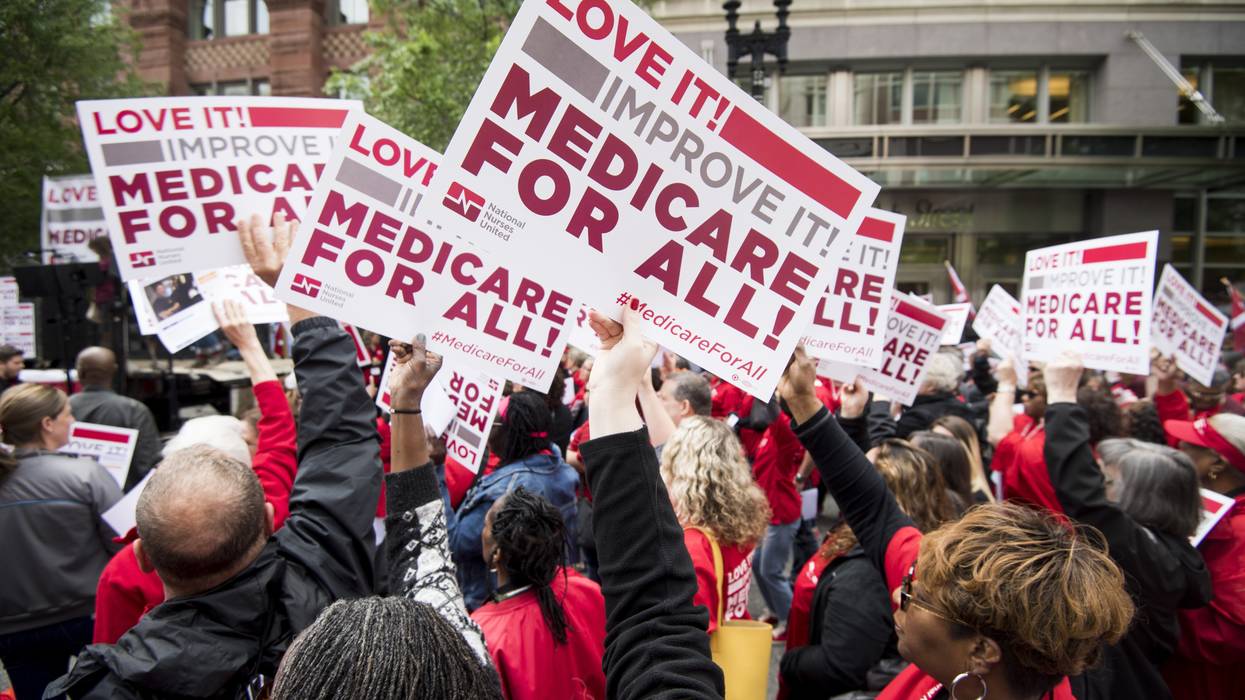
The shortcomings of US healthcare are painfully apparent throughout Rep. Casten’s district, so why won't he co-sponsor the Medicare for All Act?
Ten years ago, when reflecting on his signature legislative achievement, President Barack Obama famously encouraged Americans to think of the Affordable Care Act as a “starter home.” For as much good as the ACA did—expanding coverage to millions, offering policies to people with “preexisting” conditions—it is clear that the foundation of this starter home is starting to crack.
As an emergency medicine physician who has practiced throughout the Chicagoland area for nearly 50 years, I have seen these fault lines up close. Health insurance corporations like Blue Cross Blue Shield and UnitedHealthcare have strayed far from their nonprofit roots, and now routinely delay and deny care for everyday Americans. Put simply, these insurers have an incentive—and even a duty—to skim hundreds of billions of dollars off the top.
Earlier this year, the Chicago City Council recognized this dynamic when it passed a resolution calling for a single-payer national health program, also known as “Medicare for All.”
The resolution passed without objection from any of the city’s 50 aldermen, and concluded by saying council members “enthusiastically support the Medicare for All Act of 2025 and call on our federal legislators to work toward its swift enactment.”
Under a single-payer national health program, Americans would no longer need to worry about what treatments their insurance would cover, what doctors they would be allowed to see, and how much they would be charged out of pocket.
Every representative whose district includes Chicago has already co-sponsored the Medicare for All Act in the US House, and every likely replacement for retiring members of Congress has promised to do the same, with one exception. Rep. Sean Casten (D-Ill.), whose district includes parts of the Garfield Ridge and Clearing neighborhoods west of Midway Airport, has committed to staying in the “starter home,” even though it is coming apart at the seams.
The shortcomings of US healthcare are painfully apparent throughout Rep. Casten’s district, where more than 40,000 of his constituents lacked health insurance before the expiration of enhanced ACA subsidies and the implementation of federal Medicaid cuts. That’s to say nothing of his constituents with sky-high deductibles and limited provider networks who cannot afford to use the coverage they do have.
During my years in the emergency department, I have seen the awful impacts of delayed care. When I practiced at Michael Reese Hospital many years ago, it was distressingly common for me to treat young men with kidney failure. Why? Because their high blood pressure went untreated due to a lack of health coverage to pay for doctor visits and simple medications. They waited until their health issues became unbearable—and much more expensive to treat.
We can do so much better than this, and growing numbers of Americans—including 90% of Democrats in a recent Gallup poll—are starting to demand that we replace our “starter home” with a much more durable healthcare system.
Under a single-payer national health program, Americans would no longer need to worry about what treatments their insurance would cover, what doctors they would be allowed to see, and how much they would be charged out of pocket. I enjoyed a glimpse of this during my 20 years at the Captain James A. Lovell Federal Health Care Center in North Chicago, where I was able to care for veterans, active-duty members of the US military, and their families—without worrying about what their insurance would cover or whether they could afford to pursue treatment.
As Dr. Claudia Fegan, who recently retired as the chief medical officer of Cook County Health, testified before the Chicago City Council, a system like Medicare for All is well within our grasp.
“We already spend enough money on healthcare in this country,” Dr. Fegan said, “we just allow too many people who do none of the work of delivering healthcare to take profit from it. By eliminating the waste and greed of private insurance, we can afford to cover everyone in our country for all necessary care, and end the scourges of surprise bills, skipped medications, and medical bankruptcy.”
Rep. Casten has declined to co-sponsor the Medicare for All Act during his four terms in office, but his position has become increasingly lonely within the Democratic Party, the Illinois Congressional Delegation, and the US medical profession.
Thankfully, it is never too late to do the right thing.
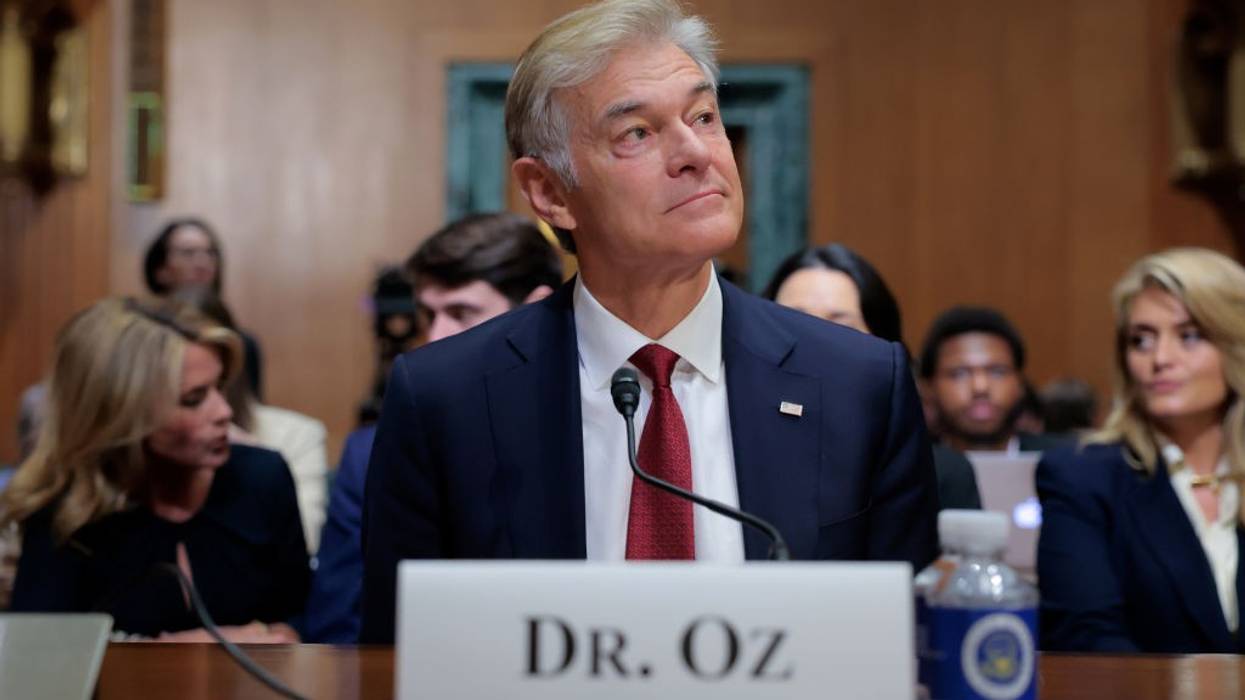
"Privatized Medicare plans are denying patients the care they need, while defrauding the government of billions a year," said one advocacy group. "Donald Trump is giving them even more taxpayer money."
The federal agency now headed by former television host Mehmet Oz announced Monday that it is substantially boosting payments to privately run Medicare Advantage plans, a boon for an industry notorious for overcharging taxpayers and denying patients necessary care.
The Centers for Medicare and Medicaid Services (CMS) said it is jacking up payments to Medicare Advantage (MA) plans by more than 5% for 2026—an increase of over $25 billion. That's more than double the increase proposed by the Biden administration.
Health insurance company stocks jumped in response to the news of the Trump administration's payment hike, with shares of UnitedHealth Group—the largest provider of Medicare Advantage plans—rising more than 6% following the CMS statement.
Oz, whom the Republican-controlled Senate confirmed in a party-line vote last week, previously reported holding tens of millions of dollars worth of stock in companies with interests before CMS, including UnitedHealth.
Social Security Works, a progressive advocacy group that campaigns against Medicare Advantage,
said Monday that "privatized Medicare plans are denying patients the care they need, while defrauding the government of billions a year."
"Trump is giving them even more taxpayer money," the group wrote on social media. "Trump-Musk don't care about 'efficiency.' They care about stealing our money."
"Medicare Advantage is wasteful and inefficient relative to traditional Medicare and everyone knows it."
One industry analyst, Chris Meekins of the financial services firm Raymond James, told Axios that the payment boost for Medicare Advantage "leads one to believe that DOGE"—the Elon Musk-led advisory commission also known as the Department of Government Efficiency—"does not care about MA."
Healthcare writer Natalie Shure
called the payment increase a clear "illustration that this administration's goal is upward wealth distribution and the dismantling of public goods, not 'efficiency.'"
"Medicare Advantage is wasteful and inefficient relative to traditional Medicare," Shure added, "and everyone knows it."
The CMS announcement came weeks after Oz told Sen. Elizabeth Warren (D-Mass.) during his confirmation hearing that he is concerned about and prepared to "go after" Medicare Advantage upcoding, the practice of making patients appear sicker than they actually are to reap larger government payments.
The Wall Street Journal reported Monday that the Trump administration did opt to "stick with a Biden administration policy change that limits certain billing practices that have boosted payments to Medicare Advantage insurers," despite industry objections to the policy.
But Oz's record, including his past support for a proposal dubbed "Medicare Advantage for All," has led watchdog groups to doubt that he intends to aggressively take on large-scale overpayments and fraud in the program. According to one estimate from 2023, Medicare Advantage plans are overcharging U.S. taxpayers by up to $140 billion a year.
Robert Weissman, co-president of Public Citizen, warned after his Senate confirmation that Oz will "seek to further privatize Medicare, increasing the risk that seniors will receive inferior care and further threatening the long-term health of the Medicare program."
"Dr. Oz is joining a team of snake oil salesmen and anti-science flunkies that have already shown disdain for the American people and their health," said Weissman.
In addition to Oz and Robert F. Kennedy Jr. at the Department of Health and Human Services, which oversees CMS, Trump appointed former Medicare Advantage lobbyist Don Dempsey as associate director for health at the Office of Management and Budget, another signal that the administration intends to be an ally to the MA industry.
The provider has—for good reason—become the most powerful lightning rod for patient and medical staff critiques of how private insurers operate.
Healthcare is big business in the United States. So big it can be hard to wrap your head around.
America’s largest healthcare company, the UnitedHealth Group, pulled in over $100 billion in revenue in just the fourth quarter of 2024 alone. For the full year, the giant’s insurance division, UnitedHealthcare, just reported record revenue of $298.2 billion.
These staggering revenue totals actually fell below investor expectations. Right after the announcement, UnitedHealth Group shares slipped 6% on the New York Stock Exchange.
The outpouring of anger after the December killing of UnitedHealthcare CEO Brian Thompson—anger not at the shooting but at the company Thompson represented—shows just how many Americans are currently suffering under our privatized healthcare system.
That tells you a lot about what’s important in the healthcare industry: profit, not care. Health insurance companies in particular can only profit by paying out less in claims than they collect in premiums. And that means denying patients coverage for the care they need.
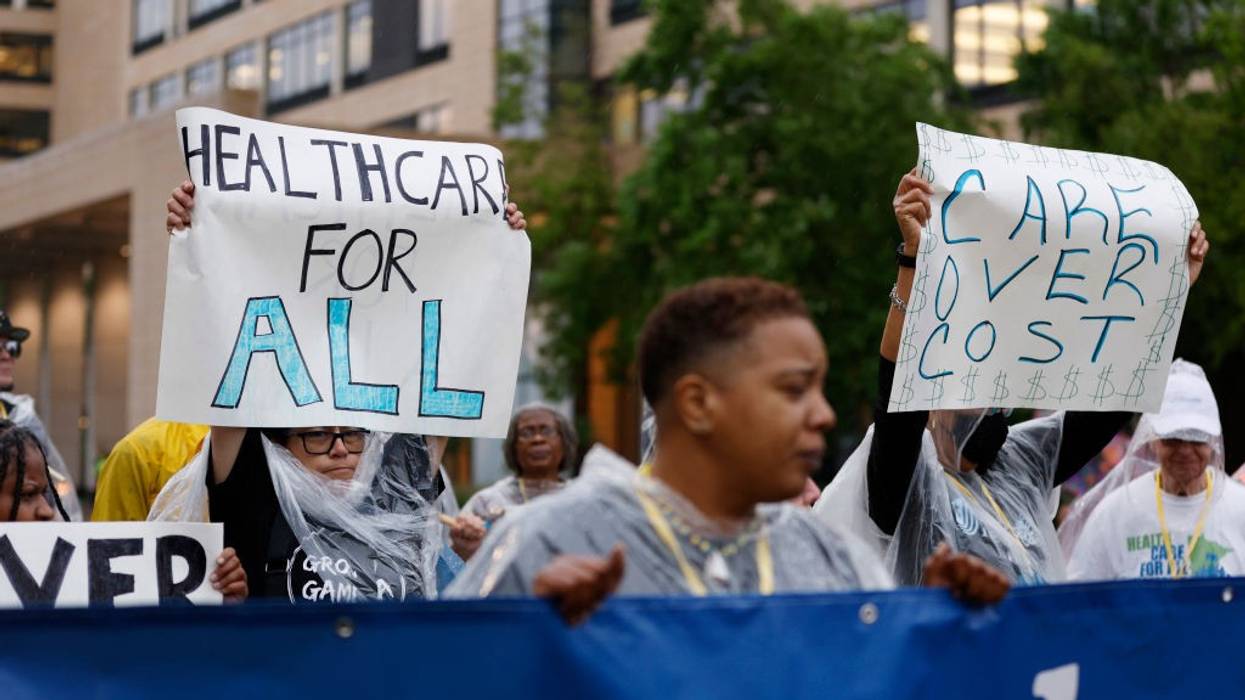
Just outside the New York Stock Exchange, victims of our for-profit healthcare system—doctors and patients alike—recently braved freezing temperatures to call out the suffering that engineered UnitedHealth’s exorbitant earnings.
One of those demonstrators, Jenn Coffey, has been battling complex regional pain syndrome (CRPS), a condition so incredibly painful that it’s often called the “suicide disease.”
UnitedHealth denied her the prior authorization needed to have her critically important treatment adequately covered. “UnitedHealthcare would rather leave me in torture than grant me the peace my infusions bring,” says Coffey. “I’m asking for a life worth dignity. I’m left begging for a life worth living.”
Several other speakers shared their deeply personal experiences with a healthcare system that far too often treats patients as disposable.
Dr. Toutou Moussa Diallo, a New York-based researcher and healthcare activist, detailed how insurance denials led to subpar treatment for his broken ankle that only made the initial injury more debilitating. Nephrologist Cheryl Kunis shared the story of a patient who died after UnitedHealthcare refused to cover a PET scan of a malignant neck tumor.
These experiences amount to much more than isolated one-off incidents. The outpouring of anger after the December killing of UnitedHealthcare CEO Brian Thompson—anger not at the shooting but at the company Thompson represented—shows just how many Americans are currently suffering under our privatized healthcare system.
The ongoing campaign protesting how UnitedHealth does business began well before Thompson’s headline-grabbing killing. The Care Over Cost mobilization, led by People’s Action, has been organizing rallies protesting America’s biggest private insurers for years.
UnitedHealth has—for good reason—become the most powerful lightning rod for patient and medical staff critiques of how private insurers operate. The company’s gargantuan profits rest on decisions that regularly exploit patients at every opportunity.
Just a few snippets from recent news accounts offer a vivid picture about how UnitedHealth goes about making its billions.
UnitedHealth Group’s pharmacy benefit manager, Optum RX, marked up some cancer treatments by over 1,000%. UnitedHealthcare systematically limited access to critical treatments for children with autism to cut costs. And along with two other insurers, the company intentionally denied nursing care to patients covered by Medicare Advantage—all to maximize profit.
And how has the UnitedHealth Group been spending all its ill-gotten gains? One telling stat: UnitedHealth Group CEO Andrew Witty pocketed an astonishing $23.5 million in 2023 compensation.
As the rally in front of the New York Stock Exchange ended, protesters called on UnitedHealthcare to publicly release its claim denial rates, oppose federal tax cuts that would result in Medicaid service reductions, and end the company’s care-denying prior authorization requirements.
Those eminently reasonable demands for the company. Meanwhile, the rest of us should consider whether we want healthcare to be a tool for the public good—or just private profit.
"It is totally fair for people to identify private insurers as the key bad actor in our current system," writes Matt Bruenig of the People's Policy Project. "The quicker we nationalize health insurance, the better."
Last week's murder of UnitedHealthcare CEO Brian Thompson brought to the surface a seething hatred of the nation's for-profit insurance system—anger rooted in the industry's profiteering, high costs, and mass care denials.
But that response has led some pundits to defend private insurance companies and claim that, in fact, healthcare providers such as hospitals and doctors are the real drivers of outlandish U.S. healthcare costs.
In an analysis published Tuesday, Matt Bruenig of the People's Policy Project argued that defenders of private insurers are relying on "factual misunderstandings and very questionable analysis" and that it is reasonable to conclude that the for-profit insurance system is "actually very bad."
"From a design perspective, the main problem with our private health insurance system is that it is extremely wasteful," Bruenig wrote, estimating based on existing research that excess administrative expenses amount to $528 billion per year—or 1.8% of U.S. gross domestic product.
"All healthcare systems require administration, which costs money, but a private multi-payer system requires massively more than other approaches, especially the single-payer system favored by the American left," Bruenig observed, emphasizing that excess administrative expenses of both the insurance companies and healthcare providers stem from "the multi-payer private health insurance system that we have."
He continued:
To get your head around why this is, think for a second about what happens to every $100 you give to a private insurance company. According to the most exhaustive study on this question in the U.S.—the CBO single-payer study from 2020—the first thing that happens is that $16 of those dollars are taken by the insurance company. From there, the insurer gives the remaining $84 to a hospital to reimburse them for services. That hospital then takes another $15.96 (19% of its revenue) for administration, meaning that only $68.04 of the original $100 actually goes to providing care.
In a single-payer system, the path of that $100 looks a lot different. Rather than take $16 for insurance administration, the public insurer would only take $1.60. And rather than take $15.96 of the remaining money for hospital administration, the hospital would only take $11.80 (12% of its revenue), meaning that $86.60 of the original $100 actually goes to providing care.
High provider payments, which some analysts have suggested are the key culprit in exorbitant healthcare costs, are also attributable to the nation's for-profit insurance system, Bruenig argued.
"Medicaid and Medicare are able to negotiate much lower rates than private insurance, just as the public health insurer under a single-payer system would be able to. It is only within the private insurance segment of the system that providers have been able to jack up rates to such an extreme extent," he wrote. "Given all of this, I think it is totally fair for people to identify private insurers as the key bad actor in our current system. They are directly responsible for over half a trillion dollars of administrative waste and (at the very least) indirectly responsible for the provider rents that are bleeding Americans dry."
"The quicker we nationalize health insurance," he concluded, "the better."
Bruenig's analysis comports with research showing that a single-payer system such as the Medicare for All program proposed by Sen. Bernie Sanders (I-Vt.), Rep. Pramila Jayapal (D-Wash.), and other progressives in Congress could produce massive savings by eliminating bureaucratic costs associated with the private insurance system.
One study published in the Annals of Internal Medicine in January 2020 estimated that Medicare for All could save the U.S. more than $600 billion per year in healthcare-related administrative costs.
"The average American is paying more than $2,000 a year for useless bureaucracy," said Dr. David Himmelstein, lead author of the study, said at the time. "That money could be spent for care if we had a Medicare for All program."
Deep-seated anger at the systemic and harmful flaws of the for-profit U.S. insurance system could help explain why the percentage of the public that believes it's the federal government's responsibility to ensure all Americans have healthcare coverage is at its highest level in more than a decade, according to Gallup polling released Monday.
"There's a day of reckoning that is happening right now," former insurance industry executive Wendell Potter, president of the Center for Health and Democracy, said in an MSNBC appearance on Monday. "Whether we're talking about employers, patients, doctors—just about everybody despises health insurance companies in ways that I've never seen before."

"Private insurance companies, including Medicare Advantage plans, are designed to generate profit. How do they do that? Take our money and then deny our care."
A pair of new stories examining the increasingly common but shadowy U.S. insurance industry practice of refusing to pay for certain treatments drew outrage Wednesday from patient advocates and Medicare for All proponents, who said the reporting further reveals the harms of for-profit healthcare.
The investigative outlet ProPublica focused its attention on the "galling" secrecy around insurance companies' claim denials, which frequently leave patients with massive medical bills and little clarity as to why their claims were rejected.
"How often insurance companies say no is a closely held secret," ProPublica's Robin Fields reported. "There's nowhere that a consumer or an employer can go to look up all insurers' denial rates—let alone whether a particular company is likely to decline to pay for procedures or drugs that its plans appear to cover."
"In 2010, federal regulators were granted expansive authority through the Affordable Care Act to require that insurers provide information on their denials. This data could have meant a sea change in transparency for consumers," Fields added. "But more than a decade later, the federal government has collected only a fraction of what it’s entitled to. And what information it has released, experts say, is so crude, inconsistent, and confusing that it's essentially meaningless."
The data that is available indicates claim denials are on the rise. According to a February KFF study of Affordable Care Act plans, "nearly 17% of in-network claims were denied in 2021."
Elisabeth Rosenthal of KFF Health News wrote in a column last month that declining to pay for patients' treatments is "a handy way for insurers to keep revenue high."
"Millions of Americans in the past few years have run into this experience: filing a healthcare insurance claim that once might have been paid immediately but instead is just as quickly denied," Rosenthal wrote. "If the experience and the insurer's explanation often seem arbitrary and absurd, that might be because companies appear increasingly likely to employ computer algorithms or people with little relevant experience to issue rapid-fire denials of claims—sometimes bundles at a time—without reviewing the patient's medical chart. A job title at one company was 'denial nurse.'"
ProPublica noted Wednesday that "some advocates say insurers have a good reason to dodge transparency."
Citing Wendell Potter, a former Cigna executive who now supports Medicare for All, ProPublica reported that "refusing payment for medical care and drugs has become a staple of their business model, in part because they know customers appeal less than 1% of denials."
"That's money left on the table that the insurers keep," Potter told the outlet.
With their companies' profits booming, the CEOs of the top seven private health insurance giants in the U.S. took home a combined $335 million in compensation last year.
Medicare Advantage providers—private insurers paid by the federal government to cover patient care—have become notorious for denying claims for medically necessary treatments as enrollment in the program continues to surge.
As The Lever's Matthew Cunningham-Cook reported Wednesday, "Medicare Advantage insurers are threatening the foundational premise of the government's healthcare safety net for seniors and people with disabilities: that people in Medicare should get the care that is recommended by a doctor."
"A 2022 investigation by the inspector general of the Department of Health and Human Services found that in 2019, 13% of the total prior authorization requests denied by Medicare Advantage plans would have been covered under traditional Medicare, leading to an estimated 85,000 additional care denials," Cunningham-Cook wrote. "That year, Medicare Advantage plans also wrongly denied 18% of payment claims—covering an estimated 1.5 million claims—reducing the likelihood that doctors will recommend the costliest yet often most effective care, for fear of not being paid."
Social Security Works, a progressive advocacy group that backs Medicare for All, tweeted in response to the new reporting Wednesday that "private insurance companies, including Medicare Advantage plans, are designed to generate profit."
"How do they do that? Take our money and then deny our care," the group added.
Cunningham-Cook opened his piece with the story of Jenn Coffey, a former Republican state representative in New Hampshire "who, like many GOP faithfuls, believed private insurers could solve the healthcare crisis if they were allowed to do things like sell policies across state lines."
But Coffey's views were shaken when UnitedHealth, her ultra-profitable Medicare Advantage provider, "constantly rejected or second-guessed the care options her doctors suggested for her cancer recovery and for a rare and painful secondary disease that has no standard treatment plan," Cunningham-Cook reported.
“Now I've realized that you can't fix or repair the system,” Coffey told The Lever. "The insurance companies don't offer anything. They serve as a roadblock."
"The only way forward," she added, "is Medicare for All."

UnitedHealth CEO Andrew Witty told investors he "appreciates" the Biden administration's decision to slow the implementation of its Medicare Advantage reforms.
The chief executive of UnitedHealth Group told investors Friday that he "appreciates" the Biden administration's decision to more slowly implement its crackdown on overbilling in Medicare Advantage, a privately run, government-funded program that the Minnesota-based insurance behemoth touted as a key profit driver in its newly released first quarter earnings report.
UnitedHealth, one of the largest Medicare Advantage providers in the U.S., reported $91.9 billion in revenue for the first three months of 2023—15% growth year-over-year—and more than $8 billion in earnings from operations, exceeding analysts' expectations.
UnitedHealthcare, UnitedHealth Group's insurance business, "is pacing strongly to its outlook for another year of market-leading growth in serving more people through its Medicare Advantage offerings," the company said in its earnings release. The company said Friday that it added 655,000 new Medicare Advantage members in the first quarter of the year.
UnitedHealth's earnings report came after the company helped lead an aggressive lobbying campaign against new Biden administration rules aimed at limiting Medicare Advantage insurers' ability to overcharge the federal government by making patients appear sicker than they actually are.
According to The New York Times, UnitedHealth CEO Andrew Witty appeared on Capitol Hill in person to lobby against the proposed changes, which the lucrative Medicare Advantage industry falsely characterized as cuts to the program that now provides insurance to nearly half of the overall Medicare population.
Late last month, the Centers for Medicare and Medicaid Services (CMS) offered a number of concessions to the industry, agreeing to impose its policy changes over a period of three years instead of all at once and boosting Medicare Advantage payment rates by more than expected.
As STAT reported last week, Wall Street investors were "overjoyed" by the Biden administration's move, which drew criticism from progressive lawmakers and healthcare analysts who warned the slow phase-in will allow Medicare Advantage plans to continue their abusive practices. UnitedHealth, like other Medicare Advantage insurers, has been accused of wrongfully denying or attempting to deny patients necessary care, in some cases utilizing artificial intelligence to determine when to end coverage.
When it comes to excess billing, CMS recently estimated that overpayments to Medicare Advantage totaled $11.4 billion in fiscal year 2022—a significant drain on the Medicare trust fund.
Citing one industry analyst, STAT noted that UnitedHealth could reap $900 million in additional profit next year alone thanks to the administration's decision to delay full implementation of the reforms.
In an analysis published in February, former insurance executive Wendell Potter noted that UnitedHealth is one of just seven large for-profit insurance companies that now control 70% of the Medicare Advantage market, which is dependent on taxpayer money.
According to Potter, who now heads the Center for Health and Democracy, insurance giants UnitedHealth, Cigna, CVS/Aetna, Elevance, Humana, Centene, and Molina saw their combined revenues from taxpayer-supported programs grow 500% between 2012 and 2022.
"They've essentially been bailed out by taxpayers," Potter said of for-profit insurance giants like UnitedHealth in a recent interview with The American Prospect. "And members of Congress, and various administrations, have been just standing on the sidelines, not paying attention to what's been going on."