

SUBSCRIBE TO OUR FREE NEWSLETTER
Daily news & progressive opinion—funded by the people, not the corporations—delivered straight to your inbox.
5
#000000
#FFFFFF
To donate by check, phone, or other method, see our More Ways to Give page.
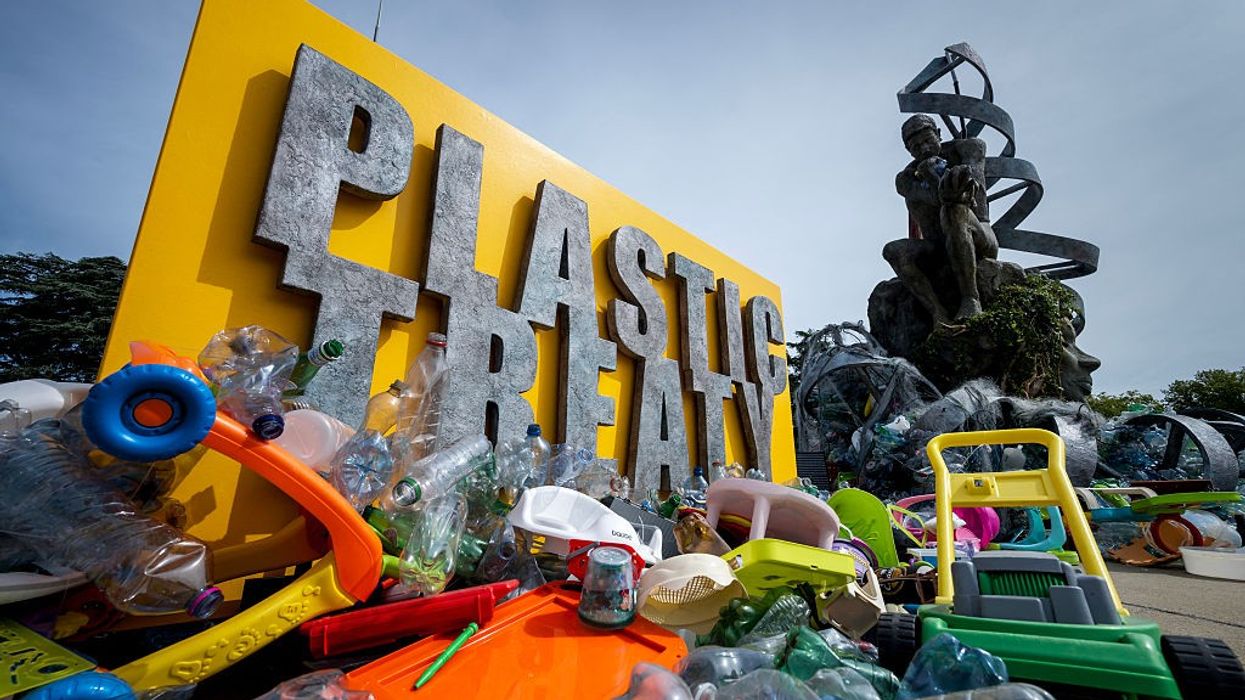
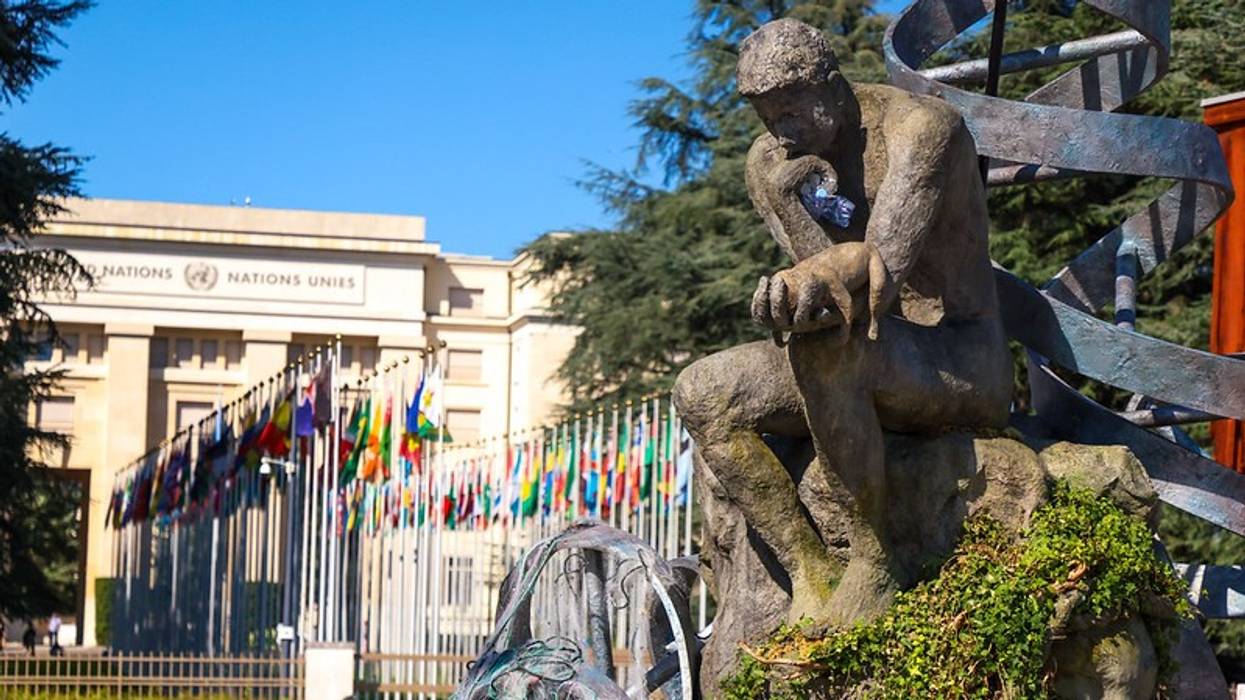
Plastic was once hailed as a great invention, but is now increasingly seen as a considerable risk to human health, the environment, and the economy. In a 2016 report, the World Economic Forum found that, at current rates, it is predicted that without a solution, "Oceans will contain more plastic than fish by 2050."
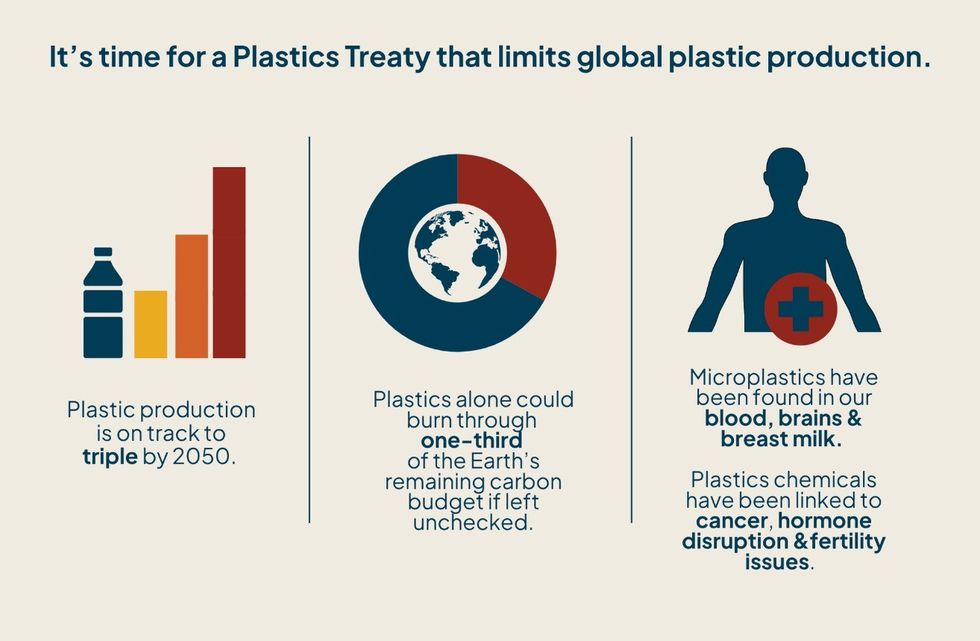
Plastics production has increased twentyfold since 1964, and now 360 million metric tons of plastic waste is created every single year. Just 9% of this is recycled effectively. One-third will end up in fragile ecosystems such as the world's oceans. Plastic production is set to triple by 2060.
There are about 16,000 different plastic chemicals, the effects of which are still largely unexplored; this includes per- and polyfluoroalkyl substances (PFAS) and other forever chemicals. Toxic chemicals now pose one of the greatest threats to humanity, alongside the climate crisis, species extinction, and nuclear weapons.
As with the fossil fuels industry, big tobacco, and the arms trade, profits are privatized, but the burden is carried socially.
There are already five marine regions which are completely contaminated with plastic and can no longer support life. The most infamous is the Great Pacific Garbage Patch in the North Pacific, which is twice the size of Texas.
Plastic is now considered a health risk with an estimated cost of up to $1.5 trillion per year. Plastic is inhaled from the air and consumed in food and drinks. Tiny microplastic particles have been found in human blood, brains, intestines, and placentas, which can cause cancer, heart attacks, and strokes. Once they have entered the environment, microplastics cannot ever be removed.
The vast majority of synthetic plastics are derived from crude oil, natural gas, or coal. The transition away from fossil fuels in the energy sector has led many fossil fuel companies to shift their attention to the plastics industry, building new manufacturing sites and ramping up production. Plastics play a significant role in the climate crisis and are responsible for 5% of global greenhouse gas emissions—twice as much as global air traffic.
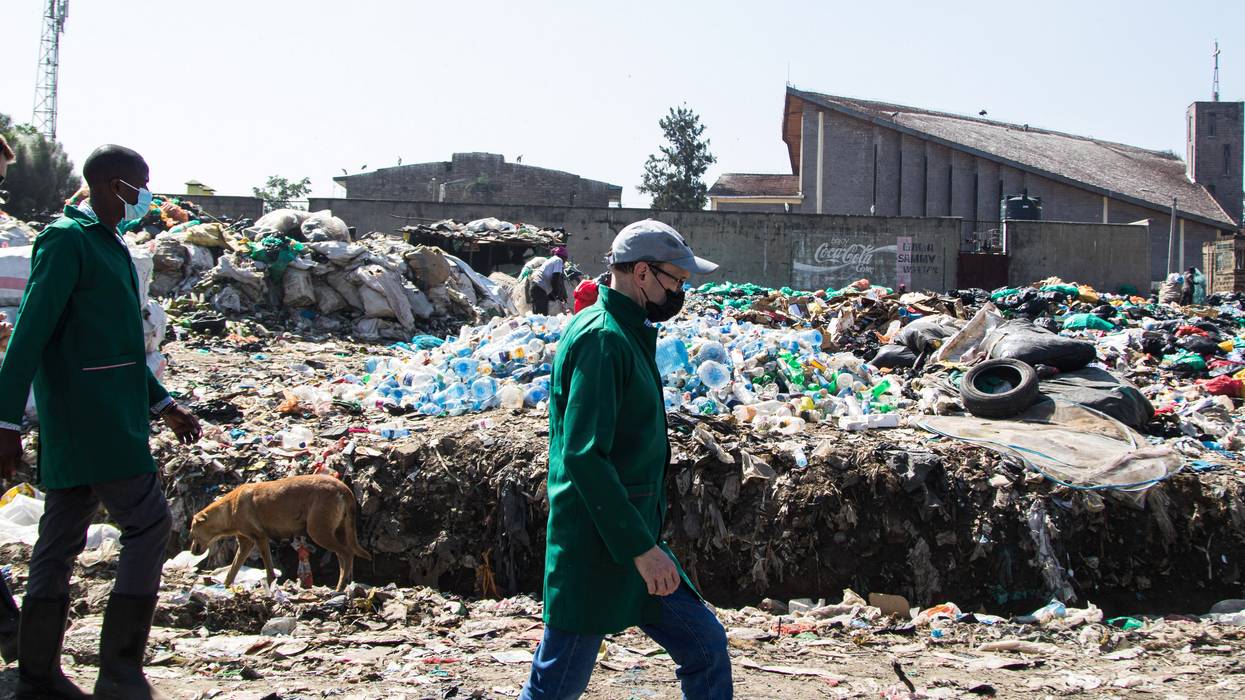
Mismanagement of plastic waste results in the vast majority of it being discarded, burned, or relocated to poorer regions of the world, where it is released back into the environment and ultimately finds its way into our oceans.
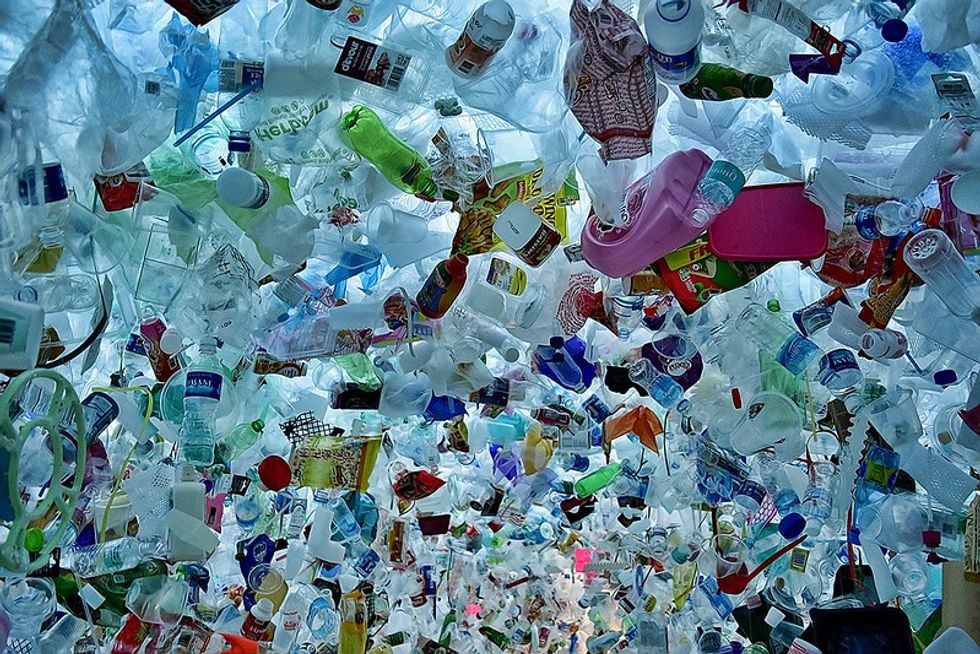 An installation of wasted materials turned into art by Tan Zi Xi is shown. (Photo by Choo Yut Shing/Flickr/CC BY-NC-SA 2.0)
There have so far been six rounds of talks organized by the UN Environment Programme (UNEP), none of which have resulted in a consensus. The previous session of the Intergovernmental Negotiating Committee (INC-5.1) in Busan, South Korea was unable to overcome opposition to an international plastics treaty and adjourned until the next year.
The main points of contention were the inclusion of mandatory caps on plastic production and the use of toxic chemicals in processing.
Oil and gas-producing countries such as Saudi Arabia, Russia, Iran, Egypt, Kuwait, and the USA have been stalling progress, as they oppose production targets and prefer to focus on waste management. The UNEP conferences have been swarmed by fossil fuel lobbyists who have been very much part of the pressure groups blocking a strong deal.
The INC-5.2 took place in Geneva from 5-15 August 2025. Representatives from 184 countries and numerous national and international nongovernmental organisations (NGOs) took part under the auspices of the United Nations. It was the largest round of international negotiations since the Paris Climate Agreement in 2015 and the UN Biodiversity Summits.
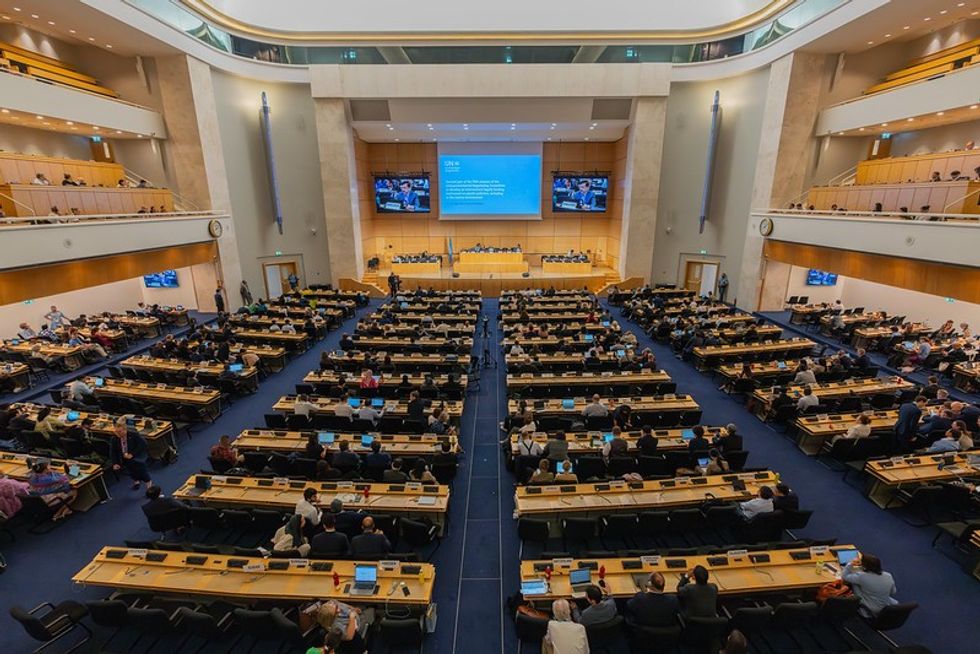 The UNEP INC-5.2 Plenary is shown. (Photo by Alejandro Laguna Lopez/UNEP/Flickr/CC BY-NC-SA 4.0)
The talks formally closed on August 15 without a deal—a historic opportunity missed. Two days before the decision was made, chairman Luis Vayas Valdivieso presented a proposal that was deemed unsatisfactory by the conference delegates. The draft practically dropped all measures to reduce plastic production and referred mainly to the handling of plastic waste that has already entered the environment.
The conference was extended by one day, which left just hours to find a compromise. A revised draft was submitted by the chair at the last hour. It was also deemed not fit for discussion by high-ambition countries as it omitted the key concepts of reducing plastic production, regulating chemicals of concern, and creating a fund to tackle plastic injustice in the Global South.
Forming a coalition of the willing, which excludes states blocking the deal, will enable countries that want a strong plastics treaty to fulfil their mandate without obstacles and move forward together.
The main obstacle to securing a strong deal was the UN's requirement for consensus in decision-making. For years, delegations have been urging a reform to a democratic voting system, allowing drafts to be approved with a two-thirds majority. Most governments support a strong treaty. The consensus process bows to low-ambition countries, who are backed by powerful corporations intent on blocking real solutions.
Colombia's delegate, Sebastián Rodríguez, blasted the talks, stating that "the negotiations were consistently blocked by a small number of states who simply don't want an agreement." Even French President Emmanuel Macron stepped in to call for a successful conclusion in the interest of future generations.
There is currently no confirmed date or venue for the next round of negotiations.
Co-headed by Norway and Rwanda, a group of like-minded countries have formed The High Ambition Coalition made up of many European countries, including the UK, Germany, and France, many small island nations, Japan, many Latin American countries, and even the UAE.
Their common goal is to end plastic pollution by 2040 and implement a strong plastics treaty which is both legally binding and effectively monitored. In preparation for the INC-5.2, the coalition drafted the Nice Wake-up Call in June 2025.
Their three primary objectives are:
Civil society organizations such as the Scientists' Coalition for an Effective Plastic Treaty, Business Coalition for a Plastics Treaty, Break Free From Plastic, Greenpeace, WWF, IPEN, the Center for International Environmental Law, GAIA, Environmental Justice Foundation, and groups of Indigenous peoples are calling for:
Plastic credits and carbon offset schemes are not a viable solution. They merely enable uninhibited plastic production under the guise of offsetting emissions elsewhere. The incineration of plastic must also be minimized as a method of plastic disposal, as it adds even further carbon to our atmosphere.
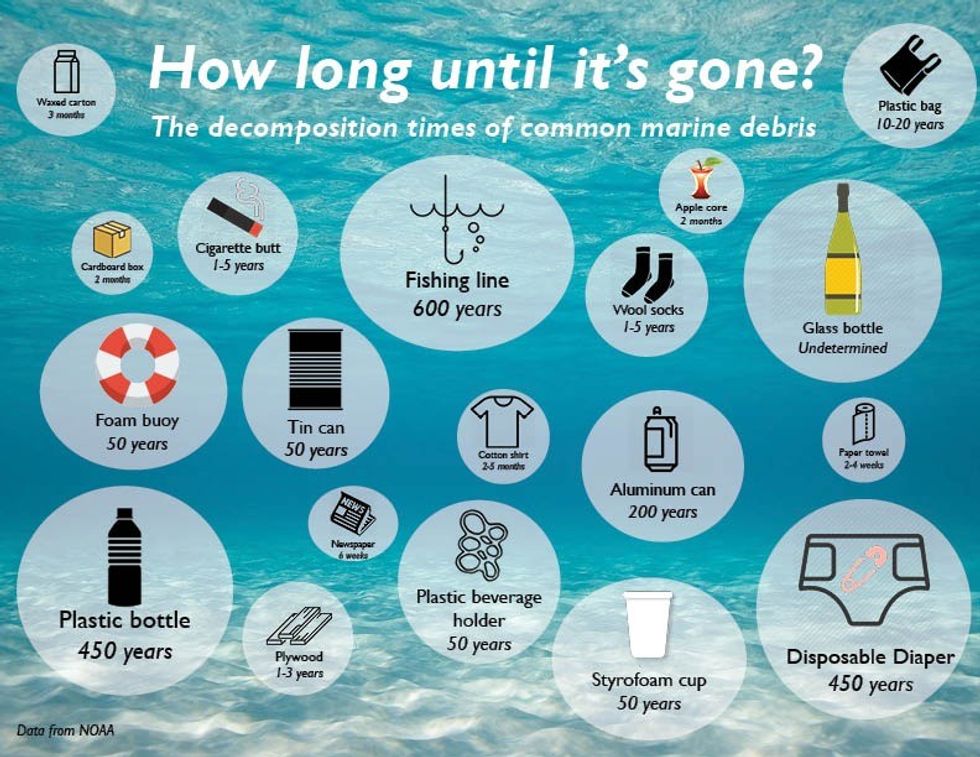 The decomposition times of marine debris are shown. (Photo by Zephyrschord/CC BY-SA 4.0)
Just seven countries are responsible for the production of two-thirds of the four most widely used types of plastic worldwide. China leads by a wide margin, producing as much plastic as the next six largest producers. The USA follows in second place, producing more than the countries in the EU combined. The countries with the highest plastic consumption per capita are the USA, closely followed by South Korea and Australia.
The plastics crisis does not respect geographical boundaries; the whole of humanity must consume and produce less plastic. The technology and materials for replacing plastic with more ecologically compatible materials are already a reality. The plastics industry needs to be refocused and jobs transformed.
As with the fossil fuels industry, big tobacco, and the arms trade, profits are privatized, but the burden is carried socially. This strategy is now an institutionalised playbook. Profits must not take precedence over environmental and health concerns. Lobbyists must be excluded from negotiations.
This conference shows just how difficult it is to enforce humanitarian and ecological objectives which go against the interests of the oil industry and oil-producing countries. The failed deal is a metaphor for global conflicting interests, a lack of ability to compromise, and the shortsighted behavior of profiting states and companies.
An eye-opening meta study from 2024 revealed the following:
We reviewed economic and environmental studies on global plastic pollution and we estimate the global cost of actions toward zero plastic pollution in all countries by 2040 to be US$ 18.3-158.4 trillion (cost of a 47% reduction of plastic production included). If no actions are undertaken, we estimate the cost of damages caused by plastic pollution from 2016 to 2040 to be US$ 13.7–281.8 trillion. These ranges suggest it is possible that the costs of inaction are significantly higher than those of action.
How long does humanity want to go on like this?
The High Ambition Coalition should continue to organize, expand its networking, and initiate the next round of negotiations with a well-prepared draft. Forming a coalition of the willing, which excludes states blocking the deal, will enable countries that want a strong plastics treaty to fulfil their mandate without obstacles and move forward together.
Individually, we can reduce our purchases and consumption of plastic and improve our management of plastic waste. Individuals can seek out alternative products such as those made from natural materials or bioplastics, which are biodegradable.
Environmental education, which informs politicians and citizens about the extent and consequences of plastic waste, is essential. It promotes ecological commitment, civil society engagement, and informed voting behavior.
Environmental protection can be enforced by legal action. The climate ruling by the International Court of Justice on July 23, 2025, initiated by Vanuatu, officially states that the human right to a clean, healthy, and sustainable environment is protected by law. Legal action can and should also be taken to reduce plastic production and pollution.
The online platform Better World Info has extensively researched and documented the Plastics Crisis and the Global Plastics Treaty. It provides additional resources and proposed solutions.



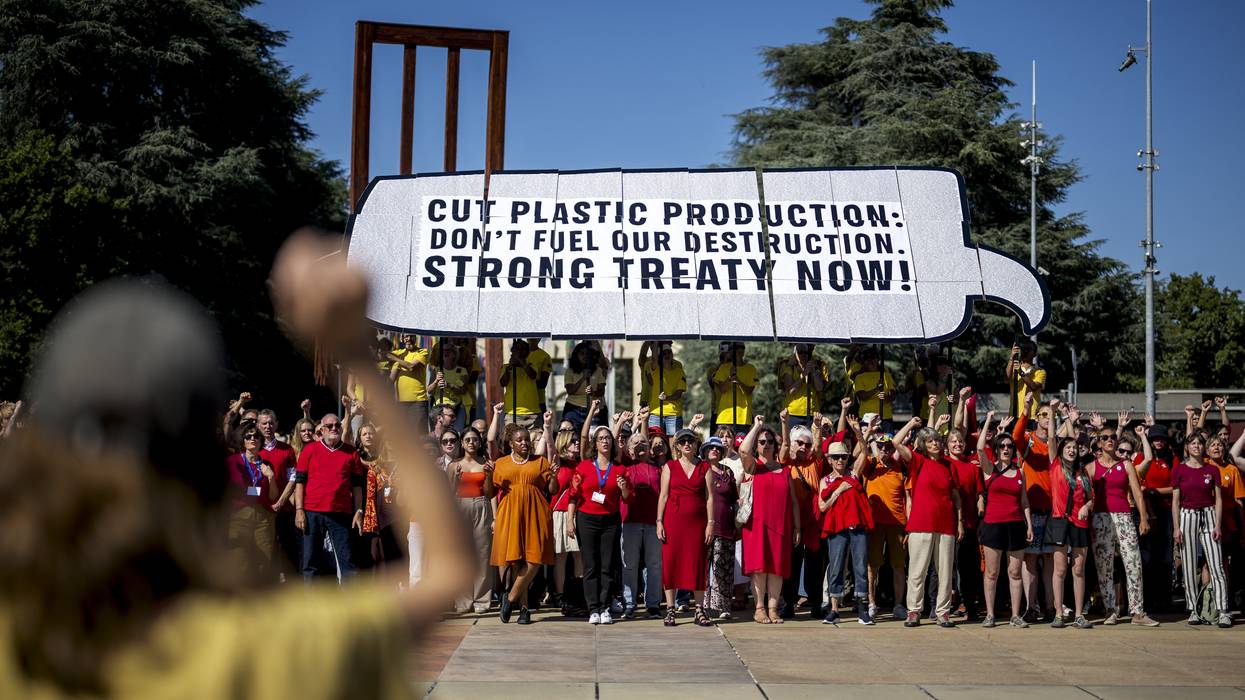
We’re headed to Geneva with our hearts and minds set on a treaty that caps and controls plastic production, addresses the toxic chemicals used to make plastics, ensures supply chain transparency, and delivers the financial mechanisms needed to stop plastic pollution and its climate and health-ravaging impacts.
