

SUBSCRIBE TO OUR FREE NEWSLETTER
Daily news & progressive opinion—funded by the people, not the corporations—delivered straight to your inbox.
5
#000000
#FFFFFF
To donate by check, phone, or other method, see our More Ways to Give page.
Daily news & progressive opinion—funded by the people, not the corporations—delivered straight to your inbox.
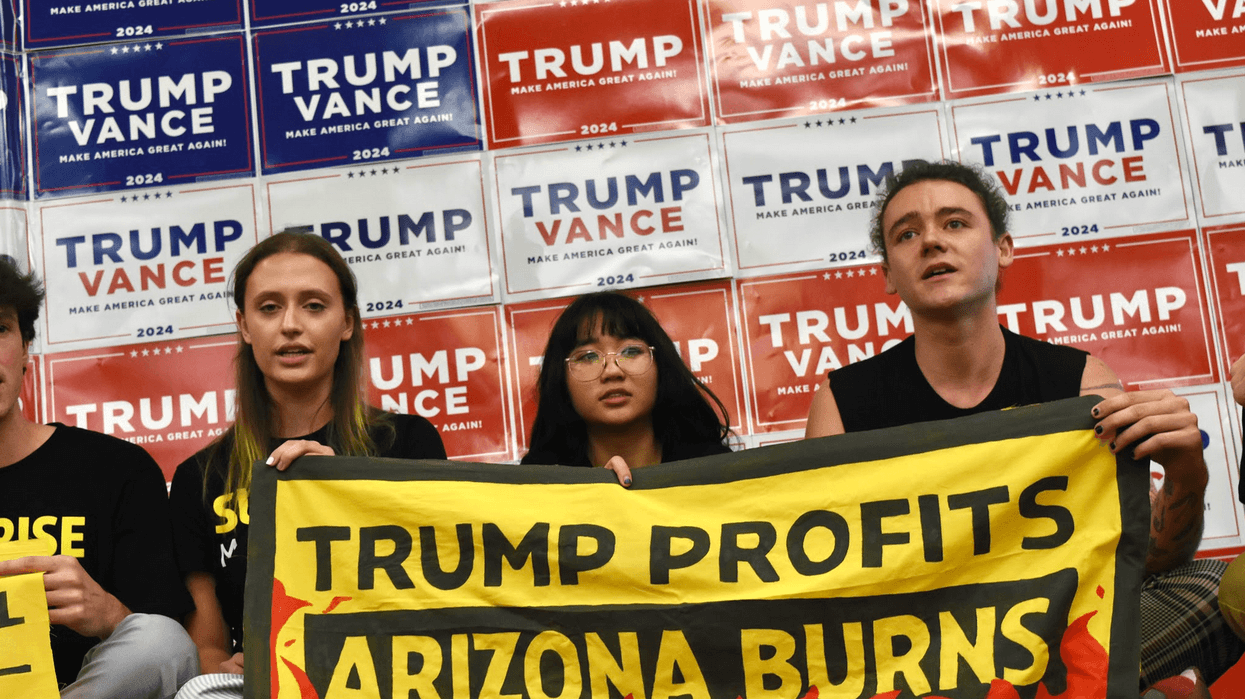
"Donald Trump is putting our futures on the auction block," said one campaigner. "He's gutting green jobs, handing tax cuts to billionaires, and ignoring the climate crisis."
As part of its engagement effort to reach 1.5 million young voters in swing states, the climate justice group Sunrise Movement on Monday organized a protest at Republican presidential candidate Donald Trump's Phoenix, Arizona campaign office, where they attempted to deliver a check to "buy" the former president "back from Big Oil."
Five campaigners delivered a fake campaign check reading, "$1 billion and $1," a reference to Trump's promise to oil executives that he would slash regulations and end President Joe Biden's renewable energy initiatives if they donated $1 billion to his campaign.
"My future, and the future of this country, shouldn't be up for sale," said 20-year-old Nate Scofield, a campaigner from North Carolina who occupied Trump's Phoenix office. "Donald Trump is putting our futures on the auction block. He's gutting green jobs, handing tax cuts to billionaires, and ignoring the climate crisis. We came here today to send a clear message: We won't stand by while he sells out our families and our future."
The occupation was met with hostility by Trump campaign staffers, who yelled, "Get your ass out of here," and "I hope you don't have kids" at the campaigners.
The campaigners sat in the office holding signs reading, "Trump profits, Arizona burns" and "Billionaires Own Trump."
Ashton Dolce, 17, spoke about how the climate crisis has devastated Arizona, where officials suspect hundreds of people may have died in just one county from extreme heat this summer.
"The heat is relentless, wildfires rage, and our water is disappearing," said Dolce. "Donald Trump's response? Let our homes burn while cashing in from Big Oil. Arizona is at the frontlines of the climate crisis, but we are also on the frontlines of this election. That's why I'm organizing my community, mobilizing young voters, and holding Trump accountable for his loyalty to Big Oil."
Police were called an arrested the organizers, but 21-year-old Riya Kumar of Idaho said she was "willing to take this risk today because my family and my future are on the line this election."
"Living in Idaho, I've seen wildfires worsen every year, and the smoke choking our communities," said Kumar. "We can't afford Donald Trump as president."

"This is a moral imperative," said the senator as historic heat continued in Phoenix, Arizona.
U.S. Sen. Bernie Sanders on Wednesday evening issued yet another call for a major mobilization to take on the fossil fuel-driven climate crisis in response to a new record in Phoenix, Arizona: 100 straight days of the temperature hitting at least 100°F.
"100 straight days of 100-degree heat," Sanders (I-Vt.) said on social media, sharing a report from The Washington Post. "The heatwave has killed at least 150 people this summer in Phoenix alone."
"The climate emergency demands a massive-scale mobilization," stressed the senator, a longtime advocate for a swift, just transition away from oil and gas. "There is no choice. This is a moral imperative."
The death toll comes from the Post, which noted that in 2023, the hottest year on record globally, "heat deaths increased 50% from 2022, reaching a record of 645 people in Maricopa County, which includes Phoenix. This year, 150 heat deaths have been confirmed by the government and an additional 440 deaths are under investigation."
Increasingly deadly extreme heat is a national issue. Research published last month in the peer-reviewed Journal of the American Medical Association shows that heat-related deaths in the United States rose 117% between 1999 and 2023, with the highest rates recorded in Arizona, California, Nevada, and Texas.
After the 100-day mark on Tuesday, the National Weather Service (NWS) said Wednesday that "with the high temperature exceeding 110°F at Phoenix Sky Harbor this afternoon, the number of days of 110°F+ high temperatures for the year now ties last year's record number of 110°F+ highs at 55 days. Expect a new record to be set tomorrow (forecasted highs of 110-115°F)."
The NWS warned Thursday that "unseasonably hot conditions are expected to persist into next week," projecting temperatures between 108-114°F in the Arizona city through Monday.
As the Arizona Republic reported earlier this week:
Not only was this the hottest summer on record in Phoenix, but in Flagstaff, Winslow, Kingman Douglas, and Tucson too.
"For most of the state, it's looking like the hottest summer on record," said Sean Benedict, the lead meteorologist at the National Weather Service in Phoenix. "There were several locations around Arizona that set the record for the hottest summer."
Climate Central pointed out Tuesday that the extreme heat in and around Phoenix was "made at least four to five times MORE likely to occur (yes, even in early September) due to human-caused climate change."
As communities around the world have endured intense heat throughout 2024, scientists have warned it could break the 2023 record and become the new hottest year in human history. The European Union's Copernicus Climate Change Service (C3S) said last month that the most recent July was just barely the second-warmest July globally—ending a streak that lasted from June 2023 to June 2024, during which each month was the hottest on record.
"Globally, July 2024 was almost as warm as July 2023, the hottest month on record," C3S deputy director Samantha Burgess said at the time. "July 2024 saw the two hottest days on record. The overall context hasn't changed, our climate continues to warm. The devastating effects of climate change started well before 2023 and will continue until global greenhouse gas emissions reach net-zero."
Although C3S has not yet released its official findings for last month, Agence France-Presse reported Tuesday that the agency's preliminary data show that "August 2024 should be on a par with last year's record 16.82°C (62.28°F)."
The C3S findings slightly conflict with those of the U.S. National Oceanic and Atmospheric Administration, which found that the latest July "was Earth's warmest July on record, extending the streak of record-high monthly global temperatures to 14 successive months." NOAA also hasn't yet released its data for August.
What climate experts agree on is that much more must be done to address the crisis created by fossil fuels. As World Meteorological Organization Secretary-General Celeste Saulo said in response to this summer's findings: "Climate adaptation alone is not enough. We need to tackle the root cause and get serious about reducing record levels of greenhouse gas emissions."
In addition to transitioning from fossil fuels to green energy, some have called for going after corporate giants that continue to rake in record profits from their planet-wrecking products. In June, Public Citizen unveiled a legal memo detailing how local or state prosecutors could bring criminal charges against Big Oil for deaths from extreme heat—using Arizona as an example.
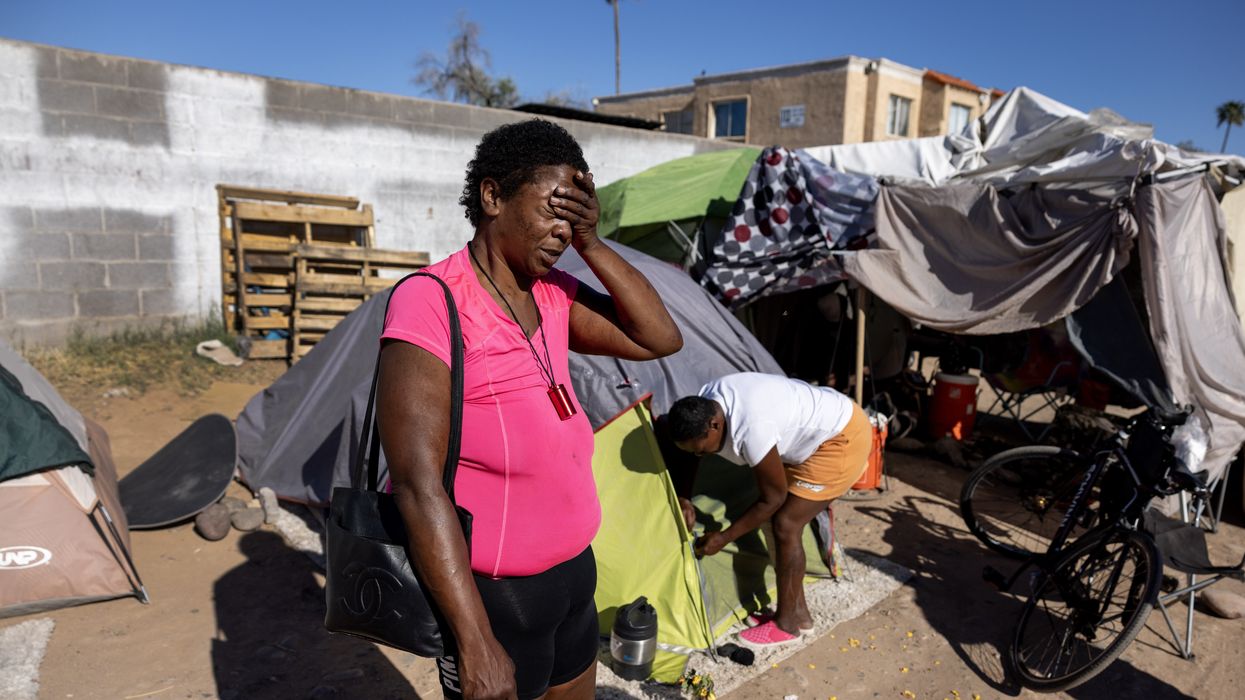
"This behavior is not only unlawful but conveys a lack of humanity and dignity of some of the most vulnerable members of our society," said Assistant Attorney General Kristen Clarke.
"A person's constitutional rights do not diminish when they lack shelter," reads a landmark report released Thursday by the U.S. Department of Justice, the result of a three-year investigation into the Phoenix Police Department.
The finding is nothing new to advocates for unhoused people who have spent years fighting overpolicing and police brutality against the population, but the report represents the first time the DOJ has found violations of the civil and constitutional rights of people who lack shelter.
The DOJ opened an investigation into the Phoenix Police Department (PhxPD) after complaints about excessive force by police, and pledged to do a full accounting of police violence and of discrimination against Black, Latino, and Native American residents.
Officials found that the overpolicing of Phoenix's unhoused population has become a "central pillar of PhxPD's enforcement strategy," despite the department's stated policy to "lead with services" and provide referrals to agencies that can help unhoused people with housing, healthcare, and other needs.
"Between January 2016 and March 2022, people who were homeless accounted for over one-third—37%—of all PhxPD misdemeanor arrests and citations," reads the report.
The DOJ found the PhxPD principally violated unhoused people's rights by detaining them without reasonable suspicion and by seizing their property without notice—violations of the residents' Fourth and Fourteenth Amendment rights.
Officers last year forcefully moved hundreds of people to a large homeless encampment called The Zone near Phoenix's Capitol complex, which was ultimately cleared last November following a lawsuit filed by neighboring residents.
The DOJ found the police put unhoused people in harm's way by forcing them to move to The Zone, where high rates of crime including sexual assault had been reported. The report also found the PhxPD unlawfully subjected unhoused people to citations and arrests for camping in public parks and other areas, with one man cited or arrested 20 times over three years.
"We found that unhoused people in Phoenix have suffered a pattern of unconstitutional conduct," said Kristen Clarke, assistant attorney general for civil rights. "Additionally, the city and the police department seize and destroy the property of homeless people without providing adequate notice or fair opportunity to collect their belongings. This behavior is not only unlawful but conveys a lack of humanity and dignity of some of the most vulnerable members of our society."
Arizona state Rep. Analise Ortiz (D-24) applauded the DOJ's historic report, but noted that "the proposed state budget includes $0 for homelessness."
In addition to the police department's violations against many of Phoenix's 2,700 unhoused people, the DOJ reported on racial discrimination, with Black drivers 144% more likely than white drivers to be pulled over, and on department leaders urging officers to use projectiles often with a "use it or lose it" policy.
The American Civil Liberties Union (ACLU) of Arizona said the report would bolster its ongoing litigation against the city and the PhxPD, and said it was not "not surprised" to hear that the DOJ had found widespread misconduct by the police.
"This damning report makes clear that the Phoenix Police Department suffers from an ingrained permissive culture that tolerates and even encourages widespread use of force, including deadly force, against some of our community's most vulnerable people," said Scott Greenwood, interim executive director of the group. "Moreover, this culture overwhelmingly directs enforcement activity against Black, Brown, Indigenous, and houseless people and harms people experiencing behavioral or emotional health crises."
"The people of Phoenix deserve genuine community safety," Greenwood added. "Today's report reflects a failure of leadership by prior chiefs over the last decade and a city government that has neglected or refused to hold them accountable. The most important thing that the mayor and city council can do now is to embrace this process as a vehicle for transformative change rather than stick their heads in the sand. Policing can and must be both effective and constitutional. Policing in Phoenix is neither."
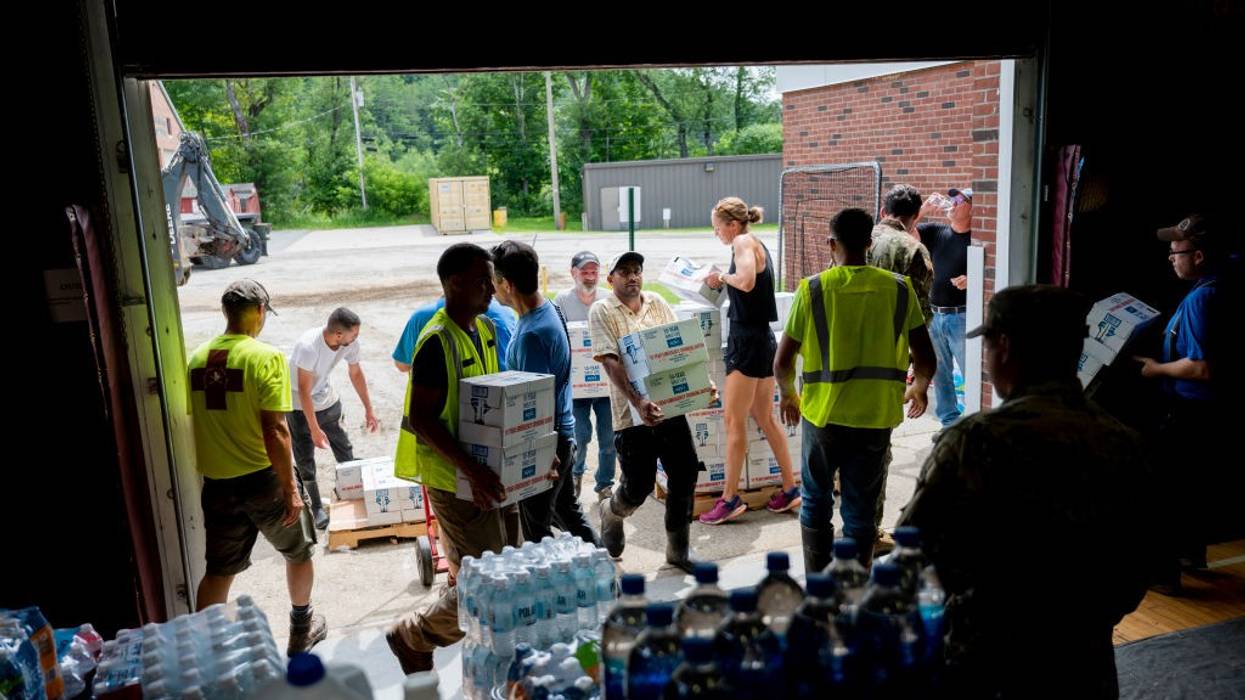
As global heating shrinks the size of the board on which we play the game of life, we’re going to need to return to the basic human experience of relying on the people around us.
I’ve given a lot of talks about climate change over the years—that’s part of what organizers do. And I can predict with great confidence the questions that people will raise their hands to ask. “Isn’t the real problem overpopulation?” (Not really; most population growth is coming in places that use incredibly small amounts of energy.) Or “what about nuclear?” (keep the plants we’ve got open if we safely can; new ones are incredibly slow and expensive to build, though someday a generation of yet newer ones could conceivably change that; in the meantime rely on the nuclear reactor hanging a safe 93 million miles up in the sky).
I can also predict the questions people will ask later, privately, as the crowd drifts out of the auditorium. One—“Is it OK for me to have a kid?”—is almost unbearably painful; no one should have to ask it. The other—“Where should I move?”—is a (little) less traumatizing. And I think it’s on a lot of minds, especially right now, as it becomes clear that many parts of our Earth won’t be habitable going forward. As I tried to explain in a recent book, global heating is systematically shrinking the size of the board on which humans can play the game of life.
On the one hand, the question implies a certain self-centered approach to the climate crisis—how do I avoid this huge communal disaster—as well as a certain quanta of privilege: Most people in this world, especially the ones who really need a new home, lack the resources or the legal ability to pick up and move. Still, we each get one life and we need to live it somewhere.
A recent study found that every time the temperature rises another tenth of a degree Celsius, another 140 million humans find themselves living outside what scientists call the “human climate niche,” the zone with temperatures where our species flourishes.
It’s easier, actually, to figure out where not to live. Phoenix may be the fastest-growing big city in the country, but anyone who moves there after this summer is not paying attention: 31 straight days over 110°F, and emergency rooms filled with people who burned themselves by… falling on the sidewalk. But it’s not just obvious places, like the middle of the desert. Last week, at 4,000 feet in the Andes, the temperature topped 95°F—in winter. (Weather historian Maximiliano Herrera described it as “one of the extreme events the world has ever seen.”) Or take Athens, one of those places we like to call a cradle of Western civilization, but two years ago the city’s “chief heat officer” was already warning it might be becoming uninhabitable; last month, during the longest heatwave in the city’s history, authorities closed the Acropolis to tourists in the afternoons.
Even in places used to dealing with extremes, life is getting harder; India’s monsoon, for instance, is ever more “violent and unpredictable.” In Himachal Pradesh, for instance, “the state has already received 1,200% more than its annual rainfall, according to data from the India Meteorological Department. Landslides and floods have claimed nearly 100 lives.”
I could muster these kinds of statistics for virtually any place you want to name: A recent study found that every time the temperature rises another tenth of a degree Celsius, another 140 million humans find themselves living outside what scientists call the “human climate niche,” the zone with temperatures where our species flourishes.
But as this summer—with the increase in global temperature at least temporarily topping the 1.5°C that the world swore to avoid in Paris—demonstrates, no place is really safe, even within those supposedly habitable zones. I live in Vermont, in the mountains of the American northeast, which has sometimes been seen as a “climate haven” because it’s at a high enough latitude to avoid the worst heatwaves, isolated from a stormy ocean coast, and historically wet. But this summer we’ve had too much water: some of the worst flooding in the country. We’re not that far from the overheated north Atlantic, and so wave after wave of unrelenting rain has descended on the state, drowning, among other things, the main street of our capital city (previously best known for being the only state capital without a McDonald’s). Another round of thunderstorms struck over the weekend; my county got six inches of rain, triggering landslides and closing the roads in and out of town. It turns out that steep mountain slopes and narrow mountain valleys combine with an overheated atmosphere (remember the 21st century’s most important physical fact: Warm air holds more water vapor; July set a new record for U.S. thunderstorms) to produce crazy flooding. I was away during this round of meteorological depravity, and it was hard to be seeing pictures of roads I travel every day wiped out.
There is no safe place.
And yet I remain glad I live where I do, not because it’s protected from climate change, but because it’s at least a little bit more equipped to deal with it. And that, in turn, is because it has high levels of social trust. Only 38% of Americans say they mostly or completely trust their neighbors, but a 2018 Vermont survey found that 78% of residents think that “people in my neighborhood trust each other to be good neighbors”; 69% of Vermonters said that they knew most of their neighbors, compared with 26% of Americans in general. Those levels of social trust help explain, I think, why the state had the lowest level of fatalities from Covid-19, much lower than its neighboring states and much lower than other small rural states with similarly homogeneous populations. Everyone wore masks, everyone got vaccinated. In the same way, when this summer’s floods hit, people came together, reenacting the surge of mutual aid that came after Hurricane Irene similarly drenched the state in 2011.
This is not an argument to move to Vermont. Among other things, the state had the lowest housing vacancy rate in the country before this summer’s flooding wiped out more of the state’s affordable housing stock. And Vermont has its share of problems, some of them rooted in an aging population resistant to progress of any kind—there are times when I think its de facto motto is “Change Anything You Want Once I’m Dead,” which explains among other things the de facto moratorium on building the wind turbines that could help provide us cleaner power.
We’ve come through 75 years where having neighbors was essentially optional: If you had a credit card, you could get everything you needed to survive dropped off at your front door. But the next 75 years aren’t going to be like that.
Instead it is an argument to get to work building that kind of social trust in as many places as possible, because we’re going to need it. We’ve come through 75 years where having neighbors was essentially optional: If you had a credit card, you could get everything you needed to survive dropped off at your front door. But the next 75 years aren’t going to be like that; we’re going to need to return to the basic human experience of relying on the people around you. We’re going to need to rediscover that we’re a social species, which for Americans will be hard—at least since Reagan we’ve been told to think of ourselves first and foremost (it was his pal Margaret Thatcher who insisted “there is no such thing as society, only individual men and women.”) And in the Musk/Trump age we’re constantly instructed to distrust everyone and everything, a corrosion that erodes the social fabric as surely as a rampaging river erodes a highway.
But it’s not impossible to change that. President Joe Biden has been frustratingly dunderheaded about approving new pipelines and oil wells, and hydrocarbon production has been soaring on his watch. He has been much better about trying to restore some sense of national unity—he has been trying to scale down national division by rebuilding left-behind economies, and also by appealing to our better angels. And those angels exist: The most hopeful book for our time remains Rebecca Solnit’s Paradise Built in Hell, which recounts how communities, whenever natural disaster strikes, pull together, just like Vermont this summer. It happens in cities as easily as in rural areas—maybe more easily, since cities are places where the gregarious gather.
An appeal to social trust is not an appeal to some airy idea of universal brotherhood. Vermont Digger, our local news service, had a reporter in a neighboring town yesterday, as it began to dig its way out of the flood. At a washed-out road crossing he encountered a pair of what I think you could only call hippies, trying to join a “Rainbow Family gathering” at a national forest campground nearby.
The two people—who went by the names Scooby Doo and Sparrow—said they had caught the first half of Dead & Company’s final tour before Sparrow’s school bus broke down in Alabama. This week they had traveled from Maine and spent the prior night camping elsewhere.
The duo had heard from two friends on Thursday night who were waiting for them at Texas Falls, estimating that dozens of people were there.
They were looking for dog food for their dog, Bhala, and thought they might have to try Killington or Middlebury.
No offense to Scooby, Sparrow, or certainly Bhala, but I’d rather have as a neighbor the next person the reporter encountered at the washed-out intersection..
Charlie Smith, an excavator, trucked loads of material to the washout in an effort to make the road passable.
“I’m trying to make it so people can get home, get groceries, go back to work,” he said. “It feels good to help people. That’s what we do.”
For Smith, the latest storm began with news that flood water had surrounded some of his equipment. He salvaged the gear Thursday night with minimal damage.
“This morning my dad called me at 5:30 and said ‘let’s get going,’” Smith recalled. He expected to go road by road throughout the day.
Neighborliness accompanied by skill in backhoe operation seems like a good combination for our moment in history. And I was even more reassured to get a mass email from the town clerk of my small burg. It outlined which roads were still closed but also reminded people that the evening’s nature talk was still on at the local school.
Please come join us for an evening of bugs after the sun goes down and stay as long as you’d like! We’ll attract the night-active insects to a white sheet in the woods, and you can learn about some of our local insects from Middlebury College Entomologist Greg Pask. Feel free to bring a flashlight or headlamp, and no bug spray please (we’re trying to attract the bugs!)
So make that neighborliness, backhoes, and a devotion to the world around us, which remains beautiful even this savage summer. We’re in a mess, but together we have some chance of working our way out of it.

As the nation bakes, it is imperative that President Joe Biden take this action to mobilize powers, resources, and tools not currently available to him that could challenge Republican obstruction.
Is Phoenix Ameria’s first unlivable city? Will this be the year America and the world wakes up?
CBS News is reporting that people in Phoenix are rationing their air conditioning; a British climatologist has declared it the developed world’s first “uninhabitable city without air conditioning.”
In large parts of the United States this summer, climate change-driven heat domes are making pavement so hot that when people pass out and come in contact with it they end up in the hospital with second- and third-degree burns. Multiple hospitals report that their burn units are near capacity.
Dr. Kevin Foster, the director of the Arizona Burn Center, told the CBC:
“We are seeing lots of patients who are falling down onto the concrete, pavement, asphalt, and suffering really, really deep burns as a result of that.” He added that this frequency and severity of burns is “twice the normal that we typically see.”
NBC news reported:
“The burns typically occur when people fall or pass out on sun-scorched pavement and other hot surfaces. During intense heatwaves, as has been unfolding across the Southwest, even being in contact with these surfaces for short periods of time can do serious damage, said Dr. Kara Geren, an emergency medicine physician at Valleywise Health in Phoenix.
“‘The burns can be very severe and disfiguring to the point where you have to have what’s called a skin graft, where they take skin from other parts of your body and kind of cover it up,’ she said.”
In 2021, 40% of Americans lived in a county severely impacted by our current climate emergency, and over 600 Americans died from climate-related causes. In 2022, climate change-related weather disasters cost the United States over $165 billion, according to NOAA.
This year will be the worst in human history, as El Niño drives a massive summer heatwave all across the Northern Hemisphere. The United Nations estimates that climate-related deaths will exceed cancer deaths in our children’s lifetimes. We stand on the precipice of a disaster unlike any that humanity has ever encountered.
The United Nations estimates that climate-related deaths will exceed cancer deaths in our children’s lifetimes. We stand on the precipice of a disaster unlike any that humanity has ever encountered.
And a small group of fossil fuel billionaires and coal barons are getting fabulously rich from humanity’s misery while actively working to block solutions. They’re using small parts of that revenue, with the blessing of five corrupt Republicans on the Supreme Court, to pay off Republican politicians (and a handful of Democrats) to block any efforts to solve this crisis.
Which makes it imperative that President Joe Biden declare a climate emergency to mobilize powers, resources, and tools not currently available to him that could challenge their obstruction. These include the National Emergencies Act, the Defense Production Act, and the Robert T Stafford Relief and Emergency Assistance Act.
In 2019, the Center for Biological Diversity published a legal analysis summarizing the powers available to the president were he to declare a climate emergency. They include:
— Ban new fossil fuel leasing.
— Ban new fracking permits.
— Establish a plan to phase out fossil fuel production.
— Reallocate hundreds of billions of dollars currently subsidizing fossil fuel production toward the deployment of green energy.
— Cap domestic fossil fuel emissions.
— End the export of crude oil, coal, and refined fossil fuel products.
They further suggest that the president veto any legislation that provides immunity from lawsuits to the fossil fuel industry (the GOP is working on this), and begin a comprehensive and systematic investigation into the fossil fuel industry’s cover-up of science they’ve known and concealed for decades about the planet-destroying consequences of their products.
When America entered World War II, we shifted large portions of America’s industrial infrastructure toward the production of war material. Factories that once made cars began to manufacture tanks and airplanes; industrial facilities producing clothing or nylon stockings turned out millions of uniforms and parachutes. Food, fuel, and even tires were rationed to provide for the war effort.
This was largely done by President Franklin D. Roosevelt using his wartime emergency powers, and, the Center for Biological Diversity argues, using peacetime emergency powers today President Biden could put America on a similarly consequential course to be free of most fossil fuel pollution within a decade.
Not only would this have a major impact on climate change because America is one of the planet’s two largest polluters, but it would also set an example for the world to follow.
President Biden considered declaring such an emergency last year, but stepped back from it. As Varshini Prakash, executive director of the Sunrise Movement told Bloomberg:
“New York City looks like it’s on fire, kids are choking on dirty air, and the AQI is a serious health threat equivalent to breathing in smoke from cigarettes. We are in a climate emergency, and it’s absurd that our government isn’t acting like it.”
Republicans are fully aware of this potential, which is why they just introduced legislation to block President Biden from declaring just such an emergency.
Cynically, they’ve named their bill the Real Emergencies Act. (You’ll recall that just last week Republican Congressman Scott Perry called climate change a “grift.”)
As Julia Rock notes at The Lever:
“The Real Emergencies Act’s seven sponsors in the Senate received a combined $3.1 million in contributions from fossil fuel industry executives and political action committees (PACs) over the 2017-2022 cycle, according to data from OpenSecrets. The bill’s 19 House sponsors raked in $1.7 million from fossil fuel executives and PACs during the 2021-2022 election cycle, according to OpenSecrets.”
One of the great tragedies of Clarence Thomas casting the deciding vote in Citizens United is that today the cost of bribing politicians represents only a tiny fraction of the profits industry can receive when those politicians do what they are asked.
Invest a few million dollars, make hundreds of billions. The fossil fuel barons succeeded in buying so much of the GOP that it’s almost impossible to find any Republican elected official who will even acknowledge climate change, much less is willing to do anything serious about it.
With Democratic control of the Senate intact, however, this corrupt attempt by these Republicans (the Real Emergencies Act) to prevent President Biden from saving the lives of Americans will not become law.
But just stopping Republican obstruction isn’t enough: We need real and consequential action now.
This past week over 100 million Americans were subjected to deadly levels of heat, and, because warmer air holds more moisture and more energy, the storms and floods unleashed on America have been unprecedented in both their frequency, volume, and violence.
And it’s going to get worse. A lot worse.
This truly is a climate emergency, and every day that goes by without significant action further endangers the future of almost all life on Earth, including us.
Reach out to your elected officials and ask them to demand that President Biden declare a climate emergency and take action now.
The bought-and-paid-for Republican shills for the fossil fuel industry in Congress will react with hysterical squeals and threats of congressional action. Their threats, however, are hollow. Now is the time for action.
As Senator Jeff Merkley told The Washington Post:
“This is a planetary emergency, and the president should declare an emergency. It is the biggest issue facing humankind. We are on a trajectory for a massive increase in climate chaos, affecting us in every possible way.”
One of the best ways to lobby the president is through Democratic members of the House and Senate. The message to President Biden has to be: “You have the power to do this: You must use it.”
The number for the congressional switchboard is 202-224-3121. Most members of Congress also allow constituents to email them through their websites, which you can easily find with a quick web search.
Take a few minutes today and make the call. The fate of our planet, our fellow humans, and future generations is hanging in the balance.

The power of the sun--including the financial benefits it rewards--has become a hot political issue in sunny Arizona.
And, with the second largest rooftop solar energy market in the United States, an otherwise ignored panel discussion by Arizona's utility commission on Thursday has earned the intense attention of solar energy's biggest backers and the industry's largest companies.
On Wednesday, over a thousand people reportedly attended a rally outside the Arizona Corporation Commission offices in Phoenix to make their voices heard. Experts on the issue say that a pending announcement by the five-member panel, should it favor demands being made by the utilities, could end the rapidly expanding 'rooftop revolution' that has captured the state in recent years.
"It was all hands on deck, the people represented there were solar workers, companies were reaching out their employees, solar customers were there, environmental advocates," said Rosalind Jackson, communications director for Vote Solar Initiative, who helped organize the turnout. "It was a pretty broad spectrum of supporters."
The solar fight in Arizona pitches decentralized energy supporters--including homeowners with rooftop arrays and those who sell, lease and install them--against the major utility companies in the state who are demanding either a hefty new tax on solar customers who provide energy to the grid or a decrease in the rate at which they are paid.
Produced by the solar industry coalition called The Alliance for Solar Choice (TASC), this video attempts to explain how so-called "net metering" benefits everyone connected to the grid as it blasts the utility companies as outdated energy "monopolies":
Solar Power Works in Arizona -- So Why do Utilities Want to Kill It?Rooftop solar power systems benefit everyone and it is working in Arizona, but utility companies want to eliminate it.Solar panels ...
And as Reuters explains, the concept of 'net metering' in which solar customers can sell their excess rooftop energy to the utilities, has enormous implications for the solar industry both in Arizona and beyond:
The policy has buttressed the growth of rooftop solar because it helps reduce the cost of going solar for homeowners. But utilities say it has another impact: it shoulders citizens who don't have solar panels with an unfair share of the cost to maintain the electric grid. [...]
If the Commission adopts either of [the utilities-backed] proposals, companies like SolarCity Corp, Sunrun and others who finance or install residential solar systems could see the critical part of their sales pitch - monthly payments on their solar panels that are less than what they were paying the utility company - erode significantly.
Not only would policy changes hurt the fast-growing market for financed solar systems, they would also either extend the payback period for consumers who lay out the roughly $20,000 to $30,000 to own their solar panels outright, or force installers of those systems to take a hit to their margins.
That would be a big setback to solar businesses in sunny Arizona, which was the No. 2 state for photovoltaic solar installations in the second quarter of this year. The state's solar industry employs about 10,000 people.
According to a recent article by Marc Gunther, a contributing editor at Fortune magazine and senior writer at Greenbiz.com, the solar industry is in breakout mode and these state-level battles are becoming increasingly important as the solar industry goes toe to toe with the conventional energy system that is epitomized by the utility companies. At the Yale Environment 360 blog, Gunther wrote:
Today's solar industry is puny - it supplies less than 1 percent of the electricity in the U.S. - but its advocates say that solar is, at long last, ready to move from the fringe of the energy economy to the mainstream. Photovoltaic panel prices are falling. Low-cost financing for installing rooftop solar is available. Federal and state government incentives remain generous.
Yet opposition from regulated utilities, which burn fossil fuels to produce most of their electricity, could stop a solar boom before it gets started.
Several utilities, including Arizona Public Service and Denver-based Xcel Energy, have asked their state regulators to reduce incentives or impose charges on customers who install rooftop solar; so far, at least, they aren't making much headway. A bill in the California legislature, backed by the utility interests would add $120 a year in fees to rooftop solar customers.
As the following video explains, two days of public hearings before the Arizona Corporation Commission, which regulates utilities in the state, were scheduled for Wednesday and Thursday with a determination about the rate scheme or possible changes expected soon after.
Recent polling in Arizona shows significant support for net metering policies currently in place. In fact, the idea of a feed-in energy system--a cause celebre for progressives and environmentalists all over the world--has become so popular in the political 'deep red' state of Arizona, that one headline this week warned that "blocking solar" in the Republican-dominated state would be tantamount to "political suicide." According to that article, 77% of respondents in the Republican-dominated Maricopa County "would be less likely to vote for an election candidate if they proposed ending support for solar."
Additionally, one of the main pro-solar groups found championing the current net metering rates is called TUSK, which stands for Tell Utilities Solar won't be Killed, chaired by none other than Barry Goldwater, Jr., former Republican congressman and son of the presidential candidate. Here he is, shilling for decentralized solar power:
Arizonans Say No To APS' Solar Tax.Polls show the vast majority of Arizonans reject APS' plans to tax the sun. Will the Corporation Commission listen?
______________________________________________