SUBSCRIBE TO OUR FREE NEWSLETTER
Daily news & progressive opinion—funded by the people, not the corporations—delivered straight to your inbox.
5
#000000
#FFFFFF
To donate by check, phone, or other method, see our More Ways to Give page.
Daily news & progressive opinion—funded by the people, not the corporations—delivered straight to your inbox.
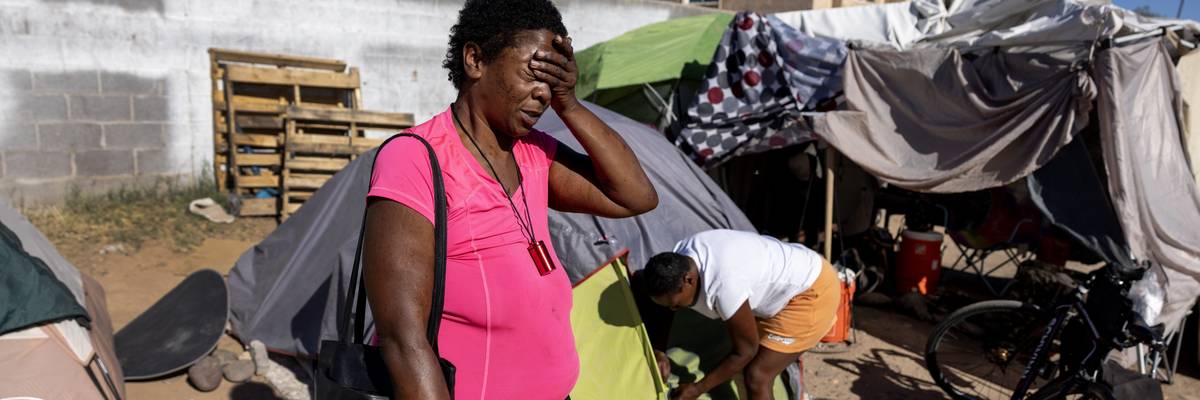
Diamon Bauldwin, 38, lives in a tent under power lines and is experiencing health problems after running out of insulin months ago on April 16, 2024 in Phoenix, Arizona.
"This behavior is not only unlawful but conveys a lack of humanity and dignity of some of the most vulnerable members of our society," said Assistant Attorney General Kristen Clarke.
"A person's constitutional rights do not diminish when they lack shelter," reads a landmark report released Thursday by the U.S. Department of Justice, the result of a three-year investigation into the Phoenix Police Department.
The finding is nothing new to advocates for unhoused people who have spent years fighting overpolicing and police brutality against the population, but the report represents the first time the DOJ has found violations of the civil and constitutional rights of people who lack shelter.
The DOJ opened an investigation into the Phoenix Police Department (PhxPD) after complaints about excessive force by police, and pledged to do a full accounting of police violence and of discrimination against Black, Latino, and Native American residents.
Officials found that the overpolicing of Phoenix's unhoused population has become a "central pillar of PhxPD's enforcement strategy," despite the department's stated policy to "lead with services" and provide referrals to agencies that can help unhoused people with housing, healthcare, and other needs.
"Between January 2016 and March 2022, people who were homeless accounted for over one-third—37%—of all PhxPD misdemeanor arrests and citations," reads the report.
The DOJ found the PhxPD principally violated unhoused people's rights by detaining them without reasonable suspicion and by seizing their property without notice—violations of the residents' Fourth and Fourteenth Amendment rights.
Officers last year forcefully moved hundreds of people to a large homeless encampment called The Zone near Phoenix's Capitol complex, which was ultimately cleared last November following a lawsuit filed by neighboring residents.
The DOJ found the police put unhoused people in harm's way by forcing them to move to The Zone, where high rates of crime including sexual assault had been reported. The report also found the PhxPD unlawfully subjected unhoused people to citations and arrests for camping in public parks and other areas, with one man cited or arrested 20 times over three years.
"We found that unhoused people in Phoenix have suffered a pattern of unconstitutional conduct," said Kristen Clarke, assistant attorney general for civil rights. "Additionally, the city and the police department seize and destroy the property of homeless people without providing adequate notice or fair opportunity to collect their belongings. This behavior is not only unlawful but conveys a lack of humanity and dignity of some of the most vulnerable members of our society."
Arizona state Rep. Analise Ortiz (D-24) applauded the DOJ's historic report, but noted that "the proposed state budget includes $0 for homelessness."
In addition to the police department's violations against many of Phoenix's 2,700 unhoused people, the DOJ reported on racial discrimination, with Black drivers 144% more likely than white drivers to be pulled over, and on department leaders urging officers to use projectiles often with a "use it or lose it" policy.
The American Civil Liberties Union (ACLU) of Arizona said the report would bolster its ongoing litigation against the city and the PhxPD, and said it was not "not surprised" to hear that the DOJ had found widespread misconduct by the police.
"This damning report makes clear that the Phoenix Police Department suffers from an ingrained permissive culture that tolerates and even encourages widespread use of force, including deadly force, against some of our community's most vulnerable people," said Scott Greenwood, interim executive director of the group. "Moreover, this culture overwhelmingly directs enforcement activity against Black, Brown, Indigenous, and houseless people and harms people experiencing behavioral or emotional health crises."
"The people of Phoenix deserve genuine community safety," Greenwood added. "Today's report reflects a failure of leadership by prior chiefs over the last decade and a city government that has neglected or refused to hold them accountable. The most important thing that the mayor and city council can do now is to embrace this process as a vehicle for transformative change rather than stick their heads in the sand. Policing can and must be both effective and constitutional. Policing in Phoenix is neither."
Dear Common Dreams reader, It’s been nearly 30 years since I co-founded Common Dreams with my late wife, Lina Newhouser. We had the radical notion that journalism should serve the public good, not corporate profits. It was clear to us from the outset what it would take to build such a project. No paid advertisements. No corporate sponsors. No millionaire publisher telling us what to think or do. Many people said we wouldn't last a year, but we proved those doubters wrong. Together with a tremendous team of journalists and dedicated staff, we built an independent media outlet free from the constraints of profits and corporate control. Our mission has always been simple: To inform. To inspire. To ignite change for the common good. Building Common Dreams was not easy. Our survival was never guaranteed. When you take on the most powerful forces—Wall Street greed, fossil fuel industry destruction, Big Tech lobbyists, and uber-rich oligarchs who have spent billions upon billions rigging the economy and democracy in their favor—the only bulwark you have is supporters who believe in your work. But here’s the urgent message from me today. It's never been this bad out there. And it's never been this hard to keep us going. At the very moment Common Dreams is most needed, the threats we face are intensifying. We need your support now more than ever. We don't accept corporate advertising and never will. We don't have a paywall because we don't think people should be blocked from critical news based on their ability to pay. Everything we do is funded by the donations of readers like you. When everyone does the little they can afford, we are strong. But if that support retreats or dries up, so do we. Will you donate now to make sure Common Dreams not only survives but thrives? —Craig Brown, Co-founder |
"A person's constitutional rights do not diminish when they lack shelter," reads a landmark report released Thursday by the U.S. Department of Justice, the result of a three-year investigation into the Phoenix Police Department.
The finding is nothing new to advocates for unhoused people who have spent years fighting overpolicing and police brutality against the population, but the report represents the first time the DOJ has found violations of the civil and constitutional rights of people who lack shelter.
The DOJ opened an investigation into the Phoenix Police Department (PhxPD) after complaints about excessive force by police, and pledged to do a full accounting of police violence and of discrimination against Black, Latino, and Native American residents.
Officials found that the overpolicing of Phoenix's unhoused population has become a "central pillar of PhxPD's enforcement strategy," despite the department's stated policy to "lead with services" and provide referrals to agencies that can help unhoused people with housing, healthcare, and other needs.
"Between January 2016 and March 2022, people who were homeless accounted for over one-third—37%—of all PhxPD misdemeanor arrests and citations," reads the report.
The DOJ found the PhxPD principally violated unhoused people's rights by detaining them without reasonable suspicion and by seizing their property without notice—violations of the residents' Fourth and Fourteenth Amendment rights.
Officers last year forcefully moved hundreds of people to a large homeless encampment called The Zone near Phoenix's Capitol complex, which was ultimately cleared last November following a lawsuit filed by neighboring residents.
The DOJ found the police put unhoused people in harm's way by forcing them to move to The Zone, where high rates of crime including sexual assault had been reported. The report also found the PhxPD unlawfully subjected unhoused people to citations and arrests for camping in public parks and other areas, with one man cited or arrested 20 times over three years.
"We found that unhoused people in Phoenix have suffered a pattern of unconstitutional conduct," said Kristen Clarke, assistant attorney general for civil rights. "Additionally, the city and the police department seize and destroy the property of homeless people without providing adequate notice or fair opportunity to collect their belongings. This behavior is not only unlawful but conveys a lack of humanity and dignity of some of the most vulnerable members of our society."
Arizona state Rep. Analise Ortiz (D-24) applauded the DOJ's historic report, but noted that "the proposed state budget includes $0 for homelessness."
In addition to the police department's violations against many of Phoenix's 2,700 unhoused people, the DOJ reported on racial discrimination, with Black drivers 144% more likely than white drivers to be pulled over, and on department leaders urging officers to use projectiles often with a "use it or lose it" policy.
The American Civil Liberties Union (ACLU) of Arizona said the report would bolster its ongoing litigation against the city and the PhxPD, and said it was not "not surprised" to hear that the DOJ had found widespread misconduct by the police.
"This damning report makes clear that the Phoenix Police Department suffers from an ingrained permissive culture that tolerates and even encourages widespread use of force, including deadly force, against some of our community's most vulnerable people," said Scott Greenwood, interim executive director of the group. "Moreover, this culture overwhelmingly directs enforcement activity against Black, Brown, Indigenous, and houseless people and harms people experiencing behavioral or emotional health crises."
"The people of Phoenix deserve genuine community safety," Greenwood added. "Today's report reflects a failure of leadership by prior chiefs over the last decade and a city government that has neglected or refused to hold them accountable. The most important thing that the mayor and city council can do now is to embrace this process as a vehicle for transformative change rather than stick their heads in the sand. Policing can and must be both effective and constitutional. Policing in Phoenix is neither."
"A person's constitutional rights do not diminish when they lack shelter," reads a landmark report released Thursday by the U.S. Department of Justice, the result of a three-year investigation into the Phoenix Police Department.
The finding is nothing new to advocates for unhoused people who have spent years fighting overpolicing and police brutality against the population, but the report represents the first time the DOJ has found violations of the civil and constitutional rights of people who lack shelter.
The DOJ opened an investigation into the Phoenix Police Department (PhxPD) after complaints about excessive force by police, and pledged to do a full accounting of police violence and of discrimination against Black, Latino, and Native American residents.
Officials found that the overpolicing of Phoenix's unhoused population has become a "central pillar of PhxPD's enforcement strategy," despite the department's stated policy to "lead with services" and provide referrals to agencies that can help unhoused people with housing, healthcare, and other needs.
"Between January 2016 and March 2022, people who were homeless accounted for over one-third—37%—of all PhxPD misdemeanor arrests and citations," reads the report.
The DOJ found the PhxPD principally violated unhoused people's rights by detaining them without reasonable suspicion and by seizing their property without notice—violations of the residents' Fourth and Fourteenth Amendment rights.
Officers last year forcefully moved hundreds of people to a large homeless encampment called The Zone near Phoenix's Capitol complex, which was ultimately cleared last November following a lawsuit filed by neighboring residents.
The DOJ found the police put unhoused people in harm's way by forcing them to move to The Zone, where high rates of crime including sexual assault had been reported. The report also found the PhxPD unlawfully subjected unhoused people to citations and arrests for camping in public parks and other areas, with one man cited or arrested 20 times over three years.
"We found that unhoused people in Phoenix have suffered a pattern of unconstitutional conduct," said Kristen Clarke, assistant attorney general for civil rights. "Additionally, the city and the police department seize and destroy the property of homeless people without providing adequate notice or fair opportunity to collect their belongings. This behavior is not only unlawful but conveys a lack of humanity and dignity of some of the most vulnerable members of our society."
Arizona state Rep. Analise Ortiz (D-24) applauded the DOJ's historic report, but noted that "the proposed state budget includes $0 for homelessness."
In addition to the police department's violations against many of Phoenix's 2,700 unhoused people, the DOJ reported on racial discrimination, with Black drivers 144% more likely than white drivers to be pulled over, and on department leaders urging officers to use projectiles often with a "use it or lose it" policy.
The American Civil Liberties Union (ACLU) of Arizona said the report would bolster its ongoing litigation against the city and the PhxPD, and said it was not "not surprised" to hear that the DOJ had found widespread misconduct by the police.
"This damning report makes clear that the Phoenix Police Department suffers from an ingrained permissive culture that tolerates and even encourages widespread use of force, including deadly force, against some of our community's most vulnerable people," said Scott Greenwood, interim executive director of the group. "Moreover, this culture overwhelmingly directs enforcement activity against Black, Brown, Indigenous, and houseless people and harms people experiencing behavioral or emotional health crises."
"The people of Phoenix deserve genuine community safety," Greenwood added. "Today's report reflects a failure of leadership by prior chiefs over the last decade and a city government that has neglected or refused to hold them accountable. The most important thing that the mayor and city council can do now is to embrace this process as a vehicle for transformative change rather than stick their heads in the sand. Policing can and must be both effective and constitutional. Policing in Phoenix is neither."