

SUBSCRIBE TO OUR FREE NEWSLETTER
Daily news & progressive opinion—funded by the people, not the corporations—delivered straight to your inbox.
5
#000000
#FFFFFF
To donate by check, phone, or other method, see our More Ways to Give page.
Daily news & progressive opinion—funded by the people, not the corporations—delivered straight to your inbox.
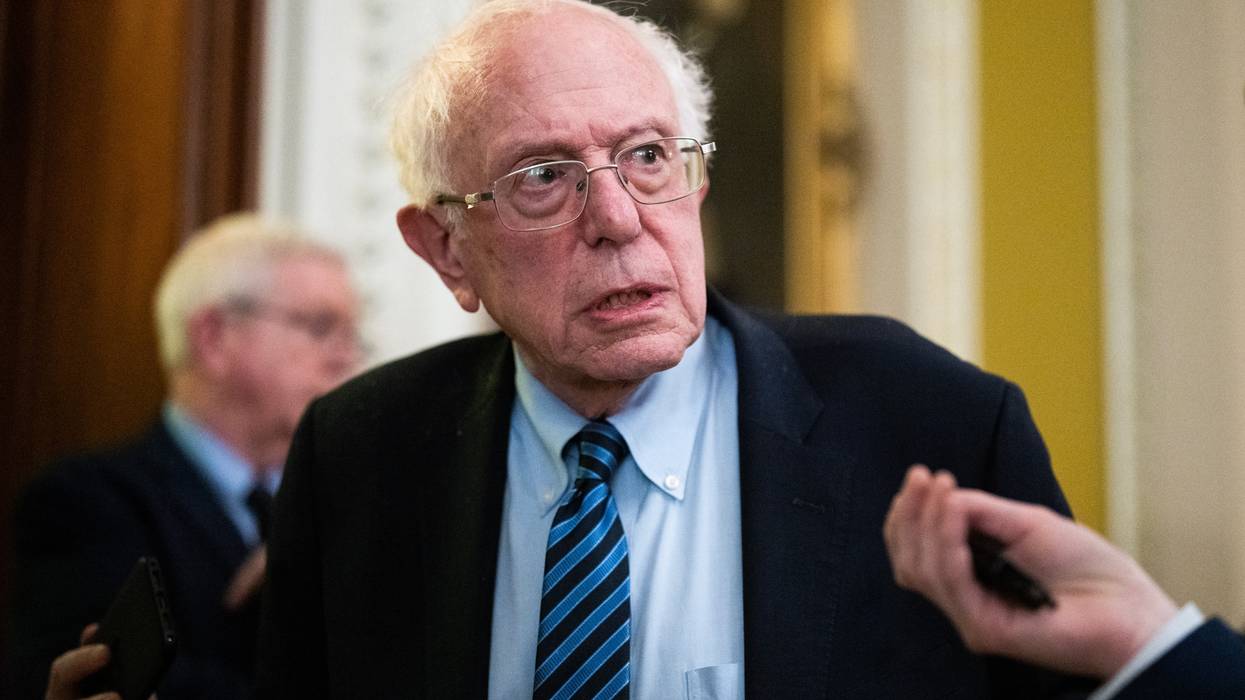
The Senate Health, Education, Labor, and Pensions Committee chair said that the popular medications "will not do any good for the millions of patients who cannot afford them."
U.S. Sen. Bernie Sanders on Wednesday opened an investigation into an "outrageously overpriced" medication manufactured by a Denmark-based company whose value by market capitalization is larger than the Scandinavian country's gross domestic product.
Sanders (I-Vt.), who chairs the Senate Health, Education, Labor, and Pensions (HELP) Committee, sent a letter to Lars Fruergaard Jørgensen, CEO of Novo Nordisk. The company makes semaglutide, a glucagon-like peptide-1 (GLP-1) agonist used to treat Type 2 diabetes under the brand name Ozempic and, when sold as Wegovy, to treat obesity in adults with at least one weight-related comorbidity.
"The scientists at Novo Nordisk deserve great credit for developing these drugs that have the potential to be a game-changer for millions of Americans struggling with Type 2 diabetes and obesity," Sanders acknowledged. "As important as these drugs are, they will not do any good for the millions of patients who cannot afford them."
"Further, if the prices for these products are not substantially reduced they also have the potential to bankrupt Medicare, Medicaid, and our entire healthcare system," he added.
Sanders continued:
Today, Novo Nordisk is charging patients in the United States up to 15 times more for Ozempic and Wegovy than it charges patients in Canada, Europe, or Japan. For example, your company charges $969 in the United States for one month of Ozempic but just $155 in Canada and just $59 in Germany. Further, Novo Nordisk charges Americans $1,349 for one month Wegovy but just $140 in Germany and just $92 in the United Kingdom.
"Meanwhile," the senator noted, "researchers at Yale University estimate that both of these drugs can be profitably manufactured for less than $5 a month."
"The result of these astronomically high prices is that Ozempic and Wegovy are out of reach for millions of Americans who need them," Sanders said. "Unfortunately, Novo Nordisk's pricing has turned drugs that could improve people's lives into luxury goods, all while Novo Nordisk made over $12 billion in profits last year—up 76% from 2021. That is unacceptable."
As of March 2024, Novo Nordisk was Europe's most highly valued company by market capitalization. Its $554 billion market cap is significantly higher than Denmark's annual gross domestic product of approximately $410 billion, according to International Monetary Fund figures.
Sanders also pointed out that Novo Nordisk is charging different prices for Ozempic and Wegovy, even though they're "the exact same drug."
"Novo Nordisk charges Americans with obesity nearly $400 more every month than those with Type 2 diabetes for the same product provided in similar doses," he wrote.
"The unjustifiably high prices of Ozempic and Wegovy are already straining the budgets of Medicare and Medicaid and severely limiting access for patients who need these drugs," the letter says. "Last year, researchers at Vanderbilt University's Department of Health Policy and the University of Chicago's Department of Medicine estimated in the New England Journal of Medicine that it would cost Medicare over $150 billion a year to cover Wegovy and other similar weight loss drugs."
"To put this in perspective, the cost of all retail prescription drugs covered by Medicare in 2022 was less than $130 billion," Sanders added.
"As chairman of the committee, I am asking Novo Nordisk to substantially reduce the price of Ozempic and Wegovy so that these important drugs can be available to Americans with Type 2 diabetes and obesity," he wrote.
Existing law empowers the government to step in to lower drug prices in service of the public interest. Under the Bayh-Dole Act of 1980—legislation meant to promote the commercialization and public availability of government-funded inventions—federal agencies reserve the right to "march in" and authorize price-lowering generic alternatives to patented medications developed with public funding.
However, U.S. administrations—including President Joe Biden's—have been loath to exercise "march-in" rights.
Under pressure from the public and lawmakers led by Sanders, Novo Nordisk last year announced that it would cut prices by up to 75% for some of its insulin products.
Responding to Wednesday's letter, Pharmaceutical Research and Manufacturers of America—Big Pharma's leading lobbyist—accused Sanders of "attacking an innovative company to advance a political agenda instead of addressing the real cause of affordability challenges."
Noting Novo Nordisk's bigger-than-Denmark market cap, Warren Gunnels, the HELP Committee's majority staff director, wrote on social media that the company "made over $12 billion in profits last year by, among other things, charging Americans $969 for Ozempic while it can be purchased for $59 in Germany and costs $5 to make."
"Our political agenda is to end this greed," he added. "Guilty. As. Charged."
Nestle, the world's largest food company, is known for scandal. It earned the nickname "babykiller" in the 1970s for causing infant illness and death in low-income communities by promoting bottle feeding of its infant formula and discouraging breastfeeding. In recent years, similar charges have been made against the company for contributing to soaring rates of obesity and diabetes in poor communities by targeting them for sales of ultra-processed junk foods. But there's another scandal of equally grim proportions that is contained within the company's accounting sheets.
On April 23, 2020, with the world in the grips of the Covid-19 pandemic and the FAO warning of a looming global food crisis, Nestle's shareholders and executives awarded themselves a record dividend payout of US$8 billion. In a time of a global health and food crisis, this handout is worth more than the entire annual budget for the UN's World Food Programme and would be enough to cover the average annual expenditures on health care for more than 100 million people in Africa.
Nestle's massive 2020 dividend payment was, in fact, just a fraction higher than the previous year's. Such large payouts for shareholders and executives is standard practice for the company-- as it is for all the big transnational food and agribusiness companies, even at times of global health catastrophes. Other notable shareholder dividends, announced in April this year, include a US$2.8 billion payout by the world's largest seed and agrochemical company Bayer AG, a US$600 million payout by the world's largest poultry producer Tyson and a US$500 million payout by the world's largest pork company, the WH Group. Cargill, the word's largest agribusiness company, is on track to top last year's record payout of US$640 million, which it makes to just a small number of Cargill family members. Increased e-commerce, particularly of food items, during the Covid-19 crisis increased the net worth of Jeff Bezos, the founder of e-commerce giant Amazon, by a shocking US$24 billion. It is even a rich time for the shareholders of smaller players in the industry, like the oil palm and rubber plantation company SOCFIN. The two French and Belgian families that essentially own the company, received EUR20 million (around US$22.5 million) in dividends and remunerations from SOCFIN's group operations while communities where it operates in Nigeria, Ghana and Cameroon cannot access clean or safe water.
All this greed at the top leaves devastation and little to trickle down to the bottom, where its consequences are deadly.
A powerful industry in the midst of a "perfect storm"
The labourers in the corporate food system, those who are quite literally dying on the frontlines to sustain the lifestyles of shareholders and executives, are not faring well. The supply chains of the big food companies, which have always been dangerous places for workers, have now become hotspots for Covid-19 infections and transmission. Across the world, there have been deadly outbreaks in meat plants, port facilities, warehouses, fish canneries, oil palm plantations, fruit farms, supermarkets and all other points along the chains that these companies command-- with the exception of their office towers, of course.
The big meat companies have perhaps been the worst offenders. With the Covid-19 pandemic in full bloom, they aggressively sped up their assembly lines to ramp up exports to China, where meat prices are unusually high. This decision was taken in full knowledge that these increases in processing made social distancing impossible and put their workers and the surrounding communities at risk of mass virus outbreaks. By the end of May, the results in the biggest meat exporting nations were horrific: hundreds of migrant meat plant workers sick with Covid-19 in Germany and Spain, thousands of cases of workers ill with Covid-19 in Brazil's meat packing industry, and over 20,000 workers infected with Covid-19 in US meat packing plants, with at least 70 deaths. Meanwhile, hundreds of thousands of animals are being culled, under atrocious conditions because these massive plants have had to shut production down, and the small abattoirs that could have taken in the livestock, have long since been forced out of business.
The carnage in Latin America, the new epicentre of the Covid-19 pandemic, has been particularly severe. With the global economy at a near standstill, agribusiness in the region has continued functioning with total impunity, deepening its impact and harm on communities and ecosystems. In almost all the countries in the region, agro-industrial activities have been exempted from quarantine, as they are considered "essential", even though their focus is on exports, not on providing food to local people.
For example, Ecuador's government issued a state of emergency decree paralysing the country, but ensuring that "all export chains, agricultural industry, livestock [industry] ... will continue to function." As a result, workers in the banana and palm plantations, seafood factories, flower farms, and many more, were forced to continue working as if the country was not under a health emergency, thereby exposing themselves to the risk of contracting Covid-19.
Similarly, the Bolsonaro government in Brazil declared that the production, transport and general logistics of export food chains were essential activities that must continue functioning without restrictions. In this context, exports of meat, soybeans and other commodities are surging - as are the numbers of people exposed to Covid-19 along the export chains. In the Brazilian state of Rio Grande do Sul, a meat export hub, more than a quarter of the confirmed novel coronavirus cases in May were among meat plant workers. Labour prosecutors are now fighting to close infested plants and force companies to implement even basic measures to protect and care for their workers during the pandemic.
Brazil's soybean exports, which are up 38 percent from last year, are another potential hotspot for Covid-19, especially at the ports where trucks and workers are constantly circulating. When the local government of the port town of Canarana in Mato Grosso tried to take action by issuing a decree to pause the export of soybeans and other grains in the absence of proper health and safety conditions, the agribusiness giants Louis Dreyfus and Cargill intervened and were able to reverse the decree within a few days. Canarana is now, in early June, seeing a surge in Covid-19 infections.
All this export frenzy has a tremendous impact on the ground. According to Deter, the real-time detection system of the Brazilian national space research institute, deforestation of the Amazon in Brazil has increased by more than 50 percent in these first three months of 2020 - at the height of the coronavirus pandemic, in comparison to the previous year's first quarter. Taking advantage of the pandemic smoke screen, with fewer inspection agents able to carry out inspection, agribusiness and mining operations are advancing on protected areas and indigenous territories, increasing the contagion of Covid-19 in indigenous populations. Many observers fear a genocide as a result of these reckless advances of agribusiness and mining operations during the pandemic.
Such brazen corporate profiteering is creating a legitimacy crisis for the corporate food system.Amidst the national quarantine in Argentina, soybean exports and forest clearings have not ceased either. In one of the most preserved forests in the entire Gran Chaco ecosystem, an area of 8,000 hectares is being prospected for clearing. Furthermore, based on monitoring with satellite imagery, Greenpeace denounced that almost 10,000 hectares were cleared in the North of the country since the lockdown began.
Such brazen corporate profiteering is creating a legitimacy crisis for the corporate food system. Although the lockdowns make it difficult to measure, the ground appears to be shifting: we see workers in the food industry speaking out, organising and getting more support and solidarity from others; we see increasing interest among consumers in healthy, local foods and the well-being of food producers and farmers; and there's been an undeniable boom in community-oriented efforts to get food to where it's needed through solidarity, mutual aid, volunteer work and cooperatives. There's even been some victories at the policy level, such as the German government's recent decision to ban sub-contracted labour in meat plants and another to prevent companies taking public aid from paying out dividends.
But this is a powerful industry, with ample amounts of cash and political connections at its disposal, and there is no doubt that it will do everything it can to use this moment of confusion and lockdowns to advance its interests. We have already seen this with the executive order that US President Trump issued at the behest of JBS, Tyson, Cargill and other meat corporations to keep their Covid-infested plants running. We have also seen it in Brazil where the Bolsonaro government approved a record 96 new pesticides in the first months of 2020, more than all the approvals for 2019. The same government deliberately used the cover of the pandemic to try and pass a law that would legalise land grabs and deforestation covering 80 million hectares in the Amazon and Cerrado regions. The pandemic has also been used as an opportunity to rapidly expand e-commerce in food retail and push ahead with Genetically Modified Organisms (GMOs) in Ethiopia and in Bolivia, where the de-facto government claimed that the Covid-19 health emergency made GM seeds a necessity for the country.
Agribusiness as big winner from new wave of structural adjustment
Worse is yet to come. Many governments are employing global consulting firms, like McKinsey, to shape their plans to open their economies back up. These secretive firms which are deeply connected to the world's largest corporations, including those from the food and agribusiness sector, will no doubt influence who emerges as winners and losers from the pandemic responses-- workers or bosses, farmers' markets or e-commerce giants, fisherfolk or the trawling industry.
We are also seeing the IMF and World Bank use their Covid-19 emergency funds to push countries into implementing agribusiness-friendly reforms. In the Ukraine, for example, a law privatising farmland was implemented despite the opposition of a majority of Ukrainians. In the coming months, such pressures will escalate. Dozens of countries are heading for defaults, and those debts will have to be negotiated not only with the IMF and bilateral lenders, but also with private creditors who have already indicated that they are not interested in even delaying debt and interest payments during this health crisis. A new wave of structural adjustment is on the way that will focus heavily on increasing foreign agribusiness investment and exports of agricultural commodities to pay off the vultures.
This time, however, governments are going to find it incredibly difficult to impose a new round of agro-imperialism on populations that have already had more than enough of it, and that are increasingly hungering for the alternatives that social movements have been advancing for decades.
Hoppy Kercheval is the host of the popular West Virginia radio talk show -- Talkline.
The show runs weekdays from 10 am to 12 noon statewide on the West Virginia Metronews Radio Network.
Kercheval's politics run right of center, but he's considered a fair and balanced host.
On Fridays at 11:30, Kercheval opens the phones to his listeners in a segment he calls Steam Release.
During Steam Release, listeners can call in and vent their frustrations on any topic they like -- and Hoppy says he won't respond.
"You can do your mini-monologue," Kercheval told his listeners this morning. "Practice it, organize your thoughts, what needs to be said -- punch it hard. And if you want, you can punch me. And I'll take it. I will not respond. I will not respond. I'll take it."
But this morning, Kercheval reneged on his promise to not respond and to take whatever came his way.
And he cut off a caller -- twice.
I know because I was the caller.
I was not happy with the news, first reported earlier this month in the New York Times, that Coca-Cola had given money to Gregory Hand, now the dean of the West Virginia School of Public Health, to fund a non-profit group -- the Global Energy Balance Network -- to promote the view that "weight-conscious Americans are overly fixated on how much they eat and drink while not paying enough attention to exercise."
Health experts say this message is misleading and part of an effort by Coke to deflect criticism about the role sugary drinks have played in the spread of obesity and Type 2 diabetes, the Times reported.
The health experts contend that the company is "using the new group to convince the public that physical activity can offset a bad diet despite evidence that exercise has only minimal impact on weight compared with what people consume," the Times reported.
"Coca-Cola had provided significant funding to Dr. Hand, who left the University of South Carolina last year for West Virginia," the Times reported. "The company gave him $806,500 for an 'energy flux' study in 2011 and $507,000 last year to establish the Global Energy Balance Network."
"It is unclear how much of the money, if any, ended up as personal income" for Dr. Hand, the Times reported.
I called in to Steam Release, got on the air, and started talking about the money from Coca-Cola to set up the Global Energy Balance Network and said that Dr. Hand should resign or be fired.
But then the phone went dead.
I heard Kercheval say -- "I just cut him off."
I called back in, thinking that Kercheval had accidentally cut me off.
I was put back on the air, started speaking, and was again cut off.
"Don't do pejorative, personal attacks on Steam Release, okay?" Kercheval said.
Is calling for the head of the West Virginia School of Public Health to resign for taking money from Coca-Cola to set up a foundation to mislead the public about public health a "pejorative, personal attack"?
And what about -- "punch it hard and I will not respond -- I will take it."
"The Coca-Cola Company is a key cause of the epidemic of obesity and type 2 diabetes that plagues our nation," said Gary Ruskin co-director of the Oakland, California based public interest group U.S. Right to Know. "The Global Energy Balance Network is a corporate front group for Coca-Cola. It is wrong for a professor of a public health school to help establish a corporate front group to protect Coca-Cola and its profits. It is especially wrong for a dean to do so. Dean Hand should be fired or should resign immediately."
My point exactly.
Sadly, it's a pertinent question: Just how dumb are you, average American? How gullible, how blindly trusting of corporate double-speak, of murky science, the idea that companies famous for making drinks that burn rust off your car really care about your health?
If you're the Coca-Cola company (or the NRA, or Monsanto, or RJ Reynolds, or Taco Bell, et al), the answer is: Very. You are very stupid. Still. Now and forever. They are counting on it.
Here's a big story from the NYT not long back, re-confirming a whole raft of studies that point to one rather significant truth, one known to nutritionists and educated fitness gurus for years: While exercise - regular, vigorous, addictive, sweaty, heart-racing, OMG take an Instagram of me exercise - is wildly essential for a whole range of human happy, it's not actually the key to weight loss.
For that, it's all about the food. Portion control, better choices, minimal processing, real ingredients. It's about dramatically reducing the garbage, the chemicals, the excess sugar, the oversized portions, the eating until you're "stuffed."
Did you know the all-American "three square meals a day" eating plan is a myth? That eating yourself into a "food coma" is disastrous for your body? That there's a good reason why one of the Internet's first smash-hit viral photosets, "This is Why You're Fat" was made into a book, and into a cultural phenom? It's common sense made... pornographic. Our dietary choices are killing us.
Don't misunderstand. Vigorous exercise is still incalculably wonderful. It makes you feel great, builds strength and tone, cranks serotonin, alleviates depression, improves everything from sex to sleep. Few things better for you in the world than moving your body, preferably around some trees, preferably partially naked. I mean, obviously.
But if it's weight loss you're after - and more than two-thirds of Americans are overweight, and one-third are clinically obese - it's mostly about food choices. Less of it, more plants, grazing lightly only when truly hungry, cutting way back on sugar, salt, excess fats, the usual. Simple, right?
Amusing, then, this story about the Coca-Cola company funding a whole new batch of studies (fronted by a big nonprofit) that entirely reverse this understanding, magically deflecting attention away from their toxic, obesity-inducing products.
Can you guess what their reputable, totally honest, not-at-all-on-Coke's-payroll scientists discovered?
That's right! To paraphrase: "There's virtually no compelling evidence that eating too much fast food or drinking a billion tons of sugary crap causes obesity, depression, or ill health overall. Poisonous, heavily processed junk food is not the enemy it's been made out to be. What Americans really need is more exercise."
Amazing, no? All those other studies are false! Your common sense is flawed! Coke loves kids and families! Also, guns have been great for America, climate change is God's will and it's just so great how there's no more racism.
It's no wonder Coke is on the defensive. Sodas are finally getting their comeuppance as a destroyer of children, a bringer of obesity and diabetes. And not just sodas; pretty much all of Coke's product family is grossly unhealthy, from Powerade to Sprite, Vitamin Water to "sugar free Full Throttle" (ugh), Barq's to Fruitopia. All horrible, all the time.
This just in: Juice boxes are terrible for kids. Snapple is utter crap. Energy drinks are revolting. Vitamin Water is a total scam, has nearly as much sugar (32 grams per bottle!) as a can of Dr. Pepper. If they didn't add phosphoric acid to soda, you'd instantly vomit from all the sugar. Also: You're a sucker for paying more for the same Coke in smaller, cuter cans. Also: This is the way it's always been. They're counting on it.
Coca-Cola knows something. They know just how ignorant most Americans are. They know he who has the biggest marketing budget, wins. And they know exactly how much they can get away with, that SCOTUS has made it easier than any time in history for billionaires and corporations to own all sides of an argument (hi, Monsanto!)
Let's not get too lopsided. It's possible to get overly fanatical about the anti-sugar thing, too, to get sucked in to the pseudo-scientific BS being touted in something like the popular Australian documentary "Sugar," another of those "Supersize Me"-style stunt movies which, according to Slate's 'Medical Examiner' columnist Daniel Engber anyway, races right past sugar's obvious deleterious effects, to claim it's the root cause of every human calamity you can name, from liver disease to to genitals warts, depression to who killed JFK. Or something. (And you thought gluten was the cause of all human suffering - you're so 2011). "Sugar" is apparently full of bogus, New Age science, wild exaggerations, experts who aren't really experts.
Too bad. Coke (and PepsiCo, and fast food titans, the makers of HFCS, and the rest) deserve much condemnation for their ruthless marketing to children and to the lesser-educated, to forcing their way into schools, to manipulating the message however they like. They do not make tasty, all-American happiness. They made junk. Always have, always will.
But they do not seem to care. Why should they? The FDA isn't nearly nimble enough to keep up (though some progressive cities, increasingly, are). No one stops them from marketing their swill however they want, or from buying their own studies to "prove," well, whatever calculated deflection of truth they like.
This is the American way, no? Get some exercise! Have a Coke and a smile! Sorry about the obesity and diabetes (but not really).
With rising rates of childhood obesity and diabetes, you might think that when the federal government convenes a meeting on how food companies market food to kids, talk of how to regulate industry practices might actually be on the agenda.
But you'd be wrong. Last week, the Federal Trade Commission and the Department of Health and Human Services co-hosted a workshop in Washington entitled, Perspectives on Marketing, Self-Regulation, and Childhood Obesity. But what should have been a forum on how to set limits around the marketing of junk food to children turned into a PR opportunity for industry. Senator Tom Harkin (D-Iowa) got it right when he said in his opening remarks that "corporate America spends $12 billion a year on food ads to kids because it works."
The only reason that FTC and HHS bothered to hold the meeting at all was that the Institute of Medicine recommended they do so in its report on childhood obesity last year. Specifically, the IOM called on the government to "convene a national conference to develop guidelines for the advertising and marketing of food and beverages directed at children." They also recommended that "the Federal Trade Commission have the authority and resources to monitor compliance with food and beverage advertising practices."
But none of this was even remotely discussed in Washington. And no wonder. By conservative estimates, a full two-thirds of the panelists - hand-picked by FTC and HHS - had financial ties to either the food or advertising industries. To add insult to injury, from the chairman of the FTC on down, nearly every government official who had the chance made clear that regulation of junk food ads aimed at children was not on the table and wouldn't be anytime soon. FTC Commissioner Thomas Leary went so far as to warn against the government becoming a "nanny state." If this sounds familiar, it's because that's usually industry's line.
And industry should thank Uncle Sam for providing them with a very expensive press conference. Among the 350 attendees were reporters from all the major outlets. And sure enough, much of the media spin included the industry promises of doing right by America's kids, with only a modicum of criticism from public interest groups.
For example, Nickelodeon took the opportunity to announce that its popular children's character, SpongeBob, will soon be hawking spinach and carrots. Notably lacking was any promise of removing his image from such unhealthy products as Pop Tarts, Kraft Cheese-Its and Breyers cookie-dough ice cream.
Also, the Grocery Manufacturers of America - the major trade group for the food industry - announced with much fanfare a set of recommendations to boost self-regulation, an obvious attempt at staving off any government intervention, as if they had anything to worry about. But what GMA conveniently neglected to mention was how they are on record as opposing just about every school nutrition bill across the country. So much for caring about children's health.
The food industry works hard to keep the focus on self-regulatory mechanisms such as the Children's Advertising Review Unit, the industry-supported 5-person shop that cannot possibly monitor all the ways that children are bombarded with food marketing these days. Yet, Elizabeth Lascoutx, director of CARU, presented her organization as doing a stellar job of monitoring food ads, making several misleading statements in the process (which seems ironic for the head of an organization charged with monitoring deceptive advertising). For example, she said that McDonald's had agreed to alter an ad campaign to show healthier choices in their children's ads, when in fact, the company disagreed with CARU's determination that the commercials were misleading.
Coca-Cola also took the opportunity to misrepresent itself. Abigail Rodgers, vice president of "Wellness Strategies and Communication" claimed that the company does not sell soda in elementary schools. Trouble is, a survey of Kentucky schools revealed that soda is sold in 44 percent of elementary schools. And Coca-Cola was a powerful lobbying force against four legislative attempts to pass a state bill to get soda out of schools. But Ms. Rodgers forgot to mention that, along with the other state bills Coca-Cola has helped kill or weaken, including those in California, New Mexico, Arizona, Connecticut, Indiana, and Oregon.
There was precious little opportunity for advocacy representation or public participation. Only a handful of panel slots were allotted to public health or children's advocates. Even then, their voices were drowned out by the likes of PepsiCo and Kraft, who were each given two separate opportunities to speak, an honor not bestowed on anyone else. Moreover, questions from the audience were tightly controlled by government officials, pre-screened by moderators. Only in response to pressure from advocates did the FTC alter the agenda at the last minute to include a brief "open forum" at the very end of the day, after all the reporters and most attendees had already left. Clearly Uncle Sam was not interested in hearing from the public on this matter.
Senator Harkin said he hoped that the meeting would not be just window dressing, but it turned out to be far worse. The motto of the Federal Trade Commission is "For the Consumer" but with this meeting, it might as well have been, "For the Industry." It is certainly not, "For the Children."