

SUBSCRIBE TO OUR FREE NEWSLETTER
Daily news & progressive opinion—funded by the people, not the corporations—delivered straight to your inbox.
5
#000000
#FFFFFF
To donate by check, phone, or other method, see our More Ways to Give page.
Daily news & progressive opinion—funded by the people, not the corporations—delivered straight to your inbox.

"Our bill will force ICE to pay the price for the damage they’ve left in their wake and ensure that these devastating operations can never be repeated," said the Minneapolis congresswoman.
On January 10, days after US Immigration and Customs Enforcement agents fatally shot US citizen and mother of three Renee Nicole Good in Minneapolis, US Rep. Ilhan Omar stood in the bitter cold of her home city, surrounded by a crowd of angry residents who'd taken to the streets.
It was just over a month into the Trump administration's "Operation Metro Surge"—a campaign that would come to be marked by the staggering scale of racial profiling that led to the arrests of US citizens, brazen defiance of court orders, and stunning displays of force, including two more shootings, one of them fatal.
Of the thousands of armed and masked agents who'd arrived to inflict terror upon the Twin Cities, Omar (D-Minn.) declared, "We are going to make sure that these people pay for what they have done to us." A cheer erupted from the crowd.
On Thursday, Omar introduced a piece of legislation aimed at fulfilling that promise. Titled the Make ICE Pay Act, the bill would block the roughly $140 billion allocated to immigration enforcement in last year's massive Republican budget law and redirect it to recovery efforts in communities reeling from ICE sieges.
"For over a year, ICE has been tearing through our nation, leading racist terror campaigns that have caused devastating damage to our cities, to our businesses, and to the lives of our constituents," Omar said.
"In Minneapolis, Operation Metro Surge cost our community nearly $700 million," she said, citing an estimate by the city of Minneapolis. "We have a moral responsibility to end this abuse of power. Our bill will force ICE to pay the price for the damage they’ve left in their wake and ensure that these devastating operations can never be repeated."
The Trump administration has used this funding to construct an enormous network of detention camps that have often held people in squalid conditions without contact with their loved ones or lawyers and to launch a hiring blitz that has swelled the agency's ranks with poorly vetted recruits, some of whom have gone on to commit deadly abuses of their newfound power.
It has also been used to supercharge ICE's footprint nationwide. With 51,000 arrests, August was the third consecutive month in which the agency set detention records.
And more than ever, the agency has gone after immigrants without criminal records, as well as asylum seekers, green card and visa holders, and Haitian and Syrian immigrants the administration abruptly stripped of Temporary Protected Status.
Through the US Department of Housing and Urban Development, Omar's bill would redirect this funding to states and cities on the receiving end of ICE abuses.
It would be used to provide them with economic relief, reimburse them for extra costs and lost economic activity resulting from raids, support schools and colleges that were disrupted, and provide mental health and social support to those affected.
Funds could also be allocated to support record-keeping and investigations into immigration agencies' conduct and to commissions that allow members of the public to testify about their experiences.
In addition to Minnesota, Omar's bill identifies several other localities that would be eligible for funding after being besieged by ICE, including California, Illinois, Louisiana, Maine, North Carolina, and Oregon, where numerous incidents of misconduct have also been documented.
The legislation is co-sponsored by Rep. Jesús "Chuy" García (D-Ill.), Rep. Rashida Tlaib (D-Mich.), Rep. Chellie Pingree (D-Maine), Rep. Sydney Kamlager-Dove (D-Calif.), Rep. Janelle Bynum (D-Ore.), and Rep. Angie Craig (D-Minn.).
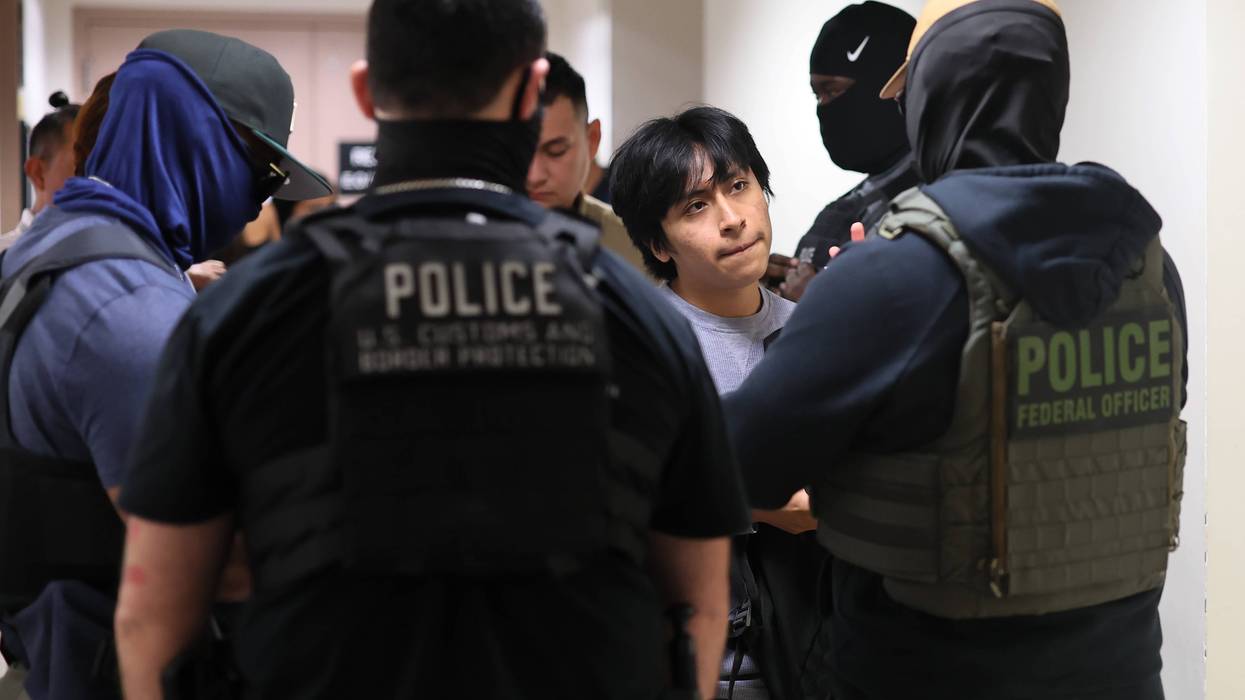
"When ICE continuously raids a community, everyone pays for it—in lost jobs, higher prices, and damaged businesses," said an advocate at the ACLU.
The Trump administration has billed its "mass deportation" agenda as a necessity to bring about an age of prosperity for US-born workers. But a new report suggests it's actually doing the opposite—exacerbating an already severe affordability crisis by suppressing wages, killing jobs, and raising costs.
On Wednesday, the ACLU and AFL-CIO published an analysis examining how the administration's unprecedented deployment of Immigration and Customs Enforcement (ICE) agents to communities around the country has not only created a climate of fear, but also caused labor shortages, reduced economic activity, and given employers new tools to suppress employees' wages.
"When ICE continuously raids a community, everyone pays for it—in lost jobs, higher prices, and damaged businesses," said Naureen Shah, director of government affairs at the ACLU's equality division.
Previous national data has already shown that, contrary to the Trump administration's argument that rounding up immigrant laborers simply creates room for those born in the US, areas that have experienced increases in ICE activity have also seen employment reductions for US-born workers.
"In our interdependent labor market, harm to one group of workers spills over to all those who labor alongside them or within the same supply chain, regardless of immigration status. Roughly 1 in 5 workers in our country is an immigrant, spanning all sectors of the economy," the report explains.
"Targeting this large and vital segment of the workforce sharply reduces the supply of labor, threatening the ability of employers to generate revenue and cover business expenses, including the wages of any remaining workers," it continues.
Reducing the labor supply consequently reduces production. The report argues that this is why industries with large numbers of immigrant laborers have seen skyrocketing costs for their products nationwide.
Data from previous deportation surges during the Obama administration shows that immigration enforcement has reduced construction labor, resulting in nearly 2,000 fewer completed homes on average and an 18% increase in home prices.
In June 2026, data showed that while core inflation was just 2.6% over the previous year, prices had shot up much more dramatically in immigrant-heavy sectors: The cost of lettuce was up 32.1%, landscaping was up 10.8%, home health care climbed 10.7%, whole milk increased 9%, and canned fruit jumped 7.9%.
The report also argues that ICE surges, which have often involved racial profiling and indiscriminate targeting, use of excessive force, and arrests of US citizens, have created terror in communities that suppresses economic activity.
A May working paper from the Wharton School of Business at the University of Pennsylvania, which examined nearly 5,400 raids around the country during 2025, showed that areas targeted by ICE raids experienced a 2.7% decline in foot traffic and a 6.2% decline in spending per business per week, which the author extrapolated would amount to 8.1 billion fewer visits and as much as $14 billion in forgone spending annually across the nation.
US-born employees in sectors with large numbers of immigrant workers were hit especially hard. Data from "Operation Metro Surge" in Minnesota earlier this year demonstrates this in miniature.
Research released in June by the Upjohn Institute estimated that the surge of immigration agents cost the state’s leisure-and-hospitality sector 4,600 jobs, 3.8 million work hours, and $71 million in wages between January and March.
Economist Exequiel Hernandez, quoted in the ACLU/AFL-CIO report, said these findings highlight the danger of creating an "economy of fear."
"If fewer people are showing up to work, they’re making less income, they’re spending less," he explained. "If they’re spending less, businesses have to cut back in hiring and selling, and it’s really quite damaging."
The report cites projections from the Economic Policy Institute (EPI) last year on what this could mean if the Trump administration meets its target of deporting 1 million people per year.
Using data from previous immigration enforcement studies, the EPI estimated that nearly 6 million fewer people could be employed by the end of President Donald Trump's second term if the administration follows through on its deportation promises. That includes 3.3 million immigrants, but also 2.6 million US-born workers, many of whom are working in immigrant-heavy sectors.
The report argues that a pathway to citizenship rather than deportation would not only be a more humane solution, but also deliver economic benefits that ripple through the economy, including for US-born residents.
It cites projections that allowing undocumented immigrants to become citizens would increase US gross domestic product (GDP) by nearly $2 trillion over a decade and generate hundreds of billions in new tax revenue.
This is because legalization would allow workers to move into jobs that better match their skills rather than being confined to low-paying jobs that tend to accept them. It would also remove immigration enforcement as a threat that employers could use to suppress wages, both for immigrant and US-born workers.
"Working people are paying the price for an immigration system that is destabilizing entire industries and communities and making it easier to exploit workers,” said AFL-CIO president Liz Shuler. “As this report demonstrates, a broad pathway to citizenship for all would raise wages, create more and better jobs, and strengthen our economy in ways that help all of us."

Under the new rule, an immigrant rights activist said, many asylum seekers "will never get a chance to argue their case."
The Trump administration published a new regulation on Monday that will immediately allow it to potentially send almost a third of asylum applicants straight into deportation proceedings without an interview to evaluate their claims.
US asylum law requires the government to give asylum seekers a “reasonable opportunity” to present evidence that they face persecution in their country of origin as a result of race, religion, nationality, social group membership, or political opinion.
For more than three decades, US Citizenship & Immigration Services explicitly stated that this process includes the "right" to an interview, where those seeking asylum have the opportunity to describe the persecution they fear and provide facts that may not have been included in their written asylum application.
But an interim final rule is scheduled to take effect on Tuesday that will scrap this right, allowing USCIS to skip the interview and refer applicants directly to immigration judges based solely on other documents they have submitted, which are often prepared without the help of an attorney in a language the applicant may not speak fluently.
In the filing for the new rule, USCIS acknowledged that applicants may be more likely to provide greater detail in face-to-face interviews, but that the overwhelming backlog of cases makes this unsustainable.
The filing states that the new rule will “more quickly place certain aliens into removal proceedings” at the Executive Office of Immigration Review (EOIR), the agency within the Department of Justice (DOJ_ that runs the federal immigration court system.
While these officials are referred to as "judges," they are really part of the executive branch, appointed at the discretion of the attorney general and not subject to any Senate confirmation process.
Critics say that under President Donald Trump, these appointees have been selected to carry out his restrictive immigration agenda.
For these positions, which the administration has advertised as “deportation judges,” The Washington Post found that two-thirds of those appointed as of April 2026 had no immigration law experience. Immigration judges granted asylum in fewer than 5% of cases in February 2026, compared with 48% in 2024.
In September, the Trump DOJ gave immigration judges broader discretion to toss out claims by allowing them to "pretermit" those that they decide are "legally deficient," meaning that applicants can be deported without a full hearing.
As it has carried out its "mass deportation" campaign, the administration has often violated the due process of immigrants in the US by removing them without notice or hearings, detaining longtime residents without the opportunity to secure bond, restricting access to legal counsel, and using mass court procedures to prevent claims from being meaningfully heard in court.
Aaron Reichlin-Melnick, a senior fellow at the American Immigration Council, said that the new rule will allow USCIS to "deny hundreds of thousands of applications without an interview, sending applicants directly to deportation proceedings."
According to the filing, the Department of Homeland Security estimated that the new rule could affect as many as 444,724 pending cases and roughly 132,000 future applicants each year.
"This means many people will never get a chance to argue their case," Reichlin-Melnick said.

“We don’t expect the truth from the Department of Justice or from the FBI," said the president of a legal group advocating for the family of Lorenzo Salgado Araujo. "We expect a whitewash.”
The family of Lorenzo Salgado Araujo is demanding a full, independent investigation into his killing by an Immigration and Customs Enforcement agent in Houston earlier this week, as they and their lawyers warn that the government is being dishonest about the incident.
The Department of Homeland Security (DHS) said the agent shot Salgado, a 52-year-old construction worker from Mexico who has lived in the US for over three decades, in self-defense on Tuesday after he attempted to ram them with his vehicle while trying to evade arrest, though it has not provided evidence to corroborate this account.
At a press conference on Wednesday, Salgado's 29-year-old son, Ronaldo, a teacher in Houston, described coming to the harrowing realization that his father had been shot when he saw video of the incident as it circulated on social media.
"I recognized him immediately," Ronaldo said, beginning to tear up. "Not from his appearance, but from his voice crying for help as he lay on the street, bleeding out."
After hearing rumors that "something bad" had happened to his father, Ronaldo said it took hours for him to figure out what had happened—after going to the scene of the shooting, he found that nobody could give him any answers.
He did not find out where his father was until he approached Conchita Reyes, a representative from the League of United Latin American Citizens (LULAC), who contacted Rep. Sylvia Garcia (D-Texas) and informed Ronaldo that his father was in the hospital.
"I learned of my father's passing from a news report on social media, not the hospital, not law enforcement," he said.
Ronaldo described his father as a "family man" who "dedicated his life in the United States to giving his family the American dream."
DHS described Lorenzo Salgado as an "illegal alien" who was living and working in the US without legal status. Ronaldo said he had lived in the US for 35 years, had no criminal record, and was in the process of obtaining a legal work permit when he was killed.
"We dotted every I, crossed every T, filled every document, attended every appointment," Ronaldo said. "He was close to obtaining his legal status."
He added that his father "worked the last 30 years of his life building homes in the Houston suburbs" and that "part of his dream was to build a house for himself and his family, just like the hundreds he had built for himself over his career."
"And he did, after he built his own house with his crew composed of family members and other loved ones," Ronaldo said. "You could find him every evening after work, resting on his porch, listening to music, petting his dog."
"I am deeply heartbroken to see that the man who taught me the value of hard work, family values, and education will no longer spend an evening on that porch," Ronaldo said.
Ronaldo said he was "calling for a full investigation into the events that transpired yesterday, July 7."
"He did not deserve to die," Ronaldo said. "He deserved to live a quiet life as Lorenzo Salgado Araujo, a husband, a father, and a job creator for dozens of men who also wanted the American dream."
Ronaldo noted that three other men, including his uncle, were also "rounded up" by ICE at the scene.
“I have not heard from them,” Ronaldo said, “but I hope that they are able to provide their own statements to prove that my father feared for his life as unmarked cars followed my dad, who only wanted to get back to work and back to us.”
Security cameras near the scene of the incident have captured some footage of Salgado’s white van appearing to be followed by unmarked ICE vehicles, but none captured the events leading up to the shooting, and there is no publicly available visual evidence of ICE’s claim that Salgado attacked officers.
The lawyers representing Salgado's family have called for DHS to release body camera footage of the incident. LULAC leaders called into question ICE's official account, noting that there had been no damage to Salgado's vehicle.
Ronaldo said his father has "always been aware of what to do in the event that he got pulled over" by ICE agents and that "he wasn’t supposed to give them a hard time.”
The legal team representing his family has said Salgado likely panicked when he saw he was being followed by masked men in unmarked cars and feared that criminals were attempting to steal his van and work equipment.
"One of his worst fears is that someone took away his work tools because that is how he made his livelihood," Ronaldo said.
So far, the federal government has not announced plans for a public, independent investigation into the agents involved in Salgado's shooting. The FBI has said it is investigating the alleged assault on the ICE agent, while the Department of Homeland Security Office of Inspector General is conducting an internal investigation.
DHS has not publicly released the name of the ICE agent who shot Salgado, citing what it said were rising threats to federal agents.
“We want a full and transparent investigation," said Juan Proaño, the CEO of LULAC. "Every piece of evidence, body camera footage, dash cam footage, bystander video, dispatch records must all be preserved and released to an independent investigator and to the public.”
In several cases over the past year, DHS and other law enforcement agencies under the Trump administration have claimed that people shot by ICE agents had attempted to harm them, only for video evidence to later prove those assertions to have been exaggerated or outright fabricated.
LULAC national president Domingo Garcia told The Texas Tribune, “We don’t expect the truth from the Department of Justice or from the FBI. We expect a whitewash.”
Garcia and other Democratic members of Congress sent a letter to DHS and ICE on Wednesday calling for an "immediate, fully independent, and transparent investigation" into Salgado's killing.
"This is not the first time ICE agents have used unnecessary, deadly force," she wrote, referencing the killings of US citizens Renee Good and Alex Pretti during a surge of immigration agents to Minneapolis in January.
"ICE shot and killed Lorenzo Salgado Araujo in our community. His family deserves answers," she said in a public statement. "ICE cannot investigate itself."
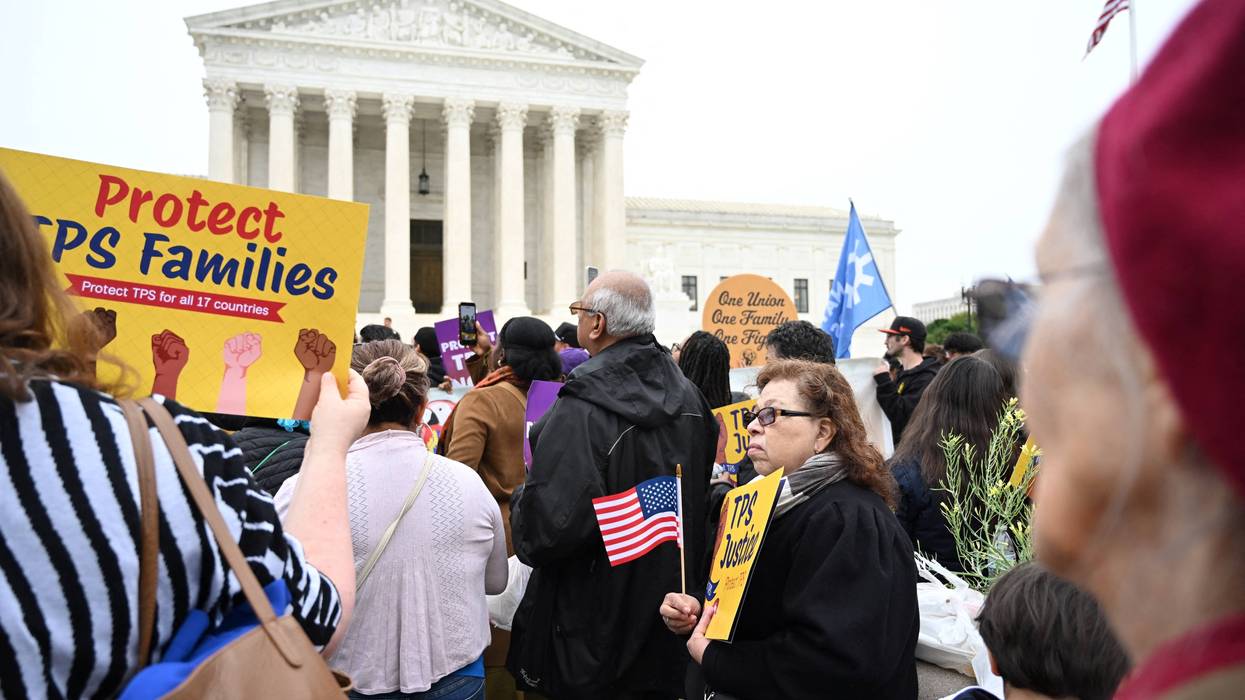
"Hundreds of thousands of people who hold legal status... now face losing their ability to work and being torn from their families and homes."
The US Supreme Court on Thursday cleared the way for the Trump administration to deport hundreds of thousands of Haitian and Syrian residents from the US after stripping them of their Temporary Protected Status last year.
In a 6-3 decision, the high court's conservative majority ruled that the Department of Homeland Security was able to strip status from 350,000 Haitians and 6,000 Syrians—including many who'd lived in the US for years—after they'd been given protection because DHS deemed their home countries unsafe to return to.
"Hundreds of thousands of people who hold legal status, who registered with the government, passed background checks, and paid fees to do so, now face losing their ability to work and being torn from their families and homes," explained Todd Schulte, the president of the immigration and criminal justice reform advocacy group Fwd.US.
A federal judge temporarily delayed the administration’s TPS terminations in February, blocking what advocates feared would be a flood of immigration agents to areas with many TPS recipients. The judge said DHS had not followed the legally required steps to determine whether Haiti and Syria were safe enough for people with temporary status to return.
The State Department currently advises Americans not to visit either country for any reason, as Haiti is in the midst of a brutal gang war that has displaced more than 1.4 million people, and Syria has been in an ongoing state of unrest since the civil war began in 2011.
Echoing the lower court, Supreme Court Justice Elena Kagan pointed out in her dissenting opinion that the only consultation within DHS on the conditions in these countries took place in a brief email exchange between a DHS aide and a State Department official, who said that there were no "foreign policy concerns" with terminating their status, but provided no evidence to declare that the two countries were safe.
The justice likewise noted that the stripping of status for Haitians was likely arbitrary and unconstitutional, based in part on "racial animus." She noted that President Donald Trump has made many statements about Haitians "so repellent and racially inflected that the majority declines to put them in print."
Kagan listed several of them, including Trump's nonsensical rant that Haitians were "eating the pets" of residents in Springfield, Ohio; his claim that Haitians living in the US “probably have AIDS"; and his description of Haiti as a "shithole country." She also noted his comments about immigrants more broadly, including that they are "poisoning the blood" of the nation.
"The statements fairly shout, in their racial undertones and overtones alike, that race entered into the president’s resolve to remove Haitians from this country," Kagan wrote.
In the majority opinion, Justice Samuel Alito sidestepped the question of whether DHS has properly considered the conditions in Haiti and Syria, stating that the TPS statute allows "no judicial review of any determination... with respect to the... termination” of a designation. He said that meant the court could not review either the final decision to terminate status or any of the individual decisions leading up to it.
He did acknowledge the question of racial animus and admitted that things Trump has said "would have scandalized the public just a short time ago." But, he said that “none of the cited statements" from Trump were "overtly racial, and in substance all expressed policy views that could rest on race-neutral justifications.”
The Trump administration has declined to renew TPS for all 13 countries for which it has come up for renewal during his second term. Alito said that since the administration has declined to renew TPS for every country, not just Haiti, the evidence was "insufficient to show that the termination of Haiti’s TPS designation was based on the race of the Haitian people.”
Thursday's ruling was yet another validation of Trump's efforts to end TPS by the Supreme Court, which last year ruled that he could similarly strip status from around 350,000 Venezuelan nationals.
But advocates have pointed out that the administration's case this time was substantially weaker.
Aaron Reichlin-Melnick, a senior fellow at the American Immigration Council, said it was "very important for people to understand that the Trump administration did not win a decision today saying that they had lawfully ended TPS."
"Instead," he said, "what the Supreme Court held was that even if the Trump administration had openly ignored the law in making TPS decisions, courts cannot stop them."
Nicolette Glazer, a California-based immigration attorney, said the court had basically determined that "a DHS secretary can end TPS at whim and neither statutory nor constitutional theory applies to curb administrative xenophobia."
"Make no mistake about what this is," said Amina Barhumi, the executive director of the Muslim Civic Coalition. "Temporary Protected Status exists because it is not safe to send people back to war and disaster. This decision does not change those dangers—it simply turns its back on the people fleeing them."
Schulte said it was a "heartbreaking, terrible decision that defies common sense." He added that "the administration simply broke the law in the way it terminated TPS." Now, he said, the lives of "hundreds of thousands of people who have lived here for decades... are in chaos."
While the Trump administration has often portrayed immigrants and refugees as parasites, Schulte argued that the "economic damage" of the decision would be felt far beyond the families facing deportation.
"Haitian TPS holders contribute nearly $6 billion to the US economy each year, and 200,000 of them work in industries already facing labor shortages, including healthcare, agriculture, and manufacturing," he said. "An estimated 25,000 US citizen children of Haitian TPS holders will be pushed into poverty when their parents lose work authorization. Employers will lose trained, dedicated workers they cannot easily replace. The real-life impact of this ruling is profound, cruel, and heartbreaking."
Some members of Congress pledged to take action to defend TPS recipients in light of the decision.
Rep. Sylvia Garcia (D-Texas) called on Congress to pass the American Dream and Promise Act, which would create pathways to permanent legal status for TPS holders, as well as holders of the similar Deferred Enforced Departure (DED), and those who were brought to the US unauthorized as children and received protection under the Deferred Action for Childhood Arrivals (DACA) program.
"TPS holders followed the rules. They registered with the government, passed background checks, renewed their status, worked legally, paid taxes, and raised their families here," Garcia said. "Their reward should not be a deportation notice."
Sen. Ed Markey (D-Mass.), who spoke outside the court on Thursday, said the ruling showed that "the far-right MAGA majority on the court cannot stand." He said, "We need to win back the House and the Senate and expand the court."
"This is not over," Markey added. "It is our responsibility to protect TPS holders and provide this vulnerable group with a pathway to permanent citizenship. I will not stop fighting."
Even Rep. Mike Lawler (R-NY), a strong supporter of Trump, said that while he "never disputed the ability" of Trump to end TPS, he "strongly disagree[d] with ending Haitian TPS at this time," saying that "the situation on the ground in Haiti is a humanitarian and political disaster and continues to warrant an extension."
Lawler noted that "roughly 1/3" of Haitian TPS holders "work in our healthcare system" and said "shutting off TPS will create a crisis" in hospitals, nursing homes, and for people with disabilities.
"I’m asking the administration to allow for an orderly process by which Haitian TPS holders can maintain their work authorization while their immigration cases are adjudicated over the next six months," he said, adding that the Senate should consider his legislation with Rep. Laura Gillen (D-NY) to temporarily extend TPS protections.
He said the administration needed to "allow for a stable government to be established with a free and fair election, creating the conditions for a safe return for Haitians."
Rep. Analilia Mejia (D-NJ), a member of the House Homeland Security Committee and Border Security and Enforcement Subcommittee, said the TPS ruling, and another ruling on Thursday allowing the administration to turn back asylum seekers at legal points of entry, "should alarm every American."
"The 14th Amendment promises due process and equal protection under the law. Those rights do not disappear because a president decides an entire community has become politically convenient to target," she said. "When the government can deny one group a hearing or strip away protections they have relied on for years, it is not just immigrants who lose. It sends a dangerous message that constitutional rights can be discarded whenever those in power find it politically useful."
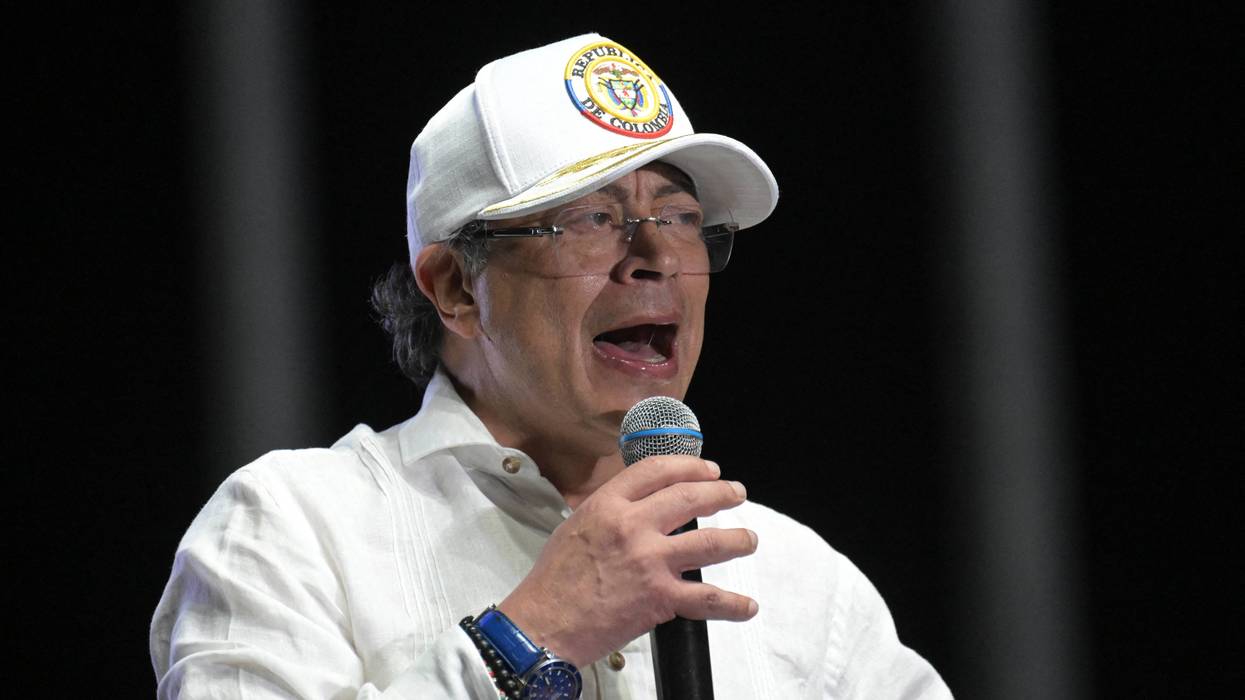
Marco Rubio's State Department is trying to deport activist Beto Coral over his public opposition to a far-right presidential candidate supported by Trump in Colombia's upcoming election.
Colombian President Gustavo Petro on Saturday demanded that US President Donald Trump “tell the people of Colombia” where activist Beto Coral is after he was detained by immigration agents this week following his criticism of Trump’s preferred candidate in Colombia’s presidential election.
Coral, a progressive activist and Petro supporter, was arrested by US Immigration and Customs Enforcement (ICE) agents at his Phoenix home on Tuesday, immediately after US Secretary of State Marco Rubio issued a memo claiming that Coral “has used his presence in the United States to conduct political activity in support of the Petro government.”
His family says they now have no idea where he is.
Atención: El activista colombiano @Betocoralg me llamó hace unos minutos para decirme que agentes de inmigración de @ICE lo están arrestando en este momento en Arizona, aparentemente con la intención de deportarlo. Está con su hijo que es menor de edad pic.twitter.com/sjlaGQdc4Y
— Daniel Coronell (@DCoronell) June 17, 2026
Coral is the son of Humberto Coral Caballero, a police captain who was involved in the 1993 operation that located and killed the notorious drug lord Pablo Escobar. His father was murdered just four months later, in a case that remains unsolved.
The younger Coral immigrated to the US in 2015 on a six-month tourist visa. He later applied for asylum in the US, saying he faced danger from drug cartels in Colombia.
Although the US Department of Homeland Security has also accused him of overstaying his visa for 10 years, the State Department memo pointed to his political activity.
“Allowing [Coral] to remain in the United States,” Rubio's memo said, “undermines US foreign policy interests in Colombia’s democratic processes and signals that foreign nationals may use US platforms to conduct politically motivated disinformation campaigns and litigation targeting foreign democratic actors without consequence.”
The memo reflects the State Department policy of seeking to deport foreign nationals explicitly over their expression of political viewpoints at odds with the Trump administration, particularly pro-Palestinian student activists such as Mahmoud Khalil of Columbia University and Rümeysa Öztürk of Tufts University.
Rubio’s memo also noted that Coral had opposed the right-wing presidential candidate Abelardo de la Espriella, a former criminal defense lawyer supported by Trump, who has pledged to “disembowel the left” if he takes power in Colombia’s presidential runoff on Sunday.
Petro has accused De la Espriella of being a “defender of narcoparamilitaries,” citing his legal defense of armed right-wing groups tied to massacres, assassinations, forced displacement, and drug trafficking.
In a message from detention, Coral said that his arrest "is a sign of what can happen" if De la Espriella, whom he described as a "defender of mobsters and criminals," becomes president of Colombia.
According to The New York Times, Coral’s arrest is the first known instance in which Rubio has targeted an immigrant in the US over their advocacy in a foreign election.
Aaron Reichlin-Melnick, a senior fellow at the American Immigration Council, called it an example of "free speech under attack" by the Trump administration.
"Marco Rubio just had a man arrested and jailed, and is seeking to deport him, because he publicly criticized a presidential candidate in Colombia that Donald Trump would prefer to be elected," he said, adding that Coral "committed no crimes and had an asylum application pending."
Beto Coral fue nuevamente trasladado este día por las autoridades migratorias estadounidenses. Su familia asegura que desconoce su ubicación actual y advierte que su nombre ya no aparece en el sistema oficial ICE Locator, situación que ha incrementado la preocupación y la… pic.twitter.com/cNh4qYy0fI
— Beto Coral (@Betocoralg) June 19, 2026
The 40-year-old Coral was arrested after returning to his Phoenix home with his 12-year-old son. Coral had recently been in Miami, where he said he'd filed a lawsuit against De la Espriella, whom he'd previously accused of illegally recording phone calls between the two.
Coral's former partner, Tatiana Camacho, told the Times that De la Espriella had contacted Coral multiple times "so he would retract his statements.”
US Rep. Jim McGovern (D-Mass.) said Tuesday that Coral’s detention pointed to “coordination between American officials and Colombian political actors in this arrest—that would amount to our government aiding and abetting transnational repression.”
McGovern noted that he had helped lead legislation cosponsored by Rubio in 2023 to counter transnational political repression while Rubio was still a senator.
"Now he’s abetting it himself," McGovern said, "by weaponizing the law to punish free speech and help Trump’s right-wing buddies."
A Friday post from Coral’s X account stated that he had recently been transferred between facilities by immigration authorities, that his family does not know his current whereabouts, as his name no longer appears in the official ICE locator system.
Alberto Coral hijo del oficial de policía, capitán Humberto Coral Caballero, que fué asesinado en el operativo policial contra Pablo Escobar, es ahora, un preso político en EEUU.
Solo por el apoyo político que el secretario de estado de los EEUU Marcos Rubio dió al defensor de…
— Gustavo Petro (@petrogustavo) June 20, 2026
On Saturday, Petro said he “demands” that Trump “tell the people of Colombia where [Beto] Coral is,” referring to him in another post as a “political prisoner.”
“Solely because of the political support that US Secretary of State Marco Rubio gave to Abelardo de la Espriella, a defender of the genocidal narcoparamilitary forces against the Colombian people, who suggested his capture, he has been detained and beaten by the US government, separating him from his family,” Petro said. “[Beto] Coral sought asylum in the US because drug trafficking mafias could have murdered him 10 years ago, and the anti-migrant attitude toward South Americans has not even allowed for his authorization.”
“What will the members of Colombia’s Public Force—which carries out the world’s largest cocaine seizures—think if the states that benefit from them reject and torture even the sons of those fallen in combat against drug trafficking?” Petro asked.
He continued: “I request the solidarity of the governments of the world and the world’s human rights organizations to free the prisoner of conscience [Beto] Coral.”

"ICE shows up, and nothing but chaos.”
This is a developing story… Please check back for updates…
Less than a week after Republicans in Congress passed $70 billion in new funding for President Donald Trump's mass deportation campaign, an immigration agent reportedly shot at a fleeing vehicle in New Jersey on Monday.
According to the police department of Stafford Township, Immigration and Customs Enforcement "was attempting to apprehend a suspect when the suspect fled from the scene in a vehicle, striking [an ICE agent]" on Monday morning around 9:30 am near a Wawa convenience store.
ICE identified the suspect as a Peruvian national, Friedrich Castillo-Ormeno, whom the agency said was given a final order of removal on January 30. Aside from describing him as an "illegal alien," ICE provided no other information about his background or any criminal history.
On June 15, 2026, ICE law enforcement officers were conducting a targeted vehicle stop in Manahawkin, New Jersey to arrest Freidrich Castillo-Ormeno, an illegal alien from Peru who was released into our country under the Biden administration. He was given a final order of removal…
— U.S. Immigration and Customs Enforcement (@ICEgov) June 15, 2026
"The agent discharged his firearm at the vehicle, reportedly striking it," the Stafford police said. "The suspect fled the scene in the vehicle and has not been located at this time." Onlookers told NBC 10 Philadelphia that bullets struck the driver's van and may have blown out the back window.
The police added that “the agent reportedly sustained unknown injuries." According to Patch, officers went to the scene and performed first aid on the agent before transporting him for further treatment. Sources told NBC 10 Philadelphia that he is expected to make a full recovery.
"It is unknown if the suspect was injured at this time," the Stafford police said, adding that although Castillo-Ormeno fled the scene, “there is no reason to believe there is any concern for the public’s safety.”
Under the Department of Homeland Security's use-of-force policy, agents are not supposed to shoot at fleeing vehicles unless the officer believes they are at imminent risk of death or serious physical injury.
ICE said Castillo-Ormeno "weaponized his vehicle and struck an officer, resulting in the officer discharging his weapon."
According to Patch, local police are not conducting an investigation into the incident, and all further updates will come from the FBI.
Under Trump, the US Department of Justice has faced criticism for locking state and local investigators out of investigations into the shootings of US citizens Renee Good and Alex Pretti in Minneapolis earlier this year and spreading false information to justify their deaths.
Minnesota became the center of a national wave of resistance to ICE that ultimately pushed federal immigration agencies to retreat on some of their most extreme tactics, though the mass deportation push against immigrants largely without criminal histories has not subsided.
New Jersey has met ICE with its own share of pushback. Last month, US Sen. Andy Kim (D-NJ) was pepper-sprayed by federal agents outside the privately run Delaney Hall detention facility in Newark. Demonstrators had shown up in solidarity with hundreds of detainees who had gone on a hunger and labor strike to protest the squalid conditions in the facility, and protests have continued for weeks.
Although Stafford Township is overwhelmingly Republican, The Daily Beast found that in the immediate aftermath of Monday's reported shooting, some residents in a local Facebook group were wary about the tumult that ICE's presence could bring.
"Immigrants have been in Stafford for decades with no problems,” one resident wrote in a local Facebook group where the incident is being discussed. “They are respectful and hardworking. ICE shows up, and nothing but chaos.”
“Who shoots at a van?" wrote another Stafford resident, who added that "[ICE] training is brutal."

“It’s hard to fathom how deeply evil this is,” said Sen. Chris Murphy.
The US government advises Americans not to travel to the Central African Republic "for any reason." But it just deported nearly two dozen people to the war-torn country, including several refugees who fled persecution in other nations.
On Friday morning, Human Rights First's deportation flight tracker reported that a plane used by Immigration and Customs Enforcement (ICE) had landed in Accra, Ghana, after departing from Louisiana the previous day and was believed to be en route to the CAR's capital, Bangui.
Per The New York Times on Thursday, the administration was preparing to deport "at least two Iranian women who had sought refuge in the United States" as well as "migrants from Afghanistan and Syria."
According to their lawyers, several of the migrants had received court orders from judges prohibiting their deportation to their home countries, citing the risk of persecution there.
A lawyer for one of the Iranian women told the Times that neither of them has a criminal record and that they both have been granted court protection due to fear of threats to their freedom or lives if they returned to Iran. One is a Christian convert, and the other is a pro-democracy activist.
According to Reuters, just the activist ended up on the flight from Louisiana. But the Christian woman is still at risk, along with another Iranian national.
Human Rights First's @ICEFlightM is monitoring this egregious situation, and we urge our policy makers to decry this life-threatening flight and other deals that send people seeking safety back to the very harms from which they fled.
https://t.co/ABZZMTQNuS
— Human Rights First (@humanrights1st) June 11, 2026
The burden of proof to receive what is known as a “withholding of removal” status from an immigration judge is even higher than that needed for migrants to qualify for asylum.
Those seeking their deportations to be halted must demonstrate that it’s more likely than not that their life or freedom would be threatened if they returned to a specific country due to their race, religion, nationality, or political or social affiliation.
In order to get around orders protecting these migrants from deportation to their home countries, the administration is instead dumping them in what have been described as "third countries."
The flight departed on Thursday is the first US deportation flight to the CAR, which is one of the poorest countries in the world and is reeling from a civil war that's displaced more than a million people both inside and outside the country.
The country is under the State Department's highest travel advisory, warning US citizens not to go there "due to risk of unrest, crime, kidnapping, landmines, health, and terrorism."
This is the @StateDept travel advisory for the Central African Republic.
The United States—a self-proclaimed nation of refuge—is about to send refugees here. https://t.co/uxfexS5S73 pic.twitter.com/pvYyxIQHdN
— Sarah Pierce (@SarahPierceEsq) June 11, 2026
"People on this flight proved to a judge that they were likely to be persecuted in their home countries," said Aaron Reichlin-Melnick, a senior fellow at the American Immigration Council. "This is profoundly unjust."
Human rights law experts Anjli Parrin and Savi Arvey wrote on Wednesday for Just Security that the administration was putting "lives at risk" by sending these migrants to a dangerous country where they know nobody and where basic healthcare infrastructure hardly exists.
They said the administration's deportation of these migrants "is the latest example of its dangerous and potentially life-threatening strategy: using secretive deals with countries to expel asylum seekers and migrants with no legal or personal connection to the places where they are being sent."
"Since early last year, the US government has signed a growing number of third-country forced transfer agreements with over 30 countries worldwide to expel and deport people to places where they have no legal or personal ties," they said.
"These deportations are often carried out in secrecy and without any semblance of due process," they added. "Individuals are often not given any advance warning or the opportunity to challenge their deportation to a third country—with many only discovering they are being sent to a country they may have never heard of while airborne."
Emily Trostle, a lawyer for the Iranian activist, told Reuters that the migrants facing deportation to the CAR "have absolutely no connection to this place."
“These individuals are being removed from the United States and abandoned in a country where they have no status, no connection, and no support network,” she said. “We fear they will ultimately be forced to return to the countries they originally fled.”
According to Human Rights First's Third Country Deportation Watch, governments around the world have been given $44 million from US taxpayers to receive these migrants. More than 19,000 people, it found, have been deported across 24 countries.
Most of them have been sent to Mexico, but the US has also shipped migrants to some of the poorest, most unstable nations in sub-Saharan Africa, including Eswatini, Equatorial Guinea, and Sierra Leone. Many have faced arbitrary detention and torture or been returned to the country where they fled persecution.
In order to avoid having to allow over 1,000 Afghans who fought alongside US soldiers to settle as refugees in the US as planned, the Trump administration is reportedly trying to ink a deal with the Democratic Republic of the Congo to take them instead, but the plan was stalled amid public backlash, and the administration is seeking other options.
It's hard to fathom how deeply evil this is, and that we have people running our country who get sick pleasure from sending women fleeing violence in Iran to an African country in the middle of a brutal civil war. https://t.co/JaN8z2LFI2
— Chris Murphy 🟧 (@ChrisMurphyCT) June 11, 2026
The Iranian American Legal Defense Fund said on Thursday that the deportation of Iranian nationals was a “potentially fatal action,” as they could face danger in the CAR or be sent back to Iran.
Another person scheduled to be deported to the CAR was an elderly man from Syria, whose immigration attorney, Margaret Stock, told the Times that he had scars all over his body due to torture in his home country.
He is a Sufi Muslim and feared persecution if he returned there, and is in danger of lacking access to care for his diabetes if sent to the CAR. According to Stock, he received an emergency temporary order halting his deportation.
Sen. Chris Murphy (Conn.), the ranking Democrat on the subcommittee in charge of funding for the Department of Homeland Security and its immigration agencies, responded to the Times report on the deportations with outrage.
"It's hard to fathom how deeply evil this is, and that we have people running our country who get sick pleasure from sending women fleeing violence in Iran to an African country in the middle of a brutal civil war," he said.
Reichlin-Melnick agreed: "Evil is the right word for... taking people who are safe in the United States, who have proven to a judge they would be persecuted in their home country, and dumping them in a random country in the middle of a civil war."
"No previous administration would have done this, despite it likely being legal," he added.

Bovino’s plan to purge the country of one-third of its population has been described as an “ethnic cleansing" proposal. He recently discussed it at a conference with European neo-Nazis.
Fresh off his appearance at a fascist conference in Portugal focused on "remigration," President Donald Trump's ex-Border Patrol Commander Gregory Bovino has teased a run for US president in 2028 centered around his fantasy of deporting 100 million people from the United States.
Amid public backlash following the killing of two US citizens by his federal agents in Minneapolis, Bovino was kicked from the helm of Trump’s mass deportation crusade in January and sent into early retirement.
But as he later discussed with The New York Times, he departed with a sense of unfinished business, unfulfilled that he could not exact what was described as a “master plan” to purge a third of the country.
As News Nation reported on Monday, Bovino is not one to give up on dreams easily. The 30-year Border Patrol veteran told the network that he was launching an exploratory committee for a White House run in 2028 and planned to move ahead with a formal campaign "if it all comes together."
The website for his committee, Bovino2028.com, which features an image of Bovino in his signature SS-style trenchcoat flanked by the phrase "House Bovino. Men Fight Back," gives a sense of the campaign he seeks to run.
The website describes a future President Bovino leading the US with a “warrior mindset," “quelling the foreign hordes that have subsumed our nation’s cities," and creating a “department of youth masculinity” to turn young men into “warriors for freedom,” and calls for the reestablishment of Elon Musk’s failed Department of Government Efficiency (DOGE).
His website also does not shy away from acknowledging his role in a conference in late May were he appeared alongside representatives of the global far-right. As Charles R. Davis described late last month for The Redoubt:
The "Remigration Summit 2026," so called, was held May 30 at the Salmanha Residence hotel just south of Porto, Portugal, and its organizers were not subtle.
"Weimar conditions require Weimar solutions," argues Afonso Gonçalves, chief organizer of the event. He's the founder of the far-right group Reconquista, so named for the mass expulsion of Muslims from the Iberian Peninsula. That's who Bovino was photographed standing next to after he landed in Europe.
Martin Sellner, an extremist from Austria, is best known for pushing the "great replacement" conspiracy theory— that Jewish elites are seeking to exterminate the white race via mass migration—that has motivated mass shooters from Pennsylvania to New Zealand.
He was the other man standing next to Bovino.
Other speakers included a Belgian fascist convicted of Holocaust denial and the founder of a Swiss neo-Nazi group called "Junge Tat" who is quite open about his fondness for "National Socialism."
Bovino is not looking to hide his affiliations with prominent neo-Nazis. The site prominently features a photo of himself with Sellner, who at a previous summit outlined a plan for the forced expulsion of "non-assimilated" citizens of immigrant backgrounds from Germany.
The ex-Border Patrol commander said during the conference that his and Sellner's ideas "mirror each other."
 Gregory Bovino poses with Martin Sellner in an image posted to his 2028 website.(Photo from Bovino2028.com)
Confirming that he was considering a presidential run on Monday, Bovino wrote on social media: "My one and only priority is deporting the 106 million illegals who are here. That’s it."
According to May data from the Center for Migration Studies, the number of undocumented immigrants actually in the United States was only about 14.6 million as of 2024, meaning that what Bovino is actually proposing is the mass expulsion of tens of millions of legal immigrants, as well as naturalized and US-born citizens.
David J. Bier, an immigration expert at the libertarian Cato Institute, testified about this plot by Bovino in front of the Senate Budget Committee in March, describing it as a plan for “ethnic cleansing"—and pushing back when one Republican senator dismissed the claim as "hyperbole."
Polls indicate Americans have overwhelmingly turned against Trump's crusade to round up millions of immigrants, with strong majorities having negative views of his tactics and of Immigration and Customs Enforcement (ICE). In early March, just over a month after Bovino's tenure ended, a record 50% of Americans said in a YouGov poll that they would support abolishing ICE.
But Bovino said the "grassroots support" he's seeing indicates that "the polls are completely wrong."
He said: "If I’m getting this much energy, it’s probably because 90% of the country wants mass deportations, and the media just isn’t asking the right questions."
While it is difficult to see Bovino achieving mass appeal on the back of an immigration crusade even more extreme than Trump's, Oliver Willis, a writer for the Daily Kos said it was a sign of where the base of the GOP could be heading.
"The Republican Party has increasingly tied itself to the white supremacist movement through continued support of Trump and the rising influence of figures like conservative podcaster and neo-Nazi Nick Fuentes," he wrote. "Bovino considering a 2028 presidential bid shows that the party—and the wider conservative movement—isn’t moderating at all."

“In Minnesota, we believe in equal justice under the law," said Minnesota Attorney General Keith Ellison. "That means nobody is above the law, including agents of the federal government."
A US Immigration and Customs Enforcement agent was arrested in Texas on Friday after he was charged by Minnesota officials for allegedly shooting a Venezuelan immigrant during an ICE operation in Minneapolis and lying about what happened.
Christian Castro, 52, was deployed as part of President Donald Trump’s mass deportation push in the Twin Cities, dubbed “Operation Metro Surge,” and was charged by Hennepin County Attorney Mary Moriarty earlier this month with four counts of felony assault and one count of falsely reporting a crime.
The charges stem from the shooting of Venezuelan national Julio Cesar Sosa-Celis at his home on January 14 as ICE agents pursued his roommate, another Venezuelan immigrant named Alfredo Alejandro Aljorna.
According to The New York Times, Castro was arrested Friday after being tracked down by investigators with the Minnesota Bureau of Criminal Apprehension (BCA). Texas Rangers and agents with the Department of Homeland Security Office of the Inspector General carried out the arrest, according to the Minnesota-based Sahan Journal.
“Today’s arrest is a critical step forward in our prosecution of Mr. Castro,” Moriarty said. “The BCA’s investigative work was instrumental in this process, and we’re grateful for their collaboration as we pursue accountability for this incident on behalf of Mr. Sosa-Celis, his family, and our community.”
Sosa-Celis and Aljorna were originally charged by the US Department of Justice (DOJ), after Castro claimed that he had shot in self-defense when the men assaulted him with a broom and a shovel, claims that were parroted by then-Department of Homeland Security (DHS) Secretary Kristi Noem and department spokesperson Tricia McLaughlin.
But the charges were later dropped after video of the incident and an examination of X-ray evidence demonstrated that Castro's claims were false. Castro and another agent were subsequently placed on administrative leave by DHS while they were investigated internally for lying under oath.
“In Minnesota, we believe in equal justice under the law. That means nobody is above the law, including agents of the federal government,” said Minnesota Attorney General Keith Ellison following news of Castro's arrest on Friday. “I am pleased to hear Christian Castro has been taken into custody and will stand trial for the crimes he allegedly committed in Minnesota. Justice demands no less.”
Castro is the second ICE agent to be charged by Moriarty's office for their role in Operation Metro Surge, which civil rights groups and Minnesota officials have characterized as a lawless immigration crackdown involving racial profiling, warrantless arrests, violent raids, and multiple shootings by federal agents.
Another agent, Gregory Morgan Jr., was charged last month with two counts of felony second-degree assault after he allegedly pulled a gun on two local residents during a traffic stop. Morgan turned himself in to local authorities last week and was released on bond.
Ellison also sued the Trump administration in March for refusing to cooperate with the state investigation into the shooting of Sosa-Celis, and other probes into the fatal shootings of two US citizens.
Moriarty's office has not yet brought charges against ICE officer Jonathan Ross, who fatally shot Minneapolis mother Renee Good in January, or Border Patrol agent Jesus Ochoa and Customs and Border Protection officer Raymundo Gutierrez in connection with the deadly shooting of Department of Veterans Affairs nurse Alex Pretti later that month.