SUBSCRIBE TO OUR FREE NEWSLETTER
Daily news & progressive opinion—funded by the people, not the corporations—delivered straight to your inbox.
5
#000000
#FFFFFF
To donate by check, phone, or other method, see our More Ways to Give page.


Daily news & progressive opinion—funded by the people, not the corporations—delivered straight to your inbox.
There are no credible reasons to believe that J Street or the “House Democratic leadership” are serious about using US leverage to “change course” in ways that would really impede the genocidal state of Israel.
When House Democratic leader Hakeem Jeffries sent out a recent “dear colleague” letter, its second sentence cited “the position articulated by… pro-peace organizations like J Street.” The congressman and J Street were opposing an amendment to block $3.3 billion in military shipments and other aid to Israel.
Jeffries (NY) contended that the measure was “overly broad.” On the same day, using the same phrase “overly broad,” J Street issued a statement declaring that “we support Leader Jeffries’ decision to oppose the amendment.”
Both Jeffries and J Street respectfully noted that many members of Congress had understandable reasons to back the measure. The next day, July 15, a record 103 Democrats voted in favor of blocking weaponry to Israel.
While attempting to prevent a high number of yes votes, Jeffries and J Street had emphasized mutual agreement to validate a position that amounted to support for arming genocide.
After the House vote, J Street said that “we welcome House Democratic leadership taking a stronger stance on using US leverage to pressure the Israeli government to change course.” But there are no credible reasons to believe that J Street or the “House Democratic leadership” are serious about using US leverage to “change course” in ways that would really impede the genocidal state of Israel.
Last month, a United Nations commission concluded that genocide is continuing, as Israeli forces intentionally target children in Gaza. “A significant body of research by legal and rights experts has concluded that Israel is intent on destroying Palestinians, including analyses by UN investigators, rights bodies such as Amnesty International and Human Rights Watch, and genocide scholars worldwide,” The Guardian reported this summer.
Jeffries, a seven-term representative from New York City, has received upwards of $1.7 million from pro-Israel donors. He is now third from the top of such recipients among the thousands of House members since 1990.
During the 34 months since the Hamas-led attack on Israel on October 7, 2023, J Street has evolved from unequivocally supporting Israeli military actions in Gaza to fervently criticizing them and calling for an end to restrictions on humanitarian aid. Yet the organization has never responded adequately in ways commensurate with the actual horrific events.
Early last year, while writing an article for The Nation, I researched J Street’s public statements ever since the start of Israel’s war on Gaza. I found that “none of J Street’s 132 news releases between October 7 [2023] and the start of the [temporary] ceasefire in late January 2025 called for an end to shipments of the US bombs and weapons that were killing those civilians while enforcing Israel’s policy of using starvation as a weapon of war.”
Throughout the 16-month period, as I pointed out: “J Street news releases echoed pronouncements coming from the White House and State Department, becoming grim parodies of wishful thinking and empty warnings. The headlines of J Street releases were largely contoured around hollow claims from the Biden administration that it was diligently striving to end the death and agony in Gaza.”
Only gradually has J Street expressed support for—minimally—curbing US military aid to Israel. Meanwhile, as has been the case since J Street’s founding nearly 20 years ago, many members of Congress have hidden behind J Street to legitimize their support for Israel, while often repeating the expedient “two-state solution” fantasy.
Describing itself as “pro-Israel, pro-peace, pro-democracy,” J Street has long been widely seen as a liberal Jewish-led alternative to the American Israel Public Affairs Committee’s right-wing politics. But J Street’s record shows that it has gone out of its way to trumpet denial.
On January 16, 2024, the organization put out a news release with this headline: “J Street Rejects Allegation at International Court of Justice of Genocide in War Against Hamas in Gaza.” Four months later, another J Street news release was equally emphatic, making clear that “J Street continues to reject the allegation of genocide in this case.”
In December 2024, both Amnesty International and Human Rights Watch released reports unequivocally stating that Israel was engaged in genocide.
At last, in August 2025, J Street’s president and driving force since its founding, Jeremy Ben-Ami, finally acknowledged the reality of Israeli genocide. “Until now, I have tried to deflect and defend when challenged to call this genocide,” he wrote in a blog post. “I have, however, been persuaded rationally by legal and scholarly arguments that international courts will one day find that Israel has broken the international genocide convention.”
J Street’s leader wrote those words a year ago. Yet he and his organization just teamed up with Hakeem Jeffries in support of continuing massive arms shipments to the genocidal Israeli government.
And so continues the convenient evasion with the absurd motto “pro-Israel, pro-peace, pro-democracy.”
"Every day this war goes on makes both the United States and Iran weaker, poorer, and less secure."
Even as President Donald Trump signaled this week that he'd like to quickly wrap up his unconstitutional war with Iran, some experts are warning that the president has put himself in a situation with no easy way out.
Military historian Bret Devereaux, a teaching assistant professor at North Carolina State University, published a lengthy analysis of the war on Wednesday in which he described it as a failed gamble that Iran's regime would simply crumble in the face of a well-executed series of aerial strikes.
Devereaux said that this was highly unlikely given the nature of the Iranian regime, which is structured to maintain itself up and down the chain of command if one or even several of its leaders are killed.
And now that it's very clear that Trump's gamble of overthrowing the regime hasn't paid off, Devereaux wrote, he will be at the mercy of events beyond his control.
"Once started, a major regional war with Iran was always likely to be something of a 'trap,'" he contended, "not in the sense of an ambush laid by Iran—but in the sense of a situation that, once entered, cannot be easily left or reversed."
While Iran's response to the strikes carried out by the US and Israel in June 2025 was relatively tepid, Devereaux said, once Trump and Israeli Prime Minister Benjamin Netanyahu declared that the goal of their latest operation would be regime change, the Iranian government took the extraordinary step of shutting down the Strait of Hormuz, sending global energy prices skyrocketing.
It has been this threat to shut down the strait, as well as the massive difficulty and cost it would take to occupy a nation of 90 million people, the historian continued, that has kept every US president for the last five decades from launching an invasion of Iran.
At the same time, he continued, Trump cannot now simply walk away while leaving Iran with the ability to take the global economy hostage whenever it pleases.
"The result is a fairly classic escalation trap: Once the conflict starts, it is extremely costly for either side to ever back down, which ensures that the conflict continues long past it being in the interests of either party," he wrote. "Every day this war goes on makes both the United States and Iran weaker, poorer, and less secure but it is very hard for either side to back down because there are huge costs connected to being the party that backs down."
Summing up his argument, Devereaux declared, "This war is dumb as hell."
Devereaux's analysis was echoed by Ilan Goldenberg, senior vice president and chief policy officer at J Street, who wrote in a social media post Wednesday that the US and Iran appear to be caught in an escalation trap, as exemplified by the Trump administration's recent decision to send more military personnel to the Persian Gulf.
"The much more important story right now isn’t diplomacy—it’s the thousands of US troops being mobilized and moving toward the Middle East," he wrote. "That movement strongly suggests preparation for further escalation, with Kharg Island emerging as the most likely target. For any objective observer, the likely Iranian response to a US move on Kharg is obvious: escalation, not capitulation. Tehran would almost certainly respond by expanding attacks on energy infrastructure across the Gulf."
Goldenberg added that "the most plausible off-ramp" will involve Trump simply declaring victory while leaving the regime intact and with vague promises to not produce a nuclear weapon, although he said that likely wouldn't come until after more escalation and destruction.
"Better to accept this likely outcome today rather than six months from now," he advised.
In a Wednesday analysis published at Liberal Currents, University of Illinois political scientist Nicholas Grossman cast doubt on Trump's ability to simply wash his hands of the Iran conflict and walk away.
Part of the issue, said Grossman, is that Iran simply might want to keep inflicting economic damage on Trump to make him think twice before launching a future attack on the regime.
"In hard power dynamics, this is the strongest position the Islamic Republic has ever been in, the most leverage they have over the United States since the 1979-80 hostage crisis," Grossman wrote. "Iran is likely thinking of longer-term security. If they can endure more US-Israeli bombing—and the war so far indicates that they can—then they can increasingly establish their ability to crash the global economy, a deterrent even the United States must respect."
Given that Trump is unlikely to want to be seen as a "loser" for simply accepting Iran's control of the strait, Grossman concluded, "that points to stablemate or escalation, more death and destruction, and a global economic disruption that will be bigger than many currently expect."
The California Democratic lawmaker slammed Jonathan Greenblatt as "a Trump apologist who attacked Obama's nuclear deal, defends Elon, and is basically a shill for the Trump administration and Netanyahu. Sad to see."
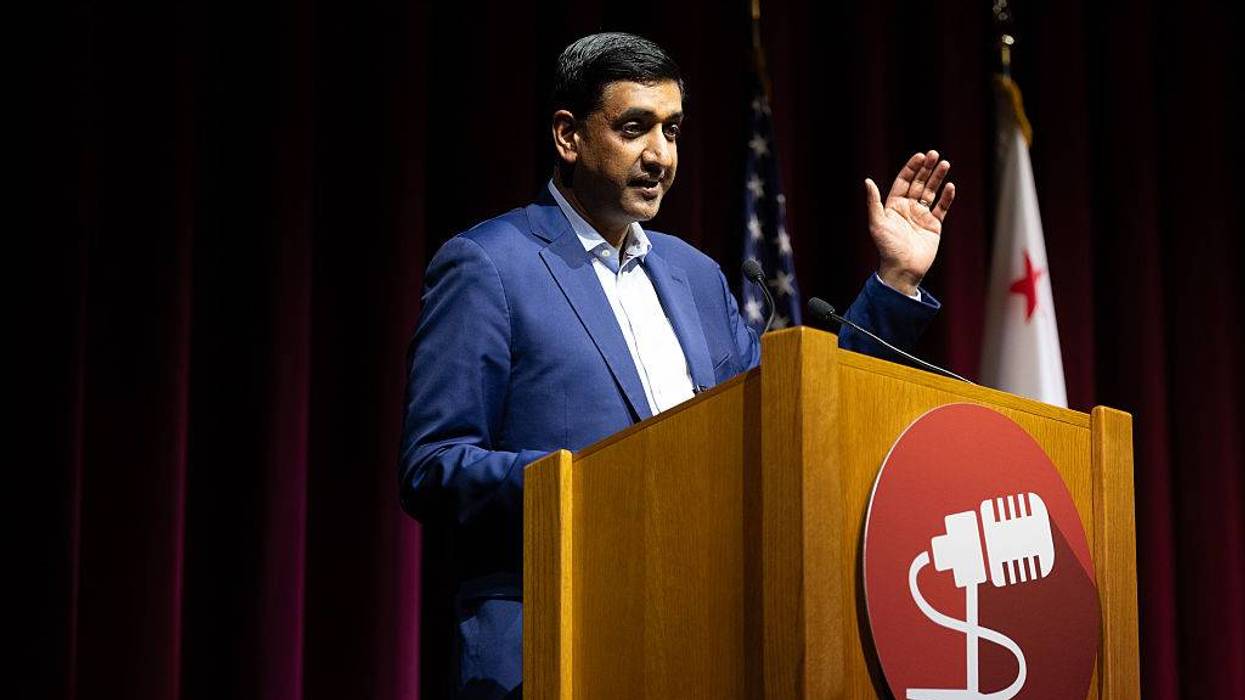
US Rep. Ro Khanna on Tuesday hit back at Anti-Defamation League CEO Jonathan Greenblatt after he accused the California Democrat of enabling antisemitism.
As reported by Jewish Insider, Greenblatt accused Khanna (D-Calif.) of using an antisemitic dog whistle when he blamed "neoconservatives" for President Donald Trump's decision to launch an unprovoked military strike against Iran.
Greenblatt also slammed Khanna for appearing on the podcast of Hasan Piker, a critic of Israel whom the ADL chief described as "one of the most virulent, outspoken antisemitic influencers in the world."
ADL CEO Jonathan Greenblatt tells 2026 Never is Now conference that it's "anti-Semitic" to blame Israel for the war on Iran that Israel started.
He accuses Sen. Chris Van Hollen of anti-Semitism for blaming "AIPAC" and slams Rep. Ro Khanna for blaming "neocons" and saying he's… pic.twitter.com/3MpTxFiSwE
— Chris Menahan 🇺🇸 (@infolibnews) March 17, 2026
In addition to going after Khanna, Greenblatt attacked Sen. Chris Van Hollen (D-Md.) for accusing the American Israel Public Affairs Committee (AIPAC) of being "un-American" during an address at a conference hosted by J Street, a liberal Zionist organization that in the past has clashed with AIPAC.
In a social media post, Khanna accused Greenblatt of being a partisan shill with a history of overlooking antisemitism from his political allies in the Republican Party.
"Facts don't matter to Greenblatt," Khanna wrote. "He is a Trump apologist who attacked [former President Barack] Obama's nuclear deal, defends Elon [Musk], and is basically a shill for the Trump administration and [Israeli Prime Minister Benjamin] Netanyahu. Sad to see. He has zero respect among any House Democrats anymore."
Shortly after this, Khanna responded to a social media post from AIPAC and suggested that the group merge with Greenblatt's ADL.
"Greenblatt you've sucked up enough to Trump you can probably get the merger approved in this administration," Khanna wrote.
Matt Duss, executive vice president at the Center for International Policy and former foreign policy adviser to Sen. Bernie Sanders (I-Vt.), took note of Khanna's defiant reaction to Greenblatt's attacks and argued it showed how much clout the ADL had lost in recent years under his leadership.
"There was a time when the head of the ADL saying this about two prominent Democrats would’ve mattered," he observed, "but Greenblatt has effectively marginalized himself with exactly this kind of reckless slander."
Drop Site News reporter Ryan Grim also argued that Greenblatt had made himself irrelevant by so aggressively hitting critics of Israel with charges of antisemitism.
"Has anyone been worse at his actual job than Jonathan Greenblatt?" he wrote. "If he wants to be an advocate for Likud in DC, he should just do that. Be direct. This thing where he weaponizes concerns about antisemitism to boost Likud is outrageous and also not working."
The head of one group decried the ADL's "disproportionate attention on left-of-center activists’ views on Israel while failing to apply the same scrutiny to the Trump administration."
The heads of three left-leaning US Jewish groups on Monday admonished the Anti-Defamation League after the controversial watchdog once again conflated criticism of Israel with antisemitism in its latest report on New York City Mayor-elect Zohran Mamdani and his transition team.
The Anti-Defamation League noted approvingly in its updated "Mamdani Monitor" that "at least 25 individuals" in the democratic socialist's transition team "have a past relationship with the ADL or partner organizations, or a history of supporting the Jewish community."
The group also appreciated that "Mamdani's team can and will respond appropriately" to actual incidents of antisemitism, pointing to last week's resignation of Catherine Almonte Da Costa, Mamdani's former director of appointments, following the revelation of antisemitic social media posts she published in the early 2010s.
However, the ADL said it remains "deeply concerned" by Mamdani's statements and actions, highlighting what the group claimed were "many examples of individuals who have engaged in some type of antisemitic, anti-Zionist, or anti-Israel activities and/or have ties to groups that engage in such activities" among the mayor-elect's transition team appointees.
"These activities include spreading classic antisemitic tropes, vilifying those who support Jewish self-determination in their ancestral homeland, seeking to undermine the legitimacy and security of the Jewish state, and more," the ADL said, adding that "at least a dozen transition committee appointees expressed support for the anti-Israel campus encampments in the spring of 2024."
The Mamdani Monitor also noted that "at least 20% of the 400-plus appointees have ties to anti-Zionist groups such as Students for Justice in Palestine (SJP), which openly glorifies Hamas’ October 7 attack... Jewish Voice for Peace (JVP), a fringe group that advocates for the eradication of Zionism and demonizes Zionists; Within Our Lifetime (WOL), a New York-based radical anti-Zionist organization... and others."
Asked about the report during a Monday press conference, Mamdani said, "We must distinguish between antisemitism and criticism of the Israeli government."
“The ADL’s report oftentimes ignores this distinction, and in doing so it draws attention away from the very real crisis of antisemitism we see not only just in our city but in the country at large,” he continued. “When we’re thinking about critiques of Zionism and different forms of political expression, as much of what this report focuses on, there’s a wide variety of political opinion, even within our own 400-plus transition committee.”
Critics say the ADL's claim in the update that it "has long distinguished between legitimate criticism of Israeli government policies and antisemitism" is belied by not only the Mamdani Monitor's language, but also its own significantly expanded definition of antisemitism and antisemitic incidents, which include protests against Israel’s US-backed genocidal war on Gaza.
Jamie Beran, CEO of the progressive group Bend the Arc: Jewish Action, said in an X thread that "we were disappointed but not surprised to see today’s ADL report continue their conflation of criticism of the Israeli government’s actions with antisemitism" and the group's "favoring of Trumpian tactics over bridge building and its prioritization of fearmongering over the safety of American Jews and our neighbors."
Beran continued:
The ADL of today seems to have three interests: keeping their right wing megadonors happy, protecting the current Israeli government’s violent far-right agenda by conflating criticism of Israel with antisemitism, and cozying up to [US President Donald] Trump to stay close to power.
None of this fights antisemitism. Their McCarthyist Mamdani Monitor is the first of its kind because the ADL chose not to deploy a similar tactic when their bedfellows offered Nazi salutes, hired and pardoned neo-Nazis, and continued to openly spread dangerous antisemitic conspiracy myths.
"If the ADL truly wanted to fight antisemitism—like we do every day—they would actually confront it at its roots and how it works alongside all forms of bigotry, not instrumentalize it for an unpopular political agenda that has nothing to do with Jewish safety," Beran added.
Jeremy Ben-Ami, president of the liberal Jewish group J Street, also rejected the ADL's "continued conflation."
“J Street continues to be deeply concerned by the ADL’s ongoing use of its so-called ‘Mamdani Monitor,’ which goes well beyond combating antisemitism and too often conflates legitimate political speech with hate," Ben-Ami said in a statement Monday.
Ben-Ami asserted that there is "something deeply wrong when major Jewish leaders and institutions focus disproportionate attention on left-of-center activists’ views on Israel while failing to apply the same scrutiny to the Trump administration and MAGA leaders, whose blatant antisemitism and ties to white nationalist movements pose a clear and dangerous threat to American Jews."
"Our communal institutions should fight antisemitism consistently and credibly, wherever it appears—not selectively, and not in ways that inflame fear or deepen division," he added.
Another liberal Jewish antisemitism watchdog, Nexus Project, also decried the ADL update, which it said "repeatedly blurs the line between antisemitism and anti-Zionism."
J Street among the groups supporting the Antisemitism Response and Prevention Act (ARPA), legislation introduced last week by US Reps. Jerrold Nadler (D-NY), Rosa DeLauro (D-Conn.), Becca Balint (D-Vt.), and Maxwell Frost (D-Fla.) in the wake of the Sydney Hanukkah massacre.
According to Nadler's office, the bill "clearly states that it is against the policy of the United States to use antisemitism as grounds to pursue ulterior political agendas, including attacks on educational institutions, suppressing constitutionally protected speech, or any other enforcement of ideological conformity."
ARPA stands in stark contrast with the Antisemitism Awareness Act (ARA), which was introduced in 2023 by Reps. Mike Lawler (R-NY), Josh Gottheimer (D-NJ, Max Miller (R-Ohio), and Jared Moskowitz (D-Fla.) in the House of Representatives and Sen. Tim Scott (R-SC) in the Senate.
The bill would require the Department of Education to consider the International Holocaust Remembrance Alliance (IHRA) Working Definition of Antisemitism when determining whether alleged harassment is motivated by anti-Jewish animus.
The ADL has pushed a wide range of governments, institutions, and organizations to adopt the IRHA definition, which conflates legitimate criticism and condemnation of Israeli policies and practices with anti-Jewish bigotry, and forces people to accept the legitimacy of a settler-colonial apartheid state engaged in illegal occupation and colonization, ethnic cleansing, and genocide.
House lawmakers overwhelmingly approved the legislation last year; however, the bill remains stalled in the Senate.
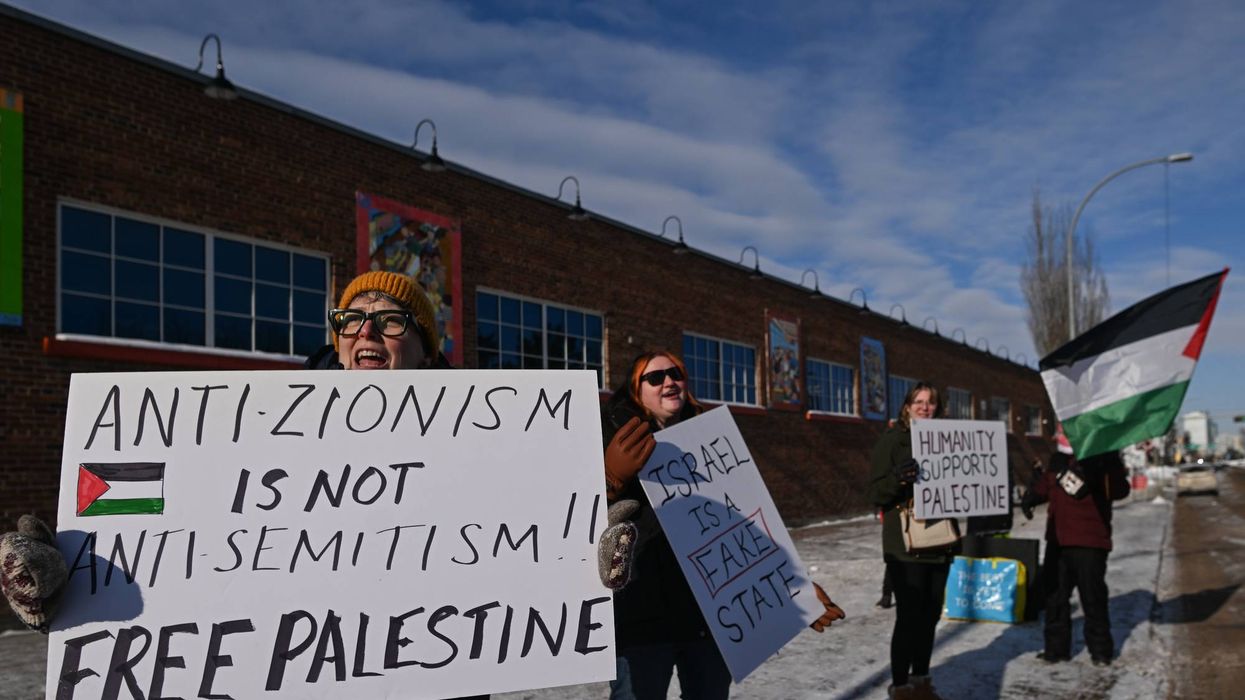
Zionism—the settler-colonial movement for the reestablishment of a Jewish homeland in Palestine—is being rejected by a growing number of Jewish Americans due to the racism, settler-colonialism, illegal occupation, ethnic cleansing, apartheid, and genocide perpetrated by Israel and rooted in claims of divine right and favor.
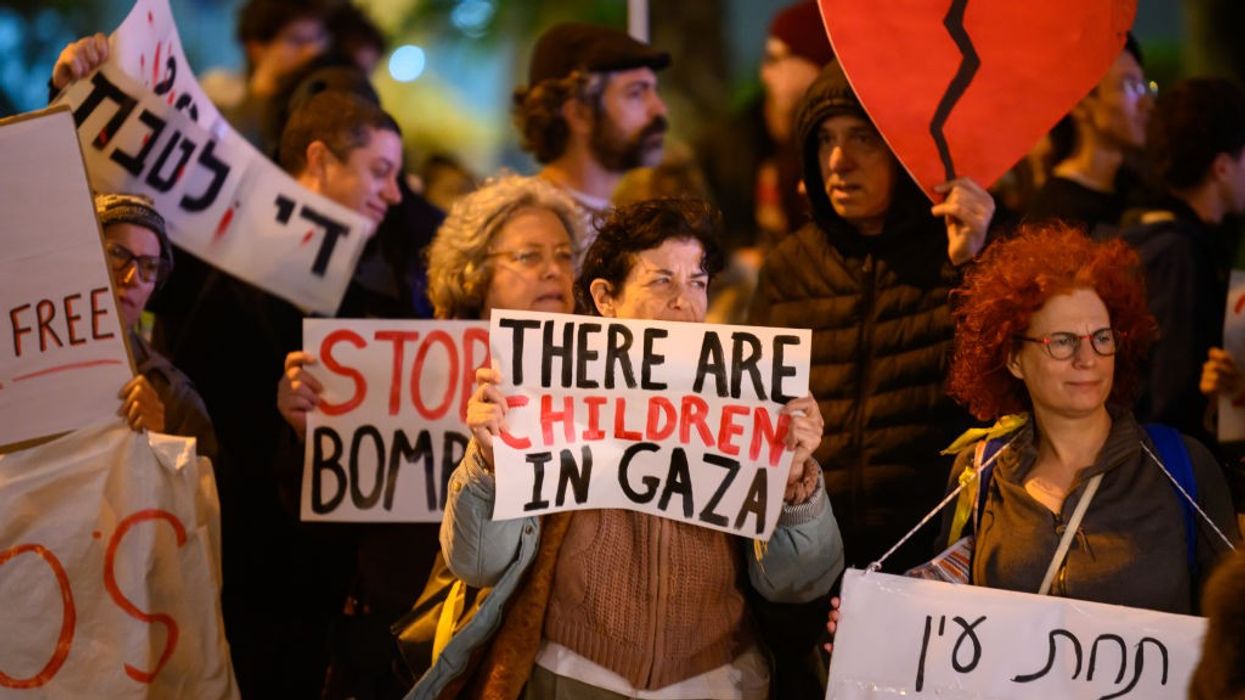
Jewish-led groups like JVP, IfNotNow, and Jews for Economic and Racial Justice (JERJ) have been at the forefront of pro-Palestine demonstrations since the start of Israel's war and siege on Gaza, which have left more than 250,000 Palestinians dead, maimed, or missing; 2 million others displaced, starved, and sickened; and most of the coastal strip in ruins.
Awda Hathaleen was described as "a teacher and an activist who struggled courageously for his people."
A Palestinian peace activist has been fatally shot by a notorious Israeli settler who was once the subject of sanctions that were lifted this year by U.S. President Donald Trump.
In June, Awda Hathaleen—an English teacher, activist, and former soccer player from the occupied West Bank—was detained alongside his cousin Eid at the airport in San Francisco, where they were about to embark on an interfaith speaking tour organized by the California-based Kehilla Community Synagogue.
Ben Linder, co-chair of the Silicon Valley chapter of J Street and the organizer of Eid and Awda's first scheduled speaking engagement told Middle East Eye that he'd known the two cousins for 10 years, describing them as "true nonviolent peace activists" who "came here on an interfaith peace-promoting mission."
Without explanation from U.S. authorities, they were deported and returned to their village of Umm al-Khair in the South Hebron Hills.
On Monday afternoon, the activist group Jewish Voice for Peace (JVP) reported on social media that Awda Hathaleen had been killed after Israeli settlers attacked his village and that a relative of his was also severely injured:
Activists working with Awda report that Israeli settlers invaded Umm al-Kheir with a bulldozer to destroy what little remains of the Palestinian village. As Awda and his family tried to defend their homes and land, a settler opened fire—both aiming directly and shooting indiscriminately. Awda was shot in the chest and later died from his injuries after being taken by an Israeli ambulance. His death was the result of brutal settler violence.
Later, when Awda's relative Ahmad al-Hathaleen tried to block the bulldozer, the settler driving it ran him over. Ahmad is now being treated in a nearby hospital.
The Israeli newspaper Haaretz later confirmed these events, adding:
An eyewitness reported that the entry of Israeli settlers into Palestinian private lands, riding an excavator, caused a commotion, and the vehicle subsequently struck a resident named Ahmad Hathaleen. "People lost their minds, and the children threw stones," he said.
A friend and fellow activist, Mohammad Hureini, posted the video of the attack online. The settler who fired the gun has been identified by Haaretz as Yinon Levi, who has previously been hit—along with other settlers—with sanctions by former U.S. President Joe Biden's administration and other governments over his past harassment of Palestinians in the West Bank.
As the Biden State Department wrote at the time:
Levi consistently leads a group of settlers who attack Palestinians, set fire to their fields, destroy their property, and threaten them with further harm if they do not leave their homes.
The sanctions were later lifted by U.S. President Donald Trump. However, they'd already been rendered virtually ineffective after the intervention of far-right Israeli Finance Minister Bezalel Smotrich, who has expressed a desire to ethnically cleanse Gaza and the West Bank of Palestinians to make way for Jewish settlements.
Brooklyn-based journalist Jasper Nathaniel, who has covered other cases of settler violence for Zeteo described Levi as "a known terrorist who's been protected by the Israeli government for years," adding that, "One of the only good things Biden did for Palestine was sanction him."
Violence by Israeli settlers in the illegally-occupied West Bank has risen sharply since the October 7, 2023 attack by Hamas and the subsequent 21-month military campaign by Israel in Gaza.
Nearly 1,000 Palestinians have been killed by settlers during that time. More than 6,400 have been forcibly displaced following the demolition of their homes by Israel, according to the United Nations Office for the Coordination of Humanitarian Affairs (OCHA).
The killing of Awda Hathaleen—who had a wife and three young children—has been met with outpourings of grief and anger from his fellow peace activists in the United States, Israel, and Palestine.
Issa Amro, the Hebron-based co-founder of the grassroots group Youth Against Settlements, described Awda as a "beloved hero."
"Awda stood with dignity and courage against oppression," Amro said. "His loss is a deep wound to our hearts and our struggle for justice."
Israeli journalist and filmmaker Yuval Abraham, who last year directed the Oscar-winning documentary No Other Land about the Israeli occupation of the West Bank, described Awda Hathaleen as "a remarkable activist," and thanked him for helping his team shoot the film in Masafer Yatta.
"To know Awda Hathaleen is to love him," said the post from JVP announcing his death. "Awda has always been a pillar amongst his family, his village and the wider international community of activists who had the pleasure to meet Awda."
Israeli-American peace activist Mattan Berner-Kadish wrote: "May his memory be a revolution. I will remember him smiling, laughing, dreaming of a better future for his children. We must make it so."
The Israeli government has displayed clear and unequivocal genocidal intent. Continuing to arm Israel with U.S. weapons means full complicity in what they do with them.
Israel’s renewed assault on Gaza comes several months after both Amnesty International and Human Rights Watch issued reports concluding without equivocation that Israel was engaged in genocide. But very few members of Congress dare to acknowledge that reality, while their silence and denials scream out complicity.
In a New York Times interview last weekend, the Senate’s Democratic leader Chuck Schumer put deep moral evasion on display. Among the “slogans” that are used when criticizing Israel, he said, “The one that bothers me the most is genocide. Genocide is described as a country or some group tries to wipe out a whole race of people, a whole nationality of people. So, if Israel was not provoked and just invaded Gaza and shot at random Palestinians, Gazans, that would be genocide. That’s not what happened.”
Schumer is wrong. The international Genocide Convention defines genocide as “acts committed with intent to destroy, in whole or in part, a national, ethnical, racial or religious group”—with such actions as killing, “deliberately inflicting on the group conditions of life calculated to bring about its physical destruction in whole or in part,” and “imposing measures intended to prevent births within the group.”
It would be untenable to publicly acknowledge the reality of Israeli genocide while continuing to support shipping more weaponry for the genocide.
Such actions by Israel have been accompanied by clear evidence of genocidal intent—underscored by hundreds of statements by Israeli leaders and policy shapers. Scarcely three months into the Israeli war on Gaza, scholars Raz Segal and Penny Green pointed out, a database compiled by the Law for Palestine human rights organization “meticulously documents and collates 500 statements that embody the Israeli state’s intention to commit genocide and incitement to genocide since October 7, 2023.”
Those statements “by people with command authority—state leaders, war cabinet ministers and senior army officers—and by other politicians, army officers, journalists and public figures reveal the widespread commitment in Israel to the genocidal destruction of Gaza.”
Since March 2, the United Nations reports, “Israeli authorities have halted the entry of all lifesaving supplies, including food, medicine, fuel and cooking gas, for 2.1 million people.” Now, Israel’s horrendous crusade to destroy Palestinian people in Gaza—using starvation as a weapon of war and inflicting massive bombardment on civilians—has resumed after a two-month ceasefire.
On Tuesday, children were among the more than 400 people killed by Israeli airstrikes, and Prime Minister Benjamin Netanyahu proclaimed that “this is only the beginning.”
It’s almost impossible to find a Republican in Congress willing to criticize the pivotal U.S. backing for Israel’s methodical killing of civilians. It’s much easier to find GOP lawmakers who sound bloodthirsty.
A growing number of congressional Democrats—still way too few—have expressed opposition. In mid-November, 17 Senate Democrats and two independents voted against offensive arms sales to Israel. But in reality, precious few Democratic legislators really pushed to impede such weapons shipments until after last November’s election. Deference to President Biden was the norm as he actively enabled the genocide to continue.
This week, renewal of Israel’s systematic massacres of Palestinian civilians has hardly sparked a congressional outcry. Silence or platitudes have been the usual.
For “pro-Israel, pro-peace” J Street, the largest and most influential liberal Zionist organization in the United States, evasions have remained along with expressions of anguish. On Tuesday the group’s founder and president, Jeremy Ben-Ami, issued a statement decrying “the decision by Netanyahu to reignite this horrific war” and calling for use of “all possible leverage to pressure each side to restore the ceasefire.” But, as always, J Street did not call for the U.S. government to stop providing the weapons that make the horrific war possible.
This week, renewal of Israel’s systematic massacres of Palestinian civilians has hardly sparked a congressional outcry. Silence or platitudes have been the usual.
That’s where genocide denial comes in. For J Street, as for members of Congress who’ve kept voting to enable the carnage with the massive U.S.-to-Israel weapons pipeline, support for that pipeline requires pretending that genocide isn’t really happening.
While writing an article for The Nation (“Has J Street Gone Along With Genocide?”), I combed through 132 news releases from J Street between early October 2023 and the start of the now-broken ceasefire in late January of this year. I found that on the subject of whether Israel was committing genocide, J Street “aligned itself completely with the position of the U.S. and Israeli governments.”
J Street still maintains the position that it took last May, when the International Court of Justice ordered Israel to halt its military offensive in Rafah. “J Street continues to reject the allegation of genocide in this case,” a news release said.
It would be untenable to publicly acknowledge the reality of Israeli genocide while continuing to support shipping more weaponry for the genocide. That’s why those who claim to be “pro-peace” while supporting more weapons for war must deny the reality of genocide in Gaza.
J Street is eager to define the limits of acceptable criticism of Israeli government policies from the Democratic Party establishment—setting aside human rights as secondary to the mantra of Israel’s “right to exist.”
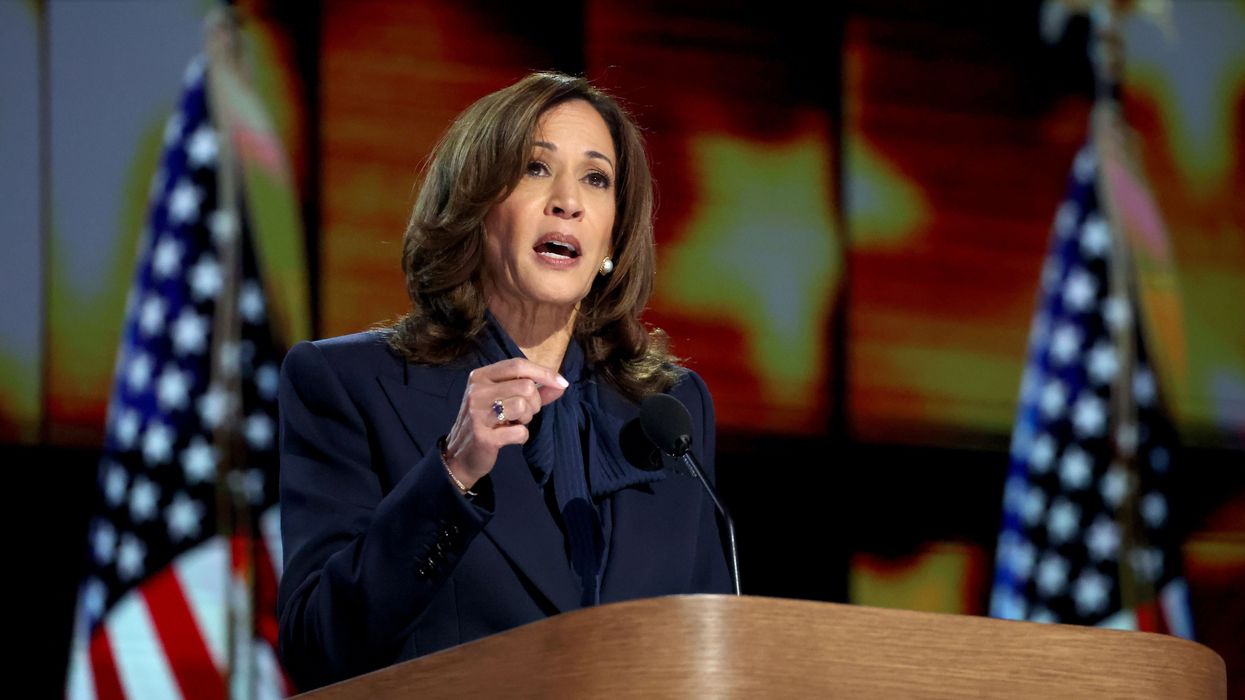
Hours after U.S. Vice President Kamala Harris gave her acceptance speech at the Democratic National Convention, the president of the “pro-Israel, pro-peace” organization J Street took a victory lap in an effusive email to supporters. “Wow,” Jeremy Ben-Ami wrote. “What a week! As J Streeters leave the Democratic National Convention fired up and ready to go, it’s clear we’re having a greater impact than ever.” He added that “the vice president’s remarks on Israel-Palestine were perhaps the clearest articulation of J Street’s values from a presidential nominee.”
But what are those “values” and how do they apply to what’s happening in Gaza?
Discussing Gaza, Harris’ DNCacceptance speech began with the anodyne evocation of “working on a cease-fire” of Gaza’s pounding that America is funding: “President Biden and I are working around the clock, because now is the time to get a hostage deal and a cease-fire deal done.”
Style aside, what Harris articulated about Israel-Palestine in her speech was no different than what President Joe Biden has been saying and doing since last fall while enabling the slaughter of Palestinian civilians.
Then came the “ironclad” pledge of eternal support for Israel, justified in this case by the October 7 Hamas raid: “And let me be clear. And let me be clear. I will always stand up for Israel’s right to defend itself, and I will always ensure Israel has the ability to defend itself…”
Key to Harris’ brief discussion of Gaza in her acceptance speech was the customary refusal in American political discourse to attribute the slaughter to the U.S. or its Israeli partner. Instead, there was a reference to “what has happened”—evoking victims without victimizers—in this way: “What has happened in Gaza over the past 10 months is devastating. So many innocent lives lost. Desperate, hungry people fleeing for safety, over and over again. The scale of suffering is heartbreaking.”
After pledging unconditional support for Israel’s military, Harris expressed sorrow—as if the horrors are being inflicted by a force of nature, not a military force that the U.S. government supplies with fundamental and essential support.
Style aside, what Harris articulated about Israel-Palestine in her speech was no different than what President Joe Biden has been saying and doing since last fall while enabling the slaughter of Palestinian civilians. The vehement enthusiasm from J Street, perhaps the USA’s leading liberal Zionist organization, is illuminating.
Harris carefully omitted any mention of the only way that the U.S. government could actually put an end to the suffering in Gaza that she called “heartbreaking”—an arms embargo to stop the huge shipments from the United States that provide the Israeli military with the weapons and ammunition it’s using to continue to massacre Palestinian people of all ages.
The Harris speech was consistent with the national party’s new platform—which “J Street helped shape,” Ben-Ami proudly wrote. But full affirmation of Biden’s policies toward the Gaza carnage should not have been any cause for celebration.
“As a Palestinian American who is an elected Democrat to the Colorado State House, it has been disheartening to witness Biden facilitate and abet Israel’s brutal war on Gaza with billions of dollars in U.S. weapons,” Iman Jodeh wrote during the convention. Harris “has said that an arms embargo—which human rights organizations have been calling for—is off the table, but that she supports a cease-fire.” However, “to truly reach a cease-fire and prevent a regional conflict, the U.S. must halt the arms shipments that fuel the conflict.”
The British medical journal The Lancet estimates that well over 100,000 residents of Gaza will die because of the Israeli bombardment and siege since October 7, as hunger and disease are endemic, and housing and infrastructure have been systematically destroyed. Polio is appearing in the devastated population of more than 2 million. Israel’s assault on the enclave, populated substantially by refugees from the 1948 creation of the Israeli state, remains unchecked—and is literally made possible by the continuous arms pipeline from the United States.
For J Street’s leadership, the current U.S. policy hits the spot. “Could not be prouder of VP Harris for her remarks on Israel/Palestine—and of Democrats’ reaction,” Ben-Ami tweeted after the convention adjourned. “This is what it means in 2024 to be pro-Israel, pro-peace, and pro-democracy.”
At the convention, the parents of a hostage held by Hamas since October 7 spoke. But no Palestinian American was allowed to say anything. In effect, the convention’s podium was a place of apartheid, mirroring the reality of Israel’s apartheid system. (In his email, Ben-Ami wistfully noted the missed opportunity: “Hosting the first ever Palestinian speaker at a national convention would have been a powerful way to underscore the shared goal of an immediate cease-fire and hostage deal, and the compassion the party feels for Palestinians and Israelis alike.”)
J Street is determined to help ensure that liberal Zionism does not question the “ironclad” U.S. commitment to Jewish nationalist control in Palestine, as discussed in articles I co-wrote that were published 10 years ago and last spring. The organization is eager to define the limits of acceptable criticism of Israeli government policies from the Democratic Party establishment—setting aside human rights considerations as secondary to the mantra of Israel’s “right to exist.” (Whether apartheid South Africa had a “right to exist” is not a topic open for discussion.)
J Street represents untenable liberal American Zionism that clings to the fantasy of a democratic and humane “Jewish state.” Washington office-holders pledge continued weapons resupply for that fantasy Jewish state—with no connection to the actual Israel that is now engaged in remorseless genocide.
The dream of humanistic Zionism is collapsing, but—like other entrenched Jewish groups and a declining number of American Jews—J Street is desperate to keep the fantasy on life support.
In 2014, we wrote an article titled “The Blind Alley of J Street and Liberal American Zionism.” At the time, Benjamin Netanyahu was in his sixth continuous year as Israel’s prime minister, while President Obama was well into his second term. And J Street, an emerging organization of Jews aligned with the Democratic administration, had momentum as “the political home for pro-Israel, pro-peace Americans.”
From the outset, ever since its founding in 2007, J Street has implicitly offered itself as a liberal alternative to the hardline American Israel Public Affairs Committee (AIPAC), which was established more than four decades earlier. An avowed purpose of J Street has been to seek a humane resolution of the Israeli-Palestinian conflict while maintaining fervent allegiance to Israel as “the Jewish state.”
In the 10 years since our article, J Street—at pains to reconcile the contradictions between its “pro-Israel” bond and the increasing Israeli brutality toward Palestinians—has remained committed to the basic goal (or mirage) of a “Jewish and democratic” state. The war on Gaza since October has heightened those contradictions, thrusting into clearer view Israel’s actual creation-and-expansion story, illuminating the violent repression and expulsion of Palestinian people.
A significant number of American Jews are now willing to challenge the Zionist project while pointing out that it is inherently fated to suppress the human rights of non-Jews in Palestine. Speaking at a protest near Sen. Chuck Schumer’s home in Brooklyn last month, Naomi Klein said: “We don’t need or want the false idol of Zionism. We want freedom from the project that commits genocide in our name.”
Standard claims about “democratic Israel” have fallen into notable disrepute on U.S. college campuses, with both Jewish and non-Jewish students this spring protesting against the manifest torture and slaughter of Gaza’s population. Rumblings were audible a decade ago, when the Jewish student group Hillel was roiled with a dispute over whether its national leadership could ban Hillel chapters on college campuses from hosting strong critics of Israeli policies. That dispute, we wrote at the time, “emerged from a long history of pressure on American Jews to accept Zionism and a ‘Jewish state’ as integral to Judaism.” Back then, some Jewish students—“pushing to widen the bounds of acceptable discourse”—were “challenging powerful legacies of conformity.”
This year, in mid-February, J Street issued a statement addressed to President Biden that urged him to propose recognition of a “demilitarized” Palestinian state as a solution leading to acceptance of Israel by Saudi Arabia and other countries in the region. This is a rough equivalent of fiddling with the roof of a structure built on a grievously cracked foundation: the forced exile of non-Jews from much of Palestine—what is now Israel—and the refusal of their right of return, while maintaining a right of return (including to the occupied West Bank) for whoever can claim Jewish identity.
Whether Jewish or not, many Americans have come to question the arrogant absurdity of enabling an American in Brooklyn to claim Palestine while denying any such claim by ethnically cleansed Palestinians. In concordance with other Zionist groups, J Street presupposes that Palestinians should settle for areas designated by the Israeli colonizers (who must not be called colonizers), while they reserve a “right of return” only for themselves and their coreligionists.
J Street offers weak tea with its proposal for “a conflict-ending agreement in which Israel also ultimately recognizes Palestinian statehood.” Under such a scenario, Palestinians as a group would dedicate themselves to cooperation, non-resistance, and—in effect, given the one-sided requirement of “demilitarization”—acceptance of Zionist rights to control Palestine.
J Street’s idea of a fix is that the U.S. government will initiate a plan for “specific steps Palestinians must take to revitalize and reinvent their government with new leadership committed to addressing corruption, demilitarization, renouncing terror and violence, and reaffirming recognition of Israel.” The plan includes “specific steps Israel must take to ease occupation and improve daily life on the West Bank, crack down on settler violence and address the humanitarian crisis in Gaza.” And President Biden would offer “American recognition of Palestinian statehood, reaffirmation of the Arab Peace Initiative and security guarantees for all parties, commitments to supporting international law”—and finally, “a UN Security Council Resolution affirming global and unanimous support for the vision, the process and the parameters for negotiation leading to a final status agreement and admission of Palestine as a full member state in the United Nations.”
The J Street “comprehensive diplomatic initiative” proposal is remarkable for what it does not do. The proposal’s failure to acknowledge Israel’s taking of East Jerusalem and West Bank lands for Jewish settlement (even increasing since its war on Gaza began) dodges realities of a Palestine that is riven with settlements of Israeli citizens—a strategy since 1967 to fragment Palestinian populations into de facto Israeli versions of Bantustans.
The number of Israelis who’ve settled in East Jerusalem and occupied West Bank has increased 35%—to 700,000—since our article 10 years ago, making it that much harder to realistically imagine a “two-state solution.” There is nothing in J Street’s new “bold” vision that conceives of Israeli ceding land it has taken for “Judaizing” increasing portions of Palestine.
Liberal American Zionists and U.S. administrations have sometimes objected to the latest illegal and immoral “facts on the ground” imposed by Israel, only to later accept them as immutable facts that could not possibly be rolled back. And so, as the United Nations High Commissioner for Human Rights recently reported, a “drastic acceleration in settlement building is exacerbating long-standing patterns of oppression, violence and discrimination against Palestinians.”
The UN human rights official, Volker Türk, reported that “the policies of the current Israeli Government appear aligned, to an unprecedented extent, with the goals of the Israeli settler movement to expand long-term control over the West Bank, including East Jerusalem, and to steadily integrate this occupied territory into the State of Israel.”
Meanwhile, J Street’s proposal for a “demilitarized” Palestinian state matches Netanyahu’s plan for Israel to retain “security control” of all of Palestine to the Jordan River.
Israeli scholar David Shulman, in the midst of this latest crisis, writes: “The wave of anti-Israel feeling that is engulfing large numbers of people in the Western world has emerged not merely from the Gaza war, with its unbearable civilian casualties and now mass starvation. What that wave reflects, more profoundly, is the justified disgust with the ongoing occupation, its seemingly eternal and ever more brutal continuation, and the policies of massive theft and apartheid that are its very essence.”
The crux of our commentary 10 years ago holds even more terribly true today, after another decade of systemic, often-lethal cruelty toward Palestinian people: J Street continues its attempt to create a humane lobby group for Israel, without questioning the manifestly unjust—and thus perpetually unstable—settlement and expulsion project that created Israel in the first place and has sustained it ever since. In essence, while presenting itself as a caring alternative to Netanyahu-brand extremism, liberal Zionism’s yearning for “peace” assumes perpetuation of basic Israeli transgressions and gains over the last 75 years, while calling for acceptance and submission from a defeated and colonized people.
Ten years ago, we wrote of American Jews’ acquiescence to Jewish nationalism: “During the 1950s and later decades, the solution for avoiding an ugly rift was a kind of preventive surgery. Universalist, prophetic Judaism became a phantom limb of American Jewry, after an amputation in service of the ideology of an ethnic state in the Middle East. Pressures for conformity became overwhelming among American Jews, whose success had been predicated on the American ideal of equal rights regardless of ethnic group origin.”
Long story short, the dream of humanistic Zionism is collapsing, but—like other entrenched Jewish groups and a declining number of American Jews—J Street is desperate to keep the fantasy on life support. The nostrum of a two-state solution for the small tormented land of Palestine is more and more flimsy, but organizations like J Street and a large majority of elected Democrats refuse to concede that it has been made nonsensical by Israel’s ever-expanding settlements and escalating Jewish nationalism comfortable with inflicting genocide on Palestinian people.
We were touched, reading through successive J Street statements after the surprise and devastating Oct. 7 raid on “Gaza Envelope” Israeli settlements, causing 1,200 deaths and 240 kidnapped. Their first responses were expressions of solidarity with stunned Israelis, beginning with “J Street Stands with Israelis Facing Hamas Terror Onslaught.” Anguish was evident as J Street statements changed their tone, when Israel escalated assaults on Palestinian civilians. Alarmed at the Israeli military’s blockading and devastating Gaza, and also intensifying paramilitary settler raids on Palestinian communities in the West Bank, J Street pleaded repeatedly that the U.S. restrain Israel—to rescue J Street's dream image of a humane and well-meaning Jewish state.
Unfortunately, these words that we wrote in 2014 have remained accurate, with steadily horrific consequences: “Every conceptual lane of J Street equates being ‘pro-Israel’ with maintaining the doctrine of a state where Jews are more equal than others. Looking to the past, that approach requires treating the historic Zionist conquest as somewhere between necessary and immaculate. Looking at the present and the future, that approach sees forthright opposition to the preeminence of Jewish rights as extreme or otherwise beyond the pale. And not ‘pro-Israel.’”
J Street’s current self-definition begins: “J Street organizes pro-Israel, pro-peace, pro-democracy Americans to promote U.S. policies that embody our deeply held Jewish and democratic values and that help secure the State of Israel as a democratic homeland for the Jewish people.”
In an unpublished autobiography, former Zionist Baltimore Rabbi Morris S. Lazaron wrote of political Zionism’s “nationalist philosophy expressed in this country under the guise of promoting ‘Jewishness,’ ‘Jewish unity,’ ‘Jewish education.’” And he summed up: “Finally I came to the conclusion that the Zionists were using Jewish need only to exploit their political goals. Every sacred feeling of the Jew, every instinct of humanity, every deep-rooted anxiety for family, every cherished memory became an instrument to be used for the promotion of the Zionist cause.”
Jews are going to have to make a painful reappraisal of the project that imposes a “Jewish” state in Palestine. Understanding our willful blindness and self-deception that facilitate the abuse of the non-Jews of Palestine will mean giving up the evasive palliative of pseudo-humanistic posturing from groups like J Street. The essential fight against antisemitism cannot mean ongoing degradation and suppression of another people. After 75-plus years of violently taking, while piously talking of a desire for peace, the disconnect between that ostensible peace-seeking and the assertion of Zionist control of the land will need to be resolved.
No matter how much it might be paved with good intentions, J Street serves as a well-trafficked avenue for liberal American Zionism that continues to support the subjugation of Palestinian people, with steady patterns of deadly violence. J Street has rigorously lobbied for the U.S. aid that provides Israel with the weaponry to inflict mass casualties.
“Since we launched J Street 15 years ago, we’ve supported every dollar of every U.S. security package to Israel,” J Street’s longtime president Jeremy Ben-Ami wrote in a May 9 email to supporters. As usual in lockstep with the Democratic White House, Ben-Ami went on to reassure supporters: “The decision to hold back certain weapons shipments is one the President doesn’t take lightly. And neither do we.”
J Street’s support for continuing huge quantities of military aid to Israel belies the organization’s humane pose. “U.S. aid to Israel must not be a blank check,” Ben-Ami wrote. “The Israeli government should be held to the same standards of all aid recipients, including requirements to uphold international law and facilitate humanitarian aid.” But those words appeared in the same email pointing out that J Street has always “supported every dollar” of U.S. military aid. Given that Israel has been flagrantly violating “international law” for decades—and had lethally blocked “humanitarian aid” in Gaza for more than six months by the time Congress approved $17 billion in new military aid in late April—J Street’s blanket support for military aid to Israel epitomizes the extreme disjunctions in the organization’s doubletalk.
“Voices on the extreme left are slamming the President for failing to do enough and enabling a genocide, even if one might think they would consider this a step in the right direction,” Ben-Ami wrote—the implication being that it’s unreasonably extreme to demand an end to U.S. policies enabling genocide.
In 2024, “pro-Israel, pro-peace” is an oxymoron, with denial stretched to a breaking point. Israel is now what it is now, not a gaslit fantasy that backers of groups like J Street want to believe. To whistle past the graveyard of a humanistic Zionist dream requires holding onto the illusion that the problem is centered around Netanyahu and his even-farther-right government allies. But a country cannot be meaningfully separated from its society.
“Israel has hardened, and the signs of it are in plain view,” foreign correspondent Megan Stack wrote last week in an extraordinary New York Times opinion piece. “Dehumanizing language and promises of annihilation from military and political leaders. Polls that found wide support for the policies that have wreaked devastation and starvation in Gaza. Selfies of Israeli soldiers preening proudly in bomb-crushed Palestinian neighborhoods. A crackdown on even mild forms of dissent among Israelis.”
The social fabric is anything but a fringe in control of the prime minister’s office and war cabinet. As Stack explained:
Israel’s slaughter in Gaza, the creeping famine, the wholesale destruction of neighborhoods—this, polling suggests, is the war the Israeli public wanted. A January survey found that 94 percent of Jewish Israelis said the force being used against Gaza was appropriate or even insufficient. In February, a poll found that most Jewish Israelis opposed food and medicine getting into Gaza. It was not Mr. Netanyahu alone but also his war cabinet members (including Benny Gantz, often invoked as the moderate alternative to Mr. Netanyahu) who unanimously rejected a Hamas deal to free Israeli hostages and, instead, began an assault on the city of Rafah, overflowing with displaced civilians.
Meanwhile, Stack added, “If U.S. officials understand the state of Israeli politics, it doesn’t show. Biden administration officials keep talking about a Palestinian state. But the land earmarked for a state has been steadily covered in illegal Israeli settlements, and Israel itself has seldom stood so unabashedly opposed to Palestinian sovereignty.”
Likewise, if J Street officials understand the state of Israeli politics, it doesn’t show. The organization’s officials also keep talking about a Palestinian state. But in reality, the “two-state solution” has become only a talking-point solution for liberal American Zionists, elected Democrats, and assorted pundits who keep trying to dodge what Israel has actually become.
Last week a founder of Human Rights Watch, Aryeh Neier, wrote: “I am now persuaded that Israel is engaged in genocide against Palestinians in Gaza.” It is a horrific truth that J Street’s leaders keep evading.
In 2024, the meaning of “pro-Israel, pro-peace” is macabre: J Street refuses to call for an end to U.S. military aid to Israel while that country continues to use American weapons and ammunition for mass murder and genocide."The cognitive dissonance is truly astounding. Israeli settlers march on stolen land... and yet, somehow, they are the victims in their own narrative," said one Palestine advocate.
In what Palestine defenders and even one mainstream U.S. Jewish group called a perilous provocation, leaders of Israel's far-right government accompanied thousands of settlers shielded by a heavy military presence on a Monday march to an illegal colony in the occupied West Bank.
Senior officials in Israeli Prime Minister Benjamin Netanyahu's far-right Cabinet—including National Security Minister Itamar Ben-Gvir and Finance Minister Bezalel Smotrich—and numerous right-wing lawmakers joined a crowd of as many as 20,000 pro-apartheid demonstrators who marched to Evyatar in a bid to legitimize the outpost, The Times of Israel reports.
According to Haaretz, 22 Palestinians including residents of the nearby town of Beita were wounded when Israeli occupation forces fired on them with less-lethal weapons including rubber-tipped steel bullets during and after the march. More than 100 people including journalists also suffered from inhaling gas used by Israeli forces to disperse counter-demonstrators. At least two journalists were hospitalized as a result of their injuries.
Meanwhile, marchers brought inflatable bouncy houses and other amusements to entertain children during the demonstration.
The Palestinian Ministry of Foreign Affairs condemned the march as "a dangerous escalation and provocation of the Palestinian people and an extension of the incitement calls of the Israeli right and the fascist right to deepen settlement at the expense of land."
Yumna Patel, Palestine news director at Mondoweiss, said on Twitter: "The cognitive dissonance is truly astounding. Israeli settlers march on stolen land, in a settler colony that's given them the land to steal and colonize, alongside an army whose singular goal is to protect them. And yet, somehow, they are the victims in their own narrative."
The liberal U.S. Jewish group J Street also condemned the march, tweeting that "this is an incendiary and deeply dangerous act by some of the most senior ministers in the Israeli government."
"Their vision is clear: annexation, endless conflict, and chaos," the group added.
However, Ben-Gvir—who is a settler—asserted that "we are here, and we are marching toward the future... I hope the entire state of Israel understands this."
Smotrich told Haaretz while marching that "God willing, we'll bring here another half-million Jews on top the half-million that are already here."
United Nations experts say the true number of Israeli settlers colonizing the West Bank and East Jerusalem is closer to 700,000.
Evyatar, an exclusively Jewish community first established in 2013, is built on stolen Palestinian land on Mount Sabih in Beita, south of Nablus. The settlement is illegal under both international and Israeli law and has been repeatedly destroyed by Israeli authorities.
Since 1967, at least 77 Beita residents have been killed by Israeli forces, many of them during protests, according to Patel.
The last mass eviction of Evyatar took place in June 2021. However, while the Israeli military says the outpost is "flagrantly illegal," scores of homes have been built there with soldiers' help and the government has provided the community with electricity, water, and roads.
On February 27—the day after settlers' deadly rampage through the Palestinian town of Huwara—Ben-Gvir, who leads the Jewish Power party, defiantly organized a rally in Evyatar, where he called for the assassination of "terrorists" who resist Israeli expansion.
Netanyahu's government is seeking to "legalize" Evyatar as it did for nine other settlements in the West Bank and East Jerusalem earlier this year.
When asked by Haaretz why Evyatar has not yet been legalized, Zvi Sukkot, an Israeli lawmaker representing the Religious Zionism party, said that "legalizing such an outpost takes time."
"We're not afraid of America," he added. The Biden administration says it opposes settlement expansion, even while lavishing Israel with billions of dollars in annual military aid and diplomatic cover.
Israel has been the fruition of a Zionist dream, but at the same time a real-life nightmare for Palestinian people.
This week, when the New York Times featured an opinion piece by billionaire Michael Bloomberg, it harmonized with a crescendo of other recent pleas from prominent American supporters of Israel. Bloomberg warned that Israel's new governing coalition is trying to give parliament the power to "overrule the nation's Supreme Court and run roughshod over individual rights, including on matters such as speech and press freedoms, equal rights for minorities and voting rights." Such a change would, Bloomberg added, undermine Israel's "strong commitment to freedom."
Strong commitment to freedom? That would sure be news to the more than 5 million Palestinian people living under Israeli occupation in Gaza and the West Bank.
The pretense is that what's happening now with Israel amounts to a surprising aberration from its natural state. At times, the denial even rests on the tacit and absurd assumption that Jews are less inclined to commit atrocities than any other people. But recent events in Israel are continuing a long Zionist process that has been propelled by mixtures of valid yearning for safety and extreme ethnocentrism, with terrible results.
Three widely esteemed human rights organizations—Amnesty International, Human Rights Watch and B'Tselem—have rendered a clear and convincing judgment: Israel operates a system of apartheid against Palestinians.
When Israeli officials are confronted with such truth—as shown in a recent video of a Q&A session with Israeli ambassador Tzipi Hotovely at the Oxford Union in Britain—the responding demagoguery is pathetic and outrageous.
During the last few weeks, Israel's government has grown even more dangerous in rhetoric and oppressive in deeds, with its soldiers protecting Jewish settlers rampaging as they terrorized Palestinians with horrible violence.
Israel has been the fruition of a Zionist dream, but at the same time a real-life nightmare for Palestinian people. The occupation of Gaza and the West Bank that began in 1967 has been nothing less than an ongoing, large-scale crime against humanity. Now, early 2023 has brought an unprecedented flood of concern from Israel's supporters in the United States. Prime Minister Benjamin Netanyahu's new government has made clear its fascistic contempt for Palestinian lives, while even taking steps to curb some rights of Israeli Jews.
Since mid-February, the leading liberal American Jewish organization J Street—"pro-Israel, pro-peace, pro-democracy"—has been sounding frantic alarms. The group's president, Jeremy Ben-Ami, warns that after taking power in early January, "the far-right . . . is now firmly in control of the government of Israel." And "they are moving at lightning speed to enact their agenda, threatening to make Israel unrecognizable to millions of Jews and others in the United States who care deeply about the country and its people, and who believe in the democratic values on which it was founded."
In a typical email alert, J Street declared that "Netanyahu is subverting Israel's democracy" while advancing "a plan to completely strip the independence of Israel's Supreme Court." J Street went on to criticize the new government for policies not unlike those of Israeli governments going back decades; the new administration has "moved forward plans to build thousands of new settlement units in occupied territory" and "approved 'legalization' of at least nine West Bank settlement outposts that were previously unauthorized by the Israeli government—acts of de facto annexation."
And yet, after decrying these ominous developments, the J Street action alert just told recipients to merely "contact your representative in Washington and urge them to speak out and stand up for our shared interests and democratic values."
Early this month, J Street lamented that "terrible violence and conflict on the ground continue to escalate—as this year has seen deadly terror attacks on Israelis and the highest monthly death toll for Palestinians in over a decade." But J Street refuses to call for a cutback—let alone a cutoff—of the massive subsidy of several billion dollars in military aid that automatically flows every year from the U.S. Treasury to the Israeli government.
Far from being a "Jewish democratic state," Israel has evolved into a Jewish supremacist state. In the real world, "Israeli democracy" is an oxymoron. Denial does not make that any less true.