

SUBSCRIBE TO OUR FREE NEWSLETTER
Daily news & progressive opinion—funded by the people, not the corporations—delivered straight to your inbox.
5
#000000
#FFFFFF
To donate by check, phone, or other method, see our More Ways to Give page.
Daily news & progressive opinion—funded by the people, not the corporations—delivered straight to your inbox.
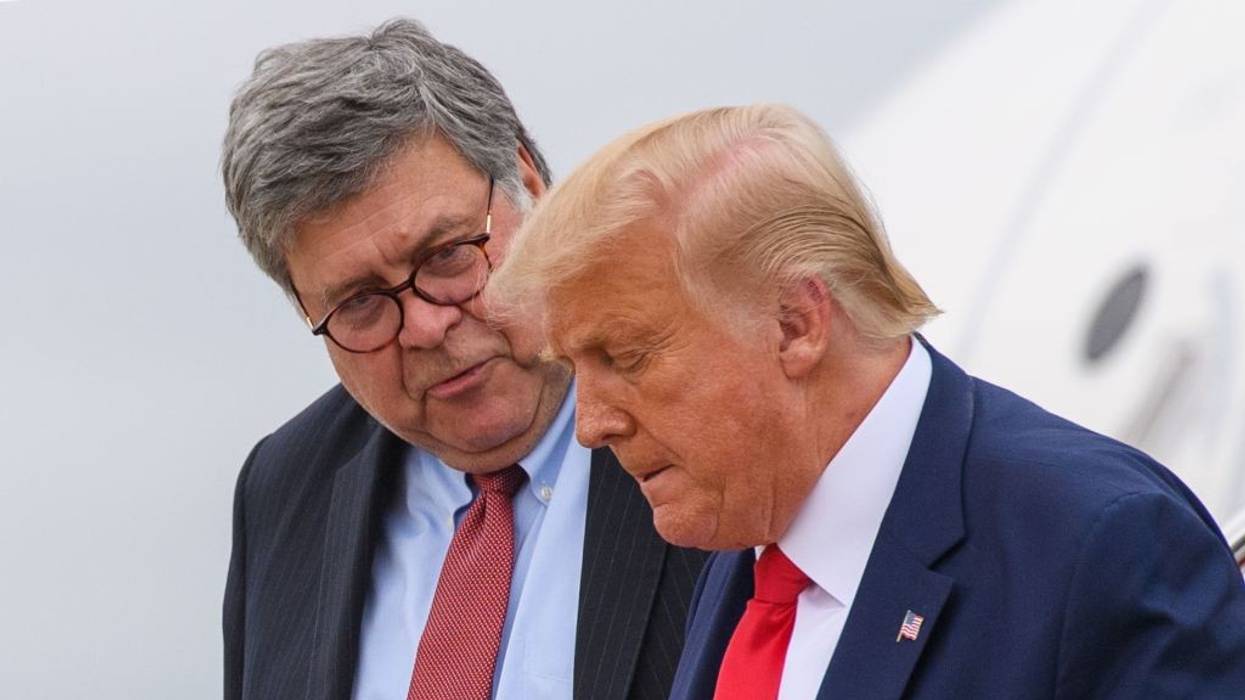
"If even half of it's true, then he's toast," Barr told Fox News Sunday.
Former President Donald Trump's former Attorney General Bill Barr broke with the GOP narrative Sunday to say the government acted responsibly in its indictment of the former president.
Appearing on Fox News Sunday, Barr said the contents of the indictment were "very, very damming."
"If even half of it's true, then he's toast," Barr said.
The indictment, unsealed Friday, included 38 counts against Trump and former aid Walt Nauta—31 against Trump for withholding national defense information, five against both for hiding their possession of classified documents, and one each for lying to the Federal Bureau of Investigators.
In response to the indictment, Trump remained defiant in two speeches at Republican state conventions in Georgia and North Carolina Saturday, calling the charges "baseless" and "ridiculous," as The Associated Press reported.
"They've launched one witch hunt after another to try and stop our movement, to thwart the will of the American people," Trump said in Georgia.
"Those documents are among the most sensitive secrets that the country has, they have to be in the custody of the archivist, he had no right to maintain them and retain them."
However, Barr said Sunday that casting the indictment as a witch hunt was itself "ridiculous."
"Yes, he's been a victim in the past. Yes, his adversaries have obsessively pursued him with phony claims, and I've been at his side defending against them when he is a victim," he said. "But this is much different. He's not a victim here."
Barr added that the former president was "totally wrong that he had the right to have those documents."
"Those documents are among the most sensitive secrets that the country has, they have to be in the custody of the archivist, he had no right to maintain them and retain them, and he kept them in a way, at Mar-a-Lago, that anyone who really cares about national security, their stomach would turn at it."
New Hampshire Republican Gov. Chris Sununu also took the indictment seriously.
"They're very real, they're self-inflicted," he told Face The Nation Sunday. "This is nothing like anything we've seen before."
He added that it was "very likely" the former president would be found guilty "at least on some of these charges."
Sununu also said he thought the rest of the GOP primary candidates vying to run for president in 2024 had a responsibility to make a statement on the indictment.
"They have to come out and acknowledge this is different, this is serious," he said, adding that it had to come from the party as a whole.
" Donald Trump doesn't represent the Republican Party," he said. "He only represents himself."
Whether Republican voters agree is another question. According to a CBS poll released Sunday, 80% of U.S. respondents said that it was a national security risk for Trump to retain nuclear and military documents. However, only 38% of likely GOP primary voters agree. Instead, 76% of these voters think the indictment was politically motivated.
Trump himself has pledged to stay in the race, even if convicted.
"I'll never leave," he told Politico in an interview on his plane Saturday.
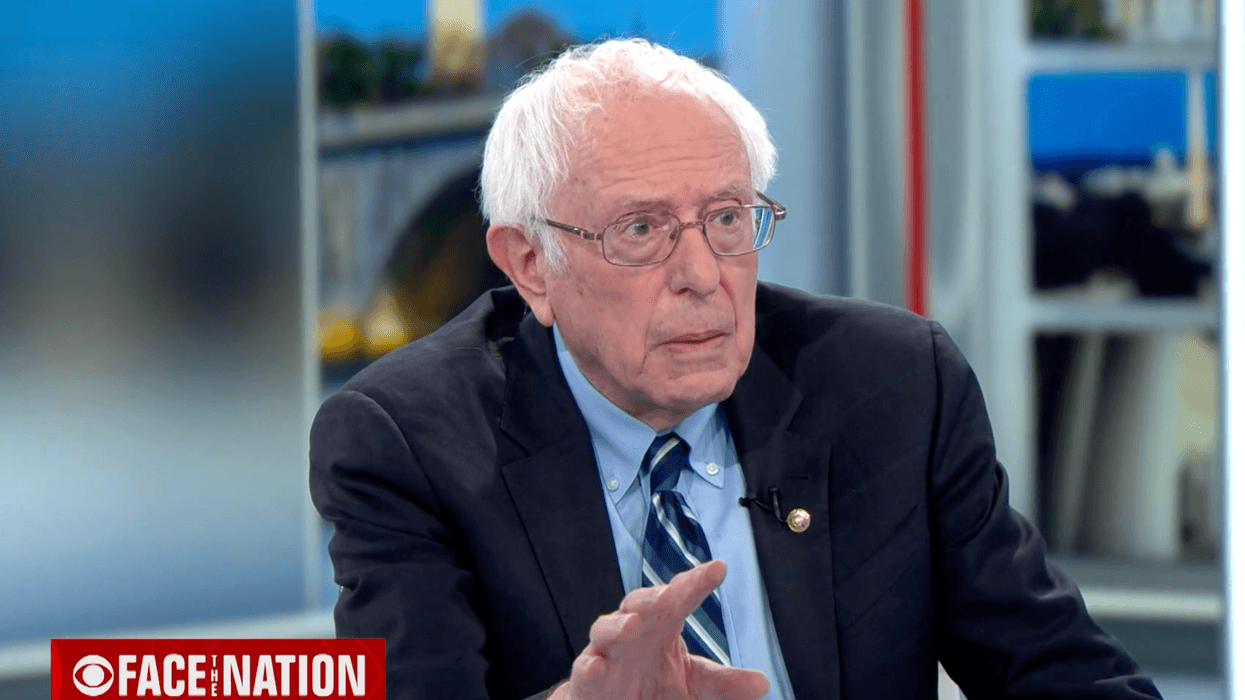
Nonpartisan, publicly funded media is "an idea that we should explore," said the senator.
Appearing on "Face the Nation" on CBS Sunday, U.S. Sen. Bernie Sanders discussed a number of issues he covers in his upcoming book, It's OK to Be Angry About Capitalism, including his proposal to ensure the news media acts in the interest of the general public and not wealthy corporations and powerful interest groups.
Host Margaret Brennan described his proposal as "a New Deal for journalism."
As some European countries do, the Vermont Independent senator said, the U.S. should have "nonpartisan public funding of media" to ensure local news outlets can stay afloat and keep communities informed about "their city council, their school board."
Such a system would also prevent news networks like CBS from relying on advertising dollars, which Medicare for All advocates have blamed for playing a role in the corporate media's hostility towards a nationalized healthcare system and other progressive proposals for the public good.
"What I say in the book is that look, I've done 1,000 interviews, like I'm doing with you right now," Sanders told Brennan. "And nobody has ever come up to me, not one reporter—not you, not anybody else—and said, 'Bernie, why are we spending twice as much on healthcare as any other country and yet we have 85 million uninsured or underinsured?' How many programs at CBS, NBC, ABC had on why we have a dysfunctional healthcare system? Does that have anything to do with who owns the major networks? 'Bernie, what are you going to do about income and wealth inequality?' ... 'Why are billionaires paying an effective tax rate lower than working class people?' No one asked me those questions."
As Luke Savage reported at Jacobin following the 2020 presidential election, viewers of the Democratic primary debates weren't informed by moderators that Medicare for All was supported by a majority of Americans, and ad breaks featured "health insurance and pharmaceutical companies seizing every opportunity to bombard viewers with misleading industry agitprop about the breathtaking wonders of profit-driven healthcare."
He added:
CNN’s Detroit debate is a case in point; the network was demanding at least $300,000 from companies advertising, with a single thirty-second spot costing an estimated $110,000—and groups like the so-called Partnership for America’s Health Care Future (in practice, a front for various corporate interests), filled out many of the slots. Regardless of how anchors or hosts think about an issue like healthcare, the networks' basic model essentially precludes meaningful critique of the status quo by design. As long as it persists, don't expect to see the public interest or popular opinion reflected anywhere on cable TV.
To counter that dynamic, Sanders argued on "Face the Nation," a New Deal for journalism including publicly funded media is "an idea that we should explore."
In the interview, the senator spoke about his support for attaching "some strings" to U.S. funding for Israel to help pressure the country to end its human rights abuses against Palestinians.
Sanders also reiterated his call for the Democratic Party to focus on representing the interests of all working people.
"What we need to do is have a movement of Black workers, Latino workers, white workers, gay workers, straight workers, and understand that we're all in this together," said Sanders. "I don't care if you're living in rural Iowa, where I spent a lot of time, alright, you can't afford health care, you can't afford to send your kid to college, or you're living in San Francisco. So too often we forget about the economic issues that unite us. The vast majority of the people know the pharmaceutical industry is ripping us off. The vast majority of the people understand that we have to improve our educational system. Let's work on that."
Bernie Sanders on Sunday lambasted his fellow presidential contender, Donald Trump, for manipulating many working Americans' legitimate economic frustrations and converting them into misguided "anger."
"Many of Trump's supporters are working-class people, and they're angry, and they're angry because they're working longer hours for lower wages, they're angry because their jobs have left this country and gone to China or other low-wage countries, they're angry because they can't afford to send their kids to college so they can't retire with dignity," Sanders said on Face the Nation.
"What Trump has done with some success is taken that anger, taken those fears which are legitimate and converted them into anger against Mexicans, anger against Muslims, and in my view, that is not the way we're going to address the major problems facing our country," Sanders said.
Sanders explained he how planned to win over Trump's "working class and middle class supporters" by focusing on issues driving inequality and pointed to comments made during a November Republican debate during which Trump argued that wages are "too high" and that raising the minimum wage would hurt the national economy.
"This guy does not want to raise the minimum wage," Sanders said.
He continued: "We can make the case that if we really want to address the issues that people are concerned about why the middle class is disappearing, massive income and wealth inequality in this country— we need policies that bring us together, that take on the greed of Wall Stree and corporate America and create a middle class that works for all of us, rather than an economy that works just for a few."
Sanders' criticisms caught the attention of the Republican frontrunner, who wrote on Twitter on Monday: "Wages in our country are too low, good jobs are too few, and people have lost faith in our leaders. We need smart and strong leadership now!"
This is a strategy that could work well for the Vermont senator. Recent polling showed that if placed head-to-head, voters favor Sanders over Trump 51 to 38 percent.
Israeli Prime Minister Benjamin Netanyahu told CBS's Bob Schieffer on Face the Nation in an interview broadcast Sunday that he was "baffled" by President Obama's assertion that if Israel goes forward with construction of a new housing development in East Jerusalem, it risks condemnation from the United States. "It's not the American way," said Netanyahu.
"I was baffled by this statement, because it doesn't reflect American values. What we're being criticized for is that some Jewish residents of Jerusalem bought apartments legally from Arabs in a predominantly Arab neighborhood, and this is seen as a terrible thing."
"It's against the American values. And it doesn't bode well for peace," he said. "The idea that we'd have this ethnic purification as a condition for peace, I think it's anti-peace."
Last week, an ultranationalist Jewish group said dozens of settlers would move into six apartment buildings purchased in the heart of a predominantly Arab neighborhood of east Jerusalem.
The international community, including the United States, does not recognize Israel's annexation of the area and considers construction there to be illegitimate settlement activity.
But Netanyahu also said he is feeling "quite good" about his relationship with Obama.
"I don't want to sound like an old married couple, but the president said that he's had more meetings with me than with any other foreign leader," Netanyahu said. "I think we have a relationship of mutual respect and mutual appreciation."
The White House declined comment.
Netanyahu "Baffled" By Obama's Settlement Criticism: "It's Against American Values"Netanyahu "baffled" by Obama's settlement criticism (October 5, 2014)