

SUBSCRIBE TO OUR FREE NEWSLETTER
Daily news & progressive opinion—funded by the people, not the corporations—delivered straight to your inbox.
5
#000000
#FFFFFF
To donate by check, phone, or other method, see our More Ways to Give page.
Daily news & progressive opinion—funded by the people, not the corporations—delivered straight to your inbox.
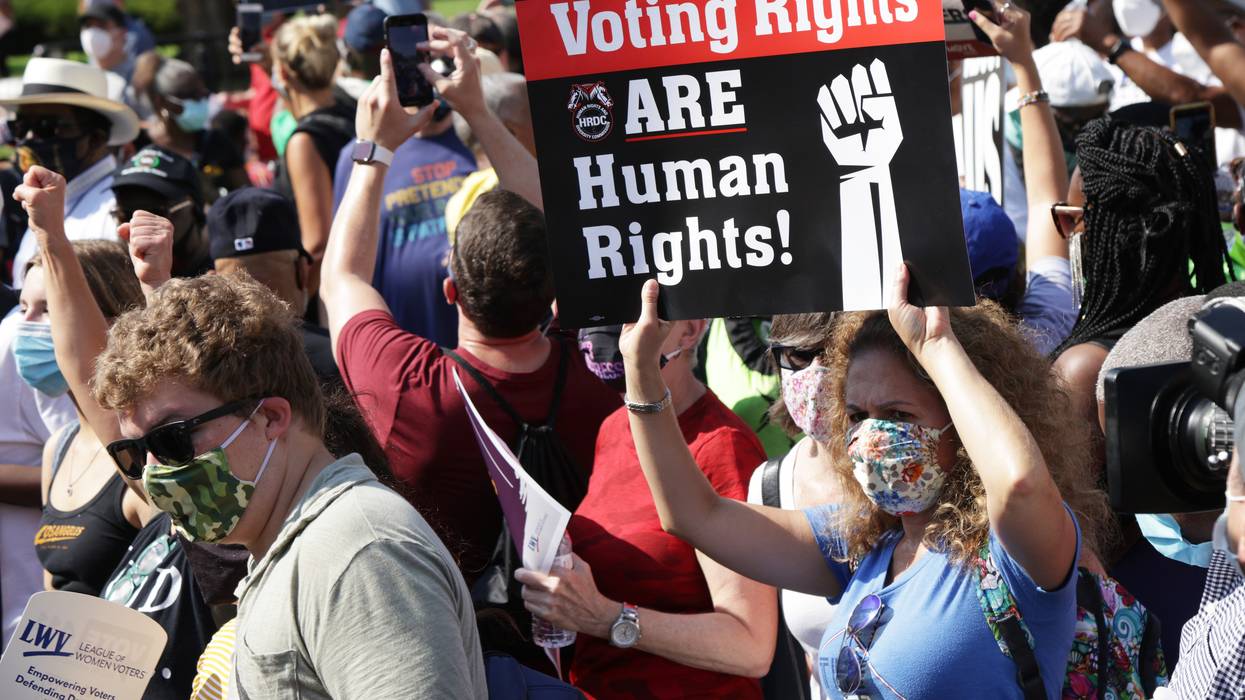
The suppression of Black votes and of women's votes are not separate struggles—they are the same assault, mounted by the same forces, to concentrate power permanently in the hands of those who hold it.
This month marks 61 years since Lyndon Johnson signed the Voting Rights Act into law. Fifty-four years ago, Congress sent the Equal Rights Amendment to the states—now ratified by the three-quarters of the states the Constitution requires. On August 26, the 19th Amendment granting women’s universal suffrage turns 106. Three anniversaries, one question: Why, in 2026, are we still fighting for rights already won—the right to vote, equal pay, the Equal Rights Amendment Congress refuses to recognize as ratified?
In April, the Supreme Court answered part of that question. In Louisiana v. Callais, a 6-3 majority ruled that challengers to a discriminatory voting map must prove intent to discriminate, not merely effect—the same sleight of hand the court used in Shelby County v. Holder (2013) to gut the Voting Rights Act's preclearance formula. The John R. Lewis Voting Rights Advancement Act, which would fix what Shelby County broke, still sits in Congress 13 years later. That is not neglect. It is a choice—and it is shameful.
The consequences are not abstract: At least six Black Democratic members of Congress face elimination through Republican redistricting this year, and one-third of the majority-minority districts under threat are held by women. The Congressional Black Caucus—grown from 13 members in 1971 to a historic high of 62 today—is being dismantled, district by district, ruling by ruling.
Then there's President Donald Trump's SAVE America Act, dressed up as election security: It requires documentary proof of citizenship to register. But an estimated 69 million American women hold a legal name that doesn't match their birth certificate—married, divorced, or changed. A woman may need a birth certificate, marriage license, divorce decree, passport, and driver's license just to prove she is herself: a paperwork tax that falls hardest on women with low incomes, survivors of domestic violence, and older women whose records are scattered across a lifetime.
You cannot protect the paycheck if you cannot protect the ballot. You cannot protect the ballot if you cannot protect the Constitution.
The suppression of Black votes and of women's votes are not separate struggles—they are the same assault, mounted by the same forces, to concentrate power permanently in the hands of those who hold it. Every woman in America who has changed her name is in the crosshairs. The attack on the Voting Rights Act, on women's economic security, and the fight for the Equal Rights Amendment are one battle.
What ties it together is economic justice: For the second consecutive year, the gender pay gap has widened. Women working full time now earn 81 cents for every dollar men earn—down from 83 cents, down from 84 the year before, the first back-to-back widening since the 1960s. For Black women, that figure drops to 65 cents, a gap of $28,340 a year. For Latinas, 58 cents—$33,620 a year. Over a lifetime, the gap costs a woman roughly half a million dollars—and for many women of color, more than $1 million.
That is not a gap. It’s a transfer of wealth—smaller Social Security checks, depleted retirement savings, less generational wealth. The root cause: Women lack the constitutional guarantee of equality that would force government, courts, and employers to treat these harms seriously.
That guarantee is the Equal Rights Amendment. The legal threshold for ratification has been met—all that remains is for Congress to pass a joint resolution affirming the ERA as the 28th Amendment. Every House Democrat has co-sponsored it. One Republican has joined them. Only one.
Our organizations are built on a truth that has not changed: Economic justice and political power are inseparable.
You cannot protect the paycheck if you cannot protect the ballot. You cannot protect the ballot if you cannot protect the Constitution.
Today we stand more than 100 years past the Suffrage Amendment, 61 past the Voting Rights Act, 54 past the day Congress sent the ERA to the states. A new Congress, elected in November, can choose which anniversary this country keeps: rights fought for and won, or rights quietly let go.
The forces of reaction aren't just trying to curtail our votes and reduce our paychecks. They’re trying to erase them. We will not stop until Congress acts.
This op-ed was distributed by American Forum.
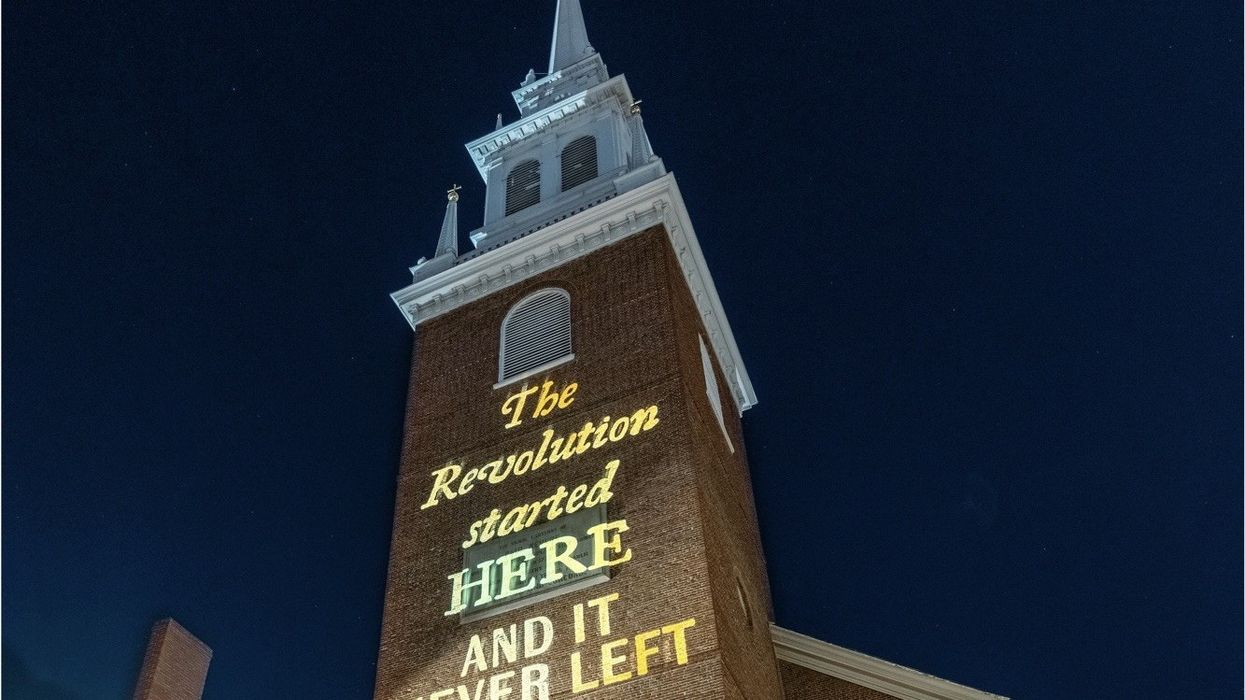
We must lay claim to or, better, reclaim America’s past and—without discounting the terrible tragedies and ironies that have marked the lives of so many Americans—articulate the truly radical story of America.
“America needs something more right now than a “must-do” list from liberals and progressives. America needs a different story… the leaders, and thinkers, and activists who honestly tell that story and speak passionately of the moral and religious values it puts in play will be the first political generation since the New Deal to win power back for the people… The right story will set our course for a generation to come…”
“Tell it—for America’s sake.”—Bill Moyers, A New Story for America (2006)
The time has come. The crisis intensifies, and the struggle is being joined. Abraham Lincoln’s warning of 1862–“We shall nobly save, or meanly lose, the last best hope of Earth”—speaks ever more directly to us. But keep listening. Lincoln did not merely issue a warning to his fellow citizens. Believing they already essentially knew what he was to say, he reminded them of who they were and made it perfectly clear to them what they had to do to overcome the crisis and prevail against the enemy they confronted. He told them that winning the war and sustaining the Union required not simply defeating the Confederacy, but also making America’s revolutionary promise all the more real for all the more Americans. He told them that to truly secure the United States they had to end slavery. He called on them to make America radically freer, more equal, and more democratic.
The time has come for us to do the same. The time has come for us to remind ourselves of who we are and what that demands. The time has come for us to take hold of our history and make America radical again.
The resurgent democratic energies and agencies we are sensing and seeing reveal that Americans not only continue both to believe in America’s revolutionary promise and to feel the radical impulse imbued in American life by the Revolution and sustained by the struggles of generations, but also yearn to defend American democratic life. Thus, they challenge not only a treacherous and reactionary president and his party. They challenge us—the democratic left—as well.
Even as we draw inspiration and encouragement from America’s progressive and radical story, we should never forget what our forebears never forgot, that the America we seek lies not in the past, but in the future that we are struggling to make.
They challenge labor unionists, progressives, radicals, socialists, and true liberals to do what we have failed to do for the past 50 years. They challenge us to finally fulfill the fearful expectations that in the 1970s drove the corporate powers that be and their conservative and neoliberal champions to declare war on the progress of American democratic life and pursue to this day class-war and culture-war campaigns against the democratic achievements of generations; the hard-won rights of workers, women, and people of color; and the very memory of how those achievements were secured and those rights were won. They challenge us to unite in a coalition—call it a “popular front” if you wish—to liberate the Democratic party, the historic Party of the People, from the Money Power and to take up the fight to truly assure life, liberty, and the pursuit of happiness to all Americans. A coalition determined to not only win elections, but also harness the powers of democratic government, subject capital to ever greater public regulation and control, and push the nation all the more in a social-democratic direction.
We cannot delay. We must start doing what we have not been doing. We must embrace our history and recognize that we are radicals at heart. And we must build a coalition of democratic forces which is committed not merely to restoring the democratic legacy of generations and the rights of workers, women, and people of color, but also, if we are to truly secure them, to radically or, if you prefer, progressively extending and deepening them. We must address the needs of the commonwealth and its citizens by re-appropriating through taxation the wealth transferred from working people to capital and the rich. We must empower labor both private and public to organize and bargain collectively and to elect union brothers and sisters to corporate boards. We must make ourselves more secure by demilitarizing and de-weaponizing everyday American life and by establishing a system of universal national healthcare. We must enact the Equal Rights Amendment and guarantee a woman’s right to control her own body. We must not simply abolish the Electoral College, but actually enact a constitutional amendment guaranteeing citizens the right to vote. Moreover, we should redeem FDR’s vision of an Economic Bill of Rights for all Americans.
We must, however, do more than come up with a “must-do list” that will appeal to and draw together diverse interests. We must do what America’s finest radical and progressive voices have always done in the face of crises and forces determined to stymie, or bring an end altogether to, the progress of American democratic life. We must recover and proclaim anew the revolutionary promise projected in Common Sense, the Declaration, the Preamble, and the Bill of Rights so as to call out the powers that be and call forth our fellow citizens.
We must do what our greatest democratic poet Walt Whitman did on the eve of the Civil War when he wrote in his continuing epic, Leaves of Grass:
YOU just maturing youth! You male or female!
Remember the organic compact of These States,
Remember the pledge of the Old Thirteen thenceforward to the rights, life, liberty, equality of man,
Remember what was promulged by the founders, ratified by The States, signed in black and white by the Commissioners, and read by Washington at the head of the army,
Remember the purposes of the founders,––Remember Washington;
Remember the copious humanity streaming from every direction toward America;
Remember the hospitality that belongs to nations and men; (Cursed be nation, woman, man, without hospitality!)
Remember, government is to subserve individuals,
Not any, not the President, is to have one jot more than you or me,
Not any habitan of America is to have one jot less than you or me.
We must do what Elizabeth Cady Stanton and her colleagues did at Seneca Falls in 1848 when they stated in the Declaration of Sentiments that “all men and women are created equal”; what Frederick Douglass did in 1852 when he asked his fellow Americans “What to the slave is the Fourth of July?”; what Lincoln did most eloquently at Gettysburg in 1863 when he projected a “new birth of freedom” to assure that “government of the people, by the people, for the people, shall not perish from the Earth”; what Eugene Debs did when he called forth Paine and other radicals and progressives to champion the causes of labor and socialism; what Franklin Roosevelt did in proclaiming the Four Freedoms and envisioning the creation of an Economic Bill of Rights for all Americans; and what Martin Luther King, Jr. did when demanding a fulfillment of America’s revolutionary promise on the steps of the Lincoln Memorial in 1963.
Moreover, we must lay claim to or, better, reclaim America’s past and—without discounting the terrible tragedies and ironies that have marked the lives of so many Americans—articulate the truly radical story of America, the truly radical story that is America. The story of how, in the face of fierce opposition, and despite all of our terrible faults and failings, generations of Americans native-born and newly-arrived, men and women in all their extraordinary diversity, have struggled both to realize the nation’s fundamental promise of equality and life, liberty, and the pursuit of happiness and to enlarge not only the We in We the People, but also the powers of the people. Indeed, the story of how our greatest generations confronted and transcended mortal threats to American democratic life in the 1770s, 1860s, and 1930s-40s (not to mention the 1960s) by making the United States radically freer, more equal, and more democratic. And we must tell that story in a way that enables us to not only appreciate why we feel the democratic impulses and yearnings we do, but also to recognize and embrace our many and diverse struggles to make real the nation’s promise past and present as ours not respectively “theirs” alone.
Finally, even as we draw inspiration and encouragement from America’s progressive and radical story, we should never forget what our forebears never forgot, that the America we seek lies not in the past, but in the future that we are struggling to make. And in that spirit, we should recall, if not publicly recite, lines such as these from Langston Hughes’ 1936 poem “Let America Be America Again”:
O, let America be America again—
The land that never has been yet—
And yet must be—the land where every man is free.
The land that’s mine—the poor man’s, Indian’s, Negro’s, ME—
Who made America,
Whose sweat and blood, whose faith and pain,
Whose hand at the foundry, whose plow in the rain,
Must bring back our mighty dream again.
Sure, call me any ugly name you choose—
The steel of freedom does not stain.
From those who live like leeches on the people’s lives,
We must take back our land again,
America!
O, yes,
I say it plain,
America never was America to me,
And yet I swear this oath—
America will be!
The time has come to take hold of our history and make America radical again. The time has come not merely to take back America, but all the more to make America America.
Note: This article is based on the Afterword to my 2020 book Take Hold of Our History: Make America Radical Again.
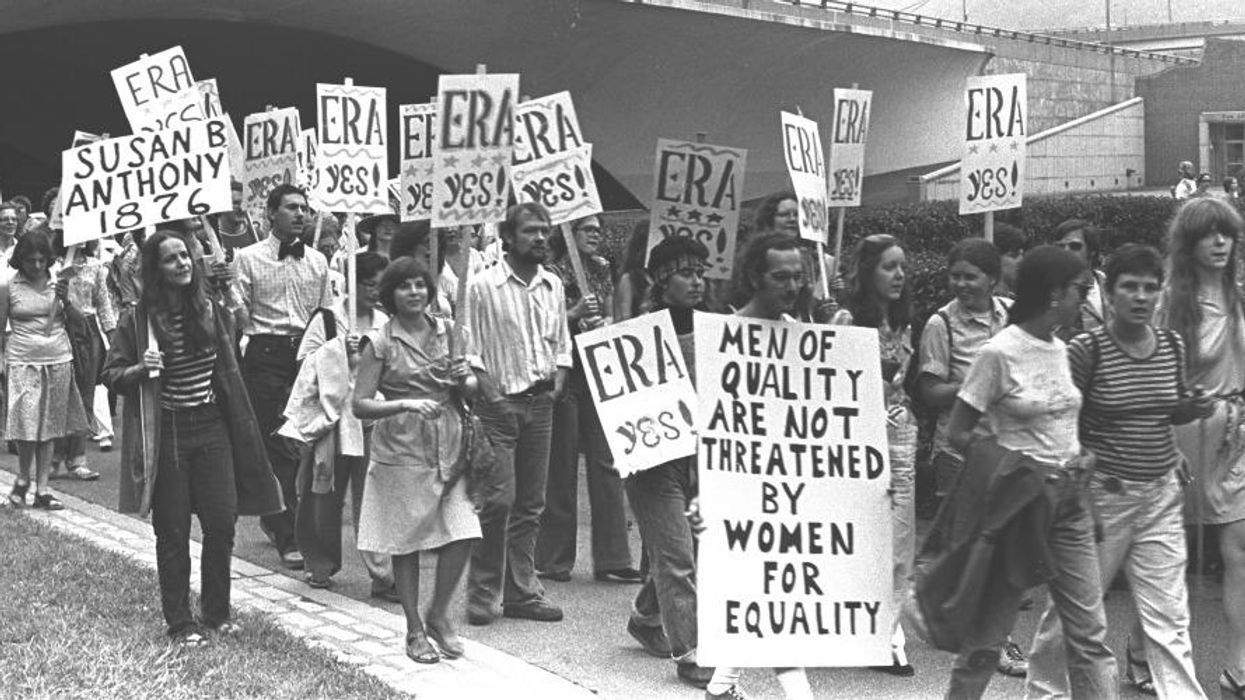
"It is long past time to recognize the will of the American people," said the president.
More than half a century after the U.S. Congress passed the Equal Rights Amendment, President Joe Biden on Friday announced his administration's official opinion that the amendment is ratified and its protections against sex-based discrimination are enshrined in the U.S. Constitution.
The announcement has been long demanded by rights advocates including Democratic lawmakers who have recently called on Biden to affirm the ERA's ratification in order to protect reproductive rights that have been gutted by the Republican Party.
"It is long past time to recognize the will of the American people," said Biden. "In keeping with my oath and duty to Constitution and country, I affirm what I believe and what three-fourths of the states have ratified: The 28th Amendment is the law of the land, guaranteeing all Americans equal rights and protections under the law regardless of their sex."
The statement came five years after Virginia became the 38th state to ratify the ERA. With that move, state lawmakers completed the requirement that three-fourths of U.S. states ratify the amendment.
According to the Brennan Center for Justice, ratification deadlines that were set by Congress after the ERA had passed by the time Virginia ratified the amendment, and five states have rescinded their approval.
But a senior White House official told CNN Friday that the president's decision was informed by the American Bar Association's opinion that "no time limit was included in the text of the Equal Rights Amendment."
"The Constitution's framers wisely avoided the chaos that would have resulted if states were able to take back the ratifying votes at any time," according to the legal association.
Former U.S. Rep. Cori Bush (D-Mo.), who in November called on Biden to take every action available to him in order to protect reproductive rights, including ensuring the ERA was recognized as part of the Constitution, called the president's announcement "an historic and consequential step."
"For over a century, we have fought for the principle that 'equality of rights under the law shall not be denied or abridged by the United States or any state on account of sex,'" said Bush. "These 24 words must now be published and enshrined in our Constitution to provide a crucial safeguard against discrimination for women, LGBTQ+ folks, and all marginalized communities."
With Biden issuing his opinion, advocates have held that the archivist of the United States, Colleen Shogan, must now certify and publish the amendment.
In December, Shogan released a statement saying that in 2020 and 2022, "the U.S. Department of Justice affirmed that the ratification deadline established by Congress for the ERA is valid and enforceable" arguing that the ERA could not be certified.
The senior administration official told CNN that Shogan "is required to publish an amendment once it has been effectively ratified."
"It will be up to the courts to interpret this and their view of the Equal Rights Amendment," they added.
Kate Kelly, a human rights lawyer who wrote the book Ordinary Equality about the ERA, asserted the amendment has been part of the Constitution since it was ratified by Virginia in 2020.
"The Archivist has no constitutional or legal role in the amending process," said Kelly. "She does NOT get to decide what is or is not in the U.S. Constitution. Her boss (the president of the United States) has spoken for his administration. That's it. The ERA is in! This is a victory."
Rep. Pramila Jayapal (D-Wash.) said Biden's action on Friday honored "the work of generations of activists and organizers for equal rights."
"While we still have much work to do to ensure that the next generation of women has more, not less, rights than previous generations, this is an important declaration," said Jayapal. "Now we must do the work to truly make this the practice of the land."
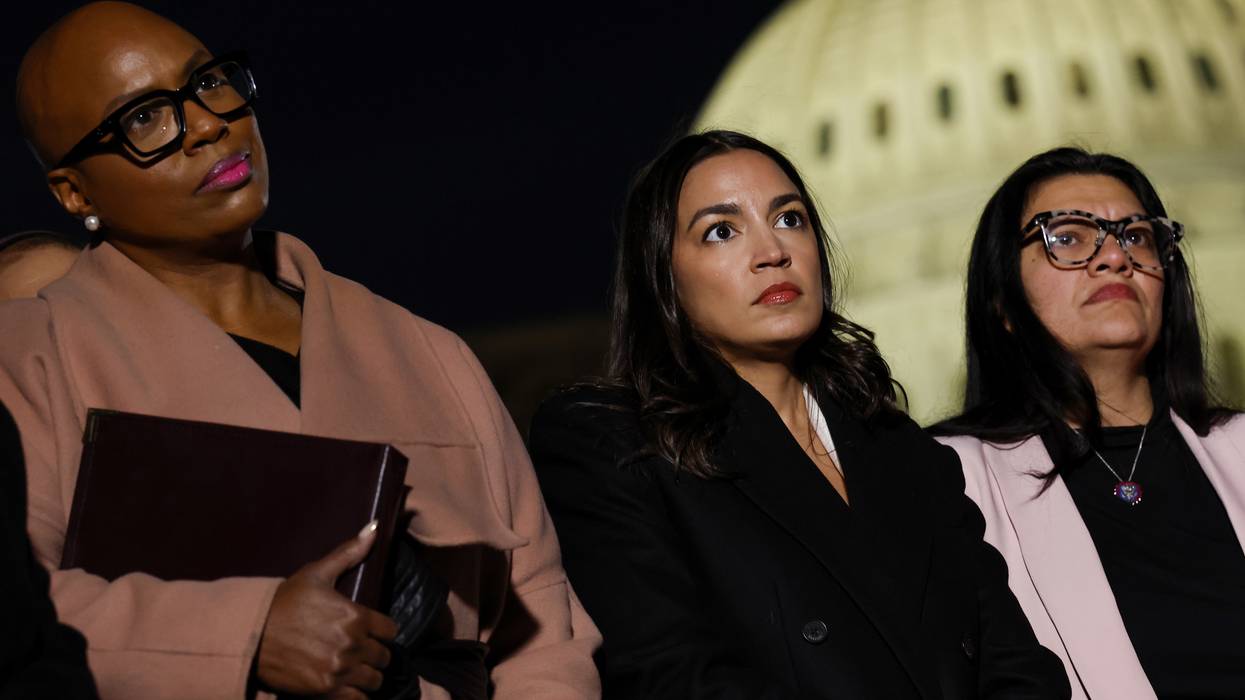
"Solidifying your legacy on equal rights with a final action on the ERA would be a defining moment for the historic Biden-Harris administration and your presidency," said the lawmakers.
With weeks to go until President-elect Donald Trump is set to take office with a Republican trifecta in the White House, Senate, and House of Representatives, more that 120 Democratic lawmakers on Sunday called on President Joe Biden to take a crucial step toward protecting millions of Americans from Trump's far-right MAGA agenda by ratifying the Equal Rights Amendment.
The ERA was passed by Congress in 1972, and met the requirement for it to be ratified by three-fourths of U.S. states in 2020, when Virginia became the 38th state to ratify the amendment.
Yet during his first term, Trump and the Republican party blocked the implementation of the ERA, claiming that since nearly 50 years passed in between the amendment's passage and the meeting of the ratification requirement, the threshold was not achieved by the deadline set by Congress.
"No Republican would care about" the deadline, said journalist Emma Vigeland, "if roles were reversed."
Citing the U.S. Code, Reps. Ayanna Pressley (D-Mass.) and Cori Bush (D-Mo.)—co-chairs of the Congressional Caucus for the Equal Rights Amendment—led their colleagues in telling Biden that the national Archivist, Colleen Shogan, is required to certify an amendment "when the National Archives and Records Administration receives official notice that a proposed amendment to the Constitution has been approved by enough states."
All Biden has to do to ratify the amendment, which would explicitly outlaw sex and gender discrimination, is direct Shogan to publish the ERA, said the lawmakers.
"Solidifying your legacy on equal rights with a final action on the ERA would be a defining moment for the historic Biden-Harris administration and your presidency," wrote the representatives, including Reps. Alexandria Ocasio-Cortez (D-N.Y.), Maxwell Alejandro Frost (D-Fla.), and James McGovern (D-Mass.).
Earlier this month, 46 U.S. senators joined the call for Biden to ratify the ERA.
As Trump has bragged about his hand in the U.S. Supreme Court's overturning of Roe v. Wade and Republicans have advocated for a national abortion ban, reproductive right advocates have said that after being officially added to the U.S. Constitution, the ERA could be invoked by judges to overturn anti-abortion laws.
In Utah, a state-level ERA was invoked in September to place an abortion ban on hold.
"A constitutional guarantee against sex discrimination would strengthen the protection of reproductive rights, ensuring that people have the right to make decisions about their own bodies without political interference or unequal treatment," wrote the lawmakers.
The signatories noted that portions of the Civil Rights Act and Education Amendments protect people from government-based sex discrimination, but gender equality is still "vulnerable to changes in the political landscape, judicial interpretations, and shifts in public opinion" because the Constitution does not explicitly protect it.
"By adding the ERA to the Constitution, it would establish an unambiguous guarantee that sex-based discrimination is unconstitutional," wrote the lawmakers. "The ERA would help eliminate gender-based pay gaps, improve workplace protections, and ensure that gender biases no longer affect hiring, promotions, or job security. With the ERA enshrined in the Constitution, people who experience sex-based discrimination would have a clearer legal path to challenge discriminatory laws or policies. California's state ERA did just that, securing protections for women in the workforce and ensuring equal treatment in education and healthcare."
By directing Shogan to ratify and publish the ERA, they added, Biden would be throwing his unequivocal support behind an amendment supported by 78% of Americans, according to a 2020 Pew Research Center poll.
Biden said on August 26, Women's Equality Day, that he has "long supported the ERA" and called on Congress "to act swiftly to recognize ratification of the ERA and affirm the fundamental truth that all Americans should have equal rights and protections under the law."
But by simply "directing the archivist to publish the ERA," said the lawmakers, Biden would "leave an indelible mark on the history of
this nation, demonstrating once again that your legacy is one of expanding rights, protecting freedoms, and securing a more inclusive future for all Americans. We urge you to take this final, transformative step toward ensuring the full promise of equality for every person in the United States."
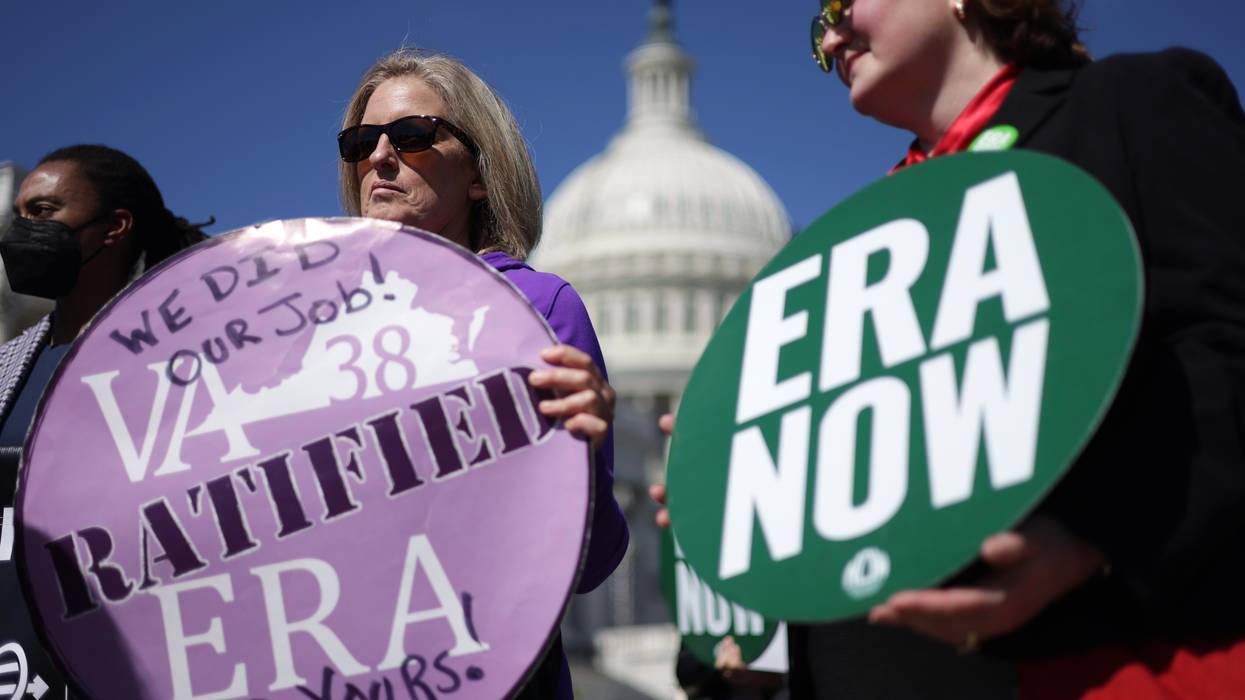
Recognizing the ERA honors the constitutional amendment process and sets a precedent for advancing democratic principles. By certifying it, President Biden would reaffirm the Constitution as a living document.
For a century, the Equal Rights Amendment—or ERA—has symbolized hope and justice. Drafted in 1923, the ERA declares, “Equality of rights under the law shall not be denied or abridged by the United States or by any state on account of sex.” Approved by Congress in 1972 and ratified by the requisite three-fourths of states—culminating with Virginia in 2020—it has met all constitutional requirements to become the 28th Amendment. Yet its certification has been unjustly delayed.
President Donald Trump ignored it, and President Joe Biden now has the opportunity to address this injustice and reaffirm his commitment to equality and the rule of law by giving notice of its passage to National Archivist Colleen Shogan to publish the ERA.
The Constitution evolves to reflect America’s progress and values. Certifying the ERA would mark a historic step in rectifying the foundational omission of gender equality. Opponents argue that Congress’ seven-year ratification deadline and rescissions by six states invalidate the ERA. However, the American Bar Association (ABA), representing over 400,000 legal professionals, rejected these claims in a 2023 resolution. The ABA asserts that Article V of the Constitution prohibits Congress from imposing deadlines or states from revoking ratifications.
The Equal Rights Amendment is more than legislation—it promises that America values all citizens equally.
Recognizing the ERA honors the constitutional amendment process and sets a precedent for advancing democratic principles. By certifying it, President Biden would reaffirm the Constitution as a living document and uphold the rule of law.
Although the United States is seen as a global leader, it lags behind 76% of countries that guarantee gender equality in their constitutions. Enshrining the ERA would signal America’s commitment to justice and human rights. A 2016 ERA Coalition survey found that 94% of Americans support a constitutional amendment ensuring gender equality, highlighting the widespread public mandate for this change.
President Biden has long championed equality, from his work on the Violence Against Women Act to advancing gender equity through executive actions. Certifying the ERA would cement his legacy as a president who expanded civil rights and upheld fundamental freedoms.
Current federal and state laws against sex discrimination are inconsistent and subject to change. Recent Supreme Court decisions embracing originalism threaten decades of progress in gender equality. By enshrining the ERA in the Constitution, President Biden can ensure permanent protections that surpass the vulnerabilities of statutory laws.
Certification would fortify gender equality as an unassailable right and inspire progress in other areas of civil rights. The ERA offers a foundation for broader justice, creating a ripple effect across communities.
Current federal and state laws addressing gender discrimination, pay disparities, violence against women, and discrimination against pregnant individuals are inconsistent and vulnerable to shifts in political and judicial interpretation, with recent Supreme Court decisions embracing originalism threatening decades of progress. By certifying the Equal Rights Amendment (ERA) as part of the Constitution, President Biden can establish permanent, unassailable protections against such injustices, ensuring that gender equality is enshrined at the highest legal level. This action would safeguard the progress made and provide a foundation for advancing broader civil rights, creating a ripple effect of justice and equity across communities.
The Equal Rights Amendment is more than legislation—it promises that America values all citizens equally. As we celebrate 100 years since its inception, the time has come to fulfill that promise. The ERA has met all constitutional requirements, and the American people overwhelmingly support its inclusion in the Constitution.
President Biden must seize this moment to notify the National Archivist, ensuring the ERA’s certification as the 28th Amendment. This is not just a legal or political issue but a moral imperative. Certifying the ERA would reaffirm America’s dedication to equality, justice, and the rule of law.
By taking this bold step, President Biden would inspire future generations, honor those who fought tirelessly for equality, and secure a brighter, fairer future for all. Let this act of leadership define his presidency and the nation’s commitment to its highest ideals.
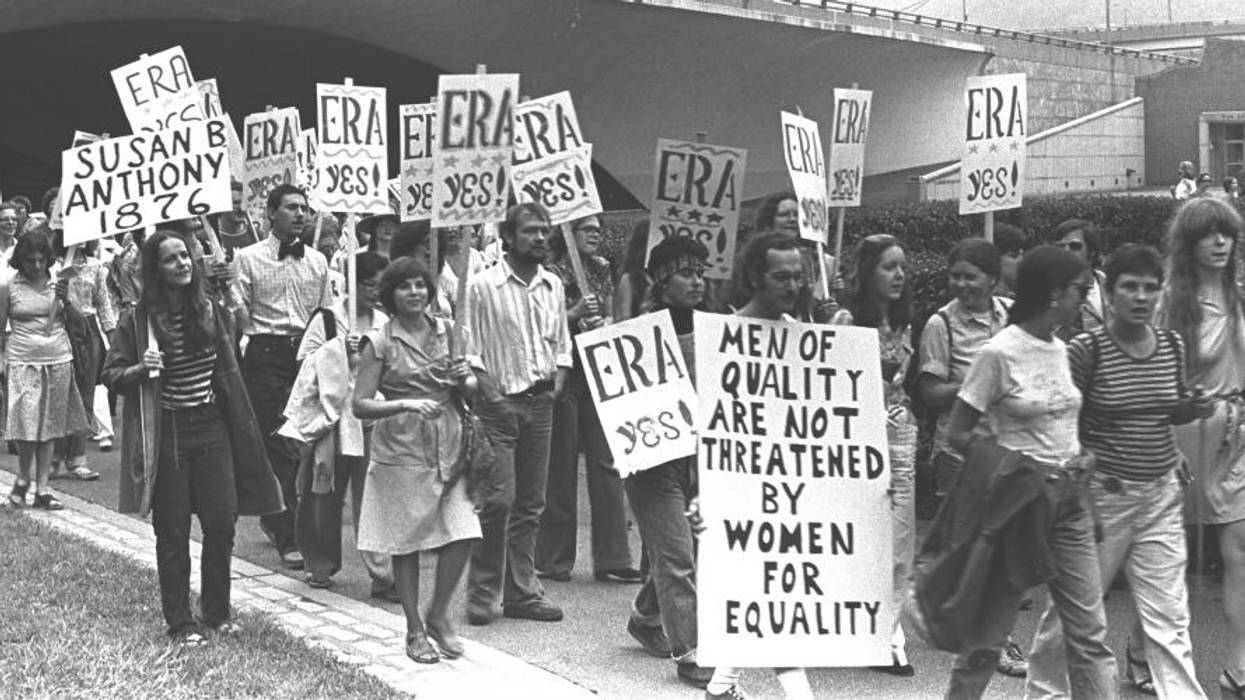
"There is no excuse for leaving us all unprotected," said one advocate.
Emphasizing that the Equal Rights Amendment is the only proposed constitutional amendment that has yet to be certified, 46 U.S. senators have joined the growing national call for President Joe Biden to ensure the proposed statute is part of the Constitution when he leaves office in January.
Reporting on the letter on Tuesday, the Virginia-based publication Style Weekly noted that the state's two Democratic senators—Sens. Mark Warner and Tim Kaine—joined almost the entire Democratic caucus in sending the letter to Biden on November 22. Independent Sens. Angus King of Maine and Bernie Sanders of Vermont signed the letter, but Sen. Joe Manchin (I-W.Va.), who also caucuses with the Democrats, did not.
The ERA was passed by Congress in 1972, and was immediately ratified by 35 states. It took nearly five decades for the amendment to be ratified by three-fourths of U.S. state legislatures, with Virginia becoming the 38th state to ratify it in 2020.
Despite the amendment meeting the ratification requirements, Biden has yet to direct the national archivist, Colleen Shogan, to certify the ERA and publish it in the Federal Register, which would formally cement it as part of the U.S. Constitution.
Once published, the amendment would guarantee legal equality between men and women, and reproductive rights advocates have said it could be invoked by judges to overturn anti-abortion rights laws that have been passed by Republican-controlled state legislatures across the country—an urgent issue as President-elect Donald Trump's second term in office with a GOP-controlled Congress draws near.
"As you are keenly aware," wrote the senators, "after nearly 50 years under the protections of Roe, more than half of all Americans have seen their rights come under attack, with access to abortion care and lifesaving healthcare varying from state to state. A federal solution is needed, and the ERA is the strongest tool to ensure equality and protect these rights for everyone. It would establish the premise that sex-based distinctions in access to reproductive care are unconstitutional, and therefore that abortion bans—which single out women for unfair denial of medical treatment based on sex—violate a constitutional right to sex equality."
The senators noted that state-level equal rights amendments have already been used in Connecticut, New Mexico, Pennsylvania, Utah, and Nevada to protect against "legislative infringements on women's reproductive freedom."
The letter was reported ahead of a virtual town hall scheduled for Tuesday at 7:00 pm ET, when Sen. Kirsten Gillibrand (D-N.Y.) is scheduled to speak about the ERA.
The town hall was organized by the Biden Publish the ERA Alliance, which consists of 20 non-partisan advocacy groups including Doctors for America, Free Speech for People, and the League of Women Voters.
Organizers are also planning rallies in Washington, D.C. on Wednesday and next week.
Kati Hornung, co-founder of Vote Equality U.S. and a leader in the grassroots effort that pushed Virginia to ratify the ERA, told Style Weekly that Biden "campaigned on fixing our constitutional gender equality gap and his campaign even requested to speak at a VAratifyERA event in 2019."
"He is running out of time to tell the national archivist, Colleen Shogan, to do her job," she said. "One hundred seventy million women and girls have been waiting 101 years for this amendment to be added and with the increased threats to our LGBTQIA+ family and friends, there is no excuse for leaving us all unprotected."
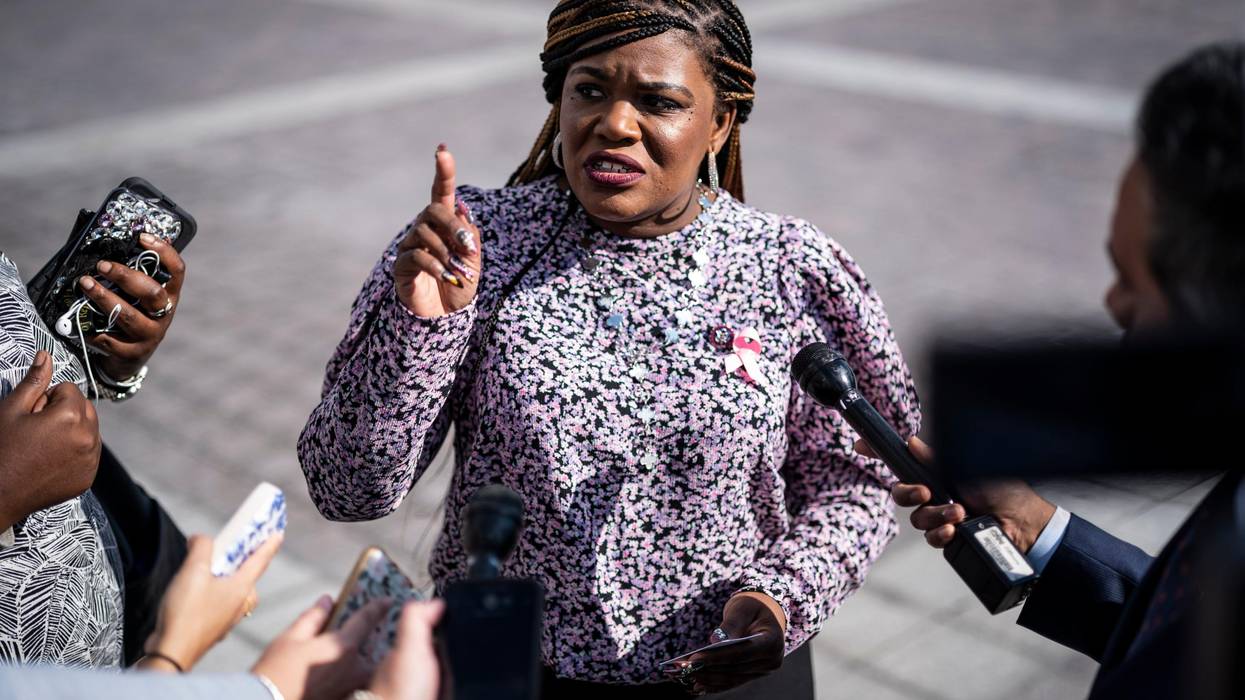
"President Biden has two months," said the congresswoman.
With just over two months to go until U.S. President-elect Donald Trump takes office, U.S. Rep. Cori Bush on Wednesday urged President Joe Biden to take all the action he can to protect reproductive rights from Republican leader who has bragged about his role in ensuring Roe v. Wade was overturned.
Biden "must immediately direct the archivist of the United States to certify and publish the Equal Rights Amendment which can protect access to abortion care and contraception," said the Missouri Democrat, who co-chairs the Congressional Caucus for the Equal Rights Amendment.
Bush's call comes more than a year after the congresswoman and Sen. Kirsten Gillibrand (D-N.Y.) introduced the ERA Now Resolution, urging Colleen Shogan, the archivist of the United States, to certify state ratifications of the amendment and publish it in the Federal Register, which would formally cement it as part of the U.S. Constitution.
First introduced 101 years ago, the ERA would guarantee legal equality for women and men in the U.S. It could push judges to overturn anti-abortion rights laws on the basis that they violate a constitutional right to gender equality. In Utah, a state-level ERA has successfully blocked an abortion ban.
Since first being proposed, the ERA was passed by Congress in 1972 and sent to the states for ratification. Virginia became the 38th state to ratify it in 2020, meeting the threshold for it to become law.
"Today the ERA has met all the constitutional requirements to become the 28th Amendment—all that's standing in the way is some paperwork," said Bush in July on the anniversary of the ERA's introduction. "As Republicans and the Supreme Court's extremist majority continue to attack access to abortion care, contraception, and LGBTQ+ rights, the ERA is needed now more than ever to protect our communities. I'm urging the archivist to fulfill her ministerial duty by certifying and publishing the Equal Rights Amendment and affirming it as the 28th Amendment."
The overturning of Roe in 2022 paved the way for at least 21 states to ban or restrict abortion care. Republicans in Congress have proposed a nationwide 15-week abortion ban. Trump has claimed he would not sign a national ban but Vice President-elect JD Vance has expressed support for one.
"There is always the possibility of a national ban," Brittany Fonteno, president of the National Abortion Federation, told The Cut on Wednesday.
In her July statement, Bush said that "one hundred and one years of advocacy have brought us to this moment, and we refuse to wait a minute longer to cement constitutional gender equality as the law of the land in St. Louis, Missouri, and across the nation."
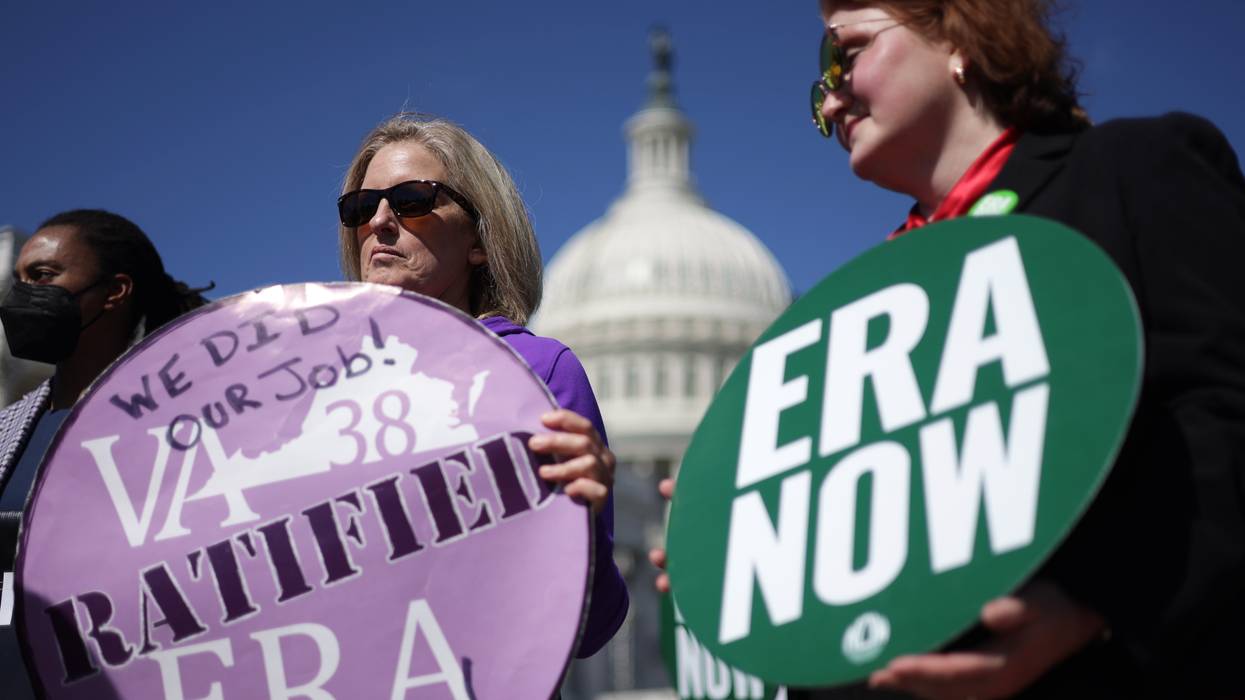
"It is shameful that despite the significant advances made in recent history, Americans continue to face discrimination on the basis of sex and lack equal rights in the Constitution," said the League of Women Voters CEO.
Equal Rights Amendment supporters on Thursday slammed the vast majority of U.S. Senate Republicans for filibustering a resolution that would make the 100-year-old measure the 28th Amendment to the Constitution.
The 51-47 vote to invoke cloture was short of the 60 needed for final consideration of the resolution. Sens. Susan Collins (R-Maine) and Lisa Murkowski (R-Alaska) were the only Republicans to join all Democrats present in supporting a vote on the ERA. Sen. Dianne Feinstein (D-Calif.) remains absent from the chamber, recovering from shingles.
"Today is a disappointing day for women," declared League of Women Voters of the United States CEO Virginia Kase Solomón. "Our nation's elected leaders have failed yet again to see us as equal members of this democracy."
"It is shameful that despite the significant advances made in recent history, Americans continue to face discrimination on the basis of sex and lack equal rights in the Constitution," she said. "Inequality hurts everyone, and we must not continue to be a nation that harmfully excludes and marginalizes women."
“We believe in the power of women to create a more perfect democracy, and that includes equal rights under the law, first and foremost," Kase Solomón added. "A strong democracy doesn't discriminate against women but empowers women. We will keep fighting, and we will keep showing up to hold our legislators accountable. Equality is essential to our democracy."
Kristin Rowe-Finkbeiner, executive director and CEO of MomsRising, agreed the vote was "a real disappointment," adding that "at this time when moms and women—and especially moms and women of color—face devastating wage discrimination, when our country has failed to adopt the programs and policies that would help parents and all caregivers achieve economic security, and when our bodily autonomy and access to reproductive healthcare is being gutted, all lawmakers from both political parties should support enshrining equal rights for women into our constitution."
"Still, we are encouraged by the fact that this vote took place today; it is evidence that this essential constitutional amendment remains on lawmakers' agenda," she said. "We will build from here. Moms want Congress to pass the Equal Rights Amendment, so states can ratify it at last."
First introduced in 1923, the ERA states:
Section 1: Equality of rights under the law shall not be denied or abridged by the United States or by any state on account of sex.
Section 2: The Congress shall have the power to enforce, by appropriate legislation, the provisions of this article.
Section 3: This amendment shall take effect two years after the date of ratification.
While the amendment passed both chambers of Congress in 1972, it must also be ratified by three-quarters of all state legislatures, or 38 states—a quota that wasn't hit until a 2020 vote in Virginia, decades after the 1982 ratification deadline.
The resolution blocked in the Senate on Thursday—led by Murkowski and Sen. Ben Cardin (D-Md.)—would have eliminated that deadline so the ERA could take effect.
Some amendment supporters in the U.S. House of Representatives marched through the Capitol to the Senate Chamber on Thursday chanting "ERA now!"
Among them was Rep. Ayanna Pressley (D-Mass.)—co-chair of the Congressional ERA Caucus with Rep. Cori Bush (D-Mo.)—who said after the vote that "once again, Senate Republicans have failed to do the bare minimum to protect our rights and equality."
Signaling that ERA supporters in the upper chamber aren't ready to give up, Senate Majority Leader Chuck Schumer (D-N.Y.) switched his vote to "no" so that he can bring up the resolution again.
The White House said ahead of the vote that the Biden administration supports the resolution, adding that "in the United States of America, no one's rights should be denied on account of their sex. It is long past time to definitively enshrine the principle of gender equality in the Constitution. Gender equality is not only a moral issue: The full participation of women and girls across all aspects of our society is essential to our economic prosperity, our security, and the health of our democracy."
This post has been updated with comment from MomsRising.
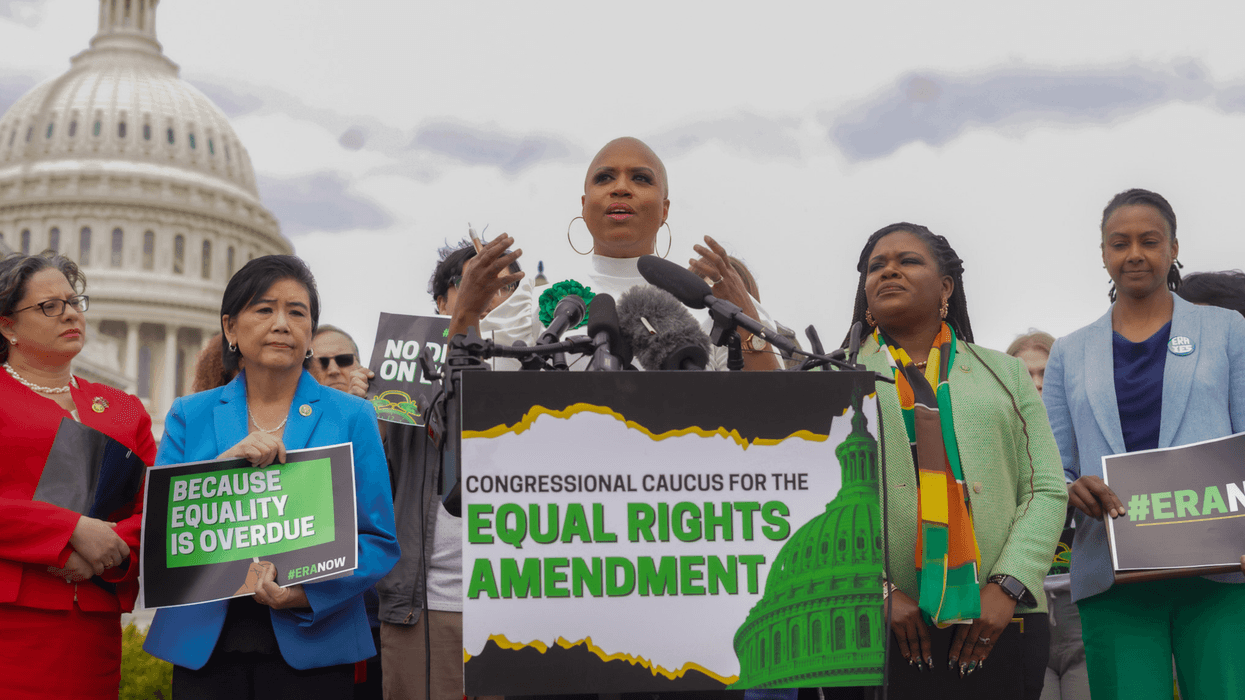
"It has been 100 years since the Equal Rights Amendment was first drafted and introduced in Congress," noted Rep. Cori Bush. "That is far too long... and we refuse to wait any longer."
A coalition of Democratic U.S. lawmakers led by Reps. Cori Bush and Ayanna Pressley on Tuesday announced the launch of a new caucus aimed at realizing the centurylong goal of adding an Equal Rights Amendment to the Constitution.
"It has been 100 years since the Equal Rights Amendment was first drafted and introduced in Congress, and more than a half century since both chambers passed it," Bush (D-Mo.) said in a statement announcing the founding of the Congressional Equal Rights Amendment Caucus. "That is far too long for women, Black and Brown folks, LGBTQ+ people, and other marginalized groups to wait for constitutional gender equality—and we refuse to wait any longer."
Pressley (D-Mass.) said: "I am proud to launch the ERA Caucus with my sister-in-service Congresswoman Bush to affirm the Equal Rights Amendment as the 28th Amendment to the Constitution, establish gender equality as a national priority, and center our most vulnerable and marginalized communities, who stand to benefit the most."
Caucus member Rep. Summer Lee (D-Penn.) said that "it's not shocking that when the Constitution was first drafted, women, Black, Brown, queer, and marginalized folks were intentionally written out. What is shocking is that in 2023, our Constitution still does not include equal rights regardless of sex—meaning our Constitution still does not reflect or protect all people."
"To the right-wing politicians and judges waging a full-on assault on the rights of women and queer youth, we're not afraid and we won't be silenced," Lee added. "We're organized and mobilized to make equal rights the law of the land."
After passing the House in 1971 and the Senate the following year, the ERA was submitted to the states for ratification. Congress set a March 1979 deadline for ratification; only 35 of the requisite 38 states approved the proposal by that time. Although the deadline was extended until 1982, no more states ratified the amendment and several state legislatures voted to rescind their ratifications.
A 21st-century effort to revive the ERA saw Nevada, Illinois, and Virginia approve the measure in recent years. Supporters say 38 states have now backed the ERA, although there is uncertainty over the expired deadlines and rescinded ratifications.
Pressley's office said that in addition to affirming the ERA, the new congressional caucus will "raise awareness in Congress to establish constitutional gender equality as a national priority; partner with an inclusive intergenerational, multiracial coalition of advocates, activists, scholars, organizers, and public figures; and center the people who stand to benefit the most from gender equality, including Black and Brown women, LGBTQ+ people, people seeking abortion care, and other marginalized groups."
In a Tuesday interview with The Hill, Pressley said she was "thinking a lot about my 14-year-old daughter, Cora, and how I do not want her to continue to live in a country in a world where we have so conflated and normalized the disparate treatment and outcomes and disparate access and the second-class status it is to be a woman in this society."
"I look forward to the day when calendars will say and on this day in history, the ERA caucus was established," she added, "but I really look forward to the day when our calendars will say on this day in history, the ERA was passed."
This week marks 95 years since the passage of the 19th Amendment, which gave women the right to vote, and 44 years since Congress designated its anniversary Women's Equality Day. This gives us the opportunity to consider how far we've come and how far we have to go and envision what the world would look like if women attained full equality. I will leave a discussion of political equality to my colleagues working tirelessly on that mission and focus on the economy.
Women make up almost half of all workers in America, and working mothers are the primary breadwinners in 40 percent of the nation's families, so economic equality would make an immense difference for families and the economy.
Just how immense? The Institute for Women's Policy Research finds that if working women were paid the same as men of the same age with similar education and hours of work, then the US economy would have produced an additional income of $447.6 billion in 2014. The average incomes of families with a working woman would increase by $7,078 annually, and poverty rates would fall dramatically. Equal pay for working women of color, who face a far larger pay gap than white women, would boost the average incomes of their families to a still greater extent.
To achieve this, lawmakers must enact policies to combat overt discrimination, such as the Paycheck Fairness Act and the Pregnant Workers Fairness Act. But that's not enough. We must also uproot the structural factors that prevent women from pursuing and attaining the same career opportunities as men.
Since women are more likely to leave the workforce or scale back on employment to care for children, elderly parents, or other loved ones in need, paid leave is a critical reform to boost family incomes and enable women to remain attached to the workforce. The catch is that to fully benefit women without imposing a stigma that could backfire on women's wages and employment; leave policies must be crafted so that men have incentives to take advantage of them as well. In other words, an America where women are equal is one where men also have greater opportunity to cuddle their babies and be present for their aging parents--roles that growing numbers of millennial men say they crave but have difficulty achieving.
At the same time, while it is entirely legitimate (and quite important) to ask why there aren't more female executives at the nation's largest companies and partners at top law firms, women's equality also demands that we work for a world where the jobs that employ a majority of women are no longer so poorly paid.
It is unacceptable that early childhood teachers--increasingly recognized as critical to children's development--still earn wages too low to live on and see little or no wage increase when they have greater educational attainment. Similarly, it's intolerable that minimum wage and overtime pay standards that apply to other employees still have not been extended to home care workers, a workforce overwhelmingly made up of women of color. Strategies that target poor conditions in these and other disproportionately female occupations are needed, as are those that increase women's opportunities in higher-paid, male-dominated jobs.
In the meantime, policies that benefit working people in general—from raising the minimum wage and the tipped minimum wage to improving overtime pay and expanding the ability to join unions—benefit working women substantially and are a key part of achieving equality.
In his 2014 State of the Union address, President Obama declared, "When women succeed, America succeeds." Achieving genuine equality would lift the entire nation.