

SUBSCRIBE TO OUR FREE NEWSLETTER
Daily news & progressive opinion—funded by the people, not the corporations—delivered straight to your inbox.
5
#000000
#FFFFFF
To donate by check, phone, or other method, see our More Ways to Give page.
Daily news & progressive opinion—funded by the people, not the corporations—delivered straight to your inbox.
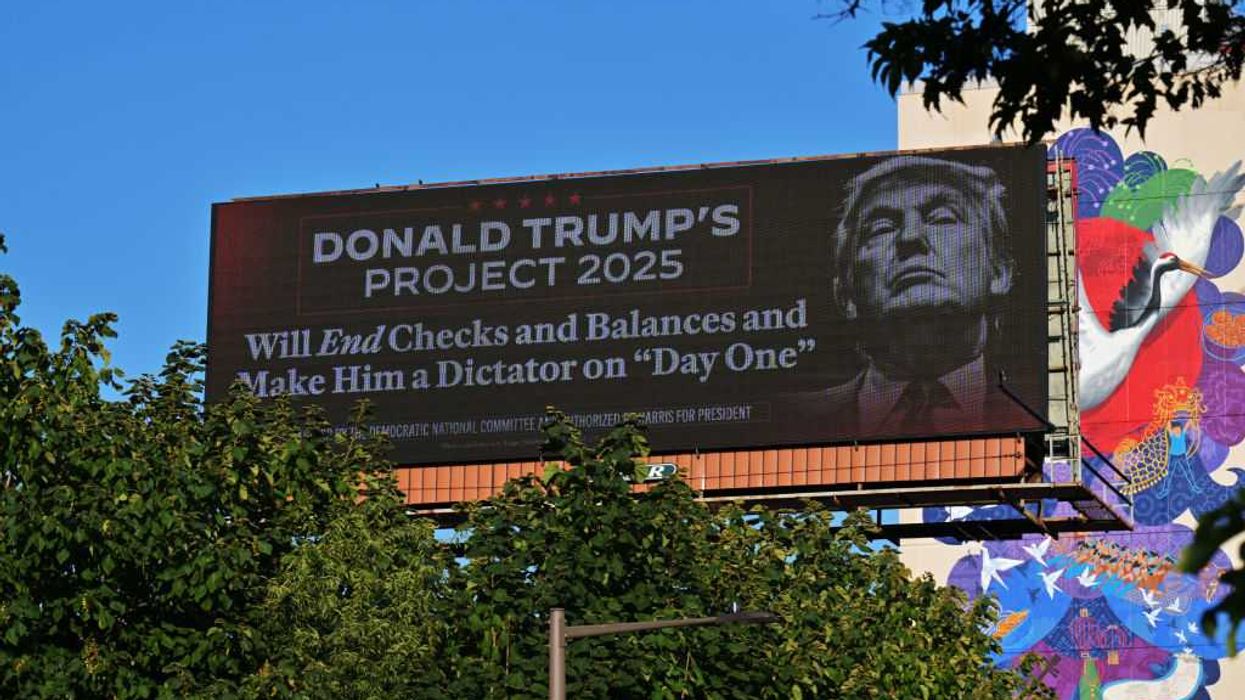
"A Trump denial is not a fact," said one media critic.
As President Donald Trump openly embraces Project 2025, mainstream media outlets are facing criticism for their role in helping him downplay his ties to the wildly unpopular far-right governing playbook in the lead-up to his reelection last year.
After she became the Democratic nominee in July, former Vice President Kamala Harris made the Heritage Foundation's over 900-page manifesto for “the next conservative president” central to her case against Trump during the 2024 election, often referring to it as "Trump's Project 2025."
She and other Democrats warned that if he retook power, he would swiftly enact many of its most extreme and unpopular proposals and dramatically expand executive power while doing it.
Among those proposals were steep cuts to social safety net programs like Medicaid and the Supplemental Nutrition Assistance Program (SNAP), the "mass deportations" of millions of immigrants, the elimination of the Department of Education, new restrictions on abortions, the gutting of climate protections, and the replacement of career civil servants with political appointees, among many others.
Democrats amplified the plan's danger at the Democratic National Convention and in campaign ads, and Trump began to distance himself from the platform. Despite the fact that as many as 140 people who'd worked in his first administration—including Paul Dans, Heritage's director of Project 2025—had a hand in its creation, Trump said: "I know nothing about Project 2025. I have no idea who is behind it."
This was demonstrably untrue, even at the time. Media Matters for America dug up a clip from as far back as May 2023 of Dans stating that "President Trump's very bought in with this," speaking of the program.
Project 2025 was almost inconceivably unpopular. An NBC News poll from September 2024 showed that while 57% of registered voters viewed the plan negatively, just 4% viewed it positively.
But in the critical months leading up to the election, many media outlets took Trump's denial at face value, publishing fact checks and other commentary that painted Democrats' warnings about his connection to the plan as alarmist or misleading.
Responding to a social media post in July stating that "Trump has made his authoritarian intentions quite clear with his Project 2025 plan," a fact check by USA Today rated the statement "false," because, as the headline said, "Project 2025 is an effort by the Heritage Foundation, not Donald Trump."
In September, after Harris confronted Trump about Project 2025 at the first and only debate between the two, the paper published another fact-check with the headline: "Harris repeats claim that Project 2025 is Trump's plan. That's still not right."
In response to Harris' claim during the debate that Project 2025 was "a detailed and dangerous plan... that the former president intends on implementing if he were elected,” Washington Post fact-checker Glenn Kessler, whose coverage received a fair bit of criticism during the 2024 cycle, reported in bold text that "Project 2025 is not an official campaign document."
A CNN fact check of the Harris campaign's social media in September remarked that one account "frequently invokes Project 2025," before caveating that "Project 2025 is not Trump’s initiative, and he has said he disagrees with some of its proposals."
In an October interview on CBS's "Face the Nation," anchor Norah O'Donnell, Harris attempted to warn about Project 2025, before O'Donnell responded: "You know that Donald Trump has disavowed Project 2025. He says that is not his campaign plan."
After nine months back in power, the website Project 2025 Tracker estimates that Trump has already implemented approximately 48% of the objectives outlined in the policy document.
In addition to his key campaign promises many of his second administration's policies are highly specific to Project 2025, such as his pledge to abolish the Federal Emergency Management Agency (FEMA), his efforts to privatize the National Weather Service (NWS), his reconfiguration of Title X funding to promote pregnancy, and his elimination of the Office for Civil Rights and Civil Liberties.
Trump is no longer hiding his connection to Project 2025, having brought in many of its hiring picks and authors to staff his administration almost immediately after his victory last November.
This week, he began to boast about it openly. As his Office of Management and Budget (OMB) director, Russ Vought, one of Project 2025's architects, began using the current government shutdown to unilaterally cut off funding to infrastructure projects in blue states and cities, Trump lauded him as "he of PROJECT 2025 Fame."
"This was always the plan," Harris responded on social media.
While many commentators expressed outrage that Trump blatantly lied about his connections to Project 2025, others dredged up old clips of newspapers and anchors taking him at his word.
"All those 2024 media fact checks that said, 'Donald Trump and the Trump campaign deny any connection to Project 2025' look pretty ridiculous right now," said MeidasTouch editor-in-chief Ron Filipkowski. "A Trump denial is not a fact. You just used his lies to 'debunk' a reality that was obvious to anyone paying attention."
Mehdi Hasan, the founder of the independent media company Zeteo, highlighted the CBS interview, saying Trump's embrace of Project 2025 was "embarrassing not just for Norah O'Donnell but a whole host of leading American anchors and reporters who echoed Trump’s false denials."
"Nothing showed the difference between mainstream and independent media better than the response to Trump’s obvious lie about not knowing anything about Project 2025," said David Pepper, author of the book Saving Democracy: A User's Manual. "Most mainstream media started fact-checking those who claimed a connection to be somehow false. Others 'both sides'ed' it. Far more in independent media called it out as a whopping lie."
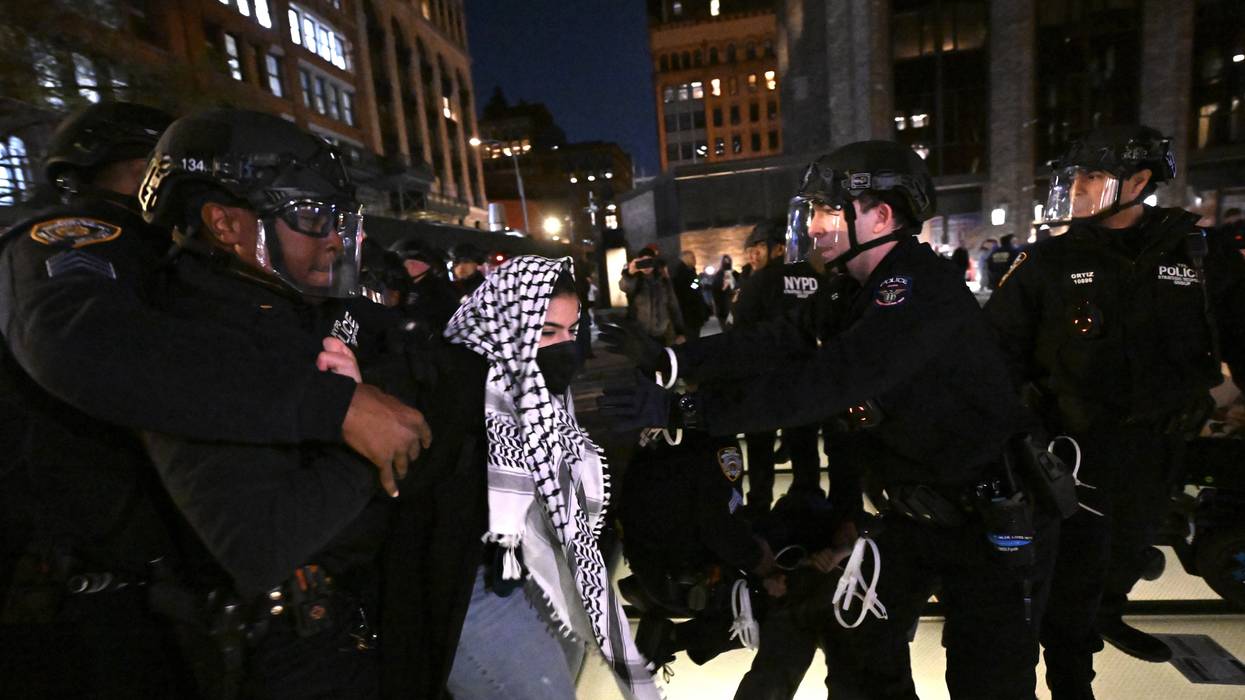
Police use of "catch-and-release" tactics is particularly worrying for press freedom advocates, according to the U.S. Press Freedom Tracker.
Arrests and detainments of journalists in the United States surged in 2024 compared to the year prior, according to the U.S. Press Freedom Tracker, a project of the Freedom of the Press Foundation.
The tracker reports that journalists were arrested or detained by police at least 48 times this year—eclipsing the number of arrests that took place in the previous two years combined, and constituting the third highest number of yearly arrests and detentions since the project began cataloging press freedom violations in 2017. 2020, however, still stands as far and away the year with the most arrests and detentions.
The 48 arrests and detentions this year is also part of a larger list of "press freedom incidents" that the tracker documents, including things like equipment damage, equipment seizure, and assault.
While a year with a high number of protests typically leads to more arrests, "it was protests in response to the Israel-Gaza war that caused this year's uptick," according to the tracker.
The vast majority of the arrests and detainments out of the total 48 were linked to these sorts of demonstrations, and it was protests at Columbia University's Manhattan campus that were the site of this year's largest detainment of journalists.
The report also recounts the story of Roni Jacobson, a freelance reporter whose experience on the last day of 2023 was a harbinger of press freedom incidents to come in 2024. Jacobson was on assignment to cover a pro-Palestinian demonstration for the New York Daily News on December 31, 2023 when she was told to leave by police because she didn't have city-issued press credentials with her. She recounted that she accidentally bumped into an officer and was arrested. She was held overnight at a precinct and then released after the charges against her, which included disorderly conduct, were dropped.
Even five arrests that the tracker deems "election-related" took place at protests that were "at least partially if not entirely focused on the Israel-Gaza war." Three of those election-related arrests took place at protests happening around the Democratic National Convention in August.
One police force in particular bears responsibility for this year's crackdown: Nearly 50% of the arrests of journalists this year were at the hands of the New York Police Department (NYPD). Many of those taken into custody had their charges dropped quickly, but the tracker notes that the NYPD's use of "catch-and-release" tactics was particularly worrying to press freedom advocates.
Two photojournalists, Josh Pacheco and Olga Federova, were detained four times this year in both New York City and Chicago while photographing protests. They were both "assaulted and arrested and [had] their equipment damaged" while documenting police clearing a student encampment at Manhattan's Fashion Institute of Technology; however, they were released the next day and told their arrests had been voided.
"While [we are] glad that some common sense prevailed by the NYPD not charging these two photographers with any crime, we are very concerned that they are perfecting 'catch-and-release' to an art form,” Mickey Osterreicher, general counsel for the National Press Photographers Association, told the tracker.
"The fact that they took two photojournalists off the street, preventing them from making any more images or transmitting the ones they already had on a matter of extreme public concern, is very disturbing," he said.
Besides covering protests, 2024 also saw the continued practice of "criminally charging journalists for standard journalistic practices," according to the tracker. For example, one investigative journalist in Los Angeles was repeatedly threatened with arrest while attempting to cover a homeless encampment sweep in the city, and then was detained in October, though he was let go without charges.
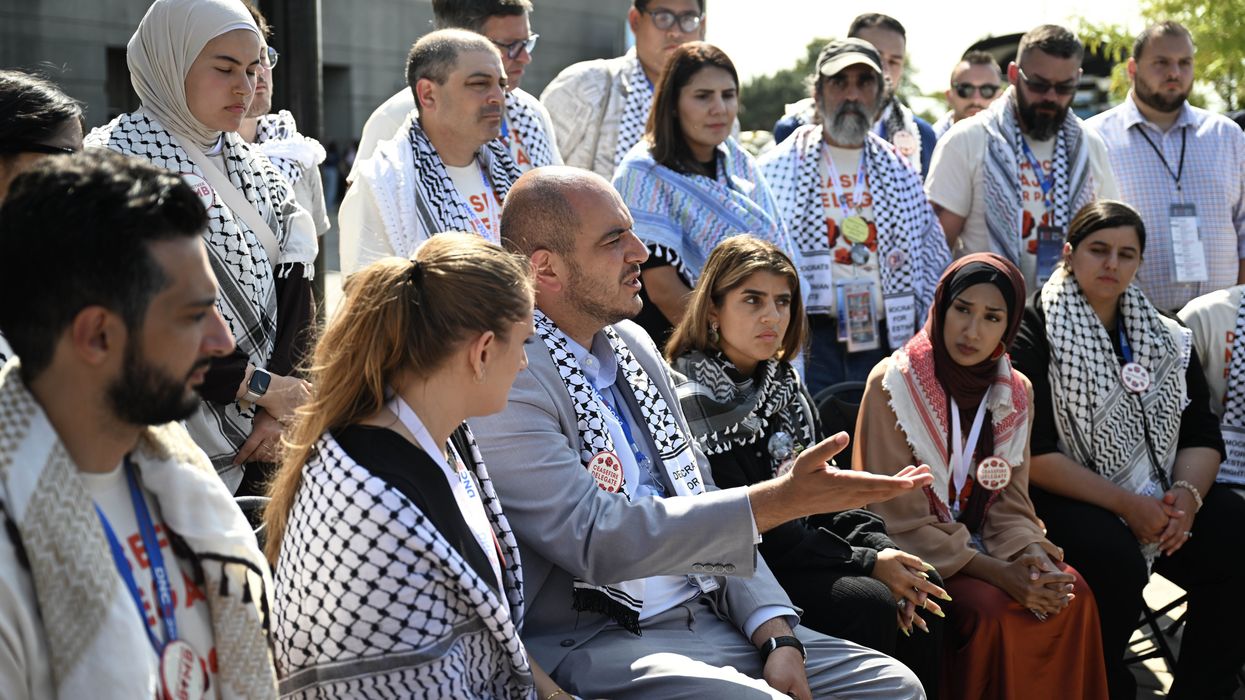
What voters opposed to the war on the people of Gaza want most is what U.S. law already requires: an arms embargo on the Israeli government that forces an end to the slaughter and starvation.
Before sparking outrage by refusing to let any Palestinian Americans speak at the Democratic National Convention last month, U.S. Vice President Kamala Harris was on her way to winning back at least some of the voters who had rejected President Joe Biden's candidacy over the war on Gaza.
The vice president had spent weeks taking several small but positive steps that gave hope to young people as well as American Muslims, Arabs, Palestinians, and other voters opposed to U.S. support for the war on Gaza.
She first refused to preside over Israeli Prime Minister Benjamin Netanyahu's predictably dishonest and dangerous speech to Congress. She also gave him a cold reception when they met one-on-one: She avoided smiling or shaking his hand during the standard post-meeting photo op and spoke alone to the press afterward.
Kamala Harris still has a very narrow opening to win over some of the voters who abandoned Biden but do not want to see Trump return to the White House.
During her remarks that day and in multiple campaign speeches, she has explicitly called for a cease-fire as part of a hostage deal and acknowledged Palestinian suffering in an empathetic way that President Biden rarely used.
She appointed a well-known and respected American Muslim attorney to serve as her liaison to Arab and Muslim voters and then stood by that official when she faced predictable attacks from pro-Israel groups.
She met with some Palestinian-American and Muslim community members on the sidelines of campaign events and gave the clear impression that she was far more sympathetic to the plight of Palestinians than her public remarks would indicate.
She initially deflected questions about whether she would support an arms embargo on the Israeli government, which was itself actually a positive sign given that any Democratic presidential candidate in years past would have responded to that question by simply saying, "No, I do not and never will support conditioning or limiting arms to Israel."
When leaders of the Uncommitted Movement later revealed that Harris had privately expressed a willingness to discuss an arms embargo, her national security adviser's cleanup statement said that she "does not support" an arms embargo in the present tense without making any pronouncements about the future.
She picked Minnesota Gov. Tim Walz as vice president instead of Pennsylvania Gov. Josh Shapiro, who had repeatedly gone out of his way to demonize college student protesters, Ben & Jerry's, and other advocates for Palestinian human rights in ways that no other VP candidate had.
Most recently, Harris approved a first-ever panel at the DNC focused on Palestinian human rights, allowing mainstream Arab and Palestinian leaders to speak freely to a packed audience about the genocide in Gaza.
Of course, none of these steps were enough. What voters opposed to the war on the people of Gaza want most is what U.S. law already requires: an arms embargo on the Israeli government that forces an end to the slaughter and starvation.
Although Vice President Harris had not been willing to break with President Biden or spark a backlash from her pro-Israel supporters by supporting an arms embargo, she had sent signals that she would at least be more open to discussing the various demands of anti-genocide voters than Biden—or Trump, for that matter.
Until, that is, the Democratic National Convention.
First, the party platform regurgitated most of the same pro-Israel talking points that AIPAC and Democratic Majority for Israel demand of candidates in their position papers, including dishonest attacks on the South Africa-inspired Boycott, Divest, and Sanctions movement; saber-rattling against Iran; and clear commitments to billions in promised funding for the Israeli government.
Second, the DNC gave a prime-time speaking slot to Israeli-American parents of hostages held captive in Gaza but then refused to give any speaking slot at all to any Palestinian Americans while making plenty of room for Republican politicians.
Even when prominent members of Congress, activists, and major unions called for the DNC and the Harris campaign to reconsider their decision, they refused. This decision insulted and infuriated Palestinian Americans and their supporters.
It also raised a very real policy concern: If supporters of Palestinian human rights could not even convince the Harris campaign to give one measly three-minute speaking spot to a Palestinian-American Democrat who would have endorsed Harris, how can we expect a Harris White House to listen when we lobby for changes in government policy?
In the weeks since the DNC speaker fiasco, the campaign has not expressed any regret for what happened. In a CNN interview, Harris also seemed to explicitly rule out supporting an embargo on even "some" arms to the Israeli government. This is remarkable given that even President Biden belatedly suspended shipments of 2,000-pound bombs.
Long story short, the Harris campaign has squandered much of the goodwill it initially built up with voters concerned about Gaza. For example, a new poll of American Muslim registered voters conducted from August 25 to 27 showed Harris winning only 29% of the vote. Jill Stein received identical support while 17% were undecided.
Despite these bleak numbers, all is not lost for Harris—yet.
Donald Trump is going out of his way to antagonize Americans who support Palestinian human rights: using Palestinian as a racist slur, promising to let Netanyahu finish the job in Gaza, speculating about ways to make Israel even larger and pledging to weaponize the federal government against college students and others who stand up for Palestine. Trump even implied that he might attack Gaza himself if the American hostages have not been released by the time he takes office.
That means Kamala Harris still has a very narrow opening to win over some of the voters who abandoned Biden but do not want to see Trump return to the White House.
What, if anything, can her campaign do now?
First, apologize for not including a Palestinian-American speaker at the convention and feature Palestinian-American speakers at a prominent campaign event.
Second, sit down with and listen to representatives of the Muslim, Palestinian, Arab, Jewish, Black, and other organizations that oppose the genocide in Gaza and use the upcoming presidential debate as an opportunity to clearly reject anti-Palestinian racism and Islamophobia here at home.
Third, pledge to enforce U.S. laws that already forbid arms sales and transfers to any foreign human rights violators, including the Israeli government.
Perhaps most importantly, Vice President Harris must convince President Biden to force Netanyahu to agree to the cease-fire deal that he keeps sabotaging. Harris says that she and President Biden are working around the clock to secure a cease-fire deal, but the truth is that the main barrier to a deal is Netanyahu's opposition to a permanent cease-fire and his insistence on partially occupying Gaza.
With nothing left to lose politically, Biden should leverage U.S. military aid to force Netanyahu to accept a permanent cease-fire deal that frees all hostages and political prisoners.
Taking these steps might allow the Harris-Walz campaign to win back some of the disillusioned voters in Michigan, Pennsylvania, Georgia, and other swing states where every vote counts.
Time is running out, the path is narrow, and the missteps of recent weeks have made her journey all the more difficult. If Vice President Harris is going to do the right thing, the time to act is now.
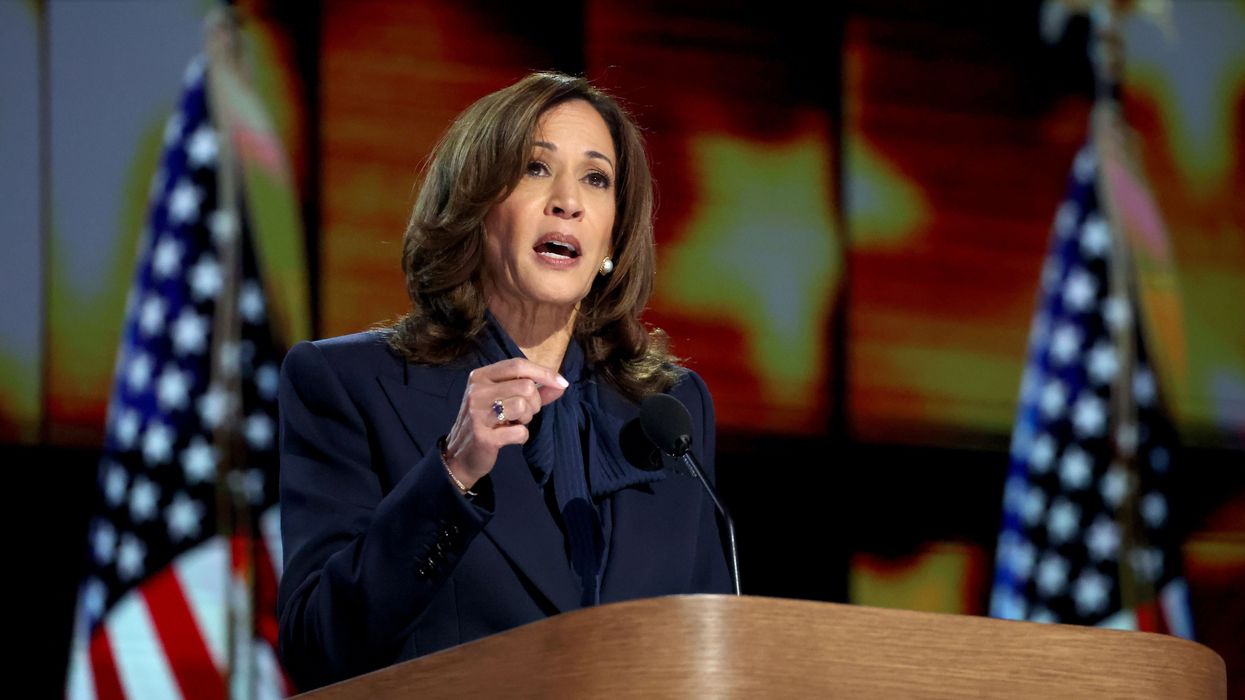
No other policy step would have as much of an impact in generating a permanent cease-fire and advancing Palestinian freedom.
In her recent speech to the Democratic National Convention accepting the party’s nomination for president, U.S. Vice President Kamala Harris drew one of her most thunderous applause lines when she called for an end to the violence and suffering Israel is inflicting in Gaza and for the long-denied fulfillment of Palestinian rights to dignity, security, freedom, and self-determination.
This enthusiastic reception, evinced by tens of thousands of die-hard Democrats at Chicago’s United Center, was a faithful reflection of where the base of the party stands on Palestinian-Israeli issues.
A May 2024 public opinion poll conducted by Data for Progress and Zeteo found that 83% of Democrats support the U.S. brokering a permanent cease-fire. A March 2024 Gallup poll found more Democrats sympathetic toward Palestinians than toward Israelis by a 10-point margin (43% to 35%) as Israel continues killing Palestinians in Gaza.
The U.S. is profoundly complicit in Israel’s mass killing of Palestinians.
While Harris’s rhetorical commitment to Palestinian freedom and self-determination is noteworthy, these will be yet more empty words unless they are accompanied by a commitment to tangible policy change. Most importantly, this means following U.S. law and ending weapons transfers to Israel. No other policy step would have as much of an impact in generating a permanent cease-fire and advancing Palestinian freedom.
For decades, Israel has denied Palestinians their freedom under a brutal system of apartheid and military rule, backed by the munificent support of U.S. taxpayers, who have provided Israel with more than $100 billion in weapons.
As Israel’s violence against Palestinians over the past 10 months has increased, so too has the amount of weaponry the U.S. is providing to Israel. The Biden administration has circumvented congressional oversight to rush to Israel the delivery of more than $6 billion in weapons, and the Pentagon recently notified Congress of $20 billion in potential new sales, which will undoubtedly be financed by U.S. taxpayers.
From fighter jets to missiles, bombs, tank shells, and mortars, U.S. weapons to Israel make us complicit in the war crimes and potential crimes against humanity Israel is inflicting on Palestinians in Gaza, as the death toll eclipses 40,000 people, including more than 16,500 children.
In her acceptance speech, Harris committed to “hold sacred” the principle of the rule of law. If elected president, her most immediate test of fidelity to this principle will emerge from her decision on whether to send additional weapons to Israel.
U.S. law is clear: No country can receive U.S. weapons to commit human rights abuses. The Foreign Assistance Act prevents the U.S. from furnishing any support to a country with a “consistent pattern of gross violations of internationally recognized human rights.” The Arms Export Control Act mandates that U.S. weapons be used “solely for internal security, for legitimate self-defense,” and for a few other scenarios not relevant to Israel’s attacks on Palestinians in Gaza. No sales or deliveries of any weapons are permitted to a country in “substantial violation” of these limitations.
In addition, current White House guidelines, embodied in its Conventional Arms Transfer policy, prohibit weapons deliveries to a country when it is “more likely than not that the arms to be transferred will be used by the recipient to commit, facilitate the recipients’ commission of, or to aggravate risks that the recipient will commit: genocide; crimes against humanity; grave breaches of the Geneva Conventions of 1949, including attacks intentionally directed against civilian objects or civilians protected as such; or other serious violations of international humanitarian or human rights law, including serious acts of gender‑based violence or serious acts of violence against children.”
As attested to by myriad Palestinian and international human rights organizations, as well as United Nations agencies and judicial bodies, Israel is brazenly violating every single clause of the Conventional Arms Transfer policy, which is supposed to prevent U.S. complicity in atrocities.
Not only should Harris commit to ending weapons transfers to Israel because U.S. law and policy mandate she do so if elected president, stopping weapons to Israel is also a smart electoral strategy to adopt. A March 2024 public opinion poll conducted by the Center for Economic and Policy Research found that 62% of Biden 2020 voters support halting weapons shipments to Israel, whereas only 14% oppose.
In addition, an August 2024 public opinion poll of voters in the critical swing states of Pennsylvania, Arizona, and Georgia, conducted by the IMEU Policy Project, found that Democratic and independent voters would be more likely to cast their ballot for Harris if she were to support an arms embargo on Israel. Thirty-nine percent of Georgians would be more likely to vote for Harris in this scenario, whereas only 5% of voters would be less likely to vote for her, with similar results obtained in Arizona (35% to 5%) and in Pennsylvania (34% to 7%).
Unfortunately, Harris appears wedded to Biden’s failed strategy of providing Israel with weapons. As she put it in an interview with CNN, she would not withhold weapons.
More than 75 years ago, in November 1947, as the U.N. debated partitioning Palestine against the wishes of its majority Indigenous inhabitants, the Truman administration imposed an arms embargo on all sides in Palestine for the commonsense reason, in the subsequent words of Secretary of State George Marshall, that to “permit American arms to go to Palestine and neighboring states would facilitate acts of violence and the further shedding of blood and thus render still more difficult the task of maintaining law and order.”
The Truman administration maintained its arms embargo against Israel after its establishment in May 1948, despite fierce lobbying from members of Congress, Zionist organizations in the U.S., and the Israeli government. Israel engaged in massive ethnic cleansing, driving more than 80% of Palestinians from their homes in what became Israel and turning them into refugees. But at least U.S. weapons did not contribute to this atrocity.
Today, as Israel continues its horrendous violence against Palestinians, which is in some respects even more deadly than the catastrophe of 1948, the obverse is true. The U.S. is profoundly complicit in Israel’s mass killing of Palestinians.
Because of her stated commitment to the rule of law, a permanent cease-fire, and Palestinian freedom, Harris must now end U.S. complicity by backing a renewed arms embargo against Israel.
As she accepted the Democratic nomination, Harris promised to maintain the world’s “most lethal” military and ensure that “America—not China—wins the competition for the 21st century.”
It wasn’t until the final night of the 2024 Democratic National Convention that pandering to military power took the stage. Until then, conventioneers were insulated from possible second thoughts they might have had about the party’s role in the constructing, maintaining, and expanding of what is in truth an Empire.
The run up to U.S. Vice President Kamala Harris’ acceptance speech included tough talk from former CIA Director and Secretary of Defense Leon Panetta, who celebrated America’s “warriors,” and by a parade of members of Congress who have served in the military: Vietnam, Afghanistan, and Iraq. With the exception of celebrating the assassination of Osama Bin Laden, there were no references to those wars, nor to the president’s role as “nuclear monarch” with the sole authority to launch an omnicidal nuclear war. References to what former President Dwight D. Eisenhower initially termed the military-industrial-congressional complex and the party’s integration with it were missing in action. So too were any references to the deployment of a new generation of nuclear weapons in Europe or President Joe Biden’s recent insistence that Chancellor Olaf Sholtz accept deployment of U.S. dual capable tomahawk intermediate range missiles in Germany capable of reaching western Russia.
But, as the conservative journalist David Brooks observed, Harris concluded her rousing acceptance speech with “an aggressive picture of America in the world.” She built on her commitment to maintain the world’s “most lethal” military, with the promise to lead in the space and artificial intelligence arms races, and promised that “America—not China—wins the competition for the 21st century,” a euphemistic reference to the struggle for hegemony. Echoing the Biden paradigm and the commitment to new Cold Wars, and omitting embarrassing references to Saudi Arabia, Israel, and more than a few other U.S. allies, she told her audiences that she knew where she and the country stand in the “enduring struggle between democracy and tyranny.”
Seeking to prevent an election shattering of the Democratic Party’s coalition, Kamala Harris has attempted to have it both ways on the Gaza genocide.
Harris came to the Senate in 2017 with little foreign policy knowledge or experience, but contrary to former President Donald Trump’s accusations, she is anything but a foreign and military policy ingenue. The Biden White House downplayed her foreign and military policy roles, but once she emerged as the Democrats’ presidential nominee, it was reported that she participated in nearly every Biden-era National Security Council meeting, where U.S. foreign and military policies are made. Similarly, she has been involved in almost every one of the President’s Daily Briefs, the intelligence community’s daily super-secret briefings about threats, developments, and opportunities around the world. Ron Klain, Biden’s first chief of staff, said that Harris came to the intelligence briefings as the “best prepared, ready with questions, having already reviewed the written intelligence and ready to help ask hard questions.” The journalist Fred Kaplan put it differently: her presence in these briefings “exposed her to more information… than any newly elected president has ever had, coming into office, in more than a century.” As vice president, she visited 21 nations on 17 foreign trips and met with more than 150 foreign leaders. In three of the past four years, she led the U.S delegation to the Munich Security Conference.
We should expect Harris to hew to the trajectory of Biden’s foreign and military policies. Along her way, she has recruited a cadre of traditional national security advisers. As vice president, her first national security adviser was Nancy McEldowney, a career U.S. diplomat and former director of the Foreign Service Institute. McEldowney was succeeded by Philip Gordon, Harris’ current and very influential foreign policy adviser, who served on former President Bill Clinton’s National Security Council staff and as an Obama European and Middle East specialist. Gordon’s deputy has been Rebecca Lissner, formerly of the Naval War College and the woman who oversaw the development of the Biden National Security Strategy. Recall that the strategy declares that the post-Cold War era is over, that the struggle with China—Washington’s only peer competitor—to shape what follows is under way. And it reiterated the United States’ commitment to its first-strike nuclear arsenal and warfighting doctrine.
According to a Wall Street Journal report that Harris blames National Security Adviser Jake Sullivan along with Secretary of State Antony Blinken for failing to contain Israel in Gaza, Gordon will likely be appointed to succeed Sullivan. Gordon was a career diplomat who is seen as a “pragmatic internationalist” rather than a progressive. He served as former President Barack Obama’s first assistant secretary of state for European and Eurasian affairs and later as his special assistant to the president and White House coordinator for the Middle East, North Africa, and the Persian Gulf Region.
Gordon’s decisive worldview reorientation reportedly came in response to former President George W. Bush’s regime change war in Iraq, which led him to understand that the U.S. is not always a force for good or on the right side of history. Bush’s wars, he understood, left that country shattered and squandered the United States’ reputation and legitimacy. As a review of the books written by Gordon explains, he believes that “the institutions of U.S. power are not in themselves wrong; it is the people who run them who make them fall short of their promise.” Staff them with better leaders he argues, and the U.S. can play its historical role as a “catalyst for democracy.” Recognizing that regime change doesn’t work, the U.S. he argues must act judiciously with the means consistent with the ends.
Gordon is seen as a Europeanist and as the E.U.’s man in Washington. Norbert Rottgen, a Christian Democratic German parliamentarian, has commented that Gordon believes that “European security is the cornerstone of U.S. global power,” and he is probably correct. Gordon has been a hardliner opposing Russia’s invasion of Ukraine and criticized Sholz for resisting pressure to send German long-range Taurus cruise missiles to Ukraine. But Gordon can be a subtle strategist, as demonstrated in his not being threatened by calls for a more autonomous Europe and his belief that a strong Europe is in the United States’ interest.
“Europeanist” though he may be, Camille Grand, the former NATO assistant secretary general, tells us that Gordon recognizes that Europe is “no longer the alpha and omega of American’s foreign policy.” There is of course China, the new “alpha and omega” of U.S. foreign, military, and economic policies, and with the exception of his deputy Linsser’s China containment work on the Biden National Security Strategy, Gordon’s fingerprints on Harris’ approach are hard to find.
Consistent with Biden, Trump, and the etiquette of U.S. political discourse, in Harris’ acceptance speech there were no references to U.S. imperial wars, coups, or provocative shows of force with which Washington won its Indo-Pacific Empir
Seeking to prevent an election shattering of the Democratic Party’s coalition, Kamala Harris has attempted to have it both ways on the Gaza genocide. In her acceptance speech, she honored the growing Democratic majority who have been outraged by Israel’s indiscriminate and devastating destruction of Gaza and its people. Possibly speaking from her heart, Harris reiterated the call for a cease-fire and stated that “what has happened in Gaza over the past 10 months is devastating…The scale of suffering is heartbreaking.” She then stated her ostensible commitment to the Palestinians’ ability to “realize their right to dignity, security, freedom, and self-determination” and to the long disregarded and fading possibility of a two-state solution.
But, like Biden, the leverage she pledged to exercise was to enhance Israel’s military power, not to achieve a cease-fire. As she said, “Let me be clear, I will always stand up for Israel’s right to defend itself, and I will always ensure Israel has the ability to defend itself.” Like Biden, her campaign has been clear in refusing to pressure Israeli Prime Minister Netanyahu and his extremist partners by withholding shipment of bombs and other weapons to Israel. And, as the Israeli leader’s campaign of assassinations in Iran and Lebanon have taken us to the brink of regional war, Harris pledged “to defend our forces,” who for reasons she didn’t dare to state find themselves deployed across southwest Asia, “and our interests against Iran and Iran-backed terrorists.”
Harris has been a hawk on Ukraine in its war of resistance against Russia, providing Kyiv “full-throated support.” We should expect her to continue unwavering support for NATO and U.S. dominion over Europe. In introducing herself in Chicago, she boasted that “Five days before Russia attacked Ukraine, I met with President Zelensky to warn him about Russia’s plan to invade. I helped mobilize a global response—over 50 countries—to defend against Putin’s aggression. And as president, I will stand strong with Ukraine and our NATO allies.”
Largely unknown prior to the convention was that in February 2022, when the U.S. intelligence community first reported that Russia’s illegal and brutal invasion of Ukraine was imminent, Harris pressed for the super-secret intelligence to be shared with Ukrainian President Volodymyr Zelensky. It was Harris who was then dispatched to meet with Zelensky in Kyiv to share the detailed intelligence and Washington’s perceptions of his options. She has since met Zelensky five times.
There has been no daylight between Harris and Biden in their support for Zelensky’s “peace diplomacy” that unrealistically demands return to Ukraine’s pre-2014 borders. (Worth noting is the Ukrainian sociologist Volodymyr Ishchenko’s assertion that, before Russian President Vladimir Putin’s invasion, most Ukrainians were willing to be done with turmoil in the eastern 20% of Ukraine and accept its succession to Russia.) There has been no indication that in future negotiations Harris would accept a neutral Ukraine with credible security guarantees or to putting the questions of Crimean, Donetsk, and Luhansk sovereignty to fair referenda or onto the diplomatic shelf for later resolution.
And, like Biden, at Munich Security Conferences Harris has preached that the “backbone” of preservation of Western principles and security is NATO—“the greatest military alliance the world has ever seen.”
Amid growing international demands to cut military spending by at least 10%, there has been no hint of Harris objecting to Biden’s massive military spending increases.
Consistent with Biden, Trump, and the etiquette of U.S. political discourse, in Harris’ acceptance speech there were no references to U.S. imperial wars, coups, or provocative shows of force with which Washington won its Indo-Pacific Empire, nor to the region spanning Biden-Harris lattice-like network of tripartite and bilateral U.S alliances, nor to global NATO’s new roles in the campaign to contain China.
In her acceptance speech, Harris mentioned China only once, and then only in relationship to the contest for supremacy in space and AI. These, not incidentally, are at the defining edges of 21st-century military power. Elsewhere Harris has been critical of Beijing’s repression of human rights and warned about the Chinese “threat” to U.S. interests and to Washington’s allies in the Asia-Pacific. Following China’s simulated blockade of Taiwan in response to Rep. Nancy Pelosi’s (D-Calif.) counterproductive and unwanted 2022 trip to Taiwan, Harris also traveled to Asia. There, in meetings with allies and some of the 55,000 U.S. troops based in Japan, she reaffirmed the U.S. commitment to deter China. She has not been shy in condemning China’s aggressive actions in the South China Sea where it seeks to challenge the Seventh Fleet’s dominance in what has been an America Lake since the end of the Pacific War. And as Beijing has encroached on what are obviously Philippine territorial waters, she has played a key role in facilitating Ferdinand Marcos Jr.’s (the former dictator’s son) reaffirmation and deepening of the U.S.-Philippines alliance after his predecessor’s flirtations with China.
Assuming that her audiences either don’t know or disregard the past and present practice of U.S. imperialism, Harris asserts that she is committed to the misnamed “rules-based order” and to a “free and open Indo-Pacific” to ensure stability and commerce. She warns that Beijing is unique as it “continues to coerce, to intimidate, and to make claims to the vast majority of the South China Sea.” Rather than pursue common security solutions to the dilemmas presented by Taiwan, she repeats Washington’s unofficial commitment to defend Taiwan, including the Pentagon’s first-strike doctrine which serves as the foundation of that commitment.
In these regards we have to hope that Minnesota Gov. Tim Walz will be more than wallpaper as vice president and that he finds ways to influence a Harris administration with his understanding that the storied China threat is “hyperbole” and the need to build on the two powers’ shared interests.
Amid growing international demands to cut military spending by at least 10%, there has been no hint of Harris objecting to Biden’s massive military spending increases. That said, if she is elected, we should not expect her to match Trump’s call for gargantuan increases in Pentagon spending.
What else might we expect from Kamala Harris if she prevails between now and November 5? Given that Africa is projected to have a quarter of the world’s population by 2050, and the markets for goods and services that go with that, as well as its stores of commercially essential natural resources, a Harris administration will likely pay greater attention to U.S. relations with the African continent than we have seen in recent years. Similarly, given her Caribbean roots, its resources, markets, and most of all its Monroe Doctrine geopolitical relationship to the United States, greater attention will likely also be paid to Latin America.
All of which brings us back to where we began. Harris remains the uncertain bastion in the struggle to defend constitutional democracy. The outcome of the election cannot be accurately predicted, and we have been sobered by the reminder that only once has a sitting vice president prevailed in an election. Between now and then Harris will be pressed to become more forthcoming about her policy commitments and how they can be achieved. Unless the Democrats win control of one or both houses of Congress, and with right-wing extremist control of the Supreme Court, only minimal progress will be made on the Harris-Walz domestic agenda. And as Harris or Trump aggressively challenge the world, each in her or his unique ways, our work to end and prevent catastrophe remains ahead of us.

From September 10-30, we will gather before the U.S.’ U.N. Mission and the Israeli Consulate demanding both nations desist from further massacres, forcible displacement, and the use of starvation and disease as weapons.
During a week of action focused on United Nations potential to end Israel’s genocidal attacks, I was part of a coalition that met with 12 different permanent missions to the U.N. We urged that if countries that are parties to the Genocide Convention or the Geneva Conventions stop trading with Israel as international law demands, (cf. the July 19 advisory opinion of the International Court of Justice), the genocide will end quickly.
In each encounter at a Permanent Mission to the U.N., its staff asked if we, as U.S. citizens, have addressed our government’s unwavering support for the genocide against impoverished and forcibly displaced people.
It was a deeply meaningful moment when the Irish Ambassador to the United Nations showed our delegation a miniature replica of John Behan’s poignant statue depicting the Irish exodus—it showed weary, hungry people disembarking from a boat after a stormy ocean voyage.
“You have to see each one of these as a human being,” he said.
The U.S. government is complicit in genocide, and we, in whose name it is acting, are also complicit if we remain silent.
My mother was an Irish indentured servant first in Ireland and then in England. As things go, she was among the more fortunate. She never endured being chained day and night in the Middle Passage of a slave ship carrying captives here, or in a human trafficker’s overcrowded, lethally airless truck container. Nor did she have to cling to the remains of an overcrowded ship to keep from drowning after it capsized in the Mediterranean.
Life in Gaza is a desperate moment-to-moment ordeal of clinging to such wreckage, trying to stay above water, to stay alive, while both major U.S. political parties struggle to push you under.
In an article published by
The Guardian, Israeli-American Omer Bartov, an eminent Holocaust historian and expert on genocide, lamented the unwillingness of many Israelis—some of whom are his friends, neighbors, colleagues, and even former students—to see Palestinians as human beings. He comments: “Many of my friends… feel that in the struggle between justice and existence, existence must win out… it is our own cause that must be triumphant, no matter the price… This feeling did not appear suddenly on 7 October.”
Is it futile to ask Israelis to reconsider this vengeance—avenging hundreds of civilians with several hundred thousand, half of them children—while the U.S. continues to arm Israel for the task?
Bartov continues:
By the time I travelled to Israel, I had become convinced that… Israel was engaged in systematic war crimes, crimes against humanity, and genocidal actions… the ultimate goal of this entire undertaking from the very beginning had been to make the entire Gaza Strip uninhabitable, and to debilitate its population to such a degree that it would either die out or seek all possible options to flee the territory. In other words… as the 1948 U.N. Genocide Convention puts it… Israel was acting “with intent to destroy, in whole or in part,” the Palestinian population in Gaza, “as such, by killing, causing serious harm… inflicting conditions of life meant to bring about the group’s destruction.”
How can United States citizens cope in a nation not just gone mad on war, but gone mad on genocide? We do not have to cope with lingering, state-enforced starvation or the memory of our lifeless children pulled from under rubble. But we must cope with our complicity.
When we can, we must act.
We cannot say we did not know. The United Nations member states watch the entire edifice of international law crumble as a genocide is broadcast across our screens. Israeli military forces may have killed close to 200,000 Gazans although only 40,000 bodies have been recovered for counting. The Israeli government’s siege is starving Palestinian children and has brought Gaza to the brink of a full-blown famine. Meanwhile, polio has made a return.
From September 10 to September 30, World BEYOND War, Code Pink, Veterans For Peace, Pax Christi, and other coalition partners will leaflet, demonstrate, and nonviolently act to expose and oppose Israeli and U.S. actions that flout international law. We will gather before both the United States’ U.N. Mission and the Israeli Consulate demanding both nations desist from further massacres, forcible displacement, and the use of starvation and disease as weapons.
We will remind people that Israel possesses thermonuclear weapons but refuses to acknowledge this fact and thereby avoids any assessment or safeguards by the International Atomic Energy Association and any involvement in the Nuclear Non-Proliferation Treaty.
We will express earnest concern both for Hamas’ prisoners and the more than 3,000 Palestinians incarcerated without charge by Israel, including women and children.
Currently, the United States and Israel have effectively decided on death for the remaining hostages rather than a settlement that would free Palestinian women and children. In a reckless bid to spark a U.S.-Iran war, Israel recently assassinated, in Tehran, the chief Hamas negotiator for a hostage release.
And still the U.S.’ arms flow continues.
Last week, the world watched as the Democratic Party leadership, at its convention, squelched voices of the Uncommitted delegates. DNC speakers repeated the lie that their party was seeking a cease-fire, while flatly refusing to stop replacing the guns and missiles Israel has used to shed blood and destroy infrastructure.
We all should rely on the covenant virtues of traditional Judaism, those virtues celebrated as essential for survival: truth, justice, and forgiving love. We should appeal to secular and faith-based people across the United States as we face precarities of nuclear annihilation and ecological collapse. Securing a better future for all children requires bolstering respect for human rights, searching always for ways to abolish war.
The U.S. government is complicit in genocide, and we, in whose name it is acting, are also complicit if we remain silent.
It is time for the United Nations to liberate itself from a Security Council structure giving five permanent, nuclear-armed members a vise-like grip on the world’s ability to counter the scourge of war. We must join with the call of the South African government, which bravely upheld international law. We must clamor for the General Assembly to enact the “Uniting for Peace” resolution.
As the forthright Jewish delegate at last week’s DNC, after he and two others unfurled a banner reading “STOP ARMING ISRAEL,” said, “Never again means never again!”
We invite you to join us. https://events.worldbeyondwar.org/

Major outlets have proved so bad at this, many candidates—and increasingly the voting public as well—would just as soon get by without them. Are they wrong?
This column, about the decline and fall of America’s political news media in such a pivotal election year, has proved very hard to write — not for a lack of material, but because I can’t keep pace with every day’s new and stunning examples of bad journalism, each one spiraling a tad lower.
I’ll start with the weekend’s lowlight: a news story that worked up the media food chain from the muck of smaller right-wing outlets, then got boosted on X/Twitter by Alex Thompson, a widely read national political correspondent for Axios, before the New York Post hyped it in your local Wawa and eventually the New York Times felt compelled to address it. You see, an idea that has animated the right for the last couple of weeks is the fantasy that Democratic vice presidential nominee Gov. Tim Walz is a phony. Sunday’s purported news slammed Walz for a 2006 episode when his then-congressional campaign claimed he’d won a youth award from the Nebraska Chamber of Commerce when really it was — get this! — the Nebraska Junior Chamber of Commerce!
Never mind that the 2006 Walz campaign had corrected this tiny mistake (picture Barack Obama doing the hand thing, but even smaller), probably the work of a junior staffer, the second they learned about it. The nattering nabobs of negativism had accomplished their mission in a year when the elite mainstream media has lost its doggone mind — going after small daily clickbait like a puppy chasing its tail, demanding news conferences only to ask trivial questions, issuing ludicrous “fact checks,” and desperately seeking gravitas in the candidate just found guilty on 34 felony counts and liable for rape and financial fraud, who was dinged by NPR for 162 lies or distortions in just one news conference.
Indeed, the outrageous overinflation of the Walz story was nearly forgotten by Monday morning when the Times, which has bent over backwards to belittle the joy of Kamala Harris’ wildly successful Democratic National Convention in Chicago last week, published an op-ed from the editor of the conservative National Review, Rich Lowry, headlined simply: “Trump Can Win on Character.” Perhaps that’s true, as critics noted, if voters do what Lowry did in his piece and pretend that inconvenient facts like the Jan. 6, 2021 insurrection or the fraud verdict had never happened. But while the column was ridiculed on social media, few people said they were giving up on the Times — because in this annus horribilis for the American media, many had already tuned out the NYT weeks or months ago.
Mainstream journalists can carp and whine about this all they want, but when less than a third of Americans trust the mass media, few folks are listening to them.
It wasn’t supposed to be like this. The NYU professor and media critic Jay Rosen urged journalists to cover “the stakes, not the odds” of the 2024 election while Margaret Sullivan — who writes for the Guardian and her Substack after stints at the Times and the Washington Post — was more blunt in beseeching the press to ignore the pull of both-sides journalism and take seriously the threat to democracy posed by Trump, who tried to override his 2020 election loss and has made no comforting assurances that he won’t try to do the same after Nov. 5, 2024.
Few journalists — if any — have listened. Much of the righteous fury during the Chicago DNC was directed at fact-checkers from the Times, Post, and independent organizations like PolitiFact. These organizations or practices were mostly established after the endemic political lying of the 2000s — remember the Iraq War? But while no one would argue with their stated approach of tough, unbiased scrutiny of all sides, the fact-checking industrial complex can’t handle the truth when one party’s platform is based on a firehouse of lies and the other party is trying to be serious, if not always literal, about reality.
So Democratic convention week brought absurdities like PolitiFact tackling a DNC video that showed an actual Trump 2016 quote that “there has to be some form of punishment” for women who have abortions and labeled it “mostly false” (!!) because his panicked aides later told him to walk back such a politically damaging statement. Also typical was USA Today calling it “false” when the DNC talks about “Trump’s Project 2025″ because the blueprint for his presidency was produced by the Heritage Foundation, even though most of its authors are former and would-be future Trump staffers and it offers the only program for filling jobs in a Trump administration.
C’mon, man.
It would require another column — maybe a book — to explain why this is happening. I see it as less the public’s main complaint (corporate control of the media) and more about our profession’s weird value structure, where it’s more important to be savvy, cynical, and not be portrayed as naive shills for liberalism than to care about saving democracy from authoritarian rule, on top of maybe a new and not always healthy brand of careerism from younger journalists.
The Chicago-based media critic Mark Jacob, a retired veteran editor of that city’s Tribune and Sun Times, nailed it Monday with a piece headlined “Mainstream media on a path to irrelevance.” Jacob has harsh words for how reporters have covered the race, writing that “too many political journalists are marinating in the Washington cocktail culture, writing for each other and for their sources — in service to the political industry, not the public.” But he also notes that traditional media can’t figure out how to compete for young eyeballs against sites like edgy and fast-paced TikTok. Jacob pointed out that public faith in mass media has plunged from 72% in 1976, after Watergate, to just 32% today.
You know who gets the new landscape better than anyone else? Kamala Harris.
The vice president and Democratic nominee is running to be America’s first post-media president. In Chicago, much was made of the fact that Team Harris and the Democrats invited 200 sometimes fawning internet “content creators” who got VIP treatment while mainstream journalists fought over nosebleed-level seats and refrained from eating or going to the bathroom for fear of losing them.
Harris feels she doesn’t need journalists at all, and a lot of the public is cheering her on.
But more broadly, Harris and her campaign is 100% focused on message discipline to build her brand and sell it to the American people in a few short weeks. The surest way to get thrown off that message discipline would be a stray answer at an open news conference or in an interview with the likes of NBC’s Lester Holt — so for now, Harris is simply not doing that.
And she’s getting away with it. Mainstream journalists can carp and whine about this all they want, but when less than a third of Americans trust the mass media, few folks are listening to them. What’s been really striking this year is that while traditionally deep distrust of the mainstream press has long been the province of right-wing Republicans, now it’s liberals who once cheered for the media to do better who seem to be giving up on them.
This is not great. For one thing, the plunge in faith leads to cancelled subscriptions that leads to laid-off reporters or shuttered printing plants — not the vision of America’s founders who believed a free press is essential. In this campaign, I think the healthy journalistic mindset is that we want to save democracy in November, but we also want Harris to show she can answer at least a few tough questions and explain her policies beyond hopelessly vague generalities.
The reality, though, is that Harris might surge into the White House in January doing very little of this — maybe none at all, especially if Trump actually chickens out of their Sept. 10 debate in Philadelphia. Fifty years ago this summer, Richard Nixon resigned the presidency because people believed what they read about him in the Washington Post. Today, Harris feels she doesn’t need journalists at all, and a lot of the public is cheering her on. And a vainglorious elite news media with severe tunnel vision has no one to blame but themselves.
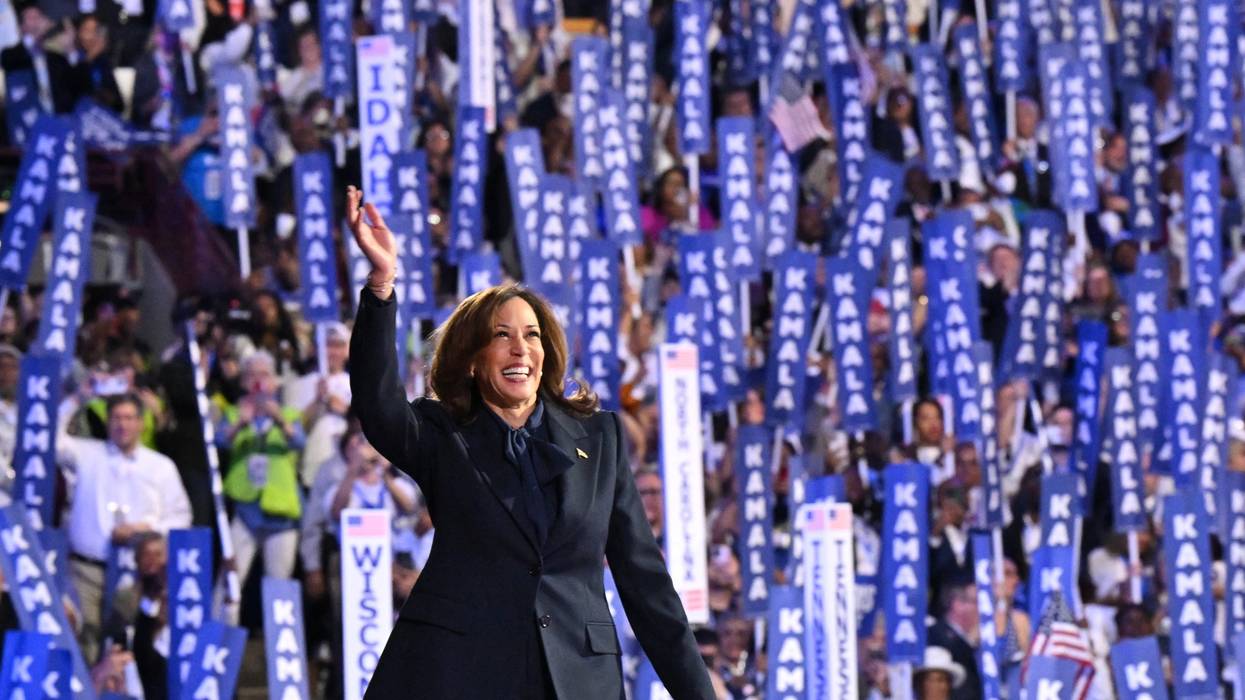
In the crazy, refracted light of bent and broken images, Kamala Harris can simultaneously be part of the administration sending billions of dollars of weaponry to the IDF, and also grieve for those innocents crushed under Gazan rubble.
I suffered through much of the three nights of non-reality programming called the 2024 Democratic National Convention. I watched nearly the whole fucking thing—the jugglers, acrobats, gladiator contests, cock fighting, and the dancers too. I sat mesmerized by an unlimited bounty of bread and circus offerings—lions and Christians, tight-rope walkers and card tricks—I might have been the only person on Earth to view pretty much the entire presentation.
Not exactly the whole thing—I walked my dog, checked baseball scores, spaced out and thought strange things, leafed through my brand new copy of
The Complete Poems of Emily Dickinson—but I came back to the DNC like a musician circling back to a particular theme or motif. And what a spectacular and awful show it was!
It resembled an extended commercial, an infomercial, perhaps, but it also seemed a bit like a funeral where people shuffle to the podium to convey memories that have been denuded of objective content—at a funeral no one wants to hear about DUI arrests and domestic battery, we only want the good stuff about how the departed climbed a tree and saved a kitten.
U.S. Vice President Kamala Harris was given a magnificent send off to the land beyond the sun. We walked away knowing that she is a saintly woman at worst, and the daughter of God sent to save us at best. We heard not mere praise, but blessings, confessions, tears, and astonishment interspersed with tunes from Stevie Wonder, Pink, John Legend, and Sheila E! But what kind of funeral concludes with the deceased in the flesh, telling her own story? And what a story she told, being born into the almost Calcutta-style poverty of the Berkeley flats.
In the physically impossible dreamscape of DNC fantasy, Kamala Harris can say in a single paragraph that she will feed the military industrial complex as if she were a zoo keeper with a bucket of meat entering a cage of famished tigers, and at the same time, fight climate change.
I know something about the mean streets of West Berkeley myself, having lived on Channing Way between Bonar and Browning for over a decade. On the flat plains of Berkeley homes now can be purchased—if you are goddamn lucky—for a hair under a million dollars. But I lived there in the 80s and 90s and Kamala would have been long gone by the time my wife and I moved to the west coast.
The Berkeley flats (as I experienced them 40 years ago) cannot be placed in the usual system of class categories, for Berkeley existed just outside the normal boundaries of our four-dimensional universe. It simultaneously exhibited working class, middle class, and upper-middle class features in some bizarre overlapping glitch of the matrix. On our block lived two doctors, a factory foreman, a preschool teacher, a single grandmother on public assistance, and the proprietor of a crack house. Kamala, in her DNC acceptance speech, attempted to pass herself off as a onetime lower-middle class child oppressed by the disrespect endured by her parents—two immigrants of color.
Kamala wowed us all with social class contortions in which a family headed by two academics with doctorates can be passed off as the embodiment of disadvantage. In the DNC rhetoric of the day, we heard nothing of class, but only about race and immigration status. We were expected to be shocked that Kamala and her younger sister, Maya, somehow, against all odds, excelled in school and went on to elite law schools.
Of course, this is the American myth that corrupts our national soul—the idea that we live in a meritocratic democracy in which all the layers of status reflect pure work ethic, and privilege has no part in the outcome (you know—the meritocracy in which Donald Trump became a self-made man). I would have had so much more respect for Kamala Harris if she had looked the nation in the eye and said:
I was born with two silver spoons in my mouth and you probably were not. My parents each held doctorates and high positions in the worlds of research and academia, and yours most likely have less than a bachelor's diploma. Still, despite having had encouragement to study hard and succeed every day of my childhood, I do my best to imagine what it would be like to grow up in a family that owned no books, and I try to put myself in the shoes of someone forced to muddle through school with no guidance and no expectations. Of course, that is not easy for me, because my hyper educated parents made it almost impossible to envision what it might be like to feel that you are a stranger in school. But I will do my best to step outside myself and wear your five-year-old Nikes.
In the fun-house mirrors of American political theater, one has to know that every moment of election programming amounts to a pile of bullshit. In the crazy, refracted light of bent and broken images, Kamala Harris can simultaneously be part of the administration sending billions of dollars of weaponry to the IDF, and also grieve for those tens of thousands (hundreds of thousands according to The Lancet) of innocents crushed under Gazan rubble. In the physically impossible dreamscape of DNC fantasy, Kamala Harris can say in a single paragraph that she will feed the military industrial complex as if she were a zoo keeper with a bucket of meat entering a cage of famished tigers, and at the same time, fight climate change.
With all the trapeze artists, ballet dancers, and magicians beguiling us with feats of virtuosity, two things remained conspicuously absent at the DNC convention—a voice representing the agony of Palestinians and Kamala's father. I had assumed that professor of economics, Donald Harris, must be long dead, but a quick run to Wikipedia proved that he still resides on our planet. Is Dr. Harris Kamala's Mary Trump—the alienated family member in charge of family skeletons? If so, he bears witness oddly in silence and does not forcefully deposit his obscure secrets in public as does Dr. Mary Trump. Does his absence speak of something ominous? Mary Trump lets loose her family secrets with no inhibition and little enlightenment. She tells us nothing about her putrid uncle that we don't already know.
But even more concerning, in a circus promising to lift all of humanity out of the muck of discouragement and horror, the failure of the directors and producers of the DNC extravaganza to produce a solitary, sympathetic Palestinian voice cannot be dismissed as an oversight. The blue honchos who must have meticulously agonized about a Palestinian speaker willing to say a reassuring word to amputate Kamala Harris from our doubts about her role in the ongoing genocide in Gaza—they all somehow came up with bupkis.
In an affair of mass manipulation, that must have cost the price of a nuclear delivery system, the DNC could not clear the one very low bar that absolutely needed to be stepped over. Millions of people waited futilely to hear that Kamala Harris would depart from President Joe Biden over the matter of supplying bombs to continue a genocidal attack on Palestinian civilians.
The great fear that many potential voters have is this: Behind the opaque curtain, the Wizard of Oz wears a Donald Trump puppet on one hand, and a Kamala Harris puppet on the other. A vote for either is a vote for more war, beefed up police spending, a military budget big enough to attack every inhabited planet within a hundred light years, and a vote to burn every drop of fossil fuel still buried in the lithosphere. Every vote is a vote for Oz.
There is another narrative, that I can't completely dismiss—that Donald Trump is a monster that makes every run-of-the-mill genocidaire into a comparative Fred Rogers. It may be that we have a choice between something murderously cold hearted and destructive and something much, much worse. Trump gives me the creeps in a way that Kamala Harris does not, but that may just be my own paranoid distortions. I worry about falling into a pond and coming face to face with a basking salt water crocodile wearing an orange wig.
Noam Chomsky called Trump the most dangerous person in human history, or something to that effect. How much longer do we kick the can down the road with the right-wing Democrats wearing their FDR masks, knowing that we get no universal healthcare, no safety net, endless war and CO2? Most of the people that I know agree with Chomsky and will be voting for Harris. I don't hold that against them. Trump scares the shit out of most people with an intact set of wits.
We live in a time of irreconcilable truths: Donald Trump is a putrid psychopath with no more internal complexity than a bullet in a chamber. Kamala Harris can mimic human emotions, but I am not convinced that she feels real pain.
Maybe the choice is whether or not to admit that we have no choice. Welcome to America.

It is easy to stand on a police line. It’s easy to yell at politicians. It’s easy to say things and do things by yourself. It’s hard to organize your neighbors and talk to new people about things they don’t immediately understand. But we must.
A few weeks ago, I plunged into Lake Michigan. Unlike usual, the water felt warm. It was easy to run all the way in and easy to float over the waves. Montrose beach was crowded with families, pitching tents to keep out of the sun. Children played, laughed, and cried. Midwesterners who still hadn’t made it out into the sun crisped their pale shoulders. It would have been a perfectly relaxing day, but fighter jets circled above everyone’s heads—doing dives and turning every which way. Mothers plugged their children’s ears and I saw a baby wearing noise canceling headphones.
It was the Air and Water show—an annual proud display of American military capabilities. They are the same jets that fly over the shores of Gaza, dropping bombs on families. That’s what I thought about—it was just by happenstance that we were there watching these planes as a performance rather than in Gaza as a weapon of mass slaughter. The more places I travel to, the more I realize how much the world looks the same. People everywhere are really kind and generous—the only thing that separates us is if the stars align to have us born under the boot of the United States or not.
As the jets flew over our heads I felt my stomach sour. In two weeks, the Democratic National Convention would come to Chicago and it was a present opportunity to make clear the contradictions that kept me up at night. Once months and months away, the DNC was finally around the corner.
Last week, members of the Democratic Party came from all parts of the country to convene in Chicago. They were coronating Kamala Harris as their presidential nominee, a woman no one really voted for. Even in the face of this blatant lack of democracy, the party members were elated to choose her. They carried signs with her husband’s name and applause erupted from the tens of thousands of people in the United Center when she declared that the United States would have the “most lethal military” in the world under her leadership. To the people well aware of the millions of people the United States killed in the last twenty years alone, her statement was a threat.
The week was marked by the obvious gaps between the people going into the United Center and the people outside of it.
There was a young woman that sat outside the exit of the Democratic National Convention on its third night reading the names of the children Israel has killed in the last ten months. She did it for hours, until her speaker battery died. She did it alone, taking care to pronounce every child’s name correctly and to say their age at the time of their murder. Without her, many of the DNC guests wouldn’t necessarily be confronted with the carnage members of their party is carrying out.
Outside the gates of the DNC I saw a young woman making sure the children of Palestine weren’t just numbers, and I saw people laughing at her for doing so. They laughed loudly and mocked her voice. They mocked the names of the dead babies. They yelled at her to leave them alone. They left the coronation ceremony livid that they had to even hear about Gaza.
That night was demoralizing, and it’s something I will remember for the rest of my life.
Democrats laugh at the names of dead children. They openly refuse to let a Palestinian speak for two minutes at their four day long event. They order riot cops on people protesting a genocide. They have their parties, fundraisers, and happy hours while bodies pile up. If they really didn’t think the genocide was so bad, they wouldn’t get so mad at us for reminding them. They knew that the people they were rallying behind are cheering on mass slaughter—they’ve just weighed their fun, their careers, and their vanity against the lives of 180,000 Palestinians and decided that nothing could be more important than themselves. I don’t care what they said to me, or my friends, but I hope our faces and our presence made them feel even an ounce of discomfort. In the best case scenario, I hope they went to sleep hearing the echoes of the martyrs' names. I still foolishly hope they turn a corner at some point.
There’s a lot to be said about the Democratic National Convention. It happened in the city with the largest Palestinian population in the United States. Plenty of our neighbors here have lost dozens and dozens of their immediate and extended families and Kamala Harris took to the stage to promise her ironclad support to their executioners. Riot cops filed into the streets, prepared to use the kettling tactics they used from the Israeli military. All of a sudden, the place I call home felt unrecognizable. The air of the coronation felt heavy—it didn’t feel like home. There were points where I was with thousands of other people, chanting in unison, but still felt so lonely. Luxury SUVs carried important people into important buildings for important events. And between us and the importance, there were police with rifles strapped to their chests.
But there were also good people. Like the girl outside the convention. And the thousand of people that marched with us. And the Shake Shack worker that joined us because he had 15 minutes before his shift started. And the security that had to kick us out to keep their job but told us how much what we were doing meant to them.
In the lead up to the DNC, we spent so much time thinking about the last DNC that happened here in 1968. Protests against the Vietnam War took to the streets in small numbers, demanding an end to the war. They were met with horrible police brutality, and mass arrests with long legal battles in their wake. Our mentors from ‘68 urged us not to be nostalgic for those days. I still admire them for going face to face with the Chicago riot cops, but I’ve also taken their reflections of ‘68 very seriously—they didn’t end the war on Vietnam. Many of them feel like they could have focused more on building a sustainable movement that people could join for the long haul. The 2024 DNC in Chicago presented us a unique opportunity—we had to take this huge moment of mass mobilization and make sure our efforts and organization doesn’t get washed away after all the balloons on the United Center floor had popped, and the important people flew out of O’Hare. When the dust settlesd and the most powerful people in the world left our city, how should we keep fighting? I was happy when so many people asked us what was next, because it meant we were thinking long term.
In our own discourses on the left, the week was consumed by the discussion of tactics—what works and what doesn’t. An organizer I know reminded us about our responsibility to be a movement people want to join. There are plenty of people who are sympathetic to our cause but haven’t figured out how to be part of it. There’s millions of people without a movement home. Our cause is already popular, it’s already growing every day. Are we doing what we can to make sure people know where to go? Are we keeping our eyes on the prize or are we getting so wrapped up in nostalgia that we can’t see what we will be capable of a year from now if we move strategically? We are nothing without the people. Our responsibility is to the people—not to our egos, not to our careers, not to the vanity of our organizations, and not to our impulses. As a movement we generally have to be better at unlearning instant gratification and also embracing a diversity of tactics. But that’s something for another day.
It is easy to stand on a police line. It’s easy to yell at politicians. It’s easy to say things and do things by yourself. It’s hard to organize your neighbors and talk to new people about things they don’t immediately understand—my hope comes from the idea that once we get really good at that, the light at the end of the tunnel will be as clear as day.
Chicagoans are loud, principled, and good people and because of that there're 2.6 million reasons to love this city. For a few days Chicagoans made certain Democrats couldn’t walk around our city without seeing and hearing about the people of Gaza. It’s my hope that we see that as a small success, and also my hope that we saw the week of mobilizations as a jumping off point for building the world we want to see.
Lake Michigan is connected to the ocean through narrow waterways along the northern border of the United States, and someone mentioned at a protest that it’s not unfathomable that the waves crashing onto the shores of Gaza were once here in Chicago, and vice versa. Even if we don’t have skies that are absent of fighter jets in my lifetime, every second spent moving us towards that kind of life was worth it. As long as we don’t throw in the towel, we are closer than ever to that reality.
This blog originally appeared here on Proof That I’m Alive.J Street is eager to define the limits of acceptable criticism of Israeli government policies from the Democratic Party establishment—setting aside human rights as secondary to the mantra of Israel’s “right to exist.”
Hours after U.S. Vice President Kamala Harris gave her acceptance speech at the Democratic National Convention, the president of the “pro-Israel, pro-peace” organization J Street took a victory lap in an effusive email to supporters. “Wow,” Jeremy Ben-Ami wrote. “What a week! As J Streeters leave the Democratic National Convention fired up and ready to go, it’s clear we’re having a greater impact than ever.” He added that “the vice president’s remarks on Israel-Palestine were perhaps the clearest articulation of J Street’s values from a presidential nominee.”
But what are those “values” and how do they apply to what’s happening in Gaza?
Discussing Gaza, Harris’ DNCacceptance speech began with the anodyne evocation of “working on a cease-fire” of Gaza’s pounding that America is funding: “President Biden and I are working around the clock, because now is the time to get a hostage deal and a cease-fire deal done.”
Style aside, what Harris articulated about Israel-Palestine in her speech was no different than what President Joe Biden has been saying and doing since last fall while enabling the slaughter of Palestinian civilians.
Then came the “ironclad” pledge of eternal support for Israel, justified in this case by the October 7 Hamas raid: “And let me be clear. And let me be clear. I will always stand up for Israel’s right to defend itself, and I will always ensure Israel has the ability to defend itself…”
Key to Harris’ brief discussion of Gaza in her acceptance speech was the customary refusal in American political discourse to attribute the slaughter to the U.S. or its Israeli partner. Instead, there was a reference to “what has happened”—evoking victims without victimizers—in this way: “What has happened in Gaza over the past 10 months is devastating. So many innocent lives lost. Desperate, hungry people fleeing for safety, over and over again. The scale of suffering is heartbreaking.”
After pledging unconditional support for Israel’s military, Harris expressed sorrow—as if the horrors are being inflicted by a force of nature, not a military force that the U.S. government supplies with fundamental and essential support.
Style aside, what Harris articulated about Israel-Palestine in her speech was no different than what President Joe Biden has been saying and doing since last fall while enabling the slaughter of Palestinian civilians. The vehement enthusiasm from J Street, perhaps the USA’s leading liberal Zionist organization, is illuminating.
Harris carefully omitted any mention of the only way that the U.S. government could actually put an end to the suffering in Gaza that she called “heartbreaking”—an arms embargo to stop the huge shipments from the United States that provide the Israeli military with the weapons and ammunition it’s using to continue to massacre Palestinian people of all ages.
The Harris speech was consistent with the national party’s new platform—which “J Street helped shape,” Ben-Ami proudly wrote. But full affirmation of Biden’s policies toward the Gaza carnage should not have been any cause for celebration.
“As a Palestinian American who is an elected Democrat to the Colorado State House, it has been disheartening to witness Biden facilitate and abet Israel’s brutal war on Gaza with billions of dollars in U.S. weapons,” Iman Jodeh wrote during the convention. Harris “has said that an arms embargo—which human rights organizations have been calling for—is off the table, but that she supports a cease-fire.” However, “to truly reach a cease-fire and prevent a regional conflict, the U.S. must halt the arms shipments that fuel the conflict.”
The British medical journal The Lancet estimates that well over 100,000 residents of Gaza will die because of the Israeli bombardment and siege since October 7, as hunger and disease are endemic, and housing and infrastructure have been systematically destroyed. Polio is appearing in the devastated population of more than 2 million. Israel’s assault on the enclave, populated substantially by refugees from the 1948 creation of the Israeli state, remains unchecked—and is literally made possible by the continuous arms pipeline from the United States.
For J Street’s leadership, the current U.S. policy hits the spot. “Could not be prouder of VP Harris for her remarks on Israel/Palestine—and of Democrats’ reaction,” Ben-Ami tweeted after the convention adjourned. “This is what it means in 2024 to be pro-Israel, pro-peace, and pro-democracy.”
At the convention, the parents of a hostage held by Hamas since October 7 spoke. But no Palestinian American was allowed to say anything. In effect, the convention’s podium was a place of apartheid, mirroring the reality of Israel’s apartheid system. (In his email, Ben-Ami wistfully noted the missed opportunity: “Hosting the first ever Palestinian speaker at a national convention would have been a powerful way to underscore the shared goal of an immediate cease-fire and hostage deal, and the compassion the party feels for Palestinians and Israelis alike.”)
J Street is determined to help ensure that liberal Zionism does not question the “ironclad” U.S. commitment to Jewish nationalist control in Palestine, as discussed in articles I co-wrote that were published 10 years ago and last spring. The organization is eager to define the limits of acceptable criticism of Israeli government policies from the Democratic Party establishment—setting aside human rights considerations as secondary to the mantra of Israel’s “right to exist.” (Whether apartheid South Africa had a “right to exist” is not a topic open for discussion.)
J Street represents untenable liberal American Zionism that clings to the fantasy of a democratic and humane “Jewish state.” Washington office-holders pledge continued weapons resupply for that fantasy Jewish state—with no connection to the actual Israel that is now engaged in remorseless genocide.