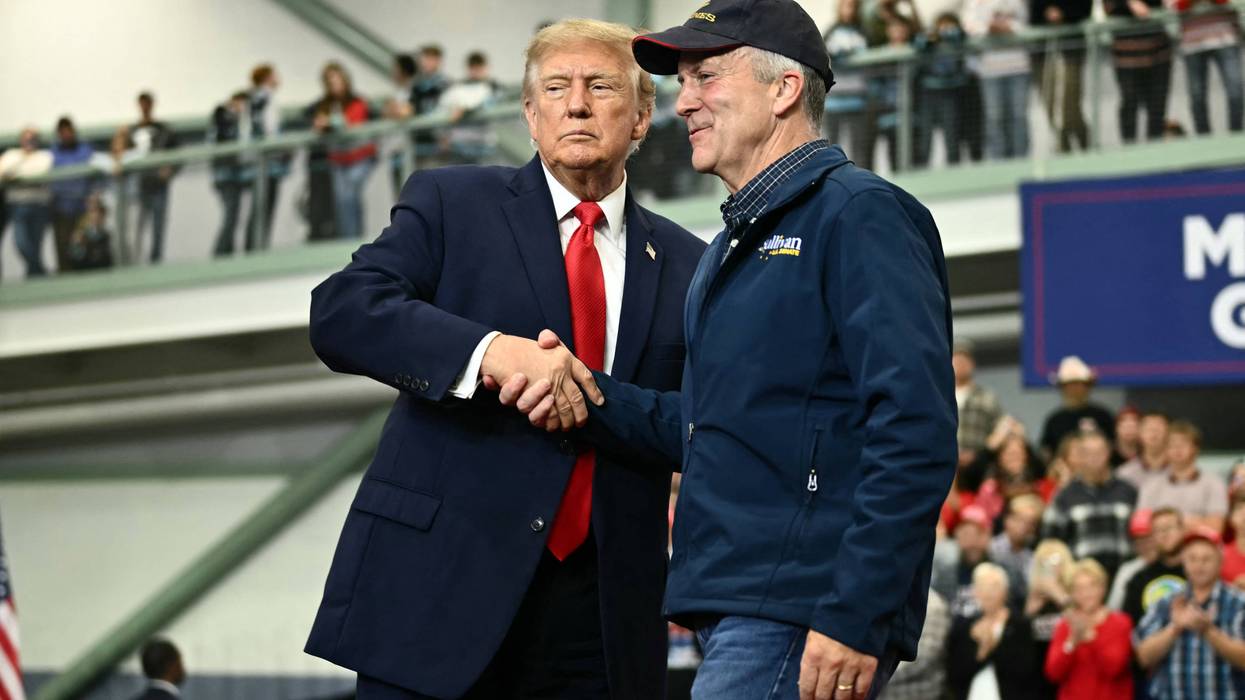
Trump-Ordered DOJ Lawsuit in Alaska Seen as First Salvo in GOP Effort to Undermine Midterm Elections
Filed just 12 days before Election Day and after voting had begun, the lawsuit claims voters intending to support the Republican incumbent may be confused into voting for a different person on the ballot, a retired teacher who is also named Dan Sullivan.
The second Sullivan, a registered Republican from Petersburg, Alaska, was initially kicked off the ballot over fears that he was trying to fool voters. But that decision was later reversed by a judge, whose decision was upheld by the Alaska Supreme Court.
Alaska's ballots distinguish between the two Dans Sullivan, with the senator listed as "registered Republican" and "incumbent," and the other listed without any identifiers.
"It's clearly marked which one is the GOP candidate and which one is just a guy," argued journalist Dave Weigel.
In its lawsuit, the DOJ claimed that the "sole purpose" of the other Sullivan's candidacy is to sow confusion and "benefit the Peltola campaign by reducing the number of votes for Sen. Sullivan."
As evidence of this, it points to Sullivan's statements that he voted for Democrats in the last three election cycles and supported Peltola's candidacy for the US House of Representatives, though it does not allege he directly coordinated with the Democratic candidate.
Instead of seeking to boot the alleged Sullivan impostor from the ballot again, the DOJ is pursuing a different remedy: It wants Alaska to delay the certification of a Peltola victory if giving all of the other Sullivan's votes to the senator would change the election outcome. Certification would remain on hold while investigators determine whether those voters meant to support the incumbent.
The latest polling average from FiftyPlusOne shows Peltola leading Sen. Sullivan by a margin of roughly two percentage points. The other Sullivan is currently polling at about 4%.
However, Alaska's ranked-choice voting system makes it considerably less likely that name-based confusion would actually cost Sen. Sullivan the election. Voters who mistakenly selected the wrong Sullivan as their first choice could still support the incumbent by ranking him second, reducing the potential for the two candidates to split the GOP vote.
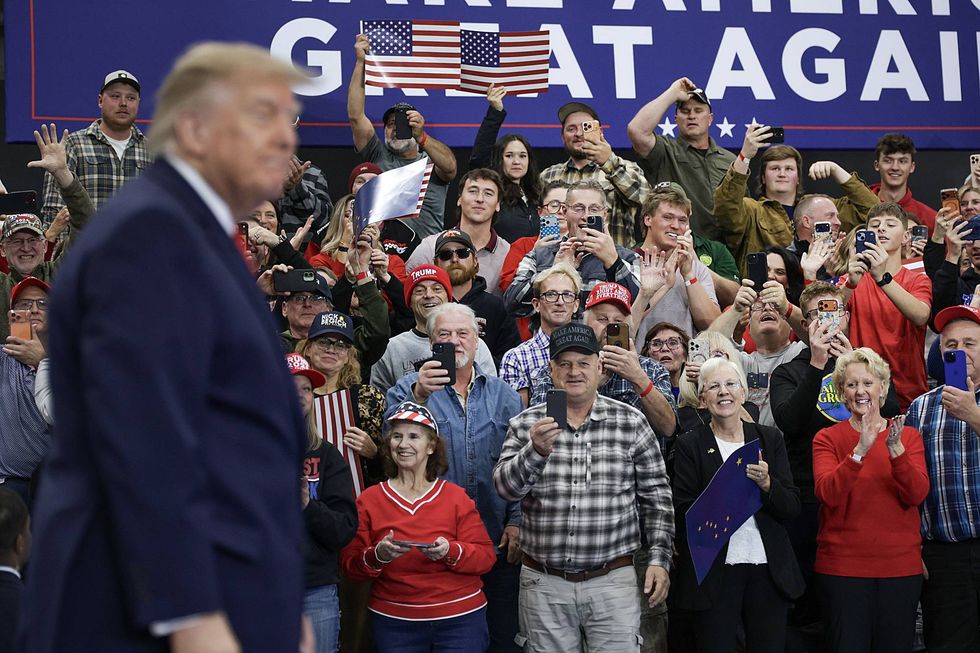 US President Donald Trump arrives for a campaign rally at the Menard Memorial Sports Center on October 13, 2026, in Wasilla, Alaska. (Photo by Alex Wong/Getty Images)
University of Notre Dame law professor Derek Muller said the DOJ's legal argument to suspend the certification of Alaska's election was "one of the worst ones I’ve ever seen."
In a blog post, he said the DOJ's request to probe whether voters accidentally cast their ballots for the wrong Sullivan was "essentially impossible" to fulfill because "the best evidence that voters preferred one Sullivan over another is how they marked their ballots."
"Some, in a panic, might react that the department is trying to deny certification of an election in a state," he said. "Of course that’s what the department is trying to do. But the legal claim is so absurdly thin, there’s essentially no likelihood of success."
Though the Alaska lawsuit is the first direct request to block an election result in 2026, Alaska is not the first state where Blanche's DOJ has filed an eleventh-hour lawsuit that critics argue is meant to interfere with election results.
The department sued California earlier this month, seeking to have the state exclude the ballots of around 20,000 voters it claimed were noncitizens based on a database known to be riddled with errors.
Election experts have pushed back on Blanche's assertion that the DOJ can intervene in states' election certification processes, even in what he described as a "doomsday scenario," since the US Constitution explicitly grants the power to run elections to states.
In stark contrast to previous US attorneys general, who have stressed their legal independence, Blanche said plainly earlier this week, "I work for President Trump."
Asked about the Alaska lawsuit on Friday, Trump told reporters directly, "I'm the one that said do it."
With Republicans projected to suffer heavy losses in the House and Senate, DOJ lawsuits represent one of several ways Trump administration officials have suggested they may interfere with elections.
Blanche and Homeland Security Secretary Markwayne Mullin have floated the idea of dispatching armed agents to polling places in violation of federal law. Trump has raised the possibility of seizing voting machines, and he has ordered the US Postal Service to block mail ballots from being delivered in some states, an effort that has been halted in court.
Devan Barber, executive director of the Democratic Senatorial Campaign Committee, told The Associated Press that the Alaska lawsuit was yet another form of meddling.
"Donald Trump knows that Dan Sullivan is going to lose the election," Barber said, "so now his Department of Justice is filing a sham lawsuit to overturn the will of Alaska voters and steal an election when he loses."