
SUBSCRIBE TO OUR FREE NEWSLETTER
Daily news & progressive opinion—funded by the people, not the corporations—delivered straight to your inbox.
5
#000000
#FFFFFF
To donate by check, phone, or other method, see our More Ways to Give page.


Daily news & progressive opinion—funded by the people, not the corporations—delivered straight to your inbox.
Mass voter challenges threaten voters, they swamp overburdened election officials with unnecessary work, and they fuel mistrust in our elections.
In March 2025, two members of the Department of Government Efficiency team communicated with a political advocacy group that was seeking to “find evidence of voter fraud and to overturn election results in certain States.” The group was trying to match Social Security records with copies of voter files that it had acquired. One of the DOGE team members even signed a “voter data agreement” with the group. While it’s still unclear if DOGE members shared any personal Social Security data, the revelation raised a scary prospect: that the federal government might collaborate with election deniers looking to block American voters from the ballot box.
Most states have laws that allow voters to challenge other voters’ eligibility. Baseless mass challenges to hundreds or thousands of voters at a time are a growing problem. They threaten voters. They swamp overburdened election officials with unnecessary work. And they fuel mistrust in our elections.
As my colleague Andrew Garber lays out in a new report, the rise of the election denier movement and technological advances have come together to make mass voter challenges a persistent problem in recent elections. Our research found that at least 185,232 voter challenges were filed in 2024 alone, and that follows hundreds of thousands of challenges filed in the previous two election cycles.
Mass challenges by private citizens add little value because of the work by dedicated and professional election officials to keep the voter rolls clean. In contrast, these challenges rely on shoddy data-matching techniques often designed to confirm wild conspiracy theories.
The reality is that the president has no more power to run our elections than the activists bringing these challenges. So the only way their efforts to undermine our elections will succeed is if voters lose faith in the whole enterprise and stay home this fall.
Until recently, these challengers have been outsider activists. The idea they may now have the support of the federal government sends chills.
The Trump administration’s efforts to support baseless voter challenges go beyond a couple of stooges at DOGE. As we’ve been tracking for months, the Department of Justice (DOJ) has been pressuring states to cough up their voters’ confidential personal data. Like all the Trump administration’s election interference efforts, this pressure campaign has mostly fallen flat, with courts consistently blocking the requests. But 16 states were all too happy to hand over their voters’ data. And when they did, the DOJ asked them to sign a data security agreement that contained an ominous loophole in the protocols for private contractors with whom the department might share voter data. Meanwhile, one of the primary perpetrators of mass challenges in recent years, Rick Richards, creator of a mass challenge software called EagleAI, reportedly met with the DOJ in 2023 to demonstrate the tool. “They like it,” he claimed.
For these reasons and more, Garber predicts that “challenges will continue to be an integral strategy in the playbook to undermine the democratic process” in this year’s elections and beyond.
Promisingly, the Brennan Center’s research also reveals that thanks to the tireless efforts of election workers and federal legal protections, the vast majority of mass challenges do not lead to inappropriate purges of voters from the rolls.
But even small rates of disenfranchisement are a concern, and challenges can confuse or intimidate voters even when they don’t formally block them from voting. And the harms of mass challenges extend much further.
For one thing, they create tremendous burdens on election officials during a time when they should be preparing for the daunting task of running elections. In 2022, in Gwinnett County, Georgia, it took between 5 -10 experienced elections staff working “all day, every day, six days a week” to evaluate the 37,000 challenges filed by just one organization, VoterGA. In the end, not a single ineligible voter was removed as a result of the challenge.
You may be asking yourself: If these mass challenges do nothing to help election officials and only make their jobs more difficult, why do our laws allow them? There must be some good reason why we let Americans challenge their neighbors’ right to vote. Well, no, not really. The answer, as is so often the case when it comes to restrictive voting laws, is racism.
In a separate publication released Tuesday, my colleague Justin Lam lays out the racially discriminatory history of voter challenge laws. They were one of many devices states used to undermine the promise of the 15th Amendment and continue to deny Black people the right to vote. Some of these tools, such as poll taxes and literacy tests, were outlawed in the 1960s. Others, such as felony disenfranchisement and voter challenge laws, survived, perhaps because they were not so closely associated with Jim Crow. But history makes the association clear. As just one example, in 1946, Georgia gubernatorial candidate Eugene Talmadge distributed challenge forms to his supporters and urged them to “disqualify and mark off the voters’ list three-fourths of the Negro vote in this state.” Lam explains that these laws have also been used to successfully suppress the votes of Native, Latino, and Asian American voters.
Modern challenges look a little different. They are often more noteworthy for how incredibly wide a net they cast. Activists challenge everyone to create the illusion of issues with voter rolls. Today’s challengers often seem less concerned with targeting a particular group than they are with advancing conspiracy theories. In Allegheny County, Pennsylvania, a Republican member of the board of elections griped, “I can’t tell you how many hours of my life I’ve wasted trying to debunk” the false narratives of voter challengers.
That official’s complaint hints at the final harm of mass challenges and their true purpose: undermining public faith in elections. Indeed, it makes sense that the Trump administration might be looking to partner with mass challengers. The administration’s election interference campaign has the same goal. The reality is that the president has no more power to run our elections than the activists bringing these challenges. So the only way their efforts to undermine our elections will succeed is if voters lose faith in the whole enterprise and stay home this fall.
Garber’s report ends with a series of policy recommendations for ending mass challenges. We hope lawmakers take them up. But, as with so many other threats to our democracy, perhaps the most important response will come from voters. Check your registration and make a plan to vote. Read and respond to election mail sent by your local officials. Cast your ballot as early as possible. Consider all the options in your state and consider returning your ballot in person or via drop box if you can. Encourage your friends and family to do the same. The more we invest in our democracy, the harder it will be to undermine it.
“The lobbying that happens on Capitol Hill should be reported if it’s a foreign country, whether it’s Great Britain, Australia, Turkey, Qatar, or Israel,” said the Kentucky Republican.
As the Israel lobby attempts to end his political career, the Republican Rep. Thomas Massie has introduced a bill that would require lobbyists working for the American Israel Public Affairs Committee, commonly known as AIPAC, to register as foreign agents.
The bill, known as the Americans Insist on Political Agent Clarity (AIPAC) Act, would amend the Foreign Agents Registration Act of 1938 (FARA), which requires those working to influence government policy on behalf of a foreign power to register with the US Department of Justice (DOJ).
Most lobbyists and donors for AIPAC are American, leading the DOJ to classify it as a domestic, rather than foreign, lobbying group. But critics have argued that it engages in extensive coordination with the Israeli government and that groups lobbying for the interests of other countries are treated with stricter scrutiny.
“Today, I introduced a bill called the AIPAC Act… which would make AIPAC subject to the Foreign Agents Registration Act," Massie (R-Ky.) announced on Redacted News Thursday. "For some reason, they’re immune right now, and I think not just the money that’s spent in politics, but the lobbying that happens on Capitol Hill should be reported if it’s a foreign country. Whether it's Great Britain, Australia, Turkey, Qatar, or Israel, it needs to be reported."
Massie has established himself as the leading Republican critic of President Donald Trump in Congress, agitating for transparency from the DOJ on the Jeffrey Epstein files and stridently opposing increased military spending and the president's aggressive overseas wars, including in Iran.
He has also distinguished himself as one of the few Republicans willing to publicly criticize Israel and call for the US to "immediately terminate" military aid in response to its killing of tens of thousands of women and children in Gaza.
His debut of the AIPAC Act comes as he's in the fight of his political life in Kentucky, where pro-Israel lobbying groups have unleashed a flood of money to unseat him in next week's Republican primary.
The United Democracy Project, an AIPAC-affiliated super PAC, has spent about $2.6 million, according to Axios, while the Republican Jewish Coalition has dropped $4 million to support Massie’s opponent, retired Navy SEAL Ed Gallrein. The Christian Zionist group Christians United For Israel has dropped six figures on a campaign to blanket “every available billboard," it said, in Kentucky’s 4th congressional district with anti-Massie messaging.
Trump has also thrown his support behind Gallrein, and two of his senior political advisers, Chris LaCivita and Tony Fabrizio, have raised more than $2 million for their MAGA KY PAC from a trio of top pro-Israel billionaires—hedge fund manager Paul Singer, investor John Paulson, and a group linked to casino mogul Miriam Adelson, according to Axios.
In all, the GOP primary in KY-04 has become the most expensive House primary on record in US history, with more than $25 million spent on advertising in total, surpassing the 2024 Democratic primary in New York's 16th district, where AIPAC and its allies unleashed another torrent of cash and successfully felled the progressive Rep. Jamal Bowman (D).
"[The money] didn't come from regular people. It's come from billionaires, and 95% of it... has come from the Israeli lobby," Massie said of the funds spent to oust him during an appearance on Tucker Carlson's podcast last week. "Their position is more war, it's more strife, it's more bombs, it's more foreign aid, and those are the things that I've been voting against."
Right now, the ad blitz—which has portrayed Massie as disloyal to MAGA—has put the incumbent in a position to lose his race. A Quantus Insights poll earlier this week showed him trailing with 43% of likely voters to Gallrein's 48%.
Massie said: "The real reason that this race is a serious race, and I may lose, is because a foreign lobby has fully funded to the extent that they've never done in any Republican race ever before."
"It seems one of the ways this effort will take shape is, as with DHS's deportation efforts, to racially profile voters and try to invalidate their votes by pretending they're not citizens," said one critic.
President Donald Trump is using the US Department of Homeland Security to quietly assert federal control over elections in at least eight states, according to an investigation out Monday from Reuters.
Under the US Constitution, elections are run by states, rather than the federal government. But under Trump, who has called on Republicans to "nationalize" voting in Democratic strongholds, DHS—which typically handles issues of counterterrorism, immigration, and national security—along with other executive agencies, has launched what Reuters described as "a wider-than-known federal push into the machinery and conduct of US elections."
"Trump administration officials and investigators have fanned out across the country, seeking confidential records, pressing for access to voting equipment, and reexamining voter-fraud cases that courts and bipartisan reviews have already rejected," the report continued.
Branko Marcetic, a writer for Jacobin, said that the revelations showed that "Trump's push to steal future elections by taking federal control of them is quietly gaining steam."
In Ohio, DHS agents have called local boards of elections in at least six counties, requesting immediate access to data about specific voters, including registration forms, voting histories, and other confidential data, citing unspecified "investigations." Though Ohio leans red, all of the requests were made in counties that either had competitive elections coming up in 2026 or were solidly Democratic.
The Nevada secretary of state received a request from the FBI for voter information as part of an investigation into the 2020 election, which Trump has continued to claim was marred by fraud that cost him a victory despite evidence to the contrary. He never fulfilled the request because those records did not exist.
In Arizona, the state senate complied with a similar subpoena for records related to its report on an audit of the 2020 election, while DHS requested information related to the state attorney general's fraud probe.
In Colorado, Jeff Small, a lobbyist with connections to the White House who claimed to be working on behalf of Stephen Miller, the president's homeland security adviser, called 10 county clerks to request access to Dominion voting machines, which were at the center of Trump's fraud conspiracy theories.
Later, some of those clerks received the same request from a person who identified themselves as a senior official at the Cybersecurity and Infrastructure Security Agency (CISA), which oversees election security. The clerks said they did not comply with these requests, which some said would violate state law.
These efforts follow a high-profile January raid by the FBI on an election facility in Fulton County, Georgia, to seize hundreds of boxes of ballots, tabulator tapes, and voter roll information from the 2020 election. Trump has directly influenced the investigation, speaking with FBI agents about it the day after dispatching Tulsi Gabbard, the director of national intelligence, to take part.
According to Reuters, election officials in many other states are bracing for similar investigations and raids into their operations.
“There is an intimidation factor,” said Amy Burgans, the Republican clerk and treasurer of Douglas County, Nevada. “It puts the question in the back of your mind... Who’s going to be next?”
As Republican chances of prevailing in the 2026 midterms appear grim, Trump has suggested on multiple occasions that elections be "canceled," something he has no power to do.
He has thus far failed in his efforts to pass the SAVE America Act through the Senate, which would require every voter to reregister and provide documents proving their citizenship, a measure experts say would likely disenfranchise millions of eligible voters.
But Reuters' investigation has revealed efforts to achieve similar ends by contacting states to compare their voter rolls with federal citizenship databases.
This happened in Missouri, where Republican Secretary of State Denny Hoskins shared publicly available voter roll data with federal authorities, who handed back lists of potential noncitizens flagged for removal.
Clerks in several of Missouri's counties said that most of the individuals flagged in the federal screenings were US citizens who'd been naturalized.
Clinton Jenkins, the Republican clerk for Miller County, said none of the names of people identified by the review had voted illegally. Rather, he suggested that federal authorities were targeting people who seemed to be of Hispanic and Latino heritage.
"It looks like if you have too many vowels in your name, you show up on a list,” Jenkins said.
"They are doing this through DHS, which it's clear by now this administration views as its own personal police force," Marcetic said.
"It seems one of the ways this effort will take shape is, as with DHS's deportation efforts, to racially profile voters and try to invalidate their votes by pretending they're not citizens," he added.
“This is a plot to interfere with the will of voters and undermine both the rule of law and public confidence in our elections," said Sen. Mark Warner.
A group of right-wing activists is crafting an executive order that would let President Donald Trump unilaterally ban mail-in ballots and voting machines ahead of the 2026 midterm elections.
The Washington Post reported on Thursday that the order being drafted by Trump allies would give him "extraordinary power over voting," even though the US Constitution explicitly gives individual states the powers to run their own elections.
An advocate for the order, Florida attorney Peter Ticktin, acknowledged in an interview with the Post that the Constitution does not give the president any role in shaping elections, but he said Trump needed to act to prevent China from supposedly interfering with American elections.
"Under the Constitution, it’s the legislatures and states that really control how a state conducts its elections, and the president doesn’t have any power to do that,” Ticktin said. "But here we have a situation where the president is aware that there are foreign interests that are interfering in our election processes. That causes a national emergency where the president has to be able to deal with it."
The activists drafting the emergency order said that they are working in coordination with the White House, although the extent of any cooperation isn't clear.
However, the Post pointed to some evidence that the White House really is on board with such a strategy, such as the Trump administration's efforts to investigate his 2020 election loss to former President Joe Biden, which the president has long baselessly claimed was due to foreign interference from a number of nations, including China and Venezuela.
As the Post noted, "a 2021 intelligence review concluded that China considered efforts to influence the election but did not go through with them."
Additionally, Trump has publicly stated numerous times that he wants to completely do away with mail-in ballots and voting machines, both of which he has baselessly claimed are riddled with fraud.
Sen. Mark Warner (D-Va.), the ranking member of the Senate Intelligence Committee, said that the draft order was simply an attempt by the president's allies to block democratic accountability in future elections.
"We've been raising the alarm for weeks about President Trump’s attacks on our elections and now we’re seeing reports that outline how they may be planning to do it,” Warner told the Post. “This is a plot to interfere with the will of voters and undermine both the rule of law and public confidence in our elections."
Government watchdog Citizens for Responsibility and Ethics in Washington (CREW) said that the drafted order was plainly unconstitutional and would fail in court.
"The Constitution gives states power over election law with oversight from Congress," CREW wrote in a social media post. "Notice who's missing? The president. Trump may try to cook up a sham national emergency to try to seize control of elections but it won't stand up to scrutiny."
MS NOW national security contributor Marc Polymeropoulos called the draft order "batshit authoritarianism" and cautioned that "this crazy shit is possible as Trump knows Congress is all but lost at this point in a free election."
"To save himself," Polymeropoulos added, "anything is possible."
Democratic Illinois Gov. JB Pritzker pointed to the Post report and warned, "Donald Trump’s plan to steal the 2026 midterm elections is already underway."
Rep. Rosa De Lauro (D-Conn.) accused Trump of "setting the stage to steal the midterm elections and set fire to our democracy," while vowing that Democrats would "fight for our democracy and safeguard the right to vote."
"But for Mr. Trump's election and imminent return to the presidency, the office assessed that the admissible evidence was sufficient to obtain and sustain a conviction at trial," the report states.
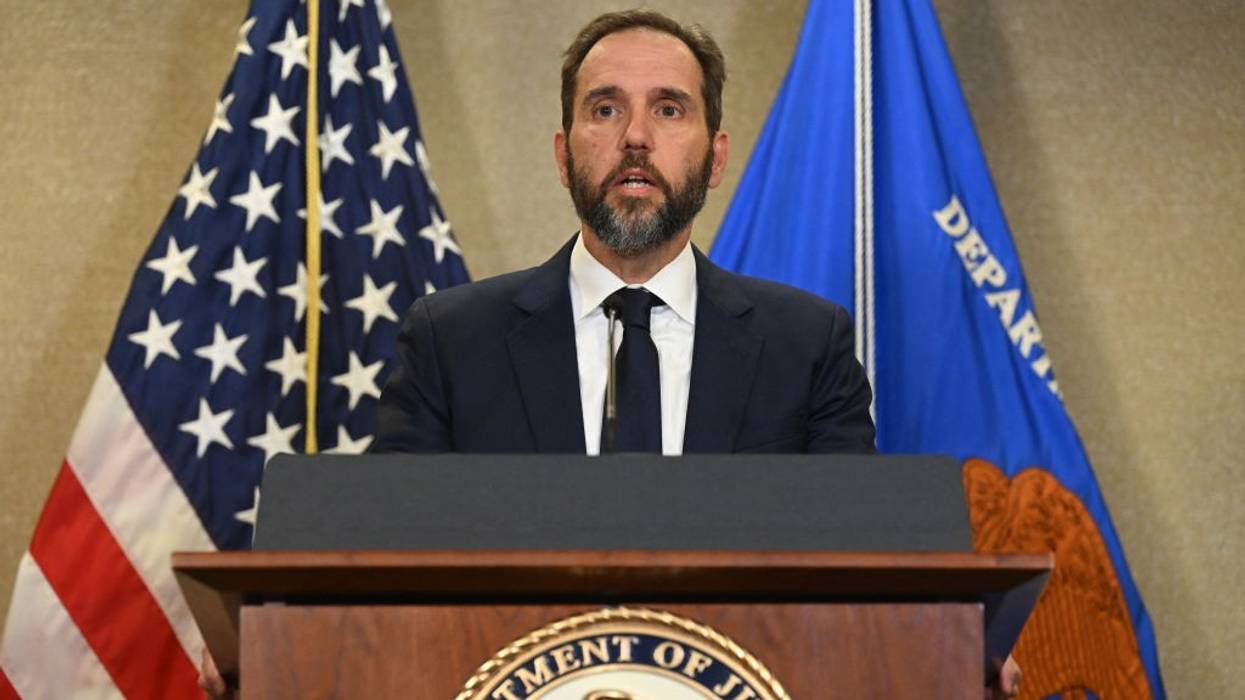
The special counsel who investigated and charged Donald Trump over his attempts to subvert the 2020 election said in a final report released by the U.S. Justice Department early Tuesday that the former president would have been convicted for "a series of criminal efforts to retain power" had he not won another White House term in November.
"But for Mr. Trump's election and imminent return to the presidency, the office assessed that the admissible evidence was sufficient to obtain and sustain a conviction at trial," wrote Jack Smith, who resigned from the Justice Department late last week ahead of Inauguration Day.
Smith pointed to the Justice Department's view that "the Constitution prohibits the continued indictment and prosecution of a president," a position he said is "categorical and does not turn on the gravity of the crimes charged, the strength of the government's proof, or the merits of the prosecution, which the office stands fully behind."
The report, which Trump's legal team sought to bury, is the first of two volumes that Smith's team produced following the completion of its investigations into the former president's unlawful election interference and hoarding of classified documents. Smith dropped the two cases shortly after Trump's victory in the 2024 election.
According to the Justice Department, Smith has urged that the volume on the classified documents probe not be released to the public while the case against Trump's former co-defendants is still pending.
"Trump worked with other people to achieve a common plan: to overturn the election results and perpetuate himself in office."
In the newly released report, Smith detailed how Trump and his allies tried to "induce state officials to ignore true vote counts," manufactured "fraudulent slates of presidential electors in seven states that he had lost," directed "an angry mob to the United States Capitol to obstruct the congressional certification of the presidential election," and leveraged "rioters' violence to further delay it."
"In service of these efforts, Mr. Trump worked with other people to achieve a common plan: to overturn the election results and perpetuate himself in office," the report added.
Trump responded furiously to the report's release, ranting on social media that "Deranged Jack Smith was unable to successfully prosecute the Political Opponent of his 'boss,' Crooked Joe Biden, so he ends up writing yet another 'Report' based on information that the Unselect Committee of Political Hacks and Thugs ILLEGALLY DESTROYED AND DELETED, because it showed how totally innocent I was, and how completely guilty Nancy Pelosi, and others, were."
In his introduction to the report, Smith rejected as "laughable" Trump's claim that the investigations were politically motivated or influenced in any way by the Biden administration.
"While we were not able to bring the cases we charged to trial, I believe the fact that our team stood up for the rule of law matters. I believe the example our team set for others to fight for justice without regard for the personal costs matters," Smith wrote. "The facts, as we uncovered them in our investigation and as set forth in my report, matter. Experienced prosecutors know that you cannot control outcomes, you can only do your job the right way for the right reasons. I conclude our work confident that we have done so, and that we have met fully our obligations to the department and to our country."
"Delay is the name of the game here," said one legal analyst. "If they can just stop the clock until January 20th, then... the attorney general will be a Trump appointee and they can kill the whole thing."
Aileen Cannon, a Trump-appointed federal judge in Florida, ordered the Justice Department on Tuesday to temporarily withhold from the American public special counsel Jack Smith's final report on his investigations into the president-elect, despite questions about her authority to do so.
Cannon's order came in response to a Monday request by President-elect Donald Trump's longtime valet Walt Nauta and Mar-a-Lago property manager Carlos De Oliveira, who are facing charges in a classified documents case brought by Smith. Trump was also charged in the classified documents probe, but Smith dropped the case against the Republican leader after he won the 2024 presidential election.
In their filing on Monday, Nauta and De Oliveira's attorneys called on Cannon to bar the release of Smith's final report, even though the classified documents case is currently before the 11th Circuit Court of Appeals in Atlanta—not Cannon's court. The Justice Department is appealing Cannon's decision last summer to dismiss the classified documents case as the agency pursues charges against Nauta and De Oliveira.
Cannon wrote in her order Tuesday that Attorney General Merrick Garland, Smith, and other Justice Department employees are enjoined from "releasing, sharing, or transmitting" Smith's final report or "any drafts of such report" outside the DOJ. The judge said her order would remain in effect until the 11th Circuit rules on Nauta and De Oliveira's motion to prohibit the release of Smith's report.
Barbara McQuade, a professor at the University of Michigan Law School, said in an appearance on MSNBC that she doesn't believe Cannon has "any jurisdiction" over decisions surrounding Smith's report.
"But delay is the name of the game here," she added. "If they can just stop the clock until January 20th, then... the attorney general will be a Trump appointee and they can kill the whole thing and say, 'There's no report to disclose.' So that's the goal here."
Speaking to reporters Tuesday just ahead of Cannon's order, Trump claimed he didn't "know" the Florida judge—despite appointing her—but praised her as "brilliant."
Trump on Judge Cannon who he appointed: I don't know the judge in Florida, but we had a brilliant judge in Florida.. her opinion was so brilliant that they dropped the appeal pic.twitter.com/rjzsNANHyu
— Acyn (@Acyn) January 7, 2025
Smith said in a filing earlier Tuesday that his office is still "working to finalize" the report on his investigations into Trump's hoarding of classified documents and efforts to subvert the 2020 presidential election. By law, special counsels are required to submit a final report to the attorney general, who has the authority to decide whether to make the findings available to the public.
Smith said in his filing that he would not transmit his report to Garland before 1:00 pm on Tuesday, and that the attorney general would not release the findings before the morning of January 10—if at all. It's unclear how Cannon's order will impact Smith's timeline.
Trump's lawyers have demanded that Garland withhold Smith's report entirely, claiming in a letter to the attorney general on Monday that making it public would "violate the Presidential Transition Act and the presidential immunity doctrine."
In their letter to Garland, Trump's attorneys—who have reviewed Smith's confidential report in recent days—revealed that the first volume of the document states that the president-elect "engaged in an unprecedented criminal effort" and was "the head of the criminal conspiracies" surrounding the 2020 election.
"This is his last chance to do something right," said one activist.
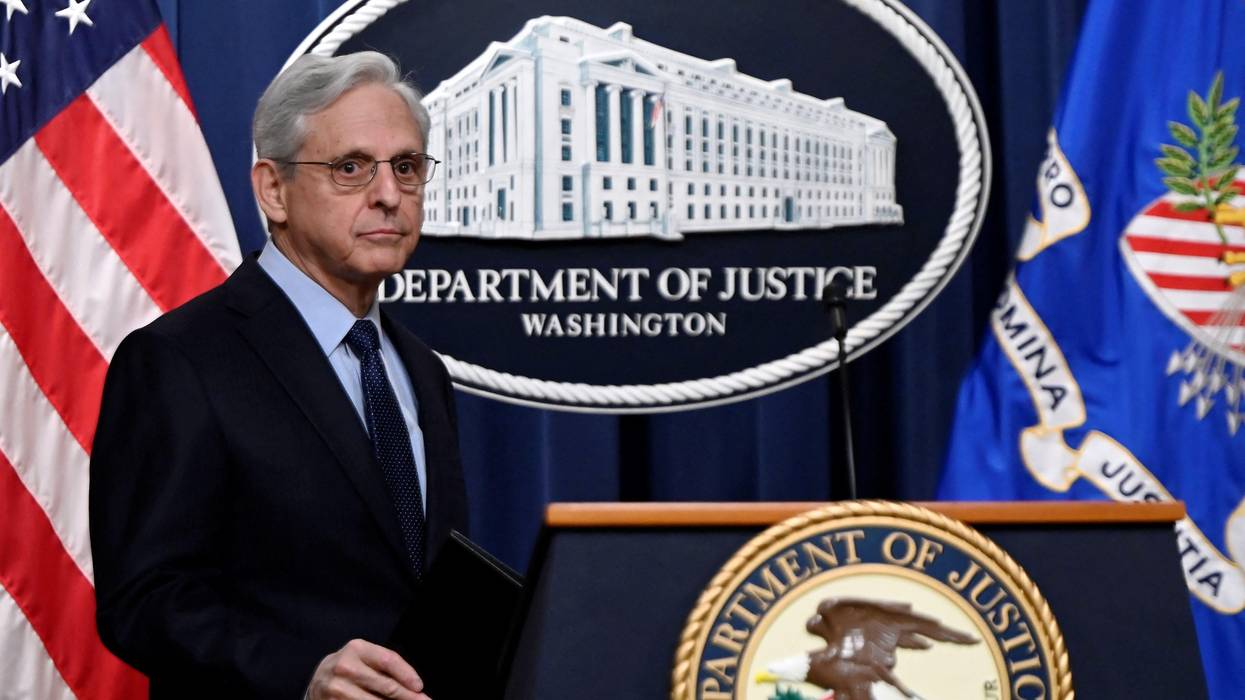
U.S. Attorney General Merrick Garland faced calls Monday to release special counsel Jack Smith's final report on his investigations into Donald Trump as quickly as possible after the president-elect's legal team demanded that the Justice Department withhold the findings from the public.
In an emailed letter to Garland—sent on the fourth anniversary of the January 6, 2021 attack on the U.S. Capitol that Trump incited—the president-elect's attorneys demanded that Smith "terminate all efforts toward the preparation and release of this report," claiming its disclosure would "violate the Presidential Transition Act and the presidential immunity doctrine."
"If Smith is not removed, then the handling of his report should be deferred to President Trump's incoming attorney general, consistent with the expressed will of the people," wrote Trump's lawyers, who were permitted to review the two-volume report in recent days.
One of the authors of the letter to Garland, Todd Blanche, is Trump's nominee to serve as deputy attorney general in the incoming administration.
The demand from Trump's lawyers intensified calls for Garland to make Smith's findings available to the public.
"Merrick Garland has exactly one more chance to show any smattering of spine—he has two weeks to release Jack Smith's report," wrote activist Jon Bauman, president of the Social Security Works PAC. "This is his last chance to do something right."
Smith was tasked with investigating Trump's unlawful hoarding of classified documents at his Mar-a-Lago estate and his efforts to subvert the 2020 presidential election. The special counsel dropped both federal cases shortly after Trump won the 2024 election, arguing that "the Constitution requires that this case be dismissed before the defendant is inaugurated."
But Smith stressed that the decision was "not based on the merits or strength of the case against the defendant."
Under federal regulations, special counsels are required to submit reports on their findings to the attorney general, who can decide whether to publicize the findings.
In addition to Trump's pressure campaign against Garland, two of the president-elect's former co-defendants in the classified documents case are pushing Trump-appointed U.S. District Judge Aileen Cannon to bar the Justice Department from releasing Smith's report.
Politico noted that it's not clear whether Cannon has the authority to grant that request.
"After she dismissed the case—ruling that Smith's appointment as special counsel was unconstitutional—the Justice Department appealed to the Atlanta-based 11th Circuit Court of Appeals," the outlet observed. "That court, not Cannon, currently has control of the case."
Smith said in a filing on Tuesday that his office is "working to finalize a two-volume confidential report to the attorney general explaining the special counsel's prosecution decisions."
"The attorney general will decide whether any portion of the report should be released to the public," the new filing continues. "The attorney general has not yet determined how to handle the report volume pertaining to [the classified documents case]... but the department can commit that the attorney general will not release that volume to the public, if he does at all, before Friday, January 10, 2025 at 10:00 am."
"Now let's return our attention to the ACTUAL person on trial," said one strategist.
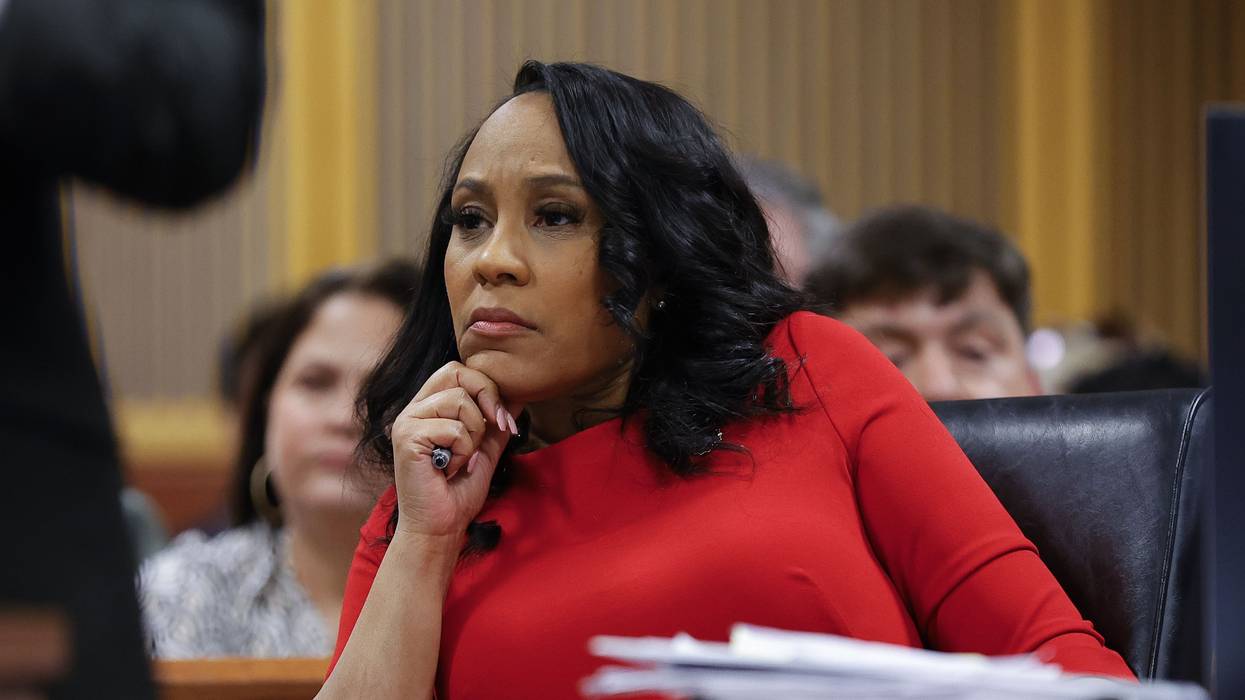
A superior court judge in Fulton County, Georgia on Friday ruled that lawyers for Donald Trump's co-defendants in the case regarding the former president's alleged election interference did not provide evidence that would have supported disqualifying the district attorney prosecuting the case.
Fulton County Superior Court Judge Scott McAfee ruled that the "allegations and evidence" against district attorney Fani Willis were "legally insufficient to support a finding of an actual conflict of interest."
Willis had been accused of "profiting personally from this prosecution" by a lawyer representing Michael Roman, a former opposition researcher for Trump who is accused of conspiring to overturn the 2020 election results in Georgia.
Roman's lawyers claimed Willis had engaged in "self-dealing" by hiring Nathan Wade, with whom she had previously had a romantic relationship, to manage the Trump case.
"You think I'm on trial," Willis said to Ashleigh Merchant, the lawyer representing Roman, at a February hearing. "These people are on trial for trying to steal an election."
Trump and 18 co-conspirators were indicted by Willis' office last August and accused of participating in a vast "criminal enterprise" when they tried to overturn the election results in Georgia. Trump faces 13 charges, including soliciting a public officer to break their oath and violating the state's Racketeering Influenced and Corrupt Organizations (RICO) Act. The state's investigation was sparked by a phone call on January 2, 2021 in which Trump asked Georgia Secretary of State Brad Raffensperger to help him "find 11,780 votes" that would swing the election results in his favor.
The allegation regarding Trump's conversation with Raffensperger "remains at the heart of the RICO charge here, and that must get in front of a jury as soon as possible," said legal analyst Norm Eisen of the Defend Democracy Project.
McAfee, a Republican appointee, on Friday said Willis had made a "lapse in judgement" by hiring Wade but that the case could proceed if either Willis or Wade leave the legal team.
Maya Wiley, president and CEO of the Leadership Conference on Civil and Human Rights, was among those who called for a prompt return to the prosecution at hand: that of the former president.
"Now let's return our attention to the ACTUAL person on trial," said Democratic strategist Christine Pelosi. "The disgraced, defeated former president who tried to steal an election!"
Eisen added that it is "time to turn the page on this distraction and get back to what this case is really about—the mountain of evidence against Donald Trump and his co-conspirators concerning one of the most serious alleged criminal conspiracies in American history."
One legal analyst said, "A president being immune to prosecution would fly in the face of our nation's core values."
A three-judge panel from the federal appeals court in Washington, D.C. on Tuesday unanimously ruled against former U.S. President Donald Trump's claims of immunity in a criminal case stemming from his efforts to overturn his 2020 loss.
"For the purpose of this criminal case, former President Trump has become citizen Trump, with all of the defenses of any other criminal defendant. But any executive immunity that may have protected him while he served as president no longer protects him against this prosecution," states the 57-page opinion.
The panel included one judge appointed by former GOP President George H.W. Bush and two appointed by Democratic President Joe Biden, who is seeking reelection this year. Trump is the Republican front-runner despite four ongoing criminal cases and arguments he is constitutionally disqualified from holding office again after engaging in insurrection on January 6, 2021.
Welcoming the development, the watchdog Citizens for Responsibility and Ethics in Washington declared: "Donald Trump is not above prosecution. The law and the Constitution apply to him just like they apply to every other American. This is a major victory for our democracy and the rule of law."
Lisa Gilbert, executive vice president of Public Citizen, said: "Yet another court has recognized that Trump's immunity arguments are absurd and held that he can be prosecuted for actions, undertaken while president, that enabled the January 6 insurrection. This decision puts yet another period at the end of the statement, 'No one is above the law.'"
People for the American Way President Svante Myrick also praised the decision, saying that "the judges on the D.C. Circuit court got it right: No president can swear to uphold the laws of the land and then enjoy immunity if he breaks them. The idea is absurd on its face and Donald Trump's claim of immunity is a desperate attempt to avoid accountability for his actions."
"But make no mistake; this ruling is likely to make Trump even more desperate, as he tries to escape criminal prosecution by any means—including winning reelection to the presidency so he can make this prosecution go away," he warned. "Now is the time to double down on our work to make sure Trump is held accountable for his crimes, and that he never occupies the Oval Office again."
The ruling aligns with the panel's skepticism during arguments last month. When one judge had challenged the limits of immunity by asking Trump's attorney whether a president could "order SEAL Team 6 to assassinate a political rival," the lawyer responded that "he would have to be and would speedily be impeached and convicted before the criminal prosecution."
The panel's decision comes after Judge Tanya Chutkan of the U.S. District Court for the District of Columbia—who rejected Trump's immunity claim in December—last week postponed his election interference trial, which had been scheduled for March. Trump is expected to appeal Tuesday's decision to the U.S. Supreme Court, whose right-wing supermajority includes three justices he appointed.
The mandate from the appellate court opinion denying Trump immunity "issues in six days on February 12," noted Los Angeles Times senior legal affairs columnist Harry Litman. "That's very quick and puts him in a box having to find a stay before then," from the full D.C. Circuit or the Supreme Court, or Chutkan can proceed with the trial.
The high court in December rejected a request from Special Counsel Jack Smith—who is overseeing Trump's two federal cases rather than the U.S. Justice Department because of the November election—that the justices skip over the appeals court to swiftly settle the immunity debate.
The delay sparked criticism of the D.C. Circuit that, as one legal journalist put it, "had a responsibility to Trump, the District Court, the Supreme Court, and the nation to rule expeditiously" on the immunity claims.
In a widely anticipated move, the judge overseeing former U.S. President Donald Trump's federal election interference case on Friday indefinitely postponed his March trial due to a pending decision from a higher court about the Republican front-runner's immunity claims.
Since Judge Tanya Chutkan of the U.S. District Court for the District of Columbia announced last August that the trial would begin March 4, Trump has argued that he is immune from criminal charges related to trying to overturn his 2020 loss to Democratic President Joe Biden, which culminated in the January 6, 2021 insurrection, because he was still in office at the time.
Chutkan, an appointee of former Democratic President Barack Obama, rejected the immunity argument in December. The U.S. Supreme Court—whose right-wing supermajority includes three Trump appointees and Justice Clarence Thomas, who wife was involved with the GOP effort to overturn the 2020 election—declined a request from Special Counsel Jack Smith to skip over the appeals court.
A panel from the Court of Appeals for the D.C. Circuit heard arguments for the case last month. While the trio—one judge appointed by former Republican President George H.W. Bush and two Biden appointees—appeared skeptical of Trump's argument, they have yet to issue a decision, which is widely expected to be appealed.
After Chutkan's move Friday, Law Dork's Chris Geidner pointed to his commentary from last week: "Sure, there are reasons why rulings—especially a ruling like this—takes time, but it's also a bit of bullshit. The D.C. Circuit had a responsibility to Trump, the District Court, the Supreme Court, and the nation to rule expeditiously. It has failed to do so."
Politico's Kyle Cheney reported that "in a lightly attended proceeding Friday... Chutkan didn't explicitly mention Trump's case. But she made clear that she's keeping her calendar flexible in the event she is able to reschedule" the election interference trial.
Trump faces 91 felony charges from four ongoing cases: one in New York, another in Georgia, and two at the federal level, both overseen by Smith due to the presidential election. He is also involved in various legal battles over whether he is allowed to be on state ballots after engaging in insurrection—an issue the Supreme Court is set to take up next week.
As The Washington Post highlighted Friday:
The delay in the D.C. case makes it increasingly likely that the first of Trump's four criminal trials could be held this spring in Manhattan on New York state charges of business fraud in connection with hush money payments during the 2016 election. That trial has nominally been set for March 25, but the court in that case has signaled deference to Trump's federal election subversion case. New York Supreme Court Justice Juan Merchan has scheduled a pretrial hearing in two weeks—Februray 15—and is expected to decide after that if the trial will go forward as planned.
The trial for the other federal case, which focuses on classified documents and is overseen by a Trump appointee in Florida, is scheduled for May but could be pushed back. A date has not been set for the Georgia case, which is also about 2020 election interference.
Despite his legal trouble, Trump is leading the dwindling GOP field of presidential candidates, with recent wins in the Iowa caucuses and New Hampshire primary.