

SUBSCRIBE TO OUR FREE NEWSLETTER
Daily news & progressive opinion—funded by the people, not the corporations—delivered straight to your inbox.
5
#000000
#FFFFFF
To donate by check, phone, or other method, see our More Ways to Give page.
Daily news & progressive opinion—funded by the people, not the corporations—delivered straight to your inbox.
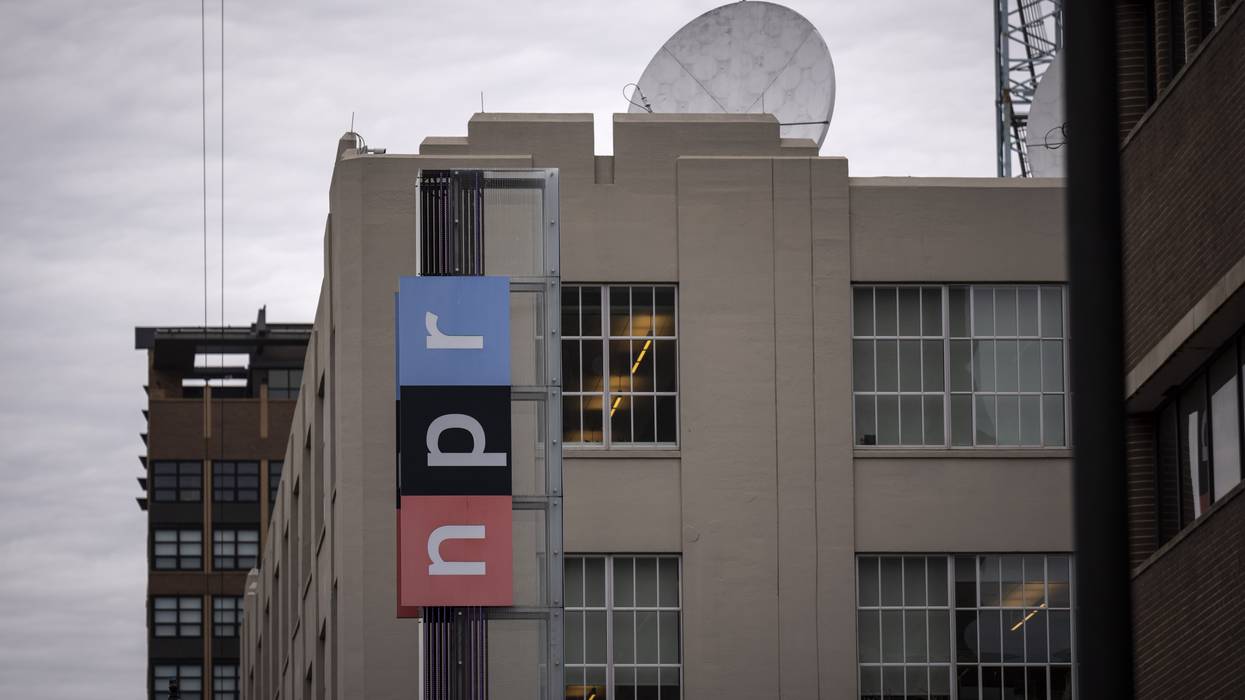
There is so much that National Public Radio could do to make itself better and raise the expectations of its listening audience.
The reasons Congress created NPR, or National Public Radio, under the Nixon administration were to fill the yawning gaps of commercial radio in local, national, and international news coverage and to give voice to the people without the censorship that comes from advertisers. It was to be publicly funded by taxpayers. Almost 55 years later, NPR is now funded heavily by large corporations. NPR’s local affiliates solicit local business advertisements and grants from local corporations. President Donald Trump has cut out NPR’s small federal subsidy, further increasing its dependence on commercial funding.
Resolution One: Apart from excellent features around the country and the world, NPR should give voice to what civic groups are doing to improve our country locally and nationally. NPR is heavy on entertainment and coverage of entertainers. It needs to fill some of its airtime with news about the bedrock civic community in America. The imbalance is serious from the national to the local. NPR anchors regularly ignore calls by civic leaders requesting discussions about this exclusion.
Resolution Two: NPR has featured many reports and interviews on race but needs far more focus on class. Class exploitation of the poor and working class by the rich and powerful corporate supremacists feeds racial discrimination. The euphemism used is “inequality,” but corporate-bred crime, fraud, and abuse affect all people indiscriminately, which often disproportionately harms minorities. A result of the gross imbalance of time devoted to race and not to class is that indiscriminate injustice is mostly ignored.
Over 60 million poor whites in our country, if they even bothered to listen to NPR, might ask, “What About Us?”
NPR often focuses on racial plights without going to the sources of race- (and class-) based harms from commercial greed. Redlining, exploitation of tenants, lower pay (average hourly wages for Black and Hispanic men are substantially lower than those of white men), substandard healthcare, rampant overcharging of the poor (recall the book The Poor Pay More: Consumer Practices of Low-Income Families by David Caplovitz), greater difficulty getting loans, and discrimination against upward mobility to corporate executive ranks are some examples of systemic commercialism fueling systemic racism.
NPR’s collateral benefit from this inattention is that business advertisers large and small love NPR and its affiliates. This is especially the case for corporations with bad records, which crave NPR’s asserted prestige. NPR should reject ads from disreputable or criminal corporations.
Resolution Three: Stop mimicking commercial radio. NPR’s three-minute news segments on the hour often don’t even match the mediocre quality of CBS Radio’s choice of topics. For example, why, in 2023, were tennis star Novak Djokovic’s visa problems in Australia at the top of NPR news day after day? As for commercials, NPR stretches the envelope, airing, with its affiliates, as many as 30 ads per hour! Imagine the audience irritation. How many times do we have to hear each hour, “NPR is supported by XYZ corporation”? NPR gives abundant repetitive ad time to the same few advertisers that one wonders whether they are assured of exclusivity vis-a-vis competitors. Moreover, NPR starts the evening program "Marketplace" with ads, which even the commercial networks do not do.
Your listeners want you to decongest your programming from ads. And some may want to know why you haven’t, given the decades you have largely given up on reversing the relative decline of congressional appropriations. You give ample time to loud right-wingers and right-wing causes. Why aren’t you gaining bipartisan support for more congressional funding?
Resolution Four: Compress the weather forecasts. Back in 1970-1971, Congress knew that commercial radio stations gave plenty of time to weather, traffic, sports, and music. That is still true. So why does WAMC in Albany, an NPR local affiliate, have such lengthy forecasts, some starting with the West Coast, with ludicrous repetition for adjacent areas? WAMC is above average, with full-time staff covering local and state governments and candidates for public office.
Resolution Five: NPR should re-evaluate its music policy. NPR’s affiliates take their weekends seriously, so much so that they take off right at 6:00 p.m. on Saturday and Sunday evenings. Let the listeners hear music for the rest of the time, as if the world stops then.
Also, musical intervals are often too long, inappropriate for their context, and foolishly interjected. NPR’s evening program Marketplace, anchored by jumping-jack Kai Ryssdal, illustrates these observations. Even while he is rapidly giving the stock market numbers, there is background music loud enough to be considered foreground.
Resolution Six: Reconsider the uniform formulaics shackling your reporters. They respond to the anchor’s inquiry with a zigzag between their sound bites and corroborating sound bites from consulting firms, think tanks, and academic commentators. This model has a tedious staccato ring to it, especially since the reporters often, by way of their introduction, repeat what the interviewees are going to say.
Resolution Seven: Correct or explain your major faux pas. NPR staff need tutorials on the constitutional authority of Congress. NPR needed to explain immediately to its listeners why, with all that staff in Washington, DC, it took about 90 minutes (or until about 3:30 pm) to start telling its affiliates about the January 6, 2021 violent assault on Congress. Commercial CNN and other commercial media started reporting no later than 2:00 pm that fateful day. “And that’s not the only time NPR has messed up,” said one reporter for WAMC (that annually pays NPR $1 million for NPR programming).
Resolution Eight: Give your public editor, Kelly McBride, a regular public time slot to discuss her insights, presently communicated mostly internally, and to address serious feedback from your listeners about NPR’s broadcasting flaws. For example, NPR has broadcast Trump’s soundbite blatant lies without pointing out that they are false. The New York Times and Washington Post frequently advise their readers that such statements by Trump are false. (Local affiliates invite political opinions, personal development, and "how to" questions on related shows).
Ms. McBride could share the program with NPR’s CEO–a position more remote from the NPR public every decade. Hear ye, Katherine Maher! Among other benefits, you’ll get good suggestions for important, little-told news stories (see reportersalert.org).
Congress should have held long-needed public hearings in both the senate and the house of representatives to ascertain whether the original missions accorded to public radio and public broadcasting are being pursued both qualitatively and quantitatively and whether these networks and their affiliates have steadily strayed from those missions, due in part to the absence of congressional oversight and adequate mechanisms for public evaluations.
In that spirit, we issued a report in 2024 titled The Public’s Media by Michael Swerdlow, distributed to many reporters, editors, anchors, and top officials at NPR. The only response was from public editor Kelly McBride, who called it “a fair critique.” Even NPR’s resident intellectual, Scott Simon, has yet to share his thoughts.
There is so much more to learn about NPR and PBS about their relations with American Public Media, the BBC, and other connections to make them better and raise the expectations of their listening audience.
It’s easy to be complacent when you have so little competition from the commercial stations that for decades have debased our publicly owned airwaves, free of charge.
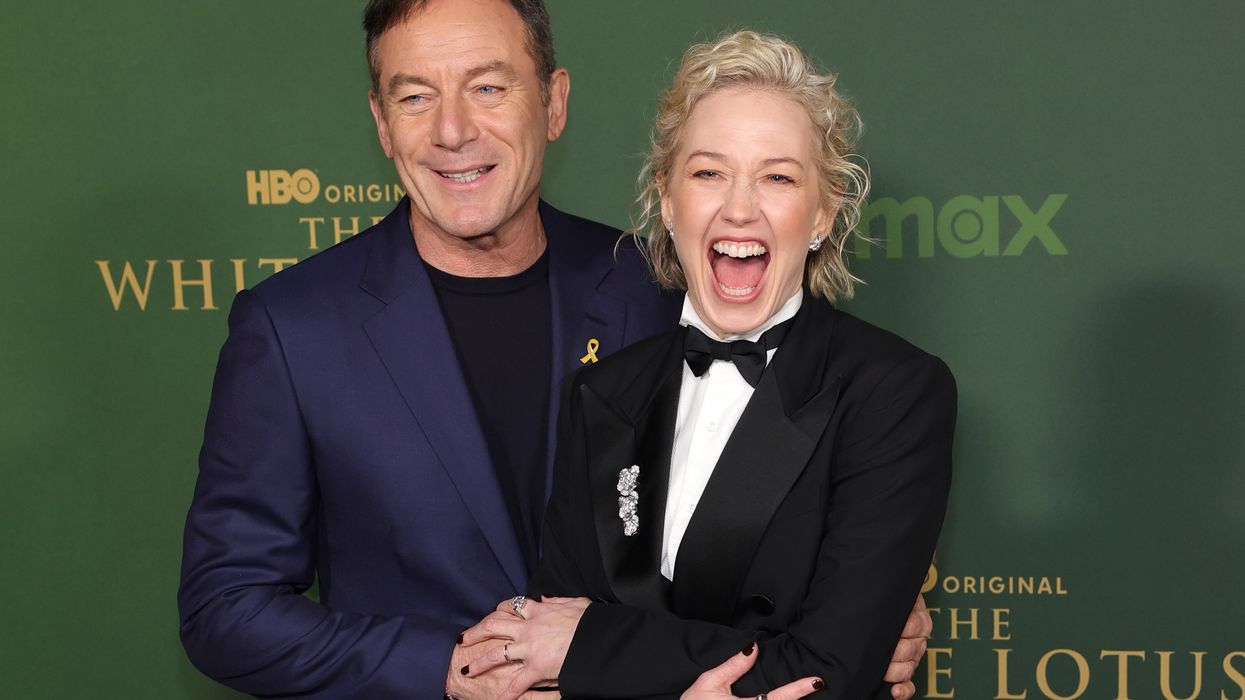
Are entertainments like these seriously acknowledging the deep-seated anxieties—and anger—that Americans are feeling today? Or is the entertainment industry just shamelessly exploiting those anxieties and that anger?
America’s richest have never been richer. Our over 800 billionaires ended 2024 worth a combined $6.72 trillion. Today, almost two months later, Americans make up 14 of the 15 richest people in the world. Just these 14 alone hold a combined net wealth of over $2.5 trillion.
One predictable consequence of numbers like these: Our world’s “super yacht” sector is doing spectacularly well, as the annual Miami International Boat Show this month convincingly confirmed. The star of this year’s show turned out to be a super yacht nearly the length of a football field.
Drivers on America’s highways and byways, meanwhile, are now needing to make room for the newly released latest luxury super car from Rolls-Royce. The new Black Badge Spectre can “sprint from zero to 60 mph in just 4.1 seconds.” The base price: a mere $490,000.
We need more, let’s all agree, than shows and movies that skewer the rich.
Amid all this excess, the fortunes—and power—of America’s most fortunate just keep mounting ever higher. At the expense of the rest of us. The world’s wealthiest billionaire, Elon Musk, has found an particularly lucrative new hobby: axing the jobs of federal employees working at agencies that protect the health and economic security of average Americans.
Researchers and analysts worldwide are, for their part, continuing to carefully track the ongoing—and historic—concentration of America’s wealth. But Hollywood, these days, may actually be tracking this concentration even closer.
The wealth, privileges, and formidable clout of our richest, Hollywood understands, are outraging average Americans. We’ve become a nation hungry for entertainment that expresses that outrage, and Hollywood has been all too happy to offer up that entertaining.
“The popularity of ‘eat the rich’ media—like Saltburn, White Lotus, Parasite, Triangle of Sadness, The Menu, Infinity Pool, The Fall of the House of Usher, and the Knives Out movies—has reached a fever pitch,” as the culture critic Kelsey Eisen puts it.
This “vilification of the rich,” adds Eisen, regularly includes “rich characters undergoing some terrible event—ranging from marital troubles to shipwrecks to even death—as some sort of comeuppance for being wealthy.”
“We do love watching the 1% get their comeuppance, don’t we?” agrees Adrian Lobb, another widely published and perceptive writer on contemporary culture.
Lobb last year interviewed Jason Isaacs, one of the stars of The White Lotus, an Emmy Award-winning comedy drama created for HBO. Isaacs told Lobb that he also “absolutely” loves the joy of the “comeuppance” moments swirling all around us.
“We watch these people who look like they’ve got everything,” Isaacs explains, “and console ourselves with the fact that they’re miserable as hell.”
The White Lotus features “sun, sea, sex” and super-rich secrets, notes the culture analyst Lobb, “with a side order of slaying.” Each season of the series showcases a set of gastronomically obsessed wealthy out to enjoy life at an exotic luxury resort, with no guest, quips writer and filmmaker Alyssa De Leo, “safe from being skewered—figuratively and literally.”
Another skewering of the “successful” takes place, De Leo observes, in the widely acclaimed film Triangle of Sadness, the story of an ultra-wealthy cruise ship that sinks and leaves the survivors “stranded on a desert island” with “the upper-class guests lacking any resources or knowledge of how to survive.”
Still another popular entry in the “comeuppance” genre, the thriller You’re Next, has a wealthy family celebrating an anniversary in a country mansion that masked assailants suddenly besiege. The assailants turn out to be hired guns that some members of the family had retained to ensure and hasten the inheritances they saw as their due.
And atop the genre’s most-watched list sits Squid Game, “one of Netflix’s most important and impactful television shows ever.” This “too-close-for-comfort dystopian thriller,” the Observer’s Brandon Katz celebrates, “cleverly spins socioeconomic inequality into thriller life-or-death games.”
Are entertainments like these seriously acknowledging the deep-seated anxieties—and anger—that Americans are feeling today? Or is the entertainment industry just shamelessly exploiting those anxieties and that anger? Are “eat the rich” films and series, as the arts critic Kelsey Eisen muses, “moving the political conversation forward” or merely “providing soothing, satisfying, and self-congratulatory entertainment”?
Eisen herself sees the answer to that question through the latter prism. She considers “eat the rich” entertainment as “less of a political statement and more of a soothing concession,” as “basically class-anxiety pornography, pure catharsis without a real message or call to action.”
Even so, Eisen readily confesses that she does indeed enjoy watching many of today’s “eat the rich” shows and movies and does see real value “in using art to encapsulate popular sentiments and anxieties and to normalize progressive sentiments.”
So should you dare enjoy “class anxiety-soothing media”? Sure, Eisen concludes. Just be sure that this media “doesn’t soothe you into being too complacent to ever actually do anything” to end that class anxiety.
Amen. We need more, let’s all agree, than shows and movies that skewer the rich. We need, now more than ever, a political movement powerful enough to break the billionaire lockgrip on our future.
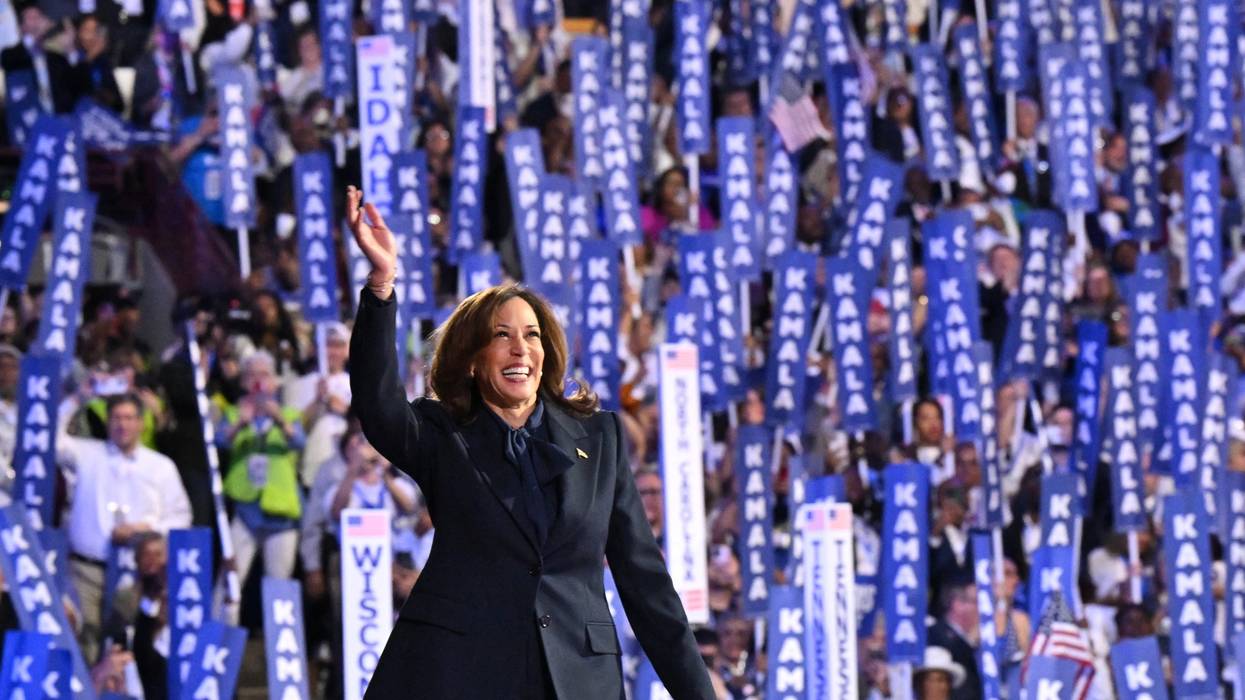
In the crazy, refracted light of bent and broken images, Kamala Harris can simultaneously be part of the administration sending billions of dollars of weaponry to the IDF, and also grieve for those innocents crushed under Gazan rubble.
I suffered through much of the three nights of non-reality programming called the 2024 Democratic National Convention. I watched nearly the whole fucking thing—the jugglers, acrobats, gladiator contests, cock fighting, and the dancers too. I sat mesmerized by an unlimited bounty of bread and circus offerings—lions and Christians, tight-rope walkers and card tricks—I might have been the only person on Earth to view pretty much the entire presentation.
Not exactly the whole thing—I walked my dog, checked baseball scores, spaced out and thought strange things, leafed through my brand new copy of
The Complete Poems of Emily Dickinson—but I came back to the DNC like a musician circling back to a particular theme or motif. And what a spectacular and awful show it was!
It resembled an extended commercial, an infomercial, perhaps, but it also seemed a bit like a funeral where people shuffle to the podium to convey memories that have been denuded of objective content—at a funeral no one wants to hear about DUI arrests and domestic battery, we only want the good stuff about how the departed climbed a tree and saved a kitten.
U.S. Vice President Kamala Harris was given a magnificent send off to the land beyond the sun. We walked away knowing that she is a saintly woman at worst, and the daughter of God sent to save us at best. We heard not mere praise, but blessings, confessions, tears, and astonishment interspersed with tunes from Stevie Wonder, Pink, John Legend, and Sheila E! But what kind of funeral concludes with the deceased in the flesh, telling her own story? And what a story she told, being born into the almost Calcutta-style poverty of the Berkeley flats.
In the physically impossible dreamscape of DNC fantasy, Kamala Harris can say in a single paragraph that she will feed the military industrial complex as if she were a zoo keeper with a bucket of meat entering a cage of famished tigers, and at the same time, fight climate change.
I know something about the mean streets of West Berkeley myself, having lived on Channing Way between Bonar and Browning for over a decade. On the flat plains of Berkeley homes now can be purchased—if you are goddamn lucky—for a hair under a million dollars. But I lived there in the 80s and 90s and Kamala would have been long gone by the time my wife and I moved to the west coast.
The Berkeley flats (as I experienced them 40 years ago) cannot be placed in the usual system of class categories, for Berkeley existed just outside the normal boundaries of our four-dimensional universe. It simultaneously exhibited working class, middle class, and upper-middle class features in some bizarre overlapping glitch of the matrix. On our block lived two doctors, a factory foreman, a preschool teacher, a single grandmother on public assistance, and the proprietor of a crack house. Kamala, in her DNC acceptance speech, attempted to pass herself off as a onetime lower-middle class child oppressed by the disrespect endured by her parents—two immigrants of color.
Kamala wowed us all with social class contortions in which a family headed by two academics with doctorates can be passed off as the embodiment of disadvantage. In the DNC rhetoric of the day, we heard nothing of class, but only about race and immigration status. We were expected to be shocked that Kamala and her younger sister, Maya, somehow, against all odds, excelled in school and went on to elite law schools.
Of course, this is the American myth that corrupts our national soul—the idea that we live in a meritocratic democracy in which all the layers of status reflect pure work ethic, and privilege has no part in the outcome (you know—the meritocracy in which Donald Trump became a self-made man). I would have had so much more respect for Kamala Harris if she had looked the nation in the eye and said:
I was born with two silver spoons in my mouth and you probably were not. My parents each held doctorates and high positions in the worlds of research and academia, and yours most likely have less than a bachelor's diploma. Still, despite having had encouragement to study hard and succeed every day of my childhood, I do my best to imagine what it would be like to grow up in a family that owned no books, and I try to put myself in the shoes of someone forced to muddle through school with no guidance and no expectations. Of course, that is not easy for me, because my hyper educated parents made it almost impossible to envision what it might be like to feel that you are a stranger in school. But I will do my best to step outside myself and wear your five-year-old Nikes.
In the fun-house mirrors of American political theater, one has to know that every moment of election programming amounts to a pile of bullshit. In the crazy, refracted light of bent and broken images, Kamala Harris can simultaneously be part of the administration sending billions of dollars of weaponry to the IDF, and also grieve for those tens of thousands (hundreds of thousands according to The Lancet) of innocents crushed under Gazan rubble. In the physically impossible dreamscape of DNC fantasy, Kamala Harris can say in a single paragraph that she will feed the military industrial complex as if she were a zoo keeper with a bucket of meat entering a cage of famished tigers, and at the same time, fight climate change.
With all the trapeze artists, ballet dancers, and magicians beguiling us with feats of virtuosity, two things remained conspicuously absent at the DNC convention—a voice representing the agony of Palestinians and Kamala's father. I had assumed that professor of economics, Donald Harris, must be long dead, but a quick run to Wikipedia proved that he still resides on our planet. Is Dr. Harris Kamala's Mary Trump—the alienated family member in charge of family skeletons? If so, he bears witness oddly in silence and does not forcefully deposit his obscure secrets in public as does Dr. Mary Trump. Does his absence speak of something ominous? Mary Trump lets loose her family secrets with no inhibition and little enlightenment. She tells us nothing about her putrid uncle that we don't already know.
But even more concerning, in a circus promising to lift all of humanity out of the muck of discouragement and horror, the failure of the directors and producers of the DNC extravaganza to produce a solitary, sympathetic Palestinian voice cannot be dismissed as an oversight. The blue honchos who must have meticulously agonized about a Palestinian speaker willing to say a reassuring word to amputate Kamala Harris from our doubts about her role in the ongoing genocide in Gaza—they all somehow came up with bupkis.
In an affair of mass manipulation, that must have cost the price of a nuclear delivery system, the DNC could not clear the one very low bar that absolutely needed to be stepped over. Millions of people waited futilely to hear that Kamala Harris would depart from President Joe Biden over the matter of supplying bombs to continue a genocidal attack on Palestinian civilians.
The great fear that many potential voters have is this: Behind the opaque curtain, the Wizard of Oz wears a Donald Trump puppet on one hand, and a Kamala Harris puppet on the other. A vote for either is a vote for more war, beefed up police spending, a military budget big enough to attack every inhabited planet within a hundred light years, and a vote to burn every drop of fossil fuel still buried in the lithosphere. Every vote is a vote for Oz.
There is another narrative, that I can't completely dismiss—that Donald Trump is a monster that makes every run-of-the-mill genocidaire into a comparative Fred Rogers. It may be that we have a choice between something murderously cold hearted and destructive and something much, much worse. Trump gives me the creeps in a way that Kamala Harris does not, but that may just be my own paranoid distortions. I worry about falling into a pond and coming face to face with a basking salt water crocodile wearing an orange wig.
Noam Chomsky called Trump the most dangerous person in human history, or something to that effect. How much longer do we kick the can down the road with the right-wing Democrats wearing their FDR masks, knowing that we get no universal healthcare, no safety net, endless war and CO2? Most of the people that I know agree with Chomsky and will be voting for Harris. I don't hold that against them. Trump scares the shit out of most people with an intact set of wits.
We live in a time of irreconcilable truths: Donald Trump is a putrid psychopath with no more internal complexity than a bullet in a chamber. Kamala Harris can mimic human emotions, but I am not convinced that she feels real pain.
Maybe the choice is whether or not to admit that we have no choice. Welcome to America.
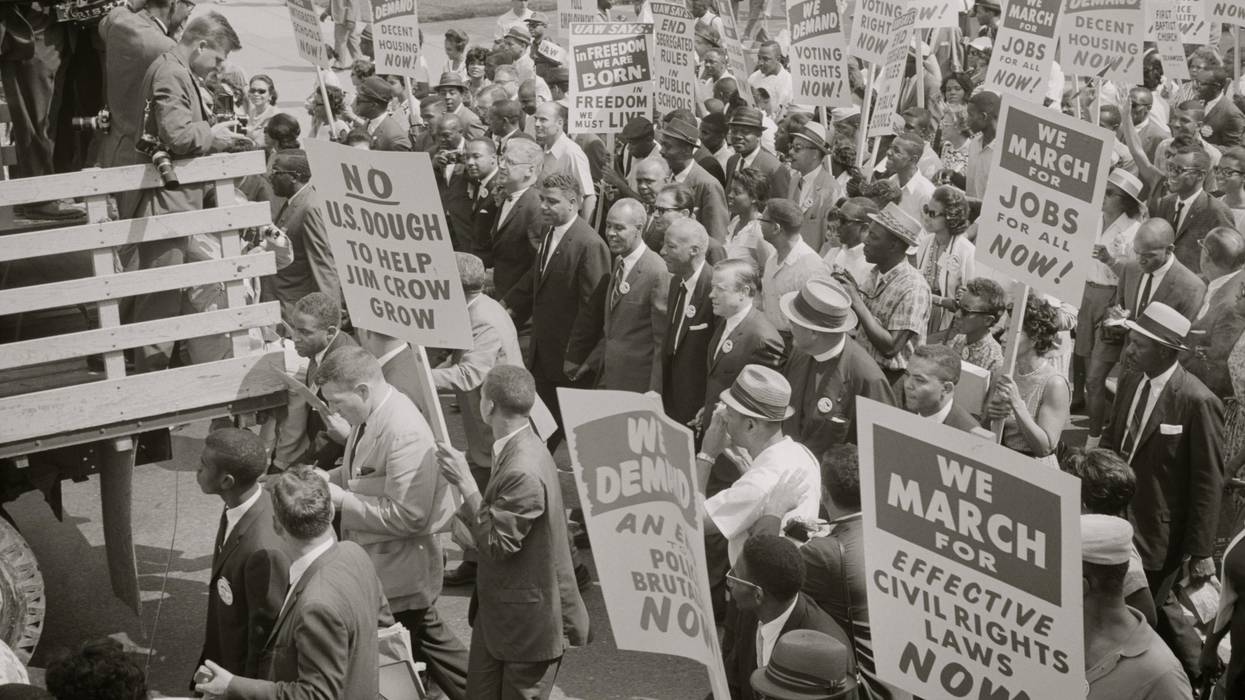
The US claims to honor his memory, even as it defiles his dreams.
On this, the national holiday named for Dr. Martin Luther King, Jr., Ajamu Baraka tweeted:
The U.S. should drop its' commemoration of Dr. King's birthday because there is no relationship between (the) Dr. King the Black freedom movement created (and the) violent, warmongering U.S.
“The King birthday is a colonialist expropriation that should be rejected,” Baraka added. That is a discussion and a decision for Black people, not me, but I will say this: It’s hard to deny that the forces Dr. King condemned are trying to colonize his legacy and exploit for their own selfish ends. But try as they may, they must never succeed. His memory is a country of the mind that must always remain free.
Over a decade ago, when there were fewer Left voices on the internet, I used my perch at the Huffington Post to honor Dr. King’s truly radical voice in my own small way. The celebrities I mentioned are forgotten and the economic numbers have shifted, but Dr. King’s words ring even truer now than they did in 2011. Wiser voices than mine, with more visibility and more right to the King legacy, are available to us now. (It did occur to me in 2018 that Dr. King would have knelt with Colin Kaepernick.)
I would commend the following quote to those political opportunists who accuse leftists of being race-blind in order to deny the economic strangulation of the working class:
“The unemployed, poverty-stricken white man must be made to realize that he is in the very same boat with the Negro. Together, they could exert massive pressure on the government to get jobs for all. Together they could form a grand alliance. Together, they could merge all people for the good of all.”
That form of organizing was once known as ‘class struggle.’
Then there's this: “A true revolution of values will soon look uneasily on the glaring contrast of poverty and wealth." Wealth inequality soared after bank criminals crashed the economy in 2008, but the grotesquely unequal United States of 2011 looks like a socialist paradise compared to today’s world of accelerated class theft.
And this: “When machines and computers, profit motives and property rights are considered more important than people, the giant triplets of racism, materialism, and militarism are incapable of being conquered.”
Those triplets have grown up to Horsemen of the Apocalypse. “Machines and computers” manipulate our society, our politics, and our economy to further enrich the billionaire class. Drones and missiles continue to endanger our planet. The “property rights” of the few – from rental properties to pharmaceutical patents – kill thousands of people daily.
Dr. King also said, “Congress appropriates military funds with alacrity and generosity. It appropriates poverty funds with miserliness and grudging reluctance.” Never were those words truer. When members of both party add tens of billions to the Pentagon’s already-bloated budget request, words like “alacrity” and “generosity” are genteel descriptions. They throw lavish gifts at the feet of the generals like courtiers pursuing the monarch’s favor. It’s like watching a gang boss reward an underling with a sack of cash for a murder well done. “Here, get yerself somethin’ nice ...”
"Of all the forms of inequality,” Dr. King said in 1966, “injustice in health care is the most shocking and inhumane.” What would he say of today’s corporate-driven healthcare, where hedge funds buy up medical practices, private insurers profit from public illness, pandemic victims go untreated, and Wall Street erodes Medicare with a program that is an “Advantage” only to investors?
A few more quotes to ponder before the holiday comes to a close:
“The evils of capitalism are as real as the evils of militarism and evils of racism.”
“[W]e are saying that something is wrong … with capitalism…. There must be better distribution of wealth and maybe America must move toward a democratic socialism.”
“I imagine you already know that I am much more socialistic in my economic theory than capitalistic… “
“In a sense, you could say we’re involved in the class struggle.”
The government, along with most of the nation, claims to honor his memory while defiling his dreams. They have turned a living soul into an idol. It may be shaped like a human being, but it makes a sound like desert wind blowing through the hollow body of a golden calf.
A new Marketplace-Edison Research poll published Tuesday found that a full 71 percent of respondents agree that the economy is rigged, affirming the popular rhetoric of the current presidential campaign season.
The majority opinion held firm across ethnicity, class, age, and gender differences. A whopping 83 percent of African Americans polled agreed that the economy is rigged, and 80 percent of people ages 18-24 also held that opinion.
The poll, tracking rising economic anxiety, discovered that most Americans agree that the economy was better for their parent's generation and believe it will be worse for the next generation.
Perhaps the perception of a rigged economy is because people work harder for increasingly less financial security.
The poll found that nearly one-quarter of respondents had not taken a single vacation in over five years, and almost 50 percent also confirmed that they feared they might lose their jobs within the next 12 months.
Moreover, 71 percent said they were afraid of an unexpected medical bill, 53 percent feared being unable to make a mortgage payment, and 60 percent of renters feared being unable to pay rent.
Nearly one-third told the pollsters that they are losing sleep over their financial situation.
Meanwhile, the poll found that Wall Street and banks are unfavorable: nearly 60 percent agreed that Wall Street does more to hurt than help most Americans, and 56 percent agreed that the U.S. government should break up banks deemed "too big to fail."
A majority of 54 percent also felt that the decline in U.S. manufacturing jobs resulted from so-called "free trade" deals rather than "natural changes in the economy," as the poll put it.
The poll's questions were familiar to many of those following this year's presidential election, as presidential hopeful Bernie Sanders made the phrase "rigged economy" and his critique of trade deals into touchstones of his campaign:
Following the shocking success of Sanders' outsider campaign, current front-runners Donald Trump and Hillary Clinton have co-opted Sanders' language to woo his supporters.
"It's not just the political system that's rigged; it's the whole economy," Trump said during a speech last week, while Clinton on Monday told a crowd, "To build an economy that works for everyone, not just those at the top, we have got to go big, and we have got to go bold," as Common Dreams reported.
Yet their efforts may fail: The Marketplace-Edison Research poll found that many respondents are also "not satisfied at all" with the two top presidential contenders.
Pundits have connected "a deep frustration on the part of working-class voters with economic globalization schemes," as John Nichols put it, to the recent Brexit vote. This has prompted some to wonder if a similar shock may eventually strike the U.S. establishment if today's economic woes go unheeded.