SUBSCRIBE TO OUR FREE NEWSLETTER
Daily news & progressive opinion—funded by the people, not the corporations—delivered straight to your inbox.
5
#000000
#FFFFFF
To donate by check, phone, or other method, see our More Ways to Give page.
Daily news & progressive opinion—funded by the people, not the corporations—delivered straight to your inbox.
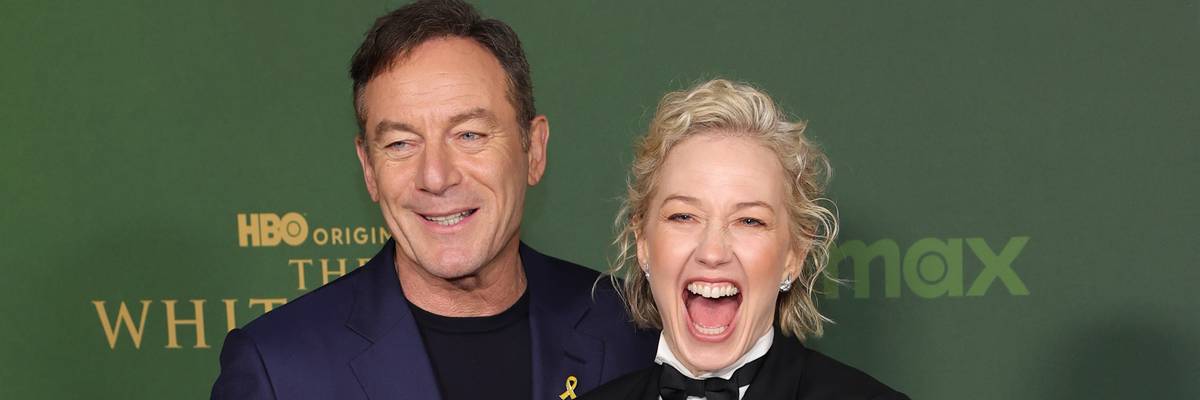
Jason Isaacs and Carrie Coon arrive at the Los Angeles Premiere Of HBO Original Series The White Lotus Season 3 at Paramount Theatre on February 10, 2025 in Los Angeles, California.
Are entertainments like these seriously acknowledging the deep-seated anxieties—and anger—that Americans are feeling today? Or is the entertainment industry just shamelessly exploiting those anxieties and that anger?
America’s richest have never been richer. Our over 800 billionaires ended 2024 worth a combined $6.72 trillion. Today, almost two months later, Americans make up 14 of the 15 richest people in the world. Just these 14 alone hold a combined net wealth of over $2.5 trillion.
One predictable consequence of numbers like these: Our world’s “super yacht” sector is doing spectacularly well, as the annual Miami International Boat Show this month convincingly confirmed. The star of this year’s show turned out to be a super yacht nearly the length of a football field.
Drivers on America’s highways and byways, meanwhile, are now needing to make room for the newly released latest luxury super car from Rolls-Royce. The new Black Badge Spectre can “sprint from zero to 60 mph in just 4.1 seconds.” The base price: a mere $490,000.
We need more, let’s all agree, than shows and movies that skewer the rich.
Amid all this excess, the fortunes—and power—of America’s most fortunate just keep mounting ever higher. At the expense of the rest of us. The world’s wealthiest billionaire, Elon Musk, has found an particularly lucrative new hobby: axing the jobs of federal employees working at agencies that protect the health and economic security of average Americans.
Researchers and analysts worldwide are, for their part, continuing to carefully track the ongoing—and historic—concentration of America’s wealth. But Hollywood, these days, may actually be tracking this concentration even closer.
The wealth, privileges, and formidable clout of our richest, Hollywood understands, are outraging average Americans. We’ve become a nation hungry for entertainment that expresses that outrage, and Hollywood has been all too happy to offer up that entertaining.
“The popularity of ‘eat the rich’ media—like Saltburn, White Lotus, Parasite, Triangle of Sadness, The Menu, Infinity Pool, The Fall of the House of Usher, and the Knives Out movies—has reached a fever pitch,” as the culture critic Kelsey Eisen puts it.
This “vilification of the rich,” adds Eisen, regularly includes “rich characters undergoing some terrible event—ranging from marital troubles to shipwrecks to even death—as some sort of comeuppance for being wealthy.”
“We do love watching the 1% get their comeuppance, don’t we?” agrees Adrian Lobb, another widely published and perceptive writer on contemporary culture.
Lobb last year interviewed Jason Isaacs, one of the stars of The White Lotus, an Emmy Award-winning comedy drama created for HBO. Isaacs told Lobb that he also “absolutely” loves the joy of the “comeuppance” moments swirling all around us.
“We watch these people who look like they’ve got everything,” Isaacs explains, “and console ourselves with the fact that they’re miserable as hell.”
The White Lotus features “sun, sea, sex” and super-rich secrets, notes the culture analyst Lobb, “with a side order of slaying.” Each season of the series showcases a set of gastronomically obsessed wealthy out to enjoy life at an exotic luxury resort, with no guest, quips writer and filmmaker Alyssa De Leo, “safe from being skewered—figuratively and literally.”
Another skewering of the “successful” takes place, De Leo observes, in the widely acclaimed film Triangle of Sadness, the story of an ultra-wealthy cruise ship that sinks and leaves the survivors “stranded on a desert island” with “the upper-class guests lacking any resources or knowledge of how to survive.”
Still another popular entry in the “comeuppance” genre, the thriller You’re Next, has a wealthy family celebrating an anniversary in a country mansion that masked assailants suddenly besiege. The assailants turn out to be hired guns that some members of the family had retained to ensure and hasten the inheritances they saw as their due.
And atop the genre’s most-watched list sits Squid Game, “one of Netflix’s most important and impactful television shows ever.” This “too-close-for-comfort dystopian thriller,” the Observer’s Brandon Katz celebrates, “cleverly spins socioeconomic inequality into thriller life-or-death games.”
Are entertainments like these seriously acknowledging the deep-seated anxieties—and anger—that Americans are feeling today? Or is the entertainment industry just shamelessly exploiting those anxieties and that anger? Are “eat the rich” films and series, as the arts critic Kelsey Eisen muses, “moving the political conversation forward” or merely “providing soothing, satisfying, and self-congratulatory entertainment”?
Eisen herself sees the answer to that question through the latter prism. She considers “eat the rich” entertainment as “less of a political statement and more of a soothing concession,” as “basically class-anxiety pornography, pure catharsis without a real message or call to action.”
Even so, Eisen readily confesses that she does indeed enjoy watching many of today’s “eat the rich” shows and movies and does see real value “in using art to encapsulate popular sentiments and anxieties and to normalize progressive sentiments.”
So should you dare enjoy “class anxiety-soothing media”? Sure, Eisen concludes. Just be sure that this media “doesn’t soothe you into being too complacent to ever actually do anything” to end that class anxiety.
Amen. We need more, let’s all agree, than shows and movies that skewer the rich. We need, now more than ever, a political movement powerful enough to break the billionaire lockgrip on our future.
Dear Common Dreams reader, It’s been nearly 30 years since I co-founded Common Dreams with my late wife, Lina Newhouser. We had the radical notion that journalism should serve the public good, not corporate profits. It was clear to us from the outset what it would take to build such a project. No paid advertisements. No corporate sponsors. No millionaire publisher telling us what to think or do. Many people said we wouldn't last a year, but we proved those doubters wrong. Together with a tremendous team of journalists and dedicated staff, we built an independent media outlet free from the constraints of profits and corporate control. Our mission has always been simple: To inform. To inspire. To ignite change for the common good. Building Common Dreams was not easy. Our survival was never guaranteed. When you take on the most powerful forces—Wall Street greed, fossil fuel industry destruction, Big Tech lobbyists, and uber-rich oligarchs who have spent billions upon billions rigging the economy and democracy in their favor—the only bulwark you have is supporters who believe in your work. But here’s the urgent message from me today. It's never been this bad out there. And it's never been this hard to keep us going. At the very moment Common Dreams is most needed, the threats we face are intensifying. We need your support now more than ever. We don't accept corporate advertising and never will. We don't have a paywall because we don't think people should be blocked from critical news based on their ability to pay. Everything we do is funded by the donations of readers like you. When everyone does the little they can afford, we are strong. But if that support retreats or dries up, so do we. Will you donate now to make sure Common Dreams not only survives but thrives? —Craig Brown, Co-founder |
America’s richest have never been richer. Our over 800 billionaires ended 2024 worth a combined $6.72 trillion. Today, almost two months later, Americans make up 14 of the 15 richest people in the world. Just these 14 alone hold a combined net wealth of over $2.5 trillion.
One predictable consequence of numbers like these: Our world’s “super yacht” sector is doing spectacularly well, as the annual Miami International Boat Show this month convincingly confirmed. The star of this year’s show turned out to be a super yacht nearly the length of a football field.
Drivers on America’s highways and byways, meanwhile, are now needing to make room for the newly released latest luxury super car from Rolls-Royce. The new Black Badge Spectre can “sprint from zero to 60 mph in just 4.1 seconds.” The base price: a mere $490,000.
We need more, let’s all agree, than shows and movies that skewer the rich.
Amid all this excess, the fortunes—and power—of America’s most fortunate just keep mounting ever higher. At the expense of the rest of us. The world’s wealthiest billionaire, Elon Musk, has found an particularly lucrative new hobby: axing the jobs of federal employees working at agencies that protect the health and economic security of average Americans.
Researchers and analysts worldwide are, for their part, continuing to carefully track the ongoing—and historic—concentration of America’s wealth. But Hollywood, these days, may actually be tracking this concentration even closer.
The wealth, privileges, and formidable clout of our richest, Hollywood understands, are outraging average Americans. We’ve become a nation hungry for entertainment that expresses that outrage, and Hollywood has been all too happy to offer up that entertaining.
“The popularity of ‘eat the rich’ media—like Saltburn, White Lotus, Parasite, Triangle of Sadness, The Menu, Infinity Pool, The Fall of the House of Usher, and the Knives Out movies—has reached a fever pitch,” as the culture critic Kelsey Eisen puts it.
This “vilification of the rich,” adds Eisen, regularly includes “rich characters undergoing some terrible event—ranging from marital troubles to shipwrecks to even death—as some sort of comeuppance for being wealthy.”
“We do love watching the 1% get their comeuppance, don’t we?” agrees Adrian Lobb, another widely published and perceptive writer on contemporary culture.
Lobb last year interviewed Jason Isaacs, one of the stars of The White Lotus, an Emmy Award-winning comedy drama created for HBO. Isaacs told Lobb that he also “absolutely” loves the joy of the “comeuppance” moments swirling all around us.
“We watch these people who look like they’ve got everything,” Isaacs explains, “and console ourselves with the fact that they’re miserable as hell.”
The White Lotus features “sun, sea, sex” and super-rich secrets, notes the culture analyst Lobb, “with a side order of slaying.” Each season of the series showcases a set of gastronomically obsessed wealthy out to enjoy life at an exotic luxury resort, with no guest, quips writer and filmmaker Alyssa De Leo, “safe from being skewered—figuratively and literally.”
Another skewering of the “successful” takes place, De Leo observes, in the widely acclaimed film Triangle of Sadness, the story of an ultra-wealthy cruise ship that sinks and leaves the survivors “stranded on a desert island” with “the upper-class guests lacking any resources or knowledge of how to survive.”
Still another popular entry in the “comeuppance” genre, the thriller You’re Next, has a wealthy family celebrating an anniversary in a country mansion that masked assailants suddenly besiege. The assailants turn out to be hired guns that some members of the family had retained to ensure and hasten the inheritances they saw as their due.
And atop the genre’s most-watched list sits Squid Game, “one of Netflix’s most important and impactful television shows ever.” This “too-close-for-comfort dystopian thriller,” the Observer’s Brandon Katz celebrates, “cleverly spins socioeconomic inequality into thriller life-or-death games.”
Are entertainments like these seriously acknowledging the deep-seated anxieties—and anger—that Americans are feeling today? Or is the entertainment industry just shamelessly exploiting those anxieties and that anger? Are “eat the rich” films and series, as the arts critic Kelsey Eisen muses, “moving the political conversation forward” or merely “providing soothing, satisfying, and self-congratulatory entertainment”?
Eisen herself sees the answer to that question through the latter prism. She considers “eat the rich” entertainment as “less of a political statement and more of a soothing concession,” as “basically class-anxiety pornography, pure catharsis without a real message or call to action.”
Even so, Eisen readily confesses that she does indeed enjoy watching many of today’s “eat the rich” shows and movies and does see real value “in using art to encapsulate popular sentiments and anxieties and to normalize progressive sentiments.”
So should you dare enjoy “class anxiety-soothing media”? Sure, Eisen concludes. Just be sure that this media “doesn’t soothe you into being too complacent to ever actually do anything” to end that class anxiety.
Amen. We need more, let’s all agree, than shows and movies that skewer the rich. We need, now more than ever, a political movement powerful enough to break the billionaire lockgrip on our future.
America’s richest have never been richer. Our over 800 billionaires ended 2024 worth a combined $6.72 trillion. Today, almost two months later, Americans make up 14 of the 15 richest people in the world. Just these 14 alone hold a combined net wealth of over $2.5 trillion.
One predictable consequence of numbers like these: Our world’s “super yacht” sector is doing spectacularly well, as the annual Miami International Boat Show this month convincingly confirmed. The star of this year’s show turned out to be a super yacht nearly the length of a football field.
Drivers on America’s highways and byways, meanwhile, are now needing to make room for the newly released latest luxury super car from Rolls-Royce. The new Black Badge Spectre can “sprint from zero to 60 mph in just 4.1 seconds.” The base price: a mere $490,000.
We need more, let’s all agree, than shows and movies that skewer the rich.
Amid all this excess, the fortunes—and power—of America’s most fortunate just keep mounting ever higher. At the expense of the rest of us. The world’s wealthiest billionaire, Elon Musk, has found an particularly lucrative new hobby: axing the jobs of federal employees working at agencies that protect the health and economic security of average Americans.
Researchers and analysts worldwide are, for their part, continuing to carefully track the ongoing—and historic—concentration of America’s wealth. But Hollywood, these days, may actually be tracking this concentration even closer.
The wealth, privileges, and formidable clout of our richest, Hollywood understands, are outraging average Americans. We’ve become a nation hungry for entertainment that expresses that outrage, and Hollywood has been all too happy to offer up that entertaining.
“The popularity of ‘eat the rich’ media—like Saltburn, White Lotus, Parasite, Triangle of Sadness, The Menu, Infinity Pool, The Fall of the House of Usher, and the Knives Out movies—has reached a fever pitch,” as the culture critic Kelsey Eisen puts it.
This “vilification of the rich,” adds Eisen, regularly includes “rich characters undergoing some terrible event—ranging from marital troubles to shipwrecks to even death—as some sort of comeuppance for being wealthy.”
“We do love watching the 1% get their comeuppance, don’t we?” agrees Adrian Lobb, another widely published and perceptive writer on contemporary culture.
Lobb last year interviewed Jason Isaacs, one of the stars of The White Lotus, an Emmy Award-winning comedy drama created for HBO. Isaacs told Lobb that he also “absolutely” loves the joy of the “comeuppance” moments swirling all around us.
“We watch these people who look like they’ve got everything,” Isaacs explains, “and console ourselves with the fact that they’re miserable as hell.”
The White Lotus features “sun, sea, sex” and super-rich secrets, notes the culture analyst Lobb, “with a side order of slaying.” Each season of the series showcases a set of gastronomically obsessed wealthy out to enjoy life at an exotic luxury resort, with no guest, quips writer and filmmaker Alyssa De Leo, “safe from being skewered—figuratively and literally.”
Another skewering of the “successful” takes place, De Leo observes, in the widely acclaimed film Triangle of Sadness, the story of an ultra-wealthy cruise ship that sinks and leaves the survivors “stranded on a desert island” with “the upper-class guests lacking any resources or knowledge of how to survive.”
Still another popular entry in the “comeuppance” genre, the thriller You’re Next, has a wealthy family celebrating an anniversary in a country mansion that masked assailants suddenly besiege. The assailants turn out to be hired guns that some members of the family had retained to ensure and hasten the inheritances they saw as their due.
And atop the genre’s most-watched list sits Squid Game, “one of Netflix’s most important and impactful television shows ever.” This “too-close-for-comfort dystopian thriller,” the Observer’s Brandon Katz celebrates, “cleverly spins socioeconomic inequality into thriller life-or-death games.”
Are entertainments like these seriously acknowledging the deep-seated anxieties—and anger—that Americans are feeling today? Or is the entertainment industry just shamelessly exploiting those anxieties and that anger? Are “eat the rich” films and series, as the arts critic Kelsey Eisen muses, “moving the political conversation forward” or merely “providing soothing, satisfying, and self-congratulatory entertainment”?
Eisen herself sees the answer to that question through the latter prism. She considers “eat the rich” entertainment as “less of a political statement and more of a soothing concession,” as “basically class-anxiety pornography, pure catharsis without a real message or call to action.”
Even so, Eisen readily confesses that she does indeed enjoy watching many of today’s “eat the rich” shows and movies and does see real value “in using art to encapsulate popular sentiments and anxieties and to normalize progressive sentiments.”
So should you dare enjoy “class anxiety-soothing media”? Sure, Eisen concludes. Just be sure that this media “doesn’t soothe you into being too complacent to ever actually do anything” to end that class anxiety.
Amen. We need more, let’s all agree, than shows and movies that skewer the rich. We need, now more than ever, a political movement powerful enough to break the billionaire lockgrip on our future.