

SUBSCRIBE TO OUR FREE NEWSLETTER
Daily news & progressive opinion—funded by the people, not the corporations—delivered straight to your inbox.
5
#000000
#FFFFFF
To donate by check, phone, or other method, see our More Ways to Give page.
Daily news & progressive opinion—funded by the people, not the corporations—delivered straight to your inbox.
Illinois did not just pass bail reform with the Pretrial Fairness Act—it built a safer, fairer, and more lasting pretrial system. Other states should take note.
Two years ago last month, Illinois became the first state to end cash bail. Critics warned the change would unleash chaos. It didn’t. Instead, Illinois proved that bail reform works—and endures.
Now, Congress and the White House are ignoring those facts, weaponizing fear and misinformation to attack the law and push for rollbacks nationwide. We can’t let them rewrite the story.
All my life, I’ve watched courts measure humanity against a dollar figure, jailing people—including members of my own family—not because they may be dangerous but because they’re poor. Cash bail doesn’t make us safer; it turns freedom into a commodity. That’s why I’ve spent more than a decade working in states across the country to build a pretrial system where safety, not wealth, determines who goes free before trial.
Cash bail doesn’t just punish poverty—it undermines the fundamental purpose of our pretrial system. It jails thousands of legally innocent people simply because they can’t pay, costing taxpayers billions and destabilizing lives. Even a few days behind bars can mean the loss of someone’s job, housing, or custody of their children, pushing them deeper into crisis and increasing the likelihood of future justice system involvement. Meanwhile, those with money—including people who may pose serious risks—can buy their freedom.
The lesson from Illinois is clear: Reform is not easy, but it is achievable and worth the fight.
Bail reform flips that logic. Under Illinois’ Pretrial Fairness Act, judges still decide when someone must be detained, but those decisions follow real hearings where evidence is presented—not the size of someone’s bank account. People can still be held if they pose a risk, but no one is jailed simply for being poor, and no one can buy their way out.
Despite the facts, public fear about crime is often driven not by bail reform but by visible crises like homelessness, untreated mental illness, and addiction—problems our legal system was never designed to solve. Too often, these conditions are criminalized through low-level charges instead of addressed with care. Cash bail can’t fix them—but investments in housing, treatment, and community services can. Yet just as those solutions are most needed, President Donald Trump and Congress slashed their funding. That failure, not bail reform, is the real threat to public safety.
Illinois recognized cash bail’s harm and built a different path. Its Pretrial Fairness Act is a national model, proving that reform is possible, sustainable, and broadly supported when built with care. The act was drafted with input from legal experts, lawmakers, impacted leaders, victims’ rights advocates, and grassroots organizers, balancing ideals and practical realities. Negotiations required compromise, but the core principle held: No one would be jailed simply for being poor.
Courts and communities had two years to prepare before the law took effect, and the coalition that championed it didn’t scatter—it trained judges, secured funding, and defended the law. The Bail Project, where I work, was one of many partners demonstrating the law’s potential. From 2019 to 2022, we provided free bail assistance and pretrial support to nearly 1,500 low-income Illinoisans—95% of whom returned to court without having money on the line. Building on that work, we invested $2.9 million in Chicago to pilot a supportive pretrial release model linking people to housing, jobs, healthcare, transportation, and court reminders. We also connected people released on recognizance bonds with affordable apartments—showing how stability keeps people from cycling back into jail.
Since implementation, crime did not surge—in fact, Chicago had its lowest summer murder rate since the 1960s—and court appearance rates held steady. The evidence is clear: Communities are not less safe because people are no longer detained for being poor. Illinois shows that when freedom is determined by risk and evidence rather than wealth, safety and fairness go hand in hand.
Yet even in the face of evidence, critics continue to exploit public anxieties about crime. In several states, misinformation has derailed reform—from outright repeal in Alaska to rapid rollbacks in New York and California. Illinois broke that pattern. Lawmakers held firm, recognizing that retreat would betray the communities most harmed by cash bail. That resolve is what separates reforms that endure from those that collapse.
Illinois did not just pass bail reform with the Pretrial Fairness Act—it built a safer, fairer, and more lasting pretrial system. Other states should take note. The lesson from Illinois is clear: Reform is not easy, but it is achievable and worth the fight.
History shows this pattern again and again: Every generation confronts reforms once branded as dangerous. Seat belt laws. Social Security. Medicaid. Each was dismissed as risky. Each is now recognized as essential. Illinois’ Pretrial Fairness Act belongs in that lineage.
"Restricting the operations of charitable bail organizations is like closing down a food pantry and claiming you’re curing hunger."
The American Legislative Exchange Council (ALEC) is helping the for-profit bail industry push legislation in four states to restrict or outright eliminate charitable bail funds, which provide those unable to afford bail with enough cash to avoid being imprisoned while awaiting their day in court.
Led by the American Bail Coalition (ABC), the commercial bail industry sees the growth of charitable bail funds as a threat. The national trade group, which opposes bail reform efforts across the country, is also one of ALEC’s key corporate members. Last fall, ABC provided platinum-level sponsorship of ALEC’s ritzy 50th anniversary gala; its chairman, Bill Carmichael, is the vice chair of ALEC’s private sector board of directors; and an ABC representative sits on ALEC’s Criminal Justice Task Force. Since joining the pay-to-play legislative bill mill in the early 1990s, “ABC has written 12 model bills fortifying the commercial bail industry,” the group claimed in a 2010 newsletter.
Charitable bail funds post bail to secure pretrial release for people who couldn’t otherwise afford it. Many groups, such as the Atlanta Solidarity Fund, also operate with the specific purpose of assisting activists who often face arrest for public protests and end up in jail when unable to pay steep cash bail amounts.
Model policy developed by the ABC cautions that “in the past few years, the [charitable bail] funds have nationalized, and are now operating in [a] fashion to destabilize the bail system.”
The bills targeting charitable bail funds — which are currently being considered by lawmakers in Georgia, Kentucky, Washington, and Virginia — call for imposing general reporting and registration requirements, setting a maximum amount of bail that a fund can cover, and/or limiting the number of times a charity can post bail to just three per year, which would effectively shutter its operations.
“Restricting the operations of charitable bail organizations is like closing down a food pantry and claiming you’re curing hunger,” says Jeremy Cherson of the Bail Project, a national nonprofit that advocates for the elimination of cash bail while also providing bail and support services.
Instead of investing in support services, “lawmakers in these states have pursued shortsighted solutions that stick with the status quo of cash bail,” he points out. That, in turn, “leads to unnecessary incarceration and all its attendant consequences like job loss, family separation, and housing instability, which only makes cities and states less safe.”
Critics of the cash bail system repeatedly warn that curtailing the operations of bail funds disproportionately impacts poor and working-class Black and brown people.
The for-profit bail bond industry generates as much as $2.4 billion in annual revenue, according to U.S. industry estimates, with more than 2 million people entering into contracts with private bail bondsmen every year. The top six bail insurers control 76% of the market, according to reporting by Reuters.
The U.S. and the Philippines are the only countries in the world with commercial bail industries. Bail bond agents charge people who can’t afford bail a non-refundable fee — usually 10% of the set amount — to ensure that bail will be paid in full if the defendant doesn’t show up in court. Defendants frequently borrow money from bail bondsmen at predatory interest rates to cover their fees. The profits from these exorbitant rates are split between the bail bondsman and the insurers that provide the financial backing.
The heightened focus on charitable bail organizations comes amidst other corporate-funded assaults on the right to protest and ongoing threats from 2024 presidential candidate Donald Trump to deploy the military against civilian protesters.
A Center for Media and Democracy (CMD) analysis of current and recent bills that seek to curtail the operations of charitable bail funds found that the ABC has likely used its ALEC connections with state lawmakers to advance these pieces of legislation.
The number of bills seeking to regulate or restrict the operations of charitable bail organizations skyrocketed in 2020 after nationwide protests in the wake of George Floyd’s murder in June of that year. When donations poured in to bail funds across the country, some of the accompanying media attention focused on certain funds that had bailed out individuals accused of committing violent crimes.
By the end of the year, the ABC had published a briefing document calling for the regulation of charitable bail funds. “During 2020, these funds grew in popularity due in large part to celebrity and political endorsements aimed at posting bail for those arrested during the violent protests across the country which began after the George Floyd incident,” the document states. “With a warchest perhaps as high as $200 million nationally, these funds are now a major issue in bail and pretrial release,” and are being used “to destabilize the bail and criminal justice system.”
Critics of the commercial bail industry counter that the for-profit business is far more detrimental.
“The payment plans, the 10% fees, the collateral bail bonds agents extract — those are the types of disruptions that take people years to recover from,” the Bail Project’s Cherson told CMD.
The ABC, which has an annual revenue of $2.3 million according to its most recent tax filings, consists of five surety insurance companies that pay steep membership dues.
In late 2021, the coalition published a model policy on how to regulate the charitable bail industry. The aim of the model bill was to hamstring charitable bail funds by putting into place preliminary reporting and regulatory requirements. It was based on a bill that passed in New York — the first state to enact restrictive legislation — along with legislation introduced in Texas and Indiana.
ABC has gone so far as to suggest that charitable bail funds may not be legal because they leave “the defendant [with] zero financial incentive to show up in court.”
The coalition spent more than $1 million on lobbying in 2022, according to its most recent tax filings, nearly double what it spent in 2020. A Reuters investigation found that in 2020 insurance companies spent $17 million “to defeat proposals to weaken or abolish the for-profit bail industry in the United States” — an industry that “brings insurers $15 billion in business a year.”
Georgia’s SB 63, which has been passed in both legislative chambers, would prevent charitable funds from posting more than three cash bonds per year and require them to have their application approved by a local sheriff’s department. It would also dramatically expand the number of bail-restricted violations — including unlawful assembly, which is often used as a dragnet to include peaceful protest. A previous, less expansive version of the bill was proposed in 2022, but failed to pass.
A spokesman for Governor Kemp’s office said that the legislation is “undergoing a thorough review process.”
In a recent statement about the bill, Tiffany Williams Roberts, public policy director of the Southern Center for Human Rights, notes that “given the history of bail funds in many civil and human rights movements in Atlanta, SB 63 represents another violent attack on the right to political dissent, which, unfortunately aligns with Atlanta’s current repression of social movements that challenge the criminal legal system.”
Two of the bill sponsors, Republican senators Frank Ginn and Stephen Gooch, are members of ALEC, with Gooch serving as an ALEC state chair. Its House co-sponsor, Rep. Houston Gaines (R), is also an ALEC member who has delivered on other ALEC priorities such as preempting local democratic control over law enforcement budgets.
Speaking on the House floor earlier this month, Gaines repeatedly referred to defendants — regardless of what they were charged with — as criminals who are “not showing back up for court, and staying on the streets,” framing his attack with rhetoric that echoes the industry’s talking points.
According to a recent ABC statement, “Georgia has come up with what is really a very simple floor for these dangerous criminals — they aren’t getting out of jail free without some assurance that they will show up for court and answer for the charges.”
Charitable bail funds are “unaccountable,” Gaines said in claiming that these organizations are responsible for releasing “violent criminals on our streets.”
The ACLU of Georgia has said that it will sue the state if Kemp signs the bill.
Kentucky
In Kentucky, a sweeping piece of legislation called the Safer Kentucky Act, which rewrites and expands much of the state’s criminal code, has widespread support among Republican lawmakers. It would limit bail payments by charitable bail organizations to a maximum of $5,000 and prevent those organizations from posting bail for people accused of certain violent crimes. The component targeting charitable bail organizations has been recycled from a previous bill first proposed in 2022.
Washington
In Washington, state Senator Mike Padden (R) reintroduced SB 5116, which would impose registration and reporting requirements on charitable bail funds. Padden, who is also a founding member of the state’s conservative Freedom Caucus, has served as a member of ALEC’s Criminal Justice Task Force. When he was a state representative in the 1990s, he served on ALEC’s board of directors.
In the early 2000s, Padden used his influence to secure $7.5 million in fees and interest payments via favorable county contracts and special interest legislation for his former employer, a debt collection agency. This session, the senator has also sponsored bills to repeal a state ban on contracting with private prison companies and authorize the use of chokeholds by police.
Virginia
Virginia’s HB 846, introduced by conservative delegate Wren Williams, would similarly regulate charitable bail funds by implementing steep registration fees and other requirements. The bill also prevents bail funds from assisting anyone previously convicted of a violent crime.
Beyond New York, Indiana is the only state to have put in place significant restrictions on charitable bail organizations with the passage of HB 1300 in 2022. The law requires charitable bail organizations to be certified by the state, prevents them from receiving state funding, and prohibits them from bailing out any defendant who has been charged with a violent crime or a felony, or has a prior conviction for a crime of violence. The Indy Star reported how a misinformation campaign that misrepresented the number of reoffenders bailed out by bail funds helped propel the proposed legislation into law.
In the wake of its passage, the Bail Project teamed up with the Indiana ACLU to sue the state over what it argued was unjust targeting of its organization. The Bail Project came under intense media scrutiny in Indiana after three of the individuals it bailed out committed violent crimes on pretrial release, making it the industry’s strawman for arguing in favor of maintaining the status quo.
Although neither the bill’s author, Rep. Peggy Mayfield (R), nor its coauthor, Rep. Donna Schaibley (R), are known to be ALEC members, reporting by CNN found that Mayfield had contact with the ABC while drafting the legislation. In addition, the three Senate sponsors of the bill are all affiliated with ALEC.
“Unlike licensed bail agents, bail funds do not have the ability to recover defendants who skip court, and their involvement should be limited to cases that don’t impose a significant risk to the public’s health and safety,” ABC Executive Director Jeffrey J. Clayton wrote in an op-ed when a previous version of the legislation was under consideration.
Cherson disagrees, telling CMD that “charitable bail organizations make a small but meaningful impact on the incredible devastation wrought by this system. And the more legislatures pursue these types of restrictions, the more broken these systems become.”
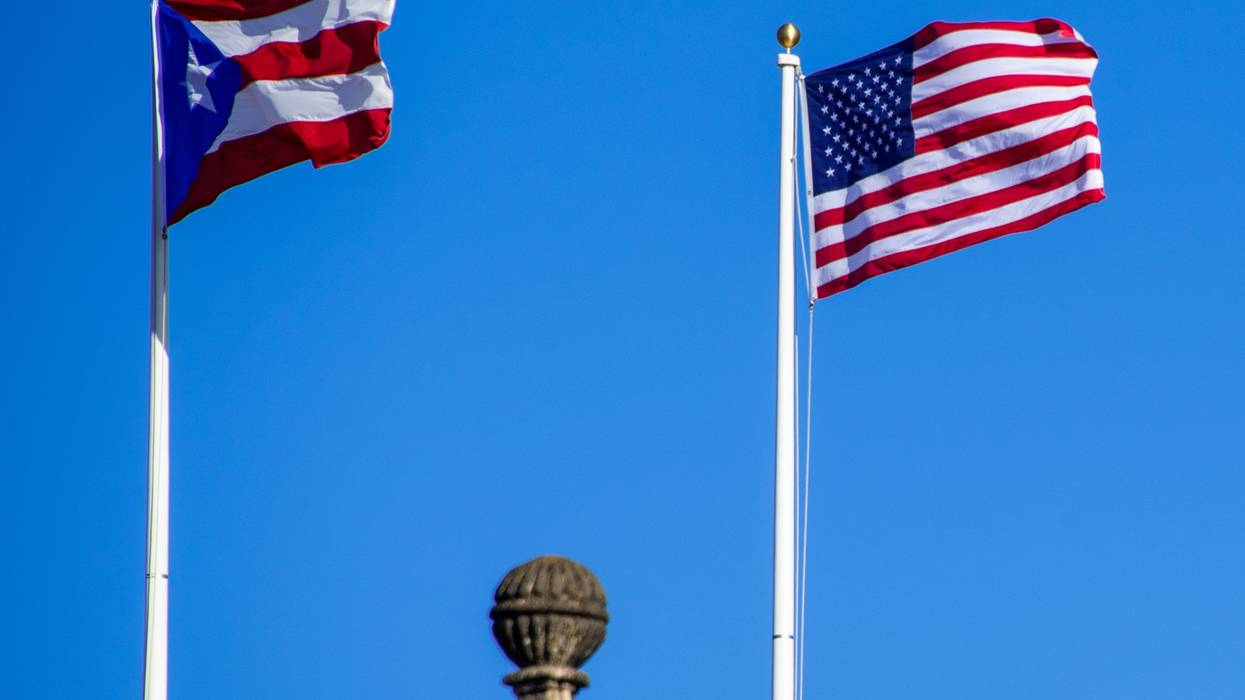
If Puerto Rico is being boxed into statehood, will Congress commit in writing not to infringe on the progressive values and practices long established in Puerto Rico’s constitution and laws?
In a matter of a year, the U.S. Supreme Court overturned decades of precedents and critical policies that took years of blood, sweat, and tears to build momentum for. The right of women to choose what happens to their own bodies during pregnancy, the use of race as a factor in college admissions despite the value of diversity in educational settings, the establishment of a constitutional right for businesses open to the public to deny service to protected classes.
In the criminal justice context, this ultra-conservative judicial activism continues to roll back basic protections under the Fourth and Fifth Amendments to the Constitution. Indeed, just years ago Justice Sonia Sotomayor raised a clarion call against the court’s allowance of an unconstitutional detention by police to be justified, after-the-fact, by the existence of an outstanding warrant—something no police officer can determine by simply looking at you, unless, presumably, you’re Black or Latinx.
And this simply summarizes what the judiciary alone has done. Congress is constantly entertaining ways to limit the rights of the accused in this country.
The details of what the United States will commit to—or not—when it comes to this politically expedient push for statehood matter.
Why do rollbacks like these matter for Puerto Rico when Congress is considering status options that include statehood?
Amid some leaders urging that Puerto Rico be leaned on to become a U.S. state and that this can somehow magically solve the problems that Americans created over centuries, Puerto Ricans should be asking tough questions about the implications of annexation, or statehood.
I am a son of Puerto Rico. I am also the former president and general counsel of LatinoJustice PRLDEF, formerly the Puerto Rican Legal Defense and Education Fund. I’ve defended civil rights, racial justice, and the right of Puerto Ricans to fair self-determination for my entire career. The pro-statehood messaging around Puerto Rico’s future fails to address the fact that the ways Puerto Rico and the U.S. operate in many spaces are dramatically different.
Puerto Rico is clearly confronting a web of issues stemming from U.S. colonialism. But as history and practice show, the Puerto Rican people have been leaders in spaces like criminal justice.
Since 1980, Puerto Ricans who are incarcerated are allowed to vote and they avidly exercise that right from their prison cells. With over 6,500 of 11,500 prisoners registered to vote in Puerto Rican elections, candidates campaign for their votes in a Caribbean archipelago where democracy is not eliminated through incarceration.
In Puerto Rico, capital punishment was abolished in 1929 and enshrined in its first-ever constitution in 1952. History tells us that the first persons ever executed by the government were enslaved Africans in 1514—killed for leading an uprising. But that is no more, as the command that “The death penalty shall not exist” is the law.
Puerto Rico also has a constitutional right to bail. Since its constitution of 1952 the protection is clear: “Every accused shall be entitled to be admitted to bail.” Apparently, it is the only place in the Western Hemisphere that establishes a fundamental right to bail in all cases. Even fear-mongering by its opponents has been rejected by the public as recently as 2012 and previously in 1994.
In part, Puerto Rico’s traditions stand in contrast to those of most states because it patterned its own Bill of Rights not after the U.S. Bill of Rights but after the Universal Declaration of Human Rights.
Predictably, given its colonial status, these policies create tension with the colonizer especially given where Puerto Rico stands on capital punishment, which the federal government insists has no bearing on it seeking the death penalty in Puerto Rico’s federal courts. This big footing is part and parcel of colonial dominance since 1898, with this year marking the 125th anniversary of the U.S. invasion of Puerto Rico.
Now, this is not to say that there are not severe systemic racial and criminal justice problems in Puerto Rico, where the police department has a federal monitor, deservedly, where a femicide crisis and violence against transgender residents have no end in sight, and where prison conditions are deplorable.
But if Puerto Rico is being boxed into statehood, will Congress commit in writing not to infringe on the progressive values and practices long established in Puerto Rico’s constitution and laws? Will Members of Congress deny the right-wing forces in the island that would be willing to sacrifice these legal protections in exchange for statehood?
Currently, the Puerto Rico Status Act (PRSA) is being pushed in Congress as a remedy to its colonial status. Consider history in a Caribbean country where the legislature, government agencies, schools, and courts—and all those who come before them—conduct business in Spanish, 24/7. Prior to Arizona, New Mexico, Oklahoma, and other states being tracked into the union, Congress included English language requirements in the enabling acts they passed. The U.S. immediately imposed an Americanization policy in the early 1900s to force Puerto Rican schools to teach in English—after decades of disaster and failure Puerto Rico finally restored Spanish as the medium of instruction. Yet the PRSA dodges what Puerto Ricans would be subjected to in crucial matters like language, criminal justice, and taxes.
As a lawyer and as someone deeply concerned about the present and future of Puerto Rico, it’s a big red flag when major issues like these are left out of the conversation and not clearly stated. And I must ask why? And who does this serve? Because it’s not Puerto Ricans, justice, or human rights.
While we witnessed the Supreme Court roll over hard-fought battles to extend “America’s promise,” we were reminded that nothing can be taken for granted. The details of what the United States will commit to—or not—when it comes to this politically expedient push for statehood matter. Puerto Ricans, here and there, need to take heed and demand answers, not the void that this legislation offers.
Many hardships are forced on defendants and their families pre-trial, including the heavy pre-trial financial burdens imposed by the bail system and attorneys.
I still remember hearing the words—“He shot her!” These words would soon change my life and completely upend my perspective on a role model I once idealized. He helped me learn to play piano, showed me what a computer looks like behind all those screws and plastic, and taught me to calculate the area of a square. His encouragement was an early stepping-stone on my journey to a PhD in mathematics.
When I received a phone call telling me that he had been arrested for violence, I was first in denial and did not have a strong reaction; though hours later, I would feel both anger and sadness, and I would question whether he truly committed this awful crime. That questioning is important because as of yet, he is still awaiting a final verdict regarding his case. If we are to truly provide justice, our legal system should not punish this defendant or any other individuals prior to the receipt of a “guilty” verdict.
Yet our judicial system often inadvertently creates other “victims” beyond those of the crime itself. Despite the call of our legal system to presume the innocence of a defendant until and unless found guilty, many hardships are forced on defendants and their families pre-trial, including the heavy pre-trial financial burdens imposed by the bail system and attorneys. Research has shown that, in comparison to costly attorneys paid for by the defendants themselves, free court-appointed attorneys obtain worse sentences for the accused, indicating that people who are poor may be unable to appropriately defend themselves, while the rich are able to overturn or significantly reduce their sentences.
Why should I have been held accountable and put in this position? I did not commit any crime, but because my relative had no one else to turn to, his bills became a punishment inflicted on me by the bail system.
I have direct experience with the large financial punishment imposed on defendants and their families pre-trial. My relative’s bail bond was set at $50,000—an amount that I could not even begin to imagine being held accountable for, with only about one year of full-time work experience after my graduate studies.
Yet despite having never committed a crime myself, it soon became clear that the burden of this alleged crime was my responsibility. I received multiple calls in the coming days regarding bail bond agents—from agents themselves as well as my relative. They all explained to me that the accused could not assume responsibility for the bond himself; I would need to take responsibility for the bond. As the only non-minor kin that the defendant maintained regular contact with, the financial liability fell on me for the bail bond as well as all of his other affairs. I soon found myself paying his internet, electricity, water, and other bills. Why should I have been held accountable and put in this position? I did not commit any crime, but because my relative had no one else to turn to, his bills became a punishment inflicted on me by the bail system.
As I paid the defendant’s bills, my credit score began to drop with the extra charges, ultimately falling more than 50 points. This story is not only my own, but the story of many who are unable to afford a bond.
While in jail because he was unable to post bail, my relative informed me of illegal activity a witness had engaged in—activity that I thought was relevant to his case. In response, I called the inmate’s free court-appointed attorney. However, after hearing only a small parcel of explanation, the lawyer told me that he was done listening to me, as he felt the discussion was irrelevant to my relative’s case.
Because the court-assigned lawyer would not listen to me, I began the process of holding consultations with other attorneys, trying to find well-suited representation. My relative said he was only provided a couple minutes on the phone each day—simply not enough time to have these consultations himself, and definitely not enough to successfully find an attorney on his own.
After I selected an attorney and paid an initial retainer, my relative was afforded a bond reduction hearing, at which multiple witnesses appeared. It was the intention of the one aforementioned witness, in particular, to fight the bond reduction and try to keep my relative in jail. In response to this, my attorney informed this witness that he was aware of her illegal activity. This simple yet effective warning convinced the witness to forgo the pushback against the bond reduction, allowing the defendant’s bond to be reduced down to $10,000. The very same information that the court-appointed attorney refused to hear allowed the inmate’s bond to be extensively reduced to an amount that I could afford.
The outcome of my relative’s bond reduction is not unique. Studies indicate that sentences are often harsher when free court-appointed attorneys are utilized. While some believe that poverty is not the only factor contributing to this disparity, the fact still remains: Had the court-appointed counsel been the legal representative, my relative’s bond would not have been as easily and readily reduced. For my relative, the acquisition of our attorney afforded him the ability to be released from jail on bond. If I had not been able to retain this attorney, my relative may very well have stayed in jail, and I would have continued to be punished as well—despite having never been even charged with a crime—through the necessity of handling his affairs and continuing to pay legal fees for a decent attorney who actually listens to their clients.
The reality is that with wealth comes options—the option to have an attorney of your own choosing, the option to secure release from jail through payment of a bond, etc. Individuals from lower socioeconomic backgrounds cannot afford these options and are subjected to severe disadvantages in our justice system. Due to racial disparities in wealth, these individuals are often people of color.
This systemic problem has persisted far too long. It is time for us to work to end this disparity and provide more resources for individuals in our judicial system. Indigent defendants can be provided with more and better options for legal counsel. The cash bail system can also be largely eliminated, as Illinois is currently considering. With our current technology, there are alternatives to cash bail that we can consider—such as providing non-violent offenders who can’t afford bail the option to be released with an ankle bracelet for tracking purposes.
While some may oppose Illinois’s proposed legislation, saying that it should be reworded, altered, or revoked, a driving motivation behind the measure is engrained in our court system—the idea that a defendant is innocent until proven guilty. In its current form, the bonding system often imposes pre-trial punishment despite “presumed innocence.” This punishment is felt not only by defendants, but also by their innocent family and relatives. This was most certainly the case in my experience, and I hope to one day see a world where no other innocent individual is forced to face this hardship—a world where our legal system is much more equitable and just, with proper resources and options for people who are indigent as well as minorities.
The US Department of Justice (DOJ) reports 2.2 million people are in our nation's jails and prisons and another 4.5 million people are on probation or parole in the US, totaling 6.8 million people, one of every 35 adults. We are far and away the world leader in putting our own people in jail. Most of the people inside are poor and Black. Here are 40 reasons why.
One. It is not just about crime. Our jails and prisons have grown from holding about 500,000 people in 1980 to 2.2 million today. The fact is that crime rates have risen and fallen independently of our growing incarceration rates.
Two. Police discriminate. The first step in putting people in jail starts with interactions between police and people. From the very beginning Black and poor people are targeted by the police. Police departments have engaged in campaigns of stopping and frisking people who are walking, mostly poor people and people of color, without cause for decades. Recently New York City lost a federal civil rights challenge to their police stop and frisk practices by the Center for Constitutional Rights during which police stopped over 500,000 people annually without any indication that the people stopped had been involved in any crime at all. About 80 percent of those stops were of Black and Latinos who compromise 25 and 28 percent of NYC's total population. Chicago police do the same thing stopping even more people also in a racially discriminatory way with 72 percent of the stops of Black people even though the city is 32 percent Black.
Three. Police traffic stops also racially target people in cars. Black drivers are 31 percent more likely to be pulled over than white drivers and Hispanic drivers are 23 percent more likely to be pulled over than white drivers. Connecticut, in an April 2015 report, reported on 620,000 traffic stops, which revealed widespread racial profiling, particularly during daylight hours when the race of driver was more visible.
Four. Once stopped, Black and Hispanic motorists are more likely to be given tickets than white drivers stopped for the same offenses.
Five. Once stopped, Blacks and Latinos are also more likely to be searched. DOJ reports Black drivers at traffic stops were searched by police three times more often and Hispanic drivers two times more often than white drivers. A large research study in Kansas City found when police decided to pull over cars for investigatory stops, where officers look into the car's interior, ask probing questions and even search the car, the race of the driver was a clear indicator of who was going to be stopped: 28 percent of young Black males twenty-five or younger were stopped in a year's time, versus white men who had 12 percent chance and white women only a 7 percent chance. In fact, not until Black men reach 50 years old do their rate of police stops for this kind of treatment dip below those of white men twenty-five and under.
Six. Traffic tickets are big business. And even if most people do not go directly to jail for traffic tickets, poor people are hit the worst by these ticket systems. As we saw with Ferguson where some of the towns in St. Louis receive 40 percent or more of their city revenues from traffic tickets, tickets are money makers for towns.
Seven. The consequences of traffic tickets are much more severe among poor people. People with means will just pay the fines. But for poor and working people fines are a real hardship. For example, over 4 million people in California do not have valid driver's licenses because they have unpaid fines and fees for traffic tickets. And we know unpaid tickets can lead to jail.
Eight. In schools, African American kids are much more likely to be referred to the police than other kids. African American students are 16 percent of those enrolled in schools but 27 percent of those referred to the police. Kids with disabilities are discriminated against at about the same rate because they are 14 percent of those enrolled in school and 26 of those referred to the police.
Nine. Though Black people make up about 12 percent of the US population, Black children are 28 percent of juvenile arrests. DOJ reports that there are over 57,000 people under the age of 21 in juvenile detention. The US even has 10,000 children in adult jails and prisons any given day.
Ten. The War on Drugs targets Black people. Drug arrests are a big source of bodies and business for the criminal legal system. Half the arrests these days are for drugs and half of those are for marijuana. Despite the fact that Black and white people use marijuana at the same rates, a Black person is 3.7 times more likely to be arrested for possession of marijuana than a white person. The ACLU found that in some states Black people were six times more likely to be arrested for marijuana than whites. For all drug arrests between 1980 and 2000 the U.S. Black drug arrest rate rose dramatically from 6.5 to 29.1 per 1,000 persons; during the same period, the white drug arrest rate barely increased from 3.5 to 4.6 per 1,000 persons.
Eleven. Many people in jail and prison because the US has much tougher drug laws and much longer sentences for drug offenses than most other countries. Drug offenders receive an average sentence of 7 months in France, twelve months in England and 23 months in the US.
Twelve. The bail system penalizes poor people. Every day there are about 500,000 people are in jails, who are still presumed innocent and awaiting trial, just because they are too poor to pay money to get out on bail. Not too long ago, judges used to allow most people, even poor people to be free while they were awaiting trial but no more. In a 2013 study of New York City courts, over 50% of the people held in jail awaiting trial for misdemeanor or felony charges were unable to pay bail amounts of $2500 or less.
Thirteen. This system creates a lot of jobs. Jails and prisons provide a lot of jobs to local, state and federal officials. To understand how this system works it is good to know the difference between jails and prisons. Jails are local, usually for people recently arrested or awaiting trial. Prisons are state and federal and are for people who have already been convicted. There are more than 3000 local jails across the US, according to the Vera Institute, and together usually hold about 500,000 people awaiting trial and an additional 200,000 or so convicted on minor charges. Over the course of a year, these local jails process over 11.7 million people. Prisons are state and federal lockups which usually hold about twice the number of people as local jails or just over 1.5 million prisoners.
Fourteen. The people in local jails are not there because they are a threat to the rest of us. Nearly 75 percent of the hundreds of thousands of people in local jails are there for nonviolent offenses such as traffic, property, drug or public order offenses.
Fifteen. Criminal bonds are big business. Nationwide, over 60 percent of people arrested are forced to post a financial bond to be released pending trial usually by posting cash or a house or paying a bond company. There are about 15,000 bail bond agents working in the bail bond industry which takes in about $14 billion every year.
Sixteen. A very high percentage of people in local jails are people with diagnosed mental illnesses. The rate of mental illness inside jails is four to six times higher than on the outside. Over 14 percent of the men and over 30 percent of the women entering jails and prisons were found to have serious mental illness in a study of over 1000 prisoners. A recent study in New York City's Rikers Island jail found 4,000 prisoners, 40 percent of their inmates, were suffering from mental illness. In many of our cities, the local jail is the primary place where people with severe mental problems end up. Yet treatment for mental illness in jails is nearly non-existent.
Seventeen. Lots of people in jail need treatment. Nearly 70 percent of people prison meet the medical criteria for drug abuse or dependence yet only 7 to 17 percent ever receive drug abuse treatment inside prison.
Eighteen. Those who are too poor, too mentally ill or too chemically dependent, though still presumed innocent, are kept in cages until their trial dates. No wonder it is fair to say, as the New York Times reported, our jails "have become vast warehouses made up primarily of people too poor to post bail or too ill with mental health or drug problems to adequately care for themselves."
Nineteen. Poor people have to rely on public defenders. Though anyone threatened with even a day in jail is entitled to a lawyer, the reality is much different. Many poor people facing misdemeanor charges never see a lawyer at all. For example, in Delaware more than 75 percent of the people in its Court of Common Pleas never speak to a lawyer. A study of Jackson County Michigan found 95 percent of people facing misdemeanors waived their right to an attorney and have plead guilty rather than pay a $240 charge for a public defender. Thirteen states have no state structure at all to make sure people have access to public defenders in misdemeanor courts.
Twenty. When poor people face felony charges they often find the public defenders overworked and underfunded and thus not fully available to provide adequate help in their case. In recent years public defenders in Kentucky, Louisiana, Missouri and Pennsylvania were so overwhelmed with cases they refused to represent any new clients. Most other states also have public defender offices that have been crushed by overwork, inadequate finances and do not measure up to the basic principles for public defenders outlined by the American Bar Association. It is not uncommon for public defenders to have more than 100 cases going at the same time, sometimes several hundred. Famous trial lawyer Gerry Spence, who never lost a criminal case because of his extensive preparation for each one, said that if he was a public defender and represented a hundred clients he would never have won a case.
Twenty One. Lots of poor people plead guilty. Lack of adequate public defense leads many people in prison to plead guilty. The American Bar Association reviewed the US public defender system and concluded it lacked fundamental fairness and put poor people at constant risk of wrongful conviction. "All too often, defendants plead guilty, even if they are innocent, without really understanding their legal rights or what is occurring...The fundamental right to a lawyer that America assumes applies to everyone accused of criminal conduct effectively does not exist in practice for countless people across the US."
Twenty Two. Many are forced to plead guilty. Consider all the exonerations of people who were forced by police to confess even when they did not do the crime who were later proven innocent: some criminologists estimate 2 to 8 percent of the people in prison are innocent but pled guilty. One longtime federal judge estimates that there is so much pressure on people to plead guilty that there may easily be 20,000 people in prison for crimes they did not commit.
Twenty Three. Almost nobody in prison ever had a trial. Trials are rare in the criminal injustice system. Over 95 percent of criminal cases are finished by plea bargains. In 1980, nearly 20 percent of criminal cases were tried but that number is reduced to less than 3 percent because sentences are now so much higher for those who lose trials, there are more punishing drug laws, mandatory minimum sentences, and more power has been given to prosecutors.
Twenty Four. Poor people get jail and jail makes people worse off. The poorest people, those who had to remain in jail since their arrest, were 4 times more likely to receive a prison sentence than those who got out on bail. There are tens of thousands of rapes inside jails and prisons each year. DOJ reports over 4,000 inmates are murdered each year inside each year. As US Supreme Court Justice Kennedy told Congress recently "This idea of total incarceration just isn't working. And it's not humane. We [society and Congress and the legal profession] have no interest in corrections, nobody looks at it."
Twenty Five. Average prison sentences are much longer than they used to be, especially for people of color. Since 1990, the average time for property crimes has gone up 24 percent and time for drug crimes has gone up 36 percent. In the US federal system, nearly 75 percent of the people sent to prison for drug offenses are Black or Latino.
Twenty Six. There is about a 70 percent chance that an African American man without a high school diploma will be imprisoned by the time he reaches his mid-thirties; the rate for white males without a high school diploma is 53 percent lower. In the 1980, there was only an 8 percent difference. In New York City, for example, Blacks are jailed at nearly 12 times the rate of whites and Latinos more than five times the rate of whites.
Twenty Seven. Almost 1 of 12 Black men ages 25 to 54 are in jail or prison, compared to 1 in 60 nonblack men. That is 600,000 African American men, an imprisonment rate of five times that of white men.
Twenty Eight. Prison has become a very big private business. Corrections Corporation of America (CCA) owns and runs 67 for-profit jails in 20 states with over 90,000 beds. Along with GEO (formerly Wackenhut), these two private prison companies have donated more than $10 million to candidates and spent another $25 million lobbying according to the Washington Post. They lobby for more incarceration and have doubled the number of prisoners they hold over the past ten years.
Twenty Nine. The Sentencing Project reports that over 159,000 people are serving life sentences in the US. Nearly half are African American and 1 in 6 are Latino. The number of people serving life in prison has gone up by more than 400% since 1984. Nearly 250,000 prisoners in the US are over age 50.
Thirty. Inside prisons, the poorest people are taken advantage of again as most items such as telephone calls to families are priced exorbitantly high, some as high as $12.95 for a 15 minute call, further separating families.
Thirty One. The DOJ reports another 3.9 million people are on probation. Probation is when a court puts a person under supervision instead of sending them to prison. Probation is also becoming a big business for private companies which get governments to contract with them to collect outstanding debts and supervise people on probation. Human Rights Watch reported in 2014 that over a thousand courts assign hundreds of thousands of people to be under the supervision of private companies who then require those on probation to pay the company for the supervision and collect fines, fees and costs or else go to jail. For example, one man in Georgia who was fined $200 for stealing a can of beer from a convenience store was ultimately jailed after the private probation company ran up over a thousand dollars in in fees.
Thirty Two. The DOJ reports an additional 850,000 people are on parole. Parole is when a person who has been in prison is released to serve the rest of their sentence under supervision.
Thirty Three. The DOJ reported in 2012 that as many as 100 million people have a criminal record, and over 94 million of those records are online.
Thirty Four. Everyone can find out people have a record. Because it is so easy to access to arrest and court records, people who have been arrested and convicted face very serious problems getting a job, renting an apartment, public assistance, and education. Eighty-seven percent of employers conduct background checks. Employment losses for people with criminal records have been estimated at as much as $65 billion every year.
Thirty Five. Race is a multiplier of disadvantage in unemployment for people who get out of prison. A study by Professor Devah Pager demonstrated that employers who were unlikely to even check on the criminal history of white male applicants, seriously discriminated against all Black applicants and even more so against Black applicants with criminal records.
Thirty Six. Families are hurt by this. The Sentencing Project reports 180,000 women are subject to lifetime bans from Temporary Assistance to Needy Families because of felony drug convictions.
Thirty Seven. Convicted people cannot get jobs after they get out. More than 60 percent of formerly incarcerated people are unemployed one year after being released. Is it a surprise that within three years of release from prison, about two-thirds of the state prisoners were rearrested?
Thirty Eight. The US spends $80 billion on this big business of corrections every year. As a retired criminal court judge I know says, "the high costs of this system would be worth it if the system was actually working and making us safer, but we are not safer, the system is not working, so the actual dollars we are spending are another indication of our failure." The cost of being number one in incarceration is four times higher than it was in 1982. Anyone feeling four times safer than they used to?
Thirty Nine. Putting more people in jail creates more poverty. The overall poverty rate in our country is undoubtedly higher because of the dramatic increase in incarceration over the past 35 years with one research project estimating poverty would have decreased by 20 percent if we had not put all these extra people in prison. This makes sense given the fact that most all the people brought into the system are poor to begin with, it is now much harder for them to find a job because of the barriers to employment and good jobs erected by a criminal record to those who get out of prison, the increased number of one parent families because of a parent being in jail, and the bans on receiving food stamps and housing assistance.
Forty. Putting all these problems together and you can see why the Center for American Progress rightly concludes "Today, a criminal record serves as both a direct cause and consequence of poverty."
What does it say about our society that it uses its jails and prisons as the primary detention facilities for poor and black and brown people who have been racially targeted and jail them with the mentally ill and chemically dependent? The current criminal system has dozens of moving parts from the legislators who create the laws, to the police who enforce them, to the courts which apply them, to the jails and prison which house the people caught up in the system, to the public and business community who decides whom to hire, to all of us who either do something or turn our heads away. These are our brothers and sisters and cousins and friends of our coworkers. There are lots of proposed solutions. To learn more about the problems and the solutions are go to places like The Sentencing Project, the Vera Institute, or the Center for American Progress. Because it's the right thing to do, and because about 95 percent of the people who we send to prison are coming back into our communities.