

SUBSCRIBE TO OUR FREE NEWSLETTER
Daily news & progressive opinion—funded by the people, not the corporations—delivered straight to your inbox.
5
#000000
#FFFFFF
To donate by check, phone, or other method, see our More Ways to Give page.
Daily news & progressive opinion—funded by the people, not the corporations—delivered straight to your inbox.
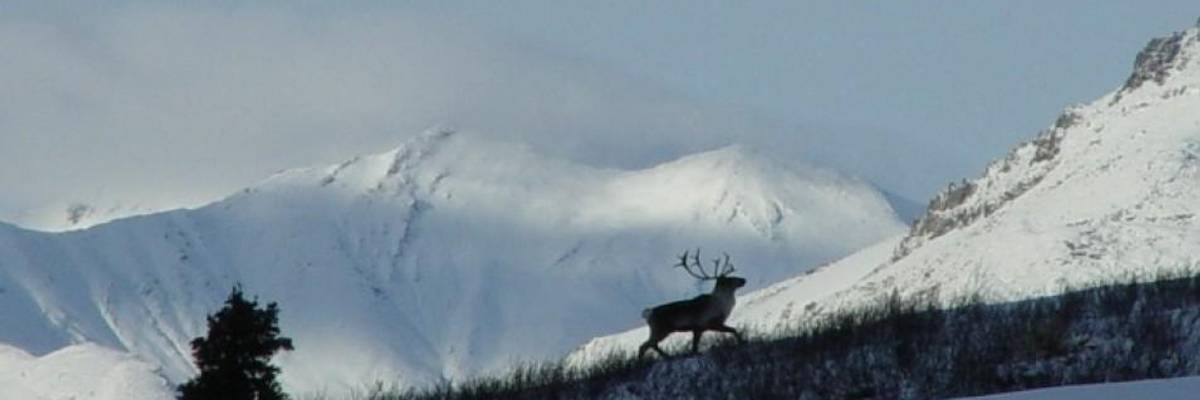
A member of the Porcupine caribou herd is seen in the Arctic Refuge in Alaska.
"Drilling for oil in the Arctic National Wildlife Refuge is all risk with no reward," said one advocate.
Wildlife protection groups and Indigenous leaders in Alaska said Monday that they would push to discourage bidding in an oil and gas lease sale just announced by the U.S. Interior Department for part of the Arctic National Wildlife Refuge.
Under the 2017 Tax Cuts and Jobs Act, which opened the refuge for oil and gas drilling, the Biden administration announced the second of two lease sales, set to be held on January 9, 2025.
The first Trump administration held the initial lease sale in 2021, but with banks and insurance companies increasingly reticent to back drilling projects in the area, it generated little interest and led to less than 1% of the projected sale revenue.
Releasing its final record of decision, the Interior Department said Monday that 400,000 acres of wilderness in the refuge's 1.6-million-acre northwest Coastal Plain would be put up for bidding at a minimum price of $30 per acre—despite vocal opposition from the Gwich'in Nation and the Iñupiat Alaska Natives.
The land supports local communities as well as porcupine caribou herds and polar bears.
"Our way of life, our food security, and our spiritual well-being is directly tied to the health of the caribou and the health of this irreplaceable landscape," Kristen Moreland, executive director of Gwich'in Steering Committee, told Bloomberg News. "Every oil company stayed away from the first lease sale, and we expect them to do the same during the second."
The record of decision concludes the Bureau of Land Management's process for developing a supplemental environmental impact statement, which was required after President-elect Donald Trump's first administration completed an analysis with "fundamental flaws and legal errors," as the Sierra Club said Monday.
Selling the drilling rights just before Trump takes office could complicate the GOP's plans to hold a more expansive sale later on, but Dan Ritzman, director of Sierra Club's Conservation Campaign, emphasized that regardless of who is in office when the sale takes place, "oil and gas development in the Arctic Refuge is a direct threat to some of the last untouched landscapes on Alaska's North Slope and to the caribou herds that the Gwich'in people rely on."
"The 2017 tax act, forced through Congress by Donald Trump and his Big Oil CEO allies, opened up the Coastal Plain to oil and gas leasing," said Ritzman. "Letting him oversee a lease sale over these pristine lands would be beyond irresponsible. In the meantime, President [Joe] Biden should listen to the Gwich'in and do all that he can to preserve these lands and waters. His legacy is on the line."
Erik Grafe, an attorney at environmental law firm Earthjustice, said the group is "committed to going to court as often as necessary to defend the Arctic Refuge from oil drilling and will work toward a more sustainable future that does not depend on ever-expanding oil extraction."
"Drilling for oil in the Arctic National Wildlife Refuge is all risk with no reward," said Grafe. "Oil drilling would destroy this beautiful land, held sacred by Gwich'in people, and would further destabilize the global climate, but it offers zero benefit to taxpayers or consumers."
Defenders of Wildlife called on Congress to repeal the 2017 tax law's mandate for leasing sales in the "iconic American landscape" of the Arctic Refuge.
"Turning the coastal plain into an oilfield will obliterate the pristine wilderness of the Arctic Refuge," said Nicole Whittington-Evans, Alaska senior program director for the group, "directly threatening the future of the Porcupine caribou herd and the physical, cultural, and spiritual existence of the Gwich'in people who depend on them."
Dear Common Dreams reader, It’s been nearly 30 years since I co-founded Common Dreams with my late wife, Lina Newhouser. We had the radical notion that journalism should serve the public good, not corporate profits. It was clear to us from the outset what it would take to build such a project. No paid advertisements. No corporate sponsors. No millionaire publisher telling us what to think or do. Many people said we wouldn't last a year, but we proved those doubters wrong. Together with a tremendous team of journalists and dedicated staff, we built an independent media outlet free from the constraints of profits and corporate control. Our mission has always been simple: To inform. To inspire. To ignite change for the common good. Building Common Dreams was not easy. Our survival was never guaranteed. When you take on the most powerful forces—Wall Street greed, fossil fuel industry destruction, Big Tech lobbyists, and uber-rich oligarchs who have spent billions upon billions rigging the economy and democracy in their favor—the only bulwark you have is supporters who believe in your work. But here’s the urgent message from me today. It's never been this bad out there. And it's never been this hard to keep us going. At the very moment Common Dreams is most needed, the threats we face are intensifying. We need your support now more than ever. We don't accept corporate advertising and never will. We don't have a paywall because we don't think people should be blocked from critical news based on their ability to pay. Everything we do is funded by the donations of readers like you. When everyone does the little they can afford, we are strong. But if that support retreats or dries up, so do we. Will you donate now to make sure Common Dreams not only survives but thrives? —Craig Brown, Co-founder |
Wildlife protection groups and Indigenous leaders in Alaska said Monday that they would push to discourage bidding in an oil and gas lease sale just announced by the U.S. Interior Department for part of the Arctic National Wildlife Refuge.
Under the 2017 Tax Cuts and Jobs Act, which opened the refuge for oil and gas drilling, the Biden administration announced the second of two lease sales, set to be held on January 9, 2025.
The first Trump administration held the initial lease sale in 2021, but with banks and insurance companies increasingly reticent to back drilling projects in the area, it generated little interest and led to less than 1% of the projected sale revenue.
Releasing its final record of decision, the Interior Department said Monday that 400,000 acres of wilderness in the refuge's 1.6-million-acre northwest Coastal Plain would be put up for bidding at a minimum price of $30 per acre—despite vocal opposition from the Gwich'in Nation and the Iñupiat Alaska Natives.
The land supports local communities as well as porcupine caribou herds and polar bears.
"Our way of life, our food security, and our spiritual well-being is directly tied to the health of the caribou and the health of this irreplaceable landscape," Kristen Moreland, executive director of Gwich'in Steering Committee, told Bloomberg News. "Every oil company stayed away from the first lease sale, and we expect them to do the same during the second."
The record of decision concludes the Bureau of Land Management's process for developing a supplemental environmental impact statement, which was required after President-elect Donald Trump's first administration completed an analysis with "fundamental flaws and legal errors," as the Sierra Club said Monday.
Selling the drilling rights just before Trump takes office could complicate the GOP's plans to hold a more expansive sale later on, but Dan Ritzman, director of Sierra Club's Conservation Campaign, emphasized that regardless of who is in office when the sale takes place, "oil and gas development in the Arctic Refuge is a direct threat to some of the last untouched landscapes on Alaska's North Slope and to the caribou herds that the Gwich'in people rely on."
"The 2017 tax act, forced through Congress by Donald Trump and his Big Oil CEO allies, opened up the Coastal Plain to oil and gas leasing," said Ritzman. "Letting him oversee a lease sale over these pristine lands would be beyond irresponsible. In the meantime, President [Joe] Biden should listen to the Gwich'in and do all that he can to preserve these lands and waters. His legacy is on the line."
Erik Grafe, an attorney at environmental law firm Earthjustice, said the group is "committed to going to court as often as necessary to defend the Arctic Refuge from oil drilling and will work toward a more sustainable future that does not depend on ever-expanding oil extraction."
"Drilling for oil in the Arctic National Wildlife Refuge is all risk with no reward," said Grafe. "Oil drilling would destroy this beautiful land, held sacred by Gwich'in people, and would further destabilize the global climate, but it offers zero benefit to taxpayers or consumers."
Defenders of Wildlife called on Congress to repeal the 2017 tax law's mandate for leasing sales in the "iconic American landscape" of the Arctic Refuge.
"Turning the coastal plain into an oilfield will obliterate the pristine wilderness of the Arctic Refuge," said Nicole Whittington-Evans, Alaska senior program director for the group, "directly threatening the future of the Porcupine caribou herd and the physical, cultural, and spiritual existence of the Gwich'in people who depend on them."
Wildlife protection groups and Indigenous leaders in Alaska said Monday that they would push to discourage bidding in an oil and gas lease sale just announced by the U.S. Interior Department for part of the Arctic National Wildlife Refuge.
Under the 2017 Tax Cuts and Jobs Act, which opened the refuge for oil and gas drilling, the Biden administration announced the second of two lease sales, set to be held on January 9, 2025.
The first Trump administration held the initial lease sale in 2021, but with banks and insurance companies increasingly reticent to back drilling projects in the area, it generated little interest and led to less than 1% of the projected sale revenue.
Releasing its final record of decision, the Interior Department said Monday that 400,000 acres of wilderness in the refuge's 1.6-million-acre northwest Coastal Plain would be put up for bidding at a minimum price of $30 per acre—despite vocal opposition from the Gwich'in Nation and the Iñupiat Alaska Natives.
The land supports local communities as well as porcupine caribou herds and polar bears.
"Our way of life, our food security, and our spiritual well-being is directly tied to the health of the caribou and the health of this irreplaceable landscape," Kristen Moreland, executive director of Gwich'in Steering Committee, told Bloomberg News. "Every oil company stayed away from the first lease sale, and we expect them to do the same during the second."
The record of decision concludes the Bureau of Land Management's process for developing a supplemental environmental impact statement, which was required after President-elect Donald Trump's first administration completed an analysis with "fundamental flaws and legal errors," as the Sierra Club said Monday.
Selling the drilling rights just before Trump takes office could complicate the GOP's plans to hold a more expansive sale later on, but Dan Ritzman, director of Sierra Club's Conservation Campaign, emphasized that regardless of who is in office when the sale takes place, "oil and gas development in the Arctic Refuge is a direct threat to some of the last untouched landscapes on Alaska's North Slope and to the caribou herds that the Gwich'in people rely on."
"The 2017 tax act, forced through Congress by Donald Trump and his Big Oil CEO allies, opened up the Coastal Plain to oil and gas leasing," said Ritzman. "Letting him oversee a lease sale over these pristine lands would be beyond irresponsible. In the meantime, President [Joe] Biden should listen to the Gwich'in and do all that he can to preserve these lands and waters. His legacy is on the line."
Erik Grafe, an attorney at environmental law firm Earthjustice, said the group is "committed to going to court as often as necessary to defend the Arctic Refuge from oil drilling and will work toward a more sustainable future that does not depend on ever-expanding oil extraction."
"Drilling for oil in the Arctic National Wildlife Refuge is all risk with no reward," said Grafe. "Oil drilling would destroy this beautiful land, held sacred by Gwich'in people, and would further destabilize the global climate, but it offers zero benefit to taxpayers or consumers."
Defenders of Wildlife called on Congress to repeal the 2017 tax law's mandate for leasing sales in the "iconic American landscape" of the Arctic Refuge.
"Turning the coastal plain into an oilfield will obliterate the pristine wilderness of the Arctic Refuge," said Nicole Whittington-Evans, Alaska senior program director for the group, "directly threatening the future of the Porcupine caribou herd and the physical, cultural, and spiritual existence of the Gwich'in people who depend on them."

