

SUBSCRIBE TO OUR FREE NEWSLETTER
Daily news & progressive opinion—funded by the people, not the corporations—delivered straight to your inbox.
5
#000000
#FFFFFF
To donate by check, phone, or other method, see our More Ways to Give page.


Daily news & progressive opinion—funded by the people, not the corporations—delivered straight to your inbox.
"Rescinding the rule would not eliminate climate risk from the market—it simply blindfolds investors to it, at their own expense," said one critic.
Consumer and environmental advocates on Monday called for the Securities and Exchange Commission to end its push to rescind rules requiring companies to disclose risks related to climate change.
The SEC first adopted the climate disclosure rules in 2024, with the commission describing them as a response to "investors’ demand for more consistent, comparable, and reliable information about the financial effects of climate-related risks on a registrant’s operations."
But in June, the SEC—now under the leadership of President Donald Trump-appointed chair Paul Atkins—proposed scrapping the rules, which the commission described as "an overreach of statutory authority and unsound policy."
Elyse Schupak, climate policy advocate for Public Citizen, said that ending the disclosure rules would reflect "the desire of Paul Atkins’ SEC to ignore growing financial risks from climate change and to deprive investors of essential information."
"For polluting industries that seek to downplay their role driving the climate crisis and their exposure to related risks, finalizing the proposed rule would be a victory," said Schupak. "The SEC should withdraw this proposal as it contradicts the commission’s responsibility to facilitate transparency for investors and promote well functioning capital markets."
Alex Martin, climate finance policy director at Americans for Financial Reform, noted that many investors spoke up in favor of the disclosure rules when they were first proposed because they saw climate risk assessment as a valuable information to have before making major financial decisions.
If the new proposal is finalized, Martin added, it "will hurt workers saving for retirement by depriving people of information needed to assess companies' financial risks due to climate change—and by endangering other critical disclosures as well."
Benjamin Schiffrin, director of securities policy for Better Markets, similarly argued that scrapping the SEC rules "will deprive investors of material information essential to making informed investment decisions."
"There can no longer be any serious dispute that the climate-related risk companies face matters greatly to their future prospects," Schiffrin emphasized. "An SEC that was serious about protecting investors would be facilitating investors’ access to this information, not preventing them from understanding how climate-related risks are impacting the companies in which they invest their hard-earned money."
Janet Ranganathan, managing director at the World Resources Institute, said repealing the rule was particularly nonsensical at a time when the country is dealing with multiple climate-related disasters, including wildfires in the Pacific Northwest.
"Rescinding the rule would not eliminate climate risk from the market—it simply blindfolds investors to it, at their own expense," said Ranganathan. "Climate risk should not become the exception to smart financial management simply because it has become politically contentious."
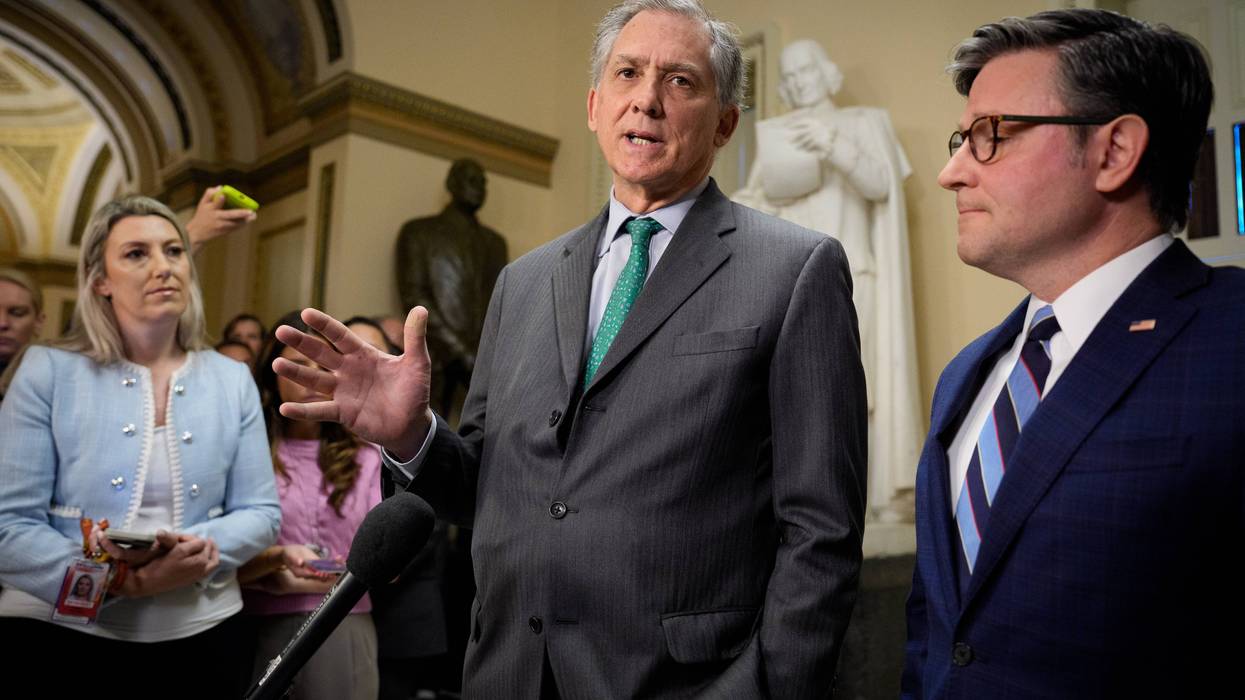
The Republican legislative package "would leave the financial system dramatically weaker and make future bank failures and publicly financed bailouts more likely," warned one advocacy group.
A broad coalition of advocacy organizations and labor unions warned Tuesday that Republican legislation currently moving through the US House of Representatives would deregulate Wall Street giants and increase the risk of another financial disaster under the guise of aiding community banks.
"This dangerous bank deregulation package would undermine core safeguards and supervision, push risk into the shadows, and make the next publicly financed bailout more likely," an alliance of 28 advocacy groups wrote in a letter to members of Congress. "Further deregulation is especially alarming at a time when financial regulatory agencies are under political attack, pursuing industry-friendly agendas, and starved of resources, and when there is effectively no oversight of financial markets."
Proponents of the GOP's Main Street Capital Access Act (HR 6955), which is backed by major bank lobbying organizations and some Democratic lawmakers, characterize the bill as an effort to bolster small financial institutions by reducing their regulatory burdens. Oscar Valdés Viera, senior policy analyst for private equity and capital markets at Americans for Financial Reform, said that's a ruse.
"Instead of providing meaningful relief from sky high credit card interest rates and late fees, this bill just lets big banks off the hook by weakening oversight, enacting carve-outs and exemptions from banking laws, and creating a pathway for banks to block commonsense regulatory safeguards that could reduce the likelihood and severity of financial crises," said Valdés Viera. "HR 6955 would automatically raise major regulatory thresholds, weaken bank examiners tools, create new avenues to contest supervisory and enforcement decisions, reduce meaningful competition review for many bank mergers, and expand merchant banking arrangements that blur the line between banking and commerce."
"The House majority is pushing a package of risky bank deregulation that is just another giveaway to Wall Street banks when the Congress should be laser focused on the affordability crisis," Valdés Viera said.
The advocacy coalition's letter urging lawmakers to block the legislative package—which could receive a vote in the House as early as Tuesday afternoon—points specifically to Sections 201-204 of the measure. The language in those sections, the coalition warned, "would raise statutory thresholds, extend 'tailoring' well beyond genuinely small and simple banks, and hard-wire automatic future threshold increases."
"As a result, fewer institutions, activities, and risks would remain within baseline guardrails even as the financial system grows more complex and interconnected," the coalition wrote. "The combined effect would be higher leverage and risk-taking, thinner cushions against losses, and weaker prudential standards. It would return the financial system to a pre-2008 pattern in which risk migrates out of view, problems build for years at midsize and large institutions, and the public is left holding the bag when those institutions fail."
The Main Street Capital Access Act, sponsored by Rep. French Hill (R-Ark.)—a major beneficiary of finance industry campaign cash—cleared the House Rules Committee on Monday. Punchbowl reported that Rep. Bill Foster (D-Ill.), the ranking member of the House Financial Services Committee's subcommittee on financial institutions, is urging his Democratic colleagues to support the legislation, despite opposition from the top Democrat on the committee, Rep. Maxine Waters (D-Calif.).
"HR 6955 is Wall Street deregulation hiding as a community bank bill," Waters said in her testimony before the House Rules Committee on Monday. "This bill lets even more of these large banks escape critical safeguards risking more failures. In fact, the sponsors of this bill were so zealous to raise thresholds, they increased one threshold that will aid bad actors who commit fraud against a bank."
"Instead of letting Wall Street put Americans and our economy at risk again," said Waters, "we should be working together to address the affordability crisis caused by Trump’s failed economic policies and endless war with Iran."