SUBSCRIBE TO OUR FREE NEWSLETTER
Daily news & progressive opinion—funded by the people, not the corporations—delivered straight to your inbox.
5
#000000
#FFFFFF
To donate by check, phone, or other method, see our More Ways to Give page.
Daily news & progressive opinion—funded by the people, not the corporations—delivered straight to your inbox.
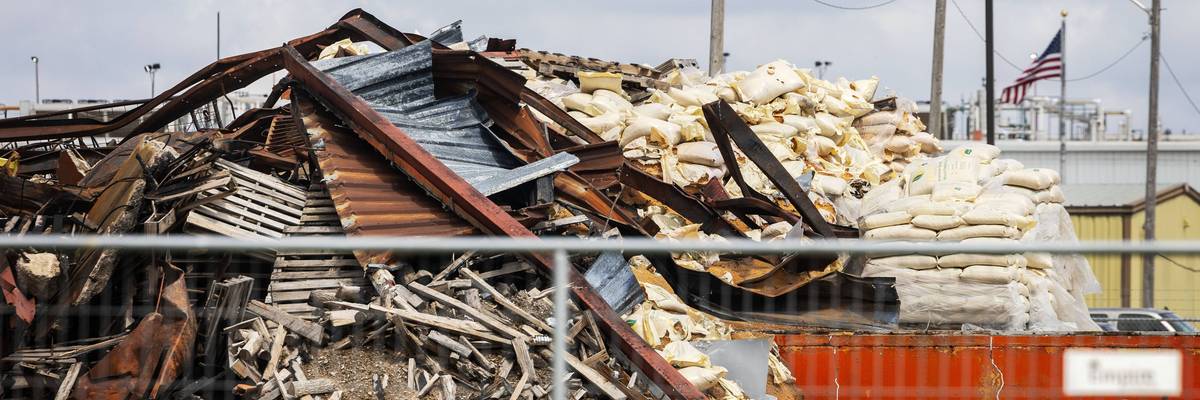
Ruble and bags of wood pellets are seen piled up at Horizon Biofuel plant in Fremont, Nebraska on Friday, May 22, 2026. The plant was the site of an explosion in July 2025 that killed three people.
When an industry already places disproportionate burdens on economically disadvantaged communities, should Congress make environmental oversight less effective?
Congress has a legitimate problem to solve. America’s aging electricity grid needs modernization, and the lengthy process for approving new energy infrastructure can delay investments that are essential to economic growth and decarbonization. But the Bipartisan American Affordability and Jobs Act of 2026, or BAAJA, risks addressing those challenges by weakening the very environmental safeguards designed to protect communities from industrial harm. Industrial wood biomass illustrates what is at stake.
Across the southeastern United States and beyond, industrial facilities process harvested timber into wood pellets, much of it destined for overseas power plants. Marketed as a renewable alternative to coal, the industry has expanded alongside persistent concerns about air pollution, forest degradation, and environmental justice. Now, Congress is considering legislation that could further diminish communities’ ability to challenge environmentally damaging development.
The industry’s local impacts are neither hypothetical nor insignificant. A peer-reviewed study examining wood pellet facilities across nine southeastern states found that pellet mills were approximately 50% more likely to be located in communities designated by the researchers as environmental justice communities. In North and South Carolina, every pellet facility examined was located in such a community.
Congress should preserve the bill’s valuable transmission reforms, but those benefits cannot come at the expense of meaningful judicial oversight, thorough environmental review, and public participation.
When an industry already places disproportionate burdens on economically disadvantaged communities, should Congress make environmental oversight less effective?
The Environmental Protection Agency has recognized the need for greater scrutiny. Its Wood Pellet Research Project examines potential air and water pollution, community health impacts, and the effects of forest loss on water quality. Researchers have also documented elevated community noise levels associated with wood pellet production in Gloster, Mississippi.
These are precisely the kinds of concerns that make meaningful environmental review and public participation indispensable.
Consider the experience of Ahoskie, North Carolina. In 2023, the state’s Department of Environmental Quality approved modifications to an Enviva wood pellet facility’s air permit, requiring additional pollution controls and a revised plan to prevent dust from drifting beyond the property boundary. The changes followed an extensive public engagement process. Residents raised concerns about dust, noise, and truck traffic, and state regulators incorporated additional requirements into the final permit.
This example demonstrates something frequently overlooked in permitting debates. Public participation is not necessarily an obstacle to development. Far from it. Public participation improves projects by identifying problems and producing enforceable safeguards.
To be clear, Ahoskie’s permit was issued through a state-administered program, not a National Environmental Policy Act review. BAAJA would not automatically eliminate such permits. But the case illustrates why communities need meaningful opportunities to challenge industrial activities, particularly when federal approvals bring a project within the scope of federal environmental law.
BAAJA would make it harder for communities to challenge projects that threaten their environment. The bill would give residents less time to bring legal challenges and limit who can file them. More concerning, even when a court finds that federal officials failed to properly assess a project’s environmental impacts, the law could prevent judges from stopping construction while those problems are addressed. The practical consequences could be profound. A community might successfully demonstrate that federal officials overlooked significant environmental impacts yet still be unable to stop construction while deficiencies are corrected. For developments affecting forests, wetlands, or nearby neighborhoods, that distinction is important to understand.
Environmental damage cannot always be reversed after the bulldozers have left. Supporters of permitting reform correctly argue that unnecessary delays impose costs. But speed and accountability are not mutually exclusive. Indeed, a Columbia University Center on Global Energy Policy analysis identifies both the efficiencies the legislation could produce and the significant restrictions it would place on environmental litigation. Congress should preserve the bill’s valuable transmission reforms, but those benefits cannot come at the expense of meaningful judicial oversight, thorough environmental review, and public participation. Until protections are adequately addressed, lawmakers risk advancing legislation whose environmental consequences extend far beyond the clean energy projects it was intended to support.
The wood pellet industry offers a cautionary lesson. Environmental promises should invite scrutiny. Communities asked to live alongside industrial operations deserve enforceable protections, regardless of whether those operations are labeled renewable. America needs to build its energy future faster, but the ability to build quickly should never come at the expense of the public’s ability to demand that we build responsibly.
This country and this world are at a monumental crossroads. US voters have an opportunity to beat back the forces of fascism and confront the billionaires who are rigging the economy, our media system, and our democracy, making it increasingly impossible for ordinary people to get by. We’re not just talking about the election. We’re talking about what must be done once these fascist elements are vanquished from power. We need a bolder set of solutions than what either major party has so far been willing to offer and a working-class movement ready to fight like hell for it. Trump didn't emerge from nowhere. The conditions that fueled MAGA authoritarianism were created by decades of radical neoliberal economic policies and a corrupt political system dominated by corporate interests. They slashed taxes on the super-rich, promising that the benefits would trickle down. They said giveaways to the corporate titans would make life more affordable for the rest of us. It was all bullshit. And when a bitter, betrayed populace searches for someone to blame, right-wing demagogues have little trouble finding scapegoats. People know when they're being lied to, but you won't hear any of this from the corporate media. Only independent journalism—powered and funded by people who believe in building a better world—can deliver truly trustworthy daily news. If you share our vision, please contribute whatever you can to sustain our work. |
Congress has a legitimate problem to solve. America’s aging electricity grid needs modernization, and the lengthy process for approving new energy infrastructure can delay investments that are essential to economic growth and decarbonization. But the Bipartisan American Affordability and Jobs Act of 2026, or BAAJA, risks addressing those challenges by weakening the very environmental safeguards designed to protect communities from industrial harm. Industrial wood biomass illustrates what is at stake.
Across the southeastern United States and beyond, industrial facilities process harvested timber into wood pellets, much of it destined for overseas power plants. Marketed as a renewable alternative to coal, the industry has expanded alongside persistent concerns about air pollution, forest degradation, and environmental justice. Now, Congress is considering legislation that could further diminish communities’ ability to challenge environmentally damaging development.
The industry’s local impacts are neither hypothetical nor insignificant. A peer-reviewed study examining wood pellet facilities across nine southeastern states found that pellet mills were approximately 50% more likely to be located in communities designated by the researchers as environmental justice communities. In North and South Carolina, every pellet facility examined was located in such a community.
Congress should preserve the bill’s valuable transmission reforms, but those benefits cannot come at the expense of meaningful judicial oversight, thorough environmental review, and public participation.
When an industry already places disproportionate burdens on economically disadvantaged communities, should Congress make environmental oversight less effective?
The Environmental Protection Agency has recognized the need for greater scrutiny. Its Wood Pellet Research Project examines potential air and water pollution, community health impacts, and the effects of forest loss on water quality. Researchers have also documented elevated community noise levels associated with wood pellet production in Gloster, Mississippi.
These are precisely the kinds of concerns that make meaningful environmental review and public participation indispensable.
Consider the experience of Ahoskie, North Carolina. In 2023, the state’s Department of Environmental Quality approved modifications to an Enviva wood pellet facility’s air permit, requiring additional pollution controls and a revised plan to prevent dust from drifting beyond the property boundary. The changes followed an extensive public engagement process. Residents raised concerns about dust, noise, and truck traffic, and state regulators incorporated additional requirements into the final permit.
This example demonstrates something frequently overlooked in permitting debates. Public participation is not necessarily an obstacle to development. Far from it. Public participation improves projects by identifying problems and producing enforceable safeguards.
To be clear, Ahoskie’s permit was issued through a state-administered program, not a National Environmental Policy Act review. BAAJA would not automatically eliminate such permits. But the case illustrates why communities need meaningful opportunities to challenge industrial activities, particularly when federal approvals bring a project within the scope of federal environmental law.
BAAJA would make it harder for communities to challenge projects that threaten their environment. The bill would give residents less time to bring legal challenges and limit who can file them. More concerning, even when a court finds that federal officials failed to properly assess a project’s environmental impacts, the law could prevent judges from stopping construction while those problems are addressed. The practical consequences could be profound. A community might successfully demonstrate that federal officials overlooked significant environmental impacts yet still be unable to stop construction while deficiencies are corrected. For developments affecting forests, wetlands, or nearby neighborhoods, that distinction is important to understand.
Environmental damage cannot always be reversed after the bulldozers have left. Supporters of permitting reform correctly argue that unnecessary delays impose costs. But speed and accountability are not mutually exclusive. Indeed, a Columbia University Center on Global Energy Policy analysis identifies both the efficiencies the legislation could produce and the significant restrictions it would place on environmental litigation. Congress should preserve the bill’s valuable transmission reforms, but those benefits cannot come at the expense of meaningful judicial oversight, thorough environmental review, and public participation. Until protections are adequately addressed, lawmakers risk advancing legislation whose environmental consequences extend far beyond the clean energy projects it was intended to support.
The wood pellet industry offers a cautionary lesson. Environmental promises should invite scrutiny. Communities asked to live alongside industrial operations deserve enforceable protections, regardless of whether those operations are labeled renewable. America needs to build its energy future faster, but the ability to build quickly should never come at the expense of the public’s ability to demand that we build responsibly.