SUBSCRIBE TO OUR FREE NEWSLETTER
Daily news & progressive opinion—funded by the people, not the corporations—delivered straight to your inbox.
5
#000000
#FFFFFF
To donate by check, phone, or other method, see our More Ways to Give page.
Daily news & progressive opinion—funded by the people, not the corporations—delivered straight to your inbox.
Corporations use their endless resources to ensure that efforts designed to benefit people enrich those at the very top.
One measure of corporate power’s dominance is its 24/7 relentless, profit-driven capacity to strike back and prevail over reforms or other efforts designed to give the people voice and fairness.
Here are some examples that should give us pause in touting civic victories:
A few years ago, during lunch with the formidable, creative Brian Lamb—founder of C-SPAN—I asked whether, after decades of blanket coverage of Congressional sessions, accessible to millions of people, Congress was an improved institution. After all, as Justice Louis Brandeis once wrote: “sunlight is the best disinfectant.” His reply: “No.” Such is the ever-growing grip of corporate lobbyists directly on and inside Congress, compared to the unorganized sovereign people back home.
The massive government investment in developing important pharmaceuticals over the decades, followed by free giveaways of these discoveries to drug companies, was supposed to reduce the corporate cost of discovering and testing new medicines and thereby reduce what companies like Pfizer, Merck and Eli Lilly would charge patients. No way—Americans, who paid for these discoveries, are charged record-high prices for pharmaceuticals—higher than in any other country in the world.
To add insult to injury, American drug firms exported production of many of these medicines to China and India for importing back to the U.S. for a greater profit than might come from U.S. production. One result—the national security nightmare of our country not producing any antibiotics here at home!
During the second Bush Administration, Congress cut the tax rate sharply to induce U.S. companies to bring home tens of billions of stored dollars in return for businesses promising to invest this money in productive enterprise and wage gains. Result—a double-cross. Instead, the companies bought back their own stock, pumped up executive compensation, and funded mergers.
Years ago, Congress passed legislation allowing business corporations to deduct up to ten percent of their taxable income for charitable contributions. The lawmakers thought this would unleash large sums of money to help the needy in addition to educational and civic initiatives.
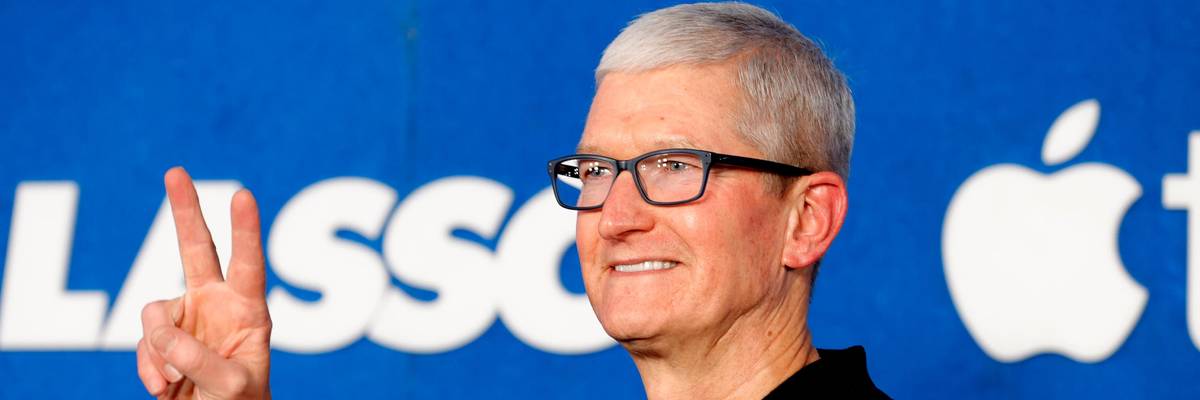
Result: Only a tiny number of major corporations exceed the one percent level of charitable donations. Hugely profitable companies give to charitable activities at a fraction of one percent. Apple is one of them, headed by CEO Tim Cook who makes $833 A MINUTE!
The U.S. Securities and Exchange Commission (SEC) does not require companies to disclose their percentage of charitable contributions. Institutional and individual shareholders should introduce resolutions to compel the top brass to do so. Such resolutions should win a majority of votes and open the door to the shame and embarrassment of stingy companies. In such a “soft area,” this may be enough to spring tens of billions of dollars for “good works.” Wake up perpetrators of “good works!” All you have to lose is your perennial red ink.
President Bill Clinton produced another unintended boomerang when in 1993, he got through Congress a revenue rule prohibiting deductibility for any corporate boss who received annual compensation above $1 million a year. However, the rule came with a giant “loophole.” As Sarah Anderson of the Institute for Policy Studies wrote in a report you should read: “So-called ‘performance’ pay, including stock options and certain bonuses, would be exempted from the deductibility cap.”
Result: Executive compensation via deviously calculated stock options and bonuses skyrocketed, and, combined with a Reaganite elimination of SEC restrictions over stock buybacks in 1982, led to the gigantic waste of trillions of dollars of corporate profits poured (shareholder money) into unproductive stock buybacks.
Corporate bosses have a personal interest in stock buybacks. As Steve Clifford showed in his book The CEO Pay Machine: How It Trashes America and How to Stop It, the bosses developed metrics for raising their pay that just happened to coincide with the stock buyback and stock option racket.
The emergence of the Pentagon-developed Internet was supposed to even a playing field between the haves and the have-nots by making access, retrieval, and transfer of knowledge and informed advocacy virtually free. It was supposed to give power to the people.
Result: Addictive trivia to the masses, information overload, and the rise of the Wardens of the Internet Gulag – Facebook, Instagram, TikTok, and the rest of these unregulated control freaks who distribute your personal information anywhere in the world for big profits.
Then, of course, there is the old standby—Regulatory Capture. First comes reforms for the people after years of striving to create health, safety, and economic regulatory agencies to impose some ‘law and order’ on the out-of-control corporate bandits and greed hounds. Then come the rebounds. Corporate lobbyists, campaign cashiers, and the placement of corporatists to run federal agencies. These corporate operatives work to put the agencies to sleep or to actually turn them against the people directly through this internal sabotage. The Food and Drug Administration (FDA) and the Federal Railroad Administration (FRA) are two such examples.
Congress has even let the drug and medical device companies fund the FDA’s drug approval regulatory apparatus. What’s that saying about ‘not biting the hand that feeds you’?
Knowing about this second, third, and fourth strike capability by big business may sensitize citizen groups and advocates to demand that the Democratic Party, at least, be alert and forceful in rolling back these anti-people travesties when they achieve majority status on Capitol Hill. Rhetoric is useless.
To date, the Dems have rarely done so even for such giveaways as Trump’s 2017 huge tax cut for the rich and powerful, which the Democrats had opposed. Taking over the House in 2019, some Dems led by House Ways and Means Committee Chairman, Richard Neal (D-MA) openly said they were not going to move to repeal and use the monies for good purposes.
Persistent Democracy does take work, doesn’t it? Oh people!
This country and this world are at a monumental crossroads. US voters have an opportunity to beat back the forces of fascism and confront the billionaires who are rigging the economy, our media system, and our democracy, making it increasingly impossible for ordinary people to get by. We’re not just talking about the election. We’re talking about what must be done once these fascist elements are vanquished from power. We need a bolder set of solutions than what either major party has so far been willing to offer and a working-class movement ready to fight like hell for it. Trump didn't emerge from nowhere. The conditions that fueled MAGA authoritarianism were created by decades of radical neoliberal economic policies and a corrupt political system dominated by corporate interests. They slashed taxes on the super-rich, promising that the benefits would trickle down. They said giveaways to the corporate titans would make life more affordable for the rest of us. It was all bullshit. And when a bitter, betrayed populace searches for someone to blame, right-wing demagogues have little trouble finding scapegoats. People know when they're being lied to, but you won't hear any of this from the corporate media. Only independent journalism—powered and funded by people who believe in building a better world—can deliver truly trustworthy daily news. If you share our vision, please contribute whatever you can to sustain our work. |
One measure of corporate power’s dominance is its 24/7 relentless, profit-driven capacity to strike back and prevail over reforms or other efforts designed to give the people voice and fairness.
Here are some examples that should give us pause in touting civic victories:
A few years ago, during lunch with the formidable, creative Brian Lamb—founder of C-SPAN—I asked whether, after decades of blanket coverage of Congressional sessions, accessible to millions of people, Congress was an improved institution. After all, as Justice Louis Brandeis once wrote: “sunlight is the best disinfectant.” His reply: “No.” Such is the ever-growing grip of corporate lobbyists directly on and inside Congress, compared to the unorganized sovereign people back home.
The massive government investment in developing important pharmaceuticals over the decades, followed by free giveaways of these discoveries to drug companies, was supposed to reduce the corporate cost of discovering and testing new medicines and thereby reduce what companies like Pfizer, Merck and Eli Lilly would charge patients. No way—Americans, who paid for these discoveries, are charged record-high prices for pharmaceuticals—higher than in any other country in the world.
To add insult to injury, American drug firms exported production of many of these medicines to China and India for importing back to the U.S. for a greater profit than might come from U.S. production. One result—the national security nightmare of our country not producing any antibiotics here at home!
During the second Bush Administration, Congress cut the tax rate sharply to induce U.S. companies to bring home tens of billions of stored dollars in return for businesses promising to invest this money in productive enterprise and wage gains. Result—a double-cross. Instead, the companies bought back their own stock, pumped up executive compensation, and funded mergers.
Years ago, Congress passed legislation allowing business corporations to deduct up to ten percent of their taxable income for charitable contributions. The lawmakers thought this would unleash large sums of money to help the needy in addition to educational and civic initiatives.
Result: Only a tiny number of major corporations exceed the one percent level of charitable donations. Hugely profitable companies give to charitable activities at a fraction of one percent. Apple is one of them, headed by CEO Tim Cook who makes $833 A MINUTE!
The U.S. Securities and Exchange Commission (SEC) does not require companies to disclose their percentage of charitable contributions. Institutional and individual shareholders should introduce resolutions to compel the top brass to do so. Such resolutions should win a majority of votes and open the door to the shame and embarrassment of stingy companies. In such a “soft area,” this may be enough to spring tens of billions of dollars for “good works.” Wake up perpetrators of “good works!” All you have to lose is your perennial red ink.
President Bill Clinton produced another unintended boomerang when in 1993, he got through Congress a revenue rule prohibiting deductibility for any corporate boss who received annual compensation above $1 million a year. However, the rule came with a giant “loophole.” As Sarah Anderson of the Institute for Policy Studies wrote in a report you should read: “So-called ‘performance’ pay, including stock options and certain bonuses, would be exempted from the deductibility cap.”
Result: Executive compensation via deviously calculated stock options and bonuses skyrocketed, and, combined with a Reaganite elimination of SEC restrictions over stock buybacks in 1982, led to the gigantic waste of trillions of dollars of corporate profits poured (shareholder money) into unproductive stock buybacks.
Corporate bosses have a personal interest in stock buybacks. As Steve Clifford showed in his book The CEO Pay Machine: How It Trashes America and How to Stop It, the bosses developed metrics for raising their pay that just happened to coincide with the stock buyback and stock option racket.
The emergence of the Pentagon-developed Internet was supposed to even a playing field between the haves and the have-nots by making access, retrieval, and transfer of knowledge and informed advocacy virtually free. It was supposed to give power to the people.
Result: Addictive trivia to the masses, information overload, and the rise of the Wardens of the Internet Gulag – Facebook, Instagram, TikTok, and the rest of these unregulated control freaks who distribute your personal information anywhere in the world for big profits.
Then, of course, there is the old standby—Regulatory Capture. First comes reforms for the people after years of striving to create health, safety, and economic regulatory agencies to impose some ‘law and order’ on the out-of-control corporate bandits and greed hounds. Then come the rebounds. Corporate lobbyists, campaign cashiers, and the placement of corporatists to run federal agencies. These corporate operatives work to put the agencies to sleep or to actually turn them against the people directly through this internal sabotage. The Food and Drug Administration (FDA) and the Federal Railroad Administration (FRA) are two such examples.
Congress has even let the drug and medical device companies fund the FDA’s drug approval regulatory apparatus. What’s that saying about ‘not biting the hand that feeds you’?
Knowing about this second, third, and fourth strike capability by big business may sensitize citizen groups and advocates to demand that the Democratic Party, at least, be alert and forceful in rolling back these anti-people travesties when they achieve majority status on Capitol Hill. Rhetoric is useless.
To date, the Dems have rarely done so even for such giveaways as Trump’s 2017 huge tax cut for the rich and powerful, which the Democrats had opposed. Taking over the House in 2019, some Dems led by House Ways and Means Committee Chairman, Richard Neal (D-MA) openly said they were not going to move to repeal and use the monies for good purposes.
Persistent Democracy does take work, doesn’t it? Oh people!