SUBSCRIBE TO OUR FREE NEWSLETTER
Daily news & progressive opinion—funded by the people, not the corporations—delivered straight to your inbox.
5
#000000
#FFFFFF
To donate by check, phone, or other method, see our More Ways to Give page.
Daily news & progressive opinion—funded by the people, not the corporations—delivered straight to your inbox.
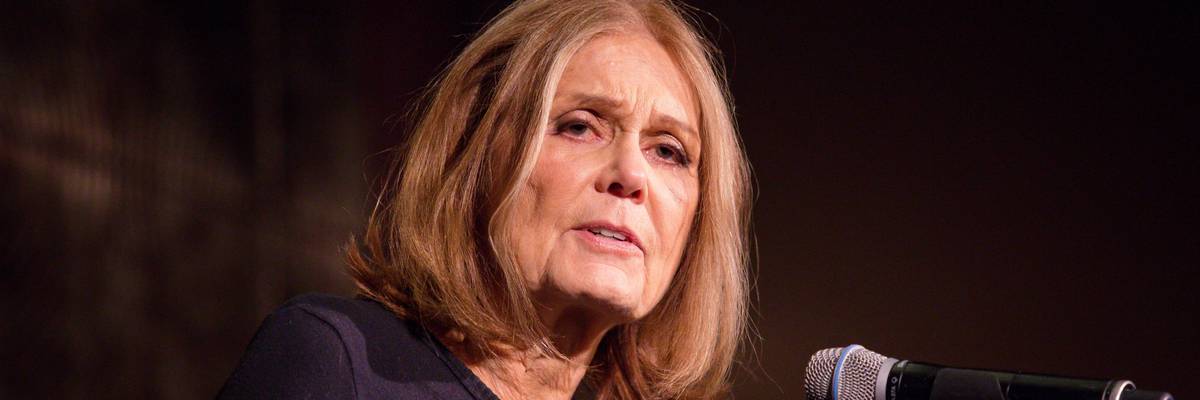
Gloria Steinem speaks at the 2016 NAN 'Keepers Of The Dream' Dinner And Awards Ceremony at the Sheraton New York Hotel & Towers on April 14, 2016 in New York City.
Gloria didn’t believe that history’s pendulum automatically swings back on its own. It swings because people organize, build movements, and refuse to give up.
“How can I be of service?”
That was the phone message Gloria Steinem kept leaving at the office of the African National Congress Parliamentary Women’s Caucus in Cape Town, South Africa in 1997.
I had arrived in the country a year earlier, working as a young staffer for some of the first women elected to lead South Africa’s new democracy. When they asked if I wanted to call that American woman back, I jumped at the chance.
Soon Gloria was on her way to Cape Town, and I was assigned to pick her up at the airport.
As this global icon—something she hated to be called—stepped into my rusted car, the first thing I remember is asking her to keep her head near the window as exhaust crept in through a hole in the floor. (She didn’t flinch.)
When she turned to me, she was both generous and matter-of-fact: “How can I help?”
The road ahead will not be easy. It will require new leadership and new lessons. But we do know how to begin.
With that, I became one of countless women who would become part of Gloria’s ever-expanding circle. For the next three decades, a group of us would be invited into the colorful living room of her New York brownstone to share updates on our work and to inevitably be asked once again: “How can I help?”
After Gloria’s death, we—and millions of others—are left reflecting on the lessons of her life. How can we make sense of a time when our politics seem to be the very opposite of her life’s work?
She wouldn’t have allowed me to ponder that question for long.
In the dark days following the Supreme Court’s Dobbs decision in 2022, I went to visit her. My group chats with women I’d spent my career working alongside were blowing up. My nieces called me, furious and worried. All of us were terrified and angry.
When I walked into that familiar yellow living room on the Upper East Side of Manhattan, the grief I expected to find was nowhere in sight. “It’s okay, the pendulum is swinging one way now, but it will swing back. We will get through this.”
Along with wit and humor, Gloria’s most defining characteristic was her optimism. She called herself a “hope-a-holic.”
Years of bitter backlash to the feminist movement didn’t make her cynical, it made her hopeful. She had seen the other side of backlash: the progress that suddenly emerges after years where nothing seems easy.
She also understood intuitively that despair was a political weapon, and she refused to supply it.
Adversaries of the feminist movement would change over time. Whether it was Phyllis Schlafly or Jerry Falwell, Rush Limbaugh or that guy at the end of the bar, they still seemed to have something in common. They were counting on us to feel hopeless and helpless. Their power depended on us questioning our own.
With Donald Trump as our bully-in-chief, that’s a lesson we should remember now. We’ve seen him before.
Gloria didn’t believe that history’s pendulum automatically swings back on its own. It swings because people organize, build movements, and refuse to give up.
Perhaps one of her most important lessons was also her most prescient. As we face the most misogynist administration in my lifetime, we also face the most racist, with relentless attacks on civil rights; diversity, equity, and inclusion (DEI); and the truth about US history. Gloria understood deeply that there could be no gender justice without racial justice. As she said in 2017, “If it’s White, it’s not feminism—by definition, it includes all women.”
She acted on that commitment by ensuring that Black women and women of color spoke with her side by side, including brilliant activists like Dorothy Pitman Hughes and Florynce “Flo” Kennedy. She was also canny and practical about her power as a white woman. She saw that she could reach other white women, get them into a room, and open a conversation about upending racism and sexism together.
Ever the organizer, Gloria was also deeply practical. Inviting another leader to speak by her side meant you could get twice the audience. Movements are built in crowded rooms.
Donald Trump’s entire project can be summed up in one word: division. He knows that sowing mistrust is key to consolidating power at the top. As long as we are fighting with each other, we won’t see how much we have in common.
It’s the exact opposite of the ethos that came to define Gloria’s worldview, which she often summed up as, “We are linked, not ranked.”
Her death comes just as a multiracial, multigenerational coalition is required to defeat authoritarianism. Gloria’s principled—and practical—approach to movement building is now a road map. The bigger the movement, the further and faster the pendulum will swing.
A decade ago, a reporter asked Gloria if she was ready to pass the torch to the next generation of activists.
“I’m not giving up my torch, thank you very much,” she replied. “I am using it to light other people’s torches.”
As we raise our own torches, we light up a world in immense crisis. The road ahead will not be easy. It will require new leadership and new lessons.
But we do know how to begin. Now it’s our turn to ask: “How can I help?”
Dear Common Dreams reader, It’s been nearly 30 years since I co-founded Common Dreams with my late wife, Lina Newhouser. We had the radical notion that journalism should serve the public good, not corporate profits. It was clear to us from the outset what it would take to build such a project. No paid advertisements. No corporate sponsors. No millionaire publisher telling us what to think or do. Many people said we wouldn't last a year, but we proved those doubters wrong. Together with a tremendous team of journalists and dedicated staff, we built an independent media outlet free from the constraints of profits and corporate control. Our mission has always been simple: To inform. To inspire. To ignite change for the common good. Building Common Dreams was not easy. Our survival was never guaranteed. When you take on the most powerful forces—Wall Street greed, fossil fuel industry destruction, Big Tech lobbyists, and uber-rich oligarchs who have spent billions upon billions rigging the economy and democracy in their favor—the only bulwark you have is supporters who believe in your work. But here’s the urgent message from me today. It's never been this bad out there. And it's never been this hard to keep us going. At the very moment Common Dreams is most needed, the threats we face are intensifying. We need your support now more than ever. We don't accept corporate advertising and never will. We don't have a paywall because we don't think people should be blocked from critical news based on their ability to pay. Everything we do is funded by the donations of readers like you. When everyone does the little they can afford, we are strong. But if that support retreats or dries up, so do we. Will you donate now to make sure Common Dreams not only survives but thrives? —Craig Brown, Co-founder |
“How can I be of service?”
That was the phone message Gloria Steinem kept leaving at the office of the African National Congress Parliamentary Women’s Caucus in Cape Town, South Africa in 1997.
I had arrived in the country a year earlier, working as a young staffer for some of the first women elected to lead South Africa’s new democracy. When they asked if I wanted to call that American woman back, I jumped at the chance.
Soon Gloria was on her way to Cape Town, and I was assigned to pick her up at the airport.
As this global icon—something she hated to be called—stepped into my rusted car, the first thing I remember is asking her to keep her head near the window as exhaust crept in through a hole in the floor. (She didn’t flinch.)
When she turned to me, she was both generous and matter-of-fact: “How can I help?”
The road ahead will not be easy. It will require new leadership and new lessons. But we do know how to begin.
With that, I became one of countless women who would become part of Gloria’s ever-expanding circle. For the next three decades, a group of us would be invited into the colorful living room of her New York brownstone to share updates on our work and to inevitably be asked once again: “How can I help?”
After Gloria’s death, we—and millions of others—are left reflecting on the lessons of her life. How can we make sense of a time when our politics seem to be the very opposite of her life’s work?
She wouldn’t have allowed me to ponder that question for long.
In the dark days following the Supreme Court’s Dobbs decision in 2022, I went to visit her. My group chats with women I’d spent my career working alongside were blowing up. My nieces called me, furious and worried. All of us were terrified and angry.
When I walked into that familiar yellow living room on the Upper East Side of Manhattan, the grief I expected to find was nowhere in sight. “It’s okay, the pendulum is swinging one way now, but it will swing back. We will get through this.”
Along with wit and humor, Gloria’s most defining characteristic was her optimism. She called herself a “hope-a-holic.”
Years of bitter backlash to the feminist movement didn’t make her cynical, it made her hopeful. She had seen the other side of backlash: the progress that suddenly emerges after years where nothing seems easy.
She also understood intuitively that despair was a political weapon, and she refused to supply it.
Adversaries of the feminist movement would change over time. Whether it was Phyllis Schlafly or Jerry Falwell, Rush Limbaugh or that guy at the end of the bar, they still seemed to have something in common. They were counting on us to feel hopeless and helpless. Their power depended on us questioning our own.
With Donald Trump as our bully-in-chief, that’s a lesson we should remember now. We’ve seen him before.
Gloria didn’t believe that history’s pendulum automatically swings back on its own. It swings because people organize, build movements, and refuse to give up.
Perhaps one of her most important lessons was also her most prescient. As we face the most misogynist administration in my lifetime, we also face the most racist, with relentless attacks on civil rights; diversity, equity, and inclusion (DEI); and the truth about US history. Gloria understood deeply that there could be no gender justice without racial justice. As she said in 2017, “If it’s White, it’s not feminism—by definition, it includes all women.”
She acted on that commitment by ensuring that Black women and women of color spoke with her side by side, including brilliant activists like Dorothy Pitman Hughes and Florynce “Flo” Kennedy. She was also canny and practical about her power as a white woman. She saw that she could reach other white women, get them into a room, and open a conversation about upending racism and sexism together.
Ever the organizer, Gloria was also deeply practical. Inviting another leader to speak by her side meant you could get twice the audience. Movements are built in crowded rooms.
Donald Trump’s entire project can be summed up in one word: division. He knows that sowing mistrust is key to consolidating power at the top. As long as we are fighting with each other, we won’t see how much we have in common.
It’s the exact opposite of the ethos that came to define Gloria’s worldview, which she often summed up as, “We are linked, not ranked.”
Her death comes just as a multiracial, multigenerational coalition is required to defeat authoritarianism. Gloria’s principled—and practical—approach to movement building is now a road map. The bigger the movement, the further and faster the pendulum will swing.
A decade ago, a reporter asked Gloria if she was ready to pass the torch to the next generation of activists.
“I’m not giving up my torch, thank you very much,” she replied. “I am using it to light other people’s torches.”
As we raise our own torches, we light up a world in immense crisis. The road ahead will not be easy. It will require new leadership and new lessons.
But we do know how to begin. Now it’s our turn to ask: “How can I help?”
“How can I be of service?”
That was the phone message Gloria Steinem kept leaving at the office of the African National Congress Parliamentary Women’s Caucus in Cape Town, South Africa in 1997.
I had arrived in the country a year earlier, working as a young staffer for some of the first women elected to lead South Africa’s new democracy. When they asked if I wanted to call that American woman back, I jumped at the chance.
Soon Gloria was on her way to Cape Town, and I was assigned to pick her up at the airport.
As this global icon—something she hated to be called—stepped into my rusted car, the first thing I remember is asking her to keep her head near the window as exhaust crept in through a hole in the floor. (She didn’t flinch.)
When she turned to me, she was both generous and matter-of-fact: “How can I help?”
The road ahead will not be easy. It will require new leadership and new lessons. But we do know how to begin.
With that, I became one of countless women who would become part of Gloria’s ever-expanding circle. For the next three decades, a group of us would be invited into the colorful living room of her New York brownstone to share updates on our work and to inevitably be asked once again: “How can I help?”
After Gloria’s death, we—and millions of others—are left reflecting on the lessons of her life. How can we make sense of a time when our politics seem to be the very opposite of her life’s work?
She wouldn’t have allowed me to ponder that question for long.
In the dark days following the Supreme Court’s Dobbs decision in 2022, I went to visit her. My group chats with women I’d spent my career working alongside were blowing up. My nieces called me, furious and worried. All of us were terrified and angry.
When I walked into that familiar yellow living room on the Upper East Side of Manhattan, the grief I expected to find was nowhere in sight. “It’s okay, the pendulum is swinging one way now, but it will swing back. We will get through this.”
Along with wit and humor, Gloria’s most defining characteristic was her optimism. She called herself a “hope-a-holic.”
Years of bitter backlash to the feminist movement didn’t make her cynical, it made her hopeful. She had seen the other side of backlash: the progress that suddenly emerges after years where nothing seems easy.
She also understood intuitively that despair was a political weapon, and she refused to supply it.
Adversaries of the feminist movement would change over time. Whether it was Phyllis Schlafly or Jerry Falwell, Rush Limbaugh or that guy at the end of the bar, they still seemed to have something in common. They were counting on us to feel hopeless and helpless. Their power depended on us questioning our own.
With Donald Trump as our bully-in-chief, that’s a lesson we should remember now. We’ve seen him before.
Gloria didn’t believe that history’s pendulum automatically swings back on its own. It swings because people organize, build movements, and refuse to give up.
Perhaps one of her most important lessons was also her most prescient. As we face the most misogynist administration in my lifetime, we also face the most racist, with relentless attacks on civil rights; diversity, equity, and inclusion (DEI); and the truth about US history. Gloria understood deeply that there could be no gender justice without racial justice. As she said in 2017, “If it’s White, it’s not feminism—by definition, it includes all women.”
She acted on that commitment by ensuring that Black women and women of color spoke with her side by side, including brilliant activists like Dorothy Pitman Hughes and Florynce “Flo” Kennedy. She was also canny and practical about her power as a white woman. She saw that she could reach other white women, get them into a room, and open a conversation about upending racism and sexism together.
Ever the organizer, Gloria was also deeply practical. Inviting another leader to speak by her side meant you could get twice the audience. Movements are built in crowded rooms.
Donald Trump’s entire project can be summed up in one word: division. He knows that sowing mistrust is key to consolidating power at the top. As long as we are fighting with each other, we won’t see how much we have in common.
It’s the exact opposite of the ethos that came to define Gloria’s worldview, which she often summed up as, “We are linked, not ranked.”
Her death comes just as a multiracial, multigenerational coalition is required to defeat authoritarianism. Gloria’s principled—and practical—approach to movement building is now a road map. The bigger the movement, the further and faster the pendulum will swing.
A decade ago, a reporter asked Gloria if she was ready to pass the torch to the next generation of activists.
“I’m not giving up my torch, thank you very much,” she replied. “I am using it to light other people’s torches.”
As we raise our own torches, we light up a world in immense crisis. The road ahead will not be easy. It will require new leadership and new lessons.
But we do know how to begin. Now it’s our turn to ask: “How can I help?”