SUBSCRIBE TO OUR FREE NEWSLETTER
Daily news & progressive opinion—funded by the people, not the corporations—delivered straight to your inbox.
5
#000000
#FFFFFF
To donate by check, phone, or other method, see our More Ways to Give page.
Daily news & progressive opinion—funded by the people, not the corporations—delivered straight to your inbox.
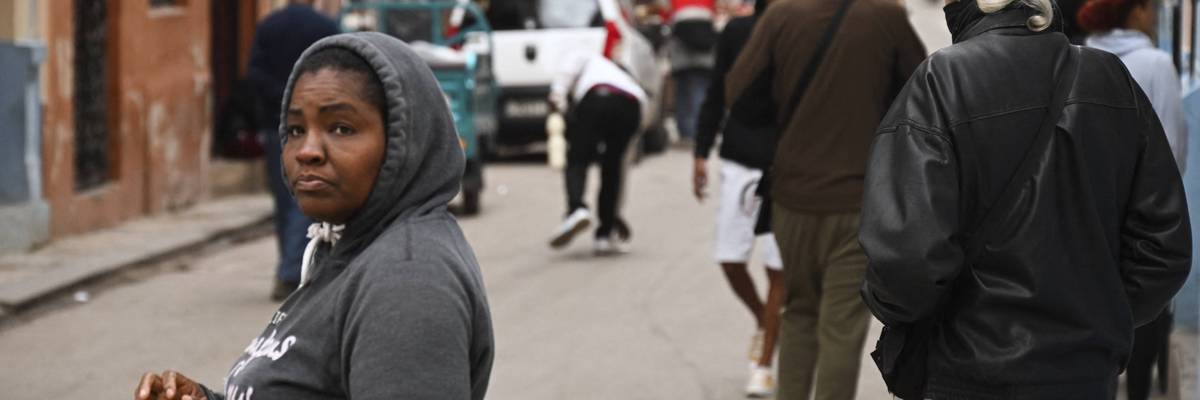
A bundled-up woman stands in a street in Havana on February 3, 2026.
President Donald Trump's expansion of the blockade is the latest chapter in an aggression waged by 12 successive US presidents. It's time to close the book.
In the shadow of President Donald Trump’s military assault on Venezuela and threats to Iran, an escalation of the longest war in US history, the 65-year war on Cuba, is being waged while Congress is virtually silent.
This is the latest chapter in an aggression waged by 12 successive US presidents, with an all too brief break when President Barack Obama initiated diplomatic steps toward normalcy in his last year in office. It has included a failed invasion by President John F. Kennedy in 1961 at the Bay of Pigs, multiple covert assassination attempts against Cuban President Fidel Castro, and secret chemical and biological attacks on Cuban agriculture and livestock to sabotage Cuba’s food self-sufficiency.
The US launched the war to overturn a socialist Cuban revolution that kicked out longtime dictator Fulgencio Batista who allowed US mobsters and corporations to dominate the island. US corporate interests owned “90% of Cuba’s mines, 80% of public utilities, 50% of railways, 40% of sugar production, 25% of bank deposits,” posted journalist Afshin Rattansi.
Most grievously, Kennedy in 1962 introduced an economic blockade of Cuba, in violation of international law, in retaliation for his Bay of Pigs humiliation. The rogue nation globally is not Cuba, it is the US. The United Nations has voted repeatedly, 33 years in a row, demanding an end to the embargo, most recently last October by a 165-7 vote. Only five right-wing allies joined the US—Argentina, Hungary, Israel, North Macedonia, and Paraguay, plus Ukraine, dependent on the US for defensive arms against Russia.
Sadly, the Trump administration’s disdain for the lives it destroys in Cuba shows little difference from its lack of compassion with how it treats US residents.
In January, shortly after invading Venezuela to kidnap President Nicolás Maduro and seize Venezuela’s rich oil resources, Trump issued a sweeping expansion of the blockade. It was enforced with Naval ships that impounded one oil tanker while Trump imposed tariffs and other threats on nations that offer to provide aid to Cuba. The war on Cuba has long been sustained, primarily for political purposes by both major parties to appease and win the votes of Cuban emigres. Secretary of State Marco Rubio, whose family left Cuba decades ago, has long been desperate to impose regime change on the island. He was the principal proponent of both the invasion of Venezuela, which he viewed as step one to end economic support for Cuba, and the follow-up quarantine.
Trump’s harsh blockade has already produced catastrophic suffering. It is not just crippling the economy, Cuba’s Health Minister José Ángel Portal Miranda told the Associated Press, but threatens “basic human safety.” The New York Times reports frequent blackouts, shortages of gasoline and cooking gas, and dwindling supplies of diesel that power the nation’s water pumps.
But the devastation to public health and Cuba’s crown jewel healthcare system forms the most calamitous consequences. Israeli researcher and activist Shaiel Ben-Ephraim cites “rising mortality rate among the elderly and those with chronic illnesses who cannot access life-support or specialized care” and a surge in diseases such as dengue fever and Orupuche virus, “which have become increasingly fatal due to the shortage of basic medicines and rehydration fluids.”
“Public health data shows a spike in infant mortality, rising from 7.1 per 1,000 live births in 2024 to an estimated 14 per 1,000 in late 2025/early 2026,” Ben-Ephraim added on Twitter. “Over 32,000 pregnant women are currently classified as 'at high risk' due to the lack of fuel for obstetric monitoring and emergency medical transport.”
Portal warned that 5 million people in Cuba living with chronic illnesses will face disruption of medications or treatments, including 16,000 cancer patients requiring radiotherapy and another 12,400 undergoing chemotherapies. “Cardiovascular care, orthopedics, oncology, and treatment for critically ill patients who require electrical backup are among the most impacted areas. Kidney disease treatments and emergency ambulance services have also been added to the list of impacted services,” he reported.
It is an undeclared war, illegal under international law, without approval from Congress. Yet only a small handful of lawmakers are expressing opposition. Massachusetts Rep. Jim McGovern introduced H.R. 7521 in early February with just 18 co-sponsors to date. It calls for an end to the embargo paralleling similar legislation last year by Oregon Sens. Ron Wyden (D-Ore.) and Jeff Merkley (D-Ore.). “It’s time to throw away the old, obsolete, failed policies of the past and try something different. Let’s focus on the people of Cuba—and let’s treat them like human beings who want to live their lives in dignity and freedom. The Cuban people—not politicians in Washington—ought to decide their own leaders and their own future,” McGovern says.
Rep. Alexandria Ocasio-Cortez (D-NY) compared the Cuban crisis to that of Gaza, Rep. Ilhan Omar of Minnesota called for the “cruel” and “despotic” blockade to be lifted, and Rep. Chuy García of Illinois said the blockade is “deliberately starving civilians” in Cuba. “The US is creating a humanitarian crisis in Cuba. Trump's & Rubio's blockade is punishing the Cuban people, not the regime. We must learn from 6 decades of failed Cuba-policy & reverse course,” tweeted Sen. Chris Van Hollen (D-Md.).
Ironically, the only setback for Trump’s attack on Cuba has come from the Supreme Court. Its February 20 decision striking down his use of the 1977 International Emergency Economic Powers Act (IEEPA) for tariffs appears to also invalidate his tariffs on countries sending oil to Cuba. Hopefully it’s “a measure of relief. The siege must be broken,” Michael Galant, a member of Progressive International’s secretariat, told Julia Conley in Common Dreams. “The siege must be broken.”
In 2018, National Nurses United Board members saw first-hand the accomplishments of the Cuban medical system in a professional “people to people” research visit. Seventy percent of care is delivered in localized polyclinics and family clinics. The polyclinics are the centerpiece providing integrated, comprehensive services, including 24-hour urgent care, prenatal, maternity, pediatric, dental, vision, hearing, vaccinations, counseling, physical therapy, x-ray, and more, serving about 30,000 area residents. The family clinics are neighborhood based, providing home visits, and serving schools and workplaces that refer people to the nearby polyclinics for more specialized care. Together, both staffed with doctors and nurses, they reduce the need and pressure for hospitalization, with less waiting time for specialists. There is universal access to care with nearly all services free, including for most medications. Cuba’s patient outcomes often exceed the US from infant and maternal mortality to life expectancy despite reduced access to some medical equipment and other restrictions due to the blockade.
Cuba even developed its own medical biotech research and development programs including a vaccine for lung cancer treatment that extends life that is unavailable for US residents due to the sanctions. Cuba also trained medical professionals from throughout the world, especially the Global South, and sent doctors and nurses to multiple countries in need, a program the US has also tried to destroy. Cuba’s healthcare model is widely regarded around the world, and yet is now in grave danger due to the draconian Trump-Rubio assault.
Sadly, the Trump administration’s disdain for the lives it destroys in Cuba shows little difference from its lack of compassion with how it treats US residents, including immigrants or citizens, whether by terrorizing communities or slashing social programs. All the more reason for all of us to continue to challenge the lawlessness at home and abroad.
“This is what we’ve seen with Gaza—a new era of depravity,” says Ocasio-Cortez. “There used to be stated protections for innocent civilians, and now it’s almost acceptable for the Western world to look the other way as people are starved or deprived—simply because political actors or regimes in that country are found objectionable. What we’re seeing is the possible precipice of hospitals running out of fuel. Innocent children and women could be put in harm’s way. It’s incumbent upon all of us to defend human rights no matter where.”
Dear Common Dreams reader, It’s been nearly 30 years since I co-founded Common Dreams with my late wife, Lina Newhouser. We had the radical notion that journalism should serve the public good, not corporate profits. It was clear to us from the outset what it would take to build such a project. No paid advertisements. No corporate sponsors. No millionaire publisher telling us what to think or do. Many people said we wouldn't last a year, but we proved those doubters wrong. Together with a tremendous team of journalists and dedicated staff, we built an independent media outlet free from the constraints of profits and corporate control. Our mission has always been simple: To inform. To inspire. To ignite change for the common good. Building Common Dreams was not easy. Our survival was never guaranteed. When you take on the most powerful forces—Wall Street greed, fossil fuel industry destruction, Big Tech lobbyists, and uber-rich oligarchs who have spent billions upon billions rigging the economy and democracy in their favor—the only bulwark you have is supporters who believe in your work. But here’s the urgent message from me today. It's never been this bad out there. And it's never been this hard to keep us going. At the very moment Common Dreams is most needed, the threats we face are intensifying. We need your support now more than ever. We don't accept corporate advertising and never will. We don't have a paywall because we don't think people should be blocked from critical news based on their ability to pay. Everything we do is funded by the donations of readers like you. When everyone does the little they can afford, we are strong. But if that support retreats or dries up, so do we. Will you donate now to make sure Common Dreams not only survives but thrives? —Craig Brown, Co-founder |
In the shadow of President Donald Trump’s military assault on Venezuela and threats to Iran, an escalation of the longest war in US history, the 65-year war on Cuba, is being waged while Congress is virtually silent.
This is the latest chapter in an aggression waged by 12 successive US presidents, with an all too brief break when President Barack Obama initiated diplomatic steps toward normalcy in his last year in office. It has included a failed invasion by President John F. Kennedy in 1961 at the Bay of Pigs, multiple covert assassination attempts against Cuban President Fidel Castro, and secret chemical and biological attacks on Cuban agriculture and livestock to sabotage Cuba’s food self-sufficiency.
The US launched the war to overturn a socialist Cuban revolution that kicked out longtime dictator Fulgencio Batista who allowed US mobsters and corporations to dominate the island. US corporate interests owned “90% of Cuba’s mines, 80% of public utilities, 50% of railways, 40% of sugar production, 25% of bank deposits,” posted journalist Afshin Rattansi.
Most grievously, Kennedy in 1962 introduced an economic blockade of Cuba, in violation of international law, in retaliation for his Bay of Pigs humiliation. The rogue nation globally is not Cuba, it is the US. The United Nations has voted repeatedly, 33 years in a row, demanding an end to the embargo, most recently last October by a 165-7 vote. Only five right-wing allies joined the US—Argentina, Hungary, Israel, North Macedonia, and Paraguay, plus Ukraine, dependent on the US for defensive arms against Russia.
Sadly, the Trump administration’s disdain for the lives it destroys in Cuba shows little difference from its lack of compassion with how it treats US residents.
In January, shortly after invading Venezuela to kidnap President Nicolás Maduro and seize Venezuela’s rich oil resources, Trump issued a sweeping expansion of the blockade. It was enforced with Naval ships that impounded one oil tanker while Trump imposed tariffs and other threats on nations that offer to provide aid to Cuba. The war on Cuba has long been sustained, primarily for political purposes by both major parties to appease and win the votes of Cuban emigres. Secretary of State Marco Rubio, whose family left Cuba decades ago, has long been desperate to impose regime change on the island. He was the principal proponent of both the invasion of Venezuela, which he viewed as step one to end economic support for Cuba, and the follow-up quarantine.
Trump’s harsh blockade has already produced catastrophic suffering. It is not just crippling the economy, Cuba’s Health Minister José Ángel Portal Miranda told the Associated Press, but threatens “basic human safety.” The New York Times reports frequent blackouts, shortages of gasoline and cooking gas, and dwindling supplies of diesel that power the nation’s water pumps.
But the devastation to public health and Cuba’s crown jewel healthcare system forms the most calamitous consequences. Israeli researcher and activist Shaiel Ben-Ephraim cites “rising mortality rate among the elderly and those with chronic illnesses who cannot access life-support or specialized care” and a surge in diseases such as dengue fever and Orupuche virus, “which have become increasingly fatal due to the shortage of basic medicines and rehydration fluids.”
“Public health data shows a spike in infant mortality, rising from 7.1 per 1,000 live births in 2024 to an estimated 14 per 1,000 in late 2025/early 2026,” Ben-Ephraim added on Twitter. “Over 32,000 pregnant women are currently classified as 'at high risk' due to the lack of fuel for obstetric monitoring and emergency medical transport.”
Portal warned that 5 million people in Cuba living with chronic illnesses will face disruption of medications or treatments, including 16,000 cancer patients requiring radiotherapy and another 12,400 undergoing chemotherapies. “Cardiovascular care, orthopedics, oncology, and treatment for critically ill patients who require electrical backup are among the most impacted areas. Kidney disease treatments and emergency ambulance services have also been added to the list of impacted services,” he reported.
It is an undeclared war, illegal under international law, without approval from Congress. Yet only a small handful of lawmakers are expressing opposition. Massachusetts Rep. Jim McGovern introduced H.R. 7521 in early February with just 18 co-sponsors to date. It calls for an end to the embargo paralleling similar legislation last year by Oregon Sens. Ron Wyden (D-Ore.) and Jeff Merkley (D-Ore.). “It’s time to throw away the old, obsolete, failed policies of the past and try something different. Let’s focus on the people of Cuba—and let’s treat them like human beings who want to live their lives in dignity and freedom. The Cuban people—not politicians in Washington—ought to decide their own leaders and their own future,” McGovern says.
Rep. Alexandria Ocasio-Cortez (D-NY) compared the Cuban crisis to that of Gaza, Rep. Ilhan Omar of Minnesota called for the “cruel” and “despotic” blockade to be lifted, and Rep. Chuy García of Illinois said the blockade is “deliberately starving civilians” in Cuba. “The US is creating a humanitarian crisis in Cuba. Trump's & Rubio's blockade is punishing the Cuban people, not the regime. We must learn from 6 decades of failed Cuba-policy & reverse course,” tweeted Sen. Chris Van Hollen (D-Md.).
Ironically, the only setback for Trump’s attack on Cuba has come from the Supreme Court. Its February 20 decision striking down his use of the 1977 International Emergency Economic Powers Act (IEEPA) for tariffs appears to also invalidate his tariffs on countries sending oil to Cuba. Hopefully it’s “a measure of relief. The siege must be broken,” Michael Galant, a member of Progressive International’s secretariat, told Julia Conley in Common Dreams. “The siege must be broken.”
In 2018, National Nurses United Board members saw first-hand the accomplishments of the Cuban medical system in a professional “people to people” research visit. Seventy percent of care is delivered in localized polyclinics and family clinics. The polyclinics are the centerpiece providing integrated, comprehensive services, including 24-hour urgent care, prenatal, maternity, pediatric, dental, vision, hearing, vaccinations, counseling, physical therapy, x-ray, and more, serving about 30,000 area residents. The family clinics are neighborhood based, providing home visits, and serving schools and workplaces that refer people to the nearby polyclinics for more specialized care. Together, both staffed with doctors and nurses, they reduce the need and pressure for hospitalization, with less waiting time for specialists. There is universal access to care with nearly all services free, including for most medications. Cuba’s patient outcomes often exceed the US from infant and maternal mortality to life expectancy despite reduced access to some medical equipment and other restrictions due to the blockade.
Cuba even developed its own medical biotech research and development programs including a vaccine for lung cancer treatment that extends life that is unavailable for US residents due to the sanctions. Cuba also trained medical professionals from throughout the world, especially the Global South, and sent doctors and nurses to multiple countries in need, a program the US has also tried to destroy. Cuba’s healthcare model is widely regarded around the world, and yet is now in grave danger due to the draconian Trump-Rubio assault.
Sadly, the Trump administration’s disdain for the lives it destroys in Cuba shows little difference from its lack of compassion with how it treats US residents, including immigrants or citizens, whether by terrorizing communities or slashing social programs. All the more reason for all of us to continue to challenge the lawlessness at home and abroad.
“This is what we’ve seen with Gaza—a new era of depravity,” says Ocasio-Cortez. “There used to be stated protections for innocent civilians, and now it’s almost acceptable for the Western world to look the other way as people are starved or deprived—simply because political actors or regimes in that country are found objectionable. What we’re seeing is the possible precipice of hospitals running out of fuel. Innocent children and women could be put in harm’s way. It’s incumbent upon all of us to defend human rights no matter where.”
In the shadow of President Donald Trump’s military assault on Venezuela and threats to Iran, an escalation of the longest war in US history, the 65-year war on Cuba, is being waged while Congress is virtually silent.
This is the latest chapter in an aggression waged by 12 successive US presidents, with an all too brief break when President Barack Obama initiated diplomatic steps toward normalcy in his last year in office. It has included a failed invasion by President John F. Kennedy in 1961 at the Bay of Pigs, multiple covert assassination attempts against Cuban President Fidel Castro, and secret chemical and biological attacks on Cuban agriculture and livestock to sabotage Cuba’s food self-sufficiency.
The US launched the war to overturn a socialist Cuban revolution that kicked out longtime dictator Fulgencio Batista who allowed US mobsters and corporations to dominate the island. US corporate interests owned “90% of Cuba’s mines, 80% of public utilities, 50% of railways, 40% of sugar production, 25% of bank deposits,” posted journalist Afshin Rattansi.
Most grievously, Kennedy in 1962 introduced an economic blockade of Cuba, in violation of international law, in retaliation for his Bay of Pigs humiliation. The rogue nation globally is not Cuba, it is the US. The United Nations has voted repeatedly, 33 years in a row, demanding an end to the embargo, most recently last October by a 165-7 vote. Only five right-wing allies joined the US—Argentina, Hungary, Israel, North Macedonia, and Paraguay, plus Ukraine, dependent on the US for defensive arms against Russia.
Sadly, the Trump administration’s disdain for the lives it destroys in Cuba shows little difference from its lack of compassion with how it treats US residents.
In January, shortly after invading Venezuela to kidnap President Nicolás Maduro and seize Venezuela’s rich oil resources, Trump issued a sweeping expansion of the blockade. It was enforced with Naval ships that impounded one oil tanker while Trump imposed tariffs and other threats on nations that offer to provide aid to Cuba. The war on Cuba has long been sustained, primarily for political purposes by both major parties to appease and win the votes of Cuban emigres. Secretary of State Marco Rubio, whose family left Cuba decades ago, has long been desperate to impose regime change on the island. He was the principal proponent of both the invasion of Venezuela, which he viewed as step one to end economic support for Cuba, and the follow-up quarantine.
Trump’s harsh blockade has already produced catastrophic suffering. It is not just crippling the economy, Cuba’s Health Minister José Ángel Portal Miranda told the Associated Press, but threatens “basic human safety.” The New York Times reports frequent blackouts, shortages of gasoline and cooking gas, and dwindling supplies of diesel that power the nation’s water pumps.
But the devastation to public health and Cuba’s crown jewel healthcare system forms the most calamitous consequences. Israeli researcher and activist Shaiel Ben-Ephraim cites “rising mortality rate among the elderly and those with chronic illnesses who cannot access life-support or specialized care” and a surge in diseases such as dengue fever and Orupuche virus, “which have become increasingly fatal due to the shortage of basic medicines and rehydration fluids.”
“Public health data shows a spike in infant mortality, rising from 7.1 per 1,000 live births in 2024 to an estimated 14 per 1,000 in late 2025/early 2026,” Ben-Ephraim added on Twitter. “Over 32,000 pregnant women are currently classified as 'at high risk' due to the lack of fuel for obstetric monitoring and emergency medical transport.”
Portal warned that 5 million people in Cuba living with chronic illnesses will face disruption of medications or treatments, including 16,000 cancer patients requiring radiotherapy and another 12,400 undergoing chemotherapies. “Cardiovascular care, orthopedics, oncology, and treatment for critically ill patients who require electrical backup are among the most impacted areas. Kidney disease treatments and emergency ambulance services have also been added to the list of impacted services,” he reported.
It is an undeclared war, illegal under international law, without approval from Congress. Yet only a small handful of lawmakers are expressing opposition. Massachusetts Rep. Jim McGovern introduced H.R. 7521 in early February with just 18 co-sponsors to date. It calls for an end to the embargo paralleling similar legislation last year by Oregon Sens. Ron Wyden (D-Ore.) and Jeff Merkley (D-Ore.). “It’s time to throw away the old, obsolete, failed policies of the past and try something different. Let’s focus on the people of Cuba—and let’s treat them like human beings who want to live their lives in dignity and freedom. The Cuban people—not politicians in Washington—ought to decide their own leaders and their own future,” McGovern says.
Rep. Alexandria Ocasio-Cortez (D-NY) compared the Cuban crisis to that of Gaza, Rep. Ilhan Omar of Minnesota called for the “cruel” and “despotic” blockade to be lifted, and Rep. Chuy García of Illinois said the blockade is “deliberately starving civilians” in Cuba. “The US is creating a humanitarian crisis in Cuba. Trump's & Rubio's blockade is punishing the Cuban people, not the regime. We must learn from 6 decades of failed Cuba-policy & reverse course,” tweeted Sen. Chris Van Hollen (D-Md.).
Ironically, the only setback for Trump’s attack on Cuba has come from the Supreme Court. Its February 20 decision striking down his use of the 1977 International Emergency Economic Powers Act (IEEPA) for tariffs appears to also invalidate his tariffs on countries sending oil to Cuba. Hopefully it’s “a measure of relief. The siege must be broken,” Michael Galant, a member of Progressive International’s secretariat, told Julia Conley in Common Dreams. “The siege must be broken.”
In 2018, National Nurses United Board members saw first-hand the accomplishments of the Cuban medical system in a professional “people to people” research visit. Seventy percent of care is delivered in localized polyclinics and family clinics. The polyclinics are the centerpiece providing integrated, comprehensive services, including 24-hour urgent care, prenatal, maternity, pediatric, dental, vision, hearing, vaccinations, counseling, physical therapy, x-ray, and more, serving about 30,000 area residents. The family clinics are neighborhood based, providing home visits, and serving schools and workplaces that refer people to the nearby polyclinics for more specialized care. Together, both staffed with doctors and nurses, they reduce the need and pressure for hospitalization, with less waiting time for specialists. There is universal access to care with nearly all services free, including for most medications. Cuba’s patient outcomes often exceed the US from infant and maternal mortality to life expectancy despite reduced access to some medical equipment and other restrictions due to the blockade.
Cuba even developed its own medical biotech research and development programs including a vaccine for lung cancer treatment that extends life that is unavailable for US residents due to the sanctions. Cuba also trained medical professionals from throughout the world, especially the Global South, and sent doctors and nurses to multiple countries in need, a program the US has also tried to destroy. Cuba’s healthcare model is widely regarded around the world, and yet is now in grave danger due to the draconian Trump-Rubio assault.
Sadly, the Trump administration’s disdain for the lives it destroys in Cuba shows little difference from its lack of compassion with how it treats US residents, including immigrants or citizens, whether by terrorizing communities or slashing social programs. All the more reason for all of us to continue to challenge the lawlessness at home and abroad.
“This is what we’ve seen with Gaza—a new era of depravity,” says Ocasio-Cortez. “There used to be stated protections for innocent civilians, and now it’s almost acceptable for the Western world to look the other way as people are starved or deprived—simply because political actors or regimes in that country are found objectionable. What we’re seeing is the possible precipice of hospitals running out of fuel. Innocent children and women could be put in harm’s way. It’s incumbent upon all of us to defend human rights no matter where.”