SUBSCRIBE TO OUR FREE NEWSLETTER
Daily news & progressive opinion—funded by the people, not the corporations—delivered straight to your inbox.
5
#000000
#FFFFFF
To donate by check, phone, or other method, see our More Ways to Give page.
Daily news & progressive opinion—funded by the people, not the corporations—delivered straight to your inbox.
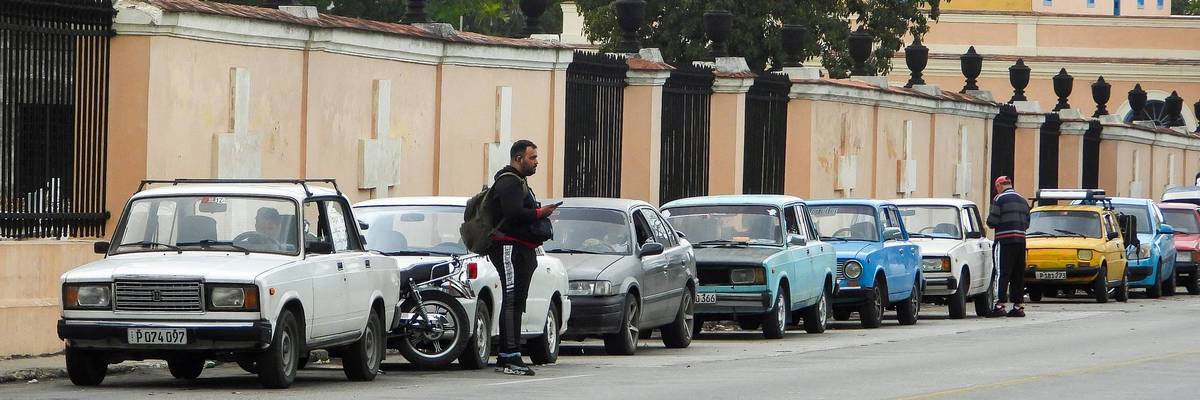
Vehicles wait in line to refuel at a gas station in Havana on January 30, 2026.
When economic measures are structured in ways that foreseeably disrupt essential civilian infrastructure, should they remain insulated from the congressional scrutiny required for military hostilities?
For decades, American leaders have described economic sanctions as the “peaceful alternative” to war—the space between diplomacy and bombs. Sanctions, we are told, are restraint.
But what happens when economic pressure shuts down power grids? When oil flows are deliberately constricted? When hospitals lose electricity, water systems falter, airports close, and entire populations endure 24-hour blackouts?
At what point does economic coercion stop being diplomacy and begin resembling siege?
Cuba today offers a sobering case study. Severe fuel shortages have led to prolonged blackouts, aviation fuel depletion, transportation paralysis, and mounting strain on hospitals and water systems. The United Nations has warned that without restored energy flows, the country risks systemic collapse. The Trump administration’s recent emergency measures—including secondary tariffs aimed at countries supplying oil to Cuba—mark a structural shift. The pressure is no longer confined to bilateral embargo. It now reaches third countries and energy supply chains.
Sanctions are often described as the alternative to war. But when structured to constrict energy lifelines and induce systemic deprivation, they can become war by other means.
This is not a narrow trade dispute. It is energy denial.
And energy is the backbone of civilian life.
The United States may have legitimate national security concerns regarding Cuba—allegations of intelligence cooperation with rival powers, human rights violations, regional instability. Those concerns deserve serious evaluation. But the constitutional question remains: When economic measures are structured in ways that foreseeably disrupt essential civilian infrastructure, should they remain insulated from the congressional scrutiny required for military hostilities?
The War Powers Resolution of 1973 was enacted in the shadow of Vietnam. Its purpose was simple: to ensure that decisions that risk war reflect the “collective judgment” of both Congress and the President. If US armed forces are introduced into hostilities, the president must report to Congress within 48 hours. Within 60 days, Congress must authorize the action—or it must end.
The resolution was designed to prevent unilateral executive entanglement in war.
But it was written for a world of tanks and troops.
It does not contemplate 21st-century economic statecraft—where power grids can be destabilized without a single soldier crossing a border, and where sanctions regimes can function, in practice, like blockades.
Modern sanctions are not limited to asset freezes or visa bans. Increasingly, they target energy flows, banking systems, insurance markets, and shipping networks. They employ secondary penalties—punishing third countries that engage in prohibited commerce. They leverage emergency declarations that can persist for years, even decades.
When economic measures constrict oil—the fuel that powers electricity generation, water purification, hospitals, refrigeration, aviation, and transportation—their societal impact can mirror the effects of siege warfare.
Yet constitutionally, they are treated as routine foreign commerce regulation.
That gap is no longer sustainable.
Economic power is national power. When wielded coercively at scale, it can destabilize regions, accelerate migration crises, and generate humanitarian consequences that reverberate far beyond the intended target. It can entrench ruling elites rather than dislodge them. It can undermine US credibility. And it can blur the line between pressure and punishment.
Congress must modernize the War Powers Resolution to reflect this reality.
The reform need not prohibit sanctions. Nor should it weaken legitimate national security tools. But it should establish guardrails.
At minimum, Congress should require that when emergency-based economic measures:
the president must submit a formal report to Congress within 48 hours—just as required when troops are introduced into hostilities.
And within 60 days, Congress should vote to authorize, modify, or terminate those measures.
This would not equate sanctions with war. It would not declare economic pressure unconstitutional. It would simply restore shared judgment in situations where economic instruments produce effects historically associated with warfare.
Emergency powers were designed for extraordinary threats—not for structural permanence. When emergency authorities become normalized, oversight attenuates. The longer a “national emergency” persists, the less it resembles an emergency.
If sanctions are genuinely necessary to protect US security, Congress should be willing to stand behind them. If they are not, Congress should have the institutional responsibility to recalibrate them.
Democratic accountability strengthens national power; it does not weaken it.
Cuba’s current trajectory underscores the urgency. Prolonged blackouts and energy scarcity do not fall neatly on government officials alone. They cascade through hospitals, schools, food storage, transportation, and tourism. They shape migration patterns and regional stability. They can generate humanitarian crises that require international response.
History offers caution. Decades of sanctions in Cuba have not produced regime change. Studies of sanctions more broadly show limited success in transforming consolidated political systems. More often, sanctions harden elites, shift burdens onto civilians, and narrow diplomatic space.
That does not mean sanctions have no role. It means they must be evaluated not only for intent, but for effect.
Strength is not measured solely by the ability to impose pressure. It is measured by the wisdom to calibrate it.
The United States is most credible when it demonstrates that its power operates within constitutional boundaries. Updating the War Powers Resolution to address large-scale economic coercion would signal that democratic oversight keeps pace with modern instruments of statecraft.
To the Trump administration: Emergency authority carries immense responsibility. Energy denial that risks humanitarian collapse may not ultimately advance US security interests. Recalibration—maintaining targeted pressure while preventing civilian infrastructure breakdown—reflects prudence, not weakness.
To Congress: Your war powers are not limited to bullets and bombs. They extend to the conditions that make conflict more likely. Modernize the law.
To scholars, institutions, and civil society: Engage respectfully, but firmly. Present data. Highlight humanitarian indicators. Encourage constitutional balance. The debate should not be partisan. It should be structural.
Sanctions are often described as the alternative to war. But when structured to constrict energy lifelines and induce systemic deprivation, they can become war by other means.
The War Powers Resolution was born of a constitutional reckoning. Half a century later, economic statecraft demands another.
History will not ask whether America had power. It will ask whether it used that power wisely—and whether it subjected that power to the discipline of democracy.
Dear Common Dreams reader, It’s been nearly 30 years since I co-founded Common Dreams with my late wife, Lina Newhouser. We had the radical notion that journalism should serve the public good, not corporate profits. It was clear to us from the outset what it would take to build such a project. No paid advertisements. No corporate sponsors. No millionaire publisher telling us what to think or do. Many people said we wouldn't last a year, but we proved those doubters wrong. Together with a tremendous team of journalists and dedicated staff, we built an independent media outlet free from the constraints of profits and corporate control. Our mission has always been simple: To inform. To inspire. To ignite change for the common good. Building Common Dreams was not easy. Our survival was never guaranteed. When you take on the most powerful forces—Wall Street greed, fossil fuel industry destruction, Big Tech lobbyists, and uber-rich oligarchs who have spent billions upon billions rigging the economy and democracy in their favor—the only bulwark you have is supporters who believe in your work. But here’s the urgent message from me today. It's never been this bad out there. And it's never been this hard to keep us going. At the very moment Common Dreams is most needed, the threats we face are intensifying. We need your support now more than ever. We don't accept corporate advertising and never will. We don't have a paywall because we don't think people should be blocked from critical news based on their ability to pay. Everything we do is funded by the donations of readers like you. When everyone does the little they can afford, we are strong. But if that support retreats or dries up, so do we. Will you donate now to make sure Common Dreams not only survives but thrives? —Craig Brown, Co-founder |
For decades, American leaders have described economic sanctions as the “peaceful alternative” to war—the space between diplomacy and bombs. Sanctions, we are told, are restraint.
But what happens when economic pressure shuts down power grids? When oil flows are deliberately constricted? When hospitals lose electricity, water systems falter, airports close, and entire populations endure 24-hour blackouts?
At what point does economic coercion stop being diplomacy and begin resembling siege?
Cuba today offers a sobering case study. Severe fuel shortages have led to prolonged blackouts, aviation fuel depletion, transportation paralysis, and mounting strain on hospitals and water systems. The United Nations has warned that without restored energy flows, the country risks systemic collapse. The Trump administration’s recent emergency measures—including secondary tariffs aimed at countries supplying oil to Cuba—mark a structural shift. The pressure is no longer confined to bilateral embargo. It now reaches third countries and energy supply chains.
Sanctions are often described as the alternative to war. But when structured to constrict energy lifelines and induce systemic deprivation, they can become war by other means.
This is not a narrow trade dispute. It is energy denial.
And energy is the backbone of civilian life.
The United States may have legitimate national security concerns regarding Cuba—allegations of intelligence cooperation with rival powers, human rights violations, regional instability. Those concerns deserve serious evaluation. But the constitutional question remains: When economic measures are structured in ways that foreseeably disrupt essential civilian infrastructure, should they remain insulated from the congressional scrutiny required for military hostilities?
The War Powers Resolution of 1973 was enacted in the shadow of Vietnam. Its purpose was simple: to ensure that decisions that risk war reflect the “collective judgment” of both Congress and the President. If US armed forces are introduced into hostilities, the president must report to Congress within 48 hours. Within 60 days, Congress must authorize the action—or it must end.
The resolution was designed to prevent unilateral executive entanglement in war.
But it was written for a world of tanks and troops.
It does not contemplate 21st-century economic statecraft—where power grids can be destabilized without a single soldier crossing a border, and where sanctions regimes can function, in practice, like blockades.
Modern sanctions are not limited to asset freezes or visa bans. Increasingly, they target energy flows, banking systems, insurance markets, and shipping networks. They employ secondary penalties—punishing third countries that engage in prohibited commerce. They leverage emergency declarations that can persist for years, even decades.
When economic measures constrict oil—the fuel that powers electricity generation, water purification, hospitals, refrigeration, aviation, and transportation—their societal impact can mirror the effects of siege warfare.
Yet constitutionally, they are treated as routine foreign commerce regulation.
That gap is no longer sustainable.
Economic power is national power. When wielded coercively at scale, it can destabilize regions, accelerate migration crises, and generate humanitarian consequences that reverberate far beyond the intended target. It can entrench ruling elites rather than dislodge them. It can undermine US credibility. And it can blur the line between pressure and punishment.
Congress must modernize the War Powers Resolution to reflect this reality.
The reform need not prohibit sanctions. Nor should it weaken legitimate national security tools. But it should establish guardrails.
At minimum, Congress should require that when emergency-based economic measures:
the president must submit a formal report to Congress within 48 hours—just as required when troops are introduced into hostilities.
And within 60 days, Congress should vote to authorize, modify, or terminate those measures.
This would not equate sanctions with war. It would not declare economic pressure unconstitutional. It would simply restore shared judgment in situations where economic instruments produce effects historically associated with warfare.
Emergency powers were designed for extraordinary threats—not for structural permanence. When emergency authorities become normalized, oversight attenuates. The longer a “national emergency” persists, the less it resembles an emergency.
If sanctions are genuinely necessary to protect US security, Congress should be willing to stand behind them. If they are not, Congress should have the institutional responsibility to recalibrate them.
Democratic accountability strengthens national power; it does not weaken it.
Cuba’s current trajectory underscores the urgency. Prolonged blackouts and energy scarcity do not fall neatly on government officials alone. They cascade through hospitals, schools, food storage, transportation, and tourism. They shape migration patterns and regional stability. They can generate humanitarian crises that require international response.
History offers caution. Decades of sanctions in Cuba have not produced regime change. Studies of sanctions more broadly show limited success in transforming consolidated political systems. More often, sanctions harden elites, shift burdens onto civilians, and narrow diplomatic space.
That does not mean sanctions have no role. It means they must be evaluated not only for intent, but for effect.
Strength is not measured solely by the ability to impose pressure. It is measured by the wisdom to calibrate it.
The United States is most credible when it demonstrates that its power operates within constitutional boundaries. Updating the War Powers Resolution to address large-scale economic coercion would signal that democratic oversight keeps pace with modern instruments of statecraft.
To the Trump administration: Emergency authority carries immense responsibility. Energy denial that risks humanitarian collapse may not ultimately advance US security interests. Recalibration—maintaining targeted pressure while preventing civilian infrastructure breakdown—reflects prudence, not weakness.
To Congress: Your war powers are not limited to bullets and bombs. They extend to the conditions that make conflict more likely. Modernize the law.
To scholars, institutions, and civil society: Engage respectfully, but firmly. Present data. Highlight humanitarian indicators. Encourage constitutional balance. The debate should not be partisan. It should be structural.
Sanctions are often described as the alternative to war. But when structured to constrict energy lifelines and induce systemic deprivation, they can become war by other means.
The War Powers Resolution was born of a constitutional reckoning. Half a century later, economic statecraft demands another.
History will not ask whether America had power. It will ask whether it used that power wisely—and whether it subjected that power to the discipline of democracy.
For decades, American leaders have described economic sanctions as the “peaceful alternative” to war—the space between diplomacy and bombs. Sanctions, we are told, are restraint.
But what happens when economic pressure shuts down power grids? When oil flows are deliberately constricted? When hospitals lose electricity, water systems falter, airports close, and entire populations endure 24-hour blackouts?
At what point does economic coercion stop being diplomacy and begin resembling siege?
Cuba today offers a sobering case study. Severe fuel shortages have led to prolonged blackouts, aviation fuel depletion, transportation paralysis, and mounting strain on hospitals and water systems. The United Nations has warned that without restored energy flows, the country risks systemic collapse. The Trump administration’s recent emergency measures—including secondary tariffs aimed at countries supplying oil to Cuba—mark a structural shift. The pressure is no longer confined to bilateral embargo. It now reaches third countries and energy supply chains.
Sanctions are often described as the alternative to war. But when structured to constrict energy lifelines and induce systemic deprivation, they can become war by other means.
This is not a narrow trade dispute. It is energy denial.
And energy is the backbone of civilian life.
The United States may have legitimate national security concerns regarding Cuba—allegations of intelligence cooperation with rival powers, human rights violations, regional instability. Those concerns deserve serious evaluation. But the constitutional question remains: When economic measures are structured in ways that foreseeably disrupt essential civilian infrastructure, should they remain insulated from the congressional scrutiny required for military hostilities?
The War Powers Resolution of 1973 was enacted in the shadow of Vietnam. Its purpose was simple: to ensure that decisions that risk war reflect the “collective judgment” of both Congress and the President. If US armed forces are introduced into hostilities, the president must report to Congress within 48 hours. Within 60 days, Congress must authorize the action—or it must end.
The resolution was designed to prevent unilateral executive entanglement in war.
But it was written for a world of tanks and troops.
It does not contemplate 21st-century economic statecraft—where power grids can be destabilized without a single soldier crossing a border, and where sanctions regimes can function, in practice, like blockades.
Modern sanctions are not limited to asset freezes or visa bans. Increasingly, they target energy flows, banking systems, insurance markets, and shipping networks. They employ secondary penalties—punishing third countries that engage in prohibited commerce. They leverage emergency declarations that can persist for years, even decades.
When economic measures constrict oil—the fuel that powers electricity generation, water purification, hospitals, refrigeration, aviation, and transportation—their societal impact can mirror the effects of siege warfare.
Yet constitutionally, they are treated as routine foreign commerce regulation.
That gap is no longer sustainable.
Economic power is national power. When wielded coercively at scale, it can destabilize regions, accelerate migration crises, and generate humanitarian consequences that reverberate far beyond the intended target. It can entrench ruling elites rather than dislodge them. It can undermine US credibility. And it can blur the line between pressure and punishment.
Congress must modernize the War Powers Resolution to reflect this reality.
The reform need not prohibit sanctions. Nor should it weaken legitimate national security tools. But it should establish guardrails.
At minimum, Congress should require that when emergency-based economic measures:
the president must submit a formal report to Congress within 48 hours—just as required when troops are introduced into hostilities.
And within 60 days, Congress should vote to authorize, modify, or terminate those measures.
This would not equate sanctions with war. It would not declare economic pressure unconstitutional. It would simply restore shared judgment in situations where economic instruments produce effects historically associated with warfare.
Emergency powers were designed for extraordinary threats—not for structural permanence. When emergency authorities become normalized, oversight attenuates. The longer a “national emergency” persists, the less it resembles an emergency.
If sanctions are genuinely necessary to protect US security, Congress should be willing to stand behind them. If they are not, Congress should have the institutional responsibility to recalibrate them.
Democratic accountability strengthens national power; it does not weaken it.
Cuba’s current trajectory underscores the urgency. Prolonged blackouts and energy scarcity do not fall neatly on government officials alone. They cascade through hospitals, schools, food storage, transportation, and tourism. They shape migration patterns and regional stability. They can generate humanitarian crises that require international response.
History offers caution. Decades of sanctions in Cuba have not produced regime change. Studies of sanctions more broadly show limited success in transforming consolidated political systems. More often, sanctions harden elites, shift burdens onto civilians, and narrow diplomatic space.
That does not mean sanctions have no role. It means they must be evaluated not only for intent, but for effect.
Strength is not measured solely by the ability to impose pressure. It is measured by the wisdom to calibrate it.
The United States is most credible when it demonstrates that its power operates within constitutional boundaries. Updating the War Powers Resolution to address large-scale economic coercion would signal that democratic oversight keeps pace with modern instruments of statecraft.
To the Trump administration: Emergency authority carries immense responsibility. Energy denial that risks humanitarian collapse may not ultimately advance US security interests. Recalibration—maintaining targeted pressure while preventing civilian infrastructure breakdown—reflects prudence, not weakness.
To Congress: Your war powers are not limited to bullets and bombs. They extend to the conditions that make conflict more likely. Modernize the law.
To scholars, institutions, and civil society: Engage respectfully, but firmly. Present data. Highlight humanitarian indicators. Encourage constitutional balance. The debate should not be partisan. It should be structural.
Sanctions are often described as the alternative to war. But when structured to constrict energy lifelines and induce systemic deprivation, they can become war by other means.
The War Powers Resolution was born of a constitutional reckoning. Half a century later, economic statecraft demands another.
History will not ask whether America had power. It will ask whether it used that power wisely—and whether it subjected that power to the discipline of democracy.