5
#000000
#FFFFFF
To donate by check, phone, or other method, see our More Ways to Give page.
Daily news & progressive opinion—funded by the people, not the corporations—delivered straight to your inbox.

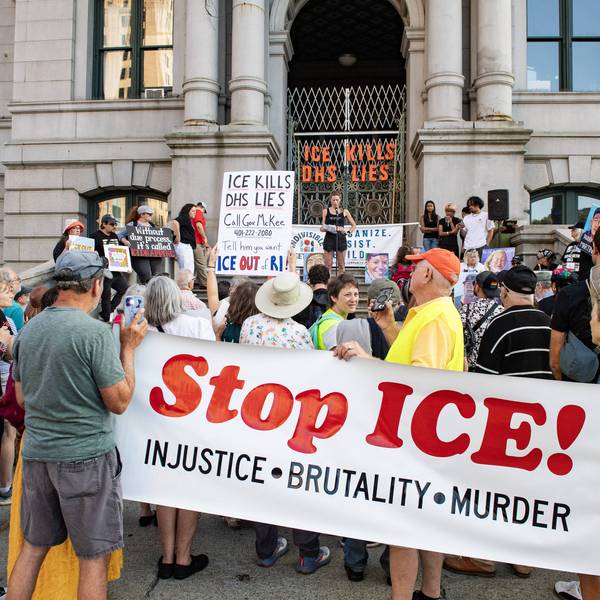
The spot where the body of Joan Sebastian Guerrero lay after ICE murdered him is identified with chalk writing.
We cannot allow these deaths to become routine, and we cannot let them disappear into statistics. Every death should force us to ask what kind of country we are becoming.
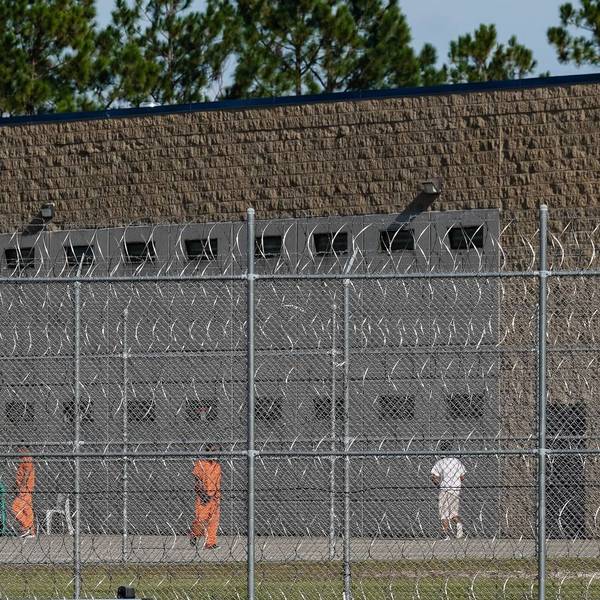
Jose Chajon-Raxon, an immigrant from Guatemala, died this August at Delaney Hall, a controversial Immigration and Customs Enforcement facility in New Jersey. His death marks more than 50 deaths in ICE custody since President Donald Trump took office last year.
Despite all the controversies, ICE keeps killing people—a sentence that should never feel normal. We should never find ourselves counting the days between deaths or waiting for the next headline. But somehow, we have.
Earlier this year it was Renee Good, then Alex Pretti. This summer it was Lorenzo Salgado Araujo and Joan Sebastián Durán Guerrero. Before them were Silviero Villegas Gonzalez and Ruben Ray Martinez. Those are only the names we know—many others will never make national news.
The day I read about Durán Guerrero’s death, I was returning home from work. I glanced at the headline and kept going. That’s what scared me the most. I wasn’t shocked that ICE had killed someone—I expected it.
No matter where you were born, what political party you belong to, or whether you support stricter immigration enforcement, no government should have the power to kill or imprison people with so little accountability.
Only later, when I stopped and read the details, did it hit me: He was shot multiple times. His 3-year-old daughter, wearing Bluey pajamas, was in the car when it happened. According to his family’s attorney, Durán Guerrero was lawfully present in the United States and had a work permit. And he wasn’t even the person ICE was looking for when he was shot.
After shooting Durán Guerrero, officers pulled him from the vehicle and handcuffed him. By then, he may already have been dead.
These are not tragic misunderstandings. These are choices.
Imagine seeing armed people in tactical gear—no body cam, their faces covered—surrounding your car. Most people would be terrified. Most people would try to get away. Durán Guerrero tried to stop, but it did not matter—the agents fired on him anyway.
ICE continues carrying out operations with masked agents in unmarked vehicles, creating confusion and fear before a single word is spoken. Immigration officers have fired on at least 30 people since President Trump returned to office. Eight of those people were killed.
Each time, the government tells us the agents acted in self-defense. Public statements quickly frame the victim as the threat. Witness testimony and video evidence often cast doubt on these accounts, but they still shift the focus away from the loss of human life and toward justifying why it happened.
Meanwhile, tens of thousands of people are still being detained every month.
In June 2026, ICE arrested more than 43,000 people, about 1,400 every day. By July, nearly 68,000 people were being held in immigration detention. The overwhelming majority of those arrested had no criminal convictions.
This includes over 6,000 children. Children who are spending their birthdays behind bars. Children who should be back in school, safe and protected. Many have been detained for 100 days or more—five times longer than the 20-day limit for detaining immigrant children.
They’re being held in facilities like Delaney and others, where human rights groups have warned repeatedly that dangerous conditions are leading to preventable deaths. ICE deaths reached their highest level in decades last year, and this year is on track to be no better.
These numbers matter. Every statistic was someone’s father, daughter, husband, neighbor, friend.
I’m afraid of how easy it has become to read another headline and move on. I know because I caught myself doing exactly that.
No matter where you were born, what political party you belong to, or whether you support stricter immigration enforcement, no government should have the power to kill or imprison people with so little accountability. No family should have to watch a loved one become another name on a growing list.
We cannot allow these deaths to become routine, and we cannot let them disappear into statistics. Every death should force us to ask what kind of country we are becoming. We cannot normalize these killings, and we cannot stop demanding justice and accountability.
We should never get used to counting ICE’s victims.
This country and this world are at a monumental crossroads. US voters have an opportunity to beat back the forces of fascism and confront the billionaires who are rigging the economy, our media system, and our democracy, making it increasingly impossible for ordinary people to get by. We’re not just talking about the election. We’re talking about what must be done once these fascist elements are vanquished from power. We need a bolder set of solutions than what either major party has so far been willing to offer and a working-class movement ready to fight like hell for it. Trump didn't emerge from nowhere. The conditions that fueled MAGA authoritarianism were created by decades of radical neoliberal economic policies and a corrupt political system dominated by corporate interests. They slashed taxes on the super-rich, promising that the benefits would trickle down. They said giveaways to the corporate titans would make life more affordable for the rest of us. It was all bullshit. And when a bitter, betrayed populace searches for someone to blame, right-wing demagogues have little trouble finding scapegoats. People know when they're being lied to, but you won't hear any of this from the corporate media. Only independent journalism—powered and funded by people who believe in building a better world—can deliver truly trustworthy daily news. If you share our vision, please contribute whatever you can to sustain our work. |
Jose Chajon-Raxon, an immigrant from Guatemala, died this August at Delaney Hall, a controversial Immigration and Customs Enforcement facility in New Jersey. His death marks more than 50 deaths in ICE custody since President Donald Trump took office last year.
Despite all the controversies, ICE keeps killing people—a sentence that should never feel normal. We should never find ourselves counting the days between deaths or waiting for the next headline. But somehow, we have.
Earlier this year it was Renee Good, then Alex Pretti. This summer it was Lorenzo Salgado Araujo and Joan Sebastián Durán Guerrero. Before them were Silviero Villegas Gonzalez and Ruben Ray Martinez. Those are only the names we know—many others will never make national news.
The day I read about Durán Guerrero’s death, I was returning home from work. I glanced at the headline and kept going. That’s what scared me the most. I wasn’t shocked that ICE had killed someone—I expected it.
No matter where you were born, what political party you belong to, or whether you support stricter immigration enforcement, no government should have the power to kill or imprison people with so little accountability.
Only later, when I stopped and read the details, did it hit me: He was shot multiple times. His 3-year-old daughter, wearing Bluey pajamas, was in the car when it happened. According to his family’s attorney, Durán Guerrero was lawfully present in the United States and had a work permit. And he wasn’t even the person ICE was looking for when he was shot.
After shooting Durán Guerrero, officers pulled him from the vehicle and handcuffed him. By then, he may already have been dead.
These are not tragic misunderstandings. These are choices.
Imagine seeing armed people in tactical gear—no body cam, their faces covered—surrounding your car. Most people would be terrified. Most people would try to get away. Durán Guerrero tried to stop, but it did not matter—the agents fired on him anyway.
ICE continues carrying out operations with masked agents in unmarked vehicles, creating confusion and fear before a single word is spoken. Immigration officers have fired on at least 30 people since President Trump returned to office. Eight of those people were killed.
Each time, the government tells us the agents acted in self-defense. Public statements quickly frame the victim as the threat. Witness testimony and video evidence often cast doubt on these accounts, but they still shift the focus away from the loss of human life and toward justifying why it happened.
Meanwhile, tens of thousands of people are still being detained every month.
In June 2026, ICE arrested more than 43,000 people, about 1,400 every day. By July, nearly 68,000 people were being held in immigration detention. The overwhelming majority of those arrested had no criminal convictions.
This includes over 6,000 children. Children who are spending their birthdays behind bars. Children who should be back in school, safe and protected. Many have been detained for 100 days or more—five times longer than the 20-day limit for detaining immigrant children.
They’re being held in facilities like Delaney and others, where human rights groups have warned repeatedly that dangerous conditions are leading to preventable deaths. ICE deaths reached their highest level in decades last year, and this year is on track to be no better.
These numbers matter. Every statistic was someone’s father, daughter, husband, neighbor, friend.
I’m afraid of how easy it has become to read another headline and move on. I know because I caught myself doing exactly that.
No matter where you were born, what political party you belong to, or whether you support stricter immigration enforcement, no government should have the power to kill or imprison people with so little accountability. No family should have to watch a loved one become another name on a growing list.
We cannot allow these deaths to become routine, and we cannot let them disappear into statistics. Every death should force us to ask what kind of country we are becoming. We cannot normalize these killings, and we cannot stop demanding justice and accountability.
We should never get used to counting ICE’s victims.