5
#000000
#FFFFFF
To donate by check, phone, or other method, see our More Ways to Give page.
Daily news & progressive opinion—funded by the people, not the corporations—delivered straight to your inbox.

Immigration and Customs Enforcement (ICE) agents walk a detainee out of the Ventura County Government Center in Ventura, California, on July 27, 2026.
Rights that apply to some people are not rights. They are privileges with an expiration date, and that date moves every single time this country gets scared.
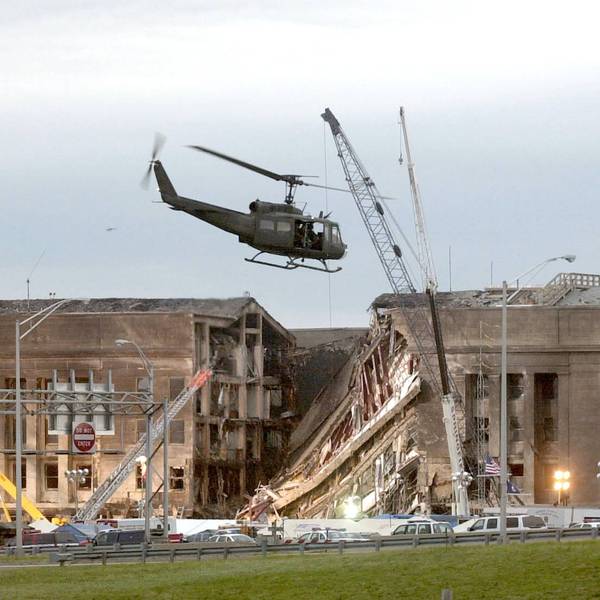
For my family, the story of September 11 didn’t end when we went to bed after a day of fear and confusion.
We were attacked during what was my first week of 9th grade. I was looking out my classroom window at the Twin Towers with a classmate as we inadvertently witnessed the first plane hit the building. We were in shock. More kids gathered at the windows as a particular silence fell over the group. We eventually moved to a bigger room with more students, but with blinds pulled down. The sound of the second plane hitting the building made the blinds pop.
I don't remember much else about that day except that the room went quiet in a way I'd never heard a room go quiet before. But I vividly remember what would happen in the days after.
The city's grief curdled into something else for people who looked like me. Harassment on the streets. Windows broken. Women with their hijabs pulled off on the street. Fathers, brothers, grandfathers were pulled out of homes and businesses across the city and questioned like suspects, not for anything they'd done, but for what mosque they prayed at or what their passport said.
Twenty-five years later, the machine that was built to watch a few of us is watching most of us.
By the following year, tens of thousands of other men were required to register in person at the immigration office because of where they were born. Between September 2002 and 2003, 83,519 men registered at intake windows across the country. Of those, 13,799 were placed in deportation proceedings. Yet, only 11 were found to have any connection to terrorism, by the government's own count at the time. A program that processed 83,000 people and tried to deport almost 14,000 of them.
Six months into that registration program, on March 1, 2003, the federal government opened the Department of Homeland Security, which folded 22 agencies into a single new department built to do that kind of work at scale. But this mandate’s impact on communities wasn't an abstraction to me. It was the agency that had just decided my brother didn't belong in our city, with a budget line and a headquarters and a mission that would live long past our nation’s trauma.
I started organizing more deeply because of what happened to my neighbors and family that year. Twenty-five years of doing this work has taught me one specific thing: The machine doesn't stay pointed where it started. It isn't only Arab and Muslim families anymore who get treated as a threat first and people second.
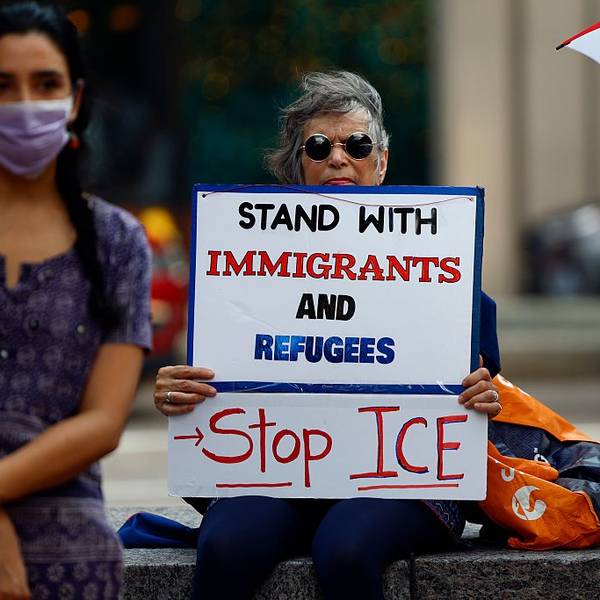
This year, Congress gave Immigration and Customs Enforcement $45 billion just for new detention spaces, a 265% jump that gives ICE a bigger detention budget than the entire federal prison system, plus another $30 billion for enforcement operations on top of that. No one has properly enumerated what threat justifies a budget that size. I don't think there is one. Rather, it's a machine that's been fed for 25 years and has simply gotten larger with more zeroes attached.
What happened to Muslim and Arab families after 9/11 is not identical to what's happening to immigrant families now. But what I recognize is narrower than that. It’s how a government decides that fear of a few individuals justifies suspicion of entire communities, and how fast the list of suspects grows once the infrastructure to monitor and process them is in place.
After 9/11, I learned the difference between charity and power. Charity helps people survive a system. Power changes what the system is permitted to do to those in society. I've spent my adult life on the side of building power, not because immigrants are just useful, exceptional, or because of their economic contributions, but because rights that apply to some people are not rights. They are privileges with an expiration date, and that date moves every single time this country gets scared.
Twenty-five years later, however, it's landing on more doors than it did in 2002. Others have said it countless times, but if some of us don't have rights, none of us do. It's the exact lesson this country refused to learn in 2002, when 11 real cases were enough to justify tracking 83,000 people, and the tracking was made permanent instead of undone. Twenty-five years later, the machine that was built to watch a few of us is watching most of us.
We must fight for every single one of us because we have all witnessed what happens when we do not. I watched it through a classroom window when I was 14. I have spent every year since making certain that the next community in the crosshairs does not face it the way mine did, alone and expected to be grateful for whatever protection somebody decided to spare us.
This anniversary is absolutely a time when we need to reflect on what we lost that day as New Yorkers and as Americans. It's also about whether we're finally willing to notice what we built right after it, and this time agree not to let it keep growing.
Dear Common Dreams reader, It’s been nearly 30 years since I co-founded Common Dreams with my late wife, Lina Newhouser. We had the radical notion that journalism should serve the public good, not corporate profits. It was clear to us from the outset what it would take to build such a project. No paid advertisements. No corporate sponsors. No millionaire publisher telling us what to think or do. Many people said we wouldn't last a year, but we proved those doubters wrong. Together with a tremendous team of journalists and dedicated staff, we built an independent media outlet free from the constraints of profits and corporate control. Our mission has always been simple: To inform. To inspire. To ignite change for the common good. Building Common Dreams was not easy. Our survival was never guaranteed. When you take on the most powerful forces—Wall Street greed, fossil fuel industry destruction, Big Tech lobbyists, and uber-rich oligarchs who have spent billions upon billions rigging the economy and democracy in their favor—the only bulwark you have is supporters who believe in your work. But here’s the urgent message from me today. It's never been this bad out there. And it's never been this hard to keep us going. At the very moment Common Dreams is most needed, the threats we face are intensifying. We need your support now more than ever. We don't accept corporate advertising and never will. We don't have a paywall because we don't think people should be blocked from critical news based on their ability to pay. Everything we do is funded by the donations of readers like you. When everyone does the little they can afford, we are strong. But if that support retreats or dries up, so do we. Will you donate now to make sure Common Dreams not only survives but thrives? —Craig Brown, Co-founder |
For my family, the story of September 11 didn’t end when we went to bed after a day of fear and confusion.
We were attacked during what was my first week of 9th grade. I was looking out my classroom window at the Twin Towers with a classmate as we inadvertently witnessed the first plane hit the building. We were in shock. More kids gathered at the windows as a particular silence fell over the group. We eventually moved to a bigger room with more students, but with blinds pulled down. The sound of the second plane hitting the building made the blinds pop.
I don't remember much else about that day except that the room went quiet in a way I'd never heard a room go quiet before. But I vividly remember what would happen in the days after.
The city's grief curdled into something else for people who looked like me. Harassment on the streets. Windows broken. Women with their hijabs pulled off on the street. Fathers, brothers, grandfathers were pulled out of homes and businesses across the city and questioned like suspects, not for anything they'd done, but for what mosque they prayed at or what their passport said.
Twenty-five years later, the machine that was built to watch a few of us is watching most of us.
By the following year, tens of thousands of other men were required to register in person at the immigration office because of where they were born. Between September 2002 and 2003, 83,519 men registered at intake windows across the country. Of those, 13,799 were placed in deportation proceedings. Yet, only 11 were found to have any connection to terrorism, by the government's own count at the time. A program that processed 83,000 people and tried to deport almost 14,000 of them.
Six months into that registration program, on March 1, 2003, the federal government opened the Department of Homeland Security, which folded 22 agencies into a single new department built to do that kind of work at scale. But this mandate’s impact on communities wasn't an abstraction to me. It was the agency that had just decided my brother didn't belong in our city, with a budget line and a headquarters and a mission that would live long past our nation’s trauma.
I started organizing more deeply because of what happened to my neighbors and family that year. Twenty-five years of doing this work has taught me one specific thing: The machine doesn't stay pointed where it started. It isn't only Arab and Muslim families anymore who get treated as a threat first and people second.
This year, Congress gave Immigration and Customs Enforcement $45 billion just for new detention spaces, a 265% jump that gives ICE a bigger detention budget than the entire federal prison system, plus another $30 billion for enforcement operations on top of that. No one has properly enumerated what threat justifies a budget that size. I don't think there is one. Rather, it's a machine that's been fed for 25 years and has simply gotten larger with more zeroes attached.
What happened to Muslim and Arab families after 9/11 is not identical to what's happening to immigrant families now. But what I recognize is narrower than that. It’s how a government decides that fear of a few individuals justifies suspicion of entire communities, and how fast the list of suspects grows once the infrastructure to monitor and process them is in place.
After 9/11, I learned the difference between charity and power. Charity helps people survive a system. Power changes what the system is permitted to do to those in society. I've spent my adult life on the side of building power, not because immigrants are just useful, exceptional, or because of their economic contributions, but because rights that apply to some people are not rights. They are privileges with an expiration date, and that date moves every single time this country gets scared.
Twenty-five years later, however, it's landing on more doors than it did in 2002. Others have said it countless times, but if some of us don't have rights, none of us do. It's the exact lesson this country refused to learn in 2002, when 11 real cases were enough to justify tracking 83,000 people, and the tracking was made permanent instead of undone. Twenty-five years later, the machine that was built to watch a few of us is watching most of us.
We must fight for every single one of us because we have all witnessed what happens when we do not. I watched it through a classroom window when I was 14. I have spent every year since making certain that the next community in the crosshairs does not face it the way mine did, alone and expected to be grateful for whatever protection somebody decided to spare us.
This anniversary is absolutely a time when we need to reflect on what we lost that day as New Yorkers and as Americans. It's also about whether we're finally willing to notice what we built right after it, and this time agree not to let it keep growing.
For my family, the story of September 11 didn’t end when we went to bed after a day of fear and confusion.
We were attacked during what was my first week of 9th grade. I was looking out my classroom window at the Twin Towers with a classmate as we inadvertently witnessed the first plane hit the building. We were in shock. More kids gathered at the windows as a particular silence fell over the group. We eventually moved to a bigger room with more students, but with blinds pulled down. The sound of the second plane hitting the building made the blinds pop.
I don't remember much else about that day except that the room went quiet in a way I'd never heard a room go quiet before. But I vividly remember what would happen in the days after.
The city's grief curdled into something else for people who looked like me. Harassment on the streets. Windows broken. Women with their hijabs pulled off on the street. Fathers, brothers, grandfathers were pulled out of homes and businesses across the city and questioned like suspects, not for anything they'd done, but for what mosque they prayed at or what their passport said.
Twenty-five years later, the machine that was built to watch a few of us is watching most of us.
By the following year, tens of thousands of other men were required to register in person at the immigration office because of where they were born. Between September 2002 and 2003, 83,519 men registered at intake windows across the country. Of those, 13,799 were placed in deportation proceedings. Yet, only 11 were found to have any connection to terrorism, by the government's own count at the time. A program that processed 83,000 people and tried to deport almost 14,000 of them.
Six months into that registration program, on March 1, 2003, the federal government opened the Department of Homeland Security, which folded 22 agencies into a single new department built to do that kind of work at scale. But this mandate’s impact on communities wasn't an abstraction to me. It was the agency that had just decided my brother didn't belong in our city, with a budget line and a headquarters and a mission that would live long past our nation’s trauma.
I started organizing more deeply because of what happened to my neighbors and family that year. Twenty-five years of doing this work has taught me one specific thing: The machine doesn't stay pointed where it started. It isn't only Arab and Muslim families anymore who get treated as a threat first and people second.
This year, Congress gave Immigration and Customs Enforcement $45 billion just for new detention spaces, a 265% jump that gives ICE a bigger detention budget than the entire federal prison system, plus another $30 billion for enforcement operations on top of that. No one has properly enumerated what threat justifies a budget that size. I don't think there is one. Rather, it's a machine that's been fed for 25 years and has simply gotten larger with more zeroes attached.
What happened to Muslim and Arab families after 9/11 is not identical to what's happening to immigrant families now. But what I recognize is narrower than that. It’s how a government decides that fear of a few individuals justifies suspicion of entire communities, and how fast the list of suspects grows once the infrastructure to monitor and process them is in place.
After 9/11, I learned the difference between charity and power. Charity helps people survive a system. Power changes what the system is permitted to do to those in society. I've spent my adult life on the side of building power, not because immigrants are just useful, exceptional, or because of their economic contributions, but because rights that apply to some people are not rights. They are privileges with an expiration date, and that date moves every single time this country gets scared.
Twenty-five years later, however, it's landing on more doors than it did in 2002. Others have said it countless times, but if some of us don't have rights, none of us do. It's the exact lesson this country refused to learn in 2002, when 11 real cases were enough to justify tracking 83,000 people, and the tracking was made permanent instead of undone. Twenty-five years later, the machine that was built to watch a few of us is watching most of us.
We must fight for every single one of us because we have all witnessed what happens when we do not. I watched it through a classroom window when I was 14. I have spent every year since making certain that the next community in the crosshairs does not face it the way mine did, alone and expected to be grateful for whatever protection somebody decided to spare us.
This anniversary is absolutely a time when we need to reflect on what we lost that day as New Yorkers and as Americans. It's also about whether we're finally willing to notice what we built right after it, and this time agree not to let it keep growing.