SUBSCRIBE TO OUR FREE NEWSLETTER
Daily news & progressive opinion—funded by the people, not the corporations—delivered straight to your inbox.
5
#000000
#FFFFFF
To donate by check, phone, or other method, see our More Ways to Give page.
Daily news & progressive opinion—funded by the people, not the corporations—delivered straight to your inbox.
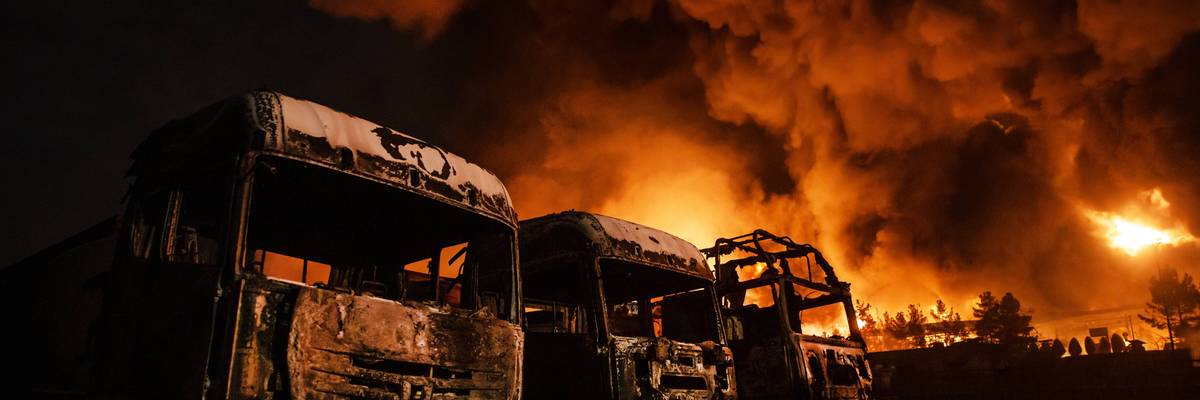
Fire breaks out at the Shahran oil depot after US and Israeli attacks, leaving numerous fuel tankers and vehicles in the area unusable in Tehran, Iran on March 8, 2026.
The US and Israel may have started this war, but it won’t be so easily ended. The damage done to Iran, Lebanon, and Palestine will be with us for a generation.
The costs associated with any war—losses of lives, treasure, and security—are to be expected. And so it is with the US-Israel war on Iran. It was unnecessary. It has been massive. And it has been waged without any clear objective or strategic purpose. Though only a few weeks old, and still too early to project how it will play out, early signs of this war’s costs and consequences are worrisome.
The amounts of weapons that the US and Israel have dropped on Iranian targets have had a devastating impact on Iran’s people and the country’s infrastructure and resources. It is difficult to imagine that this situation can be remedied any time soon. As a result, Iran, which was already struggling with a flagging economy and a reform-minded and restive population, will most likely endure years of political unrest met by massive repression.
Once illegally attacked by the US and Israel, instead of seeking support from neighboring Arab countries, Iran has struck out at them with a vengeance, destroying some of their infrastructure and economic resources. While the Arab Gulf states can recover, the fragile rapprochement that had been developing between them and Iran has been shattered and will not be easily rebuilt.
A disruption in the supply of oil and gas has resulted from Iran’s choking of the Straits of Hormuz and Israel’s and Iran’s bombings of oil and gas facilities on both sides of the Gulf. This has caused a steep rise in the price of fuel, a sharp decline in the stock market, and the loss of hundreds of billions in overall wealth of investments and pension funds. The war’s economic impacts will continue to reverberate throughout the remainder of the year.
This isn’t the first time that Israel or the US have looked at what they had done to these countries and their peoples and said, “Well, that’s finished,” only to find that the devastating toll of the losses they inflicted and dislocation they created produced a festering bitterness that didn’t dissipate in time.
Meanwhile, the excessive amounts of weaponry so far expended in the war has resulted in reported shortages in both the US and Israel, with President Donald Trump asking Congress to approve an additional $200 billion for the Pentagon and a substantial increase in Israel’s military assistance. As with Ukraine and Gaza, the only winners of this war appear to be the US arms manufacturers.
The damage done doesn’t stop there. The Lebanese Hezbollah forgot that Israel never plays by the rules. They responded to Israel’s murder of Iran’s Ayatollah—a spiritual leader for many Shi’a Muslims—by firing a few shells across their border. Despite the fact that Israel has daily violated its five-month-old ceasefire with Lebanon, Israel used Hezbollah’s shelling to launch a sustained and disproportionate attack on Lebanon. To date, Israel has killed over 1,000 Lebanese, has destroyed entire neighborhoods in Beirut, and has ordered almost one-quarter of Lebanon’s people to flee their homes, exacerbating existing sectarian divisions in the country. Israeli forces now appear to be preparing for a longer-term Israeli occupation of Lebanon’s south. This occupation will likely fare no better than the last time Israel attempted it from the late 1970s to 2000.
As if this weren’t enough, Israel’s far-right government has used the cover of war to consolidate annexation of the West Bank. Plans have been accelerated to evacuate and destroy Palestinian communities in the Jordan Valley to build a “security wall.” Since the war began, the number of attacks by settlers (with the support of Israeli troops) on Palestinian villages has dramatically increased, now averaging 10 a day. These military and vigilante actions have involved deaths and injuries, land theft, and destruction of homes and properties (including orchards and livestock). While Israel’s intent to take full control of all of Palestine has been steadily proceeding in recent years, the actions of the past few weeks are making it all but irreversible.
Meanwhile, the Gaza genocide continues. The attention of the world may be focused elsewhere, but the nearly 2 million Palestinians who remain in that devastated strip continue to suffer from hunger, lack of proper shelter, sanitation, and medical and other essential support services. There is no way to understand the long-term impact this “hell on earth” existence will have on Gaza’s children. But an educated guess would be that it won’t be good.
At this point, Israel’s Prime Minister Benjamin Netanyahu is strutting around as if he were the “Middle East Overlord.” At the same time, there are conflicting reports that the US is either attempting to “wind down” the war or to send ground troops to Iran to “finish the job.” Both are ill-founded. Whatever Trump’s intention, it is a fool’s errand. There is no winding down, nor is there a job to finish.
The US and Israel may have started this war, but it won’t be so easily ended. The damage done to Iran, Lebanon, and Palestine will be with us for a generation. This isn’t the first time that Israel or the US have looked at what they had done to these countries and their peoples and said, “Well, that’s finished,” only to find that the devastating toll of the losses they inflicted and dislocation they created produced a festering bitterness that didn’t dissipate in time. Beware the reckoning.
Dear Common Dreams reader, It’s been nearly 30 years since I co-founded Common Dreams with my late wife, Lina Newhouser. We had the radical notion that journalism should serve the public good, not corporate profits. It was clear to us from the outset what it would take to build such a project. No paid advertisements. No corporate sponsors. No millionaire publisher telling us what to think or do. Many people said we wouldn't last a year, but we proved those doubters wrong. Together with a tremendous team of journalists and dedicated staff, we built an independent media outlet free from the constraints of profits and corporate control. Our mission has always been simple: To inform. To inspire. To ignite change for the common good. Building Common Dreams was not easy. Our survival was never guaranteed. When you take on the most powerful forces—Wall Street greed, fossil fuel industry destruction, Big Tech lobbyists, and uber-rich oligarchs who have spent billions upon billions rigging the economy and democracy in their favor—the only bulwark you have is supporters who believe in your work. But here’s the urgent message from me today. It's never been this bad out there. And it's never been this hard to keep us going. At the very moment Common Dreams is most needed, the threats we face are intensifying. We need your support now more than ever. We don't accept corporate advertising and never will. We don't have a paywall because we don't think people should be blocked from critical news based on their ability to pay. Everything we do is funded by the donations of readers like you. When everyone does the little they can afford, we are strong. But if that support retreats or dries up, so do we. Will you donate now to make sure Common Dreams not only survives but thrives? —Craig Brown, Co-founder |
The costs associated with any war—losses of lives, treasure, and security—are to be expected. And so it is with the US-Israel war on Iran. It was unnecessary. It has been massive. And it has been waged without any clear objective or strategic purpose. Though only a few weeks old, and still too early to project how it will play out, early signs of this war’s costs and consequences are worrisome.
The amounts of weapons that the US and Israel have dropped on Iranian targets have had a devastating impact on Iran’s people and the country’s infrastructure and resources. It is difficult to imagine that this situation can be remedied any time soon. As a result, Iran, which was already struggling with a flagging economy and a reform-minded and restive population, will most likely endure years of political unrest met by massive repression.
Once illegally attacked by the US and Israel, instead of seeking support from neighboring Arab countries, Iran has struck out at them with a vengeance, destroying some of their infrastructure and economic resources. While the Arab Gulf states can recover, the fragile rapprochement that had been developing between them and Iran has been shattered and will not be easily rebuilt.
A disruption in the supply of oil and gas has resulted from Iran’s choking of the Straits of Hormuz and Israel’s and Iran’s bombings of oil and gas facilities on both sides of the Gulf. This has caused a steep rise in the price of fuel, a sharp decline in the stock market, and the loss of hundreds of billions in overall wealth of investments and pension funds. The war’s economic impacts will continue to reverberate throughout the remainder of the year.
This isn’t the first time that Israel or the US have looked at what they had done to these countries and their peoples and said, “Well, that’s finished,” only to find that the devastating toll of the losses they inflicted and dislocation they created produced a festering bitterness that didn’t dissipate in time.
Meanwhile, the excessive amounts of weaponry so far expended in the war has resulted in reported shortages in both the US and Israel, with President Donald Trump asking Congress to approve an additional $200 billion for the Pentagon and a substantial increase in Israel’s military assistance. As with Ukraine and Gaza, the only winners of this war appear to be the US arms manufacturers.
The damage done doesn’t stop there. The Lebanese Hezbollah forgot that Israel never plays by the rules. They responded to Israel’s murder of Iran’s Ayatollah—a spiritual leader for many Shi’a Muslims—by firing a few shells across their border. Despite the fact that Israel has daily violated its five-month-old ceasefire with Lebanon, Israel used Hezbollah’s shelling to launch a sustained and disproportionate attack on Lebanon. To date, Israel has killed over 1,000 Lebanese, has destroyed entire neighborhoods in Beirut, and has ordered almost one-quarter of Lebanon’s people to flee their homes, exacerbating existing sectarian divisions in the country. Israeli forces now appear to be preparing for a longer-term Israeli occupation of Lebanon’s south. This occupation will likely fare no better than the last time Israel attempted it from the late 1970s to 2000.
As if this weren’t enough, Israel’s far-right government has used the cover of war to consolidate annexation of the West Bank. Plans have been accelerated to evacuate and destroy Palestinian communities in the Jordan Valley to build a “security wall.” Since the war began, the number of attacks by settlers (with the support of Israeli troops) on Palestinian villages has dramatically increased, now averaging 10 a day. These military and vigilante actions have involved deaths and injuries, land theft, and destruction of homes and properties (including orchards and livestock). While Israel’s intent to take full control of all of Palestine has been steadily proceeding in recent years, the actions of the past few weeks are making it all but irreversible.
Meanwhile, the Gaza genocide continues. The attention of the world may be focused elsewhere, but the nearly 2 million Palestinians who remain in that devastated strip continue to suffer from hunger, lack of proper shelter, sanitation, and medical and other essential support services. There is no way to understand the long-term impact this “hell on earth” existence will have on Gaza’s children. But an educated guess would be that it won’t be good.
At this point, Israel’s Prime Minister Benjamin Netanyahu is strutting around as if he were the “Middle East Overlord.” At the same time, there are conflicting reports that the US is either attempting to “wind down” the war or to send ground troops to Iran to “finish the job.” Both are ill-founded. Whatever Trump’s intention, it is a fool’s errand. There is no winding down, nor is there a job to finish.
The US and Israel may have started this war, but it won’t be so easily ended. The damage done to Iran, Lebanon, and Palestine will be with us for a generation. This isn’t the first time that Israel or the US have looked at what they had done to these countries and their peoples and said, “Well, that’s finished,” only to find that the devastating toll of the losses they inflicted and dislocation they created produced a festering bitterness that didn’t dissipate in time. Beware the reckoning.
The costs associated with any war—losses of lives, treasure, and security—are to be expected. And so it is with the US-Israel war on Iran. It was unnecessary. It has been massive. And it has been waged without any clear objective or strategic purpose. Though only a few weeks old, and still too early to project how it will play out, early signs of this war’s costs and consequences are worrisome.
The amounts of weapons that the US and Israel have dropped on Iranian targets have had a devastating impact on Iran’s people and the country’s infrastructure and resources. It is difficult to imagine that this situation can be remedied any time soon. As a result, Iran, which was already struggling with a flagging economy and a reform-minded and restive population, will most likely endure years of political unrest met by massive repression.
Once illegally attacked by the US and Israel, instead of seeking support from neighboring Arab countries, Iran has struck out at them with a vengeance, destroying some of their infrastructure and economic resources. While the Arab Gulf states can recover, the fragile rapprochement that had been developing between them and Iran has been shattered and will not be easily rebuilt.
A disruption in the supply of oil and gas has resulted from Iran’s choking of the Straits of Hormuz and Israel’s and Iran’s bombings of oil and gas facilities on both sides of the Gulf. This has caused a steep rise in the price of fuel, a sharp decline in the stock market, and the loss of hundreds of billions in overall wealth of investments and pension funds. The war’s economic impacts will continue to reverberate throughout the remainder of the year.
This isn’t the first time that Israel or the US have looked at what they had done to these countries and their peoples and said, “Well, that’s finished,” only to find that the devastating toll of the losses they inflicted and dislocation they created produced a festering bitterness that didn’t dissipate in time.
Meanwhile, the excessive amounts of weaponry so far expended in the war has resulted in reported shortages in both the US and Israel, with President Donald Trump asking Congress to approve an additional $200 billion for the Pentagon and a substantial increase in Israel’s military assistance. As with Ukraine and Gaza, the only winners of this war appear to be the US arms manufacturers.
The damage done doesn’t stop there. The Lebanese Hezbollah forgot that Israel never plays by the rules. They responded to Israel’s murder of Iran’s Ayatollah—a spiritual leader for many Shi’a Muslims—by firing a few shells across their border. Despite the fact that Israel has daily violated its five-month-old ceasefire with Lebanon, Israel used Hezbollah’s shelling to launch a sustained and disproportionate attack on Lebanon. To date, Israel has killed over 1,000 Lebanese, has destroyed entire neighborhoods in Beirut, and has ordered almost one-quarter of Lebanon’s people to flee their homes, exacerbating existing sectarian divisions in the country. Israeli forces now appear to be preparing for a longer-term Israeli occupation of Lebanon’s south. This occupation will likely fare no better than the last time Israel attempted it from the late 1970s to 2000.
As if this weren’t enough, Israel’s far-right government has used the cover of war to consolidate annexation of the West Bank. Plans have been accelerated to evacuate and destroy Palestinian communities in the Jordan Valley to build a “security wall.” Since the war began, the number of attacks by settlers (with the support of Israeli troops) on Palestinian villages has dramatically increased, now averaging 10 a day. These military and vigilante actions have involved deaths and injuries, land theft, and destruction of homes and properties (including orchards and livestock). While Israel’s intent to take full control of all of Palestine has been steadily proceeding in recent years, the actions of the past few weeks are making it all but irreversible.
Meanwhile, the Gaza genocide continues. The attention of the world may be focused elsewhere, but the nearly 2 million Palestinians who remain in that devastated strip continue to suffer from hunger, lack of proper shelter, sanitation, and medical and other essential support services. There is no way to understand the long-term impact this “hell on earth” existence will have on Gaza’s children. But an educated guess would be that it won’t be good.
At this point, Israel’s Prime Minister Benjamin Netanyahu is strutting around as if he were the “Middle East Overlord.” At the same time, there are conflicting reports that the US is either attempting to “wind down” the war or to send ground troops to Iran to “finish the job.” Both are ill-founded. Whatever Trump’s intention, it is a fool’s errand. There is no winding down, nor is there a job to finish.
The US and Israel may have started this war, but it won’t be so easily ended. The damage done to Iran, Lebanon, and Palestine will be with us for a generation. This isn’t the first time that Israel or the US have looked at what they had done to these countries and their peoples and said, “Well, that’s finished,” only to find that the devastating toll of the losses they inflicted and dislocation they created produced a festering bitterness that didn’t dissipate in time. Beware the reckoning.