SUBSCRIBE TO OUR FREE NEWSLETTER
Daily news & progressive opinion—funded by the people, not the corporations—delivered straight to your inbox.
5
#000000
#FFFFFF
To donate by check, phone, or other method, see our More Ways to Give page.
Daily news & progressive opinion—funded by the people, not the corporations—delivered straight to your inbox.
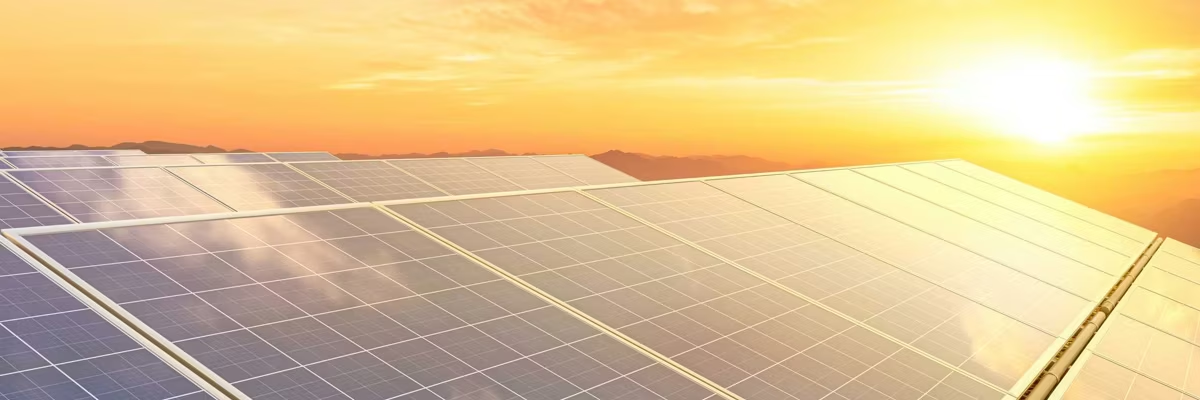
Solar panels are seen under the sun.
Clean energy is strong. And in 2025, it showed its strength in some really notable ways, as momentum, economics, policies, and people carried clean energy progress forward, despite it all.
To claim that 2025 in the United States has been one for the history books may be the understatement of the year. So many unprecedented things have happened, that historians will have no shortage of harrowing lessons to be learned from this era.
In the clean energy space, the Trump administration launched attack after attack to slow down the clean energy in favor of fossil fuels, killing projects, investments, and jobs. By rescinding clean energy funding, pushing to abolish tax credits, coordinating across the administration to interfere with wind and solar, and so much more, they’ve set us up for bitter harvests for years to come.
And yet…
Clean energy is strong. And in 2025, it showed its strength in some really notable ways, as momentum, economics, policies, and people carried clean energy progress forward, despite it all. And it seems all the more important to celebrate it this year.
So, here are clean energy bright spots worthy of resounding cheers.
One pillar of progress has been growth in renewable energy capacity, for more clean electricity and all the other benefits clean energy brings. And one clear shining star for 2025 is the US solar sector:
Energy storage was another fount of progress in 2025, with installations for the year projected to be more than 50% higher than in 2024, led by Texas, California, and Arizona.
All told, says the American Clean Power Association, 2025 looks “firmly on pace to surpass 2024 as the biggest clean power deployment year in history.”
Where solar, storage, and other clean energy technologies really shine is in what they make possible in electricity markets around the country. Some examples:
Though the challenges were unprecedented for offshore wind, 2025 also brought noteworthy happenings in that space. Construction progressed on the next generation of projects, aimed at serving Connecticut, Massachusetts, New York, Rhode Island, and Virginia, and several large-scale ones should reach full power in 2026 (if I didn’t just jinx it…). In service in Virginia to aid the work is the Charybdis, the brand-new wind turbine installation vessel that is the first built in the United States (Texas). Virginia’s offshore wind project will be one of the world’s largest when completed next year, capable of producing enough energy for more than 600,000 Virginian households.
Clean energy’s progress despite all that the Trump administration threw at it is notable, and it seems important to celebrate those accomplishments as we go into the new year.
As some of the Trump administration’s spurious excuses to halt under-construction offshore wind projects failed to stand up to legal scrutiny, the importance of offshore wind for economies—not just as a source of clean electrons—was even clearer than usual in the range of voices pushing back and speaking out in opposition to the administration’s monkeying. Those included labor unions, business networks, and even the Republican member of Congress for the Virginia project staging area and Speaker of the House Mike Johnson (R-La.).
Meanwhile, the first operating large-scale US offshore wind project, serving Long Island, showed strong results in its first year—including in the winter months, when offshore wind power comes in particularly handy. New England too was benefiting from offshore turbines, before the projects themselves even reached completion: Injections of electricity into the region’s grid led to wind generation from January to early December 2025 that was 26% higher than in the same period in 2024, and led in mid-December to a record for peak wind production that was 29% higher than 2024’s peak.
As technology moves forward, so do some leading states. Despite—or because of—the federal moves in the wrong direction, multiple states doubled down on their moves toward a clean energy economy in 2025. Maine, for example, committed to 100% clean electricity by 2040. California extended and strengthened its “cap and invest” program. Illinois passed a comprehensive clean energy package. And, because clean energy matters at all scales, it’s worth celebrating Michigan’s moves to make it easier for customers to connect distributed renewable energy systems (think rooftop solar) to the electric grid, and Utah’s embrace of balcony solar.
And there’s a lot more to come for clean energy, despite the even rougher seas ahead in the near term under this administration. Continuing affordability concerns will guide even some slow-to-come-around people to recognize solar and wind as often the cheapest source of new electricity generation. Decision-makers and the rest of us who care about good jobs and economic development will continue to push for more policies to accelerate the move to clean energy. Innovation, economies of scale in products and projects, and continued international progress will all make clean energy even more attractive.
There’s a lot about 2025 I’d really like to be able to undo, or forget. But clean energy’s progress despite all that the Trump administration threw at it is notable, and it seems important to celebrate those accomplishments as we go into the new year. Not least to keep reminding ourselves of the enormity of what’s already possible and what’s yielding dividends right now, today, and will be long into the future.
Dear Common Dreams reader, It’s been nearly 30 years since I co-founded Common Dreams with my late wife, Lina Newhouser. We had the radical notion that journalism should serve the public good, not corporate profits. It was clear to us from the outset what it would take to build such a project. No paid advertisements. No corporate sponsors. No millionaire publisher telling us what to think or do. Many people said we wouldn't last a year, but we proved those doubters wrong. Together with a tremendous team of journalists and dedicated staff, we built an independent media outlet free from the constraints of profits and corporate control. Our mission has always been simple: To inform. To inspire. To ignite change for the common good. Building Common Dreams was not easy. Our survival was never guaranteed. When you take on the most powerful forces—Wall Street greed, fossil fuel industry destruction, Big Tech lobbyists, and uber-rich oligarchs who have spent billions upon billions rigging the economy and democracy in their favor—the only bulwark you have is supporters who believe in your work. But here’s the urgent message from me today. It's never been this bad out there. And it's never been this hard to keep us going. At the very moment Common Dreams is most needed, the threats we face are intensifying. We need your support now more than ever. We don't accept corporate advertising and never will. We don't have a paywall because we don't think people should be blocked from critical news based on their ability to pay. Everything we do is funded by the donations of readers like you. When everyone does the little they can afford, we are strong. But if that support retreats or dries up, so do we. Will you donate now to make sure Common Dreams not only survives but thrives? —Craig Brown, Co-founder |
To claim that 2025 in the United States has been one for the history books may be the understatement of the year. So many unprecedented things have happened, that historians will have no shortage of harrowing lessons to be learned from this era.
In the clean energy space, the Trump administration launched attack after attack to slow down the clean energy in favor of fossil fuels, killing projects, investments, and jobs. By rescinding clean energy funding, pushing to abolish tax credits, coordinating across the administration to interfere with wind and solar, and so much more, they’ve set us up for bitter harvests for years to come.
And yet…
Clean energy is strong. And in 2025, it showed its strength in some really notable ways, as momentum, economics, policies, and people carried clean energy progress forward, despite it all. And it seems all the more important to celebrate it this year.
So, here are clean energy bright spots worthy of resounding cheers.
One pillar of progress has been growth in renewable energy capacity, for more clean electricity and all the other benefits clean energy brings. And one clear shining star for 2025 is the US solar sector:
Energy storage was another fount of progress in 2025, with installations for the year projected to be more than 50% higher than in 2024, led by Texas, California, and Arizona.
All told, says the American Clean Power Association, 2025 looks “firmly on pace to surpass 2024 as the biggest clean power deployment year in history.”
Where solar, storage, and other clean energy technologies really shine is in what they make possible in electricity markets around the country. Some examples:
Though the challenges were unprecedented for offshore wind, 2025 also brought noteworthy happenings in that space. Construction progressed on the next generation of projects, aimed at serving Connecticut, Massachusetts, New York, Rhode Island, and Virginia, and several large-scale ones should reach full power in 2026 (if I didn’t just jinx it…). In service in Virginia to aid the work is the Charybdis, the brand-new wind turbine installation vessel that is the first built in the United States (Texas). Virginia’s offshore wind project will be one of the world’s largest when completed next year, capable of producing enough energy for more than 600,000 Virginian households.
Clean energy’s progress despite all that the Trump administration threw at it is notable, and it seems important to celebrate those accomplishments as we go into the new year.
As some of the Trump administration’s spurious excuses to halt under-construction offshore wind projects failed to stand up to legal scrutiny, the importance of offshore wind for economies—not just as a source of clean electrons—was even clearer than usual in the range of voices pushing back and speaking out in opposition to the administration’s monkeying. Those included labor unions, business networks, and even the Republican member of Congress for the Virginia project staging area and Speaker of the House Mike Johnson (R-La.).
Meanwhile, the first operating large-scale US offshore wind project, serving Long Island, showed strong results in its first year—including in the winter months, when offshore wind power comes in particularly handy. New England too was benefiting from offshore turbines, before the projects themselves even reached completion: Injections of electricity into the region’s grid led to wind generation from January to early December 2025 that was 26% higher than in the same period in 2024, and led in mid-December to a record for peak wind production that was 29% higher than 2024’s peak.
As technology moves forward, so do some leading states. Despite—or because of—the federal moves in the wrong direction, multiple states doubled down on their moves toward a clean energy economy in 2025. Maine, for example, committed to 100% clean electricity by 2040. California extended and strengthened its “cap and invest” program. Illinois passed a comprehensive clean energy package. And, because clean energy matters at all scales, it’s worth celebrating Michigan’s moves to make it easier for customers to connect distributed renewable energy systems (think rooftop solar) to the electric grid, and Utah’s embrace of balcony solar.
And there’s a lot more to come for clean energy, despite the even rougher seas ahead in the near term under this administration. Continuing affordability concerns will guide even some slow-to-come-around people to recognize solar and wind as often the cheapest source of new electricity generation. Decision-makers and the rest of us who care about good jobs and economic development will continue to push for more policies to accelerate the move to clean energy. Innovation, economies of scale in products and projects, and continued international progress will all make clean energy even more attractive.
There’s a lot about 2025 I’d really like to be able to undo, or forget. But clean energy’s progress despite all that the Trump administration threw at it is notable, and it seems important to celebrate those accomplishments as we go into the new year. Not least to keep reminding ourselves of the enormity of what’s already possible and what’s yielding dividends right now, today, and will be long into the future.
To claim that 2025 in the United States has been one for the history books may be the understatement of the year. So many unprecedented things have happened, that historians will have no shortage of harrowing lessons to be learned from this era.
In the clean energy space, the Trump administration launched attack after attack to slow down the clean energy in favor of fossil fuels, killing projects, investments, and jobs. By rescinding clean energy funding, pushing to abolish tax credits, coordinating across the administration to interfere with wind and solar, and so much more, they’ve set us up for bitter harvests for years to come.
And yet…
Clean energy is strong. And in 2025, it showed its strength in some really notable ways, as momentum, economics, policies, and people carried clean energy progress forward, despite it all. And it seems all the more important to celebrate it this year.
So, here are clean energy bright spots worthy of resounding cheers.
One pillar of progress has been growth in renewable energy capacity, for more clean electricity and all the other benefits clean energy brings. And one clear shining star for 2025 is the US solar sector:
Energy storage was another fount of progress in 2025, with installations for the year projected to be more than 50% higher than in 2024, led by Texas, California, and Arizona.
All told, says the American Clean Power Association, 2025 looks “firmly on pace to surpass 2024 as the biggest clean power deployment year in history.”
Where solar, storage, and other clean energy technologies really shine is in what they make possible in electricity markets around the country. Some examples:
Though the challenges were unprecedented for offshore wind, 2025 also brought noteworthy happenings in that space. Construction progressed on the next generation of projects, aimed at serving Connecticut, Massachusetts, New York, Rhode Island, and Virginia, and several large-scale ones should reach full power in 2026 (if I didn’t just jinx it…). In service in Virginia to aid the work is the Charybdis, the brand-new wind turbine installation vessel that is the first built in the United States (Texas). Virginia’s offshore wind project will be one of the world’s largest when completed next year, capable of producing enough energy for more than 600,000 Virginian households.
Clean energy’s progress despite all that the Trump administration threw at it is notable, and it seems important to celebrate those accomplishments as we go into the new year.
As some of the Trump administration’s spurious excuses to halt under-construction offshore wind projects failed to stand up to legal scrutiny, the importance of offshore wind for economies—not just as a source of clean electrons—was even clearer than usual in the range of voices pushing back and speaking out in opposition to the administration’s monkeying. Those included labor unions, business networks, and even the Republican member of Congress for the Virginia project staging area and Speaker of the House Mike Johnson (R-La.).
Meanwhile, the first operating large-scale US offshore wind project, serving Long Island, showed strong results in its first year—including in the winter months, when offshore wind power comes in particularly handy. New England too was benefiting from offshore turbines, before the projects themselves even reached completion: Injections of electricity into the region’s grid led to wind generation from January to early December 2025 that was 26% higher than in the same period in 2024, and led in mid-December to a record for peak wind production that was 29% higher than 2024’s peak.
As technology moves forward, so do some leading states. Despite—or because of—the federal moves in the wrong direction, multiple states doubled down on their moves toward a clean energy economy in 2025. Maine, for example, committed to 100% clean electricity by 2040. California extended and strengthened its “cap and invest” program. Illinois passed a comprehensive clean energy package. And, because clean energy matters at all scales, it’s worth celebrating Michigan’s moves to make it easier for customers to connect distributed renewable energy systems (think rooftop solar) to the electric grid, and Utah’s embrace of balcony solar.
And there’s a lot more to come for clean energy, despite the even rougher seas ahead in the near term under this administration. Continuing affordability concerns will guide even some slow-to-come-around people to recognize solar and wind as often the cheapest source of new electricity generation. Decision-makers and the rest of us who care about good jobs and economic development will continue to push for more policies to accelerate the move to clean energy. Innovation, economies of scale in products and projects, and continued international progress will all make clean energy even more attractive.
There’s a lot about 2025 I’d really like to be able to undo, or forget. But clean energy’s progress despite all that the Trump administration threw at it is notable, and it seems important to celebrate those accomplishments as we go into the new year. Not least to keep reminding ourselves of the enormity of what’s already possible and what’s yielding dividends right now, today, and will be long into the future.