May, 09 2022, 01:01pm EDT

Appeals Board Finds EPA Permit for First-Ever Industrial Aquaculture Facility in Federal Waters Violates Clean Water Act
Siding with Center for Food Safety (CFS) and allies in an appeal, last week the Environmental Appeals Board
SARASOTA, Fla.
Siding with Center for Food Safety (CFS) and allies in an appeal, last week the Environmental Appeals Board issued a decision that states the U.S. Environmental Protection Agency's (EPA) permit for Velella Epsilon, the first-ever industrial aquaculture facility in federal waters, violated the Clean Water Act. The Board has ordered EPA to clarify that the facility will not cause harm to aquatic ecosystems and species in the Gulf of Mexico.
The coalition behind the appeal, originally filed in November 2020, includes CFS, Recirculating Farms Coalition, Friends of the Earth, Center for Biological Diversity, Food & Water Watch, Healthy Gulf, Suncoast Waterkeeper, and Tampa Bay Waterkeeper. The appeal argued that the EPA permit for Velella Epsilon, located 45 miles off the coast of Sarasota, Florida, had violated the law by failing to evaluate the potential dangers of the wastewater that the facility will release into vulnerable Gulf ecosystems, such as phosphorus and nitrogen contributing to harmful algal blooms (also often known as red tide), antibiotics, escaped fish, and pathogens and parasites.
The groups alleged EPA violated the Clean Water Act, the National Environmental Policy Act, and the Endangered Species Act. Last week's victory confirms that EPA failed to meet the Clean Water Act's legal standard in its determination that harm to the marine environment is not likely to occur and must therefore take further action to comply with federal law
Coalition statements:
"EPA admitted that it made inconsistent statements in its decision to approve the first-ever offshore finfish aquaculture facility. As the appeals board noted, EPA needs to determine with certainty that the facility will not harm the marine environment. If it does, we will continue to watchdog EPA to ensure it meets legal requirements for its assessment of this facility, as well as any others in the future to protect aquatic ecosystems, species, and public health," said Meredith Stevenson, associate attorney at Center for Food Safety and counsel in the appeal.
"It is good news that the Environmental Appeals Board recognized shortcomings in the EPA permitting process. We hope the agency will take time to review and acknowledge the dangers associated with offshore finfish aquaculture, and we will not need to pursue future legal action," said Marianne Cufone, executive director of Recirculating Farms and co-founder of the Don't Cage Our Oceans coalition.
Center for Food Safety's mission is to empower people, support farmers, and protect the earth from the harmful impacts of industrial agriculture. Through groundbreaking legal, scientific, and grassroots action, we protect and promote your right to safe food and the environment. CFS's successful legal cases collectively represent a landmark body of case law on food and agricultural issues.
(202) 547-9359LATEST NEWS
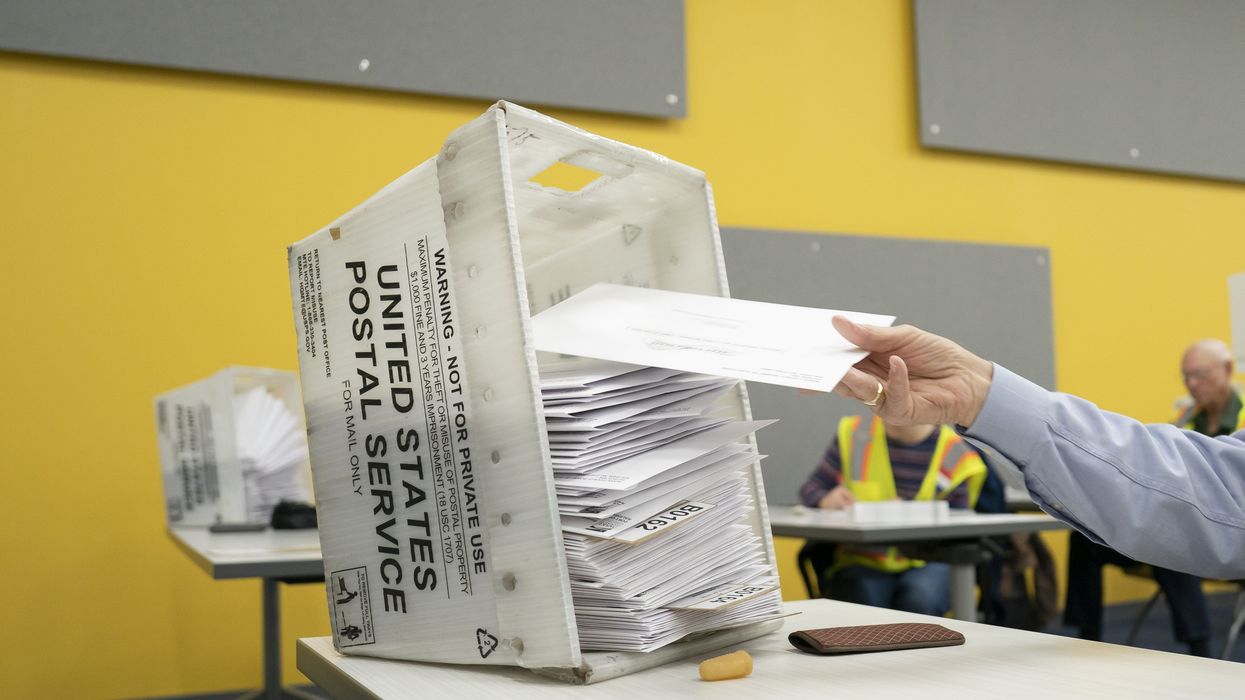
‘Yeah, That’s Illegal’: USPS Chief Says States Won't Receive Mail Ballots Unless They Hand Voter Rolls to Trump
"You're making a decision that people cannot vote by mail. That's unacceptable," said US Sen. Gary Peters.
Jun 25, 2026
Postmaster General David Steiner drew the ire of Democratic senators and voting rights advocates on Wednesday when he said that the US Postal Service would not deliver mail-in ballots in states that do not hand their voter files to the Trump administration.
During a Senate Homeland Security Committee hearing, Sen. Gary Peters (D-Mich.), the panels ranking member, asked Steiner if USPS would deliver ballots in a state whose government had refused the Trump administration's request for access to its absentee voter list.
"Under our proposed regulation, no," Steiner replied. "We would tell the state that we need the manifest."
Peters responded by accusing USPS of creating a rule that "coerces" states into handing their voter files to the federal government even though they are under no legal obligation to do so.
"You're making a decision that people cannot vote by mail," Peters said. "That's unacceptable."
PETERS: Yes or no, if a state refuses to turn their absentee voter list to the federal government, will the Postal Service still mail their ballots under this proposed rule?
POSTMASTER GENERAL STEINER: No.
PETERS: So the proposed rule basically coerces states to hand over their… pic.twitter.com/5bnJb5Atnr
— Aaron Rupar (@atrupar) June 24, 2026
Sen. Richard Blumenthal (D-Conn.) also sparred with Steiner during the hearing, informing the postmaster general that USPS had absolutely no role to play in determining how states conduct their elections.
"You run the Postal Service, you deliver the mail," Blumenthal said. "You don't review ballots or registration. Nobody said you should... This proposed rule is bogus."
Blumenthal demanded Steiner commit to deliver all mail-in ballots to voters in his state regardless of whether it complied with the Trump administration's demands, but the postmaster general said he would not make such a commitment.
"Our proposed rule is subject to litigation," Steiner told him. "We'll see how that all turns out."
"Well, I guess we will see," Blumenthal replied, "but it will probably be in court."
The Founding Fathers didn’t envision USPS reviewing voting ballots or registration. Trump’s Postmaster General refuses to commit to deliver mail-in-ballots without fulfilling Trump’s new bogus, sham review. pic.twitter.com/V3jiBMyGOY
— Richard Blumenthal (@SenBlumenthal) June 24, 2026
Some observers reacted with shock to Steiner's willingness to go along with Trump's latest election-rigging scheme, which they said was patently unconstitutional.
"Yeah, that's illegal," said Aaron Reichlin-Melnick, senior fellow at the American Immigration Council. "The Post Office can’t refuse to deliver mail to try and get policy concessions."
"We have a Postmaster General who should not be in any position of trust or influence," commented political scientist Norman Ornstein, "a disgraceful traitor to American values."
Illinois Gov. JB Pritzker signaled his state would challenge the proposed USPS rule.
"Illinois expanded vote-by-mail because we believe voting should be easier, not harder," Pritzker wrote. "Now, Trump’s handpicked Postmaster General is threatening to withhold mail ballots unless states turn over voter rolls. That's not election security. It’s voter suppression."
Political scientist Robert E. Kelly argued that Trump's attack on mail-in voting was a "deeply malign gimmick which makes it so hard to accommodate MAGA within the US political order."
"No one thought to use the mail as a partisan weapon," Kelly wrote. "The laws and norms around mail are poorly known, because no one ever thought to try this gambit before. But now, because Trump insists on politicizing the bureaucracy, this whole thing will go to court just months before the election."
Keep ReadingShow Less

Thousands Feared Dead After Back-to-Back Earthquakes Devastate Venezuela
One resident of Venezuela's capital described the scene in her area as "like a horror movie" as rescue teams searched the rubble of collapsed buildings for survivors.
Jun 25, 2026
Emergency workers rushed to search the rubble of collapsed buildings in and near the Venezuelan capital of Caracas on Thursday after back-to-back powerful earthquakes rocked the country, killing at least 164 people—a toll that's expected to reach the thousands as victims' bodies are recovered from the wreckage.
The disaster began on Wednesday afternoon local time as a 7.2-magnitude earthquake hit around 100 miles west of Caracas. Just 39 seconds later, a 7.5-magnitude quake struck, compounding the damage. One Caracas resident told Reuters that the aftermath of the quakes "was like a horror movie."
The Associated Press reported that rescue teams were seen "using power tools to work their way into piles of rubble where buildings once stood."
"Panicked residents of the capital were sent pouring into the streets, and after the quakes many people walked among the debris searching for the missing among collapsed buildings and toppled electric poles," the outlet added. "Footage on state TV showed three children, covered in dust but alive, pulled from the rubble in La Guaira state... one of the areas hardest hit by the quakes because of the large number of collapsed buildings."
Video captured the first moments of two powerful earthquakes striking Venezuela, triggering panic as people fled for safety as buildings collapsed around them. pic.twitter.com/ZadZ6VNrNo
— Al Jazeera Breaking News (@AJENews) June 25, 2026
Acting Venezuelan President Delcy Rodríguez, who took charge following the US abduction of President Nicolás Maduro in January, said that "dozens of buildings have collapsed" in La Guaira.
"We are currently carrying out intensive rescue operations to save lives," Rodríguez added.
Venezuela looks like it was BOMBED after two MASSIVE 7.1 and 7.5 magnitude earthquakes.
Pray for the people, this is really bad pic.twitter.com/pIw8ywXzYe
— Ryan Rozbiani (@RyanRozbiani) June 25, 2026
US President Donald Trump, who authorized the illegal assault on Venezuela and kidnapping of Maduro earlier this year, wrote on social media that his administration "stands ready, willing, and able to help."
"I have instructed all agencies of our government to get ready to move quickly," Trump wrote. "We will be there for our new and great friends. Early reports are not good!!!"
Tom Fletcher, the United Nations' emergency relief coordinator, said in a statement Thursday that "we are fully mobilized to support the people of Venezuela following the deadly and devastating earthquakes that hit the country."
"The coming days will require a massive collective effort to support the government-led response and help communities," Fletcher added. "Even before these earthquakes, nearly 8 million people in Venezuela were in need of humanitarian support. This disaster risks deepening existing vulnerabilities. Sustained international support for humanitarian organizations responding on the ground is essential and urgent."
Keep ReadingShow Less
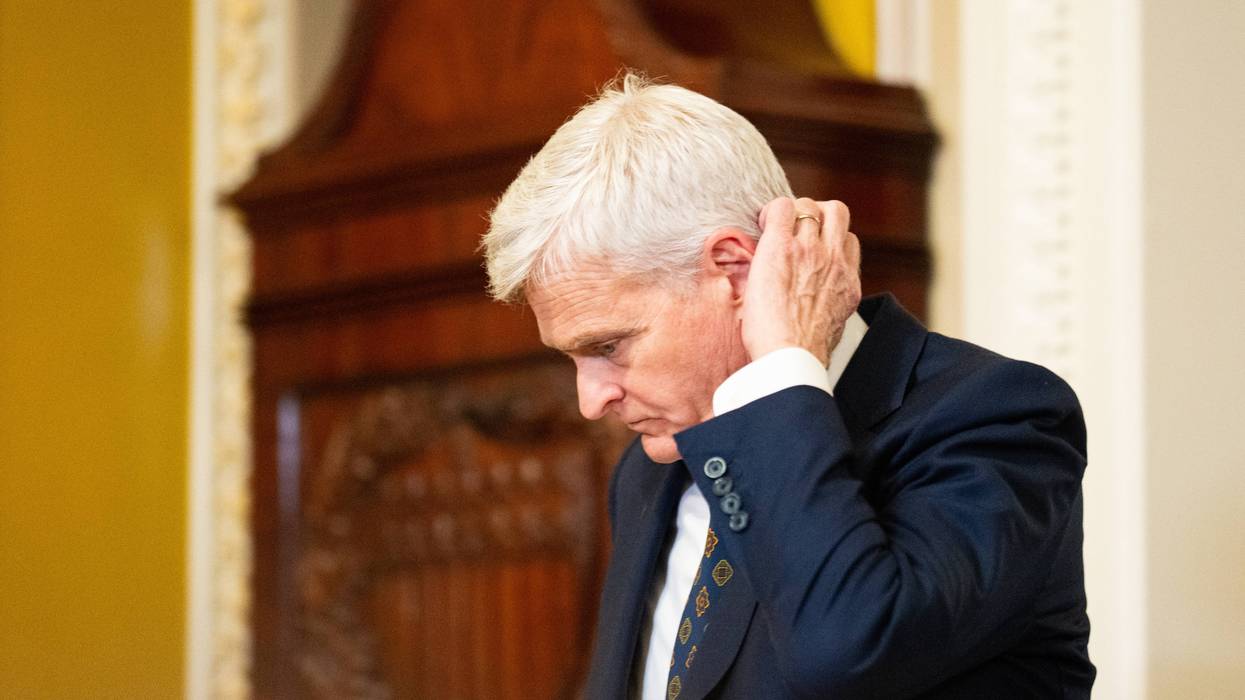
Caving to Trump 'Temper Tantrum,' Two Republicans Flip to Block Iran War Powers Resolution
Republican Sen. Bill Cassidy, who lost reelection last month and said he would not be "bullied," switched his vote to no after the president berated him during a closed-door lunch hours earlier.
Jun 25, 2026
Two Senate Republicans who supported a previous resolution calling for an end to the US war on Iran changed their votes late Wednesday after President Donald Trump publicly and privately berated GOP lawmakers, calling them "losers" who provided "aid and comfort to the enemy."
In Wednesday's procedural vote, Sen. Bill Cassidy (R-La.)—who reportedly got into a shouting match with Trump over the Iran war during a closed-door lunch hours earlier—sided with virtually every other Republican in opposing the war powers resolution, just a day after he supported a separate, symbolic resolution calling for the removal of US forces from the conflict. Sen. Rand Paul (R-Ky.) also switched, changing his vote to "present" at the urging of the president.
Senate Republicans forced late Wednesday's vote in a clear effort to placate Trump, who fumed at "Republican losers" who backed the symbolic war powers resolution that passed the upper chamber earlier this week. Sen. Tim Kaine (D-Va.), the lead sponsor of the resolution that Republicans blocked on Wednesday, said the vote was held to "appease [Trump's] temper tantrum."
"After both Republican-majority Houses took the historic step of voting that additional war against Iran is illegal without congressional authorization, President Trump came to the Capitol and tried to browbeat Republican senators for upholding their oaths of office," said Kaine. Wednesday's vote, the senator added, "does not undo the expressed position of Congress that further war against Iran is illegal unless Congress votes for it."
Trump, who has repeatedly threatened to resume attacks on Iran if negotiations collapse, celebrated Wednesday's vote in a late-night post on his social media platform, thanking Senate GOP leaders and highlighting that Cassidy and Paul changed their votes.
Cassidy, who lost reelection last month and insisted hours before the vote that he would not "be bullied" by the administration, subsequently thanked the White House for giving him a "thorough briefing" on Iran to "address many of my concerns." Trump reportedly called Cassidy a "lunatic" during Wednesday's private lunch.
"This president is telling the American people there’s no money for healthcare, housing, or childcare—but there should be endless taxpayer dollars to fund wars they don’t support."
Wednesday's vote came amid tenuous negotiations between the US and Iran on a diplomatic resolution to end the illegal war that Trump launched in late February, killing thousands of Iranians, throwing the global economy into chaos, and driving up prices at home.
On Wednesday, prior to the Senate war powers vote, the White House asked Congress to approve an $87.6 billion supplemental funding package that includes nearly $70 billion for military programs to address "operational costs incurred" during the war on Iran.
Rep. Brendan Boyle (D-Pa.), the top Democrat on the House Budget Committee, said in a statement that "the tens of billions in military spending requested by the Trump administration could be used to protect Americans’ healthcare, feed hungry children, and help working families afford everyday life."
"Instead, Trump wants taxpayers to continue footing the bill for his reckless war in Iran, which has sent the cost of gas and everyday goods skyrocketing, put our brave men and women in uniform at risk, and left the region no safer than before," Boyle added.
Senate Democrats' top appropriator, Patty Murray of Washington, said she would not "rubberstamp tens of billions more for this disastrous war of choice."
“This president is telling the American people there’s no money for healthcare, housing, or childcare—but there should be endless taxpayer dollars to fund wars they don’t support," said Murray.
Keep ReadingShow Less
Most Popular