

SUBSCRIBE TO OUR FREE NEWSLETTER
Daily news & progressive opinion—funded by the people, not the corporations—delivered straight to your inbox.
5
#000000
#FFFFFF
To donate by check, phone, or other method, see our More Ways to Give page.
Daily news & progressive opinion—funded by the people, not the corporations—delivered straight to your inbox.

Eric Hoffman, Friends of the Earth U.S., 202-222-0747, ehoffman@foe.org
Jaydee Hanson, International Center for Technology Assessment, 202-547-9359, jhanson@icta.org
Jim Thomas, ETC Group, 1-514-273-9994, jim@etcgroup.org
Silvia Ribeiro, ETC Group, +52 55 5563 2664, silvia@etcgroup.org
Carolyn Raffensperger, Science and Environmental Health Network, 515-268-0600, raffenspergerc@cs.com
Today a broad coalition of 111 organizations from around the world released The Principles for the Oversight of Synthetic Biology, the first global civil society declaration to outline principles that must be adopted to protect public health and the environment from the risks posed by synthetic biology, and to address the field's economic, social and ethical challenges.
Today a broad coalition of 111 organizations from around the world released The Principles for the Oversight of Synthetic Biology, the first global civil society declaration to outline principles that must be adopted to protect public health and the environment from the risks posed by synthetic biology, and to address the field's economic, social and ethical challenges. Until these governance principles are in place, the coalition is calling fora moratorium on the release and commercial use of synthetic organisms and products.
The synthetic biology industry is expanding rapidly, with a market value in 2011 of over $1.6 billion that is expected to reach $10.8 billion by 2016. However, there has been little to no governance of the industry or assessment of the novel risks posed by synthetic organisms. Synthetic biology is "extreme genetic engineering" -- not just reading and rearranging genetic code, but writing it to create new genes, genetic traits and possibly entire life forms from scratch.
The global coalition calls for the following seven principles to be established to safeguard public health and the environment from the novel risks of synthetic biology and to ensure open, meaningful and full public participation in decisions regarding its uses:
"The Principles for the Oversight of Synthetic Biology marks an important milestone in the debate around synthetic biology, as it is the first document from a global coalition of civil society organizations that outlines how synthetic biology should be regulated," said Eric Hoffman, Food and Technology Policy Campaigner at Friends of the Earth U.S. "This diverse coalition of 111 groups from around the world, including environmental, religious, consumer, scientific, worker safety and human rights groups, has come together to call for the proper governance of synthetic biology. Our recommendations are rooted in the guiding principle of placing the health of people and the environment above corporate profits."
"Self-regulation of the synthetic biology industry simply won't work. Current laws and regulations around biotechnology are outdated and inadequate to deal with the novel risks posed by synthetic biology technologies and their products," said Andy Kimbrell, Executive Director of the International Center for Technology Assessment. "These principles outline the positive role local and national governments, as well as international laws, can play in protecting communities from the novel risks posed by synthetic biology."
"In addition to the risks synthetic biology poses to human health and the environment, this technology may also deepen global social and economic injustices," explained Silvia Ribeiro, Latin American Director of ETC Group. "Novel organisms tailored to break down biomass will enable a new bio-economy in which land, water and fertilizers used to produce food for communities in the global South will be diverted for producing biomass feed for synthetic organisms in order to produce fuels, chemicals and other high-end products for wealthy nations."
"We are calling for a global moratorium on the release and commercial use of synthetic organisms until we have established a public interest research agenda, examined alternatives, developed the proper regulations and put into place rigorous biosafety measures," said Carolyn Raffensperger, Executive Director of the Science and Environmental Health Network. "It is our obligation to safeguard the future, to be wise in our development and use of technologies which could threaten humans and the Earth."
The full report is available for download at: www.foe.org/principles-for-synthetic-biology
Friends of the Earth fights for a more healthy and just world. Together we speak truth to power and expose those who endanger the health of people and the planet for corporate profit. We organize to build long-term political power and campaign to change the rules of our economic and political systems that create injustice and destroy nature.
(202) 783-7400
"We will defeat the oligarchy and the political system that it maintains," said Graham Platner. "The politics of Susan Collins."
US Sen. Bernie Sanders on Sunday rallied in Orono, Maine with progressive Senate candidate Graham Platner, who called for transformative political change to reclaim the wealth that has been "stolen by corrupt politicians and the corporations that bought them."
Platner, who effectively locked up the Maine's US Senate Democratic primary after Gov. Janet Mills exited the race last month, placed five-term incumbent Republican Sen. Susan Collins among the corrupt lawmakers who have sold out workers and advanced the interests of the billionaire class, which is shelling out millions to protect Collins' seat.
"We will not just fight the oligarchy," Platner told an audience of 1,400 gathered at the University of Maine, the location of the 40th stop of Sanders' (I-Vt.) nationwide "Fighting Oligarchy" tour. "We will defeat the oligarchy and the political system that it maintains... The politics of Susan Collins. A politics that turns politicians into millionaires but tells you to be grateful for crumbs. It is a lie."
Platner declared that "we need a political revolution," something he said Sanders "has been fighting for for 60 years."
"When we beat back fascism, when we defend our democracy and our freedom, let it be a different kind of freedom," said Platner. "A freedom to not be condemned to scraps and struggle, but to live with the dignity and fulfillment that gives us the society we deserve."
Watch the full rally:
Sanders, who became the first US senator to endorse Platner last August when he was widely seen as a long shot to win the Democratic nomination, said that "what we're talking about"—from Medicare for All to a living wage to union rights for all workers—"is not radical."
"What is radical is when so few have so much," said Sanders. "What is radical is when billionaires control our political system."
Sunday's "Fight Oligarchy" rally came days after a survey showed Platner leading Collins—who has held her seat for nearly three decades—by seven percentage points among likely voters, who appear unfazed by an intensifying wave of attacks on Platner from pro-Collins super PACs and the National Republican Senatorial Committee.
"Susan Collins is spineless and corrupt," Platner wrote on social media ahead of the rally. "And in 163 days, we will defeat her."
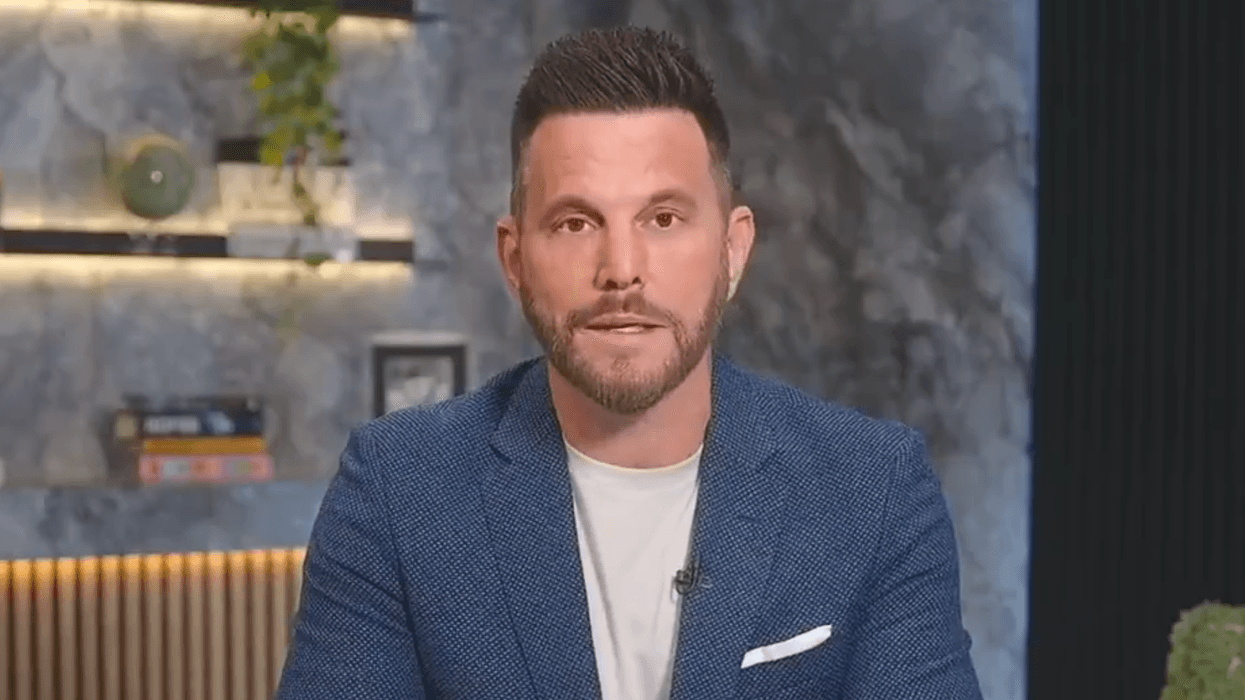
"He’s the Jim Cramer of Iran war predictions," said one critic.
Conservative commentator Dave Rubin, who for months has been a top booster of President Donald Trump's illegal war with Iran, was inundated with mockery on Sunday after a viral video exposed months' worth of his failed predictions about the conflict.
The video, which was posted on social media Saturday, begins with Rubin telling viewers to not listen to any of the prognostications being made by critics of the war, which Trump launched in late February without any authorization from Congress.
"I'm pretty good with predictions," Rubin says. "And my prediction here is that everything the media is now going to say about Iran—it's going to close the Strait of Hormuz, and energy prices are going to go crazy—none of this is going to come to pass."
Iran war: greatest hits from the last 12 weeks pic.twitter.com/9pgXyvmsgF
— Dave Rubin Clips II (Parody) - Retired Jan.20/2025 (@DaveClips) May 24, 2026
The video then cuts to Rubin wrongly predicting that gas prices during the conflict "will continue to come down," before switching to claims that Iran lacks the military capability to keep the Strait of Hormuz closed in the face of US military power.
"If the United States wants to keep the Strait of Hormuz open, which it does," says Rubin, "and Donald Trump says we'll escort ships through if we have to, it's going to stay open."
From there, the video shows Rubin hyping of the prospect of Iranian dissident Reza Pahlavi swooping in to take over the country after the war, and then getting fooled by a fake artificial intelligence-generated video of Iranians giving thanks to Israeli Prime Minister Benjamin Netanyahu for bombing their country.
The video compilation of Rubin's failed predictions drew immediate ridicule from critics.
"He’s the Jim Cramer of Iran war predictions," joked Krystal Ball.
Commentator Adam Mockler wrote of Rubin that "it’s brutal watching him make failed predictions week after week."
Journalist Glenn Greenwald argued that the video should be the last nail in the coffin of whatever credibility Rubin had left.
"Imagine having sat through and listened to all of this Israeli propaganda, which turned out to be (predictably and completely) false," commented Greenwald, "and then thinking there was some value in continuing to listen to this person."
The Bulwark's Tim Miller said that while he knew Rubin was "a smooth-brained hack," he still "couldn’t even fathom how bad these war takes would be."
Political analyst Omar Baddar, meanwhile, said the video should erase any doubt that Rubin is "the dumbest man on the internet."

The Trump administration last week sued Minnesota after it passed a law banning prediction markets from operating in the state.
A Sunday report in The New York Times revealed how the Trump administration is using a key government agency to shut down any efforts to regulate online betting markets such as Kalshi and Polymarket.
According to the Times, the administration has stacked the Commodity Futures Trading Commission (CFTC) with industry insiders who have systematically "mowed down" staffers at the agency who have expressed interest in providing oversight on prediction markets.
Among other things, the report documented how multiple officials at CTFC have been put on leave simply for asking questions about the betting markets' ties to members of President Donald Trump's family or for having past experience enforcing regulations related to cryptocurrencies.
What's more, the Times found that even being an industry insider isn't enough to guarantee good standing in the agency. Brian Quintenz, who was tapped by Trump to lead CTFC last year, saw his nomination withdrawn after he drew the ire of Cameron and Tyler Winklevoss for refusing to support their cryptocurrency exchange's complaint against the agency.
Revelations about industry insiders rolling over regulators at CTFC come as the Trump administration is fighting any attempts by states to regulate prediction markets.
As explained in a Thursday report from CNBC, the Trump administration is "fighting a multi-front battle to stop the state actions and assert its regulatory authority," with CTFC arguing that it is "the only entity that can regulate" betting platforms.
16 different states are engaged in legal proceedings against the platforms, and Minnesota last week passed a law to ban them outright, which immediately drew a lawsuit from the administration.
The new Minnesota law, which is scheduled to take effect in August, bans prediction markets "from hosting, creating or advertising in the state," according to ABC News.
In an interview with ABC, Minnesota state Rep. Emma Greenman (D-63B) said she authored the legislation because she has grown increasingly concerned about young people in the state seeing their finances drained from placing online bets.
"We're seeing studies come out that say [the companies] are targeting 18- to 21-year-olds," said Greenman, "and we are seeing gambling starting younger and younger."
CFTC Chair Michael Selig last month warned states against trying to regulate prediction markets, which he said would "circumvent the clear directive of Congress."
"Our message to Wisconsin is the same as to New York, Arizona, and others," said Selig. "If you interfere with the operation of federal law in regulating financial markets, we will sue you."