SUBSCRIBE TO OUR FREE NEWSLETTER
Daily news & progressive opinion—funded by the people, not the corporations—delivered straight to your inbox.
5
#000000
#FFFFFF
To donate by check, phone, or other method, see our More Ways to Give page.
Daily news & progressive opinion—funded by the people, not the corporations—delivered straight to your inbox.
“In November, California voters will at last have a chance to make billionaires pay their fair share," said the coalition behind the proposal.
It's official: The proposed California Billionaire Tax Act, which last week was certified for November's election, has a ballot designation—Proposition 40.
"The people of California now have the opportunity to decide what kind of future they want,” Service Employees International Union-United Healthcare Workers West (SEIU-UHW) vice president Debru Carthan said on Thursday.
“Proposition 40 asks a simple question: At a time when hospitals are reducing services, working families are being squeezed, and essential services are under attack, should a few hundred billionaires contribute their fair share to protect the state that helped make their extraordinary wealth possible?" Carthan asked. "We believe Californians will answer with a resounding yes."
Drafted by SEIU-UHW, Prop 40 would impose a one-time 5% levy on people worth $1 billion or more, to be paid in annual installments of 1% over five years.
It’s official! The billionaire tax will be on the ballot as Prop 40. This November, Vote YES on Prop 40 to ensure billionaires pay their fair share to keep hospitals and ERs open. #BillionaireTaxNow
[image or embed]
— Billionaire Tax Now (@billionairetaxnow.bsky.social) June 30, 2026 at 1:31 PM
The bil would require the state to spend 90% of revenue from the tax on healthcare and the rest on food assistance and public education. Proponents say the tax would raise roughly $100 billion in revenue. Critics argue that it could drive wealthy residents and investment from California and stall economic growth.
Prop 40 supporters include the Teamsters union and progressive groups like the California Democratic Socialists of America (DSA) and Our Revolution, as well as individual progressives like Sen. Bernie Sanders (I-Vt.), Rep. Ro Khanna (D-Calif.), and Democratic congressional candidate Connie Chan, who is running to replace retiring longtime San Francisco Congresswoman Nancy Pelosi.
The measure is opposed by Republicans, business groups, the Democratic Party, and even some progressives, including Chan's opponent, state Sen. Scott Wiener (D-11).
Prop 40's most prominent Democratic opponent is California Gov. Gavin Newsom, whom critics accuse of trying to bamboozle voters with his recently unveiled plan for a national billionaire income tax. Some observers skeptical of the presumed 2028 presidential hopeful contend that his support for an income tax is rooted in knowledge that very rich people actually have relatively little income when compared with their investments and other assets.
Some progressive groups opposing Prop 40—including the California Teachers Association (CTA) and Planned Parenthood Affiliates of California—point out that it is a one-off tax on wealth, not income. CTA is backing a separate ballot measure, the Children’s Education and Health Care Protection Act, which would permanently extend Proposition 55, California’s existing high-income-earner tax, which is set to expire in 2030.
In response to Thursday's ballot designation, Billionaire Tax Now said in a statement that "the measure qualified for the ballot after supporters submitted more than 1.6 million signatures from Californians across the state—nearly twice the number required to qualify—making it one of the strongest citizen-led ballot qualification efforts in California history."
"Voters consistently support the billionaire tax by large, double-digit margins," the coalition continued. "For healthcare workers who have dedicated their lives to caring for patients, today’s news isn’t just welcome, it’s critical. With no other viable alternatives proposed by Gov. Newsom, the billionaire tax is the only available option to stop a cascade of hospital and clinic closures spurred by massive federal cuts in HR 1, known as President [Donald] Trump’s so-called 'Big, Beautiful Bill.'"
"In November," Billionaire Tax Now added, "California voters will at last have a chance to make billionaires pay their fair share to help prevent widespread hospital closures, through a commonsense ballot initiative that places a one-time 5% tax on the wealth of approximately 200 billionaires who reside in the Golden State."
"As families struggle to keep food on the table, Congress must prioritize work on efforts to lower costs and help Americans stay afloat," said the Washington Democrat.
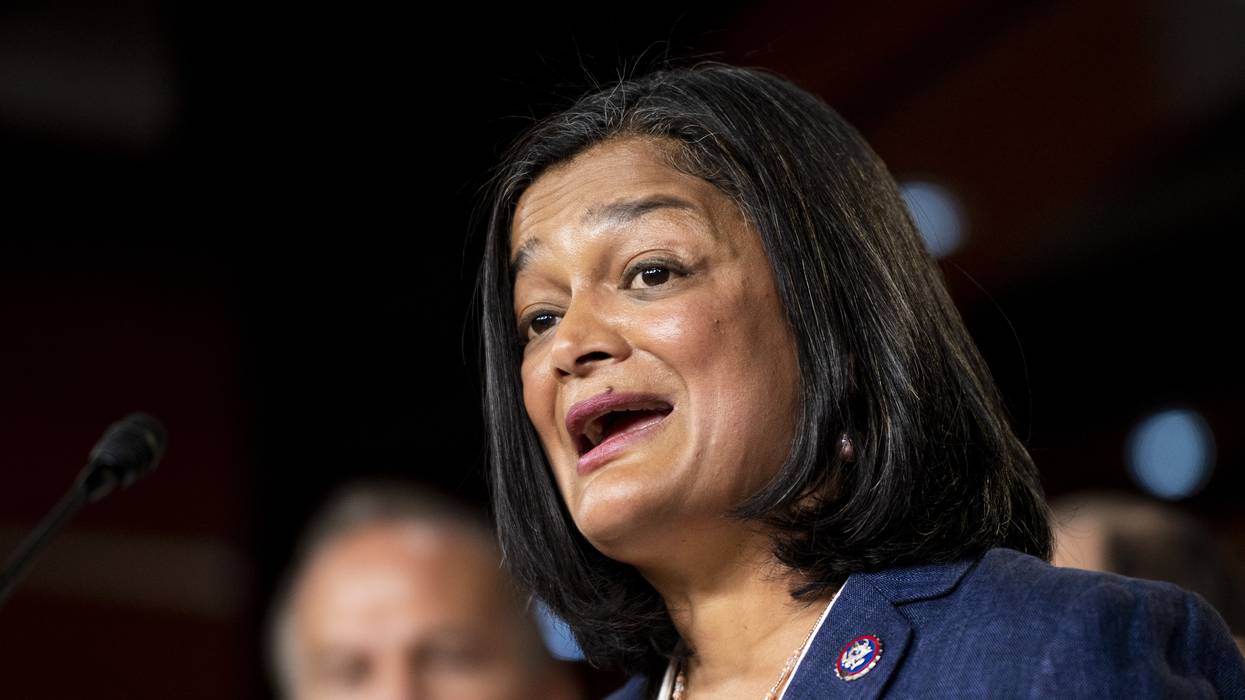
As Americans face rising grocery prices under President Donald Trump and rally behind progressive policies and primary candidates, US Rep. Pramila Jayapal on Thursday introduced a bill that shows what kind of proposals could become reality with more Democrats like her in Congress.
Inspired by a program in her own district in Washington state, the chair emerita of the Congressional Progressive Caucus introduced the Fresh Bucks for Fresh Produce Act, which would create a pilot program at the US Department of Agriculture (USDA) that gives households earning 80% or less of their area's median income $60 per month to buy fruits and vegetables.
The USDA pilot would be modeled on Seattle's Fresh Bucks initiative, in which enrolled households "experience a 31% higher rate of food security and consume at least three daily servings of fruits and vegetables 37% more often than those assigned to a program waitlist," according to University of Washington (UW) research published last August.
"I would classify both of those numbers as pretty large," study co-author Jessica Jones-Smith a professor at UW and University of California, Irvine, said at the time. "We don't routinely see interventions that work that well. It's a pretty big impact on diet in terms of what we can do from a policy perspective and expect to make a difference in food insecurity."
In Seattle—generally ranked as an expensive but livable metropolis—a single person living within city limits on a monthly income of $7,070, or $84,850 a year, can apply for the program. For a family of four, it's $10,095 per month, or $121,150 annually. In January, the city the welcomed over 4,500 more local households off its waitlist and increased monthly benefits from $40 to $60.
Those enrolled in Seattle's program can buy "fresh fruits and vegetables at supermarkets, and fresh, frozen, canned, and dried fruits and vegetables (with no added fats, sugars, or salt) at farmers markets and independent grocers" that accept Fresh Bucks cards.
Adam Porter, who directs the Meals on Wheels program at the Seattle-based Sound Generations, said Thursday that "older adults across King County are facing impossible choices as grocery prices continue to rise. Seattle's Fresh Bucks program has had a substantial impact on our clients' health and quality of life: We have seen firsthand how a targeted produce benefit can increase health equity, improve food security, and keep food dollars circulating locally.
"A USDA pilot modeled on that success would be a meaningful step toward healthier households and stronger community food systems nationwide," Porter continued. In addition to his organization, groups endorsing Jayapal's bill include the Center for Biological Diversity, Coalition for Organic and Regenerative Agriculture, Farm Action Fund, Food & Water Watch, National Education Association, Southern Poverty Law Center, White Center Community Development Association (WCCDA), and over a dozen more.
"In White Center and historically underinvested communities across King County, we see every day how rising grocery costs continue to strain working families, seniors, immigrants, and households already navigating increasing housing and living expenses," said WCCDA executive director Aaron Garcia. "Access to healthy, culturally relevant food should not be determined by income—it should not be considered a luxury."
"At WCCDA, we believe thriving communities require systems that make healthy food accessible, affordable, and attainable—and that investments in food access are investments in community health, economic stability, and opportunity," Garcia said. "We strongly support Congresswoman Jayapal's leadership in advancing innovative solutions that respond to the realities families face today while strengthening local food systems and neighborhood businesses that give us our vibrancy."
"Expanding the proven Seattle Fresh Bucks model through a federal pilot offers an opportunity to increase food security, support local producers and retailers, and help communities across the country build healthier, more resilient futures," he added.
Jayapal has celebrated recent primary wins by leftists in New York, and on Thursday, with the November midterms just four months away, she called out her Republican colleagues—who are trying to hang on to their narrow majorities in both chambers of Congress after using them to pass cuts to federal food and healthcare programs while giving more tax breaks to the rich.
"As families struggle to keep food on the table, Congress must prioritize work on efforts to lower costs and help Americans stay afloat," said Jayapal, who is joined in sponsoring the bill by Democratic Reps. Alma Adams (NC), Nanette Barragán (Calif.), Chris Deluzio (Pa.), Shomari Figures (Ala.), Jahana Hayes (Conn.), Eleanor Holmes Norton (DC), Andrea Salinas (Ore.), Adam Smith (Wash.), and Shri Thanedar (Mich).
"While Republicans in Congress enacted legislation to raise food prices and are hell-bent on cutting food assistance, Seattle is once again leading the way with the Fresh Bucks program, which is successfully keeping people fed with nutritious food and reducing hunger," she said. "We must pass this legislation to expand the program nationwide and get families in every corner of the country healthy produce they can afford."
As power grids become strained amid the latest US heatwave, residents of communities with data centers are being asked to make sacrifices in the form of cost, comfort, and potentially safety.
The rise of global temperatures has made oppressive summer heatwaves an annual occurrence, and for many Americans, air conditioning is no longer optional.
But as scorching temperatures bear down on the US once again this week, affecting more than 250 million people across the country, some are suddenly being forced to share the precious cool air with data centers that have popped up in their towns to power the breakneck build-out of artificial intelligence technology.
To keep their massive arrays of computer servers cool, these complexes require large amounts of energy even in normal times. But during a heatwave, the demand becomes even greater.
As power grids become strained, residents of communities with data centers are being asked to make sacrifices in the form of cost, comfort, and potentially safety.
In Henrico County, Virginia, which has 37 data centers, thousands of county employees received an email last week from County Manager John Vithoulkas warning them that beginning on July 1, the rate paid by "government and school facilities will increase dramatically—by 25%, increasing costs by an estimated $5 million next fiscal year."
"To mitigate the impact of higher electric costs, I am asking that we, collectively, make slight adjustments to conserve electricity across our individual workspaces,” he said in the email, which was obtained by 404 Media. “Turn off your lights when leaving your workspace, including when you leave for the day,” he continued. “Turn off your computers/laptops at the end of each workday. If your workspace has windows, adjust the blinds to manage heat from sunlight.”
He also informed them of the high cost of running "space heaters," which Frank Landymore of Futurism.com suggested was a thinly veiled way of telling residents to turn down the AC, since nobody would be using space heaters in 100-degree heat.
It was a signifier of what's happened across the entire mid-Atlantic grid, whose largest operator, PJM Interconnection, is experiencing record energy demand.
According to Reuters, the grid that supplies power to 67 million people has seen a roughly 1,000% increase in capacity prices since 2024 as a result of the AI boom, which is already being passed onto consumers in the form of higher bills.
To reduce the risk of outages caused by an overburdened grid, the US Department of Energy granted PJM the authority to require data centers to operate backup diesel generators.
Under the emergency order, Politico reported, data centers are allowed to produce enough diesel emissions that the Environmental Protection Agency (EPA) would categorize it as a "possible human carcinogen."
The result has been what Shaolei Ren, a professor at the University of California, Riverside, told The Associated Press could be “a disaster for the local air quality" in communities with data centers.
In Lowell, Massachusetts, where a Markley Group data center sits in the working-class Sacred Heart neighborhood, residents told the AP that they were staying inside to avoid smelling the diesel fumes being belched up near their homes.
Public backlash led the Lowell City Council to vote unanimously for a moratorium on data center building in February. But many residents feel the damage has already been done, with the Markley center gobbling up their town's electric and water resources.
One resident told The Harvard Crimson in May that since the center came to town, his winter electric bill has shot up from $40 to $177.
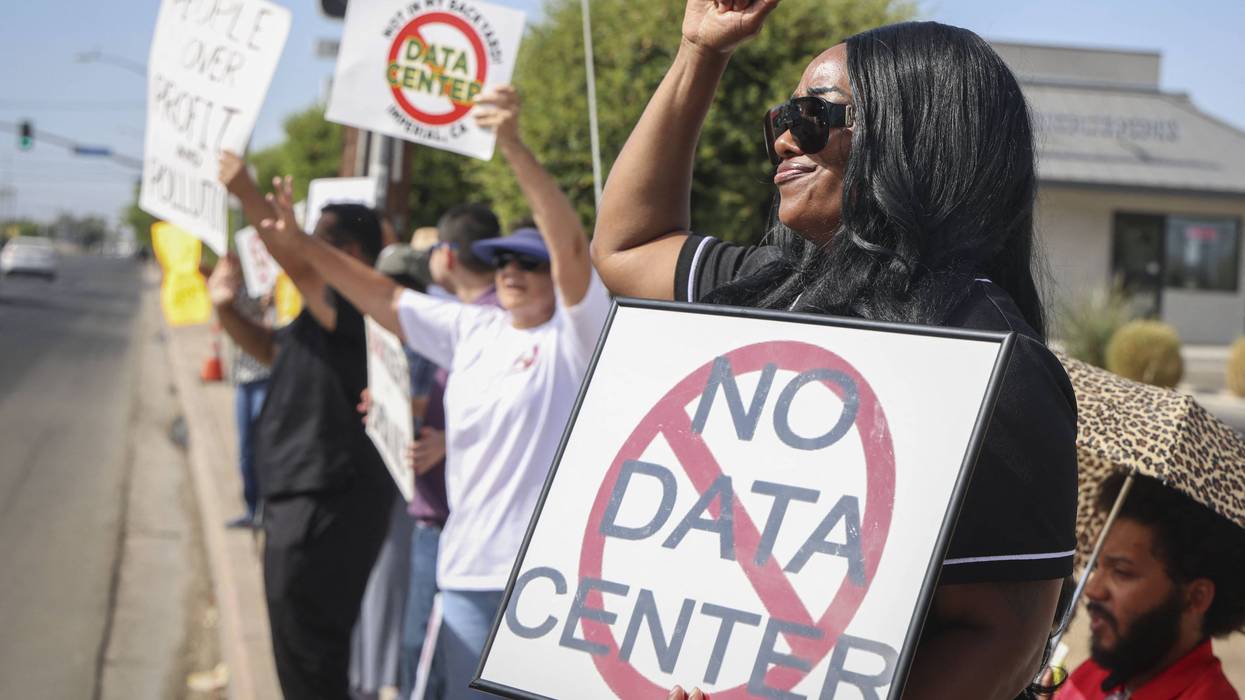
As temperatures spiked this week, more than 200 protesters flooded a local zoning meeting to voice their anger about the noise, pollution, and surveillance equipment bearing down on their homes. One 14-year-old girl was dragged out of the meeting by police officers.
"I'm not hurting anyone," she shouted as cops escorted her through the exit. "We just don't want data centers!"
Within roughly three years, data centers have come to consume about 4.5% of all electricity in the US, a number that is expected to keep ballooning in the coming years.
Even before the data center boom began, scientists had long warned that the climate crisis caused by human carbon emissions would make US heatwaves more frequent, longer, and more intense.
Heatwaves in major US cities are already three times as common as they were in the 1960s, according to an EPA report from 2024, and the average heatwave season is now 46 days longer.
The number of heat-related deaths in the US more than doubled from 1,069 in 1999 to 2,325 in 2023, according to a JAMA Network study analyzing mortality data from the Centers for Disease Control and Prevention.
With more than 1,500 data center projects currently underway across the US, a vicious cycle appears poised to accelerate.
The rapid buildout of data centers has already culminated in massive emission spikes. Amazon, which once pledged to reach net-zero emissions by 2040, saw its carbon output increase by 16% in 2025 in large part due to its multi-billion dollar data center buildout.
According to a report out Wednesday from the Environmental Integrity Project, at least 74 natural gas-fired power plants are being planned to power the industry's expansion, which are expected to release 662 million tons of greenhouse gas—equivalent to the entire nation of Australia—per year.
Many of the plants are being built in low-income areas that already have poorer health outcomes and could produce nearly 160,000 tons of health-damaging pollutants that can cause lung damage, asthma, and heart attacks.
“In their wholehearted embrace of dirty and outdated gas power, data center developers are announcing to the public that they don’t care about us," said Alex Bomstein, the executive director at Clean Air Council. "We deserve better than decades of toxic pollution, parched streambeds, and climate chaos.”