

SUBSCRIBE TO OUR FREE NEWSLETTER
Daily news & progressive opinion—funded by the people, not the corporations—delivered straight to your inbox.
5
#000000
#FFFFFF
To donate by check, phone, or other method, see our More Ways to Give page.
Daily news & progressive opinion—funded by the people, not the corporations—delivered straight to your inbox.
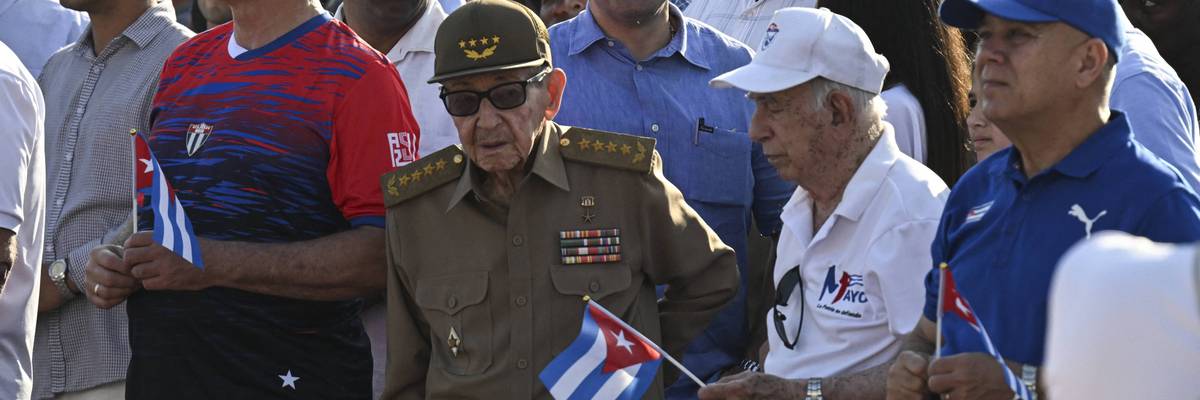
Former Cuban President Raúl Castro (center, in military uniform) and other officials attend a rally marking International Workers' Day in Havana on May 1, 2026.
Cuban Chargé d'Affaires Lianys Torres Rivera said her government is willing to negotiate with the US, but "the only exception is our sovereignty, independence, and right to self-determination."
Cuba's top diplomat in the United States on Friday underscored the inviolability of her country's sovereignty amid tenuous negotiations with the Trump administration and mounting fears that the US is planning to criminally indict a former Cuban president and possibly invade the island to abduct him.
Cuban Chargé d'Affaires Lianys Torres Rivera told The Hill that her country's socialist government is open to negotiating with the US, but that "the only exception is our sovereignty, independence, and right to self-determination," adding that "those are the red lines."
Torres Rivera acknowledged that ramped-up US pressure—including President Donald Trump's invasion threats and tightening of the internationally condemned 65-year economic embargo—is inflicting tremendous suffering on the Cuban people.
“It’s difficult. What the Cuban people are enduring these days is difficult," she said. "They are under a collective punishment from the US."
The Cuban government said Thursday that Trump's oil blockade has left the island and its 11 million people without fuel—a situation United Nations experts last week described as illegal "energy starvation."
“We have reorganized the whole country, the healthcare system, the education system, the transportation system, to keep the basic services running," Torres Rivera told The Hill. "But it doesn’t mean that they are running normally. They are running under huge stress.”
Still, "a serious country that respects yourself... won’t put on the table your political system or your internal order that the people of our country decide in a sovereign way," she stressed.
The delicate balancing act Cuba is being forced to perform was on stark display on Thursday as Central Intelligence Agency Director John Ratcliffe traveled to Havana for talks aimed at pressuring Cuban officials into complying with demands that critics say would inrfinge upon the nation's sovereignty. These likely include political and economic reforms, releasing political prisoners, and ending or weakening Cuba's alliances with US adversaries including China, Iran, Russia, and Venezuela.
It was a bitter pill to swallow for Cubans, as the CIA was behind myriad efforts to topple their government, from assassination attempts against revolutionary leader Fidel Castro to the failed Bay of Pigs invasion to supporting Cuban exile terrorists who carried out deadly attacks that Havana says killed thousands of people.
Further stoking fears of aggression from the Trump administration,r unidentified US officials told CBS News that the Department of Justice is preparing to criminally indict 94-year-old former Cuban President Raúl Castro for the 1996 shoot-down of planes belonging to the subversive US-based group Brothers to the Rescue after they violated Cuban airspace.
Some observers noted the 1976 midair bombing by US-based anti-Castro militants of Cubana de Aviacion Flight 455, a commercial airliner carrying 73 passengers and crew. The CIA, under then-Director George H.W. Bush, knew that Cuban exiles were plotting to blow up a Cubana plane, but did not warn Havana. The perpetrators of the bombing eventually made their way back to Florida, where they were welcomed as heroes.
Others surmised that the reported planned indictment is a pretext for a US invasion and arrest of Castro similar to January's abduction of Venezuelan President Nicolás Maduro on dubious—and partially retracted—narco-terrorism allegations.Thirty-two Cubans, including military and police officers providing security for Maduro, were killed by US forces during the abduction operation.
"To me, this signals that the Pirate State could be planning another kidnapping operation against Cuba like they did in Venezuela," British journalist Richard Medhurst said in response to the reporting, referring to the US. "This is the lawless behavior they want to normalize around the world."
ACLU head of digital engagement Stefan Smith said on social media: "Remember Maduro and Venezuela? If you’re a foreign leader indicted in American courts, we claim the right to send the military to kidnap you. Indictment is permission to invade."
Following his visit to Cuba, Ratcliffe said that negotiations "will not stay open indefinitely," remarks that followed numerous threats by Trump to "take" Cuba.
"Whether I free it, take it—I think I can do anything I want," the president said in March as his fuel embargo caused blackouts that brought deadly suffering to the most vulnerable Cubans, including sick people and children.
Torres Rivera insisted that protests over the blackouts don't mean Cubans won't rally in defense of their homeland.
“When they are enduring 20 hours of blackouts, they have grievances, and they express it,” she told The Hill, cautioning US officials against a "wrong reading" of the demonstrations.
"We are preparing to defend ourselves," Torres Rivera said, adding that a US invasion "could be a big mistake. It could be a bloodbath."
"We don’t want Cubans dying in Cuba,” she stressed, nor “any American soldier.”
Dear Common Dreams reader, It’s been nearly 30 years since I co-founded Common Dreams with my late wife, Lina Newhouser. We had the radical notion that journalism should serve the public good, not corporate profits. It was clear to us from the outset what it would take to build such a project. No paid advertisements. No corporate sponsors. No millionaire publisher telling us what to think or do. Many people said we wouldn't last a year, but we proved those doubters wrong. Together with a tremendous team of journalists and dedicated staff, we built an independent media outlet free from the constraints of profits and corporate control. Our mission has always been simple: To inform. To inspire. To ignite change for the common good. Building Common Dreams was not easy. Our survival was never guaranteed. When you take on the most powerful forces—Wall Street greed, fossil fuel industry destruction, Big Tech lobbyists, and uber-rich oligarchs who have spent billions upon billions rigging the economy and democracy in their favor—the only bulwark you have is supporters who believe in your work. But here’s the urgent message from me today. It's never been this bad out there. And it's never been this hard to keep us going. At the very moment Common Dreams is most needed, the threats we face are intensifying. We need your support now more than ever. We don't accept corporate advertising and never will. We don't have a paywall because we don't think people should be blocked from critical news based on their ability to pay. Everything we do is funded by the donations of readers like you. When everyone does the little they can afford, we are strong. But if that support retreats or dries up, so do we. Will you donate now to make sure Common Dreams not only survives but thrives? —Craig Brown, Co-founder |
Cuba's top diplomat in the United States on Friday underscored the inviolability of her country's sovereignty amid tenuous negotiations with the Trump administration and mounting fears that the US is planning to criminally indict a former Cuban president and possibly invade the island to abduct him.
Cuban Chargé d'Affaires Lianys Torres Rivera told The Hill that her country's socialist government is open to negotiating with the US, but that "the only exception is our sovereignty, independence, and right to self-determination," adding that "those are the red lines."
Torres Rivera acknowledged that ramped-up US pressure—including President Donald Trump's invasion threats and tightening of the internationally condemned 65-year economic embargo—is inflicting tremendous suffering on the Cuban people.
“It’s difficult. What the Cuban people are enduring these days is difficult," she said. "They are under a collective punishment from the US."
The Cuban government said Thursday that Trump's oil blockade has left the island and its 11 million people without fuel—a situation United Nations experts last week described as illegal "energy starvation."
“We have reorganized the whole country, the healthcare system, the education system, the transportation system, to keep the basic services running," Torres Rivera told The Hill. "But it doesn’t mean that they are running normally. They are running under huge stress.”
Still, "a serious country that respects yourself... won’t put on the table your political system or your internal order that the people of our country decide in a sovereign way," she stressed.
The delicate balancing act Cuba is being forced to perform was on stark display on Thursday as Central Intelligence Agency Director John Ratcliffe traveled to Havana for talks aimed at pressuring Cuban officials into complying with demands that critics say would inrfinge upon the nation's sovereignty. These likely include political and economic reforms, releasing political prisoners, and ending or weakening Cuba's alliances with US adversaries including China, Iran, Russia, and Venezuela.
It was a bitter pill to swallow for Cubans, as the CIA was behind myriad efforts to topple their government, from assassination attempts against revolutionary leader Fidel Castro to the failed Bay of Pigs invasion to supporting Cuban exile terrorists who carried out deadly attacks that Havana says killed thousands of people.
Further stoking fears of aggression from the Trump administration,r unidentified US officials told CBS News that the Department of Justice is preparing to criminally indict 94-year-old former Cuban President Raúl Castro for the 1996 shoot-down of planes belonging to the subversive US-based group Brothers to the Rescue after they violated Cuban airspace.
Some observers noted the 1976 midair bombing by US-based anti-Castro militants of Cubana de Aviacion Flight 455, a commercial airliner carrying 73 passengers and crew. The CIA, under then-Director George H.W. Bush, knew that Cuban exiles were plotting to blow up a Cubana plane, but did not warn Havana. The perpetrators of the bombing eventually made their way back to Florida, where they were welcomed as heroes.
Others surmised that the reported planned indictment is a pretext for a US invasion and arrest of Castro similar to January's abduction of Venezuelan President Nicolás Maduro on dubious—and partially retracted—narco-terrorism allegations.Thirty-two Cubans, including military and police officers providing security for Maduro, were killed by US forces during the abduction operation.
"To me, this signals that the Pirate State could be planning another kidnapping operation against Cuba like they did in Venezuela," British journalist Richard Medhurst said in response to the reporting, referring to the US. "This is the lawless behavior they want to normalize around the world."
ACLU head of digital engagement Stefan Smith said on social media: "Remember Maduro and Venezuela? If you’re a foreign leader indicted in American courts, we claim the right to send the military to kidnap you. Indictment is permission to invade."
Following his visit to Cuba, Ratcliffe said that negotiations "will not stay open indefinitely," remarks that followed numerous threats by Trump to "take" Cuba.
"Whether I free it, take it—I think I can do anything I want," the president said in March as his fuel embargo caused blackouts that brought deadly suffering to the most vulnerable Cubans, including sick people and children.
Torres Rivera insisted that protests over the blackouts don't mean Cubans won't rally in defense of their homeland.
“When they are enduring 20 hours of blackouts, they have grievances, and they express it,” she told The Hill, cautioning US officials against a "wrong reading" of the demonstrations.
"We are preparing to defend ourselves," Torres Rivera said, adding that a US invasion "could be a big mistake. It could be a bloodbath."
"We don’t want Cubans dying in Cuba,” she stressed, nor “any American soldier.”
Cuba's top diplomat in the United States on Friday underscored the inviolability of her country's sovereignty amid tenuous negotiations with the Trump administration and mounting fears that the US is planning to criminally indict a former Cuban president and possibly invade the island to abduct him.
Cuban Chargé d'Affaires Lianys Torres Rivera told The Hill that her country's socialist government is open to negotiating with the US, but that "the only exception is our sovereignty, independence, and right to self-determination," adding that "those are the red lines."
Torres Rivera acknowledged that ramped-up US pressure—including President Donald Trump's invasion threats and tightening of the internationally condemned 65-year economic embargo—is inflicting tremendous suffering on the Cuban people.
“It’s difficult. What the Cuban people are enduring these days is difficult," she said. "They are under a collective punishment from the US."
The Cuban government said Thursday that Trump's oil blockade has left the island and its 11 million people without fuel—a situation United Nations experts last week described as illegal "energy starvation."
“We have reorganized the whole country, the healthcare system, the education system, the transportation system, to keep the basic services running," Torres Rivera told The Hill. "But it doesn’t mean that they are running normally. They are running under huge stress.”
Still, "a serious country that respects yourself... won’t put on the table your political system or your internal order that the people of our country decide in a sovereign way," she stressed.
The delicate balancing act Cuba is being forced to perform was on stark display on Thursday as Central Intelligence Agency Director John Ratcliffe traveled to Havana for talks aimed at pressuring Cuban officials into complying with demands that critics say would inrfinge upon the nation's sovereignty. These likely include political and economic reforms, releasing political prisoners, and ending or weakening Cuba's alliances with US adversaries including China, Iran, Russia, and Venezuela.
It was a bitter pill to swallow for Cubans, as the CIA was behind myriad efforts to topple their government, from assassination attempts against revolutionary leader Fidel Castro to the failed Bay of Pigs invasion to supporting Cuban exile terrorists who carried out deadly attacks that Havana says killed thousands of people.
Further stoking fears of aggression from the Trump administration,r unidentified US officials told CBS News that the Department of Justice is preparing to criminally indict 94-year-old former Cuban President Raúl Castro for the 1996 shoot-down of planes belonging to the subversive US-based group Brothers to the Rescue after they violated Cuban airspace.
Some observers noted the 1976 midair bombing by US-based anti-Castro militants of Cubana de Aviacion Flight 455, a commercial airliner carrying 73 passengers and crew. The CIA, under then-Director George H.W. Bush, knew that Cuban exiles were plotting to blow up a Cubana plane, but did not warn Havana. The perpetrators of the bombing eventually made their way back to Florida, where they were welcomed as heroes.
Others surmised that the reported planned indictment is a pretext for a US invasion and arrest of Castro similar to January's abduction of Venezuelan President Nicolás Maduro on dubious—and partially retracted—narco-terrorism allegations.Thirty-two Cubans, including military and police officers providing security for Maduro, were killed by US forces during the abduction operation.
"To me, this signals that the Pirate State could be planning another kidnapping operation against Cuba like they did in Venezuela," British journalist Richard Medhurst said in response to the reporting, referring to the US. "This is the lawless behavior they want to normalize around the world."
ACLU head of digital engagement Stefan Smith said on social media: "Remember Maduro and Venezuela? If you’re a foreign leader indicted in American courts, we claim the right to send the military to kidnap you. Indictment is permission to invade."
Following his visit to Cuba, Ratcliffe said that negotiations "will not stay open indefinitely," remarks that followed numerous threats by Trump to "take" Cuba.
"Whether I free it, take it—I think I can do anything I want," the president said in March as his fuel embargo caused blackouts that brought deadly suffering to the most vulnerable Cubans, including sick people and children.
Torres Rivera insisted that protests over the blackouts don't mean Cubans won't rally in defense of their homeland.
“When they are enduring 20 hours of blackouts, they have grievances, and they express it,” she told The Hill, cautioning US officials against a "wrong reading" of the demonstrations.
"We are preparing to defend ourselves," Torres Rivera said, adding that a US invasion "could be a big mistake. It could be a bloodbath."
"We don’t want Cubans dying in Cuba,” she stressed, nor “any American soldier.”

