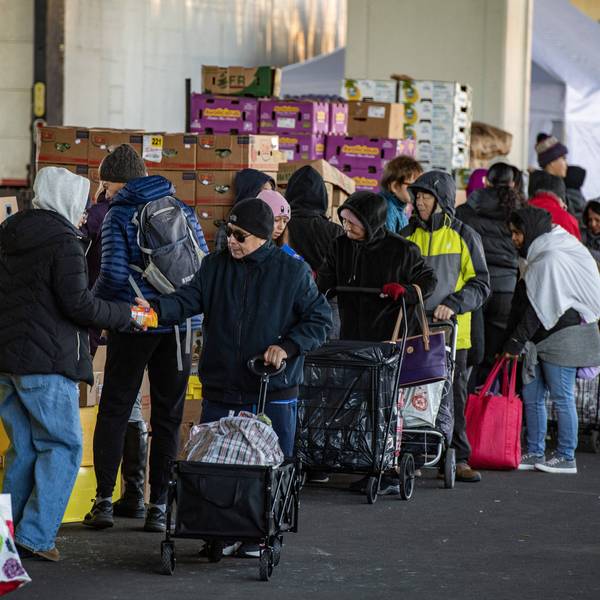
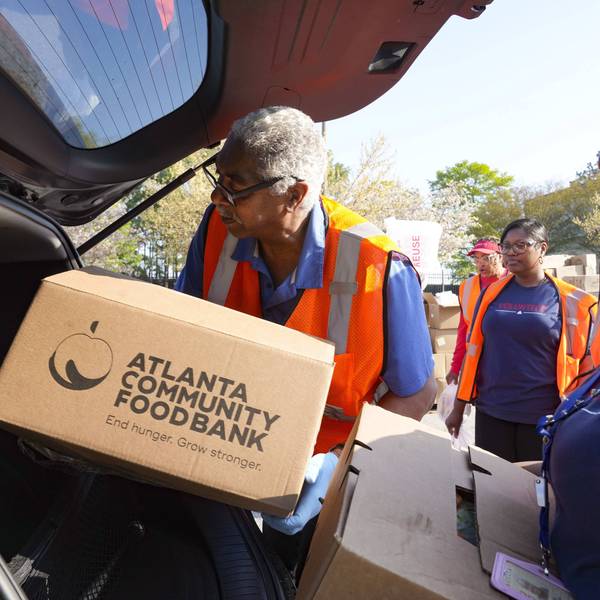

Volunteers load boxes of food into a car during a food distribution event on May 29, 2026 in Montebello, California.
'A Devastating Gut Punch': New Trump-GOP Cuts to Food Aid Take Effect Amid High Grocery Prices
"This is a plan to wreck state SNAP programs and push millions off of SNAP and into hunger."
The Republican budget package that President Donald Trump signed into law last summer included a change requiring states to fund a larger portion of the costs of administering the Supplemental Nutrition Assistance Program, which provides food aid to tens of millions of Americans.
That change, which advocates and experts warned would impose unsustainable burdens on some states and potentially result in more cuts to food aid, took effect late last week, amid a nationwide affordability crisis that has forced many Americans to turn to food banks and other sources of support to meet their families' needs.
Katie Bergh, a food policy expert at the Center on Budget and Policy Priorities (CBPP), explained that—under the Trump-GOP budget law—"every state now gets half as many federal dollars to ensure SNAP gets to eligible families on time and in the right amount."
"Some states didn't increase state funding to make up for this federal funding cut, which could lead to staff shortages, backlogs, and low-income families waiting months for help," Bergh warned. "Other states and counties are weighing property tax increases or cuts to other services to fill the gap."
CBPP has estimated that more than 5 million people, including more than a million children, have lost SNAP since Trump signed the Republican budget measure into law last year.
Rep. Shontel Brown (D-Ohio) condemned the newly implemented SNAP changes in a statement, noting that Trump and the Republican Party have created new work requirements—and thus new bureaucratic burdens for states and aid recipients—while also slashing administrative funding, a potentially disastrous combination.
"It’s a devastating gut punch and it’s intentional," said Brown. "This is a plan to wreck state SNAP programs and push millions off of SNAP and into hunger."
The Food Research & Action Center estimated in a recent analysis that the new cost burden for states "ranges from $3 million in Wyoming to $168 million in New York."
"States are being asked to administer a more complicated program with fewer federal resources. That is not an efficiency strategy. It is a fiscal transfer," the group said. "Ultimately, this policy does not simply affect state agencies. It affects every family waiting for an application to be processed, every community experiencing rising food insecurity, and every state budget attempting to balance growing needs with fewer available resources."
We are at a crossroads
This country and this world are at a monumental crossroads. In a few short weeks, US voters will have an opportunity to beat back the forces of fascism and confront the billionaires who are rigging the economy, our media system, and our democracy, making it increasingly impossible for ordinary people to get by. We’re not just talking about the election. We’re talking about what must be done once these fascist elements are vanquished from power. We need a bolder set of solutions than what either major party has so far been willing to offer and a working-class movement ready to fight like hell for it. Trump didn't emerge from nowhere. The conditions that fueled MAGA authoritarianism were created by decades of radical neoliberal economic policies and a corrupt political system dominated by corporate interests. They slashed taxes on the super-rich, promising that the benefits would trickle down. They said giveaways to the corporate titans would make life more affordable for the rest of us. It was all bullshit. And when a bitter, betrayed populace searches for someone to blame, right-wing demagogues have little trouble finding scapegoats. People know when they're being lied to, but you won't hear any of this from the corporate media. Only independent journalism—powered and funded by people who believe in building a better world—can deliver truly trustworthy daily news. Our Fall Campaign is underway, and we need your help. To power our newsroom through the rest of the year, we need to raise $125,000 by midnight on October 31. So if you share our vision, please contribute whatever you can to sustain our work. |
The Republican budget package that President Donald Trump signed into law last summer included a change requiring states to fund a larger portion of the costs of administering the Supplemental Nutrition Assistance Program, which provides food aid to tens of millions of Americans.
That change, which advocates and experts warned would impose unsustainable burdens on some states and potentially result in more cuts to food aid, took effect late last week, amid a nationwide affordability crisis that has forced many Americans to turn to food banks and other sources of support to meet their families' needs.
Katie Bergh, a food policy expert at the Center on Budget and Policy Priorities (CBPP), explained that—under the Trump-GOP budget law—"every state now gets half as many federal dollars to ensure SNAP gets to eligible families on time and in the right amount."
"Some states didn't increase state funding to make up for this federal funding cut, which could lead to staff shortages, backlogs, and low-income families waiting months for help," Bergh warned. "Other states and counties are weighing property tax increases or cuts to other services to fill the gap."
CBPP has estimated that more than 5 million people, including more than a million children, have lost SNAP since Trump signed the Republican budget measure into law last year.
Rep. Shontel Brown (D-Ohio) condemned the newly implemented SNAP changes in a statement, noting that Trump and the Republican Party have created new work requirements—and thus new bureaucratic burdens for states and aid recipients—while also slashing administrative funding, a potentially disastrous combination.
"It’s a devastating gut punch and it’s intentional," said Brown. "This is a plan to wreck state SNAP programs and push millions off of SNAP and into hunger."
The Food Research & Action Center estimated in a recent analysis that the new cost burden for states "ranges from $3 million in Wyoming to $168 million in New York."
"States are being asked to administer a more complicated program with fewer federal resources. That is not an efficiency strategy. It is a fiscal transfer," the group said. "Ultimately, this policy does not simply affect state agencies. It affects every family waiting for an application to be processed, every community experiencing rising food insecurity, and every state budget attempting to balance growing needs with fewer available resources."