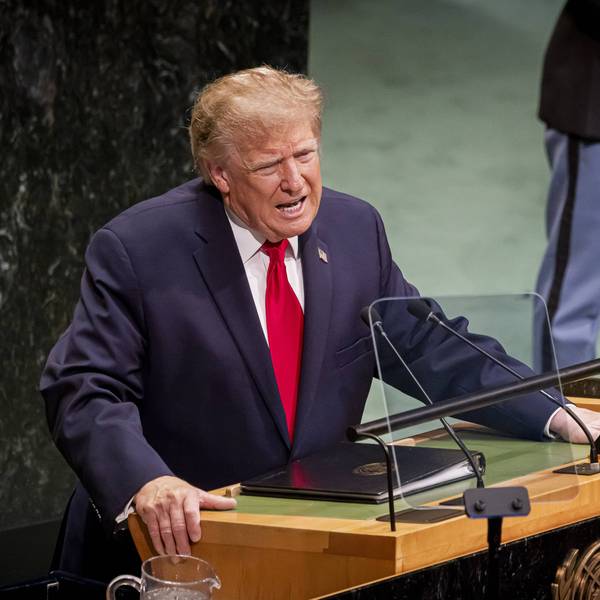
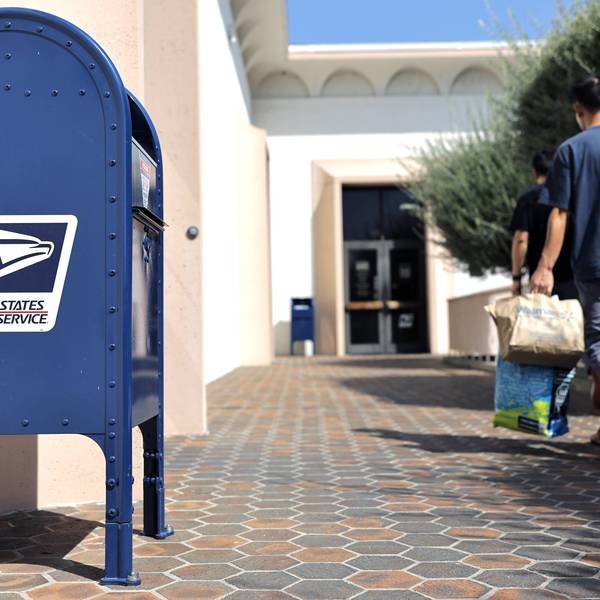
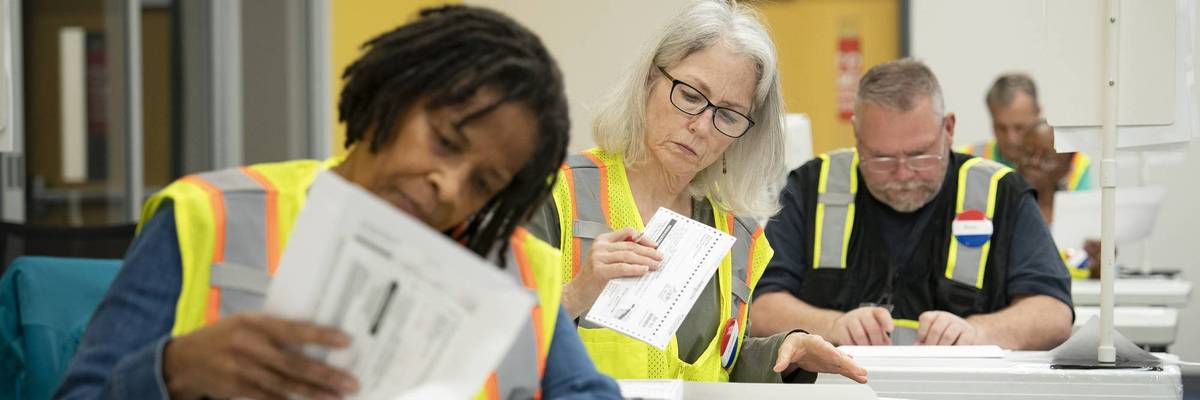
Absentee ballots were prepared to be mailed at the Wake County Board of Elections on September 17, 2024 in Raleigh, North Carolina.
'Direct Violation of the Constitution': Democratic States Sue to Stop Trump Assault on Mail-In Voting
"This is yet another example of this administration’s unlawful overreach," said Rhode Island's attorney general.
A coalition of two dozen Democratic-led states filed a lawsuit on Wednesday challenging President Donald Trump's attempt to use the US Postal Service as a vehicle for his assault on mail-in voting, which he has targeted incessantly during both of his White House terms.
The lawsuit targets a newly finalized USPS rule under which the postal service would not deliver ballots in states that don't provide their voter data to the federal government. Rhode Island Attorney General Peter Neronha said in a statement Wednesday that "this is yet another example of this administration’s unlawful overreach and is in direct violation of the Constitution, which makes clear that states have the primary authority to administer elections."
"Voting by mail is a tried-and-true method of exercising our most fundamental right as American citizens," Neronha added. "Indeed, it’s the preferred voting method of the president himself. I am confident that we will succeed here, as we have many times before, thereby protecting the right of American citizens, Donald Trump included, to vote without interference.”
The states' lawsuit comes days after the US Supreme Court, which includes three Trump-nominated justices, stayed a lower-court injunction that had blocked implementation of the president's March executive order instructing the US Postal Service to enact restrictions on mail-in voting to prevent "fraud," which is rare in American elections. On Wednesday, a federal judge in Boston lifted the nationwide injunction on the mail-in voting restrictions following a request from Trump's Justice Department.
The office of New York Attorney General Letitia James, who joined the new lawsuit, emphasized that states "would have just weeks to comply" if the USPS rule is allowed to take effect ahead of the 2026 midterms.
"Election officials will have to redesign ballot envelopes, obtain federal approval, and establish entirely new systems to transmit voter lists to USPS, all while preparing to mail ballots to millions of Americans," James' office warned. "If states or local election officials cannot comply in time, eligible voters could be prevented from receiving or returning their ballots."
The US Constitution does not give the president any power over elections, but Trump has spoken repeatedly of his desire to "take over" and "nationalize" voting in the wake of his 2020 loss.
As part of his scheme, Trump has focused heavily on exerting control over the US Postal Service, which is currently led by David Steiner. The postmaster general, whom Trump boosted for the role, has faced calls to resign for allowing USPS to be used as "a partisan instrument of voter suppression."
Trump is currently pushing to fill four of the five vacancies on the US Postal Service's Board of Governors. All of the president's nominees, which must be confirmed by the Senate, are Republicans. As The New York Times noted on Tuesday, "Trump's selections broke with a longstanding practice of nominating board members in bipartisan pairs."
"The quiet attempt to restructure the leadership of the Postal Service comes as the president and his allies are trying to transform the 251-year-old agency into a central player in their quest to overhaul the nation’s elections," the Times observed.
Last month, as Common Dreams reported, US Sen. Gary Peters (D-Mich.) called for a pause on Trump's postal board nominees, warning that their confirmation would "undermine public confidence in the board’s ability to serve the public interest above any partisan political aims."
"This imbalance in representation would be unprecedented," said Peters.
We are at a crossroads
This country and this world are at a monumental crossroads. In a few short weeks, US voters will have an opportunity to beat back the forces of fascism and confront the billionaires who are rigging the economy, our media system, and our democracy, making it increasingly impossible for ordinary people to get by. We’re not just talking about the election. We’re talking about what must be done once these fascist elements are vanquished from power. We need a bolder set of solutions than what either major party has so far been willing to offer and a working-class movement ready to fight like hell for it. Trump didn't emerge from nowhere. The conditions that fueled MAGA authoritarianism were created by decades of radical neoliberal economic policies and a corrupt political system dominated by corporate interests. They slashed taxes on the super-rich, promising that the benefits would trickle down. They said giveaways to the corporate titans would make life more affordable for the rest of us. It was all bullshit. And when a bitter, betrayed populace searches for someone to blame, right-wing demagogues have little trouble finding scapegoats. People know when they're being lied to, but you won't hear any of this from the corporate media. Only independent journalism—powered and funded by people who believe in building a better world—can deliver truly trustworthy daily news. Our Fall Campaign is underway, and we need your help. To power our newsroom through the rest of the year, we need to raise $125,000 by midnight on October 31. So if you share our vision, please contribute whatever you can to sustain our work. |
A coalition of two dozen Democratic-led states filed a lawsuit on Wednesday challenging President Donald Trump's attempt to use the US Postal Service as a vehicle for his assault on mail-in voting, which he has targeted incessantly during both of his White House terms.
The lawsuit targets a newly finalized USPS rule under which the postal service would not deliver ballots in states that don't provide their voter data to the federal government. Rhode Island Attorney General Peter Neronha said in a statement Wednesday that "this is yet another example of this administration’s unlawful overreach and is in direct violation of the Constitution, which makes clear that states have the primary authority to administer elections."
"Voting by mail is a tried-and-true method of exercising our most fundamental right as American citizens," Neronha added. "Indeed, it’s the preferred voting method of the president himself. I am confident that we will succeed here, as we have many times before, thereby protecting the right of American citizens, Donald Trump included, to vote without interference.”
The states' lawsuit comes days after the US Supreme Court, which includes three Trump-nominated justices, stayed a lower-court injunction that had blocked implementation of the president's March executive order instructing the US Postal Service to enact restrictions on mail-in voting to prevent "fraud," which is rare in American elections. On Wednesday, a federal judge in Boston lifted the nationwide injunction on the mail-in voting restrictions following a request from Trump's Justice Department.
The office of New York Attorney General Letitia James, who joined the new lawsuit, emphasized that states "would have just weeks to comply" if the USPS rule is allowed to take effect ahead of the 2026 midterms.
"Election officials will have to redesign ballot envelopes, obtain federal approval, and establish entirely new systems to transmit voter lists to USPS, all while preparing to mail ballots to millions of Americans," James' office warned. "If states or local election officials cannot comply in time, eligible voters could be prevented from receiving or returning their ballots."
The US Constitution does not give the president any power over elections, but Trump has spoken repeatedly of his desire to "take over" and "nationalize" voting in the wake of his 2020 loss.
As part of his scheme, Trump has focused heavily on exerting control over the US Postal Service, which is currently led by David Steiner. The postmaster general, whom Trump boosted for the role, has faced calls to resign for allowing USPS to be used as "a partisan instrument of voter suppression."
Trump is currently pushing to fill four of the five vacancies on the US Postal Service's Board of Governors. All of the president's nominees, which must be confirmed by the Senate, are Republicans. As The New York Times noted on Tuesday, "Trump's selections broke with a longstanding practice of nominating board members in bipartisan pairs."
"The quiet attempt to restructure the leadership of the Postal Service comes as the president and his allies are trying to transform the 251-year-old agency into a central player in their quest to overhaul the nation’s elections," the Times observed.
Last month, as Common Dreams reported, US Sen. Gary Peters (D-Mich.) called for a pause on Trump's postal board nominees, warning that their confirmation would "undermine public confidence in the board’s ability to serve the public interest above any partisan political aims."
"This imbalance in representation would be unprecedented," said Peters.
- After Judge Unblocks Trump Voting Order, Groups Target His 'Blatantly Unconstitutional' USPS Rule | Common Dreams ›
- 'Democracy Is Under Attack': Civil Rights Lawsuit Aims to Block Trump Assault on Mail-In Voting | Common Dreams ›
- Trump's War on Mail-in Voting is Hitting a Brick Wall—But the Danger is Far From Over | Common Dreams ›
A coalition of two dozen Democratic-led states filed a lawsuit on Wednesday challenging President Donald Trump's attempt to use the US Postal Service as a vehicle for his assault on mail-in voting, which he has targeted incessantly during both of his White House terms.
The lawsuit targets a newly finalized USPS rule under which the postal service would not deliver ballots in states that don't provide their voter data to the federal government. Rhode Island Attorney General Peter Neronha said in a statement Wednesday that "this is yet another example of this administration’s unlawful overreach and is in direct violation of the Constitution, which makes clear that states have the primary authority to administer elections."
"Voting by mail is a tried-and-true method of exercising our most fundamental right as American citizens," Neronha added. "Indeed, it’s the preferred voting method of the president himself. I am confident that we will succeed here, as we have many times before, thereby protecting the right of American citizens, Donald Trump included, to vote without interference.”
The states' lawsuit comes days after the US Supreme Court, which includes three Trump-nominated justices, stayed a lower-court injunction that had blocked implementation of the president's March executive order instructing the US Postal Service to enact restrictions on mail-in voting to prevent "fraud," which is rare in American elections. On Wednesday, a federal judge in Boston lifted the nationwide injunction on the mail-in voting restrictions following a request from Trump's Justice Department.
The office of New York Attorney General Letitia James, who joined the new lawsuit, emphasized that states "would have just weeks to comply" if the USPS rule is allowed to take effect ahead of the 2026 midterms.
"Election officials will have to redesign ballot envelopes, obtain federal approval, and establish entirely new systems to transmit voter lists to USPS, all while preparing to mail ballots to millions of Americans," James' office warned. "If states or local election officials cannot comply in time, eligible voters could be prevented from receiving or returning their ballots."
The US Constitution does not give the president any power over elections, but Trump has spoken repeatedly of his desire to "take over" and "nationalize" voting in the wake of his 2020 loss.
As part of his scheme, Trump has focused heavily on exerting control over the US Postal Service, which is currently led by David Steiner. The postmaster general, whom Trump boosted for the role, has faced calls to resign for allowing USPS to be used as "a partisan instrument of voter suppression."
Trump is currently pushing to fill four of the five vacancies on the US Postal Service's Board of Governors. All of the president's nominees, which must be confirmed by the Senate, are Republicans. As The New York Times noted on Tuesday, "Trump's selections broke with a longstanding practice of nominating board members in bipartisan pairs."
"The quiet attempt to restructure the leadership of the Postal Service comes as the president and his allies are trying to transform the 251-year-old agency into a central player in their quest to overhaul the nation’s elections," the Times observed.
Last month, as Common Dreams reported, US Sen. Gary Peters (D-Mich.) called for a pause on Trump's postal board nominees, warning that their confirmation would "undermine public confidence in the board’s ability to serve the public interest above any partisan political aims."
"This imbalance in representation would be unprecedented," said Peters.
- After Judge Unblocks Trump Voting Order, Groups Target His 'Blatantly Unconstitutional' USPS Rule | Common Dreams ›
- 'Democracy Is Under Attack': Civil Rights Lawsuit Aims to Block Trump Assault on Mail-In Voting | Common Dreams ›
- Trump's War on Mail-in Voting is Hitting a Brick Wall—But the Danger is Far From Over | Common Dreams ›