

SUBSCRIBE TO OUR FREE NEWSLETTER
Daily news & progressive opinion—funded by the people, not the corporations—delivered straight to your inbox.
5
#000000
#FFFFFF
To donate by check, phone, or other method, see our More Ways to Give page.
Daily news & progressive opinion—funded by the people, not the corporations—delivered straight to your inbox.

We can’t let vote deniers trash our elections, in Washington or in state capitols. Squalid moments like this one must be followed by reform and renewal.
Voters had a big win at the Supreme Court this week. What does it all mean?
On Monday, the court refused to allow the Postal Service to implement a new rule that would have curbed mail voting. But the one-paragraph ruling seemed to say more than “not yet.” The Trump administration, the justices ruled, was “unlikely to succeed on the merits.”
This was great news for the millions of citizens who rely on mail voting, the method now used by 1 in 3 voters. It was utterly bonkers that the White House tried to exert control over the election system. That’s illegal, a fact now confirmed over and over. The Brennan Center was proud to be part of the legal team representing voters before the Supreme Court.
We must never, ever get used to the idea that the president of the United States routinely denigrates our democracy. We should not have to wait with bated breath to see whether the Supreme Court will do the right thing.
President Donald Trump’s drive to undermine the election is failing. Time and again, his moves have been parried or blocked.
Voters, the coast is clear. You can vote with confidence. It’s five weeks until Election Day. Make a plan. Vote early in person. Vote as early as possible via the US Postal Service (USPS). Vote via a drop box. Vote on Election Day. Make your voice heard.
Yes, let’s exhale. But also let’s not lose sight of some bigger lessons.
Trump has not given up on trying to mess up and undermine the election. Repeatedly, courts have had to step in to protect the rule of law, blocking the executive order that mandated the USPS rule, the order before that, and very possibly whatever comes next. Whistleblowers keep popping up to reveal new depredations, such as the violations of state law by the Department of Homeland Security that were uncovered this week.
Just know that voting rights groups, state and local governments, election officials, and judges around the country have your back.
Then there’s the Supreme Court. It did the right thing here. But the situation should not have been this hard. This court helped create the chaos and confusion three weeks ago when it allowed Trump’s mail ballot plan to go forward.
And this whole election takes place in a political system transformed by the Roberts Court. A flood of billionaire funding and dark money thanks to Citizens United and other rulings. Frenzied gerrymandering. And, all too often, a green light for voter suppression. It has been two decades since the Supreme Court blocked a state from enacting a restrictive voting law. After the Louisiana v. Callais ruling in April that demolished what was left of the Voting Rights Act, Southern states rapidly redrew congressional maps to eliminate districts where Black voters had a fair chance to elect candidates who represented them. Expect more fights about district maps next year.
As for the states, there is some good news: In the recent mail balloting case, 24 state attorneys general filed litigation. Opposition to USPS’ antics did not fall strictly along party lines, with seven Republican-led states separately telling the court that Trump’s plan to disrupt the existing system was unworkable. That’s all encouraging.
But far too many states are colluding in efforts to take rights from their own citizens. In numerous states, our research shows, voters will go to the polls with restrictions put in place since 2024. Unscrupulous politicians have free rein to concoct new restrictive rules.
All this adds up to an argument for strong new national laws to ensure this doesn’t happen again. I’m done with trench warfare on voting. We can’t let vote deniers trash our elections, in Washington or in state capitols. Squalid moments like this one must be followed by reform and renewal.
On Wednesday the Brennan Center released Eight Solutions to Protect Voting Rights and Improve Representation, the most recent in a series of papers laying out solutions to our most pressing issues. Already we have published proposals on political corruption, Supreme Court reform, and congressional reform. This new raft of proposed actions would respond to the assaults on voting and representation still underway.
Congress can pass a national law, for example, banning partisan gerrymandering and barring mid-decade redistricting. That would significantly bolster competition and representation across the country, applying to red states and blue states alike. And it would eliminate the Supreme Court’s ridiculous rule in Callais that partisanship serves as an excuse for states drawing racially discriminatory maps.
What about the freedom to vote in the wake of the court’s other damaging decisions? Citizens should be able to defend their own voting rights in court when they are impinged upon. Surprisingly, no such law exists assuring access to the courts today. With the Voting Rights Act smashed to bits, an even broader statute would give voters the ability to protect themselves. Voters who have suffered racial discrimination should not face court-imposed barriers to vindicating their rights.
We also need national standards to ensure that citizens everywhere can vote by mail, vote early, be automatically registered, and take advantage of the myriad ways we have improved access. We should expand the size of the House of Representatives, a change conservative scholar Yuval Levin and others have urged, to widen representation. And it’s past time to admit the District of Columbia and Puerto Rico as states, as their citizens have repeatedly supported. And more.
Believe it or not, Congress has the power to do all these things. Yes, gridlocked, polarized, much-maligned Congress. The branch of government closest to the people should take the lead in restoring power to the people.
We must never, ever get used to the idea that the president of the United States routinely denigrates our democracy. We should not have to wait with bated breath to see whether the Supreme Court will do the right thing.
The law is clear: States run elections. But the Constitution gives Congress a role, too: It can pass national legislation. It should use that explicitly granted power to do what it has at other times, to lift the floor under voters and ensure protections. When it comes to voting rights, presidents should stay out. Congress should jump in.
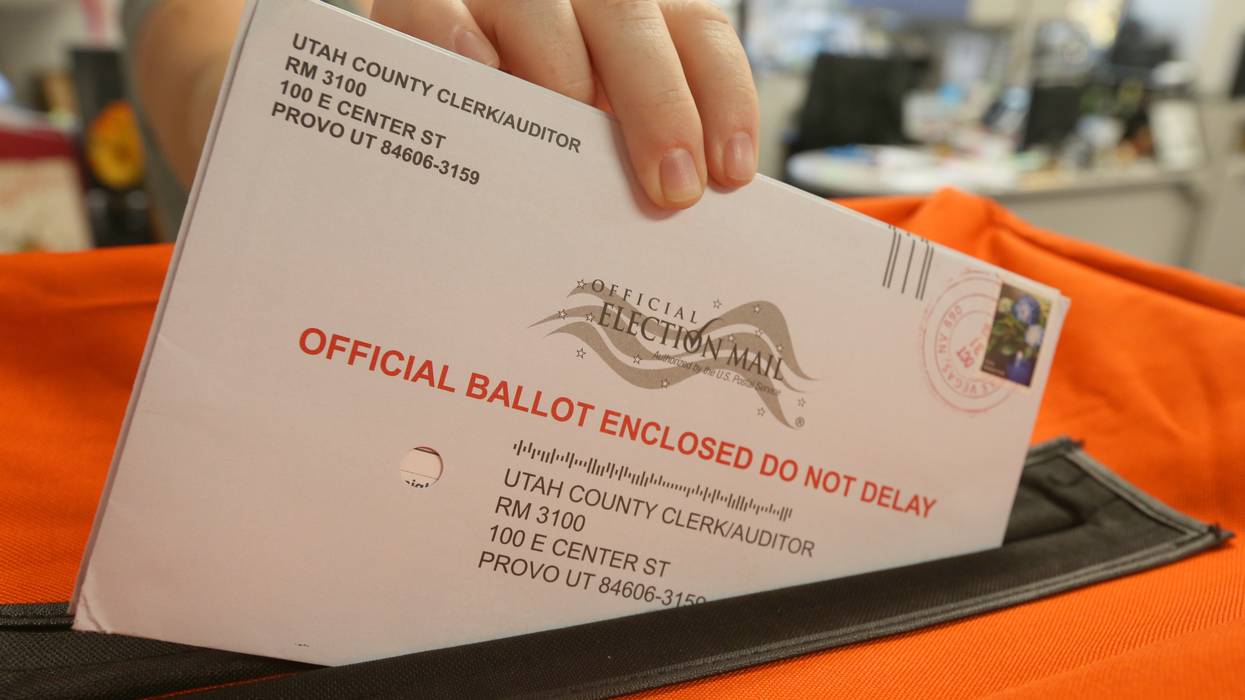
If the court stays injunctions and allows the Trump administration's new main-in voting rule to be implemented, the impact will be devastating, especially for Democrats.
Donald Trump’s unconstitutional bid to turn the United States Postal Service into a weapon of voter suppression could determine the outcome of the midterm elections and the future of American democracy.
The president’s bid is now on the Supreme Court’s notorious shadow docket for a final showdown in two consolidated cases (US Postal Service v. California and Trump v. League of Women Voters) that center on the final regulatory rule on mail-in voting that the Postal Service issued on August 21. The rule—adopted in compliance with an executive order Trump promulgated in March to root out what he claims is fraudulent voting by noncitizens—requires state election officials to upload lists of mail-in voters’ names and addresses to an untested and secretly constructed USPS online portal and to redesign ballot envelopes to include bar codes that can be checked against the voter lists. If a state does not obtain envelope design approval, or does not upload voter information, the USPS will not deliver ballots to voters.
For now, the rule has been blocked in both cases by preliminary injunctions issued by Boston-based Federal District Court Judge Indira Talwani. If the Supreme Court stays the injunctions and allows the new rule to be implemented, the impact will be devastating, especially for Democrats.
Nearly 1 in 3 Americans voted by mail in 2024, including an estimated 37% of Democratic voters, but only 24% of Republicans. Five states—Colorado, Hawaii, Oregon, Utah, and Washington—hold elections almost entirely by mail. As the midterms approach, North Carolina has already begun mailing midterm ballots to some 260,000 voters. According to Democracy Docket, a host of others will follow suit in the coming weeks, including 5.1 million mailed ballots in Washington, 4 million in Colorado, and 3.2 million in Arizona. Next month in California, election officials are slated to mail over 23 million ballots.
Unlike the founders, Trump sees the Postal Service as a vehicle to negate democracy and maintain his personal grip on power.
Even if the Postal Service’s new rule were warranted to prevent fraud—and studies have repeatedly shown that voter fraud in the US is extremely rare—the states do not have sufficient time to retool their ballot infrastructures to securely meet the rule’s demands and deadlines.
“With fewer than 60 days to go before the November election, there is not a shred of evidence that states could comply with it without disenfranchising voters who rely on mail ballots,” said Sophia Lin Lakin, director of the American Civil Liberty Union’s Voting Rights Project, in a statement to the media. “Put plainly, this administration is racing to the Supreme Court to demand the right to enforce a rule that has no purpose other than to create chaos, undermine election integrity, and rob eligible voters of their essential right to make their voices heard in our democracy.”
This is not the first time Trump’s new postal system rule has reached the Supreme Court. On August 24, the six Republican sycophants on the high tribunal lifted earlier injunctions blocking the rule issued by Judge Talwani on procedural grounds, holding that the initial legal challenges to the rule were brought prematurely. Now that the rule has become final, that rationale no longer applies. This time, Chief Justice John Roberts and his GOP confederates will be forced to assess the rule’s legality.
As a matter of law, the issue is a true no-brainer. The Constitution’s “Elections Clause” (Article I, Section 4, Clause 1) gives states the authority to set the “times, places, and manner” of elections for House members and senators subject only to congressional oversight. Even under the strong version of the unitary executive theory that the Republican court majority has embraced, the president and the federal agencies under his control have no power to dictate how elections are run. The new postal system rule also runs afoul of the statutory framework governing the USPS, which requires the agency to have as “its basic function the obligation to provide postal services to bind the Nation together through the personal, educational, literary, and business correspondence of the people… [by means of] prompt, reliable, and efficient services to patrons in all areas and… to all communities.”
In addition, the rule conflicts with the postal system’s history as an impartial institution operating in the national interest to support democracy. That history dates back to the colonial era when Benjamin Franklin and others worked to replace the primitive courier system controlled by the British crown with an integrated service designed to unite the 13 colonies. Those efforts paved the way for the formation of the legendary committees of correspondence and for the first official post office established by the Continental Congress under the Articles of Confederation, with Franklin as the first postmaster general. The Postal Service was formally organized under the Constitution, which granted Congress the power “To establish Post Offices and post Roads.”
Unlike the founders, Trump sees the Postal Service as a vehicle to negate democracy and maintain his personal grip on power. In his first term in office, he tried to gut the service by backing Louis DeJoy, an obsequious campaign donor, to become postmaster general. Among other measures, DeJoy eliminated overtime pay for postal workers, banned late or additional trips to deliver mail, and removed highly efficient mail-sorting machines from facilities throughout the country to impede mail-in voting. In May 2025, the Postal Service replaced DeJoy with another Trump loyalist, former FedEx board member David Steiner, who oversaw the adoption of the new mail-in voting rule.
In the Supreme Court, the administration is represented by Solicitor General D. John Sauer, who gained Trump’s favor defending him in Trump v. United States, the landmark 2024 case on presidential immunity. In his brief to the court on mail-in balloting, Sauer argues that “the Postal Service’s final rule imposes only modest envelope-design and addressee-information requirements for federal-election ballots sent via US Mail,” and that claims of voter disenfranchisement are overblown.
Sauer has likened mail-in ballots to the mailing of cremated remains and replica explosives, which the Postal Service can strictly regulate under federal law. He has also cited the service’s authority to reject unstamped mail and heavy parcels with insufficient postage, an argument that has nothing to do with the blanket prohibitions the new rule would impose.
Sauer and his arguments deserve to be laughed straight out of court.
But this is the Supreme Court of John Roberts, who has devoted his career to destroying the Voting Rights Act and conferring near-total immunity from criminal prosecution on Donald Trump. It is also the court of Samuel Alito, who wrote the majority decision overturning Roe v. Wade, and Clarence Thomas, who has spent his career accepting unreported luxury vacations paid for by billionaire Republican donors. It is also the court of three Trump appointees—Amy Coney Barrett, Neil Gorsuch, and Brett “I Like Beer” Kavanaugh. As recent history confirms, no argument is too absurd for this junta to embrace as long as it furthers the interests of Trump and the MAGA movement.
The First Circuit Court of Appeals found implementing Trump's order would cause "chaos and widespread disenfranchisement... between now and November 3."
A federal court on Thursday rejected the Trump administration's request to reinstate an executive order that placed restrictions on mail-in voting ahead of the midterm elections, arguing that the order is "likely unlawful."
The US First Circuit Court of Appeals ruled that President Donald Trump's mail-in voting executive order likely violates the US Constitution's elections clause, which grants states the rights to oversee their own elections, subject to oversight from the US Congress.
The court also found that the regulations proposed by the order "could prevent millions of Americans from obtaining and returning their ballots" in the coming election.
The ruling noted that the Trump executive order places a number of onerous restrictions on mail-in voting, such as requiring states to print "a voter-specific Intelligent Mail barcode ('IMb')" on all outgoing ballots as a precondition for their delivery by the United States Postal Service (USPS).
Additionally, the court wrote, the order would compel states "to obtain USPS approval for new ballot-envelope designs; to purchase new envelopes to replace those already ordered; to assure that there are technological systems in place adequate to generate IMbs; and to upload voter-specific information to a USPS online portal that is still not operational."
The court said these restrictions are so severe that they validate an earlier ruling from a federal district court, which found that implementing Trump's executive order would lead to "chaos and widespread disenfranchisement... between now and November 3."
Among other things, the court found these Trump-ordered rules would make it "impossible for some states to reprint compliant envelopes," while also creating a "herculean task" of "scanning tens of millions of ballot envelopes and reviewing for a match with information in the presently non-operative portal."
The court also took a shot at Trump administration lawyers, whom it alleged "have not even seriously challenged" the district court's finding about the chaos the president's executive order would cause.
The injunction against Trump's mail-in voting order came as a result of a complaint filed by a number of civil society groups, including the League of Women Voters and the Association of Americans Resident Overseas.
In a joint statement released after the ruling, the plaintiffs and their counsel said that the court affirmed that "the US Postal Service is not the gatekeeper for mail ballots."
"This decision rightly keeps in place an order blocking USPS from enforcing its disruptive and disenfranchising rule through the November election," they added, "and preserves the current system, which has worked safely, securely, and reliably for decades."
Democratic California Gov. Gavin Newsom took the opportunity to taunt the Trump administration for suffering yet another loss in its crusade to clamp down on mail-in voting.
"The rule of law continues to slap down Donald Trump's dangerous and un-American attacks on our free and fair elections," Newsom wrote. "California will never stop fighting for our democracy and the people's ability to exercise their constitutional right to vote."
The Trump administration has asked to the US Supreme Court to reinstate the president's voting order. With mail-in ballots for the upcoming midterms already being sent out in some states, a ruling from the nation's highest court is expected in the coming days.
The effort to undermine the election is failing. It will succeed only if citizens stay home.
Benjamin Franklin wrote, “Never trouble trouble until trouble troubles you.” That’s not quite our approach at the Brennan Center. We worry. (Dr. Franklin also advised, “An ounce of prevention is worth a pound of cure.”)
What are we particularly concerned about as we look toward November?
Voter confusion is perhaps the biggest risk. People ask, understandably, can they still vote by mail? Will I need to show a passport or birth certificate to register? It has been many years since the freedom to vote has faced so many proposed challenges, and never before from the federal government. With all the news and noise, citizens cannot be expected to follow the executive edicts and ping-ponging court rulings in minute detail.
In fact, for voters, very little has actually changed. Congress and courts blocked all those bad ideas. The SAVE Act never passed. As a general matter, citizens can cast ballots as before.
After all the push and pull, voters can make their voices heard. Make a plan to vote. Vote early if possible. In person, with a drop box, or if necessary, using the mail.
With less than two months to go, President Donald Trump’s drive to undermine the election is failing. Judges, states and counties, and voting rights groups have blocked his moves. If we keep at it, we can have free and fair elections in 2026.
What else keeps us on edge? The Supreme Court, of course. It is now considering whether to undo a trial court’s decision blocking a rule that would allow the US Postal Service to withhold mail ballots. The trial court determined that rule is illegal and unconstitutional.
If the court allows the USPS to implement its rule, it would introduce chaos and disenfranchise many voters just before the election, as a USPS whistleblower explained in a friend-of-the-court brief detailing the agency’s rushed and flawed process to implement the rule. The court will likely rule in a matter of days on the administration’s request to allow the USPS rule. Fingers crossed.
Here’s a third concern: a growing risk of foreign interference. America is at war. (An illegal, unauthorized war, worth noting.) In 1980, the “October surprise” was the notion that Iran would release Americans it held hostage to influence that year’s election. Let’s hope that Iranian hackers do not produce a digital “October surprise” this year.
Iran has shown its ability to break into municipal water systems in Minnesota. In previous elections, Russia and China have tried to sway voters or attack registration lists. Trump’s purge of election security offices means that American elections have less federal protection against malevolent foreign hackers than before.
States have worked hard to get ready. And it’s important to remember that there is no way for even the most sophisticated schemer to change the results. Voting machines are not connected to the internet. And citizens cast ballots with a paper record, which can be audited and recounted.
Some of our worries are decreasing.
First, “ICE at the polls.” That could still happen. But deployment of federal forces is illegal under numerous federal and state laws. The chairman of the Joint Chiefs of Staff pledged recently not to use federal troops, correctly asserting, “Election administration and security remain the fundamental responsibility of state and local officials.” We have growing confidence that courts would step in fast. At the Brennan Center, we are prepared to sue if necessary. The briefs are written, and the toner is in the printer.
Then there are the Justice Department observers deployed to some states. They are annoying and often seem like a bit of a mess. But they too are subject to the laws that prohibit voter intimidation, and state officials are prepared to speak up if observers are disruptive.
And as for the worry that electoral winners won’t be certified, we are increasingly confident that courts will step in here, too. Judges have been heroes and upheld the rule of law.
But courts are not enough. We need a citizen mobilization to watch polls, help voters, and blow the whistle on abuse. That, too, gives hope.
It’s going to be a busy two months. No doubt Trump and his partisans will fling new charges every few days. All that clatter can confuse voters further. Perhaps that’s part of the goal.
So for all of us who want voters to have their say in 2026, a chief job is to stay calm and make clear that—as of right now, at least—little has changed. That’s a task for the news media. Public officials should be clear and calm. We who fight for voting rights must measure our own tone, so as not to rattle confidence.
After all the push and pull, voters can make their voices heard. Make a plan to vote. Vote early if possible. In person, with a drop box, or if necessary, using the mail. As we’ve said before, the effort to undermine the election is failing. It will succeed only if citizens stay home.
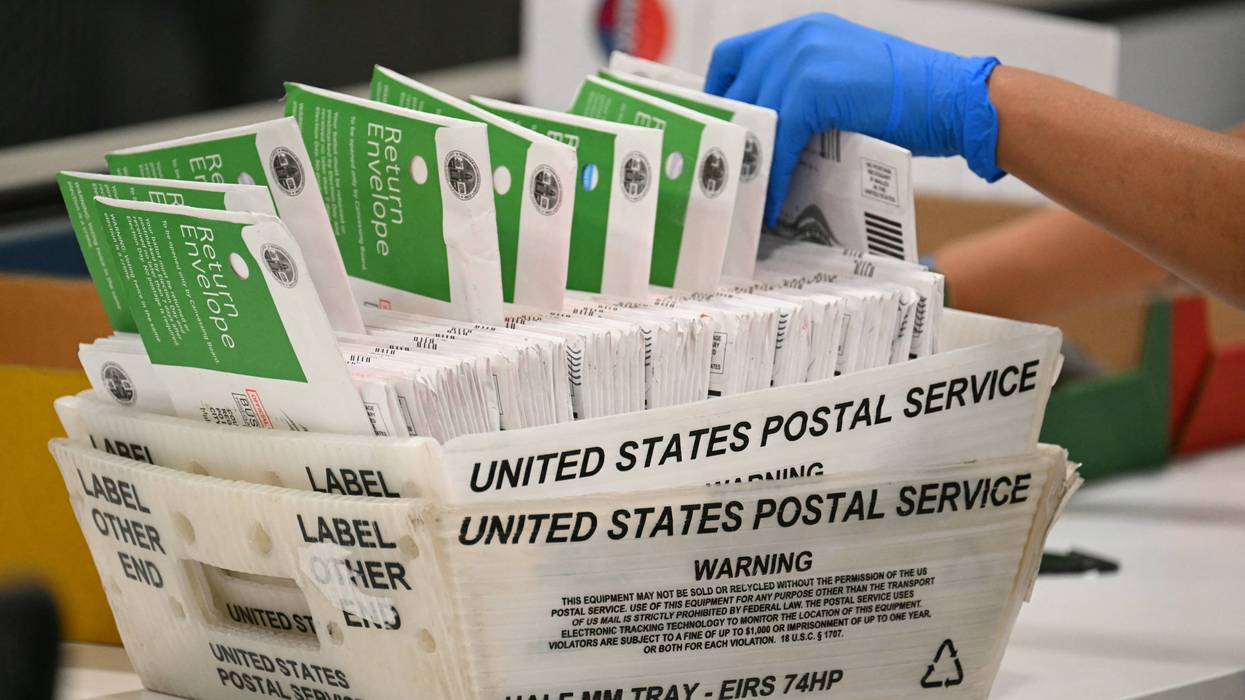
"Trump is threatening not just our ability to mail our vote but our right to decide our future and the direction of our country."
A group of young voters on Wednesday crashed a meeting of the United States Postal Service Board of Governors and demanded that they not carry out President Donald Trump's executive order to disrupt the mail-in voting process.
The voters, which were organized with the help of Sunrise Movement, walked into the Board of Governors' meeting in Potomac, Maryland, and asked members if they would commit to delivering all ballots sent through the USPS for November's midterm elections.
Stella Lovelady, 24, approached the board members holding a sign that read "Let Us Vote," and said she is "worried that Donald Trump will prevent millions of people from voting by mail."
"I’m worried young people’s voices won't be heard in November because their ballots won't be delivered," said Lovelady. "Trump is threatening not just our ability to mail our vote but our right to decide our future and the direction of our country."
Alex Ames, a 24-year-old voter from Georgia, asked the board members to "commit to us, to the public today, that you will mail every ballot out and not cave to Donald Trump’s political demands."
Amber McReynolds, chair of the Board of Governors, thanked Ames for her input but informed her that she was intruding on a private meeting.
"We understand it’s a meeting but this is also an emergency," Ames responded. "Ballots have already started getting mailed out. And if there's a new emergency screening system that hasn't been practiced before and all these ballots get tossed out, young voters, potentially millions of people, will not get their ballots in November."
Shortly after this, the young voters were escorted out of the meeting.
Earlier this year, Trump signed an executive order that instructed the United States Postal Service to not deliver ballots in any states that have not given the federal government access to its voter lists.
However, that order is currently tied up in court, and both Wisconsin and North Carolina last week began mailing out ballots to voters.
Aru Shiney-Ajay, executive director of Sunrise Movement, said that the president's attempts to restrict mail-in voting show he is "desperate" and "has decided the only way he can win is if possibly millions of people can’t vote."
“The American people won’t let that happen," Shiney-Ajay emphasized. "We’ll defeat this wannabe dictator in November like we did in 2020—with our votes, our voices and our peaceful actions."
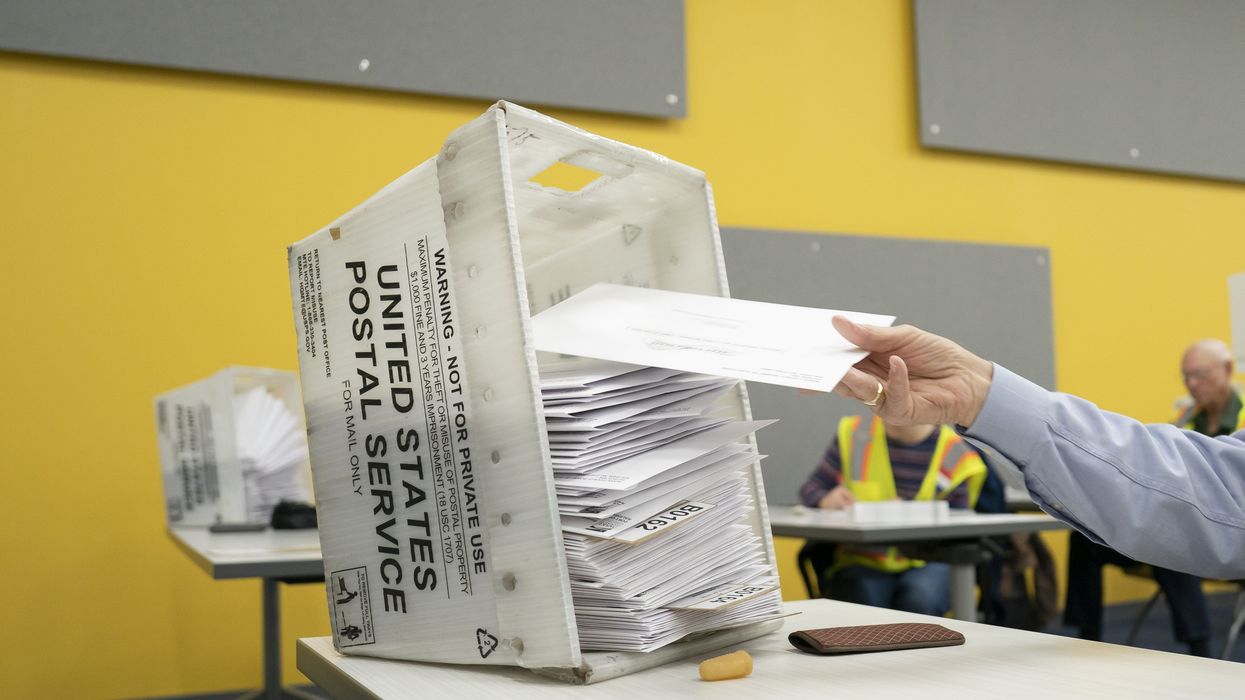
Allowing Trump's mail-in voting restrictions to take effect "would be a break-glass moment for our democracy," said one critic.
President Donald Trump's crusade against mail-in voting is running into a brick wall, although many critics are warning that the dangers to democracy are far from over.
The Washington Post reported on Sunday that Trump is "running out of options" to change mail-in voting rules that "don't involve significant upheaval," as states have already started sending out ballots to voters.
In March, Trump signed an executive order that instructed the United States Postal Service to not deliver ballots in any states that have not given the federal government access to its voter lists.
However, that order is currently tied up in court, and both Wisconsin and North Carolina last week began mailing out ballots to voters, the Post reported.
Don Millis, a Republican who chairs the Wisconsin Elections Commission, told the Post that "there's no practical way for Wisconsin clerks to comply" with Trump's orders, adding that the president's schemes targeting mail-in voting are likely to "hurt the Republican turnout more than the Democratic turnout."
The Trump administration has been pushing the US Supreme Court to intervene to allow the president's executive order to take effect.
However, as noted in a Politico report published on Friday, nine other states are set to send ballots to voters over the next two weeks, which would make a last-minute ruling by the court an unprecedented disruption in the democratic process.
"It would be so outrageous to try to let this go into effect," Ben Hovland, senior fellow for democracy at the Center for American Progress, told Politico. "It's hard to even imagine... It would be a break-glass moment for our democracy."
However, Hovland said that Trump's election meddling effort could still do real damage to the country because it can "dissuade people from participating or coming out to vote" and "establish a pretext to make bad faith claims about election results."
Hovland's concerns about the president's intentions were echoed in a Sunday report in The New York Times, which found voters across the country expressing confusion about the voting process and anxiety over whether their votes will be counted this year.
Pima County, Arizona Recorder Gabriella Cázares-Kelly told the Times that her office has received a flood of calls from worried voters, and she said that the president's relentless push to restrict voting by mail has left her unable to provide reassuring answers.
"I wish that I could tell my constituents to not worry," said Cázares-Kelly, "and I can’t."
Rich Cooper, elections manager in Clark County, Washington, similarly told the Times he has been unable to ease voters' worries about what rules will govern this year's elections.
“The biggest thing they want to know is if things are going to change,” Cooper said of voters expressing concerns. “We have to tell them we just don’t know yet.”

"The Trump administration is trying to use the United States Postal Service to decide who gets to vote in this year's election. Unacceptable."
Sen. Bernie Sanders warned Tuesday that President Donald Trump's attempt to leverage the US Postal Service to advance his assault on mail-in voting is part of a broader and intensifying "authoritarian power grab" that poses an existential threat to American democracy.
"The Trump administration is trying to use the United States Postal Service to decide who gets to vote in this year's election. Unacceptable," Sanders (I-Vt.) wrote after an anonymous federal official said in a whistleblower disclosure that USPS systems being hastily implemented at the president's direction—and in possible violation of court orders—could threaten the delivery of millions of ballots in the fast-approaching midterm elections.
Sanders said that Trump's assault on mail-in voting via the Postal Service is "blatantly unconstitutional," noting that the nation's founders empowered states to administer elections "precisely so that no authoritarian in Washington could ever seize that power for himself."
"Trump is trying to seize it anyway—in a blatant attempt to rig the election in his favor," the senator warned. "Trump knows this has nothing to do with the safety of mail-in ballots, because he himself has voted by mail in Florida twice this year. He knows mail-in voting is safe and secure."
"Voter fraud is not the problem," Sanders continued. "Trump's problem is that his agenda is deeply unpopular. He has waged illegal wars the American people did not ask for. He is throwing 15 million Americans off the healthcare they have and has made the largest cuts to education and nutrition assistance in history in order to pay for $1 trillion in tax breaks to the top 1% and his billionaire friends."
"He knows that when people vote, they will reject oligarchy and corporate greed. So instead of changing his policies, he is trying to decide which voters get to participate in elections this November," he added. "Too many Americans have fought and died to defend American democracy. We must stop Trump’s authoritarian power grab—before it is too late."
Trump Must Not Be Allowed to Prevent Millions of Americans from Voting
The Trump administration is trying to use the United States Postal Service to decide who gets to vote in this year's election. Unacceptable. We will not accept Trump’s authoritarianism.
Last month, the…
— Bernie Sanders (@BernieSanders) September 1, 2026
Following the USPS whistleblower disclosure, the investigative outlet ProPublica reported on Wednesday that top Postal Service officials have "expressed concerns" during recent internal meetings about how the new policies the agency is implementing in compliance with Trump's March executive order "could delay or block ballots from reaching large swaths of eligible voters for the upcoming midterms."
Days after the Postal Service published its final rule on new mail-in voting requirements, election clerks warned USPS officials that potentially millions of ballots could be impacted, according to ProPublica.
"An example was given of Maricopa County, Arizona, which often sends out more than 2 million ballots at a time in its initial mailing," the outlet reported. "USPS officials confirmed it was possible that one ballot with a bad barcode or wrong voter information within the more than 2 million ballots could delay the entire mailing, according to two people who attended the related committee meeting."
The USPS rule is currently blocked by a federal court, but the Trump administration is working to clear legal hurdles and implement the mail-in ballot restrictions ahead of the midterms.
In a letter to Postmaster General David Steiner on Tuesday, every Democratic member of the House Oversight Committee called for an immediate end to "this irresponsible and illegal scheme to implement the Trump administration’s plan to control our federal elections."
"The right of all Americans to have their votes counted is sacrosanct," the lawmakers wrote. "The Postal Service's current actions are putting clear obstacles in the way of that right."
An anonymous federal official warned of a "high likelihood that the new ballot mail verification processes will result in major disruptions in mail ballots ever getting delivered to voters."
An anonymous federal official warned in a whistleblower disclosure submitted to members of the US Congress that the Postal Service's haphazard implementation of President Donald Trump's executive order on mail-in voting could "derail the midterm elections" by preventing potentially millions of American voters from receiving ballots.
The disclosure was released in full on Tuesday by Sen. Richard Blumenthal (D-Conn.), who included the document in a letter to Postmaster General David Steiner—Trump's pick to lead USPS. Blumenthal said the whistleblower's account provides "disturbing details about USPS’ seemingly illegal plot to interfere in November’s midterms."
The new disclosure raises "significant concerns" about the Postal Service's "secretive, rushed, chaotic, and fundamentally flawed process" for establishing "an entirely new and untested set of IT systems" in compliance with Trump's March executive order, which is at the center of high-stakes legal fights just weeks before the November midterms.
Trump's USPS directives have been blocked in federal court, but the administration is trying to get them reinstated ahead of the midterm contests—and the whistleblower complaint suggests the administration may be violating court orders by continuing to work on the new systems. Mail-in voting for the midterms is officially set to begin this week.
Described in the disclosure as the "Portal," the new Postal Service IT systems "will govern the delivery of ballots to voters as soon as the 2026 mid-term federal elections and beyond." The whistleblower raises "grave concerns" that the Trump administration has "hidden the high likelihood that the new ballot mail verification processes will result in major disruptions in mail ballots ever getting delivered to voters."
"As presently designed, if even one bar code on one single ballot in a bulk-mailing of 10,000 ballots fails to properly scan during the verification process, the entire batch is rejected and sent back to the state—effectively stopping the ballots from being mailed to voters," the disclosure states. "The whistleblower is particularly concerned that the Portal (where the bar codes are stored) will almost certainly have significant operating problems when released to the public, due to the rushed IT development; this will contribute to failures in the verification process."
The whistleblower filing notes warnings that the Portal system could "completely crash" during rollout and quoted descriptions from IT workers at the Postal Service who described the entire process as "a shit show."
Theme throughout Whistleblower disclosure is how USPS IT work is complete mess, likely to "completely crash."
"Workers have described the election ballot mail development process as 'a sh*t show."
Raises stakes enormously on any state officials thinking to go along with this. pic.twitter.com/e8GrLYxu1W
— Ryan Goodman (@rgoodlaw) September 1, 2026
Libby Liu, the CEO of Whistleblower Aid—a nonprofit representing the anonymous federal official—said in a statement that "the whistleblower’s service to our nation is warning the public that their ability to vote is in serious jeopardy."
"We are crossing the Rubicon of American elections," said Liu. “This dangerously defective mail-in ballot process could disenfranchise millions of voters, ensnaring ballots in red tape under the guise of solving a non-existent problem. People in states that rely heavily on vote-by-mail will have a more difficult time making their voices heard in our challenged democracy this November."
The USPS whistleblower also provided their account to the House Oversight Committee. Rep. Robert Garcia (D-Calif.), the top Democrat on the committee, said in a statement Tuesday morning that the official's account makes clear that "Trump's attack on vote-by-mail for the 2026 election is more serious than previously understood."
"This new secret tracking system at the US Postal Service is faulty, untested, and threatens to totally disrupt ballot delivery for millions of American citizens," said Garcia. "We are fighting in court to protect the right to vote by mail for all and will continue to investigate. This unconstitutional and dangerous power grab must be permanently and immediately blocked."
US District Judge Indira Talwani said states will "face irreparable harm where they are required to comply with a likely unconstitutional regulation for which compliance is practically impossible as to the 2026 midterm elections," now just two months away.
A federal judge in Boston on Thursday evening issued a new and complete block on rules recently set forth by the US Postal Service designed to severely restrict mail-in voting nationwide—a ruling that comes just days after the US Supreme Court put a hold on a previous, similar injunction against the rules that stemmed from an executive order issued last year by President Donald Trump.
US District Judge Indira Talwani said the group of Democratic-led states and voting rights group that filed separate legal challenges over the changes to how the USPS would handle mail-in ballots adequately proved that they would "face irreparable harm where they are required to comply with a likely unconstitutional regulation for which compliance is practically impossible as to the 2026 midterm elections, now little more than two months away."
When the Supreme Court ruled Monday on the lawsuit, it lifted a previous injunction ordered by Judge Talwani, ruling not on the legality of the rules themselves but arguing that the states and other plaintiffs did not have proper legal standing at the time because the Postal Service had yet to release the finalized rules stemming from Trump's order at the time the lawsuit was filed.
However, because the USPS did finalize its rules at the end of last week, Talwani's new temporary injunction ordered on Thursday would not fall prey to that dynamic. As the New York Times reports:
[Talwani] wrote that while the Supreme Court had “admonished” her on Monday that the Postal Service had not finalized any changes when the groups sued initially, making court action premature, the stakes had changed since then because of the step the agency took Friday to formalize its plan.
Her ruling marked the third court decision on the issue in less than a week, a whipsaw of action that threatened to confuse voters. But each delay has reduced the administration’s chances of clearing the legal hurdles to execute its logistically complicated mail-in ballot plan before the November election. She blocked the rule from taking effect for 14 days, and she had previously scheduled a hearing to discuss the legality of the rule on Sept. 3.
In her order, Judge Talwani explained that the prospect of the new rule suddenly taking effect carried “significant risk of their members’ disenfranchisement” for voting rights organizations, which had also sued, along with the states.
Counsel and plaintiffs in the lawsuit by voting rights groups—led by the League of Women Voters of Massachusetts—issued a statement welcoming Thursday's decision.
“The Administration previously dismissed plaintiffs’ ongoing harms from the executive order as speculative, but the newly finalized rule confirmed what plaintiffs have been saying all along," the statement read. "The Rule implements the Executive Order’s unprecedented attempt to usurp electoral authority from the states and Congress at the expense of voters. We welcome the court’s order, which recognized the immediate need to protect the entire electorate from the damaging impacts of this unlawful final rule in the lead-up to November’s general elections. This is an important step towards affirming the public’s confidence in the system of mail ballots, which thousands of eligible voters nationwide rely on as a core method of democratic participation.”
After Monday's ruling by the Supreme Court, the group's behind the challenge vowed to keep fighting and introduced a new round of legal challenges.
"USPS’s decision to rush this blatantly unconstitutional rule into effect just weeks before an election is the latest step in a rollout that has sown confusion at every turn and now threatens to disenfranchise voters who did everything right. This is chaos by design, and voters are the ones who will pay for it,” warned Sophia Lin Lakin, director of the ACLU's Voting Rights Project, on Wednesday.
Attorneys General from the coalition of 24 states that had challenged the rule also welcomed Talwani's latest intervention.
“From the beginning, it’s been clear that President Trump doesn’t understand how elections work. He’s repeatedly broken the law, so we’ve repeatedly taken him to court,” said California Attorney General Bonta in a statement. “On Monday, the US Supreme Court issued an order on the emergency docket stating we brought our lawsuit too early but did not address the merits of our challenge to the President’s executive order seeking to impose additional, unlawful restrictions on the ability to vote by mail. Just two days later, consistent with that order, we sued to stop the illegal USPS rule in its tracks. Today, the district court blocked the rule, making it clear that President Trump must keep his hands off our elections. The right to vote is a foundational principle of our democracy, and we’re making sure it remains protected for everyone.”
With the Trump administration almost certain to appeal, the case is likely headed back to the US Supreme Court, likely on a fast track, to decide the legal merits presented by the challengers.
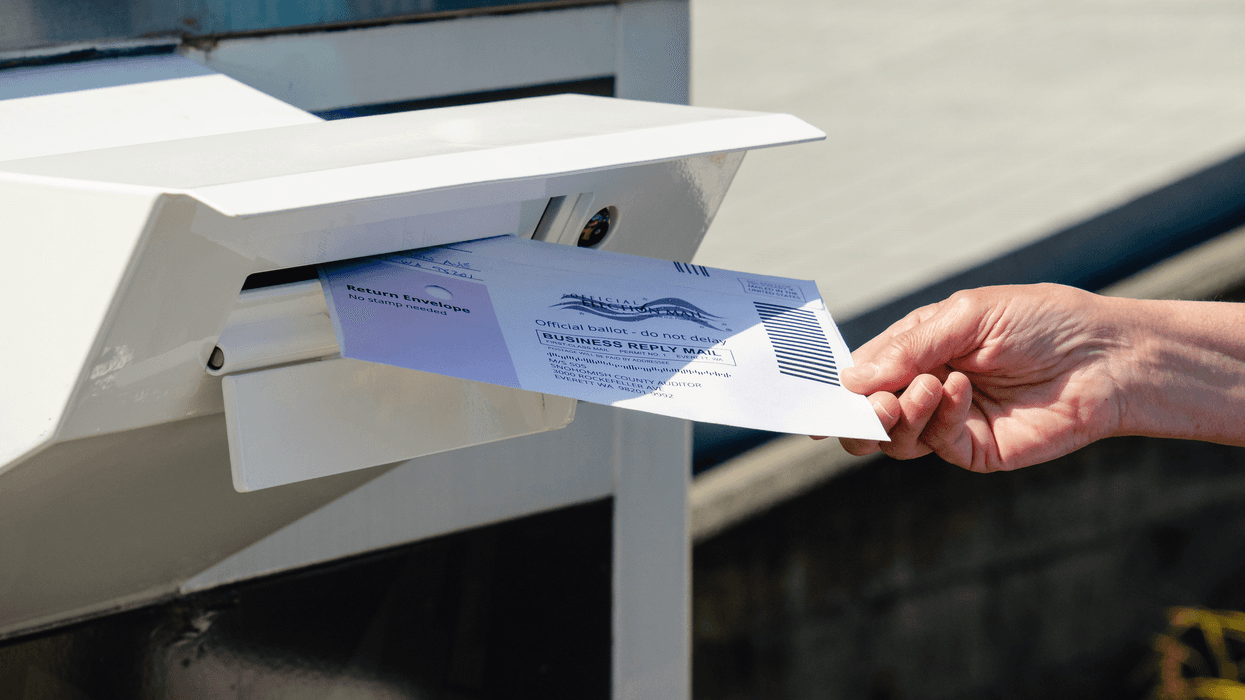
“These mail-in ballot restrictions threaten to disenfranchise millions of eligible voters who rely on mail voting to participate in our democracy," said one advocate.
A day after a federal judge lifted her injunction on President Donald Trump's executive order targeting mail-in ballots, a quartet of civil rights groups on Thursday filed fresh claims in their lawsuit challenging the administration's weaponization of the US Postal Service to attack the right to vote under the pretense of fighting nearly nonexistent fraud.
The Lawyers’ Committee for Civil Rights Under Law, NAACP, Common Cause, and Black Voters Matter Fund argued in the US District Court for the District of Columbia that Trump’s March 31 executive order unlawfully attempts to federalize important parts of election administration—especially voter eligibility verification and mail-ballot delivery—by presidential fiat, without authorization from Congress, while creating serious risks of disenfranchisement and misuse of personal data.
The plaintiffs—and many legal experts—argue that the US Constitution gives the states and Congress the authority to regulate federal elections, not the president.
"Our democracy is under attack," NAACP president and CEO Derrick Johnson said Thursday in a statement. "No federal entity should be allowed to implement last-minute rules that disenfranchise voters and override state election laws."
"This new USPS rule is a direct assault on the fundamental freedoms of millions of Americans—particularly Black voters, communities of color, seniors, military members, and rural residents—just weeks before a critical election,” Johnson added, referring to November's pmidterms. "We will not stand idly by while the voices of the people are silenced. We must protect every eligible citizen’s right to cast their ballot.”
Damon Hewitt, president and executive director of the Lawyers’ Committee for Civil Rights Under Law, warned that “these mail-in ballot restrictions threaten to disenfranchise millions of eligible voters who rely on mail voting to participate in our democracy while balancing work, caregiving responsibilities, disabilities, and other realities of daily life."
"The Trump administration is trying to limit access to the ballot, sow confusion at the polls, and to use the ensuing chaos as an excuse to exert power over agencies and processes in a politicized way," Hewitt added. “We will not let this or any administration further undermine our democratic process. We will fight to ensure our elections are free and fair, and that eligible voters are not shut out—especially Black voters and other voters of color, who are frequently targeted by voter suppression schemes.”
Several courts had ruled against Trump's order. But this week, the US Supreme Court cleared the way for the administration to proceed with its plans, and on Wednesday US District Judge Indira Talwani, an appointee of former President Barack Obama, was compelled to lift her injunction on the executive order as a result of the high court's decision.
Also on Wednesday, the groups behind the case before Talwani moved to block the Postal Service rule, as did a coalition of two dozen Democratic state attorneys general, whose initial challenge had resulted in the ruling from the Supreme Court—which found that the AGs filed their first suit prematurely.
Republicans including Trump—who has repeatedly voted by mail—have used fearmongering and disinformation to push the nearly nonexistent “threat” of voter fraud, especially in regard to mailed ballots, and noncitizens voting in US elections.
“Mail-in voting is so safe that even the president has used it twice this year,” Common Cause president and CEO Virginia Kase Solomón said on Thursday. “The Postal Service exists to deliver our mail, not to be weaponized by this administration to silence voters. Common Cause will keep fighting to protect a democracy where people choose their leaders—not the other way around.”
Trump’s March order is part of a broader attack on voting rights that includes pushing an updated version of Republicans’ so-called SAVE America Act, which would mandate proof of citizenship and strict photo ID requirements to register to vote in federal elections. The legislation, which was passed by the House of Representatives in February, is stalled in the narrowly split Senate, where it lacks the support of 60 lawmakers needed to avoid a Democrat filibuster.
"Mail-in voting gives people the freedom and flexibility to participate in our democracy, and we should be honest about what these efforts to restrict it are really doing: creating barriers to the ballot under the guise of election security," Black Voters Matter Fund co-founders Cliff Albright and LaTosha Brown said in a joint statement Thursday. "We are not fooled. This is the same old playbook—manufacture confusion, create unnecessary hurdles, and chip away at voting access."
“When the same politicians who defend their own access to mail-in voting move to restrict that access for others, the hypocrisy is hard to ignore," Albright and Brown continued. "We cannot allow voter suppression to be repackaged as voter protection or allow political interference to determine who gets to participate and whose voice counts."
"This is not about making democracy more secure; it is about reshaping who can fully participate in it," they added. "We will continue to call these efforts what they are and fight for every eligible voter’s freedom to make their voice heard.”