SUBSCRIBE TO OUR FREE NEWSLETTER
Daily news & progressive opinion—funded by the people, not the corporations—delivered straight to your inbox.
5
#000000
#FFFFFF
To donate by check, phone, or other method, see our More Ways to Give page.
Daily news & progressive opinion—funded by the people, not the corporations—delivered straight to your inbox.
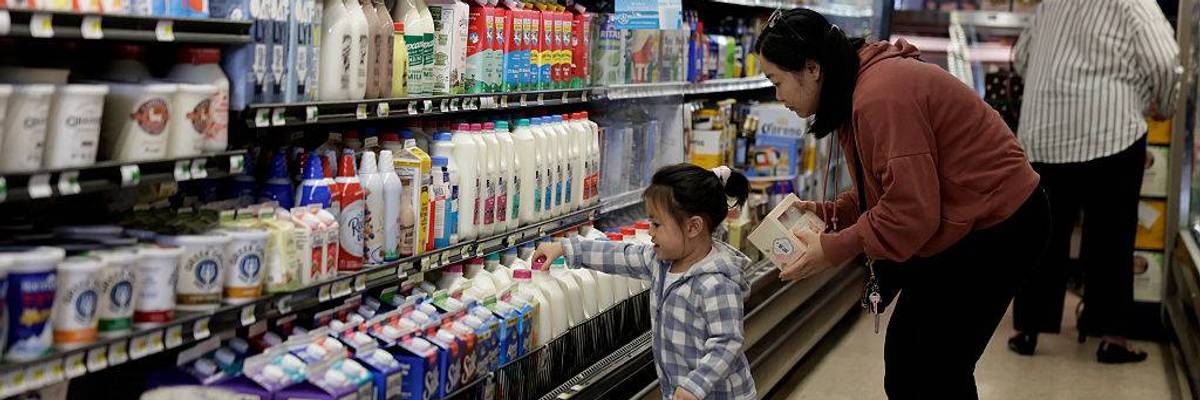
Customers shop at Handy Market on May 14, 2026 in Burbank, California.
"Millions losing SNAP, including children, is an emergency that Congress needs to fix now, before more people are hurt."
An analysis updated Monday by the Center on Budget and Policy Priorities estimates that millions of people, including more than 800,000 children, have lost Supplemental Nutrition Assistance Program benefits since Republicans’ 2025 One Big Beautiful Bill Act took effect.
In total, CBPP estimates that "SNAP participation nationwide fell by more than 4 million people (10%) between the law’s July 2025 enactment and March 2026," with declines "especially pronounced" in Arizona, which has seen enrollment fall by more than 50%.
CBPP finds that, in 13 states with available data, 808,000 children have stopped receiving SNAP assistance since July, which it notes "accounts for nearly half of the 1.7-million-person decline among people of all ages in those states."
The number of people losing access to SNAP is projected to grow in the coming months given that the budget law's biggest changes to the program won't take effect until next year, writes CBPP.
"Starting in 2027, most states will have to pay between 5 and 15% of SNAP benefit costs, totaling hundreds of millions of dollars a year in many states," explains CBPP. "And the amount a state will have to pay will be based on current error rates, factoring in errors that states are making today."
These drastic funding changes "may incentivize states to take drastic measures to reduce their payment error rates quickly and cut program costs, even if it means delaying or improperly denying benefits to eligible people," the center adds.
Katie Bergh, senior policy analyst at CBPP, commented that the latest data shows that the changes made in the GOP budget law appear "to be driving far greater harm than many anticipated," as "states have raced to minimize their exposure to these massive new costs."
"Many people who remain eligible for SNAP on paper—including kids—are losing the benefits they need," Bergh emphasized. "Millions losing SNAP, including children, is an emergency that Congress needs to fix now, before more people are hurt."
Tahra Hoops, director of economic analysis at Chamber of Progress, described the GOP's SNAP cuts as "disastrous," with "kids losing much needed food assistance thanks to policies that are cruel and ineffective."
Hoops also provided historical context to the rapid drop in SNAP enrollment.
"The last time SNAP participation fell this sharply, this fast was after the 1996 welfare reform law," Hoops explained. "That cut took 2.2 million people off food assistance over 8 months. We are already seeing almost twice the damage and the unemployment rate has remained flat."
Policy analyst Michael Linden described the impact of the GOP's budget law on the SNAP program as "the Memorial Reflecting Pool of keeping kids from going hungry," a reference to President Donald Trump's calamitous attempted renovation of the iconic pool located near the Lincoln Memorial in Washington, DC.
This country and this world are at a monumental crossroads. US voters have an opportunity to beat back the forces of fascism and confront the billionaires who are rigging the economy, our media system, and our democracy, making it increasingly impossible for ordinary people to get by. We’re not just talking about the election. We’re talking about what must be done once these fascist elements are vanquished from power. We need a bolder set of solutions than what either major party has so far been willing to offer and a working-class movement ready to fight like hell for it. Trump didn't emerge from nowhere. The conditions that fueled MAGA authoritarianism were created by decades of radical neoliberal economic policies and a corrupt political system dominated by corporate interests. They slashed taxes on the super-rich, promising that the benefits would trickle down. They said giveaways to the corporate titans would make life more affordable for the rest of us. It was all bullshit. And when a bitter, betrayed populace searches for someone to blame, right-wing demagogues have little trouble finding scapegoats. People know when they're being lied to, but you won't hear any of this from the corporate media. Only independent journalism—powered and funded by people who believe in building a better world—can deliver truly trustworthy daily news. If you share our vision, please contribute whatever you can to sustain our work. |
An analysis updated Monday by the Center on Budget and Policy Priorities estimates that millions of people, including more than 800,000 children, have lost Supplemental Nutrition Assistance Program benefits since Republicans’ 2025 One Big Beautiful Bill Act took effect.
In total, CBPP estimates that "SNAP participation nationwide fell by more than 4 million people (10%) between the law’s July 2025 enactment and March 2026," with declines "especially pronounced" in Arizona, which has seen enrollment fall by more than 50%.
CBPP finds that, in 13 states with available data, 808,000 children have stopped receiving SNAP assistance since July, which it notes "accounts for nearly half of the 1.7-million-person decline among people of all ages in those states."
The number of people losing access to SNAP is projected to grow in the coming months given that the budget law's biggest changes to the program won't take effect until next year, writes CBPP.
"Starting in 2027, most states will have to pay between 5 and 15% of SNAP benefit costs, totaling hundreds of millions of dollars a year in many states," explains CBPP. "And the amount a state will have to pay will be based on current error rates, factoring in errors that states are making today."
These drastic funding changes "may incentivize states to take drastic measures to reduce their payment error rates quickly and cut program costs, even if it means delaying or improperly denying benefits to eligible people," the center adds.
Katie Bergh, senior policy analyst at CBPP, commented that the latest data shows that the changes made in the GOP budget law appear "to be driving far greater harm than many anticipated," as "states have raced to minimize their exposure to these massive new costs."
"Many people who remain eligible for SNAP on paper—including kids—are losing the benefits they need," Bergh emphasized. "Millions losing SNAP, including children, is an emergency that Congress needs to fix now, before more people are hurt."
Tahra Hoops, director of economic analysis at Chamber of Progress, described the GOP's SNAP cuts as "disastrous," with "kids losing much needed food assistance thanks to policies that are cruel and ineffective."
Hoops also provided historical context to the rapid drop in SNAP enrollment.
"The last time SNAP participation fell this sharply, this fast was after the 1996 welfare reform law," Hoops explained. "That cut took 2.2 million people off food assistance over 8 months. We are already seeing almost twice the damage and the unemployment rate has remained flat."
Policy analyst Michael Linden described the impact of the GOP's budget law on the SNAP program as "the Memorial Reflecting Pool of keeping kids from going hungry," a reference to President Donald Trump's calamitous attempted renovation of the iconic pool located near the Lincoln Memorial in Washington, DC.