

SUBSCRIBE TO OUR FREE NEWSLETTER
Daily news & progressive opinion—funded by the people, not the corporations—delivered straight to your inbox.
5
#000000
#FFFFFF
To donate by check, phone, or other method, see our More Ways to Give page.
Daily news & progressive opinion—funded by the people, not the corporations—delivered straight to your inbox.
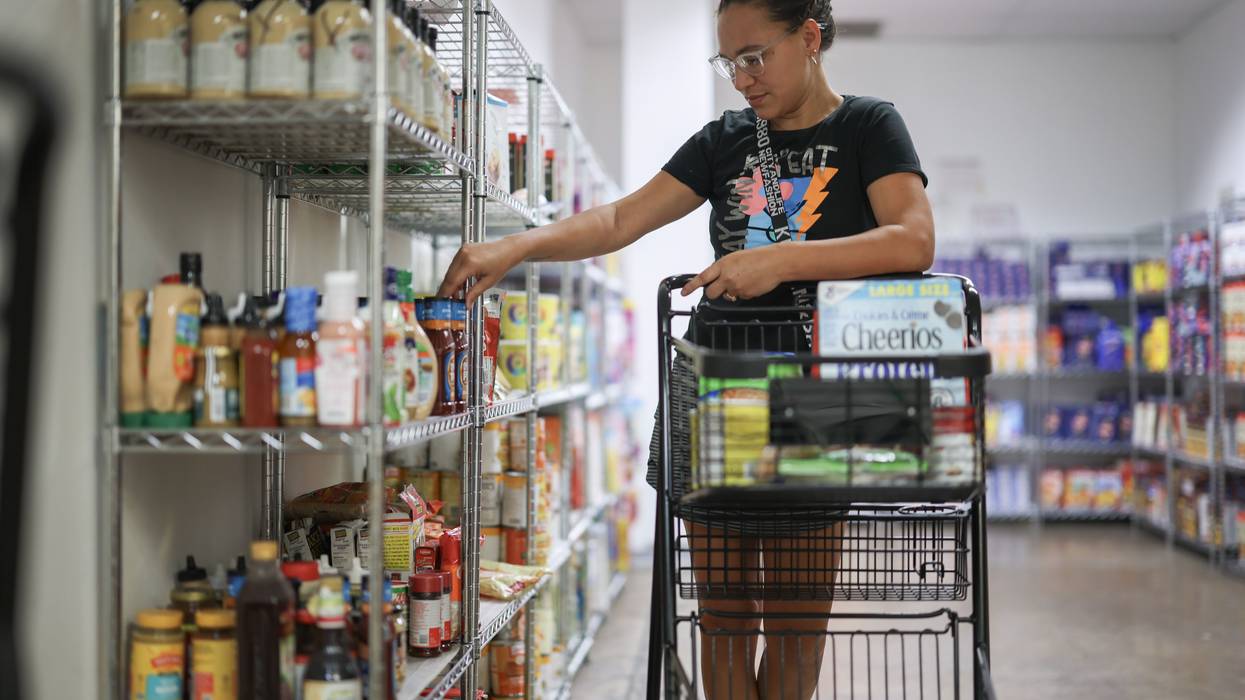
"These cuts are not filtering out 'waste, fraud, and abuse'... they are parents deciding between paying the electric bill and putting food on the table, or skipping meals."
Participation in the Supplemental Nutrition Assistance Program is now at its lowest point in 17 years thanks to cuts made in the Republican Party's One Big Beautiful Bill Act.
The Center for Budget and Policy Priorities (CBPP) on Wednesday published the latest update to its series of reports tracking the impact of SNAP cuts, and it found that there are roughly 5 million fewer people participating in SNAP thanks in large part to the cuts made in the 2025 GOP budget law.
Since the law's passage, enrollment in SNAP has decreased in every US state except Alaska.
While enrollment has fallen by an average of 12% across the US over the last year, eight states have seen participation plummet by 20% or higher. Arizona has seen the largest overall drop in participation, with 45% fewer people enrolled in the program over the last year.
"The declines started before the harmful 2025 Republican reconciliation law’s enactment, suggesting factors at play in addition to that law," CBPP explained. "But in almost all states, declines in SNAP participation accelerated after the 2025 Republican reconciliation law, and we expect that trend to continue."
CBPP also projected participation would fall even further in the next year given that the biggest changes made to SNAP funding won't fully kick in until 2027, when "most states will have to pay between 5% and 15% of SNAP benefit costs, totaling hundreds of millions of dollars a year in many states."
"The amount a state will have to pay will be based on current error rates, factoring in errors that states are making today," CBPP emphasized. "The magnitude of the cost shift and the urgency surrounding error rates may incentivize states to take drastic measures to reduce their payment error rates quickly and cut program costs, even if it means delaying or improperly denying benefits to eligible people."
CBPP's latest report on SNAP cuts comes after ParentsTogether Action released a survey of SNAP beneficiaries on Tuesday finding that two-thirds of families who rely on the program have already seen benefits decrease over the last year.
The survey shows 75% of SNAP beneficiaries also report that affording food is one of their biggest economic challenges, echoing earlier surveys showing that buying groceries has become a major source of stress for Americans overall.
SNAP recipients described to ParentsTogether Action how the SNAP cuts have impacted their finances.
"They took over $120 off our SNAP," said a Kansas mother named Brandi. "We have a hard time keeping up with bills. I get [Supplemental Security Income], and that is my only income for my daughter and myself."
An Oregon woman named Amanda, meanwhile, described seeing her benefits cut by more than half after she found a job.
"We were receiving $400 a month, but after I reported my new income and reapplied, our benefits dropped to just under $200," she said. "We also didn’t receive any benefits for one month during the process."
Ailen Arreaza, executive director of ParentsTogether Action, said the SNAP cuts are forcing families to make an "impossible choice" on whether to prioritize paying for food, healthcare, or their utility bills.
"These cuts are not filtering out 'waste, fraud, and abuse' like the administration would like us to believe," Arreaza explained, "they are parents deciding between paying the electric bill and putting food on the table, or skipping meals so their kids can eat. Families should not have to make these choices."
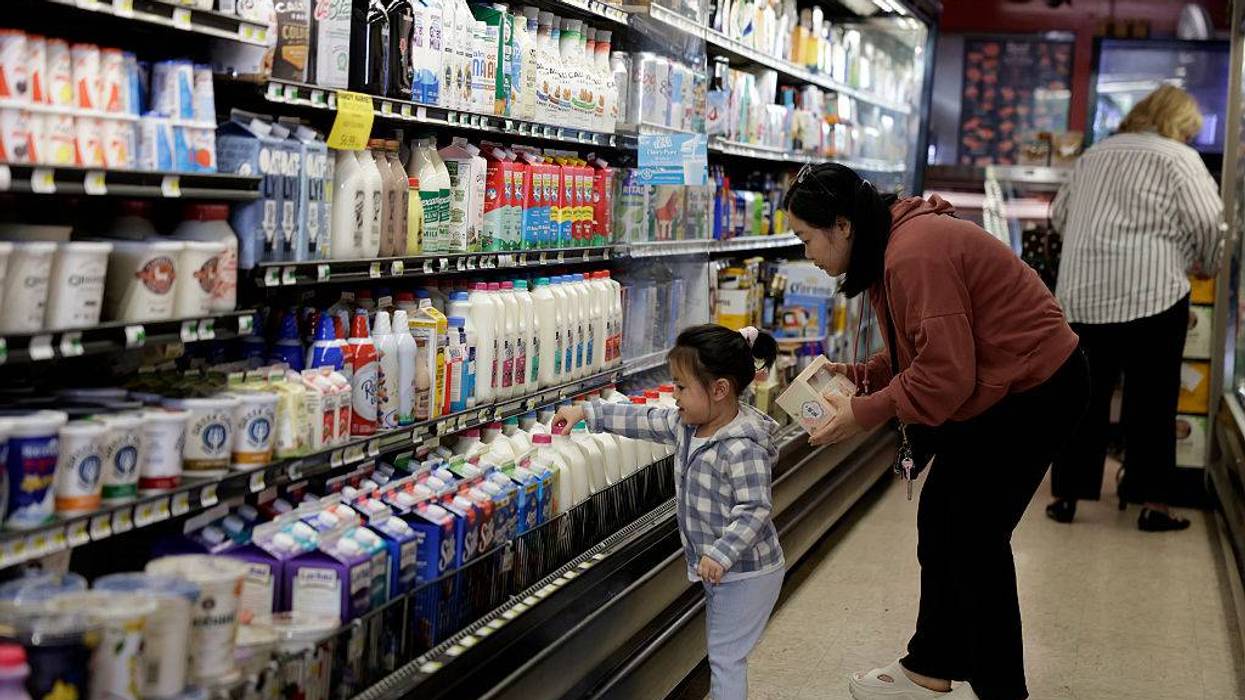
"Millions losing SNAP, including children, is an emergency that Congress needs to fix now, before more people are hurt."
An analysis updated Monday by the Center on Budget and Policy Priorities estimates that millions of people, including more than 800,000 children, have lost Supplemental Nutrition Assistance Program benefits since Republicans’ 2025 One Big Beautiful Bill Act took effect.
In total, CBPP estimates that "SNAP participation nationwide fell by more than 4 million people (10%) between the law’s July 2025 enactment and March 2026," with declines "especially pronounced" in Arizona, which has seen enrollment fall by more than 50%.
CBPP finds that, in 13 states with available data, 808,000 children have stopped receiving SNAP assistance since July, which it notes "accounts for nearly half of the 1.7-million-person decline among people of all ages in those states."
The number of people losing access to SNAP is projected to grow in the coming months given that the budget law's biggest changes to the program won't take effect until next year, writes CBPP.
"Starting in 2027, most states will have to pay between 5 and 15% of SNAP benefit costs, totaling hundreds of millions of dollars a year in many states," explains CBPP. "And the amount a state will have to pay will be based on current error rates, factoring in errors that states are making today."
These drastic funding changes "may incentivize states to take drastic measures to reduce their payment error rates quickly and cut program costs, even if it means delaying or improperly denying benefits to eligible people," the center adds.
Katie Bergh, senior policy analyst at CBPP, commented that the latest data shows that the changes made in the GOP budget law appear "to be driving far greater harm than many anticipated," as "states have raced to minimize their exposure to these massive new costs."
"Many people who remain eligible for SNAP on paper—including kids—are losing the benefits they need," Bergh emphasized. "Millions losing SNAP, including children, is an emergency that Congress needs to fix now, before more people are hurt."
Tahra Hoops, director of economic analysis at Chamber of Progress, described the GOP's SNAP cuts as "disastrous," with "kids losing much needed food assistance thanks to policies that are cruel and ineffective."
Hoops also provided historical context to the rapid drop in SNAP enrollment.
"The last time SNAP participation fell this sharply, this fast was after the 1996 welfare reform law," Hoops explained. "That cut took 2.2 million people off food assistance over 8 months. We are already seeing almost twice the damage and the unemployment rate has remained flat."
Policy analyst Michael Linden described the impact of the GOP's budget law on the SNAP program as "the Memorial Reflecting Pool of keeping kids from going hungry," a reference to President Donald Trump's calamitous attempted renovation of the iconic pool located near the Lincoln Memorial in Washington, DC.
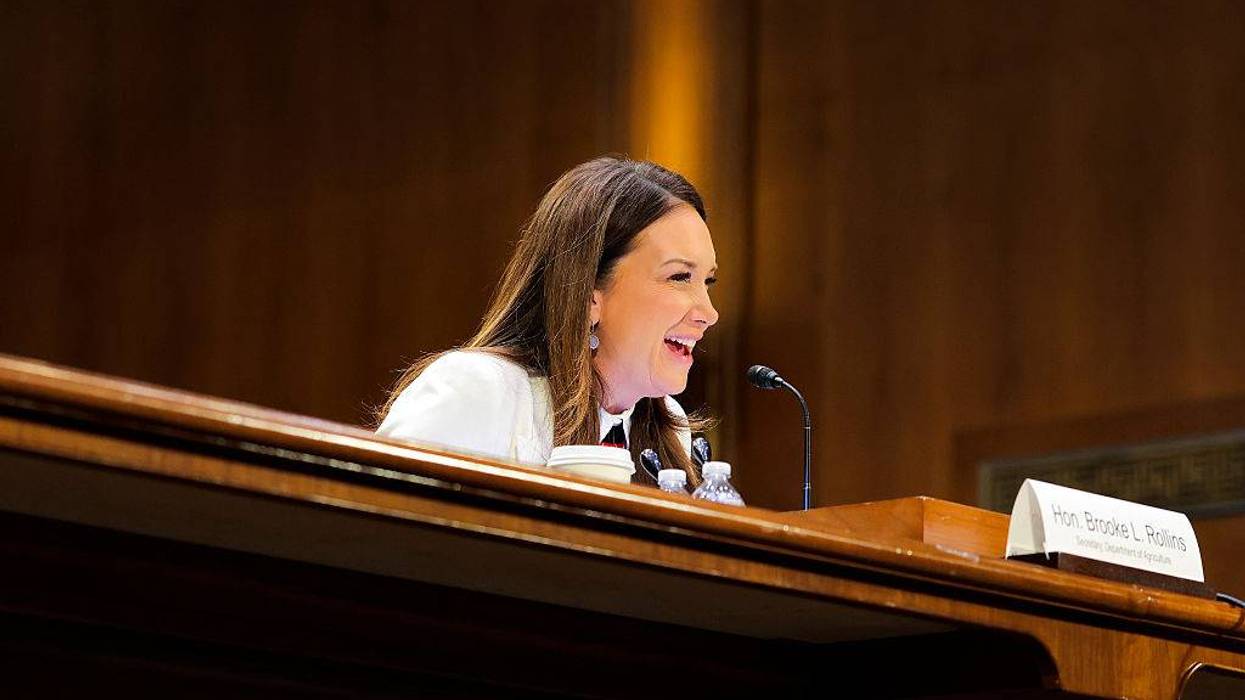
"Kicking 4.3 million Americans off of SNAP is not a flex, it's a failure," said Democratic Rep. Shontel Brown.
US Secretary of Agriculture Brooke Rollins on Saturday openly celebrated millions of people losing their food assistance, which experts say is a direct result of the Republicans' 2025 budget law that slashed funding to the Supplemental Nutrition Assistance Program by $186 billion over a decade.
In a social media post pointing to preliminary data from her department, Rollins boasted that there were now "4.3 million off SNAP and counting!"
"Under President Trump, Americans are getting back to work!" Rollins added. "Healthy employment numbers mean less reliance on government programs. Leaving benefits for those who truly need them. America is back in business!"
In reality, the unemployment rate is currently higher than when President Donald Trump took office in February 2025 and there has been almost no growth in net employment since the president announced his "Liberation Day" tariffs just over a year ago.
The Associated Press on Monday published a fact check of Rollins' claims about SNAP, finding that Republicans' cuts to the program were far more likely responsible for the historic drops in enrollment than any purported improvement in the economy.
Caitlin Caspi, an associate professor at the University of Connecticut who studies food insecurity, told the AP that current job creation numbers are nowhere near strong enough to explain the massive number of Americans losing access to SNAP.
"We’re not seeing a linear kind of drop-off,” Caspi said. “We are not seeing, if you look at the unemployment rates, things that might be an indicator that a strong economy was driving this change. We don't see, for example, a pattern of decline in unemployment that would match the pattern of decline in SNAP participation."
Caspi's analysis was echoed by the Center on Budget and Policy Priorities (CBPP), which last week published an analysis finding that "economic conditions haven’t been improving as the number of people receiving SNAP has plummeted in recent months, representing the sharpest decline in decades."
Instead, CBPP pointed the finger squarely at the GOP's budget law as the biggest culprit behind the decline.
"The deep cuts to federal funding for SNAP are shifting significant new costs to states," wrote CBPP, noting that the GOP law "also dramatically expands SNAP’s already harsh and ineffective provision taking away people’s benefits for not meeting the work requirement."
Rollins' claims about SNAP enrollment were also criticized by Rep. Shontel Brown (D-Ohio), who expressed disgust that the administration is bragging about kicking people off food assistance during a time when the price of groceries has continued to rise thanks in part to Trump's own policies.
"Better economy where?" Brown wrote on social media in response to Rollins. "You mean the one where Americans paid $300 more on their groceries to compensate for Trump's tariffs? Kicking 4.3 million Americans off of SNAP is not a flex, it's a failure. That's why I've authored legislation to reverse the Trump SNAP cuts."
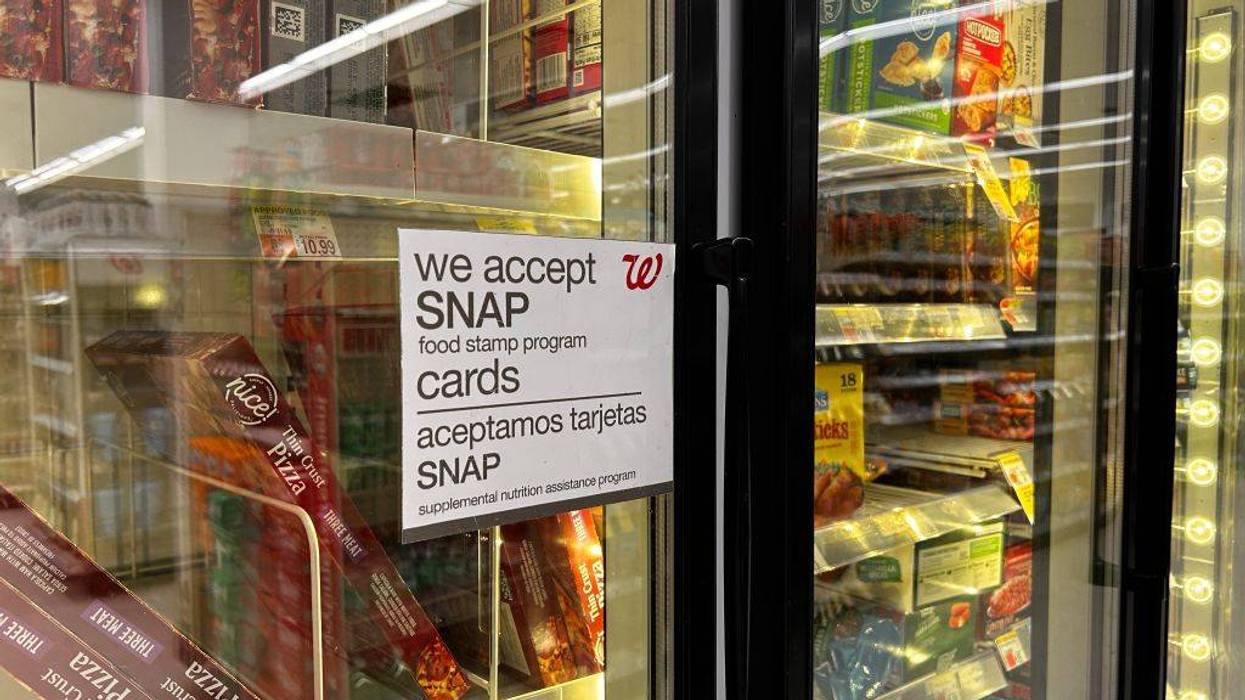
"No family should have to worry about putting food on the table, but congressional Republicans have made sure that millions will," said one critic of the GOP's budget law.
An analysis published Wednesday by the Center for Budget and Policy Priorities found that millions of low-income Americans have stopped participating in the Supplemental Nutrition Assistance Program ever since President Donald Trump signed the One Big Beautiful Bill Act into law last year.
According to CBPP's analysis, SNAP participation declined by 6% between July 2025 and December 2025, with 2.5 million fewer Americans receiving benefits.
CBPP estimated that millions more will be dropped from SNAP benefits in the coming months as states adjust their budgets to remain in compliance with the law.
"Starting in 2027, most states will have to pay between 5% and 15% of SNAP benefit costs, totaling hundreds of millions of dollars a year in many states," explained CBPP. "The magnitude of the cost shift... may incentivize states to take drastic measures to reduce their payment error rates quickly and cut program costs, even if it means delaying or improperly denying benefits to eligible people."
In total, concluded CBPP, "we estimate that 4 million people in a typical month will lose out" on SNAP benefits "once the changes are fully implemented."
CBPP published a separate analysis focusing specifically on Arizona, where SNAP participation has already fallen "far more than anticipated," while warning that other states could soon see similarly steep participation drops as they rush to comply with the law.
The GOP budget law contained roughly $186 billion in cuts to SNAP over the span of a decade, which came from expanding work requirements, shifting some of the cost of the program to the states, and restricting benefit increases. As a result, millions of Americans became vulnerable to losing their benefits.
Leor Tal, campaign director at Unrig Our Economy, pointed to CBPP's analysis as an example of the GOP waging class warfare on behalf of rich donors.
“SNAP is a lifeline for working Americans nationwide," Tal said. "Now, that lifeline is being ripped away from millions because Republicans in Congress decided that giving tax breaks to billionaires and waging war are more important than protecting food for families. No family should have to worry about putting food on the table, but congressional Republicans have made sure that millions will.”
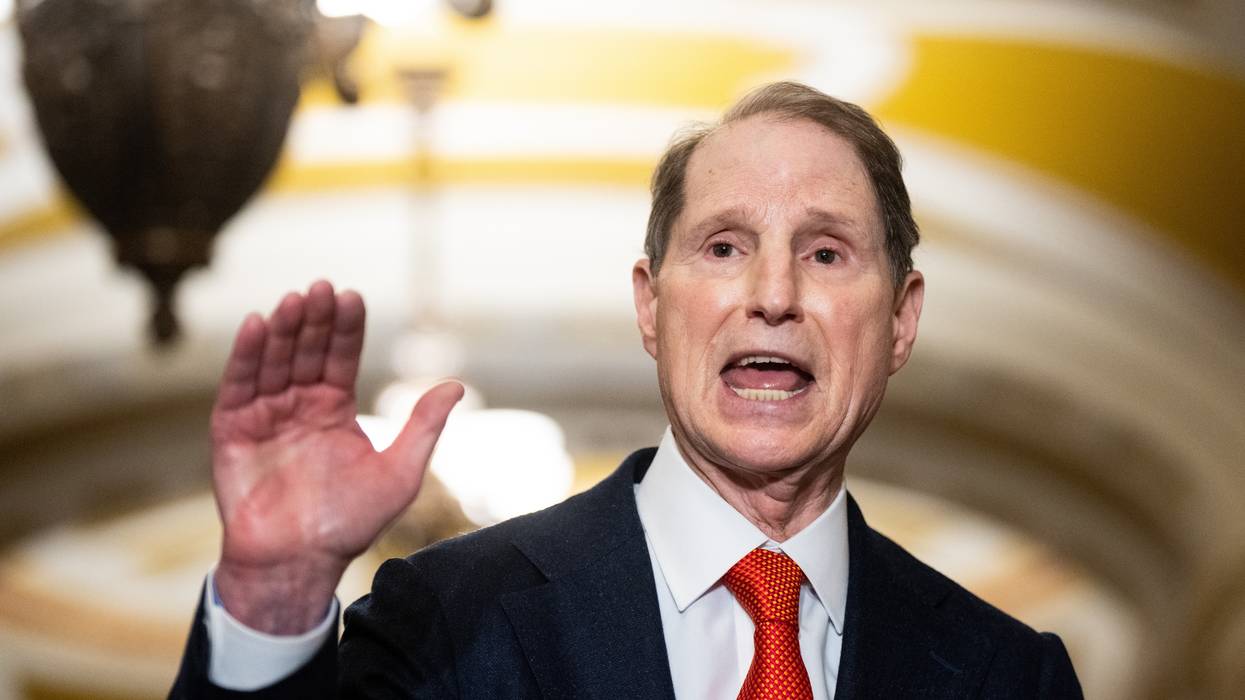
"Americans will pay a steep price if Republicans move forward with this disastrous agenda," said Sen. Ron Wyden.
The House Republican Study Committee on Tuesday released a blueprint for a new budget reconciliation package with the purported goal of making "life more affordable for working families."
However, according to an analysis by Washington Post economic policy reporter Jacob Bogage, two of the three most expensive items in the GOP budget blueprint would be the elimination of the federal estate tax, which would provide a massive windfall to the richest US households, and indexing capital gains to inflation, which even the conservative American Enterprise Institute contends "would further distort taxpayer decisions and increase the ability to shelter income from taxation."
Other items in the GOP blueprint include refilling the Strategic Petroleum Reserve with oil seized from Venezuela, blocking federal funds for abortion providers, and a new "excise tax on colleges that allow trans women in sports."
Sen. Ron Wyden (D-Ore.), ranking member of the Senate Finance Committee, wasted no time ripping the proposal from the largest right-wing House caucus to pieces.
"After passing the largest health care cut in American history, Republicans are doubling down on a failed agenda that benefits billionaires and giant corporations while ripping away food, healthcare and other basic necessities,” Wyden said. “This legislation will eliminate protections for Americans with preexisting conditions, place more red tape between families and their healthcare, and seize ideological trophies instead of focusing on making life more affordable. Americans will pay a steep price if Republicans move forward with this disastrous agenda.”
Richard Phillips, pensions and tax policy director for Sen. Bernie Sanders (I-Vt.), marveled at the GOP loading up a bill supposedly focused on working families with massive giveaways to the wealthiest Americans.
"As part of it's new affordability agenda for the American people the Republican Study Committee reveals its plan to give the wealthiest 0.2% of estates a $281 billion tax break?" he wrote in a post on X.
Chuck Marr, vice president of federal tax policy at the Center on Budget and Policy Priorities, similarly called the GOP blueprint "tone deaf."
"Nothing says attack the affordability crisis working-class people face than Rs calling for eliminating the estate tax for the wealthiest heirs in the country—just months after giving them a $30 million tax free exemption," he wrote.
The GOP's second attempt at a budget reconciliation package comes months after it passed the One Big Beautiful Bill Act, a reconciliation package that gave more tax breaks to the rich, but cut Medicaid spending by nearly $1 trillion over the next decade, while also slashing spending on the Supplemental Nutrition Assistance Program by nearly $200 billion over the same period.

"Families are heading into the holidays facing snowballing costs on everything from toys and groceries to health care and utilities, yet Trump continues to call affordability a hoax."
President Donald Trump delivered a speech on Wednesday in which he tried to convince US voters that the economy under his watch was the envy of the world.
However, newly released data shows that Americans are not buying it.
The latest data from the University of Michigan's Surveys of Consumers showed consumer sentiment of current economic conditions dropped yet again in December to a rating of 50.4, which represents a 33% drop from the 74.0 consumer sentiment rating one year ago.
The Groundwork Collaborative released a report on Friday that slammed the president's economic stewardship and said that "it is no surprise that a record number of Americans put Trump’s economic performance on the naughty list this holiday season."
The group then explained why Americans have good reason to be pessimistic.
One of the most glaring problems with Trump's economy at the moment, the group contended, is the labor market, which has reported net negative job growth over the last two months.
What's more, Groundwork Collaborative noted that "the number of people working part time for economic reasons rose to 5.5 million in November, an increase of about 909,000 since September, as Americans are unable to find full-time employment."
The group also hit Trump for his tariffs on imported goods, which have already cost the average American family an estimated $1,200 so far and are projected to cost them $2,100 next year, assuming the tariffs remain at their current levels.
Alex Jacquez, chief of policy and advocacy at Groundwork Collaborative, said that current economic conditions were the opposite of what Trump promised during the 2024 presidential campaign, when he vowed to lower prices starting on his first day in office.
"Families are heading into the holidays facing snowballing costs on everything from toys and groceries to health care and utilities, yet Trump continues to call affordability a hoax," said Jacquez. "As working families yearn for the ghost of economies past, let’s hope the Scrooge in the White House makes a resolution to stop gaslighting Americans and get serious about bringing costs down in the new year."
Groundwork Collaborative's analysis came one day after the Center on Budget and Policy Priorities (CBPP) released a report on Thursday that outlined how Trump and his Republican allies have worked to make life less affordable for US voters over the last year.
Beyond the aforementioned tariffs cited by Groundwork Collaborative, CBPP cited the major cuts that Trump and the GOP made to Medicaid and the Supplemental Nutritional Assistance Program (SNAP) in the One Big Beautiful Bill Act that they passed into law earlier this year.
CBPP also flagged Trump and the GOP's cuts to renewable energy projects that the group argued are raising the cost of electricity at a time when electric grids are coming under heavy strain from the energy demands of artificial intelligence data centers. Making this crisis potentially even worse, the think tank noted that Trump has proposed entirely eliminating the Low Income Home Energy Assistance Program (LIHEAP).
Taken together, CBPP suggested that GOP policies have been taking a hatchet to the budgets of US households in the bottom half of the income distribution scale.
"Households with incomes in the bottom half of the distribution... spend almost 90% of their incomes on basic items: utilities, groceries, health care, transportation, and shelter," wrote CBPP. "And to help afford those basics, many need assistance, such as Medicaid, SNAP, or LIHEAP, that the Administration has put on the chopping block."
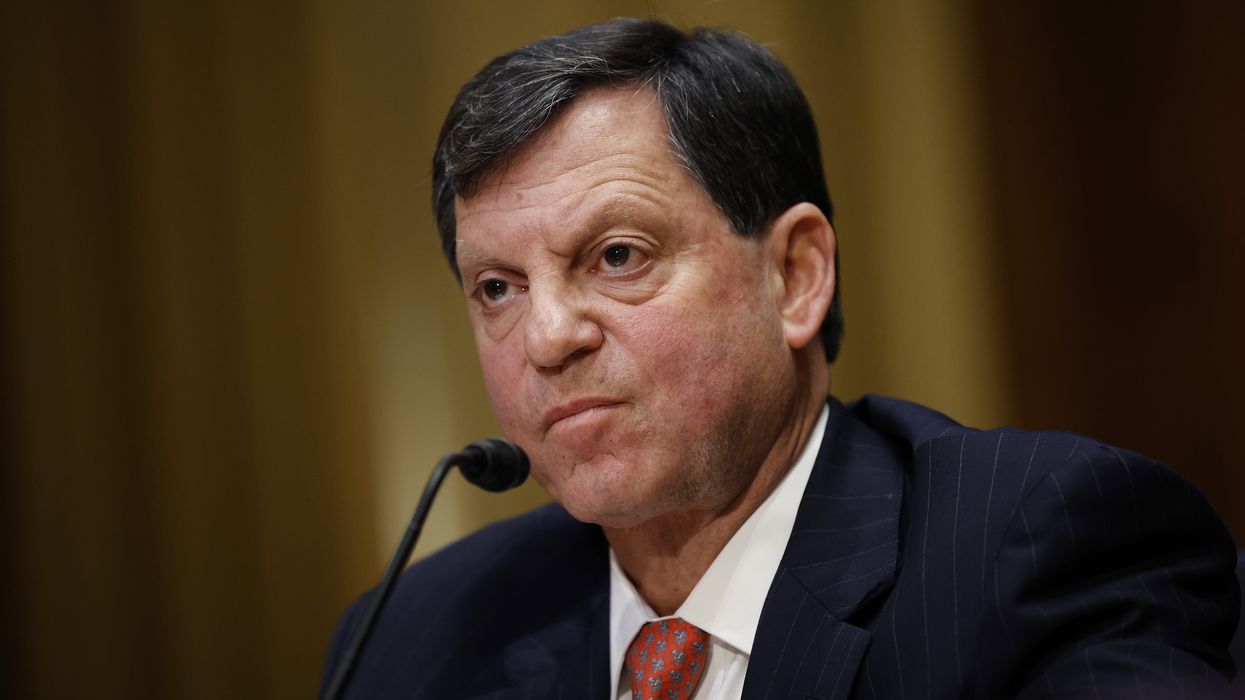
"Every American who has paid into Social Security should be outraged," said one Social Security advocate.
The Trump administration on Monday announced that Social Security Commissioner Frank Bisignano would also serve as a the chief executive officer at the Internal Revenue Service, in a move that was panned by defenders of the crucial anti-poverty Social Security program.
As The Wall Street Journal reported on Monday, US Treasury Secretary Scott Bessent announced that Bisignano would be filling the newly created position of CEO at the IRS, even as he retains his duties as Social Security commissioner.
According to the Journal, Bisignano "will report directly to Bessent, who will remain the formal head of the IRS as acting commissioner," and that he "will help implement the administration's vision for the IRS, which emphasizes upgraded technology and retreats from the heavier enforcement initiatives started under President Joe Biden."
Bisignano's appointment comes weeks after Billy Long, the previous IRS commissioner, got ousted from his job after working there for under two months.
Social Security advocates reacted to the move by condemning the administration for creating even more turmoil at the Social Security Administration (SSA).
Nancy Altman, president of Social Security Works, slammed the administration for giving Bisignano added duties when he was already "unqualified" to serve as Social Security commissioner.
"Never in Social Security’s 90-year history has a commissioner held a second job," she said. "Bisignano’s new role will leave a leadership vacuum at the top of the agency, especially since Trump hasn’t even nominated a deputy commissioner."
Altman further accused the administration of "allowing Social Security to rot through sabotage and neglect" by downgrading the program's top role to part-time.
Richard Fiesta, executive director for the Alliance for Retired Americans, similarly emphasized that running the SSA was "a full-time job," and said that the Trump administration had already caused "chaos" at the agency by slashing longtime staff members.
"Every American who has paid into Social Security should be outraged," he said. "Americans pay for the workers and administration of the agency through their Social Security withholdings in every paycheck. We expect a full-time commissioner for our money. Instead, we’re now getting a part-time commissioner drawing a full salary from our Social Security taxes."
Kathleen Romig, director of Social Security and disability policy at the Center on Budget and Policy Priorities, described Bisignano’s appointment as "alarming news" and said it raises "major concerns."
Specifically, Romig warned about potential security breaches of Americans' data at both the IRS and SSA.
"We know that from the beginning they’ve been trying to bulldoze protections of the sensitive data that each agency holds," she wrote in a post on Bluesky. "Early this year, acting heads of both SSA and Treasury were both pushed out over data access"
She then pointed to reports that the Department of Government Efficiency has been working on a "data lake" that uses sensitive information from both agencies "to track and surveil undocumented immigrants" residing in the US.
"This unprecedented arrangement cries out for meaningful oversight to ensure that each agency adequately serves the public, conflicts of interest are resolved, and our most sensitive data are protected," she said.
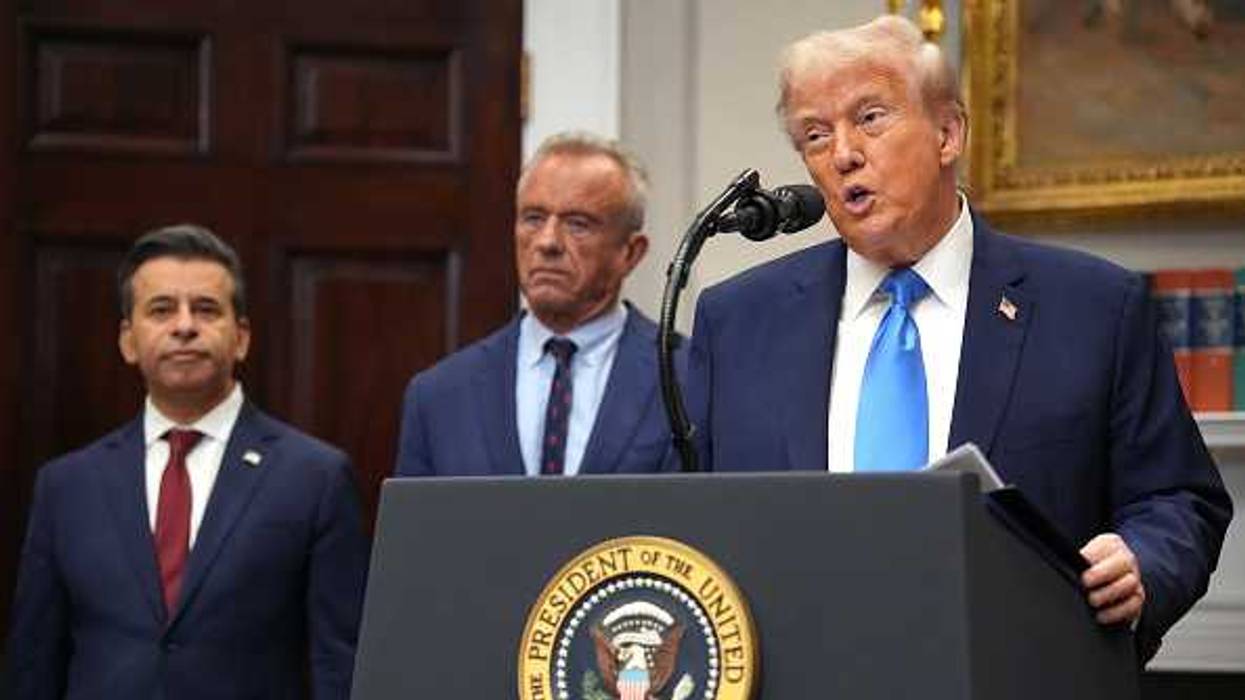
"Without sufficient funding and freedom from political interference, the federal statistical system as we know it—and our ability to make economic and policy decisions based in reality—are in jeopardy," said researchers.
In recent weeks, efforts by the Trump administration to conceal statistics and data from the public have made headlines—from the US Department of Justice's decision to delete a 2024 study that showed right-wing extremists are behind the vast majority of ideologically driven killings in the US, contrary to the White House's repeated claims about violence from the left, to President Donald Trump's firing of a top economist after an unfavorable jobs report that he said was released to hurt him politically.
In a new report Monday, the Center on Budget and Policy Priorities (CBPP) detailed how Trump's overt politicization of data has combined with funding cuts to make it harder for experts—and the public that's impacted by the Trump administration's agenda—to see how those very policies are impacting households across the country.
"Without sufficient funding and freedom from political interference, the federal statistical system as we know it—and our ability to make economic and policy decisions based in reality—are in jeopardy," said CBPP bsenior research analyst Victoria Hunter Gibney and vice president for housing and income security Cara Brumfield.
The report warns of "disappearing federal data"—both information that has been surreptitiously yanked from public view and data that the administration has announced will no longer be available, like the US Department of Agriculture annual Household Food Security reports.
As Common Dreams reported last week, the agency called the survey "redundant, costly, politicized, and extraneous" and claimed they have "failed to present anything more than subjective, liberal fodder," as it said it would stop publishing the data—the federal government's main source of information on hunger.
"Without data, it is also going to be hard not only to fact-check Trump and his cronies but to measure the (most likely horrific) impact of Trump’s policies."
The decision followed the Republican Party's passage of the One Big Beautiful Bill Act (OBBBA), which includes the biggest-ever cuts to the Supplemental Nutrition Assistance Program (SNAP) at a time when more than 47 million Americans—including 1 in 5 children—are facing food insecurity.
In addition to preemptively rejecting research that would have shown the impact of the GOP's SNAP cuts, the administration has shown no interest in tracking weather disasters via its Billion Dollar Weather and Climate Disasters database, which was discontinued in May; the effects of crime on LGBTQ+ Americans via National Crime Victimization Survey; and even the existence of LGBTQ+ communities via the National Health Interview Survey.
The administration has also stopped the federal government from collecting data by overseeing mass layoffs across the public servant workforce, with the Department of Health and Human Services placing researchers with the Pregnancy Risk Assessment Monitoring System on administrative leave in April—ending the government's accounting of maternal mortality numbers. HHS also laid off the analysts who worked on federal poverty guidelines that are used to calculate eligibility for parts of Medicaid as well as nutrition and home energy assistance.
In a multitude of ways, the CBPP said, the administration is "suppressing data that would reveal the harmful effects of the Republican megabill’s deep cuts and leaving families’ struggles harder to track."
The report also warns that "brain drain" is worsening the US Census Bureau's ability to collect population data that helps determine communities' representation in Congress, federal funding allocation, and plan community services. Former Census Bureau Director Robert Santos left halfway through his five-year term shortly after Trump took office in January. Santos spearheaded efforts to make the survey more inclusive and emphasized rebuilding trust with immigrant and Latino communities after Trump, during his first term, pushed to include a citizenship question on the survey.
A top economist at the Census Bureau, Ron Jarmin, was also replaced this month by Trump appointee George Cook, who has "no prior government experience and no advanced training in statistical methods," the CBPP said.
The Republican Party is currently pushing to further weaken efforts to count the population of the US, with the House Appropriations Committee reporting out legislation this month to officially designate the decennial census as voluntary and drastically limit efforts to follow up with nonrespondents. Mandatory participation is not enforced, but the Census Bureau has found that response rates plummet when the survey is officially designated as voluntary.
The proposed change would "seriously exacerbate risks to data quality from nonresponse bias," said the CBPP.
The same bill reported out by the House committee proposed slashing $40 million from the Census Bureau budget, impacting the Survey of Income and Program Participation (SIPP), which collects data on a number of economic well-being indicators and "enables policymakers to understand how proposed laws will change eligibility and costs."
The reduced version of SIPP that would be funded by the bill "is unlikely to provide the uniquely rich content (such as month-by-month income data) and structure (such as following children as they move between different caregivers’ homes) that allow the current SIPP to answer policymakers’ questions about families, their needs, and the programs that serve them," said the group.
The CBPP released its analysis as Liza Featherstone wrote at The New Republic that the president is "waging a catastrophic war on data" that is "fundamental to Trump and his authoritarian regime."
Trump's destructive cuts to agencies and surveys that collect crucial data have been paired with numerous baseless claims by the president and his allies—that Tylenol taken in pregnancy causes autism, that violence is surging in cities where he plans to deploy federal troops, and that transgender people disproportionately commit mass shootings and violence.
"It will be increasingly hard for correctives on such points to get traction, however, since Trump’s administration has greatly reduced its own ability to collect and disseminate accurate information about crime," wrote Featherstone.
"Without data, it is also going to be hard not only to fact-check Trump and his cronies but to measure the (most likely horrific) impact of Trump’s policies," she added. "That too is almost certainly intentional—or at least very convenient for him."

Scott's proposal for more draconian cuts has renewed scrutiny regarding his past as a hospital executive, where he oversaw the "largest government fraud settlement ever," which included stealing from Medicaid.
Sen. Rick Scott has introduced an amendment to the Republican budget bill that would slash another $313 million from Medicaid and kick off millions more recipients.
The latest analysis by the Congressional Budget Office (CBO) found that 17 million people could lose their health insurance by 2034 as the result of the bill as it already exists.
According to a preliminary estimate by the Democrats on the Joint Congressional Economic Committee, that number could balloon up to anywhere from 20 to 29 million if Scott's (R-Fla.) amendment passes.
The amendment will be voted on as part of the Senate's vote-a-rama, which is expected to run deep into Monday night and possibly into Tuesday morning.
"If Sen. Rick Scott's amendment gets put forward, this would be a self-inflicted healthcare crisis," said Tahra Hoops, director of economic analysis at Chamber of Progress.
The existing GOP reconciliation package contains onerous new restrictions, including new work requirements and administrative hurdles, that will make it harder for poor recipients to claim Medicaid benefits.
Scott's amendment targets funding for the program by ending the federal government's 90% cost sharing for recipients who join Medicaid after 2030. Those who enroll after that date would have their medical care reimbursed by the federal government at a lower rate of 50%.
The Affordable Care Act (ACA) introduced the increased rate in 2010 to incentivize states to expand Medicaid, allowing more people to be covered.
Scott has said his program would "grandfather" in those who had already been receiving the 90% reimbursement rate.
However, Medicaid is run through the states, which will have to spend more money to keep covering those who need the program after 2030.
The Center on Budget and Policy Priorities estimated that this provision "would shift an additional $93 billion in federal Medicaid funding to states from 2031 through 2034 on top of the cuts already in the Senate bill."
This will almost certainly result in states having to cut back, by introducing their stricter requirements or paperwork hurdles.
Additionally, nine states have "trigger laws" that are set to end the program immediately if the federal matching rate is reduced: Arizona, Arkansas, Illinois, Indiana, Montana, New Hampshire, North Carolina, Utah, and Virginia.
The Joint Congressional Economic Committee estimated Tuesday that around 2.5 million more people will lose their insurance as a result of those cuts.
If all the states with statutory Medicaid expansion ended it as a result of Scott's cuts, as many as 12.5 million could lose their insurance. Combined with the rest of the bill, that's potentially 29 million people losing health insurance coverage, the committee said.
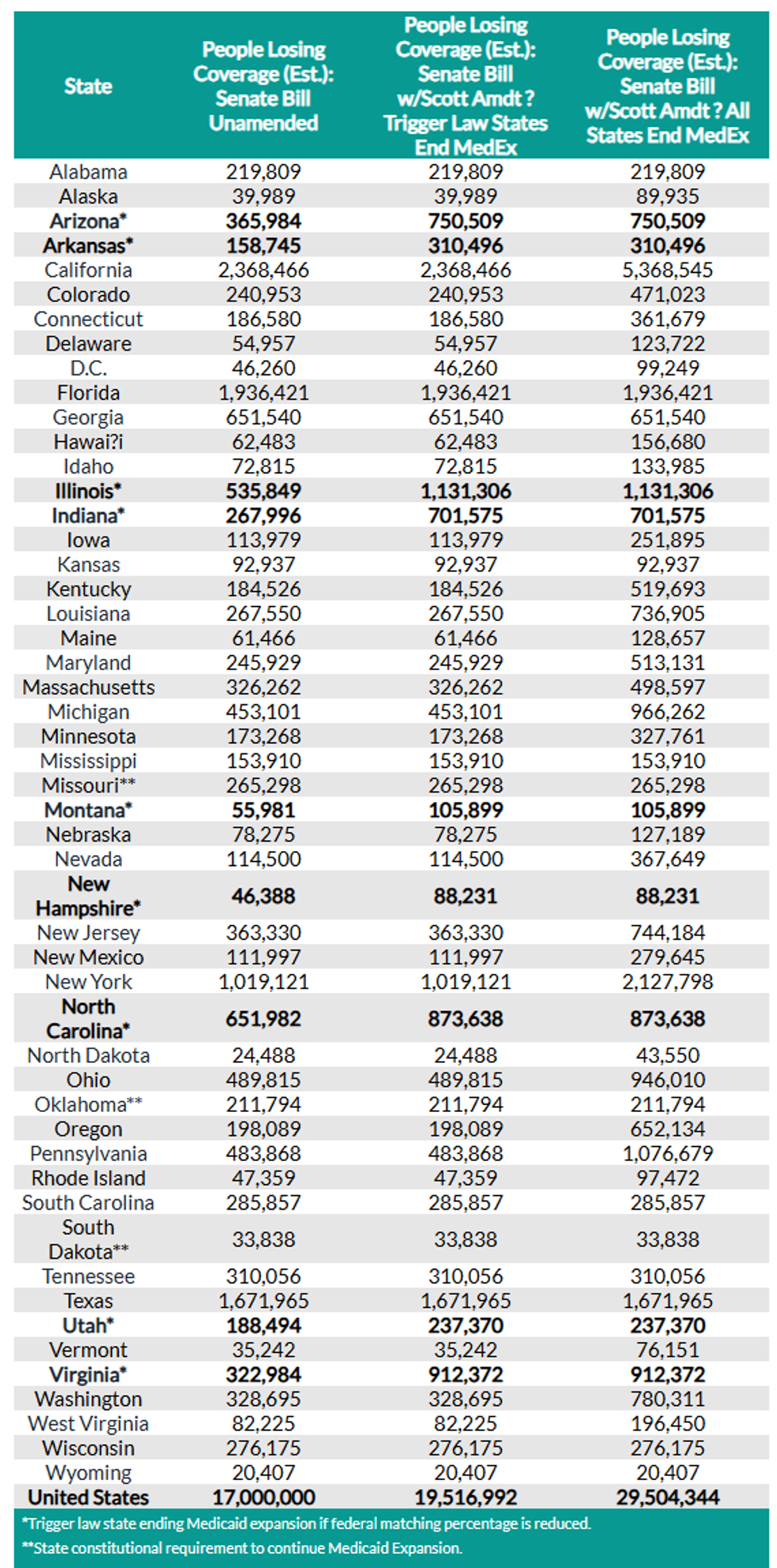 A chart shows how many people are estimated to lose healthcare coverage with each possible version of the GOP bill.(Chart: Congressional Joint Economic Committee Democrats)
There are enough Republicans in the Senate to pass the bill with Scott's amendment. However, they can afford no more than three defections. According to Politico, Sens. Rand Paul (R-Ky.) and Thom Tillis (R-N.C.) have signaled they will vote against the amendment.
Sen. Jim Justice (R-W.V.) also said he'd "have a hard time" voting yes on the bill if Scott's amendment passed. His state of West Virginia has the second-highest rate of people using federal medical assistance of any state in the country, behind only Mississippi.
Critics have called out Scott for lying to justify this line of cuts. In a recent Fox News appearance, Scott claimed that his new restrictions were necessary to stop Democrats who want to "give illegal aliens Medicaid benefits," even though they are not eligible for the program.
Scott's proposal has also brought renewed scrutiny to his past as a healthcare executive.
"Ironically enough, some of the claims against Scott's old hospital company revolved around exploiting Medicaid, and billing for services that patients didn't need," wrote Andrew Perez in Rolling Stone Monday.
In 2000, Scott's hospital company, HCA, was forced to pay $840 million in fines, penalties, and damages to resolve claims of unlawful billing practices in what was called the "largest government fraud settlement ever." Among the charges were that during Scott's tenure, the company overbilled Medicare and Medicaid by pretending patients were sicker than they actually were.
The company entered an additional settlement in 2003, paying out another $631 million to compensate for the money stolen from these and other government programs.
Scott himself was never criminally charged, but resigned in 1997 as the Department of Justice began to probe his company's activities. Despite the scandal, Scott not only became a U.S. senator, but is the wealthiest man in Congress, with a net worth of more than half a billion dollars.
The irony of this was not lost on Perez, who wrote: "A few decades later, Scott is now trying to extract a huge amount of money from state Medicaid funds to help finance Trump's latest round of tax cuts for the rich."

"When people can't get their benefits for any reason, that is a benefit cut," said one advocate.
A new analysis out Friday makes the case that cuts proposed by the Trump administration to Social Security operations nationwide will create a "significant new burden" for millions of people, particularly "those who live in rural areas or have transportation or mobility difficulties."
Those who collect Social Security benefits will no longer be able to update their direct deposit banking information solely by phone. Instead of verifying their identity via security questions over the phone, the agency will require those who rely on Social Security to use a multifactor authentication process that includes a one-time PIN code or to visit a social security office in person.
The left-leaning think tank behind the new analysis, the Center on Budget and Policy Priorities (CBPP), warned Friday that even though Trump officials within the SSA have claimed that the policy shift is designed to reduce fraud, "the agency's own figures show that direct deposit fraud is a very small problem—less than one-hundredth of one percent of benefits are misdirected."
A document from the agency gives "estimated burden figures," which indicates that nearly 2 million beneficiaries will need to visit a field office as a result of the changed process.
An April analysis from CBPP estimated that some 6 million live more than a 45-mile trip away from the nearest Social Security field office.
"The new PIN code requirement will be impossible for many beneficiaries to meet," according to the analysis from CBPP released Friday. "Many seniors and people with disabilities lack internet service, computers or smartphones, or the technological savvy to navigate SSA's online services."
What's more, the analysis states, "the PIN requirement expects callers to complete a multi-step, multifactor authentication and generate a PIN code while on the phone with an agent. Or if they don't have an account, they must hang up, establish an online account, then call back—a not-insignificant inconvenience when most callers to SSA do not reach an agent on the first try, and the wait time for a call back from SSA averages 2.5 hours."
Alex Lawson, executive director of Social Security Works, told Common Dreams on Friday that the CBPP analysis helps show how "the Trump administration and its goons are waging a full scale war against Social Security. They are forcing millions of Americans into Social Security offices at the same time they are cutting a huge percentage of the workforce."
"They are forcing millions of Americans into Social Security offices at the same time they are cutting a huge percentage of the workforce," Lawson added. "The Trump-Musk regime has one goal: Wreak Social Security so they can rob it. When people can't get their benefits for any reason, that is a benefit cut."
Trump, with the help of his billionaire advisor Elon Musk and the so-called Department of Government Efficiency, have endeavored to slash government spending and personnel. A tracker from The New York Times estimates that there has been a 5% staff reduction at SSA, but total planned reductions at the agency could ultimately cut staff by 17%.
Reporting from NPR from last week highlighted how workers at the SSA are struggling to keep up, with fewer staff working to serve over 70 million beneficiaries.