
SUBSCRIBE TO OUR FREE NEWSLETTER
Daily news & progressive opinion—funded by the people, not the corporations—delivered straight to your inbox.
5
#000000
#FFFFFF
To donate by check, phone, or other method, see our More Ways to Give page.


Daily news & progressive opinion—funded by the people, not the corporations—delivered straight to your inbox.
“Trump’s claims about inflation are false, and you can go to the grocery store and see it yourself,” said one economist.
A new poll shows US voters' approval of President Donald Trump's handling of the economy has hit an all-time low, even as the president and his officials insist the economy is the best in the world.
The latest Associated Press-NORC Center for Public Affairs Research poll released Thursday found that only 31% of voters approve of Trump's handling of the economy, the lowest figure in that survey throughout either of his two terms in office. Overall, 68% of voters said that the current state of the economy was "poor."
What's more, Trump's approval rating on the economy among Republican voters now stands at just 69%, a strikingly low figure for a president who has consistently commanded loyalty from the GOP base.
Despite the grim numbers, the president and his administration have continued to say that the US is now in the middle of an economic boom.
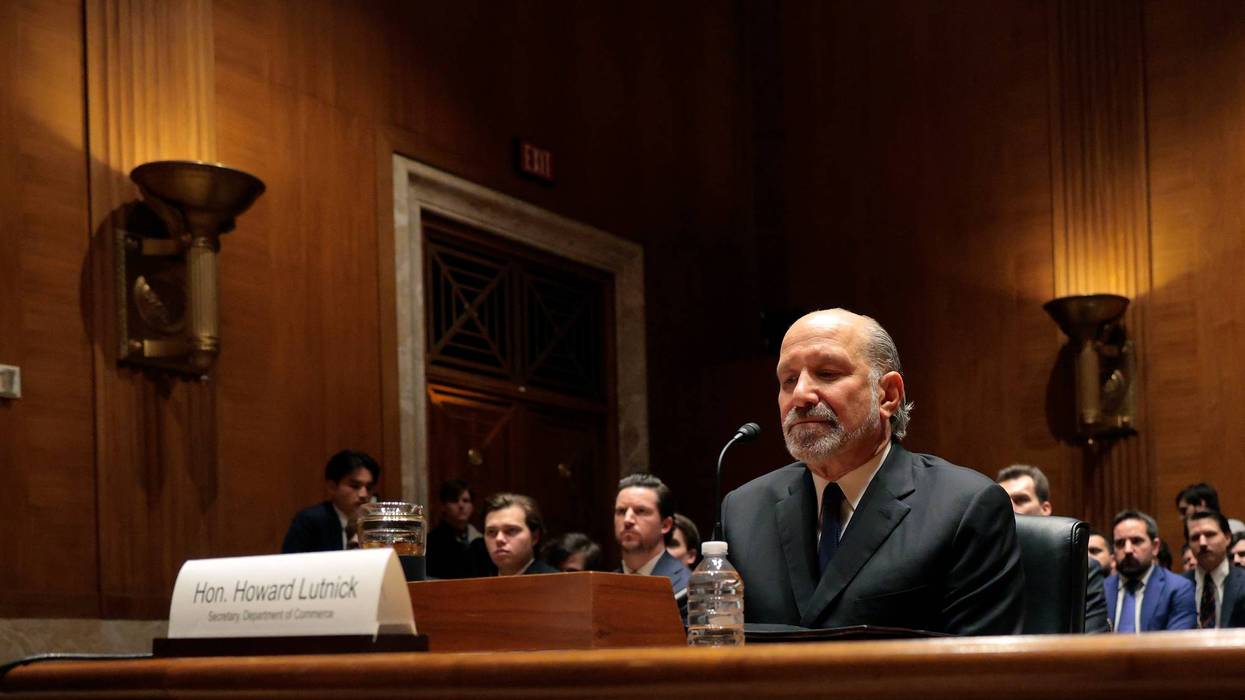
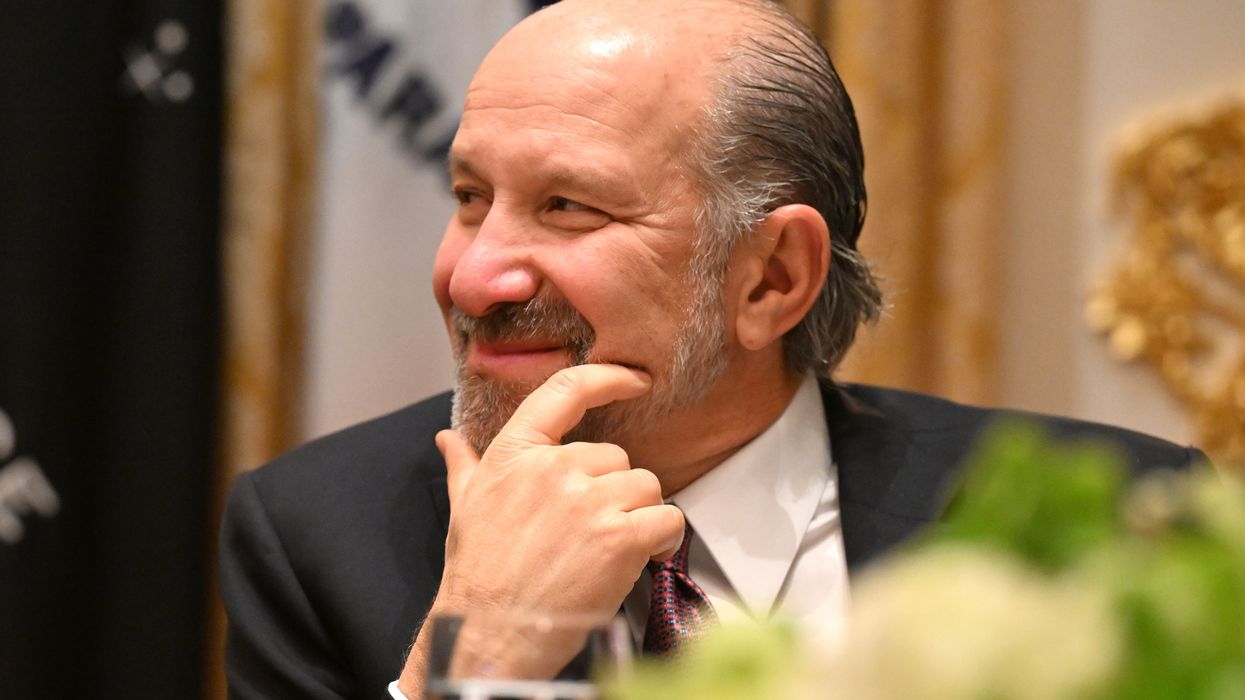
During a Thursday morning interview on CNBC, Commerce Secretary Howard Lutnick said that the US now has "the greatest $30 trillion economy in the world."
"We are doing great," Lutnick said. "Nothing bad is happening. Greatness is happening. We grew at 4% GDP! Come on!"
Lutnick: "Jay Powell is too afraid to lead the greatest $30t economy in the world. We should be leading with our front foot. Instead we are always leaning back as if something bad is happening. We are doing great. Nothing bad is happening. Greatness is happening. We're growing 4%… pic.twitter.com/uWqrlwpllE
— Aaron Rupar (@atrupar) December 11, 2025
Lutnick's message echoes the one Trump delivered earlier this week during a rally in Pennsylvania, where he said that voters' concerns about being able to afford basics such as groceries, electricity, and healthcare were a "hoax" concocted by Democrats.
"Prices are coming down very substantially," Trump falsely claimed during his speech. "But they have a new word. You know, they always have a hoax. The new word is affordability."
Trump on the US economy: “I said it the other day. And a lot of people misinterpreted it. They said ‘Oh he doesn’t realize prices are high.’ Prices are coming down very substantially. But they have a new word. You know, they always have a hoax. The new word is affordability.” pic.twitter.com/JkErFnkT1D
— Sahil Kapur (@sahilkapur) December 10, 2025
As NPR reported on Thursday, data shows that the prices of groceries and electricity have continued to rise throughout Trump's second term, directly contradicting his claims that prices are "coming down."
University of Michigan economist Betsey Stevenson told NPR that Trump is playing with fire by making false claims about prices when US consumers can see costs persistently going up.
"Trump's claims about inflation are false, and you can go to the grocery store and see it yourself," Stevenson said.
Even some members of Trump's own party are growing wary of him insisting that America is experiencing an unprecedented economic boom when voters feel otherwise.
Sen. Lisa Murkowski (R-Alaska) told The Hill that Trump's insistence on making happy talk about the economy would not fly with voters.
"You can’t call it a hoax and suggest that people are going to believe it," she said. "What you say matters."
An anonymous Republican senator also told The Hill that they were concerned about the optics of Trump building a massive luxury ballroom in the White House at a time when Americans say they are struggling financially.
"The cost of living just makes life very difficult on people," the senator stressed.
And Sen. Shelley Moore Capito (R-W.Va.) gently pushed back on Trump's messaging by telling CNN that "a lot of people are still having trouble making ends meet" in her state.
"We’re collecting all data we can to assess the economy’s health in this time when the gold standard data are under attack,” said the Economic Policy Institute's senior economist.
Amid President Donald Trump's efforts to conceal the harmful consequences of his economic policies by hiding key data and replacing economists who tell harsh truths with partisan yes-people, a leading US think tank on Monday announced a new digital dashboard "to provide an accountability check" against attempts to manipulate and mislead the public.
The Economic Policy Institute (EPI) says its new data accountability dashboard "serves as a one-stop shop" for economic data as federal statistic agencies (FSAs), once the "gold standard" for information, "face historically unprecedented threats from the Trump administration to their capacity and even their independence."
"This raises the specter of a future where FSA data cannot be relied upon to honestly report whether the US economy is experiencing dysfunction," EPI said.
In a bid to circumvent this, the EPI dashboard "displays a range of data not collected or disseminated by FSAs to shed some light on the economy during the pause in government data collection during the shutdown and—even more importantly—to provide an accountability check against efforts to manipulate FSA data in the future."
The federal statistical agencies (FSAs) that produce the gold standard economic data employers/investors/job seekers/workers/policymakers rely on to assess the health of the U.S. economy face unprecedented threats.We've pulled next-best data from non-FSA sources to help keep an eye on things. 1/
[image or embed]
— Economic Policy Institute (@epi.org) November 18, 2025 at 7:19 AM
As EPI senior economist Elise Gould explained in a statement: “The data collected by the federal statistical agencies are an incredibly valuable public good. While there would never be a good time to squander it, the absolute worst time to degrade data quality is when the economy is facing policy shocks that threaten to cause either a recession or an uptick of inflation."
"Given this urgency, we’re collecting all data we can to assess the economy’s health in this time when the gold standard data are under attack,” she added.
Trump's attempts to hide unfavorable economic data date back to his first administration, when he blocked or delayed economic analyses on the projected impacts of his tariffs. For example, half a dozen economists at the US Department of Agriculture (USDA) quit en masse in April 2019, claiming they suffered retaliation for publishing reports that shed negative light on the president's trade and taxation policies.
In a related move that year, the USDA abruptly relocated its Economic Research Service main office from Washington, DC to Kansas City, Missouri, prompting another wave of resignations. ERS publications—including reports on farm income, rural economies, and trade impacts—dropped sharply, with key analyses delayed or blocked. Critics, including former agency officials, argued that the move to Kansas City was intended to conceal negative impacts of Trump's trade policies from the public.
During Trump's second administration, Commerce Secretary Howard Lutnick disbanded the Federal Economic Statistics Advisory Committee (FESAC), a key body that worked under the Commerce Department’s Bureau of Economic Analysis to ensure that the federal government produces accurate data on economic indicators.
Trump also gutted the Bureau of Labor Statistics’ Technical Advisory Committee, which had advised the Department of Labor about how economic changes can impact data collection. In August, Trump fired BLS Commissioner Erika McEntarfer, baselessly accusing her of manipulating economic data to harm him politically by publishing a jobs report showing weak employment growth.
Two weeks later, the president nominated EJ Antoni, a senior economist at the Heritage Foundation described as a "partisan bomb thrower" who helped write Project 2025, a blueprint for a far-right overhaul of the federal government, to replace McEntarfer. Antoni stunned critics with suggestions including eliminating federal monthly jobs reports, and with his overall lack of data management experience. His nomination was later withdrawn amid mounting controversy.
Additionally, the Trump administration has summarily fired dozens of independent agency leaders, required every federal agency to have a White House liaison, and required ostensibly independent agencies to submit draft regulations to the Office of Management and Budget—headed by Project 2025 architect Russell Vought—for review before publication.
As Common Dreams reported, an analysis published in September by the Center on Budget and Policy Priorities detailed how the Trump administration's politicization of data, combined with funding cuts, is making it more difficult for experts to determine how the president's policies are impacting US households.
From ending tracking of the impacts of climate-driven extreme weather, to removing a study from the Department of Justice website that showed violent attacks by far-right extremists outpaced those committed by the left, to removing questions about gender identity from key crime surveys, the Trump administration's attacks on information transcend economic data.
"The assault on data, research, and facts is fundamental to Trump and his authoritarian regime," Liza Featherstone, a contributing editor at The New Republic, recently wrote. "He seems to understand that data provides the basis for arguments, and he does not want any arguments. He also understands that facts and knowledge can only be nourished and sustained by institutions and experts, so he is destroying those institutions and pink-slipping those experts."
"We must appreciate their importance and their stakes as well as he does, and remain as committed to the institutions, the data, the facts, and the experts as Trump is to their eradication," Featherstone added. "He has brought sincere zeal to their destruction, and we must bring an even greater passion to their restoration and renaissance. We will need it, as ours is the harder job."
"The billions of dollars of donations these oligarchic clans give candidates, parties, and particularly outside spending groups drown out the voices and concerns of ordinary voters," according to the report.
The ever-growing amount of billionaire cash in elections is poisoning U.S. democracy, according to a report published Wednesday by the advocacy group Americans for Tax Fairness—which found that the top 100 billionaire families spent an eye-popping $2.6 billion on federal contests in 2024.
That's more than twice the roughly $1 billion spent by individual billionaire donors in 2020, according to the group, and constitutes 160 times the amount of billionaire political spending since the 2010 Supreme Court decision Citizens United v. Federal Election Commission. That decision paved the way for the proliferation of super political action committees (PACs), a type of committee that can accept unlimited donations to spend on political activity.
Picking apart that $2.6 billion, there's a clear partisan skew: 70% of that billionaire money went to entities supporting Republican candidates, while 23% went to entities backing Democratic candidates. The other 7% went toward independent candidates—such as presidential contender Robert F. Kennedy Jr., who is now a Cabinet secretary—and committees that gave to candidates from both parties who champion specific issues, such as cryptocurrency.
That skew is particularly pronounced when it comes to the competitive Senate races that determined control of the chamber in 2024.
Looking at Senate contests in Arizona, Michigan, Montana, Nevada, Ohio, Pennsylvania, and Wisconsin, the authors of the report found that nearly 80% of the total billionaire cash in these races—which tallied $1.14 billion in outside spending—went to outside groups supporting Republican candidates, compared to 20% used to support Democratic hopefuls.
"The billions of dollars of donations these oligarchic clans give candidates, parties, and particularly outside spending groups drown out the voices and concerns of ordinary voters, endangering democracy and distorting public policy," the report states.
What's more, "this undue influence by the billionaire donor class over our government—always a concern and already present in mostly indirect ways—has found its full, frightening expression in the second Trump administration with the ascendancy of Elon Musk, the world's richest man and the biggest billionaire donor in the 2024 elections," the authors wrote.
Musk's ability to convert his extreme wealth into political influence in the Trump administration contrasts with reports that Musk pays relatively little in taxes. In 2018, for example, Musk paid nothing in federal income taxes even as his wealth soared, largely due to Tesla stock appreciation.
But Musk is just the "most notorious example of billionaires literally buying power," according to the group. ATF highlighted that billionaire Linda McMahon secured a position as President Donald Trump's education secretary after she and her ex-husband gave tens of millions to support Republican candidates, as did billionaire businessman Howard Lutnick, now the commerce secretary.
The report, titled Billionaires Buying Elections: They've Come to Collect, is the latest in ATF's "billionaires buying elections" series, and according to the group it is the most comprehensive because it covers both direct billionaire giving and "traces the indirect routes billionaire cash can take through campaign committees contributing to each other."
In its methodology section, the report gives the example of WinSenate—a super PAC that works to elect Democrats to the Senate—which did not report billionaire contributions, but received all of its funding from the Senate Majority PAC. Because the Senate Majority PAC got 19.9% of its funding from billionaires, the report counted WinSenate's share of billionaire spending at 19.9%.
According to the report, other big-name Republican megadonors in the 2024 cycle included shipping supply magnates Richard and Elizabeth Uihlein and Israeli-American billionaire Miriam Adelson.
According to the authors of the report, billionaires need to be taxed more.
"Tax policy—which has the most direct impact on billionaire wealth—is perhaps the most obviously affected by the money-for-power billionaire bargain," according to the group, which cites the current Republican push to extend parts of Trump's 2017 tax cuts that primarily benefit the wealthy as part of a general trend in tax policy over the past four decades to decrease taxes on the wealthiest people and most profitable businesses.
"The self-reinforcing combination of booming billionaire fortunes and weakening campaign finance laws continues to threaten our democratic form of government," according to the report. "As the outcome of the last presidential campaign amply demonstrates, until billionaires pay their fair share of taxes and we put effective curbs on their political spending, this threat will only grow."
The report calls for solutions like bolstering the estate tax and implementing a wealth tax, such as the Ultra-Millionaire Tax Act, a bill that was reintroduced by multiple Democratic senators in 2024. The newer version of the legislation would place a 2% annual tax on the net worth of households and trusts between $50 million and $1 billion, and impose an 1% annual surtax—so 3% tax overall—on the net worth of families and trusts that is above $1 billion.