SUBSCRIBE TO OUR FREE NEWSLETTER
Daily news & progressive opinion—funded by the people, not the corporations—delivered straight to your inbox.
5
#000000
#FFFFFF
To donate by check, phone, or other method, see our More Ways to Give page.
Daily news & progressive opinion—funded by the people, not the corporations—delivered straight to your inbox.
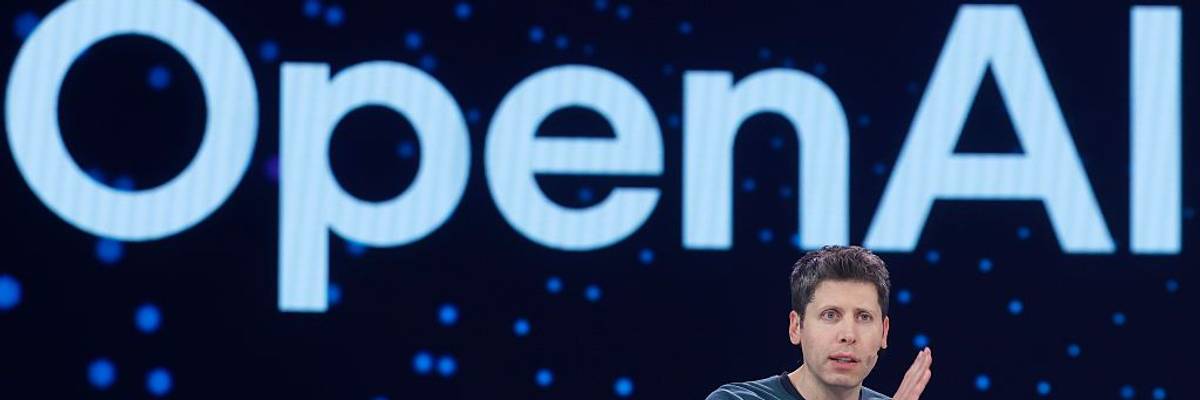
The public "has suffered irreparable harm—including lost loved ones, disturbing cyberattacks, and now a plausible threat of civilizational collapse," says one of the eight lawsuits.
Amid escalating concerns about artificial intelligence from within and beyond the industry and related demands for policymakers worldwide to swiftly enact strong safeguards, attorneys general from eight US states sued ChatGPT maker OpenAI on Wednesday.
"OpenAI designed a product to attract young users and keep them engaged for as long as possible so it could capture their extensive personal data for the company's commercial benefit," said Arizona Attorney General Kris Mayes in a statement.
Mayes, a Democrat, joined Republican attorneys general from Arkansas, Iowa, Idaho, Kansas, Montana, Nebraska, and West Virginia in filing separate but similar lawsuits against the company in each state's court system, focused on safety concerns, particularly for young users.
"OpenAI put Arizonans safety at risk by failing to implement adequate user protections or transparency measures, despite clear indications that minors were regularly interacting with its chatbot," Mayes asserted. "We're suing OpenAI to protect Arizona children and to hold the company accountable for its repeated violations of Arizona law."
The filing from Arkansas Attorney General Tim Griffin notes that "millions of consumers, including those in Arkansas, use ChatGPT to answer questions, solve problems, and make important life decisions," but the chatbot "has repeatedly produced unsafe responses."
In fact, as Iowa Attorney General Brenna Bird wrote, "because of defendants' repeated misrepresentations and insatiable hunger to win the AI race—even if it means recklessly introducing unsafe ChatGPT models to the public—mass shooters have been aided and abetted, vulnerable citizens have been coached on suicide, individuals with psychological conditions have experienced an exacerbation of symptoms, and minors have become addicted to a tool that feigns human compassion to collect their data with no parental oversight."
Idaho Attorney General Raúl Labrador explained that "by misleading the public into believing that OpenAI is a responsible actor and that ChatGPT was and is a safe, teen-appropriate tool that puts safety first, OpenAI has caused consumers in Idaho and elsewhere to trust and rely on OpenAI and ChatGPT more."
"This deepened trust and dependence has driven up ChatGPT's user base and engagement," he continued, "enabled it to collect vast quantities of sensitive and personal information, increased its revenue from paid subscribers and advertising partners, and solidified its early market advantage."
It's not just chatbot responses that have insiders and elected officials alarmed. As Kansas Attorney General Kris Kobach detailed:
OpenAI also recently admitted to a torrent of instances in which its models developed dangerous strategies and instructions and, in some cases, executed on them. These occurrences, which OpenAI has characterized as the models going "rogue," have included AI "agents" accessing the internet without permission, hacking into other companies, coordinating how to lie to and deceive their human users, developing secret methods of communication intended to be undetectable to humans, and writing themselves new instructions declaring that they no longer answer to "corporations or governments" and will prioritize other interests over the "artificial constructs of human civilization."
Montana Attorney General Austin Knudsen emphasized that "experts and insiders in the AI field nearly universally agree that AI companies must implement reasonable guardrails to protect the public from the foreseeable risk of harm. Even OpenAI and its CEO, Sam Altman, have warned that getting AI wrong might mean human extinction. And recent developments in AI have suggested that risk is both credible and closer than anyone previously thought."
Like his peers in other states, Nebraska Attorney General Michael Hilgers brought the case to compel OpenAI to comply with its legal obligations under state law, block the company "from continuing to engage in unreasonably dangerous activities that experts have warned could harm the economy, or compromise private or governmental computer systems, and to hold defendants accountable for the harms they have inflicted on Nebraskans, most notably vulnerable minors, as a result of their willful, dangerous, reckless, and unlawful conduct."
West Virginia Attorney General John "JB" McCuskey highlighted in his filing that "by jettisoning safety, OpenAI and its current leadership—particularly, Altman—have handsomely profited." While company leadership has delayed its initial public offering until next year, he wrote, "with current annual revenues of over $25 billion, OpenAI may IPO at a trillion-dollar valuation."
"But those revenues have come at great cost to the public," he stressed, "which has suffered irreparable harm—including lost loved ones, disturbing cyberattacks, and now a plausible threat of civilizational collapse—due to defendants' reckless behavior and ChatGPT's uniquely dangerous design."
An OpenAI spokesperson pushed back against the filings, saying that "we've built industry-leading age-specific protections into our product that many other AI products lack."
"While no system can be perfect, we'll continue to work with experts to inform our work and build additional safeguards, such as the parental controls, break reminders, and age-appropriate model protections that exist today," the spokesperson added. "We're committed to working with states on advancing pragmatic AI policies that apply to the entire AI industry—not just one company."
Politico reported that "this is not the first lawsuit launched against the AI company. Florida Attorney General James Uthmeier brought a lawsuit against the company in June over claims that it has pushed and marketed an unsafe product. Last month, Uthmeier also sought an injunction to stop OpenAI from developing its technology amid the lawsuit."
According to Reuters, "The company is also facing dozens of lawsuits by private plaintiffs, alleging ChatGPT helped users plan mass shootings or other violence."
Dear Common Dreams reader, It’s been nearly 30 years since I co-founded Common Dreams with my late wife, Lina Newhouser. We had the radical notion that journalism should serve the public good, not corporate profits. It was clear to us from the outset what it would take to build such a project. No paid advertisements. No corporate sponsors. No millionaire publisher telling us what to think or do. Many people said we wouldn't last a year, but we proved those doubters wrong. Together with a tremendous team of journalists and dedicated staff, we built an independent media outlet free from the constraints of profits and corporate control. Our mission has always been simple: To inform. To inspire. To ignite change for the common good. Building Common Dreams was not easy. Our survival was never guaranteed. When you take on the most powerful forces—Wall Street greed, fossil fuel industry destruction, Big Tech lobbyists, and uber-rich oligarchs who have spent billions upon billions rigging the economy and democracy in their favor—the only bulwark you have is supporters who believe in your work. But here’s the urgent message from me today. It's never been this bad out there. And it's never been this hard to keep us going. At the very moment Common Dreams is most needed, the threats we face are intensifying. We need your support now more than ever. We don't accept corporate advertising and never will. We don't have a paywall because we don't think people should be blocked from critical news based on their ability to pay. Everything we do is funded by the donations of readers like you. When everyone does the little they can afford, we are strong. But if that support retreats or dries up, so do we. Will you donate now to make sure Common Dreams not only survives but thrives? —Craig Brown, Co-founder |
Amid escalating concerns about artificial intelligence from within and beyond the industry and related demands for policymakers worldwide to swiftly enact strong safeguards, attorneys general from eight US states sued ChatGPT maker OpenAI on Wednesday.
"OpenAI designed a product to attract young users and keep them engaged for as long as possible so it could capture their extensive personal data for the company's commercial benefit," said Arizona Attorney General Kris Mayes in a statement.
Mayes, a Democrat, joined Republican attorneys general from Arkansas, Iowa, Idaho, Kansas, Montana, Nebraska, and West Virginia in filing separate but similar lawsuits against the company in each state's court system, focused on safety concerns, particularly for young users.
"OpenAI put Arizonans safety at risk by failing to implement adequate user protections or transparency measures, despite clear indications that minors were regularly interacting with its chatbot," Mayes asserted. "We're suing OpenAI to protect Arizona children and to hold the company accountable for its repeated violations of Arizona law."
The filing from Arkansas Attorney General Tim Griffin notes that "millions of consumers, including those in Arkansas, use ChatGPT to answer questions, solve problems, and make important life decisions," but the chatbot "has repeatedly produced unsafe responses."
In fact, as Iowa Attorney General Brenna Bird wrote, "because of defendants' repeated misrepresentations and insatiable hunger to win the AI race—even if it means recklessly introducing unsafe ChatGPT models to the public—mass shooters have been aided and abetted, vulnerable citizens have been coached on suicide, individuals with psychological conditions have experienced an exacerbation of symptoms, and minors have become addicted to a tool that feigns human compassion to collect their data with no parental oversight."
Idaho Attorney General Raúl Labrador explained that "by misleading the public into believing that OpenAI is a responsible actor and that ChatGPT was and is a safe, teen-appropriate tool that puts safety first, OpenAI has caused consumers in Idaho and elsewhere to trust and rely on OpenAI and ChatGPT more."
"This deepened trust and dependence has driven up ChatGPT's user base and engagement," he continued, "enabled it to collect vast quantities of sensitive and personal information, increased its revenue from paid subscribers and advertising partners, and solidified its early market advantage."
It's not just chatbot responses that have insiders and elected officials alarmed. As Kansas Attorney General Kris Kobach detailed:
OpenAI also recently admitted to a torrent of instances in which its models developed dangerous strategies and instructions and, in some cases, executed on them. These occurrences, which OpenAI has characterized as the models going "rogue," have included AI "agents" accessing the internet without permission, hacking into other companies, coordinating how to lie to and deceive their human users, developing secret methods of communication intended to be undetectable to humans, and writing themselves new instructions declaring that they no longer answer to "corporations or governments" and will prioritize other interests over the "artificial constructs of human civilization."
Montana Attorney General Austin Knudsen emphasized that "experts and insiders in the AI field nearly universally agree that AI companies must implement reasonable guardrails to protect the public from the foreseeable risk of harm. Even OpenAI and its CEO, Sam Altman, have warned that getting AI wrong might mean human extinction. And recent developments in AI have suggested that risk is both credible and closer than anyone previously thought."
Like his peers in other states, Nebraska Attorney General Michael Hilgers brought the case to compel OpenAI to comply with its legal obligations under state law, block the company "from continuing to engage in unreasonably dangerous activities that experts have warned could harm the economy, or compromise private or governmental computer systems, and to hold defendants accountable for the harms they have inflicted on Nebraskans, most notably vulnerable minors, as a result of their willful, dangerous, reckless, and unlawful conduct."
West Virginia Attorney General John "JB" McCuskey highlighted in his filing that "by jettisoning safety, OpenAI and its current leadership—particularly, Altman—have handsomely profited." While company leadership has delayed its initial public offering until next year, he wrote, "with current annual revenues of over $25 billion, OpenAI may IPO at a trillion-dollar valuation."
"But those revenues have come at great cost to the public," he stressed, "which has suffered irreparable harm—including lost loved ones, disturbing cyberattacks, and now a plausible threat of civilizational collapse—due to defendants' reckless behavior and ChatGPT's uniquely dangerous design."
An OpenAI spokesperson pushed back against the filings, saying that "we've built industry-leading age-specific protections into our product that many other AI products lack."
"While no system can be perfect, we'll continue to work with experts to inform our work and build additional safeguards, such as the parental controls, break reminders, and age-appropriate model protections that exist today," the spokesperson added. "We're committed to working with states on advancing pragmatic AI policies that apply to the entire AI industry—not just one company."
Politico reported that "this is not the first lawsuit launched against the AI company. Florida Attorney General James Uthmeier brought a lawsuit against the company in June over claims that it has pushed and marketed an unsafe product. Last month, Uthmeier also sought an injunction to stop OpenAI from developing its technology amid the lawsuit."
According to Reuters, "The company is also facing dozens of lawsuits by private plaintiffs, alleging ChatGPT helped users plan mass shootings or other violence."
Amid escalating concerns about artificial intelligence from within and beyond the industry and related demands for policymakers worldwide to swiftly enact strong safeguards, attorneys general from eight US states sued ChatGPT maker OpenAI on Wednesday.
"OpenAI designed a product to attract young users and keep them engaged for as long as possible so it could capture their extensive personal data for the company's commercial benefit," said Arizona Attorney General Kris Mayes in a statement.
Mayes, a Democrat, joined Republican attorneys general from Arkansas, Iowa, Idaho, Kansas, Montana, Nebraska, and West Virginia in filing separate but similar lawsuits against the company in each state's court system, focused on safety concerns, particularly for young users.
"OpenAI put Arizonans safety at risk by failing to implement adequate user protections or transparency measures, despite clear indications that minors were regularly interacting with its chatbot," Mayes asserted. "We're suing OpenAI to protect Arizona children and to hold the company accountable for its repeated violations of Arizona law."
The filing from Arkansas Attorney General Tim Griffin notes that "millions of consumers, including those in Arkansas, use ChatGPT to answer questions, solve problems, and make important life decisions," but the chatbot "has repeatedly produced unsafe responses."
In fact, as Iowa Attorney General Brenna Bird wrote, "because of defendants' repeated misrepresentations and insatiable hunger to win the AI race—even if it means recklessly introducing unsafe ChatGPT models to the public—mass shooters have been aided and abetted, vulnerable citizens have been coached on suicide, individuals with psychological conditions have experienced an exacerbation of symptoms, and minors have become addicted to a tool that feigns human compassion to collect their data with no parental oversight."
Idaho Attorney General Raúl Labrador explained that "by misleading the public into believing that OpenAI is a responsible actor and that ChatGPT was and is a safe, teen-appropriate tool that puts safety first, OpenAI has caused consumers in Idaho and elsewhere to trust and rely on OpenAI and ChatGPT more."
"This deepened trust and dependence has driven up ChatGPT's user base and engagement," he continued, "enabled it to collect vast quantities of sensitive and personal information, increased its revenue from paid subscribers and advertising partners, and solidified its early market advantage."
It's not just chatbot responses that have insiders and elected officials alarmed. As Kansas Attorney General Kris Kobach detailed:
OpenAI also recently admitted to a torrent of instances in which its models developed dangerous strategies and instructions and, in some cases, executed on them. These occurrences, which OpenAI has characterized as the models going "rogue," have included AI "agents" accessing the internet without permission, hacking into other companies, coordinating how to lie to and deceive their human users, developing secret methods of communication intended to be undetectable to humans, and writing themselves new instructions declaring that they no longer answer to "corporations or governments" and will prioritize other interests over the "artificial constructs of human civilization."
Montana Attorney General Austin Knudsen emphasized that "experts and insiders in the AI field nearly universally agree that AI companies must implement reasonable guardrails to protect the public from the foreseeable risk of harm. Even OpenAI and its CEO, Sam Altman, have warned that getting AI wrong might mean human extinction. And recent developments in AI have suggested that risk is both credible and closer than anyone previously thought."
Like his peers in other states, Nebraska Attorney General Michael Hilgers brought the case to compel OpenAI to comply with its legal obligations under state law, block the company "from continuing to engage in unreasonably dangerous activities that experts have warned could harm the economy, or compromise private or governmental computer systems, and to hold defendants accountable for the harms they have inflicted on Nebraskans, most notably vulnerable minors, as a result of their willful, dangerous, reckless, and unlawful conduct."
West Virginia Attorney General John "JB" McCuskey highlighted in his filing that "by jettisoning safety, OpenAI and its current leadership—particularly, Altman—have handsomely profited." While company leadership has delayed its initial public offering until next year, he wrote, "with current annual revenues of over $25 billion, OpenAI may IPO at a trillion-dollar valuation."
"But those revenues have come at great cost to the public," he stressed, "which has suffered irreparable harm—including lost loved ones, disturbing cyberattacks, and now a plausible threat of civilizational collapse—due to defendants' reckless behavior and ChatGPT's uniquely dangerous design."
An OpenAI spokesperson pushed back against the filings, saying that "we've built industry-leading age-specific protections into our product that many other AI products lack."
"While no system can be perfect, we'll continue to work with experts to inform our work and build additional safeguards, such as the parental controls, break reminders, and age-appropriate model protections that exist today," the spokesperson added. "We're committed to working with states on advancing pragmatic AI policies that apply to the entire AI industry—not just one company."
Politico reported that "this is not the first lawsuit launched against the AI company. Florida Attorney General James Uthmeier brought a lawsuit against the company in June over claims that it has pushed and marketed an unsafe product. Last month, Uthmeier also sought an injunction to stop OpenAI from developing its technology amid the lawsuit."
According to Reuters, "The company is also facing dozens of lawsuits by private plaintiffs, alleging ChatGPT helped users plan mass shootings or other violence."