SUBSCRIBE TO OUR FREE NEWSLETTER
Daily news & progressive opinion—funded by the people, not the corporations—delivered straight to your inbox.
5
#000000
#FFFFFF
To donate by check, phone, or other method, see our More Ways to Give page.
Daily news & progressive opinion—funded by the people, not the corporations—delivered straight to your inbox.
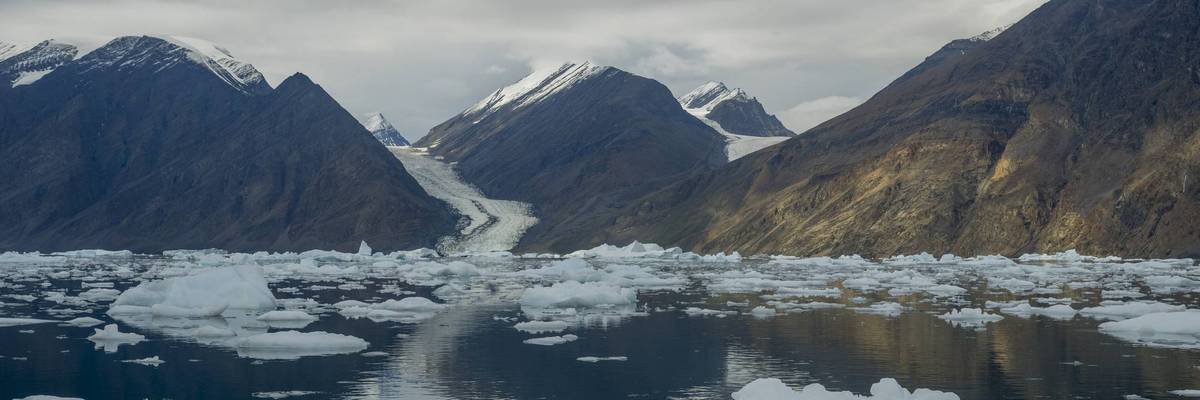
A tidewater glacier flowing down through a valley from the Greenland Ice Cap on July 14, 2026.
"For two decades," said one of the report's authors, "it has documented conditions across the Arctic system, bringing together physical and social sciences with real-world observations/data and consistent updates."
The Trump administration has reportedly decided to yank federal funding from an annual National Oceanic and Atmospheric Administration report that examined the state of the Arctic, which is warming significantly faster than other regions of the world as continued fossil fuel extraction and use drive up global temperatures.
Politico, which first reported the decision, noted that the move "jeopardizes public dissemination of the report that NOAA has published since 2006. It has previously been available on the agency’s website, requires NOAA staff for its production, and pools data from NOAA scientists for many of its findings."
Zack Labe, a climate scientist who has been an author on NOAA’s peer-reviewed Arctic Report Card since 2020, wrote on social media that the Trump administration's decision "is truly devastating."
"The Arctic Report Card has been one of my favorite scientific endeavors," Labe wrote. "For two decades, it has documented conditions across the Arctic system, bringing together physical and social sciences with real-world observations/data and consistent updates."
Speaking to the science news outlet EOS, Labe warned that "the loss of the Arctic Report Card would be significant not only for the scientific community, but also for decision-makers and the public."
"Written for a broad audience and developed by more than 100 scientists from around the world, the report is an important resource for consistently documenting changes in one of the fastest warming regions on our planet," Labe added. "Discontinuing it would create a significant gap in our ability to track and connect these changes from year to year, with implications for people and communities around the world."
Last year's edition of the report card found that "surface air temperatures across the Arctic from October 2024 through September 2025 were the warmest recorded since 1900."
"The last 10 years are the 10 warmest on record in the Arctic," the report observed.
The Trump administration, packed with fossil fuel industry allies and headed by a climate denier, has worked aggressively to gut federal initiatives designed to track the worsening impact of the global climate emergency. Since taking power last year, the administration has dismissed government scientists, scrubbed climate information from federal websites, stopped updating a database that tracked the country's costliest weather disasters, and picked a climate denier to oversee the federal government's flagship climate report.
Rick Thoman, an Arctic climate specialist, called the Trump administration's latest move "devastating news for Arctic environmental monitoring."
Dear Common Dreams reader, It’s been nearly 30 years since I co-founded Common Dreams with my late wife, Lina Newhouser. We had the radical notion that journalism should serve the public good, not corporate profits. It was clear to us from the outset what it would take to build such a project. No paid advertisements. No corporate sponsors. No millionaire publisher telling us what to think or do. Many people said we wouldn't last a year, but we proved those doubters wrong. Together with a tremendous team of journalists and dedicated staff, we built an independent media outlet free from the constraints of profits and corporate control. Our mission has always been simple: To inform. To inspire. To ignite change for the common good. Building Common Dreams was not easy. Our survival was never guaranteed. When you take on the most powerful forces—Wall Street greed, fossil fuel industry destruction, Big Tech lobbyists, and uber-rich oligarchs who have spent billions upon billions rigging the economy and democracy in their favor—the only bulwark you have is supporters who believe in your work. But here’s the urgent message from me today. It's never been this bad out there. And it's never been this hard to keep us going. At the very moment Common Dreams is most needed, the threats we face are intensifying. We need your support now more than ever. We don't accept corporate advertising and never will. We don't have a paywall because we don't think people should be blocked from critical news based on their ability to pay. Everything we do is funded by the donations of readers like you. When everyone does the little they can afford, we are strong. But if that support retreats or dries up, so do we. Will you donate now to make sure Common Dreams not only survives but thrives? —Craig Brown, Co-founder |
The Trump administration has reportedly decided to yank federal funding from an annual National Oceanic and Atmospheric Administration report that examined the state of the Arctic, which is warming significantly faster than other regions of the world as continued fossil fuel extraction and use drive up global temperatures.
Politico, which first reported the decision, noted that the move "jeopardizes public dissemination of the report that NOAA has published since 2006. It has previously been available on the agency’s website, requires NOAA staff for its production, and pools data from NOAA scientists for many of its findings."
Zack Labe, a climate scientist who has been an author on NOAA’s peer-reviewed Arctic Report Card since 2020, wrote on social media that the Trump administration's decision "is truly devastating."
"The Arctic Report Card has been one of my favorite scientific endeavors," Labe wrote. "For two decades, it has documented conditions across the Arctic system, bringing together physical and social sciences with real-world observations/data and consistent updates."
Speaking to the science news outlet EOS, Labe warned that "the loss of the Arctic Report Card would be significant not only for the scientific community, but also for decision-makers and the public."
"Written for a broad audience and developed by more than 100 scientists from around the world, the report is an important resource for consistently documenting changes in one of the fastest warming regions on our planet," Labe added. "Discontinuing it would create a significant gap in our ability to track and connect these changes from year to year, with implications for people and communities around the world."
Last year's edition of the report card found that "surface air temperatures across the Arctic from October 2024 through September 2025 were the warmest recorded since 1900."
"The last 10 years are the 10 warmest on record in the Arctic," the report observed.
The Trump administration, packed with fossil fuel industry allies and headed by a climate denier, has worked aggressively to gut federal initiatives designed to track the worsening impact of the global climate emergency. Since taking power last year, the administration has dismissed government scientists, scrubbed climate information from federal websites, stopped updating a database that tracked the country's costliest weather disasters, and picked a climate denier to oversee the federal government's flagship climate report.
Rick Thoman, an Arctic climate specialist, called the Trump administration's latest move "devastating news for Arctic environmental monitoring."
The Trump administration has reportedly decided to yank federal funding from an annual National Oceanic and Atmospheric Administration report that examined the state of the Arctic, which is warming significantly faster than other regions of the world as continued fossil fuel extraction and use drive up global temperatures.
Politico, which first reported the decision, noted that the move "jeopardizes public dissemination of the report that NOAA has published since 2006. It has previously been available on the agency’s website, requires NOAA staff for its production, and pools data from NOAA scientists for many of its findings."
Zack Labe, a climate scientist who has been an author on NOAA’s peer-reviewed Arctic Report Card since 2020, wrote on social media that the Trump administration's decision "is truly devastating."
"The Arctic Report Card has been one of my favorite scientific endeavors," Labe wrote. "For two decades, it has documented conditions across the Arctic system, bringing together physical and social sciences with real-world observations/data and consistent updates."
Speaking to the science news outlet EOS, Labe warned that "the loss of the Arctic Report Card would be significant not only for the scientific community, but also for decision-makers and the public."
"Written for a broad audience and developed by more than 100 scientists from around the world, the report is an important resource for consistently documenting changes in one of the fastest warming regions on our planet," Labe added. "Discontinuing it would create a significant gap in our ability to track and connect these changes from year to year, with implications for people and communities around the world."
Last year's edition of the report card found that "surface air temperatures across the Arctic from October 2024 through September 2025 were the warmest recorded since 1900."
"The last 10 years are the 10 warmest on record in the Arctic," the report observed.
The Trump administration, packed with fossil fuel industry allies and headed by a climate denier, has worked aggressively to gut federal initiatives designed to track the worsening impact of the global climate emergency. Since taking power last year, the administration has dismissed government scientists, scrubbed climate information from federal websites, stopped updating a database that tracked the country's costliest weather disasters, and picked a climate denier to oversee the federal government's flagship climate report.
Rick Thoman, an Arctic climate specialist, called the Trump administration's latest move "devastating news for Arctic environmental monitoring."