SUBSCRIBE TO OUR FREE NEWSLETTER
Daily news & progressive opinion—funded by the people, not the corporations—delivered straight to your inbox.
5
#000000
#FFFFFF
To donate by check, phone, or other method, see our More Ways to Give page.
Daily news & progressive opinion—funded by the people, not the corporations—delivered straight to your inbox.
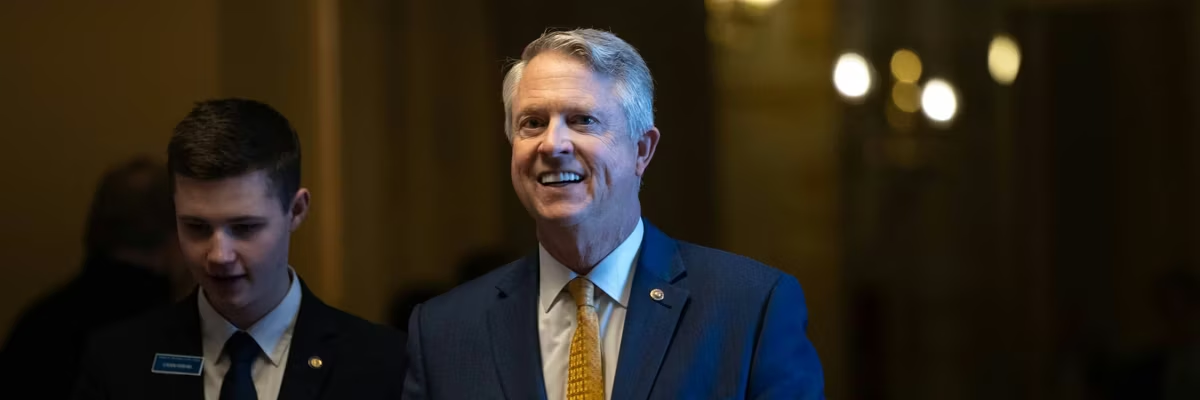
Sen. Roger Marshall (R-Kan.) arrives for a vote at the US Capitol on January 15, 2026, in Washington, DC.
One foreign policy analyst said the senator was effectively admitting that “we’re literally committing crimes against humanity.”
A Republican US senator proudly declared that President Donald Trump's blockade of Iranian ports is "starving" Iranians on Wednesday, in yet another piece of counterevidence to the idea that the president's war there is meant to "liberate" the people.
"We have this embargo working, this blockade, and we're literally starving them," said Sen. Roger Marshall (R-Kan.) during an interview on Newsmax. "Both financially, and they can't feed themselves either, very long."
During the same interview, Marshall said Trump must “take everything into consideration” to finish the war against Iran and compared the decision Trump must make to "President [Harry] Truman’s decision on dropping the bomb, and D-Day for President [then-Gen. Dwight] Eisenhower.”
The comments came after Trump announced that he would extend a two-week ceasefire while continuing his naval blockade of Iranian ports, enacted as a counter to Iran's closure of the Strait of Hormuz, which has caused chaos and inflation across the global economy.
It was yet another 180-degree spin from Trump, who just days before had issued another genocidal threat to "blow up" the "whole country" of Iran, including civilian infrastructure, if it did not capitulate to his demands in a ceasefire agreement, which was roundly condemned by international organizations as a pledge to commit war crimes.
The Iranian population suffered tremendously under Trump's "maximum pressure sanctions" before the war, which fueled 58% food inflation year over year in September 2025.
The war launched by the US and Israel in February has only heightened the pain: Last month, Iran's inflation rate hit a record 72%, and the cost of its staple food basket soared to 134% compared with the previous year.
More than 750,000 jobs had been lost as of last week, and the United Nations Development Program predicted that Iran's economy could contract by as much as 10% as a result of the war. In just 40 days of war, the UNDP found that 3.5-4.1 million Iranians have fallen below the poverty line.
Trump's blockade of Iranian ports has tightened the noose even more, cutting off about 90% of the nation's maritime trade.
According to The Wall Street Journal, the blockade immediately affected nearly a million tons of grain and oilseeds. Prices for commodities like rice, which have already increased sevenfold in recent months, are expected to soar even further.
While Iran is much larger and more self-sufficient than Cuba, the blockade mirrors the economic warfare Trump has waged against the island in what he has said is an effort to force its leadership from power or outright "take" it for the US.
The blockade of fuel shipments to the island enacted through tariff threats has paralyzed its economy and resulted in rolling blackouts that have disrupted hospital care, agriculture, and every other facet of daily life for the Cuban people, drawing condemnation from United Nations human rights experts, who have called it a "serious violation of international law" and an act of "extreme unilateral economic coercion."
The Trump administration and its cheerleaders in Congress have not been shy about their goal for sanctions in Iran—to inflict suffering upon the people of Iran in hopes that they will rise up and overthrow their government. But Marshall's declaration that Trump was trying to "starve" Iran was seen by critics as an even more explicit endorsement of collective punishment than most.
Dylan Williams, the vice president for government affairs at the Center for International Policy, said it confirmed that Trump was pitching "genocide as a tactic in Iran."
In less than two months, at least 1,700 civilians have been killed, including more than 250 children, according to the US-based Human Rights Activist News Agency. More than 26,000 people have been injured, according to the Iranian Health Ministry.
The international affairs researcher Derek Davison wrote that by cheering a policy he said was "literally starving" Iran, Marshall was basically saying: "We're literally committing crimes against humanity. It's awesome."
Dear Common Dreams reader, It’s been nearly 30 years since I co-founded Common Dreams with my late wife, Lina Newhouser. We had the radical notion that journalism should serve the public good, not corporate profits. It was clear to us from the outset what it would take to build such a project. No paid advertisements. No corporate sponsors. No millionaire publisher telling us what to think or do. Many people said we wouldn't last a year, but we proved those doubters wrong. Together with a tremendous team of journalists and dedicated staff, we built an independent media outlet free from the constraints of profits and corporate control. Our mission has always been simple: To inform. To inspire. To ignite change for the common good. Building Common Dreams was not easy. Our survival was never guaranteed. When you take on the most powerful forces—Wall Street greed, fossil fuel industry destruction, Big Tech lobbyists, and uber-rich oligarchs who have spent billions upon billions rigging the economy and democracy in their favor—the only bulwark you have is supporters who believe in your work. But here’s the urgent message from me today. It's never been this bad out there. And it's never been this hard to keep us going. At the very moment Common Dreams is most needed, the threats we face are intensifying. We need your support now more than ever. We don't accept corporate advertising and never will. We don't have a paywall because we don't think people should be blocked from critical news based on their ability to pay. Everything we do is funded by the donations of readers like you. When everyone does the little they can afford, we are strong. But if that support retreats or dries up, so do we. Will you donate now to make sure Common Dreams not only survives but thrives? —Craig Brown, Co-founder |
A Republican US senator proudly declared that President Donald Trump's blockade of Iranian ports is "starving" Iranians on Wednesday, in yet another piece of counterevidence to the idea that the president's war there is meant to "liberate" the people.
"We have this embargo working, this blockade, and we're literally starving them," said Sen. Roger Marshall (R-Kan.) during an interview on Newsmax. "Both financially, and they can't feed themselves either, very long."
During the same interview, Marshall said Trump must “take everything into consideration” to finish the war against Iran and compared the decision Trump must make to "President [Harry] Truman’s decision on dropping the bomb, and D-Day for President [then-Gen. Dwight] Eisenhower.”
The comments came after Trump announced that he would extend a two-week ceasefire while continuing his naval blockade of Iranian ports, enacted as a counter to Iran's closure of the Strait of Hormuz, which has caused chaos and inflation across the global economy.
It was yet another 180-degree spin from Trump, who just days before had issued another genocidal threat to "blow up" the "whole country" of Iran, including civilian infrastructure, if it did not capitulate to his demands in a ceasefire agreement, which was roundly condemned by international organizations as a pledge to commit war crimes.
The Iranian population suffered tremendously under Trump's "maximum pressure sanctions" before the war, which fueled 58% food inflation year over year in September 2025.
The war launched by the US and Israel in February has only heightened the pain: Last month, Iran's inflation rate hit a record 72%, and the cost of its staple food basket soared to 134% compared with the previous year.
More than 750,000 jobs had been lost as of last week, and the United Nations Development Program predicted that Iran's economy could contract by as much as 10% as a result of the war. In just 40 days of war, the UNDP found that 3.5-4.1 million Iranians have fallen below the poverty line.
Trump's blockade of Iranian ports has tightened the noose even more, cutting off about 90% of the nation's maritime trade.
According to The Wall Street Journal, the blockade immediately affected nearly a million tons of grain and oilseeds. Prices for commodities like rice, which have already increased sevenfold in recent months, are expected to soar even further.
While Iran is much larger and more self-sufficient than Cuba, the blockade mirrors the economic warfare Trump has waged against the island in what he has said is an effort to force its leadership from power or outright "take" it for the US.
The blockade of fuel shipments to the island enacted through tariff threats has paralyzed its economy and resulted in rolling blackouts that have disrupted hospital care, agriculture, and every other facet of daily life for the Cuban people, drawing condemnation from United Nations human rights experts, who have called it a "serious violation of international law" and an act of "extreme unilateral economic coercion."
The Trump administration and its cheerleaders in Congress have not been shy about their goal for sanctions in Iran—to inflict suffering upon the people of Iran in hopes that they will rise up and overthrow their government. But Marshall's declaration that Trump was trying to "starve" Iran was seen by critics as an even more explicit endorsement of collective punishment than most.
Dylan Williams, the vice president for government affairs at the Center for International Policy, said it confirmed that Trump was pitching "genocide as a tactic in Iran."
In less than two months, at least 1,700 civilians have been killed, including more than 250 children, according to the US-based Human Rights Activist News Agency. More than 26,000 people have been injured, according to the Iranian Health Ministry.
The international affairs researcher Derek Davison wrote that by cheering a policy he said was "literally starving" Iran, Marshall was basically saying: "We're literally committing crimes against humanity. It's awesome."
A Republican US senator proudly declared that President Donald Trump's blockade of Iranian ports is "starving" Iranians on Wednesday, in yet another piece of counterevidence to the idea that the president's war there is meant to "liberate" the people.
"We have this embargo working, this blockade, and we're literally starving them," said Sen. Roger Marshall (R-Kan.) during an interview on Newsmax. "Both financially, and they can't feed themselves either, very long."
During the same interview, Marshall said Trump must “take everything into consideration” to finish the war against Iran and compared the decision Trump must make to "President [Harry] Truman’s decision on dropping the bomb, and D-Day for President [then-Gen. Dwight] Eisenhower.”
The comments came after Trump announced that he would extend a two-week ceasefire while continuing his naval blockade of Iranian ports, enacted as a counter to Iran's closure of the Strait of Hormuz, which has caused chaos and inflation across the global economy.
It was yet another 180-degree spin from Trump, who just days before had issued another genocidal threat to "blow up" the "whole country" of Iran, including civilian infrastructure, if it did not capitulate to his demands in a ceasefire agreement, which was roundly condemned by international organizations as a pledge to commit war crimes.
The Iranian population suffered tremendously under Trump's "maximum pressure sanctions" before the war, which fueled 58% food inflation year over year in September 2025.
The war launched by the US and Israel in February has only heightened the pain: Last month, Iran's inflation rate hit a record 72%, and the cost of its staple food basket soared to 134% compared with the previous year.
More than 750,000 jobs had been lost as of last week, and the United Nations Development Program predicted that Iran's economy could contract by as much as 10% as a result of the war. In just 40 days of war, the UNDP found that 3.5-4.1 million Iranians have fallen below the poverty line.
Trump's blockade of Iranian ports has tightened the noose even more, cutting off about 90% of the nation's maritime trade.
According to The Wall Street Journal, the blockade immediately affected nearly a million tons of grain and oilseeds. Prices for commodities like rice, which have already increased sevenfold in recent months, are expected to soar even further.
While Iran is much larger and more self-sufficient than Cuba, the blockade mirrors the economic warfare Trump has waged against the island in what he has said is an effort to force its leadership from power or outright "take" it for the US.
The blockade of fuel shipments to the island enacted through tariff threats has paralyzed its economy and resulted in rolling blackouts that have disrupted hospital care, agriculture, and every other facet of daily life for the Cuban people, drawing condemnation from United Nations human rights experts, who have called it a "serious violation of international law" and an act of "extreme unilateral economic coercion."
The Trump administration and its cheerleaders in Congress have not been shy about their goal for sanctions in Iran—to inflict suffering upon the people of Iran in hopes that they will rise up and overthrow their government. But Marshall's declaration that Trump was trying to "starve" Iran was seen by critics as an even more explicit endorsement of collective punishment than most.
Dylan Williams, the vice president for government affairs at the Center for International Policy, said it confirmed that Trump was pitching "genocide as a tactic in Iran."
In less than two months, at least 1,700 civilians have been killed, including more than 250 children, according to the US-based Human Rights Activist News Agency. More than 26,000 people have been injured, according to the Iranian Health Ministry.
The international affairs researcher Derek Davison wrote that by cheering a policy he said was "literally starving" Iran, Marshall was basically saying: "We're literally committing crimes against humanity. It's awesome."