5
#000000
#FFFFFF
To donate by check, phone, or other method, see our More Ways to Give page.
Daily news & progressive opinion—funded by the people, not the corporations—delivered straight to your inbox.
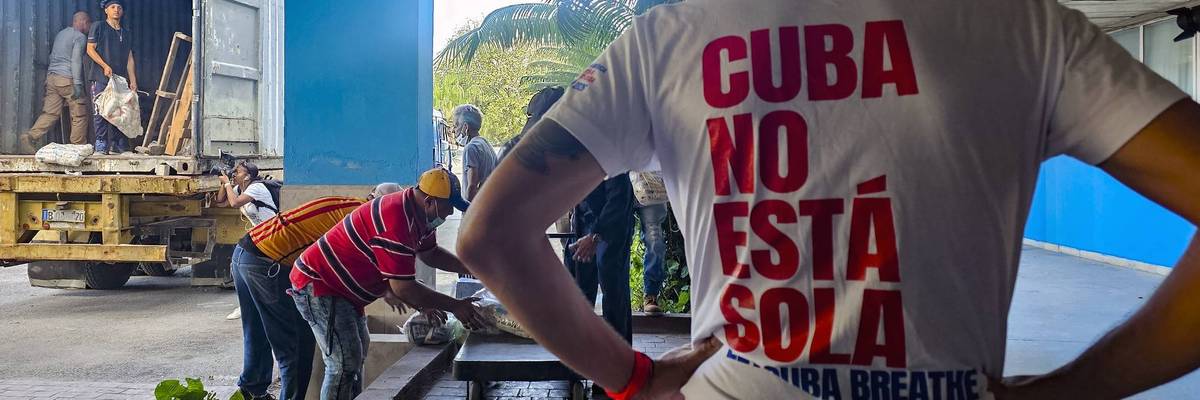
Aid brought by the Nuestra América Convoy from Mexico is unloaded at the William Soler Pediatric Cardiocenter in Havana, Cuba on March 25, 2026.
"Trump has started illegal regime change conflicts in Venezuela and Iran and is now threatening Cuba," said Rep. Pramila Jayapal. "We must pass this legislation to block him from acting on a whim."
Amid calls for Congress to "do something—before it is too late," a pair of US House Democrats on Thursday introduced the Prevent an Unconstitutional War in Cuba Act to block President Donald Trump from using any federal funds to take military action against the island nation without congressional authorization.
The proposal from Reps. Pramila Jayapal (D-Wash.) and Gregory Meeks (D-NY), ranking member of the House Foreign Affairs Committee, comes after Trump ramped up the United States' decades-long economic blockade, cutting off Cuba from Venezuelan oil. The fuel shortage has led to island-wide blackouts, and disrupted everything from healthcare to transportation. As Jayapal put it earlier this month, the "cruel and failing policy... has caused incredible harm to the Cuban people."
Trump has also repeatedly threatened a US takeover of Cuba. His other misadventures abroad—such as joining Israel in waging war on Iran without authorization from Congress, bombing boats allegedly being used to smuggle drugs in the Caribbean Sea and Pacific Ocean, and abducting President Nicolás Maduro from Venezuela in an operation that killed dozens of Venezuelans and Cubans—have fueled fears that he may act on those threats, as Jayapal signaled in a Thursday statement.
“Trump has started illegal regime change conflicts in Venezuela and Iran and is now threatening Cuba. These military attacks put our troops in danger, endanger innocent civilians, waste billions of taxpayer dollars, and are not what the American people want," she said. "Trump promised to end forever wars—he lied. Congress alone has the power to declare war, something Trump clearly does not respect. He has no plan to improve conditions for the Cuban people or promote democracy, and we must pass this legislation to block him from acting on a whim."
The bill's prohibition on funding military action against Cuba does not apply to any use of force that is consistent with the section of the War Powers Act that empowers the president to respond to a "national emergency" created by an attack on the United States or its armed forces. In January, Trump notably signed an executive order declaring a national emergency with respect to Cuba and authorized new tariffs on imports from countries that supply oil to the island.
As with Iran pre-war, the Trump administration is currently engaged in negotiations with the Cuban government. Those talks are being led by US Secretary of State Marco Rubio, a son of Cuban immigrants and longtime supporter of regime change in the country, who said earlier this month that "the embargo is tied to political change on the island... They're in a lot of trouble, and the people in charge, they don't know how to fix it, so they have to get new people in charge."
Predictions over whether Trump will actually bomb or invade Cuba, which is located just 90 miles south of Florida, remain mixed.
"I think once Donald Trump gets an economic agreement that opens the island to US business, he will have fulfilled his transactional aims in Cuba. I don't think he cares about political transition. He doesn't seem to care about it in Venezuela," American University professor and Back Channel to Cuba coauthor William LeoGrande told USA Today this week. "And so, I think once there's an economic agreement that's to the advantage of the United States and US businesses, the president will move on to the next thing."
Current Affairs editor-in-chief Nathan Robinson, who's reported on the Nuestra América Convoy from Havana this week, declared on Wednesday that "they WILL run the Venezuela playbook on Cuba."
"They want a Republican donor imperial viceroy who will privatize the Cuban healthcare and school systems, and hand all the waterfront property to developers, with the Cuban people serving as cheap labor building a playground for Miami's rich," said Robinson.
Meeks—who is facing pressure to force a vote on his Iran war powers resolution—said Thursday that "Cuba is not for Donald Trump to take, and today we stand firm against the illegal use of the US military to pursue turning Cuba into another playground for Trump's chaotic adventurism."
"Such a reckless course would risk American lives, cost taxpayers billions, and, in all likelihood, leave the underlying political and economic conditions unchanged," he said. "The United States cannot bomb Cuba out of economic collapse or political repression—lasting change must come through empowering the Cuban people, not doubling down on a failed approach that disproportionately harms them."
The new bill is backed by Democratic Reps. Gabe Amo (RI), Joaquin Castro (Texas), Sara Jacobs (Calif.), Jesús "Chuy" García (Ill.), Hank Johnson (Ga.), Sydney Kamlager-Dove (Calif.), Jim McGovern (Mass.), Eleanor Holmes Norton (DC), Mark Pocan (Wis.), Jan Schakowsky (Ill.), Melanie Stansbury (NM), Dina Titus (Nev.), Rashida Tlaib (Mich.), and Nydia Velázquez (NY). However, like legislation aimed at stopping Trump's boat strikes, aggression toward Venezuela, and war on Iran, it is unlikely to be passed by the GOP-controlled Congress.
Still, earlier this week, Velázquez also introduced a war powers resolution to prevent US involvement in military hostilities against the island. She said in a statement that "Donald Trump's belligerent foreign policy is creating new wars and conflicts across the world."
"This administration's foreign policy is totally out of control and is putting countless American and foreign lives at risk," Velázquez warned. "Trump's military blockade, his threats, and his track record this term show that Congress must reassert its constitutional authority and stop another disastrous war before it's too late."
Dear Common Dreams reader, It’s been nearly 30 years since I co-founded Common Dreams with my late wife, Lina Newhouser. We had the radical notion that journalism should serve the public good, not corporate profits. It was clear to us from the outset what it would take to build such a project. No paid advertisements. No corporate sponsors. No millionaire publisher telling us what to think or do. Many people said we wouldn't last a year, but we proved those doubters wrong. Together with a tremendous team of journalists and dedicated staff, we built an independent media outlet free from the constraints of profits and corporate control. Our mission has always been simple: To inform. To inspire. To ignite change for the common good. Building Common Dreams was not easy. Our survival was never guaranteed. When you take on the most powerful forces—Wall Street greed, fossil fuel industry destruction, Big Tech lobbyists, and uber-rich oligarchs who have spent billions upon billions rigging the economy and democracy in their favor—the only bulwark you have is supporters who believe in your work. But here’s the urgent message from me today. It's never been this bad out there. And it's never been this hard to keep us going. At the very moment Common Dreams is most needed, the threats we face are intensifying. We need your support now more than ever. We don't accept corporate advertising and never will. We don't have a paywall because we don't think people should be blocked from critical news based on their ability to pay. Everything we do is funded by the donations of readers like you. When everyone does the little they can afford, we are strong. But if that support retreats or dries up, so do we. Will you donate now to make sure Common Dreams not only survives but thrives? —Craig Brown, Co-founder |
Amid calls for Congress to "do something—before it is too late," a pair of US House Democrats on Thursday introduced the Prevent an Unconstitutional War in Cuba Act to block President Donald Trump from using any federal funds to take military action against the island nation without congressional authorization.
The proposal from Reps. Pramila Jayapal (D-Wash.) and Gregory Meeks (D-NY), ranking member of the House Foreign Affairs Committee, comes after Trump ramped up the United States' decades-long economic blockade, cutting off Cuba from Venezuelan oil. The fuel shortage has led to island-wide blackouts, and disrupted everything from healthcare to transportation. As Jayapal put it earlier this month, the "cruel and failing policy... has caused incredible harm to the Cuban people."
Trump has also repeatedly threatened a US takeover of Cuba. His other misadventures abroad—such as joining Israel in waging war on Iran without authorization from Congress, bombing boats allegedly being used to smuggle drugs in the Caribbean Sea and Pacific Ocean, and abducting President Nicolás Maduro from Venezuela in an operation that killed dozens of Venezuelans and Cubans—have fueled fears that he may act on those threats, as Jayapal signaled in a Thursday statement.
“Trump has started illegal regime change conflicts in Venezuela and Iran and is now threatening Cuba. These military attacks put our troops in danger, endanger innocent civilians, waste billions of taxpayer dollars, and are not what the American people want," she said. "Trump promised to end forever wars—he lied. Congress alone has the power to declare war, something Trump clearly does not respect. He has no plan to improve conditions for the Cuban people or promote democracy, and we must pass this legislation to block him from acting on a whim."
The bill's prohibition on funding military action against Cuba does not apply to any use of force that is consistent with the section of the War Powers Act that empowers the president to respond to a "national emergency" created by an attack on the United States or its armed forces. In January, Trump notably signed an executive order declaring a national emergency with respect to Cuba and authorized new tariffs on imports from countries that supply oil to the island.
As with Iran pre-war, the Trump administration is currently engaged in negotiations with the Cuban government. Those talks are being led by US Secretary of State Marco Rubio, a son of Cuban immigrants and longtime supporter of regime change in the country, who said earlier this month that "the embargo is tied to political change on the island... They're in a lot of trouble, and the people in charge, they don't know how to fix it, so they have to get new people in charge."
Predictions over whether Trump will actually bomb or invade Cuba, which is located just 90 miles south of Florida, remain mixed.
"I think once Donald Trump gets an economic agreement that opens the island to US business, he will have fulfilled his transactional aims in Cuba. I don't think he cares about political transition. He doesn't seem to care about it in Venezuela," American University professor and Back Channel to Cuba coauthor William LeoGrande told USA Today this week. "And so, I think once there's an economic agreement that's to the advantage of the United States and US businesses, the president will move on to the next thing."
Current Affairs editor-in-chief Nathan Robinson, who's reported on the Nuestra América Convoy from Havana this week, declared on Wednesday that "they WILL run the Venezuela playbook on Cuba."
"They want a Republican donor imperial viceroy who will privatize the Cuban healthcare and school systems, and hand all the waterfront property to developers, with the Cuban people serving as cheap labor building a playground for Miami's rich," said Robinson.
Meeks—who is facing pressure to force a vote on his Iran war powers resolution—said Thursday that "Cuba is not for Donald Trump to take, and today we stand firm against the illegal use of the US military to pursue turning Cuba into another playground for Trump's chaotic adventurism."
"Such a reckless course would risk American lives, cost taxpayers billions, and, in all likelihood, leave the underlying political and economic conditions unchanged," he said. "The United States cannot bomb Cuba out of economic collapse or political repression—lasting change must come through empowering the Cuban people, not doubling down on a failed approach that disproportionately harms them."
The new bill is backed by Democratic Reps. Gabe Amo (RI), Joaquin Castro (Texas), Sara Jacobs (Calif.), Jesús "Chuy" García (Ill.), Hank Johnson (Ga.), Sydney Kamlager-Dove (Calif.), Jim McGovern (Mass.), Eleanor Holmes Norton (DC), Mark Pocan (Wis.), Jan Schakowsky (Ill.), Melanie Stansbury (NM), Dina Titus (Nev.), Rashida Tlaib (Mich.), and Nydia Velázquez (NY). However, like legislation aimed at stopping Trump's boat strikes, aggression toward Venezuela, and war on Iran, it is unlikely to be passed by the GOP-controlled Congress.
Still, earlier this week, Velázquez also introduced a war powers resolution to prevent US involvement in military hostilities against the island. She said in a statement that "Donald Trump's belligerent foreign policy is creating new wars and conflicts across the world."
"This administration's foreign policy is totally out of control and is putting countless American and foreign lives at risk," Velázquez warned. "Trump's military blockade, his threats, and his track record this term show that Congress must reassert its constitutional authority and stop another disastrous war before it's too late."
Amid calls for Congress to "do something—before it is too late," a pair of US House Democrats on Thursday introduced the Prevent an Unconstitutional War in Cuba Act to block President Donald Trump from using any federal funds to take military action against the island nation without congressional authorization.
The proposal from Reps. Pramila Jayapal (D-Wash.) and Gregory Meeks (D-NY), ranking member of the House Foreign Affairs Committee, comes after Trump ramped up the United States' decades-long economic blockade, cutting off Cuba from Venezuelan oil. The fuel shortage has led to island-wide blackouts, and disrupted everything from healthcare to transportation. As Jayapal put it earlier this month, the "cruel and failing policy... has caused incredible harm to the Cuban people."
Trump has also repeatedly threatened a US takeover of Cuba. His other misadventures abroad—such as joining Israel in waging war on Iran without authorization from Congress, bombing boats allegedly being used to smuggle drugs in the Caribbean Sea and Pacific Ocean, and abducting President Nicolás Maduro from Venezuela in an operation that killed dozens of Venezuelans and Cubans—have fueled fears that he may act on those threats, as Jayapal signaled in a Thursday statement.
“Trump has started illegal regime change conflicts in Venezuela and Iran and is now threatening Cuba. These military attacks put our troops in danger, endanger innocent civilians, waste billions of taxpayer dollars, and are not what the American people want," she said. "Trump promised to end forever wars—he lied. Congress alone has the power to declare war, something Trump clearly does not respect. He has no plan to improve conditions for the Cuban people or promote democracy, and we must pass this legislation to block him from acting on a whim."
The bill's prohibition on funding military action against Cuba does not apply to any use of force that is consistent with the section of the War Powers Act that empowers the president to respond to a "national emergency" created by an attack on the United States or its armed forces. In January, Trump notably signed an executive order declaring a national emergency with respect to Cuba and authorized new tariffs on imports from countries that supply oil to the island.
As with Iran pre-war, the Trump administration is currently engaged in negotiations with the Cuban government. Those talks are being led by US Secretary of State Marco Rubio, a son of Cuban immigrants and longtime supporter of regime change in the country, who said earlier this month that "the embargo is tied to political change on the island... They're in a lot of trouble, and the people in charge, they don't know how to fix it, so they have to get new people in charge."
Predictions over whether Trump will actually bomb or invade Cuba, which is located just 90 miles south of Florida, remain mixed.
"I think once Donald Trump gets an economic agreement that opens the island to US business, he will have fulfilled his transactional aims in Cuba. I don't think he cares about political transition. He doesn't seem to care about it in Venezuela," American University professor and Back Channel to Cuba coauthor William LeoGrande told USA Today this week. "And so, I think once there's an economic agreement that's to the advantage of the United States and US businesses, the president will move on to the next thing."
Current Affairs editor-in-chief Nathan Robinson, who's reported on the Nuestra América Convoy from Havana this week, declared on Wednesday that "they WILL run the Venezuela playbook on Cuba."
"They want a Republican donor imperial viceroy who will privatize the Cuban healthcare and school systems, and hand all the waterfront property to developers, with the Cuban people serving as cheap labor building a playground for Miami's rich," said Robinson.
Meeks—who is facing pressure to force a vote on his Iran war powers resolution—said Thursday that "Cuba is not for Donald Trump to take, and today we stand firm against the illegal use of the US military to pursue turning Cuba into another playground for Trump's chaotic adventurism."
"Such a reckless course would risk American lives, cost taxpayers billions, and, in all likelihood, leave the underlying political and economic conditions unchanged," he said. "The United States cannot bomb Cuba out of economic collapse or political repression—lasting change must come through empowering the Cuban people, not doubling down on a failed approach that disproportionately harms them."
The new bill is backed by Democratic Reps. Gabe Amo (RI), Joaquin Castro (Texas), Sara Jacobs (Calif.), Jesús "Chuy" García (Ill.), Hank Johnson (Ga.), Sydney Kamlager-Dove (Calif.), Jim McGovern (Mass.), Eleanor Holmes Norton (DC), Mark Pocan (Wis.), Jan Schakowsky (Ill.), Melanie Stansbury (NM), Dina Titus (Nev.), Rashida Tlaib (Mich.), and Nydia Velázquez (NY). However, like legislation aimed at stopping Trump's boat strikes, aggression toward Venezuela, and war on Iran, it is unlikely to be passed by the GOP-controlled Congress.
Still, earlier this week, Velázquez also introduced a war powers resolution to prevent US involvement in military hostilities against the island. She said in a statement that "Donald Trump's belligerent foreign policy is creating new wars and conflicts across the world."
"This administration's foreign policy is totally out of control and is putting countless American and foreign lives at risk," Velázquez warned. "Trump's military blockade, his threats, and his track record this term show that Congress must reassert its constitutional authority and stop another disastrous war before it's too late."