5
#000000
#FFFFFF
To donate by check, phone, or other method, see our More Ways to Give page.
Daily news & progressive opinion—funded by the people, not the corporations—delivered straight to your inbox.
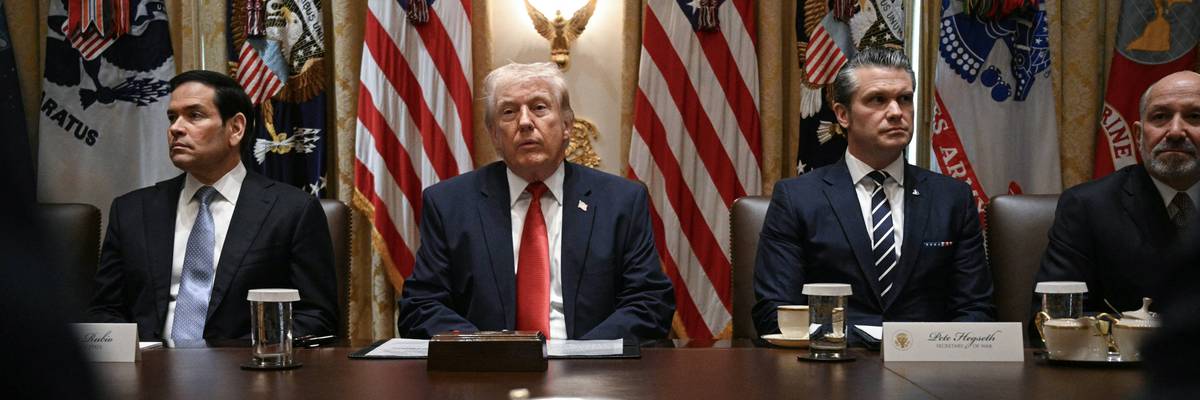
US President Donald Trump hosts a cabinet meeting in Washington, DC, on March 26, 2026 with US Secretary of State Marco Rubio, US Secretary of Defense Pete Hegseth, and US Secretary of Commerce Howard Lutnick.
"This is neither 'peace' nor 'strength,'" said one policy expert. "It's gruesome."
US Secretary of State Marco Rubio spoke publicly for the first time Wednesday about a shift in the Pentagon's boat bombing operations, in which the US in recent days has begun interdicting suspected refueling vessels for drug boats in Ecuador's territorial waters—but he made clear that the military is also still killing people aboard boats, as it did Wednesday in the latest bombing in the Caribbean.
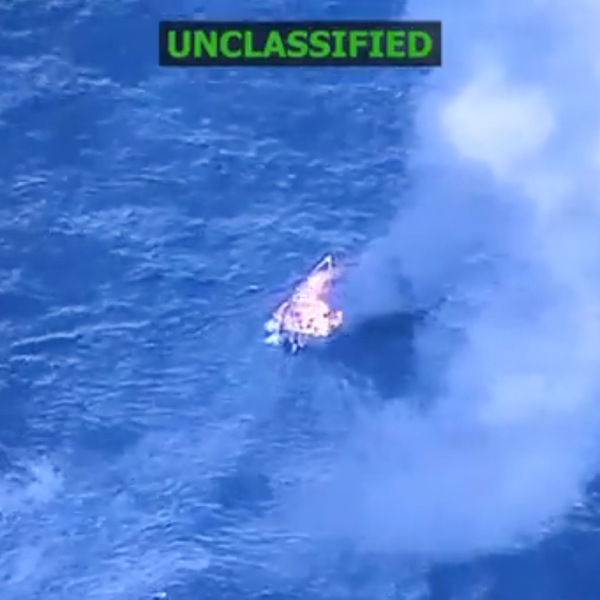
US Southern Command announced that Joint Task Force Western Hemisphere—the recently rebranded name of the Trump administration's expanding military operation that it says is aimed at stopping drug trafficking—had executed its latest "lethal kinetic strike" on a boat operating along known "narco-trafficking routes in the Caribbean," killing three people that the US claimed were "narco-terrorists."
"Confirmed intelligence revealed the vessel's active involvement in narco-trafficking," said US Southern Command, releasing no evidence of the boat's illegal activities.
International legal experts have emphasized that the US is not in an authorized military conflict with drug cartels and that drug trafficking under international law is treated as a crime by law enforcement agencies—not as an act of force that the US can legally respond to with military action.
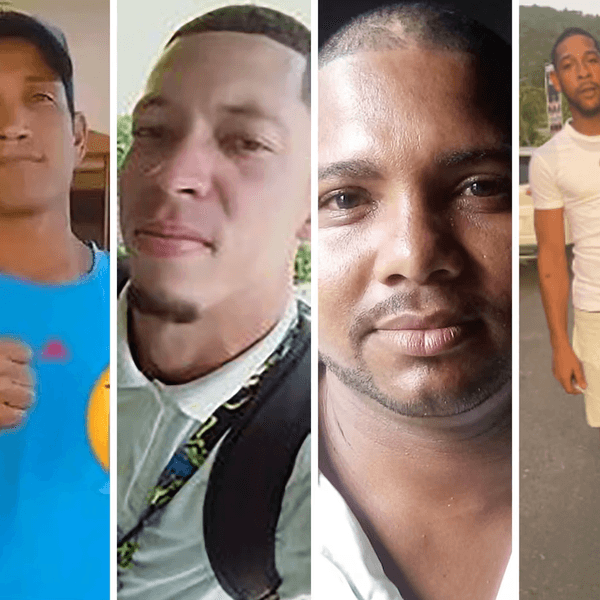
Officials and military service members involved in the strikes may be liable for war crimes or murder, experts have warned. Some of the at least 230 victims of the boat bombings since last September have been identified, with family members saying they were not even involved in drug trafficking.
Historian Alexander Aviña used the term "serial killer empire" to describe the Trump administration after the latest bombing.
Adam Isacson of the Washington Office on Latin America noted that the announcement by US Southern Command Wednesday night was the first in more than a year of attacks in which the strike order was "not attributed to a person."
Isacson also pointed out that according to Customs and Border Patrol data, there is little, if any, evidence that bombing boats and killing crew members and passengers in the Caribbean and eastern Pacific Ocean has done anything to stop the flow of drugs into the US.
Outside the US Embassy in Quito, Ecuador, Rubio told reporters Wednesday that as the US also begins conducting joint operations with Ecuador to interdict suspected refueling vessels in the country's territorial waters, "we have to operate according to their laws."
In those operations, people aboard the boats have been removed and handed over to Ecuadorian authorities before the US has conducted strikes.
Rubio at one point referred to the lethal boat bombings as operations that took place "earlier, last year," but also emphasized, "We still blow up ships if need be."
Brian Finucane of the International Crisis Group said the administration is continuing its campaign of "illegal killing in a make-believe war."
The latest boat bombing also came as Rubio announced that the US was designating Los Tiguerones, an Ecuadorian gang, as a foreign terrorist organization, empowering the administration to freeze the group's assets in US financial institutions.
The designation does not give the US the legal authority to carry out military strikes against Los Tiguerones or other gangs the administration has designated as terrorist groups—but a key element of Joint Task Force Western Hemisphere's expansion in Latin America has been joint military operations, including a US-Ecuadorian joint attack on a dairy farm where officials had claimed drug traffickers were operating.
The new designation "is part of [the administration's] narrative about a new 'War on Terror' against the narcos," said Finucane.
Glaeldys González Calanche, an analyst with the International Crisis Group, told The New York Times that Los Tiguerones has had diminishing power and influence in Ecuador in recent years and expressed surprise at the designation.
Ecuadorian gangs "operate at the lowest links of the chain" of drug trafficking operations in Latin America, González told the Times. “They provide services, like moving cargo from point A to point B. Ecuadorian groups are not decisive, they aren’t major players.”
Dear Common Dreams reader, It’s been nearly 30 years since I co-founded Common Dreams with my late wife, Lina Newhouser. We had the radical notion that journalism should serve the public good, not corporate profits. It was clear to us from the outset what it would take to build such a project. No paid advertisements. No corporate sponsors. No millionaire publisher telling us what to think or do. Many people said we wouldn't last a year, but we proved those doubters wrong. Together with a tremendous team of journalists and dedicated staff, we built an independent media outlet free from the constraints of profits and corporate control. Our mission has always been simple: To inform. To inspire. To ignite change for the common good. Building Common Dreams was not easy. Our survival was never guaranteed. When you take on the most powerful forces—Wall Street greed, fossil fuel industry destruction, Big Tech lobbyists, and uber-rich oligarchs who have spent billions upon billions rigging the economy and democracy in their favor—the only bulwark you have is supporters who believe in your work. But here’s the urgent message from me today. It's never been this bad out there. And it's never been this hard to keep us going. At the very moment Common Dreams is most needed, the threats we face are intensifying. We need your support now more than ever. We don't accept corporate advertising and never will. We don't have a paywall because we don't think people should be blocked from critical news based on their ability to pay. Everything we do is funded by the donations of readers like you. When everyone does the little they can afford, we are strong. But if that support retreats or dries up, so do we. Will you donate now to make sure Common Dreams not only survives but thrives? —Craig Brown, Co-founder |
US Secretary of State Marco Rubio spoke publicly for the first time Wednesday about a shift in the Pentagon's boat bombing operations, in which the US in recent days has begun interdicting suspected refueling vessels for drug boats in Ecuador's territorial waters—but he made clear that the military is also still killing people aboard boats, as it did Wednesday in the latest bombing in the Caribbean.
US Southern Command announced that Joint Task Force Western Hemisphere—the recently rebranded name of the Trump administration's expanding military operation that it says is aimed at stopping drug trafficking—had executed its latest "lethal kinetic strike" on a boat operating along known "narco-trafficking routes in the Caribbean," killing three people that the US claimed were "narco-terrorists."
"Confirmed intelligence revealed the vessel's active involvement in narco-trafficking," said US Southern Command, releasing no evidence of the boat's illegal activities.
International legal experts have emphasized that the US is not in an authorized military conflict with drug cartels and that drug trafficking under international law is treated as a crime by law enforcement agencies—not as an act of force that the US can legally respond to with military action.
Officials and military service members involved in the strikes may be liable for war crimes or murder, experts have warned. Some of the at least 230 victims of the boat bombings since last September have been identified, with family members saying they were not even involved in drug trafficking.
Historian Alexander Aviña used the term "serial killer empire" to describe the Trump administration after the latest bombing.
Adam Isacson of the Washington Office on Latin America noted that the announcement by US Southern Command Wednesday night was the first in more than a year of attacks in which the strike order was "not attributed to a person."
Isacson also pointed out that according to Customs and Border Patrol data, there is little, if any, evidence that bombing boats and killing crew members and passengers in the Caribbean and eastern Pacific Ocean has done anything to stop the flow of drugs into the US.
Outside the US Embassy in Quito, Ecuador, Rubio told reporters Wednesday that as the US also begins conducting joint operations with Ecuador to interdict suspected refueling vessels in the country's territorial waters, "we have to operate according to their laws."
In those operations, people aboard the boats have been removed and handed over to Ecuadorian authorities before the US has conducted strikes.
Rubio at one point referred to the lethal boat bombings as operations that took place "earlier, last year," but also emphasized, "We still blow up ships if need be."
Brian Finucane of the International Crisis Group said the administration is continuing its campaign of "illegal killing in a make-believe war."
The latest boat bombing also came as Rubio announced that the US was designating Los Tiguerones, an Ecuadorian gang, as a foreign terrorist organization, empowering the administration to freeze the group's assets in US financial institutions.
The designation does not give the US the legal authority to carry out military strikes against Los Tiguerones or other gangs the administration has designated as terrorist groups—but a key element of Joint Task Force Western Hemisphere's expansion in Latin America has been joint military operations, including a US-Ecuadorian joint attack on a dairy farm where officials had claimed drug traffickers were operating.
The new designation "is part of [the administration's] narrative about a new 'War on Terror' against the narcos," said Finucane.
Glaeldys González Calanche, an analyst with the International Crisis Group, told The New York Times that Los Tiguerones has had diminishing power and influence in Ecuador in recent years and expressed surprise at the designation.
Ecuadorian gangs "operate at the lowest links of the chain" of drug trafficking operations in Latin America, González told the Times. “They provide services, like moving cargo from point A to point B. Ecuadorian groups are not decisive, they aren’t major players.”
US Secretary of State Marco Rubio spoke publicly for the first time Wednesday about a shift in the Pentagon's boat bombing operations, in which the US in recent days has begun interdicting suspected refueling vessels for drug boats in Ecuador's territorial waters—but he made clear that the military is also still killing people aboard boats, as it did Wednesday in the latest bombing in the Caribbean.
US Southern Command announced that Joint Task Force Western Hemisphere—the recently rebranded name of the Trump administration's expanding military operation that it says is aimed at stopping drug trafficking—had executed its latest "lethal kinetic strike" on a boat operating along known "narco-trafficking routes in the Caribbean," killing three people that the US claimed were "narco-terrorists."
"Confirmed intelligence revealed the vessel's active involvement in narco-trafficking," said US Southern Command, releasing no evidence of the boat's illegal activities.
International legal experts have emphasized that the US is not in an authorized military conflict with drug cartels and that drug trafficking under international law is treated as a crime by law enforcement agencies—not as an act of force that the US can legally respond to with military action.
Officials and military service members involved in the strikes may be liable for war crimes or murder, experts have warned. Some of the at least 230 victims of the boat bombings since last September have been identified, with family members saying they were not even involved in drug trafficking.
Historian Alexander Aviña used the term "serial killer empire" to describe the Trump administration after the latest bombing.
Adam Isacson of the Washington Office on Latin America noted that the announcement by US Southern Command Wednesday night was the first in more than a year of attacks in which the strike order was "not attributed to a person."
Isacson also pointed out that according to Customs and Border Patrol data, there is little, if any, evidence that bombing boats and killing crew members and passengers in the Caribbean and eastern Pacific Ocean has done anything to stop the flow of drugs into the US.
Outside the US Embassy in Quito, Ecuador, Rubio told reporters Wednesday that as the US also begins conducting joint operations with Ecuador to interdict suspected refueling vessels in the country's territorial waters, "we have to operate according to their laws."
In those operations, people aboard the boats have been removed and handed over to Ecuadorian authorities before the US has conducted strikes.
Rubio at one point referred to the lethal boat bombings as operations that took place "earlier, last year," but also emphasized, "We still blow up ships if need be."
Brian Finucane of the International Crisis Group said the administration is continuing its campaign of "illegal killing in a make-believe war."
The latest boat bombing also came as Rubio announced that the US was designating Los Tiguerones, an Ecuadorian gang, as a foreign terrorist organization, empowering the administration to freeze the group's assets in US financial institutions.
The designation does not give the US the legal authority to carry out military strikes against Los Tiguerones or other gangs the administration has designated as terrorist groups—but a key element of Joint Task Force Western Hemisphere's expansion in Latin America has been joint military operations, including a US-Ecuadorian joint attack on a dairy farm where officials had claimed drug traffickers were operating.
The new designation "is part of [the administration's] narrative about a new 'War on Terror' against the narcos," said Finucane.
Glaeldys González Calanche, an analyst with the International Crisis Group, told The New York Times that Los Tiguerones has had diminishing power and influence in Ecuador in recent years and expressed surprise at the designation.
Ecuadorian gangs "operate at the lowest links of the chain" of drug trafficking operations in Latin America, González told the Times. “They provide services, like moving cargo from point A to point B. Ecuadorian groups are not decisive, they aren’t major players.”