'A Global Crisis': Report Reveals Over 40% Rise in Violent Attacks on Education
The coalition leader behind the report called the figures "a warning that the global norms that once protected children are collapsing," and "the world is drifting toward a place where even the youngest are no longer off‑limits.”
From the Gaza Strip to Ukraine and beyond, violent attacks on students, teachers, and schools have surged in recent years, according to a report released Monday by an international coalition.
The report, titled "Education Under Attack 2026," documents at least 8,566 attacks on education and cases of military forces using educational facilities from the beginning of 2024 to the end of last year, a more than 40% increase from the previous two-year period.
"We believe the true increase is far higher," noted Felicity Pearce, lead researcher for the Global Coalition to Protect Education from Attack (GCPEA) report, in a statement. "Escalating conflict, shrinking humanitarian access, and widespread information blackouts mean many attacks are never reported."
The 2024-25 attacks harmed at least 10,600 students, educators, and other personnel across 83 countries, including 55 that are not in active conflict. GCPEA found the highest incidence in Colombia, the Democratic Republic of the Congo (DRC), Ethiopia, Haiti, Palestine, and Ukraine, while Cameroon, Myanmar, Nigeria, and Yemen had the greatest numbers of people harmed or killed.
"Cameroon continued to face overlapping security crises, which continued to heavily affect civilians in 2024-2025, marked by persistent violence in the Far North region and protracted armed conflict in the Northwest and Southwest regions," the report explains. GCPEA recorded at least 67 attacks on schools, 85 attacks on students and staff, and 11 reports of military use of educational facilities.
It's now been a decade since the Colombian government and the Revolutionary Armed Forces of Colombia signed peace accords, but GCPEA still identified at least 160 reports of attacks on educational facilities, 129 reports of attacks on students and personnel, and 107 reports of military use of schools.
In the DRC, as "armed conflict intensified" between the Rwandan Defense Force-backed March 23 Movement and the Congolese national armed forces—supported by Burundi's military and allied militias—there were at least 350 attacks on schools, 15 attacks on students and staff, and 313 cases of military use of facilities.
"Conflict in Ethiopia continued to impact access to education for millions of children," the publication states. GCPEA tracked around 100 attacks on schools and seven on students and personnel—though acknowledged monitoring and reporting challenges—as well as approximately 1,200 schools used for military purposes, a sharp increase from the previous period.
"As armed gangs in Haiti merged and gained control over more of the country, escalating violence included attacks on schools, school students, and staff, as well as the military use of schools, and disrupted education for over 1.2 million children," according to the report. Specifically, there were at least 339 attacks on schools, 55 attacks on students and staff, and 27 reports of military use of facilities.
In Myanmar, "as internal conflict intensified between the military junta that seized power in February 2021 and armed resistance groups," GCPEA tracked 212 attacks on schools, 18 attacks on students and personnel, and 84 military occupations.
As armed conflict between the Nigerian government and non-state armed groups continued during the reporting period, attacks on schools dropped slightly, to nine, while attacks on students and staff were consistent, at 14—but at least 90 people were killed or injured, and over 700 were abducted. There were at least five incidents of the military using schools.
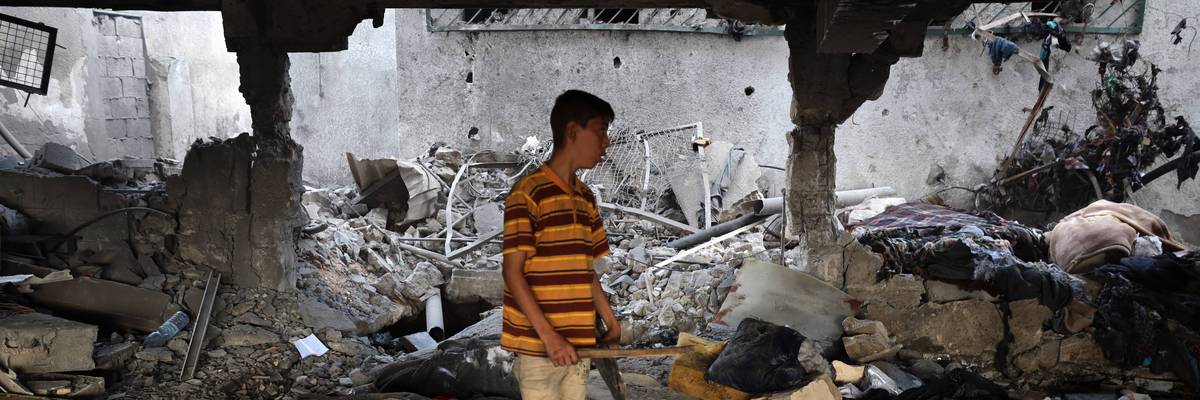
"Israel continued to commit genocidal violence against the Palestinian population in Gaza," the report says, and there were increased attacks on schools, students, and teachers in both the coastal strip—where most educational buildings have been "severely damaged"—and the occupied West Bank. Across Palestine, GCPEA identified at least 620 attacks on schools, 2,400 attacks on students and staff, and 10 cases of the military use of educational facilities.
As Ukrainian forces continued to fight Russian invaders, GCPEA tracked more than 900 attacks on schools and at least one case of military use of a school. The report also points out that "1,611 schools had been damaged or destroyed since the start of the full-scale invasion, including at least 339 that had been completely destroyed," forcing 741,000 children to study in a hybrid format, and another 443,000 to learn entirely online.
In Yemen, "a fragile truce largely held through 2024 and 2025," but the continued battle among the internationally recognized government, Houthi forces, and regional actors meant there were still at least 16 attacks on schools, 62 attacks on students and staff, and 63 cases of military use of facilities.
Lisa Chung Bender, director of the GCPEA, told The Guardian that the report's findings "are a warning that the global norms that once protected children are collapsing."
"A warning that the world is drifting toward a place where even the youngest are no longer off‑limits," she said. "And a warning that if we do not hold the line now, we may never get it back."
The report urges support for the Safe Schools Declaration, and features recommendations for governments and civil society.
Its release follows the latest publication from the Explosive Weapons Monitor, which was released last week and documents at least 22,616 civilian fatalities from explosive weapons across 65 countries and territories last year. The monitor found 1,416 attacks on education in 2025, a 64% increase from 2024, and also highlighted Myanmar, Palestine, and Ukraine.
We are at a crossroads
This country and this world are at a monumental crossroads. US voters have an opportunity to beat back the forces of fascism and confront the billionaires who are rigging the economy, our media system, and our democracy, making it increasingly impossible for ordinary people to get by. We’re not just talking about the election. We’re talking about what must be done once these fascist elements are vanquished from power. We need a bolder set of solutions than what either major party has so far been willing to offer and a working-class movement ready to fight like hell for it. Trump didn't emerge from nowhere. The conditions that fueled MAGA authoritarianism were created by decades of radical neoliberal economic policies and a corrupt political system dominated by corporate interests. They slashed taxes on the super-rich, promising that the benefits would trickle down. They said giveaways to the corporate titans would make life more affordable for the rest of us. It was all bullshit. And when a bitter, betrayed populace searches for someone to blame, right-wing demagogues have little trouble finding scapegoats. People know when they're being lied to, but you won't hear any of this from the corporate media. Only independent journalism—powered and funded by people who believe in building a better world—can deliver truly trustworthy daily news. Our Fall Campaign is underway, and we need your help. To power our newsroom through the rest of the year, we need to raise $125,000 by midnight on October 31. So if you share our vision, please contribute whatever you can to sustain our work. |
From the Gaza Strip to Ukraine and beyond, violent attacks on students, teachers, and schools have surged in recent years, according to a report released Monday by an international coalition.
The report, titled "Education Under Attack 2026," documents at least 8,566 attacks on education and cases of military forces using educational facilities from the beginning of 2024 to the end of last year, a more than 40% increase from the previous two-year period.
"We believe the true increase is far higher," noted Felicity Pearce, lead researcher for the Global Coalition to Protect Education from Attack (GCPEA) report, in a statement. "Escalating conflict, shrinking humanitarian access, and widespread information blackouts mean many attacks are never reported."
The 2024-25 attacks harmed at least 10,600 students, educators, and other personnel across 83 countries, including 55 that are not in active conflict. GCPEA found the highest incidence in Colombia, the Democratic Republic of the Congo (DRC), Ethiopia, Haiti, Palestine, and Ukraine, while Cameroon, Myanmar, Nigeria, and Yemen had the greatest numbers of people harmed or killed.
"Cameroon continued to face overlapping security crises, which continued to heavily affect civilians in 2024-2025, marked by persistent violence in the Far North region and protracted armed conflict in the Northwest and Southwest regions," the report explains. GCPEA recorded at least 67 attacks on schools, 85 attacks on students and staff, and 11 reports of military use of educational facilities.
It's now been a decade since the Colombian government and the Revolutionary Armed Forces of Colombia signed peace accords, but GCPEA still identified at least 160 reports of attacks on educational facilities, 129 reports of attacks on students and personnel, and 107 reports of military use of schools.
In the DRC, as "armed conflict intensified" between the Rwandan Defense Force-backed March 23 Movement and the Congolese national armed forces—supported by Burundi's military and allied militias—there were at least 350 attacks on schools, 15 attacks on students and staff, and 313 cases of military use of facilities.
"Conflict in Ethiopia continued to impact access to education for millions of children," the publication states. GCPEA tracked around 100 attacks on schools and seven on students and personnel—though acknowledged monitoring and reporting challenges—as well as approximately 1,200 schools used for military purposes, a sharp increase from the previous period.
"As armed gangs in Haiti merged and gained control over more of the country, escalating violence included attacks on schools, school students, and staff, as well as the military use of schools, and disrupted education for over 1.2 million children," according to the report. Specifically, there were at least 339 attacks on schools, 55 attacks on students and staff, and 27 reports of military use of facilities.
In Myanmar, "as internal conflict intensified between the military junta that seized power in February 2021 and armed resistance groups," GCPEA tracked 212 attacks on schools, 18 attacks on students and personnel, and 84 military occupations.
As armed conflict between the Nigerian government and non-state armed groups continued during the reporting period, attacks on schools dropped slightly, to nine, while attacks on students and staff were consistent, at 14—but at least 90 people were killed or injured, and over 700 were abducted. There were at least five incidents of the military using schools.
"Israel continued to commit genocidal violence against the Palestinian population in Gaza," the report says, and there were increased attacks on schools, students, and teachers in both the coastal strip—where most educational buildings have been "severely damaged"—and the occupied West Bank. Across Palestine, GCPEA identified at least 620 attacks on schools, 2,400 attacks on students and staff, and 10 cases of the military use of educational facilities.
As Ukrainian forces continued to fight Russian invaders, GCPEA tracked more than 900 attacks on schools and at least one case of military use of a school. The report also points out that "1,611 schools had been damaged or destroyed since the start of the full-scale invasion, including at least 339 that had been completely destroyed," forcing 741,000 children to study in a hybrid format, and another 443,000 to learn entirely online.
In Yemen, "a fragile truce largely held through 2024 and 2025," but the continued battle among the internationally recognized government, Houthi forces, and regional actors meant there were still at least 16 attacks on schools, 62 attacks on students and staff, and 63 cases of military use of facilities.
Lisa Chung Bender, director of the GCPEA, told The Guardian that the report's findings "are a warning that the global norms that once protected children are collapsing."
"A warning that the world is drifting toward a place where even the youngest are no longer off‑limits," she said. "And a warning that if we do not hold the line now, we may never get it back."
The report urges support for the Safe Schools Declaration, and features recommendations for governments and civil society.
Its release follows the latest publication from the Explosive Weapons Monitor, which was released last week and documents at least 22,616 civilian fatalities from explosive weapons across 65 countries and territories last year. The monitor found 1,416 attacks on education in 2025, a 64% increase from 2024, and also highlighted Myanmar, Palestine, and Ukraine.
- Russian Airstrike on Ukrainian School Reportedly Kills Dozens ›
- 'Beyond Horror': Israel Kills Mostly Children in Fresh Attacks on Gaza Schools ›
- Israel Bombs More Gaza Schools, Killing Dozens, Including Many Women and Children ›
- Research Shows 10,000+ Killed or Harmed in Growing Global Attacks on Education ›