

SUBSCRIBE TO OUR FREE NEWSLETTER
Daily news & progressive opinion—funded by the people, not the corporations—delivered straight to your inbox.
5
#000000
#FFFFFF
To donate by check, phone, or other method, see our More Ways to Give page.
Daily news & progressive opinion—funded by the people, not the corporations—delivered straight to your inbox.
Today, the European Commission published its Digital Single Market (DSM) Strategy. The Commission's stated vision and objectives are laudable: a borderless Europe-wide market for online goods and services where businesses serve consumers seamlessly across national borders. President Juncker has stated that this requires breaking down silos of national regulation in areas such as telecommunications and copyright.
Today, the European Commission published its Digital Single Market (DSM) Strategy. The Commission's stated vision and objectives are laudable: a borderless Europe-wide market for online goods and services where businesses serve consumers seamlessly across national borders. President Juncker has stated that this requires breaking down silos of national regulation in areas such as telecommunications and copyright. The existing fragmented regulatory landscape makes it needlessly complicated for European consumers and businesses to take full advantage of the internet and digital technologies.
While the DSM Strategy contains a number of positive elements, the Center for Democracy & Technology (CDT) is concerned about parts of the strategy that would hinder, rather than help build an open, innovative internet and digital market in Europe.
"The suggested imposition of a duty of care on all internet intermediaries with respect to third-party content casts a long shadow over the Strategy's more promising proposals. The existing e-Commerce Directive has done an excellent job of defining the responsibilities of internet platforms with respect to hosting user-generated content. It enables free expression online, cross-border commerce, and social development, and provides a clear framework for dealing with illegal content. We do not see evidence of a need for revision of these rules," said Jens-Henrik Jeppesen, CDT Director for European Affairs.
"In addition, the suggestion that a new set of regulatory obligations might be imposed on all manner of internet 'platforms' - a term that has not been defined - seems counterproductive. It could very well discourage the very development of the new enterprises and business models the Commission seeks to foster," added Jeppesen.
These concerns notwithstanding, the Strategy has a number of sensible and useful proposals, including ones aimed at enabling free flow of data within the EU, reforming parts of Europe's fragmented copyright system, and harmonizing the allocation and use of radio spectrum. "The Commission has identified some of the most pressing reforms necessary to achieve the scale that European innovators and entrepreneurs need to be able to build and grow successful businesses. They deserve credit for addressing these national and territorial regulatory barriers head on," Jeppesen said.
As the EU institutions develop the initiatives announced in the DSM strategy, CDT will continue to advocate for improvements that will promote a free and open internet for Europeans, and nurture a competitive European digital economy.
The Center for Democracy and Technology works to promote democratic values and constitutional liberties in the digital age. With expertise in law, technology, and policy, CDT seeks practical solutions to enhance free expression and privacy in global communications technologies. CDT is dedicated to building consensus among all parties interested in the future of the Internet and other new communications media.
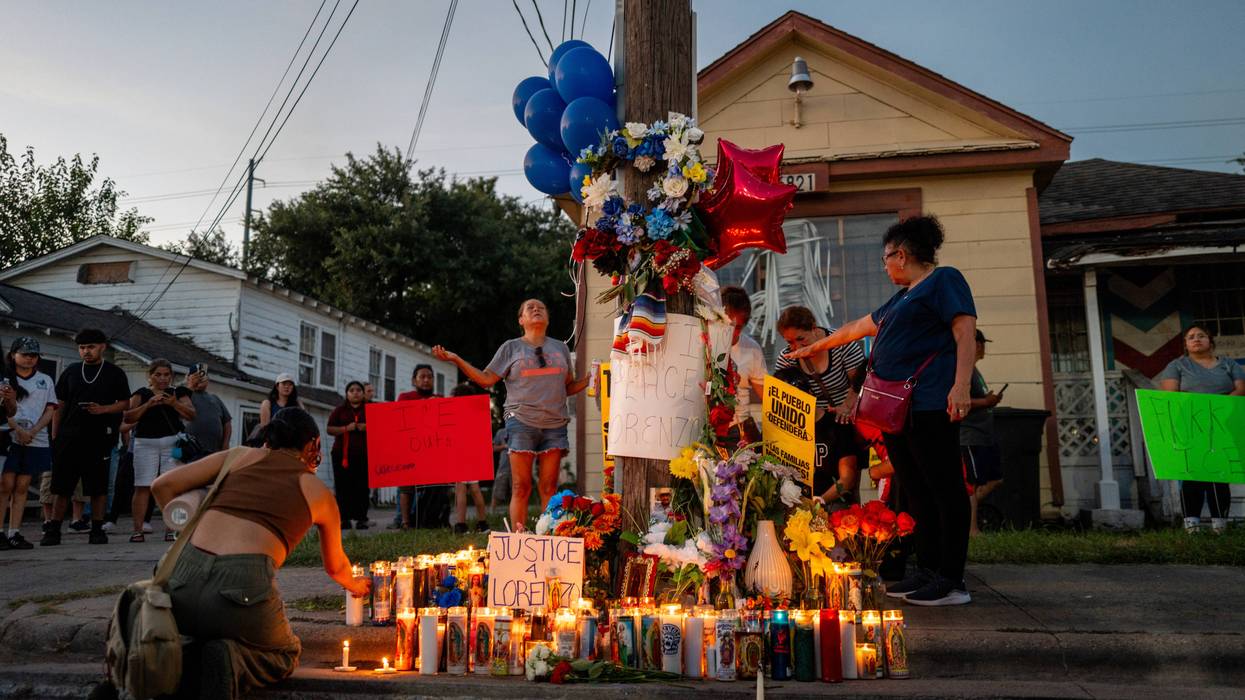
Salgado "called Houston home for 35 years," said New York's democratic socialist mayor. "On Tuesday, an ICE agent shot and killed him."
New York City Mayor Zohran Mamdani on Thursday renewed his call to "abolish ICE" after a US Immigration and Customs Enforcement agent fatally shot a man in Texas earlier this week.
"Lorenzo Salgado Araujo called Houston home for 35 years. On Tuesday, an ICE agent shot and killed him," Mamdani said on social media. "His family learned of his death from a video before anyone bothered to knock on their door."
"New York City stands with the Salgado family in demanding a full, independent investigation and real accountability," the mayor added. "To the Salgado family and any immigrant family in this city living in fear: We grieve with you, and we will continue to stand beside you in the pursuit of justice."
More than 1,000 people gathered in Houston's East End on Wednesday evening to denounce ICE and remember Salgado, a 52-year-old married father of three originally from Mexico who, according to relatives, was in the process of legalizing his status in the United States.
Salgado's son, school teacher Ronaldo Salgado, said that his father had "dedicated his life to giving his family the American dream."
Salgado was driving in the Magnolia Park neighborhood to pick up his construction crew on Tuesday morning when an unidentified ICE agent fatally shot him during an enforcement operation. ICE claimed that Salgado tried to evade arrest and threatened agents with his vehicle, but his family, civil rights advocates, and community leaders strongly dispute that account, pointing to surveillance footage and eyewitness accounts that they argue undermine the agency's narrative.
A Department of Homeland Security spokesperson told The New York Times late on Thursday that neither Salgado nor any of his three passengers were the targets of ICE enforcement, but that they drew agents' attention because one of them resembled a wanted man from Guatemala.
Democratic lawmakers and civil rights groups have joined Salgado's relatives in demanding an independent investigation of his killing.
Mexican President Claudia Sheinbaum announced Thursday that her government plans to file criminal complaints in the United States in connection with 14 Mexican nationals who died in ICE custody. Sheinbaum added that Salgado's killing "is not only sad and regrettable, but also appears to have been targeted."
On-duty officers from ICE and other Department of Homeland Security agencies have fatally shot at least four other people during President Donald Trump's deadly second-term crackdown on undocumented immigrants: Silverio Villegas González of Mexico and US citizens Ruben Ray Martinez, Renee Good and Alex Pretti.
At least dozens of people have also died in ICE custody or shortly after being released during Trump's second term. Last month, ICE announced that it was rescinding a 2021 Biden administration policy requiring congressional notification and an investigation whenever a detainee died within 30 days of their release.
“Consumers are getting really screwed by all of this,” said one critic.
Political appointees installed by President Donald Trump are overruling career attorneys inside the Department of Justice's Antitrust Division, intervening to weaken or halt investigations into major corporate mergers in a way never seen before, MS NOW reported Thursday.
Three unnamed sources told the outlet "that DOJ staff have privately complained that the Trump administration is essentially deciding not to enforce antitrust laws that are critical to keeping companies from becoming single-source providers and being able to charge enormous sums for their product or service."
According to MS NOW:
The two mergers that DOJ leaders are ramming through include two low-cost Mexican air carriers, Viva Aerobus and Volaris, who announced their plans to merge last year, and the proposed merger of the Italian firm Saipem and UK firm Subsea7, who together control a sizable portion of sales for equipment used for subsea oil operations. Major oil companies, including ExxonMobil, Petrobras and TotalEnergies, have filed formal objections with federal regulators about the latter merger, arguing to antitrust regulators that the combined firms will create a subsea monopoly that will increase costs, delay critical projects and force clients into expensive, long-term contracts.
Experts say the aforementioned mergers are likely to drive up prices US consumers pay for airfare to Mexico and at the gas pump, yet again giving the lie to Trump's "America First" pledge.
Current and former DOJ officials described Trump's interference as without precedent.
“It’s unilateral surrender on antitrust enforcement; it’s absolutely unprecedented,” Bill Baer, the former assistant attorney general for the antitrust division during the Obama administration. “It’s definitely going to hurt consumers. It means prices will go up, concentration is going to increase—and quality often diminishes when you have only a few firms operating in the same market.”
The DOJ Antitrust Division was originally launched more than a century ago during the tail-end of the Progressive Era to combat monopolies and enforce antitrust legislation like the Clayton Antitrust Act and the Gilded Age-era Sherman Act. It was formally created during the Great Depression following weak enforcement of the Sherman and Clayton acts, as the Franklin D. Roosevelt administration viewed concentrated corporate power as a threat not only to consumers but to democracy itself.
While the postwar decades saw relatively aggressive antitrust enforcement by presidents of both major parties, the Reagan administration adopted a much more permissive merger philosophy that laid the groundwork for decades of consolidation across industries that has continued to this day, despite limited antitrust revivals during the Obama and Biden administrations.
Biden-era Federal Trade Commission Chair Lina Khan and DOJ officials pursued a more aggressive antitrust agenda that Trump has been rolling back in favor of deregulation. Critics have pointed out that Trump has sometimes used antitrust mechanisms selectively, targeting certain media or technology companies for political reasons rather than consistently applying a broad anti-monopoly approach.
According to an article published last month in The Wall Street Journal, Stanley Woodward, the senior DOJ official now overseeing antitrust enforcement, has told department lawyers that he favors resolving cases through settlements rather than taking corporations to trial. Some antitrust attorneys interpreted the remarks as a directive to avoid litigation and seek settlements in ongoing and future cases. Critics say Woodward’s posture could weaken the DOJ's ability to challenge monopolistic mergers in favor of fast-tracked settlements.
"He's taking litigation off the table, and you don’t get a settlement absent a litigation threat,” one person with knowledge of Woodward's actions told MS NOW. “I can’t think of an administration in history that would want to run antitrust policy like this.”
“Consumers are getting really screwed by all of this,” the person continued. “We’re talking 10 years of consumer harm that can’t be undone.”
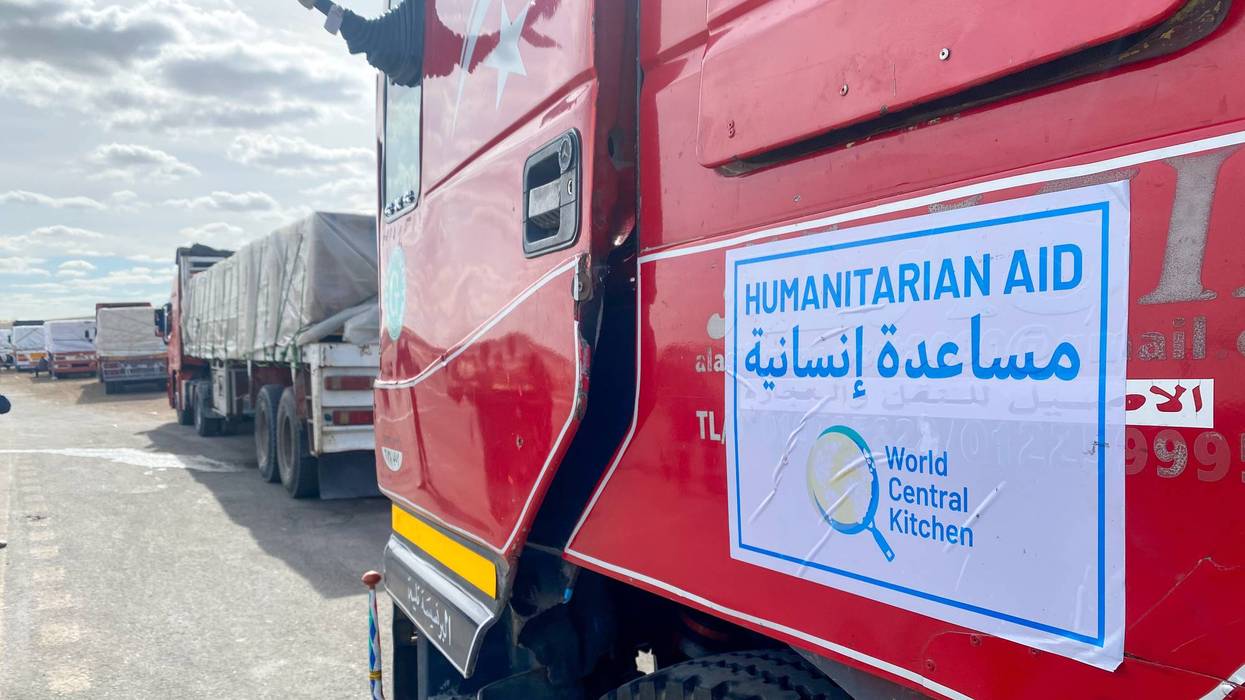
A Gaza trucker's association leader called it "a deliberate killing of a civilian driver who had complied with all instructions."
A soldier with the Israel Defense Forces reportedly shot and killed a Palestinian driver delivering aid to Gaza on Wednesday in what witnesses described as a "field execution."
Based on accounts from three witnesses, The Guardian reported that the driver, Ahmad Nasser Saleem, was shot in the head at close range shortly after his convoy entered Gaza to deliver food supplies from the World Central Kitchen.
They said the four-truck convoy had stopped along the Philadelphi Corridor on the edge of Gaza after one of the vehicles broke down. Israeli soldiers then ordered the drivers to dismount before one of them shot Saleem in the head when his hands were raised.
The other drivers in the convoy stressed that every movement made by the World Central Kitchen is coordinated with the Israeli government.
“After the truck broke down, we waited for authorization to get out and inspect it, because every movement we make has to be coordinated in advance,” said one of the other drivers, Diaa Mansour.
He said that while they were awaiting authorization, an Israeli military vehicle arrived and soldiers ordered him, Saleem, and another driver, Alaa Shaat, to get out of their trucks.
“They made us stand by the side of the road. They ordered me to take off my clothes and forced me to sit under the sun,” Mansour said. “Then they brought Ahmad out of his truck. One of the soldiers began talking to Ahmad while he stood with his hands raised. Ahmad did not speak Hebrew, and it seemed the soldiers did not understand his Arabic."
"Suddenly, they shot him. He was hit in the head and died at the scene," Mansour said. "It appeared they were trying to find out why we had stopped, but they did not understand the situation and opened fire immediately, without any discussion or attempt to communicate.”
Jihad Saleem, the deputy head of the Association of Transport Companies in Gaza, identified as a distant relative of the aid worker who was killed, said that the transportation of aid was "100%" coordinated with Israel through the UN World Food Program and WCK.
"The moment Ahmad raised his hands in surrender, one of the soldiers drew his M16 rifle and shot him directly in the head,” he said. “It was a field execution and a deliberate killing of a civilian driver who had complied with all instructions. He was wearing his orange safety vest and carried all the required permits, security clearances, and coordination that had been approved by the IDF."
The IDF confirmed the shooting, but disputed the series of events. A military spokesperson said the convoy "had stopped along the Philadelphi Corridor and exited their trucks contrary to established procedures" and that one of the drivers "ran toward the troops" who "initiated the suspect apprehension protocol and, after perceiving an immediate threat, opened fire toward him."
Jihad Saleem said that “drivers are subjected to daily violations, including beatings, abuse, humiliation, and being forced to stand for long hours under the sun."
“Even more disturbing," Saleem said, "the soldier who shot Ahmad talked to the three surviving drivers afterward and threatened them, saying they would meet the same fate as Ahmad. This clearly indicates that the attack was deliberate.”
Israel's genocidal assault on Gaza, which began in October 2023, has included the systematic restriction of humanitarian aid entering the strip, which has caused widespread starvation, which humanitarian groups have said Israel is using as a "weapon of war" against the Palestinian population.
The United Nations Office for the Coordination of Humanitarian Affairs said as of April 29, 2026, that it had recorded the killing of 593 aid workers in the territory, including eight since a ceasefire agreement between Israel and Hamas in October 2025.
The shooting of Ahmad Saleem follows the shooting of two other Palestinian aid drivers in May under similar circumstances. According to The Guardian, the two men had been detained by the IDF for days before being released near a roundabout in Rafah where they were each shot.
The month before, two drivers working for the UN Children's Fund (UNICEF) were killed by Israeli fire as they were filling their water trucks at an established distribution point.
Saleem is at least the 11th documented worker with WCK to have been killed by Israeli forces during the conflict. In April 2024, an Israeli strike hit a convoy clearly marked with the WCK logo and killed seven workers after the drivers had similarly coordinated their movements with the IDF.
That November, Israel bombed another vehicle, killing three WCK workers and two others, claiming that one of them had been involved in Hamas' October 7, 2023 attack against Israel, which was not independently confirmed and which the WCK said it had no knowledge of.
WCK said in a statement that it was "devastated" to learn of Saleem's killing on Wednesday.
"Ahmad Nasser Saleem was doing what so many of our partners do every day in Gaza—working to get food to hungry people," the group said. "We are in contact with his family, and our deepest grief is with them. WCK expects a full accounting of what happened. Humanitarian aid deliveries should never be a target."