SUBSCRIBE TO OUR FREE NEWSLETTER
Daily news & progressive opinion—funded by the people, not the corporations—delivered straight to your inbox.
5
#000000
#FFFFFF
To donate by check, phone, or other method, see our More Ways to Give page.
Daily news & progressive opinion—funded by the people, not the corporations—delivered straight to your inbox.
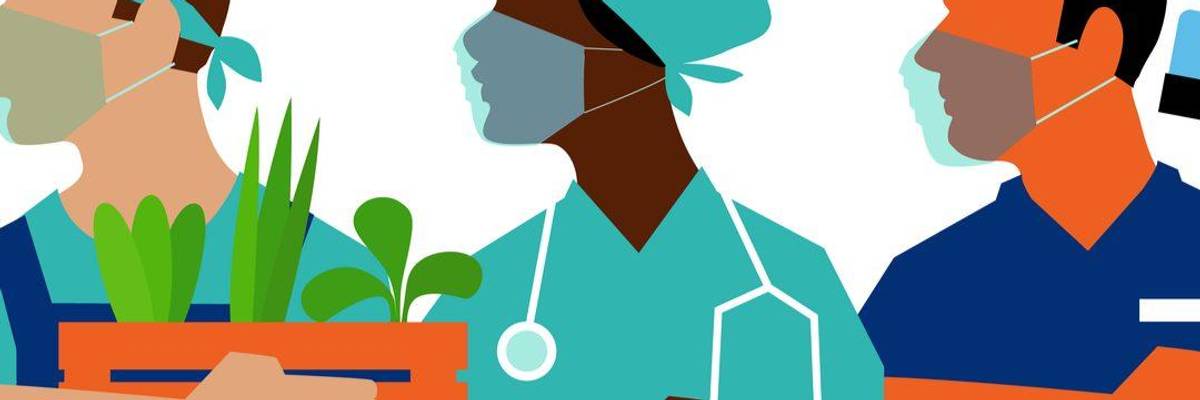
I don't want to have to struggle so hard to survive. I don't want that for anyone. (Photo: Shutterstock)
I'm one of America's millions of essential workers. We're working in your children's schools, at your grocery stores, and at drive-through windows. We're cleaning your homes.
And we're struggling so hard to make ends meet.
Congress is debating whether to raise the minimum wage to $15 an hour. Experts say this would raise wages for 32 million workers like me.
Supporters had hoped to pass the increase as part of the COVID-19 relief package, but an obscure parliamentary rule says they can't. Now supporters in Congress will have to decide how hard they'll fight for us.
I want to share a bit about what it's like to work for less than a living wage--especially during this pandemic.
In my last job, I sold vacuums door to door. My coworkers and I had to go into strangers' houses to demonstrate the equipment. But our company didn't provide Personal Protective Equipment (PPE), and it didn't require employees or clients to socially distance or wear masks.
Eventually, I caught COVID-19. Instead of supporting me, my manager repeatedly questioned me for quarantining. I didn't want to risk my life for a low-wage job with no benefits, so I left.
Now I work two low-wage jobs, but neither has benefits. The safety precautions are a little better, but as a home care worker, I'm caring for patients who may or may not wear masks.
It's especially stressful because I live with my mom, who's in several high-risk categories. My two jobs aren't enough to afford an apartment with utilities, furniture, and other expenses, so we're living in a hotel.
The pandemic made this harder, but the truth is that it's always been hard--I'm 23 and I've already had too many jobs to count. I keep changing jobs to escape poverty wages, harassment, discrimination, exploitation, danger, and a lack of health care. Wherever I go, it doesn't seem to get better.
This isn't right. And that's why I've learned to fight back.
When I was working at McDonald's for $7.25 an hour a few years ago, a co-worker told me she was going to a rally for the Fight for $15 campaign. I asked to go along. It was an amazing experience. We were all there for each other, working for structural change so that we don't have to live this way. So no one does.
I started dedicating my life to achieving a living wage, union rights, and health care for all. And right now, we're so close to $15.
Some lawmakers don't think essential workers like me need a livable wage. I want to tell them they're wrong. We're the ones taking care of your ailing parents, teaching your kids, and putting food on your table.
My mom and I deserve a place to call our own. My fellow low-wage workers deserve to be able to buy good food, get quality healthcare, and securely house their families in exchange for their hard and often dangerous work.
Even before the pandemic, 140 million Americans were poor or low-income. Now the economy is down 10 million jobs since the pandemic hit, and at least 8 million more of us are living in poverty.
I don't want to have to struggle so hard to survive. I don't want that for anyone. We'll need more than a living wage to make ends meet for all of us--we'll need stronger unions and better health care, too--but fair pay for hard work would be a great place to start.
The minimum wage must be raised to $15 an hour. Join the Fight for $15 where you live, and call on your representatives to make it happen. Together we can make this a reality.
Dear Common Dreams reader, It’s been nearly 30 years since I co-founded Common Dreams with my late wife, Lina Newhouser. We had the radical notion that journalism should serve the public good, not corporate profits. It was clear to us from the outset what it would take to build such a project. No paid advertisements. No corporate sponsors. No millionaire publisher telling us what to think or do. Many people said we wouldn't last a year, but we proved those doubters wrong. Together with a tremendous team of journalists and dedicated staff, we built an independent media outlet free from the constraints of profits and corporate control. Our mission has always been simple: To inform. To inspire. To ignite change for the common good. Building Common Dreams was not easy. Our survival was never guaranteed. When you take on the most powerful forces—Wall Street greed, fossil fuel industry destruction, Big Tech lobbyists, and uber-rich oligarchs who have spent billions upon billions rigging the economy and democracy in their favor—the only bulwark you have is supporters who believe in your work. But here’s the urgent message from me today. It's never been this bad out there. And it's never been this hard to keep us going. At the very moment Common Dreams is most needed, the threats we face are intensifying. We need your support now more than ever. We don't accept corporate advertising and never will. We don't have a paywall because we don't think people should be blocked from critical news based on their ability to pay. Everything we do is funded by the donations of readers like you. When everyone does the little they can afford, we are strong. But if that support retreats or dries up, so do we. Will you donate now to make sure Common Dreams not only survives but thrives? —Craig Brown, Co-founder |
I'm one of America's millions of essential workers. We're working in your children's schools, at your grocery stores, and at drive-through windows. We're cleaning your homes.
And we're struggling so hard to make ends meet.
Congress is debating whether to raise the minimum wage to $15 an hour. Experts say this would raise wages for 32 million workers like me.
Supporters had hoped to pass the increase as part of the COVID-19 relief package, but an obscure parliamentary rule says they can't. Now supporters in Congress will have to decide how hard they'll fight for us.
I want to share a bit about what it's like to work for less than a living wage--especially during this pandemic.
In my last job, I sold vacuums door to door. My coworkers and I had to go into strangers' houses to demonstrate the equipment. But our company didn't provide Personal Protective Equipment (PPE), and it didn't require employees or clients to socially distance or wear masks.
Eventually, I caught COVID-19. Instead of supporting me, my manager repeatedly questioned me for quarantining. I didn't want to risk my life for a low-wage job with no benefits, so I left.
Now I work two low-wage jobs, but neither has benefits. The safety precautions are a little better, but as a home care worker, I'm caring for patients who may or may not wear masks.
It's especially stressful because I live with my mom, who's in several high-risk categories. My two jobs aren't enough to afford an apartment with utilities, furniture, and other expenses, so we're living in a hotel.
The pandemic made this harder, but the truth is that it's always been hard--I'm 23 and I've already had too many jobs to count. I keep changing jobs to escape poverty wages, harassment, discrimination, exploitation, danger, and a lack of health care. Wherever I go, it doesn't seem to get better.
This isn't right. And that's why I've learned to fight back.
When I was working at McDonald's for $7.25 an hour a few years ago, a co-worker told me she was going to a rally for the Fight for $15 campaign. I asked to go along. It was an amazing experience. We were all there for each other, working for structural change so that we don't have to live this way. So no one does.
I started dedicating my life to achieving a living wage, union rights, and health care for all. And right now, we're so close to $15.
Some lawmakers don't think essential workers like me need a livable wage. I want to tell them they're wrong. We're the ones taking care of your ailing parents, teaching your kids, and putting food on your table.
My mom and I deserve a place to call our own. My fellow low-wage workers deserve to be able to buy good food, get quality healthcare, and securely house their families in exchange for their hard and often dangerous work.
Even before the pandemic, 140 million Americans were poor or low-income. Now the economy is down 10 million jobs since the pandemic hit, and at least 8 million more of us are living in poverty.
I don't want to have to struggle so hard to survive. I don't want that for anyone. We'll need more than a living wage to make ends meet for all of us--we'll need stronger unions and better health care, too--but fair pay for hard work would be a great place to start.
The minimum wage must be raised to $15 an hour. Join the Fight for $15 where you live, and call on your representatives to make it happen. Together we can make this a reality.
I'm one of America's millions of essential workers. We're working in your children's schools, at your grocery stores, and at drive-through windows. We're cleaning your homes.
And we're struggling so hard to make ends meet.
Congress is debating whether to raise the minimum wage to $15 an hour. Experts say this would raise wages for 32 million workers like me.
Supporters had hoped to pass the increase as part of the COVID-19 relief package, but an obscure parliamentary rule says they can't. Now supporters in Congress will have to decide how hard they'll fight for us.
I want to share a bit about what it's like to work for less than a living wage--especially during this pandemic.
In my last job, I sold vacuums door to door. My coworkers and I had to go into strangers' houses to demonstrate the equipment. But our company didn't provide Personal Protective Equipment (PPE), and it didn't require employees or clients to socially distance or wear masks.
Eventually, I caught COVID-19. Instead of supporting me, my manager repeatedly questioned me for quarantining. I didn't want to risk my life for a low-wage job with no benefits, so I left.
Now I work two low-wage jobs, but neither has benefits. The safety precautions are a little better, but as a home care worker, I'm caring for patients who may or may not wear masks.
It's especially stressful because I live with my mom, who's in several high-risk categories. My two jobs aren't enough to afford an apartment with utilities, furniture, and other expenses, so we're living in a hotel.
The pandemic made this harder, but the truth is that it's always been hard--I'm 23 and I've already had too many jobs to count. I keep changing jobs to escape poverty wages, harassment, discrimination, exploitation, danger, and a lack of health care. Wherever I go, it doesn't seem to get better.
This isn't right. And that's why I've learned to fight back.
When I was working at McDonald's for $7.25 an hour a few years ago, a co-worker told me she was going to a rally for the Fight for $15 campaign. I asked to go along. It was an amazing experience. We were all there for each other, working for structural change so that we don't have to live this way. So no one does.
I started dedicating my life to achieving a living wage, union rights, and health care for all. And right now, we're so close to $15.
Some lawmakers don't think essential workers like me need a livable wage. I want to tell them they're wrong. We're the ones taking care of your ailing parents, teaching your kids, and putting food on your table.
My mom and I deserve a place to call our own. My fellow low-wage workers deserve to be able to buy good food, get quality healthcare, and securely house their families in exchange for their hard and often dangerous work.
Even before the pandemic, 140 million Americans were poor or low-income. Now the economy is down 10 million jobs since the pandemic hit, and at least 8 million more of us are living in poverty.
I don't want to have to struggle so hard to survive. I don't want that for anyone. We'll need more than a living wage to make ends meet for all of us--we'll need stronger unions and better health care, too--but fair pay for hard work would be a great place to start.
The minimum wage must be raised to $15 an hour. Join the Fight for $15 where you live, and call on your representatives to make it happen. Together we can make this a reality.