SUBSCRIBE TO OUR FREE NEWSLETTER
Daily news & progressive opinion—funded by the people, not the corporations—delivered straight to your inbox.
5
#000000
#FFFFFF
To donate by check, phone, or other method, see our More Ways to Give page.
The National Security Agency depends on huge computers that guzzle electricity in the service of the surveillance state. For the NSA's top executives, maintaining a vast flow of juice to keep Big Brother nourished is essential--and any interference with that flow is unthinkable.
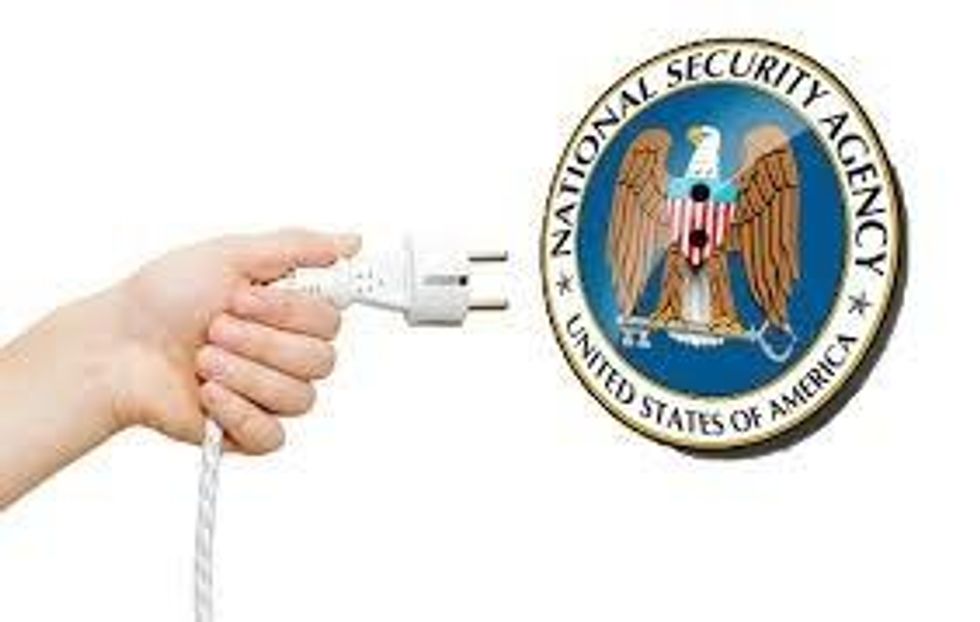
But interference isn't unthinkable. And in fact, it may be doable.
Grassroots activists have begun to realize the potential to put the NSA on the defensive in nearly a dozen states where the agency is known to be running surveillance facilities, integral to its worldwide snoop operations.
Organizers have begun to push for action by state legislatures to impede the electric, water and other services that sustain the NSA's secretive outposts.
Those efforts are farthest along in the state of Washington, where a new bill in the legislature--the Fourth Amendment Protection Act--is a statutory nightmare for the NSA. The agency has a listening post in Yakima, in the south-central part of the state.
The bill throws down a challenge to the NSA, seeking to block all state support for NSA activities violating the Fourth Amendment. For instance, that could mean a cutoff of electricity or water or other state-government services to the NSA site. And the measure also provides for withholding other forms of support, such as research and partnerships with state universities.
Here's the crux of the bill: "It is the policy of this state to refuse material support, participation, or assistance to any federal agency which claims the power, or with any federal law, rule, regulation, or order which purports to authorize, the collection of electronic data or metadata of any person pursuant to any action not based on a warrant that particularly describes the person, place, and thing to be searched or seized."
If the windup of that long sentence has a familiar ring, it should. The final dozen words are almost identical to key phrases in the Fourth Amendment of the U.S. Constitution.
In recent days, more than 15,000 people have signed a petition expressing support for the legislation. Launched by RootsAction.org, the petition is addressed to the bill's two sponsors in the Washington legislature--Republican Rep. David Taylor, whose district includes the NSA facility in Yakima, and Democrat Luis Moscoso from the Seattle area.
Meanwhile, a similar bill with the same title has just been introduced in the Tennessee legislature--taking aim at the NSA's center based in Oak Ridge, Tenn. That NSA facility is a doozy: with several hundred scientists and computer specialists working to push supercomputers into new realms of mega-surveillance capacities.
A new coalition, OffNow, is sharing information about model legislation. The group also points to known NSA locations in other states including Utah (in Bluffdale), Texas (San Antonio), Georgia (Augusta), Colorado (Aurora), Hawaii (Oahu) and West Virginia (Sugar Grove), along with the NSA's massive headquarters at Fort Meade in Maryland. Grassroots action and legislative measures are also stirring in several of those states.
One of the key organizations in such efforts is the Bill of Rights Defense Committee, where legal fellow Matthew Kellegrew told me that the OffNow coalition "represents the discontent of average people with ... business-as-usual failure to rein in out-of-control domestic spying by the NSA and other federal departments like the FBI. It is a direct, unambiguous response to a direct, unambiguous threat to our civil liberties."
In the process--working to counter the bipartisan surveillance-state leadership coming from the likes of President Obama, House Speaker John Boehner, the House Intelligence Committee's chair Mike Rogers and the Senate Intelligence Committee's chair Dianne Feinstein--activists urging a halt to state-level support for the NSA include people who disagree on other matters but are determined to undermine the Big Brother hierarchies of both parties.
"By working together to tackle the erosion of the Fourth Amendment presented by bulk data collection," Kellegrew said, "people from across partisan divides are resurrecting the lost art of collaboration and in the process, rehabilitating the possibility of a functional American political dialogue denied to the people by dysfunction majority partisan hackery.
From another vantage point, this is an emerging faceoff between reliance on cynical violence and engagement in civic nonviolence.
Serving the warfare state and overall agendas for U.S. global dominance to the benefit of corporate elites, the NSA persists in doing violence to the Constitution's civil-liberties amendments--chilling the First, smashing the Fourth and end-running the Fifth.
Meanwhile, a nascent constellation of movements is striving to thwart the surveillance state, the shadowy companion of perpetual war.
This is a struggle for power over what kind of future can be created for humanity.
It's time to stop giving juice to Big Brother.
The National Security Agency depends on huge computers that guzzle electricity in the service of the surveillance state. For the NSA's top executives, maintaining a vast flow of juice to keep Big Brother nourished is essential--and any interference with that flow is unthinkable.
But interference isn't unthinkable. And in fact, it may be doable.
Grassroots activists have begun to realize the potential to put the NSA on the defensive in nearly a dozen states where the agency is known to be running surveillance facilities, integral to its worldwide snoop operations.
Organizers have begun to push for action by state legislatures to impede the electric, water and other services that sustain the NSA's secretive outposts.
Those efforts are farthest along in the state of Washington, where a new bill in the legislature--the Fourth Amendment Protection Act--is a statutory nightmare for the NSA. The agency has a listening post in Yakima, in the south-central part of the state.
The bill throws down a challenge to the NSA, seeking to block all state support for NSA activities violating the Fourth Amendment. For instance, that could mean a cutoff of electricity or water or other state-government services to the NSA site. And the measure also provides for withholding other forms of support, such as research and partnerships with state universities.
Here's the crux of the bill: "It is the policy of this state to refuse material support, participation, or assistance to any federal agency which claims the power, or with any federal law, rule, regulation, or order which purports to authorize, the collection of electronic data or metadata of any person pursuant to any action not based on a warrant that particularly describes the person, place, and thing to be searched or seized."
If the windup of that long sentence has a familiar ring, it should. The final dozen words are almost identical to key phrases in the Fourth Amendment of the U.S. Constitution.
In recent days, more than 15,000 people have signed a petition expressing support for the legislation. Launched by RootsAction.org, the petition is addressed to the bill's two sponsors in the Washington legislature--Republican Rep. David Taylor, whose district includes the NSA facility in Yakima, and Democrat Luis Moscoso from the Seattle area.
Meanwhile, a similar bill with the same title has just been introduced in the Tennessee legislature--taking aim at the NSA's center based in Oak Ridge, Tenn. That NSA facility is a doozy: with several hundred scientists and computer specialists working to push supercomputers into new realms of mega-surveillance capacities.
A new coalition, OffNow, is sharing information about model legislation. The group also points to known NSA locations in other states including Utah (in Bluffdale), Texas (San Antonio), Georgia (Augusta), Colorado (Aurora), Hawaii (Oahu) and West Virginia (Sugar Grove), along with the NSA's massive headquarters at Fort Meade in Maryland. Grassroots action and legislative measures are also stirring in several of those states.
One of the key organizations in such efforts is the Bill of Rights Defense Committee, where legal fellow Matthew Kellegrew told me that the OffNow coalition "represents the discontent of average people with ... business-as-usual failure to rein in out-of-control domestic spying by the NSA and other federal departments like the FBI. It is a direct, unambiguous response to a direct, unambiguous threat to our civil liberties."
In the process--working to counter the bipartisan surveillance-state leadership coming from the likes of President Obama, House Speaker John Boehner, the House Intelligence Committee's chair Mike Rogers and the Senate Intelligence Committee's chair Dianne Feinstein--activists urging a halt to state-level support for the NSA include people who disagree on other matters but are determined to undermine the Big Brother hierarchies of both parties.
"By working together to tackle the erosion of the Fourth Amendment presented by bulk data collection," Kellegrew said, "people from across partisan divides are resurrecting the lost art of collaboration and in the process, rehabilitating the possibility of a functional American political dialogue denied to the people by dysfunction majority partisan hackery.
From another vantage point, this is an emerging faceoff between reliance on cynical violence and engagement in civic nonviolence.
Serving the warfare state and overall agendas for U.S. global dominance to the benefit of corporate elites, the NSA persists in doing violence to the Constitution's civil-liberties amendments--chilling the First, smashing the Fourth and end-running the Fifth.
Meanwhile, a nascent constellation of movements is striving to thwart the surveillance state, the shadowy companion of perpetual war.
This is a struggle for power over what kind of future can be created for humanity.
It's time to stop giving juice to Big Brother.